.png?width=375&height=100&name=WebPage%20logo%20with%20curves%202026%20(8).png)
Energy From the Sun
"Describe how energy from the Sun, hydrosphere, and atmosphere interact and influence weather and climate."
💡 What This Standard Actually Means
"Describe". Students describe how three things interact to drive weather and climate: energy from the Sun, the hydrosphere (Earth's water), and the atmosphere (Earth's air). There is no memorizing wattage numbers or calculating angles with formulas. Students should be able to explain the cause-and-effect chain: the Sun's energy heats the land, water, and air unevenly, that energy moves through the hydrosphere and atmosphere, and the result is the weather we see day to day and the climate patterns we see over time. Instruction can take many forms, such as labeled diagrams, flow charts, concept maps, and written explanations.
The Sun radiates energy in all directions. A tiny fraction of that energy reaches Earth as electromagnetic radiation, mostly visible light and infrared. When it hits the ground, water, or atmosphere, some is reflected, some is absorbed, and the absorbed portion heats those surfaces. That warmed surface then re-emits energy as infrared (heat) back into the atmosphere.
Earth is a sphere, so the Sun's energy does not hit every spot the same way. Near the equator, sunlight strikes almost straight down, so its energy is concentrated over a small area. Near the poles, the same beam of sunlight spreads across a much larger curved area, so each square meter receives less energy. That is why the equator stays warm year-round and the poles stay cold year-round.
That uneven heating is the engine that drives weather. Warm air near the equator rises. Cooler air from higher latitudes flows in to replace it. Water absorbs and releases heat differently than land, which creates land breezes, sea breezes, and ocean currents like the Gulf Stream. Every major weather pattern on Earth traces back to this one idea: the Sun heats Earth unevenly, and the atmosphere and oceans move energy around trying to balance it out.
The thing I wish I had known earlier is how many kids walk in thinking seasons happen because Earth gets closer to the Sun in summer. It makes intuitive sense. It's also wrong. Before I teach anything else under 8.10A, I pull out a flashlight and a globe and shine the light straight at the equator. Then I tilt the globe the way Earth actually tilts and shine the light again. Students see, in real time, that the beam either hits head-on or spreads across a wider patch. That one demo unlocks the whole standard. After that, land-water-air heating, wind, currents, all of it clicks into place because they already have the mental picture of direct versus angled light.
⚠️ Misconceptions Your Students May Have
These are some of the most common misconceptions. Knowing what to look for can help you get ahead of them.
"It's hotter in summer because Earth is closer to the Sun"
This is one of the most documented misconceptions in Earth science. Earth's distance from the Sun barely changes over a year, and the Northern Hemisphere is actually slightly farther from the Sun during its summer. Seasons are driven by Earth's 23.5 degree axial tilt, which changes the angle of incoming sunlight and the length of daylight on each hemisphere. Direct sunlight delivers more energy per square meter than angled sunlight.
"Land and water heat up the same way"
Water has a much higher specific heat than soil, sand, or rock, so it takes more energy to change its temperature. Land heats up quickly and cools down quickly. Water heats up slowly and holds onto that heat far longer. This difference is what drives sea breezes, lake-effect snow, and the moderating climate near coasts.
"The equator is hot because it's closer to the Sun"
The Sun is about 93 million miles away. The difference between the equator and the poles is a few thousand miles, which is essentially nothing at that scale. The real reason the equator is warmer has to do with the angle of the incoming light. At the equator, sunlight hits the ground nearly straight on, concentrating energy. At the poles, the same sunlight spreads out over a much larger area, delivering less energy per square meter.
"Air gets warm directly from the Sun"
Most of the atmosphere is transparent to visible light, which passes right through. The ground and the oceans absorb that visible light and then re-emit infrared energy, which is what actually warms the lower atmosphere from below. That is why mountaintops are colder than valleys even though they are physically higher (and technically closer to the Sun). Air is heated indirectly, through contact with warmed surfaces and absorption of infrared radiation.
📓 Teaching Resources for 8.10A
These resources are aligned to this standard.



100% Aligned Lessons for Every TEKS You Teach
Kesler Science Plus puts thousands of ready-to-teach lessons and activities in your hands, so you can boost engagement and get your planning time back. Trusted by schools and districts all over the great state of Texas.
🌎 Phenomenon Ideas for 8.10A
Use these real-world phenomena to anchor your lesson. Show students the phenomenon first, let them wonder, then build toward Energy From the Sun as the explanation.
Barefoot on Asphalt vs. Grass in Summer
Step barefoot onto a black asphalt driveway on a sunny Texas afternoon and you'll feel the burn in a second. Step onto the grass right next to it and it feels comfortable. Both surfaces received the same sunlight, from the same Sun, on the same day. Why do they feel so different?
"Both the asphalt and the grass received the same solar radiation. What could explain why one heated up so much more than the other? How might color, material, and water content each play a role?"
The Beach at Noon vs. the Ocean at Noon
At noon at the beach, the sand can be scorching hot while the ocean water a few feet away stays cool enough to wade in. By late evening, the situation flips. The sand cools off quickly as the Sun goes down, but the water stays roughly the same temperature all night long.
"If the Sun delivered the same energy to both the sand and the water, why does one heat up and cool down so much faster than the other? How might this difference help explain why daytime winds at the beach often blow from the ocean toward the shore?"
Why Texas Is Hot and Alaska Is Cold at the Same Time of Year
In July, the average afternoon high in Houston, Texas is around 94 degrees Fahrenheit. In the same month, the average afternoon high in Barrow, Alaska is only around 47 degrees Fahrenheit. Both places are on the same planet, orbiting the same Sun, at the same time of year. What's different?
"How does the angle that sunlight strikes the ground change as you move from the equator toward the poles? What does that do to how much solar energy is packed into each square meter of ground?"
💡 Free Engagement Ideas for 8.10A
Ready-to-run activities you can drop straight into a lesson. Where one of these looks like a phenomenon from the section above, that is on purpose: show it first as the hook, then let students run it themselves.
Flashlight Angle Demo
Darken the room. Shine a flashlight straight down onto graph paper and trace the bright circle. Tilt the flashlight 45 degrees and trace the new oval. Students count the squares covered and see that the same beam of light now spreads over more area, meaning less energy per square.
Sand vs. Water Heating Race
Fill one cup with dry sand and one cup with room-temperature water, equal amounts. Place a thermometer in each. Put both under a desk lamp for 15 minutes and record temperatures every 2 minutes. Turn the lamp off and keep recording as they cool. Graph both curves and compare.
Colors and Heat Absorption
Wrap identical empty soda cans with black paper, white paper, and aluminum foil. Add the same amount of water to each, insert a thermometer, and set them in direct sunlight or under a lamp. Measure temperature every 3 minutes. Students see which surfaces absorb more of the Sun's energy.
Convection in a Shoebox
Cut two holes in the top of a shoebox and tape plastic wrap over the opening to make a window. Place a small cup of hot water under one hole and a small cup of ice under the other. Hold a stick of incense over the cup of ice. Watch the smoke sink, travel across, rise over the warm water, and loop around. This is the same mechanism that drives wind. Teacher tip: the smoke current is subtle from a distance, so run it under a document camera or as a small-group station, and backlight the box so the smoke shows up.
🎯 What Approaches, Meets, and Masters Thinking Look Like
Here is what student thinking at each level looks like on this one task, so you know what to look for and how to move a student up.
A sunny coastal town gets a cool breeze off the ocean every afternoon. Draw a labeled diagram that traces the energy, then describe how energy from the Sun, the hydrosphere (the ocean), and the atmosphere (the air) interact to create this breeze. In your description, explain both how this daily interaction shapes the town's weather and how the same Sun-water-air interactions, repeated over years, shape its overall climate.
- A diagram that starts with the Sun's energy as electromagnetic radiation reaching Earth, not air that simply “turns warm.”
- The Sun heating the land and the ocean by different amounts (land heats fast, water heats slowly).
- Air over the warmer land rising, and cooler air from over the ocean flowing in to replace it (that is the breeze).
- All three systems named and connected: the Sun supplies energy, the hydrosphere and atmosphere move that energy around.
- A clear cause-and-effect chain, not just a list of facts: uneven heating causes air movement causes the breeze.
- The difference between weather (today's breeze) and climate (the same pattern averaged over many years) addressed directly.
- Air described as heated indirectly, by the warmed land and water below it, not directly by sunlight passing through. That is the easiest place to slip.
The Sun shines down and warms up the air over the town. Hot air feels like a breeze, so the wind blows in from the ocean. The ocean is there too and it adds water to the air. Over time this is the climate because it happens every day.
Energy from the Sun reaches Earth and heats the land and the ocean, but not the same. The land heats up fast and the ocean heats up slowly because water holds heat longer. So the air over the land gets warmer, and warm air rises. That leaves a gap, and the cooler air sitting over the ocean flows in to take its place. That moving air is the afternoon breeze. This is the day's weather. The climate is what you get when this same Sun, water, and air pattern repeats for years, so this town has a mild, breezy climate.
The Sun's energy doesn't heat everything evenly, and that is the whole reason there is a breeze at all. Land and water absorb the same sunlight but change temperature at different speeds, so one warms more than the other. The air over the warmer surface rises, and air over the cooler surface moves in underneath it. The atmosphere is basically trying to even out the heat the Sun spread unevenly.
That is how I know the breeze must reverse at night. After sunset there is no new energy from the Sun, and the land cools off faster than the ocean because water holds its heat. Now the ocean is the warmer surface, so the air rises over the water and the breeze blows the opposite way, from the land out to the sea. Same three systems, just flipped, and over many years all these daily flips average out into the town's mild coastal climate.
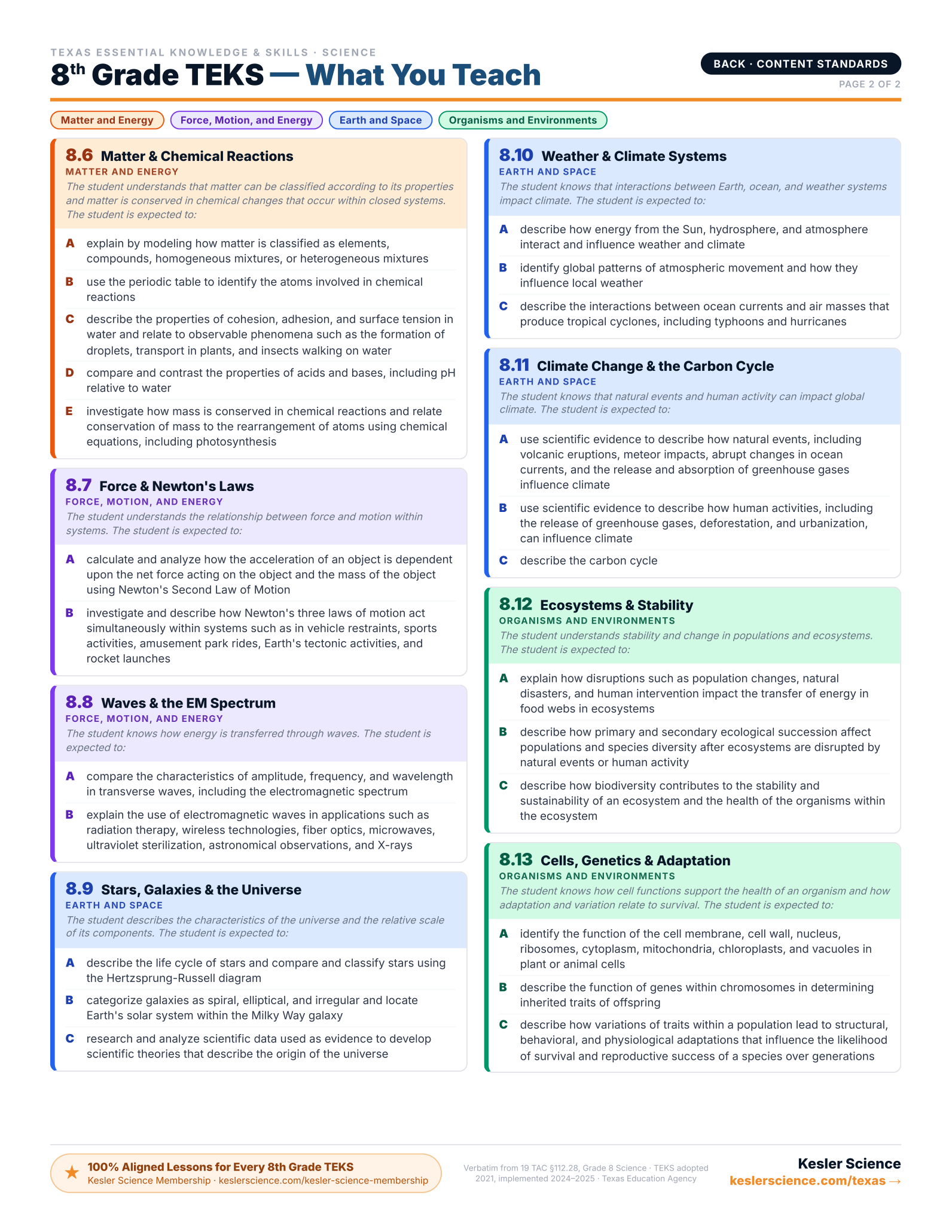
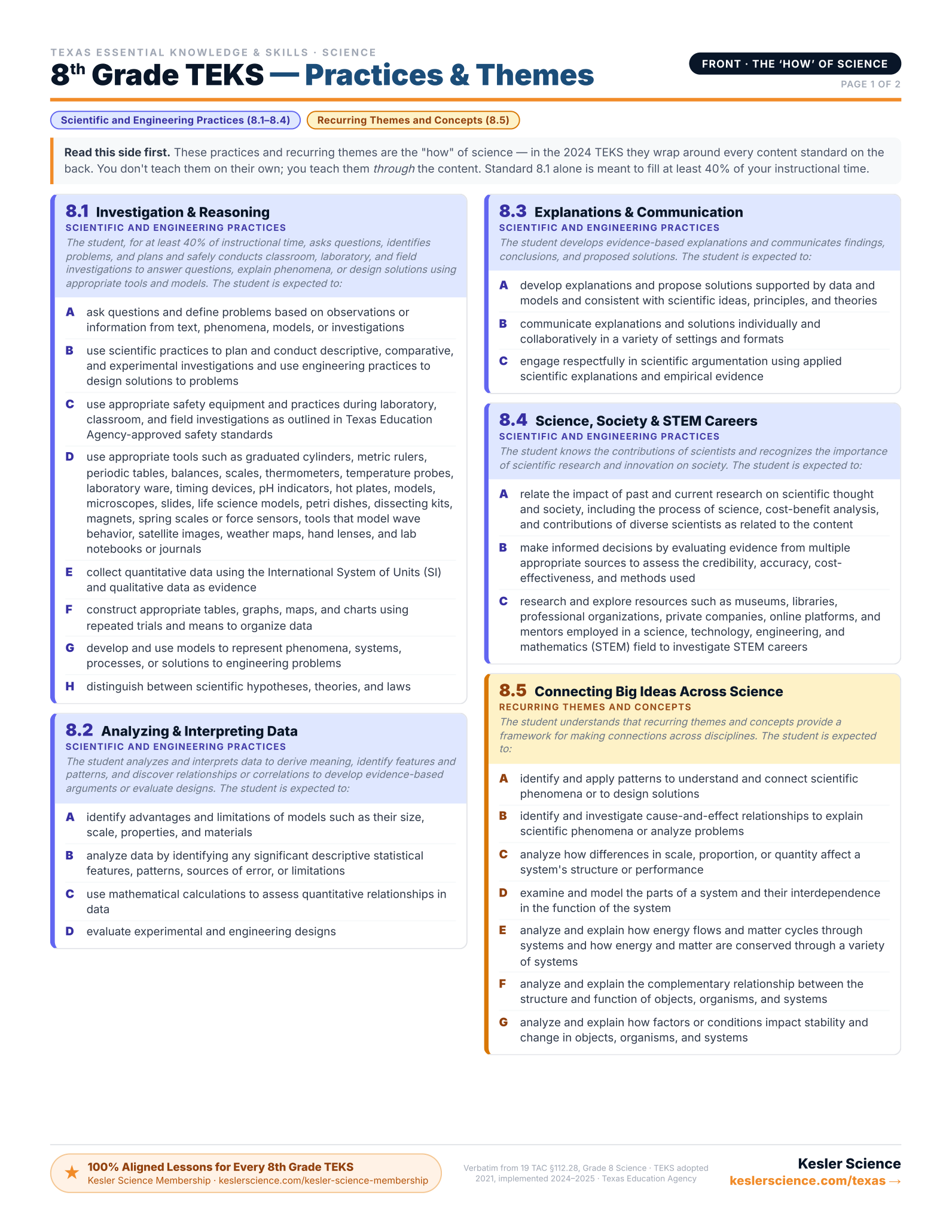
Every 8th-Grade Science TEKS on One Page
The color-coded, front-and-back cheat sheet I wish I'd had — every standard, organized by reporting category. Print it and reference it all year long. This will be your new favorite document!
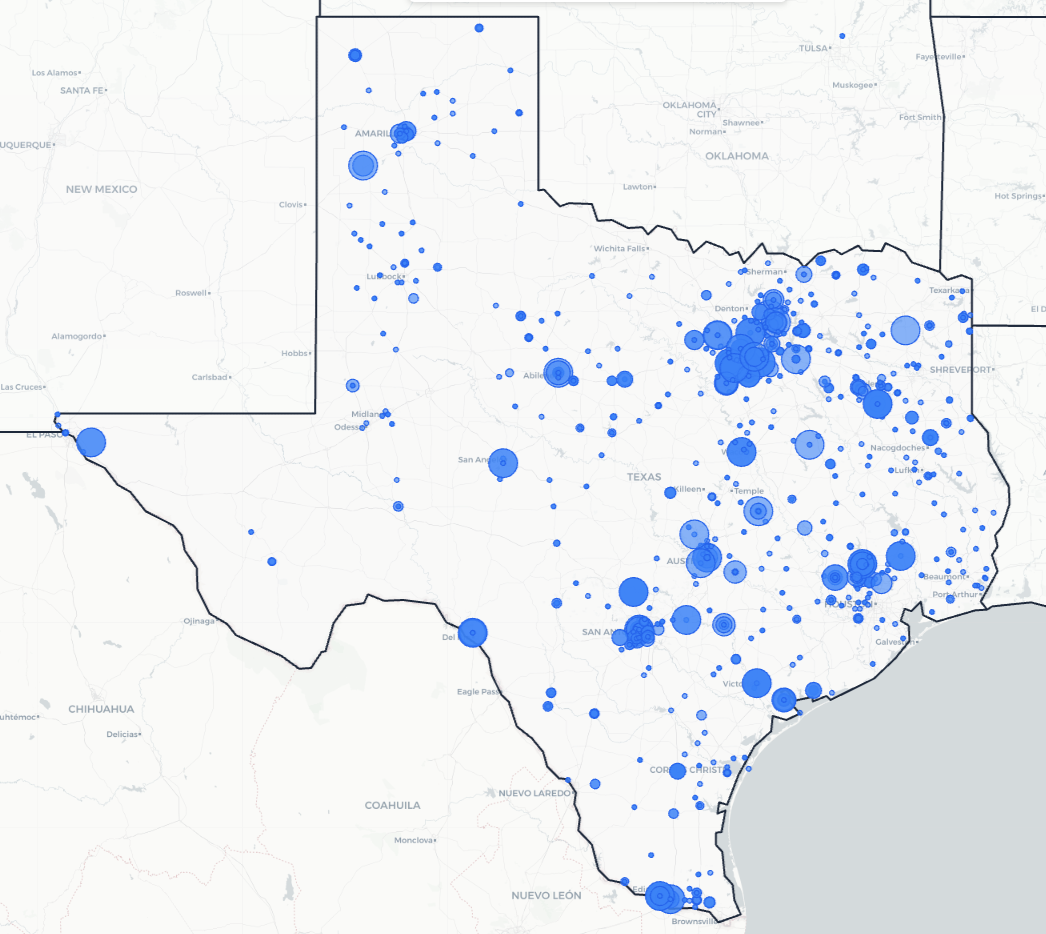
Trusted Across Texas
From the Rio Grande Valley to the Panhandle, Texas science teachers are using Kesler Science to save time and engage students.
Texas Schools and Districts
Love Kesler Science
What Teachers Are Saying
Give Your Science Teachers Everything They Need
School and district licenses give your teachers access to every resource they need, including station labs, inquiry labs, anchoring phenomena, presentations, escape rooms, and much more. One purchase covers the grade levels you need.
- PO-friendly. We accept purchase orders
- Volume discounts for 11+ teachers
- Complimentary Kesler Science Plus orientation for 4+ teachers
- Three free implementation PD sessions for departments of 11+
- Aligned to the 2024 TEKS standards
See It in Action
Book a walkthrough and we'll show you how Kesler Science fits your campus.
Book Demo CallNo pressure, no hard sell