.png?width=375&height=100&name=WebPage%20logo%20with%20curves%202026%20(8).png)
Cell Organelles
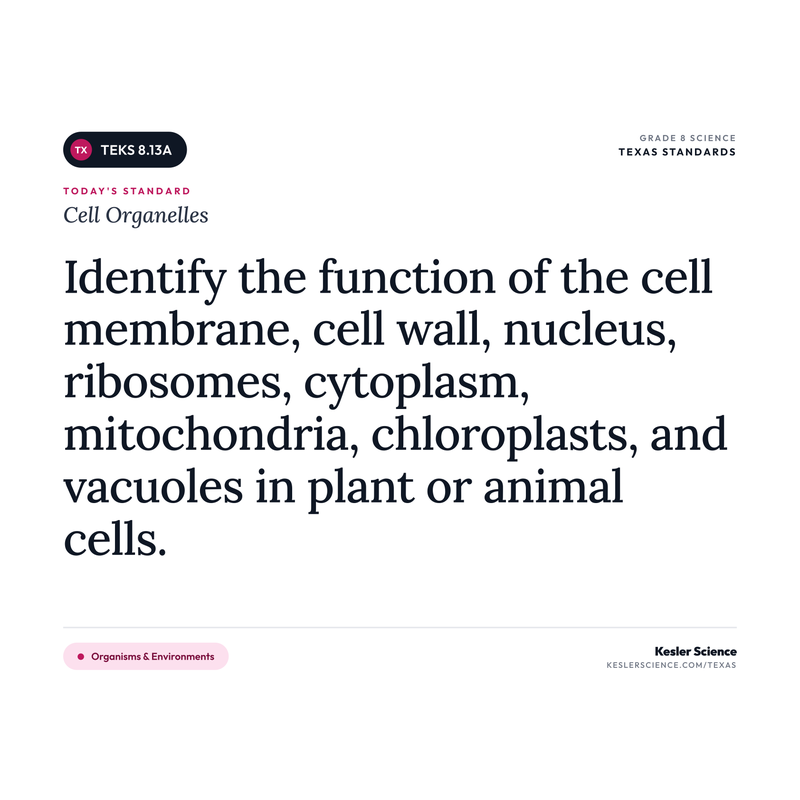
"Identify the function of the cell membrane, cell wall, nucleus, ribosomes, cytoplasm, mitochondria, chloroplasts, and vacuoles in plant or animal cells."
💡 What This Standard Actually Means
"Identify". Students name the function of each organelle in plant or animal cells. The standard lists a specific set to focus on: cell membrane, cell wall, nucleus, ribosomes, cytoplasm, mitochondria, chloroplasts, and vacuoles. Students should be able to match each organelle with its job and tell plant and animal cells apart by which organelles each one has. Instruction can take many forms, such as labeled models, matching cards, and compare-and-contrast tables. Don't drift into endoplasmic reticulum, Golgi apparatus, or lysosomes, those aren't named in 8.13A.
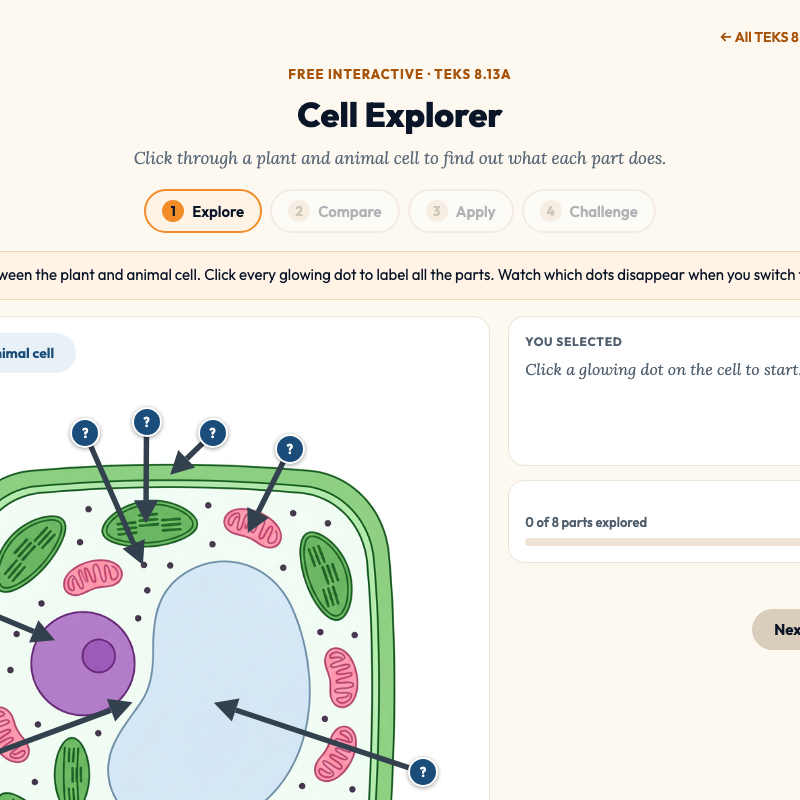
A cell works a lot like a small factory, with each organelle handling a specific job. The nucleus stores DNA and directs activity. Mitochondria release energy from food molecules through cellular respiration, producing ATP. Ribosomes assemble proteins using instructions from the nucleus. Cytoplasm is the gel-like fluid that fills the cell, holds the organelles in place, and is where many chemical reactions take place.
The cell membrane surrounds every cell and controls what enters and exits, letting some molecules through while blocking others. Vacuoles store water, nutrients, and waste, and in plant cells, a single large central vacuole takes up much of the interior space. Chloroplasts are the site of photosynthesis, where sunlight is captured to make glucose. Cell walls are rigid layers outside the cell membrane that give plant cells their shape.
Plant and animal cells share most of the organelles named in 8.13A: nucleus, mitochondria, ribosomes, cytoplasm, cell membrane, and vacuoles. The key differences students must know: plant cells have a cell wall, chloroplasts, and a large central vacuole, while animal cells lack all three. Both plant and animal cells have mitochondria. Plants still respire. Photosynthesis and respiration are separate processes happening in separate organelles.
Cell organelles can turn into a memorization slog fast. The move that helped my students stick with it was the factory analogy, but I made them build it. I'd give groups a poster-sized blank cell diagram and a stack of sticky notes with the organelle names. Their job was to label each organelle, then write what job it did using factory language: "shipping department," "power plant," "boss's office," "protein assembly line." When they defended their choices, the functions stuck better than any worksheet I used. Then I'd ask, "Which organelles would you remove if this were a plant cell versus an animal cell?" That flip locks in the differences.
⚠️ Misconceptions Your Students May Have
These are some of the most common misconceptions. Knowing what to look for can help you get ahead of them.
"Plants make energy in chloroplasts, so they don't need mitochondria"
Plants have both. Chloroplasts capture sunlight to make glucose through photosynthesis. Mitochondria break that glucose down into usable energy (ATP) through cellular respiration. Plants use both every day. Photosynthesis makes the food. Respiration uses the food. Don't let the bright green chloroplasts steal all the attention.
"The cell membrane and the cell wall are the same thing"
They are separate structures with different jobs. The cell membrane is a thin, flexible selective barrier around every cell. The cell wall is a rigid outer layer found in plant cells, fungi, and bacteria, but not in animal cells. (The chemistry of each is different: plant cell walls are made of cellulose, fungal walls of chitin, and bacterial walls of peptidoglycan.) In plant cells, the cell wall sits outside the cell membrane. Students often collapse them into one, so label both clearly whenever they appear together.
"Ribosomes are only found inside the endoplasmic reticulum"
Ribosomes are found attached to the rough ER and floating free in the cytoplasm. In both locations, they build proteins. The free-floating ones often make proteins used inside the cell, while the ER-attached ones often make proteins that get shipped out or stored. Either way, the ribosome is the protein-builder.
"Plant cells don't have vacuoles; that's an animal cell thing"
Students sometimes reverse this one. Plant cells have a large central vacuole that stores water, nutrients, and waste and helps the cell keep its shape. Animal cells have smaller vacuoles, often several of them, doing similar storage work on a smaller scale. Both cells have vacuoles. The size and number is what differs.
📓 Teaching Resources for 8.13A
These resources are aligned to this standard.


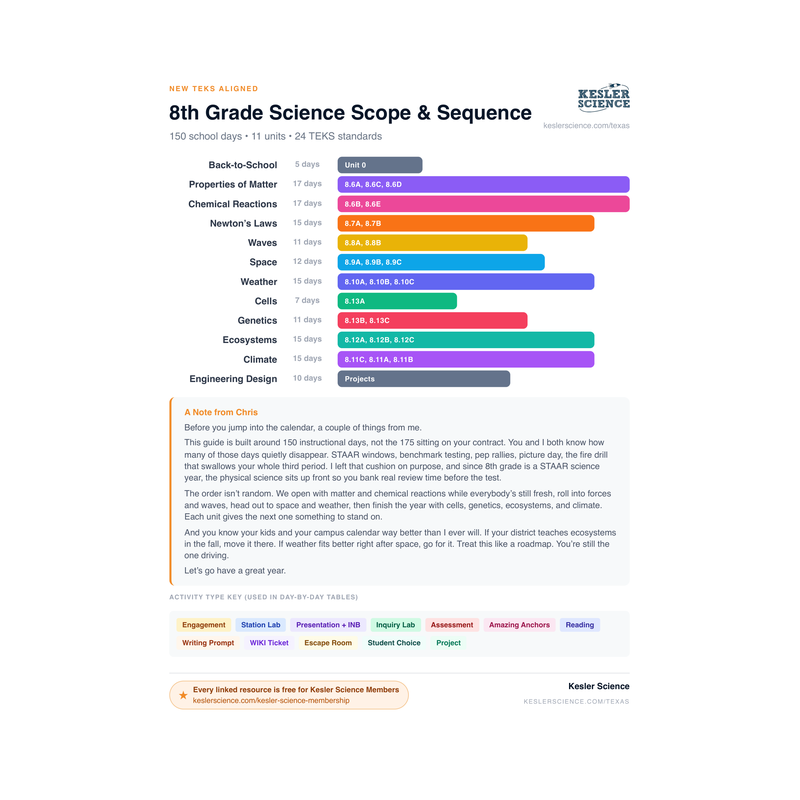
100% Aligned Lessons for Every TEKS You Teach
Kesler Science Plus puts thousands of ready-to-teach lessons and activities in your hands, so you can boost engagement and get your planning time back. Trusted by schools and districts all over the great state of Texas.
🌎 Phenomenon Ideas for 8.13A
Use these real-world phenomena to anchor your lesson. Show students the phenomenon first, let them wonder, then build toward Cell Organelles as the explanation.
An Onion Skin Under the Microscope
Peel a thin layer from an onion and place it under a microscope. You see neat rectangular shapes lined up like bricks, each with a small dot inside. Now compare that to a cheek cell scraped with a toothpick and stained. The cheek cells look rounder, less organized, and have no walls between them. What's different, and why does it matter?
"What structures are visible in the onion cells that aren't in the cheek cells? What do those structures do for the plant that an animal cell wouldn't need?"
A Wilted Plant After Two Days Without Water
Skip watering a houseplant for two days. The leaves droop, the stems bend, the whole plant looks defeated. Water it deeply and come back an hour later. The leaves are stiff and upright again. Something inside each plant cell changed, and it wasn't the cell wall.
"Which organelle is responsible for the plant standing back up after watering? Why doesn't the same thing happen with animals when they drink a lot of water?"
Why Muscle Cells Are Packed With Mitochondria
Scientists who look at different animal cells under a microscope notice something interesting. Muscle cells, especially cardiac muscle, contain far more mitochondria than skin cells or bone cells. In cardiac muscle cells (the cells of your heart), mitochondria can make up around a third of the cell's volume. Why would one type of cell stockpile so many of one organelle?
"What is the job of the mitochondria, and how does that connect to what muscle cells do all day? What does this tell us about how cells are built for their function?"
💡 Free Engagement Ideas for 8.13A
Ready-to-run activities you can drop straight into a lesson. Where one of these looks like a phenomenon from the section above, that is on purpose: show it first as the hook, then let students run it themselves.
Cell as a Factory Poster
Groups are assigned either a plant or animal cell. They design a poster showing the cell as a factory, city, or school, matching each organelle to a role (shipping, power, management, transport). They must label every required organelle and justify the analogy. Display both plant and animal versions for comparison.
Plant vs. Animal Venn Diagram
Give each group a large Venn diagram with "plant cell" on the left and "animal cell" on the right. Pass out organelle name cards and have groups sort each into the correct region (plant only, animal only, or both). Cell wall, chloroplasts, and large central vacuole end up on the plant-only side. Everything else sits in the middle.
Microscope Onion and Cheek Compare
Make two slides, one with a thin piece of onion and one with a cheek cell swab stained with iodine or methylene blue. Students sketch both under the microscope and label the visible organelles. Cell wall, nucleus, and the large vacuole show up in the onion. Cheek cells show the nucleus and membrane clearly.
Organelle Job Interview Skit
Each student is assigned an organelle and must introduce themselves in a 30-second skit: what they do, where they live in the cell, and why the cell needs them. Extra credit for any student who can be interviewed by two classmates about how their organelle interacts with another.
🎯 What Approaches, Meets, and Masters Thinking Look Like
Here is what student thinking at each level looks like on this one task, so you know what to look for and how to move a student up.
Label a plant cell and an animal cell side by side. For each cell, identify the function of every organelle present from this list: cell membrane, cell wall, nucleus, ribosomes, cytoplasm, mitochondria, chloroplasts, and vacuoles. Then explain which organelles tell you a cell is a plant cell and which it is an animal cell, and why.
- A correct function (the job), not just a name, for each organelle: nucleus directs the cell and stores DNA, ribosomes build proteins, mitochondria release energy from food, cytoplasm is the fluid where reactions happen.
- Cell membrane identified as the barrier that controls what enters and leaves every cell.
- Vacuoles identified as storage (water, nutrients, waste) in both cells, with the plant cell's large central vacuole noted.
- Cell wall and chloroplasts shown only on the plant cell, with correct jobs: the wall gives rigid shape, chloroplasts run photosynthesis to make glucose.
- A clear plant-vs-animal call based on the right markers: cell wall, chloroplasts, and a large central vacuole mean plant cell.
- Mitochondria placed in both cells, since plants respire too. That is the easiest place to slip.
The nucleus is the control center that holds the DNA. The cell membrane lets things in and out. Ribosomes make proteins and the cytoplasm is the jelly inside. The plant cell has a cell wall for shape and chloroplasts because plants make their own food. I put mitochondria in the animal cell to give it energy, but the plant cell doesn't need them because the chloroplasts already make the energy from sunlight.
The nucleus stores the DNA and directs the cell. Ribosomes build proteins. Mitochondria release energy from food, so I put them in both cells because plants need energy too. Cytoplasm is the gel that fills the cell and holds everything in place. The cell membrane controls what goes in and out of every cell. Vacuoles store water, nutrients, and waste; the plant cell has one big central vacuole and the animal cell has smaller ones. The cell wall gives the plant cell a rigid shape, and the chloroplasts do photosynthesis to make glucose from sunlight. I know the plant cell is a plant cell because it has a cell wall, chloroplasts, and a large central vacuole, and the animal cell has none of those three.
The nucleus directs the cell and stores DNA, ribosomes build proteins, mitochondria release energy from food, cytoplasm holds the organelles and is where reactions happen, the membrane controls what enters and leaves, and vacuoles store water, nutrients, and waste. The cell wall gives a rigid shape and chloroplasts run photosynthesis. The real way to tell cells apart is to look at function, not just the name. A cell wall means the cell needs structural support, and chloroplasts mean the cell makes its own food from sunlight.
That is how I would identify the mystery cell. It has a cell wall, so something is giving it a rigid shape, but it has no chloroplasts, so it cannot make food from sunlight. That means it is not a plant cell, even though the wall makes it look like one. A walled cell that still has a nucleus and mitochondria but no chloroplasts fits something like a fungus. The chloroplast is the marker that actually proves a cell does photosynthesis, not the wall.
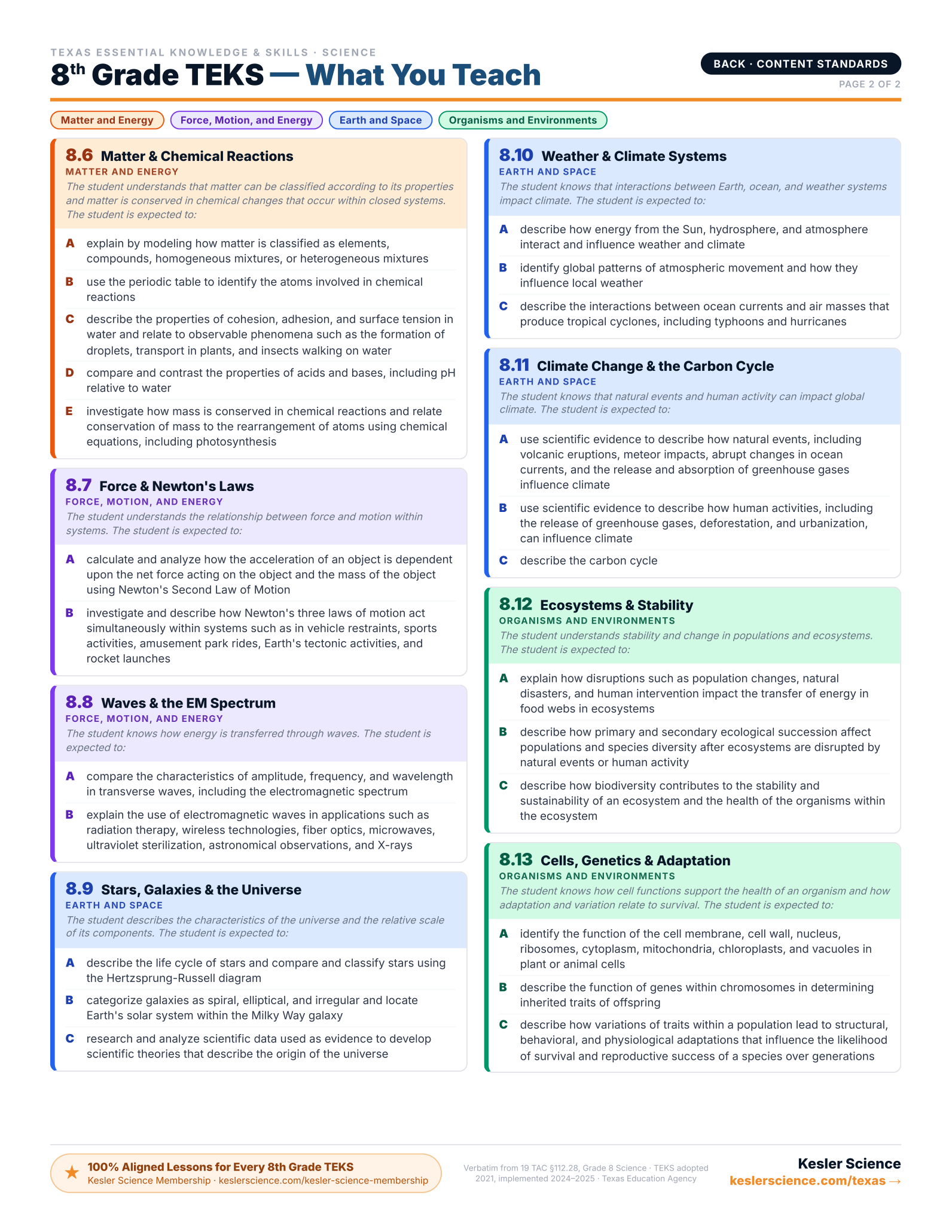
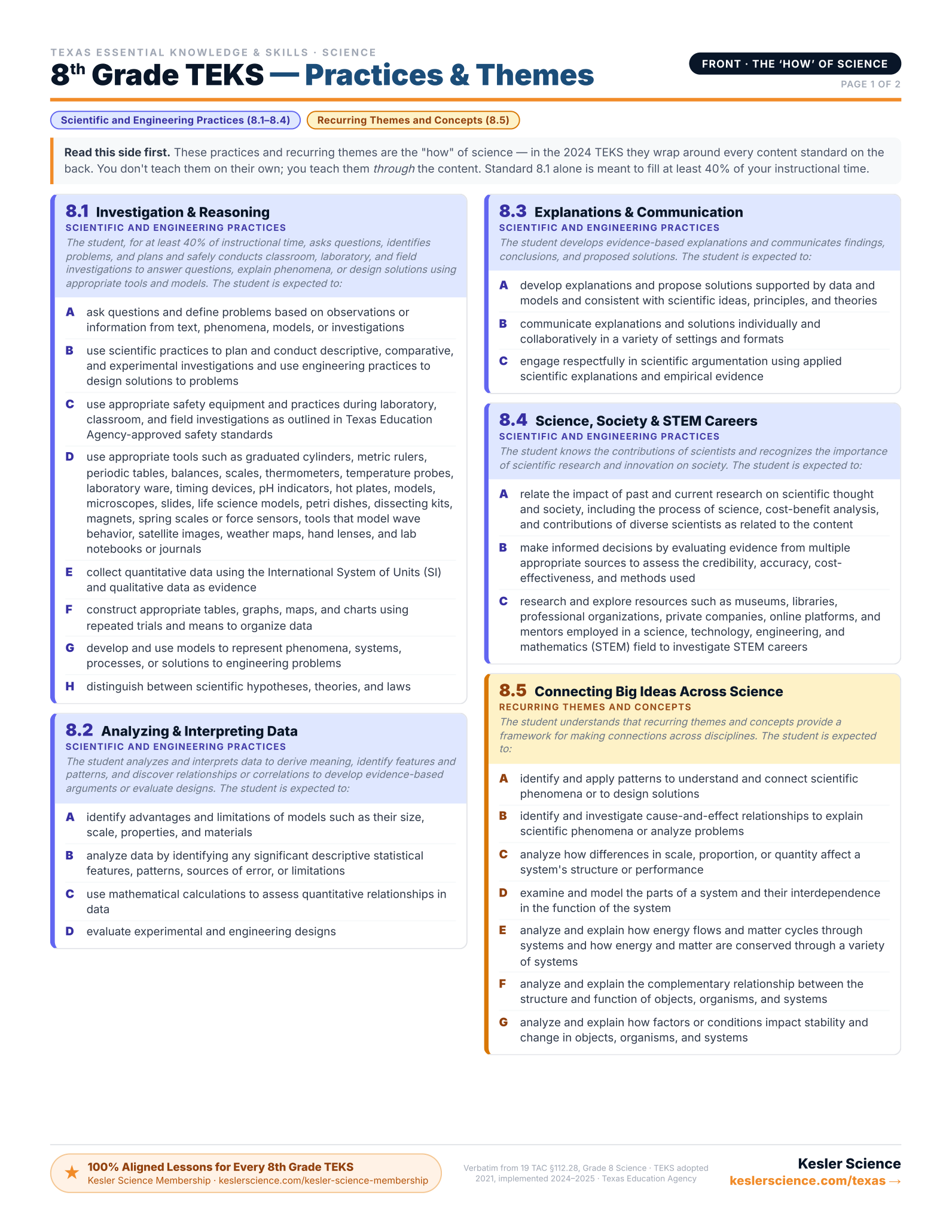
Every 8th-Grade Science TEKS on One Page
The color-coded, front-and-back cheat sheet I wish I'd had — every standard, organized by reporting category. Print it and reference it all year long. This will be your new favorite document!
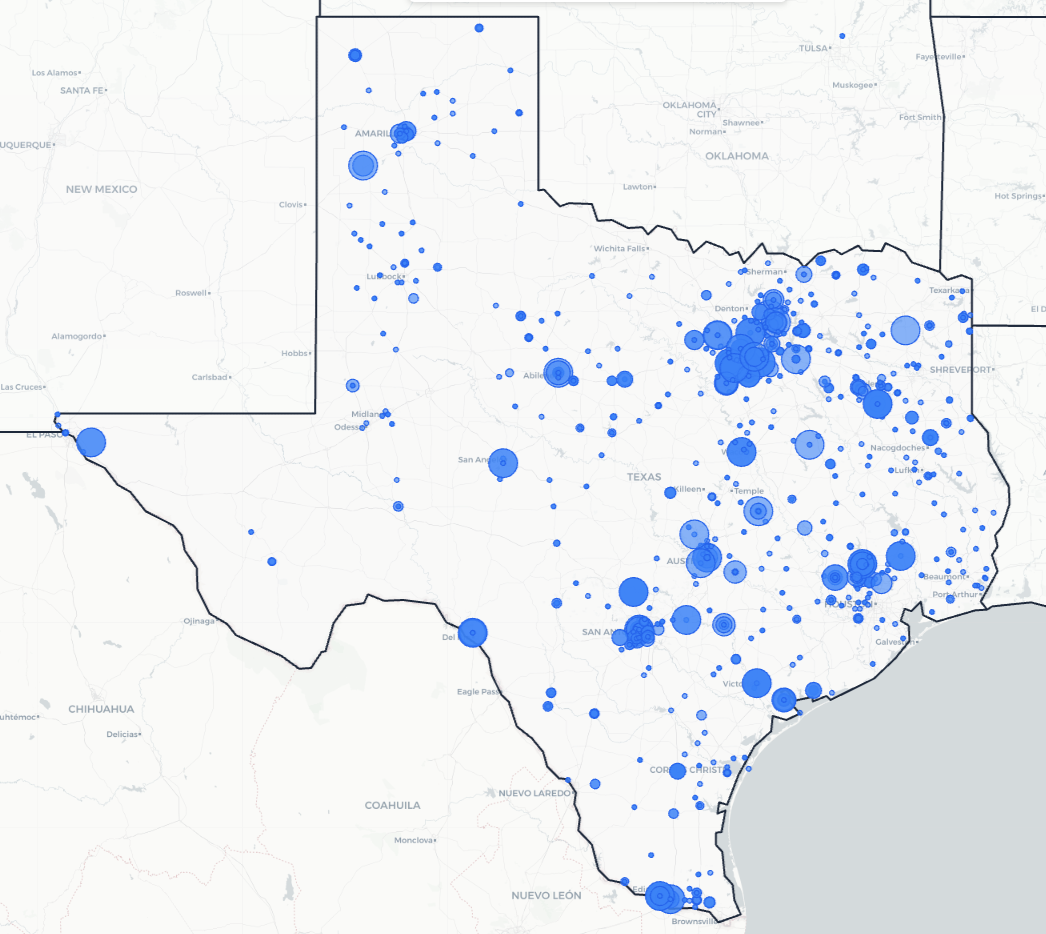
Trusted Across Texas
From the Rio Grande Valley to the Panhandle, Texas science teachers are using Kesler Science to save time and engage students.
Texas Schools and Districts
Love Kesler Science
What Teachers Are Saying
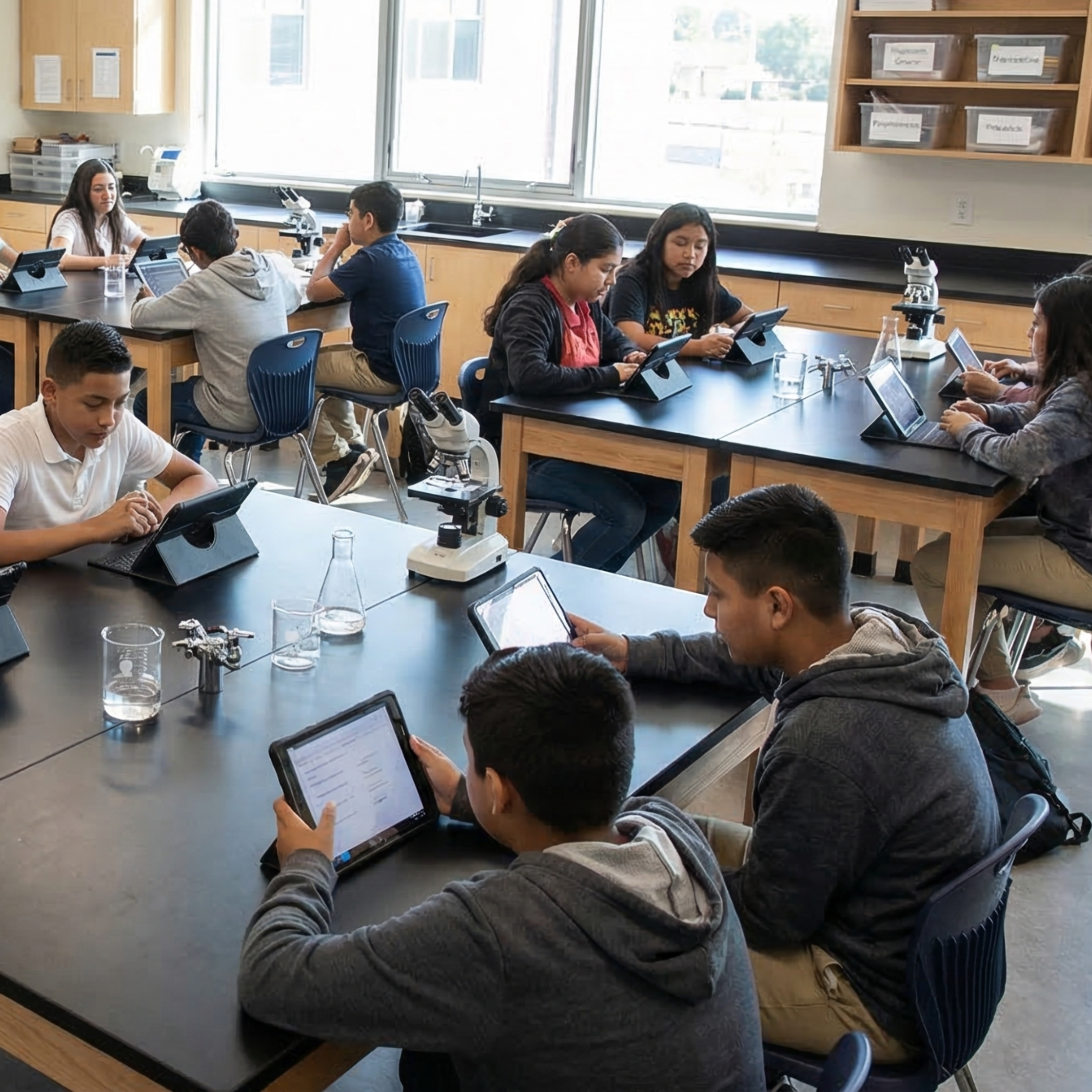
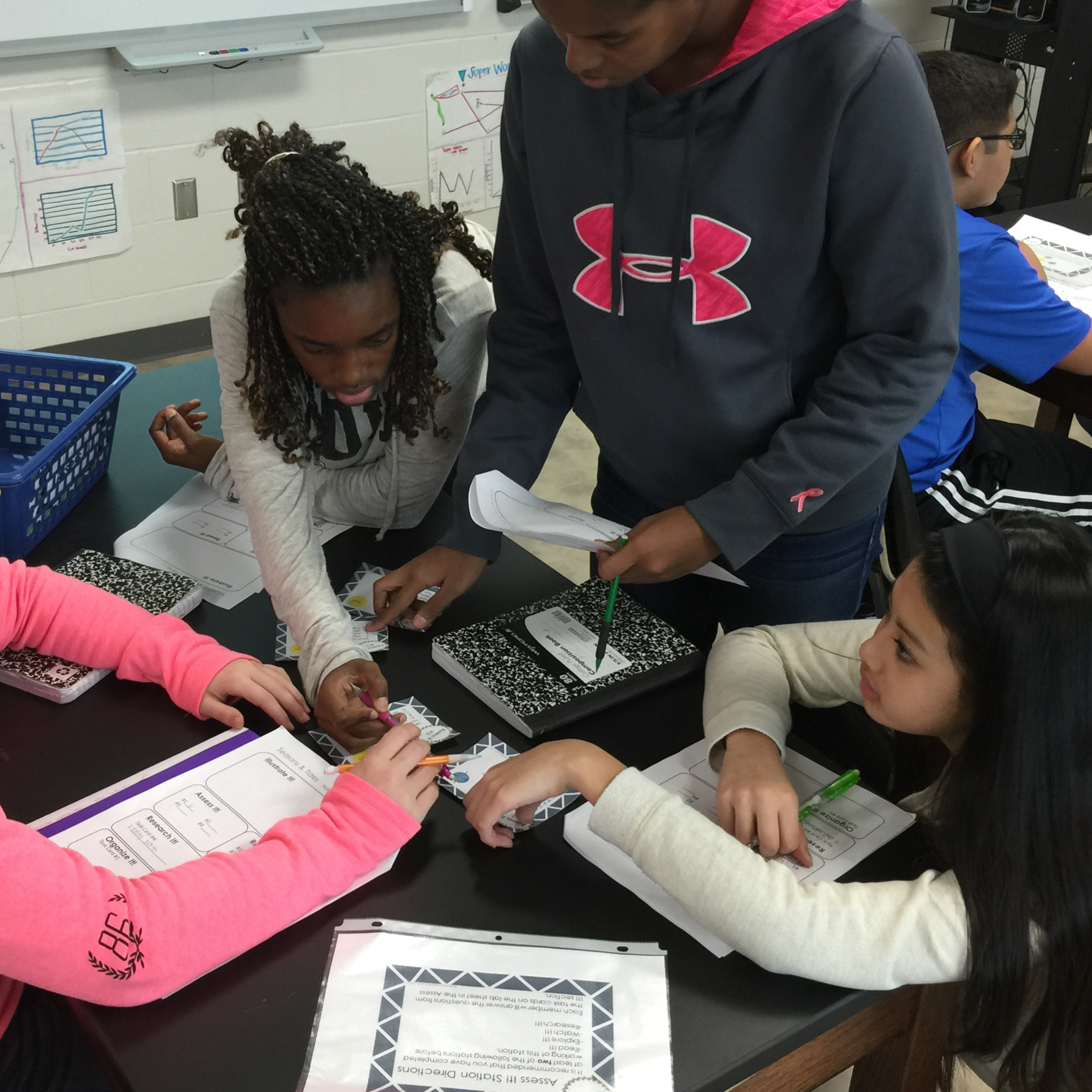
Give Your Science Teachers Everything They Need
School and district licenses give your teachers access to every resource they need, including station labs, inquiry labs, anchoring phenomena, presentations, escape rooms, and much more. One purchase covers the grade levels you need.
- PO-friendly. We accept purchase orders
- Volume discounts for 11+ teachers
- Complimentary Kesler Science Plus orientation for 4+ teachers
- Three free implementation PD sessions for departments of 11+
- Aligned to the 2024 TEKS standards
See It in Action
Book a walkthrough and we'll show you how Kesler Science fits your campus.
Book Demo CallNo pressure, no hard sell