.png?width=375&height=100&name=WebPage%20logo%20with%20curves%202026%20(8).png)
Sustainability of an Ecosystem
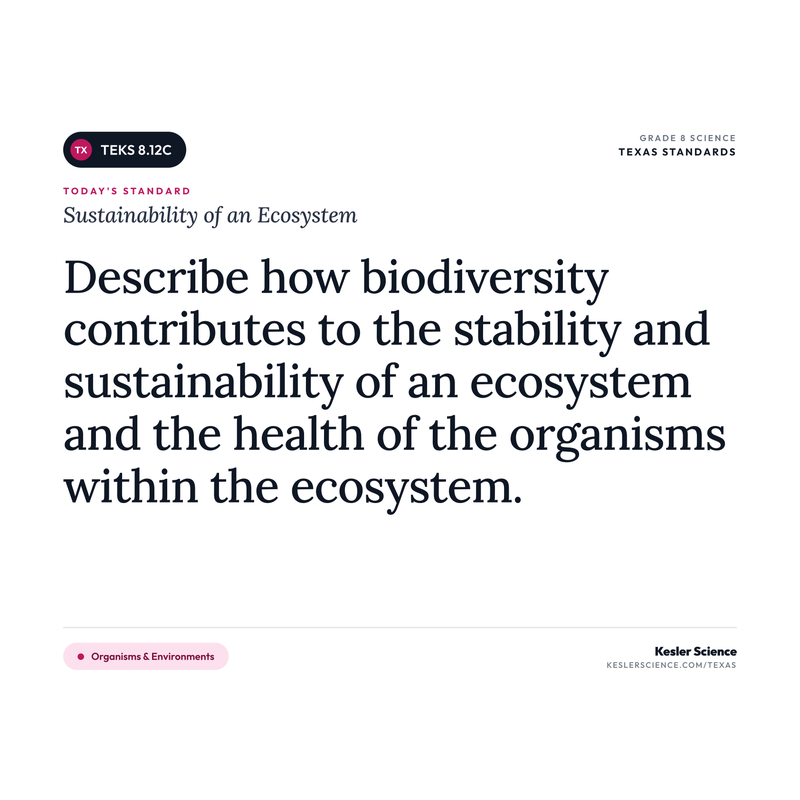
"Describe how biodiversity contributes to the stability and sustainability of an ecosystem and the health of the organisms within the ecosystem."
💡 What This Standard Actually Means
"Describe." Students explain how biodiversity contributes to three outcomes: the stability of an ecosystem, its sustainability over time, and the health of the organisms living within it. The verb is description with reasoning, not evaluation or prediction. Students should be able to use real examples, walk through cause-and-effect chains, and connect what happens when biodiversity goes up or down to those three outcomes. Instruction can take many forms, such as case studies, food web diagrams, and short explanatory writing.
An ecosystem is sustainable when it can maintain its structure and function over time. That does not mean it stays frozen. It means the system keeps working through natural ups and downs, populations stay in balance, and the organisms living there stay healthy.
The standard names one driver: biodiversity. The more species an ecosystem has, and the more roles those species fill, the more resilient the whole system tends to be. When biodiversity is high, the ecosystem absorbs shocks better, recovers faster, and the organisms inside it have a better shot at staying healthy. When biodiversity drops, stability slips, sustainability becomes harder to hold, and the health of the organisms inside the system suffers right along with it.
Look at the Chesapeake Bay. When oyster populations crashed, the bay lost a species that filtered the water and built habitat for everything else. Biodiversity went down, water quality dropped, and the health of the species that depended on those reefs declined with it. In Yellowstone, the return of wolves brought a missing piece back into the system. Biodiversity went up, elk behavior shifted, plants recovered, and the whole community got healthier. On Texas ranches that rotate cattle between pastures, native grasses come back, plant and animal diversity climbs, and the herd itself stays healthier on the same land. Same pattern every time: biodiversity moves, and stability, sustainability, and the health of the organisms living there move with it.
The trap I used to fall into on this TEKS was treating biodiversity like a vocabulary word. Define it, quiz it, done. Students could repeat the definition but couldn't actually describe why it mattered. The fix was running scenarios. I'd put a case on the board: "A new shrimp farm opens in the bay. What happens to biodiversity in that area? How does that change the stability of the ecosystem, its long-term sustainability, and the health of the organisms living there?" Then I'd let groups talk it out with evidence. Once students were describing the chain from biodiversity to those three outcomes in their own words, they had the standard cold. That's the whole task this TEKS is asking for.
⚠️ Misconceptions Your Students May Have
These are some of the most common misconceptions. Knowing what to look for can help you get ahead of them.
"A sustainable ecosystem stays exactly the same forever"
Sustainability isn't permanence. Populations rise and fall, weather shifts, species come and go. A sustainable ecosystem keeps its structure and function through those normal fluctuations. The goal is a working balance over time, not a frozen snapshot.
"More biodiversity automatically makes an ecosystem more sustainable"
Biodiversity typically increases stability and supports sustainability, but the relationship is not a simple ratio. What species do in the ecosystem matters as much as how many there are. A system with fewer species filling a wider range of roles can sometimes be more resilient than a system with many species doing the same thing. Teach diversity as a strong contributor, not a guaranteed outcome.
"Humans are always a threat to ecosystem sustainability"
Human activity has caused real ecological damage, and students need to understand that clearly. Human activity can also actively support sustainability. Controlled burns restore fire-adapted ecosystems. Restored wetlands filter water and rebuild habitat. Wildlife corridors reconnect fragmented populations. A balanced take is more accurate and more useful than a blanket rule.
"Losing one species doesn't really matter as long as most of the others are still there"
Every species lost is a drop in biodiversity, and biodiversity is what gives an ecosystem its stability and resilience. Lose one key species, like the oysters in the Chesapeake or the wolves in Yellowstone, and the stability of the whole system can tip. Sustainability gets harder to hold. The health of the organisms that depended on that species, directly or indirectly, takes a hit. Help students see that biodiversity is not just "how many species" but how each species supports the rest.
📓 Teaching Resources for 8.12C
These resources are aligned to this standard.


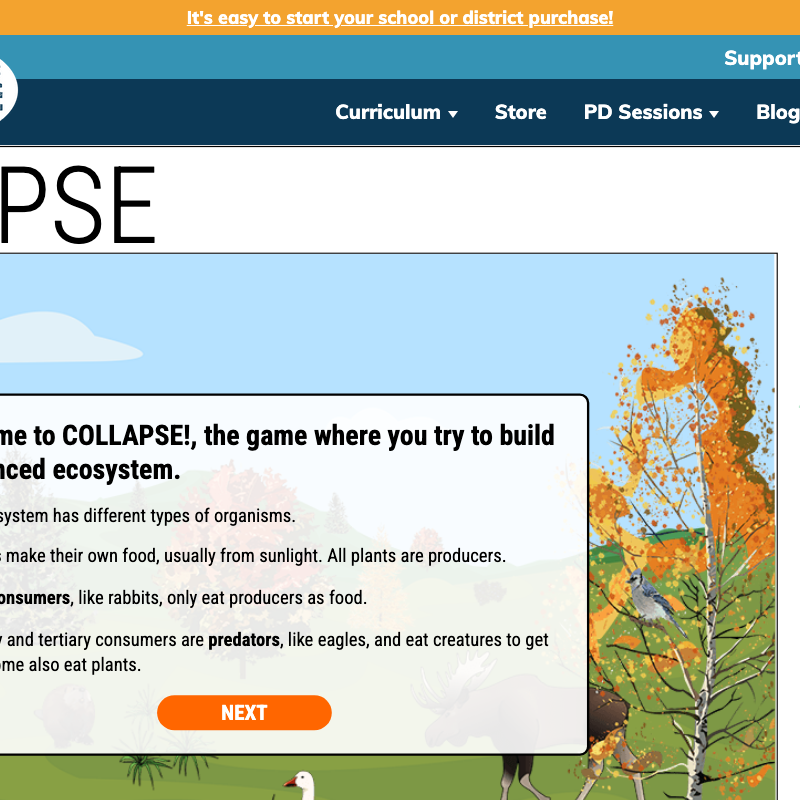
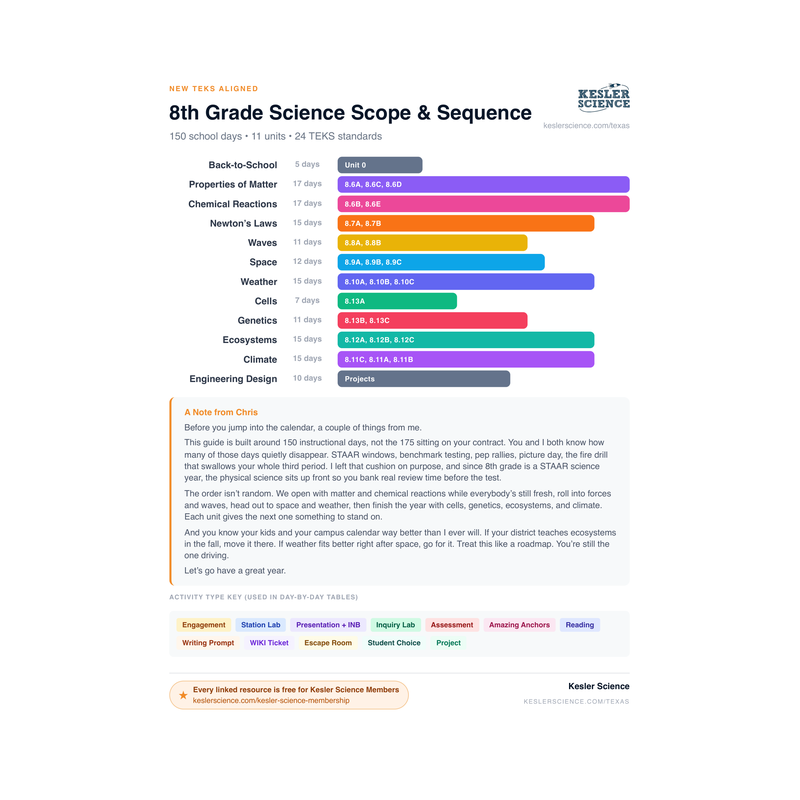
100% Aligned Lessons for Every TEKS You Teach
Kesler Science Plus puts thousands of ready-to-teach lessons and activities in your hands, so you can boost engagement and get your planning time back. Trusted by schools and districts all over the great state of Texas.
🌎 Phenomenon Ideas for 8.12C
Use these real-world phenomena to anchor your lesson. Show students the phenomenon first, let them wonder, then build toward Sustainability of an Ecosystem as the explanation.
A Bay That Ran Out of Oysters
Chesapeake Bay once held enough oysters to filter the entire bay in a matter of days. After decades of overharvesting, pollution, and disease, oyster populations dropped to a small fraction of their former size. Water clarity fell. Algae blooms increased. Many other species that depended on oyster reefs declined with them.
"When oysters disappeared, the bay lost a major piece of its biodiversity. Describe how that drop in biodiversity affected the stability of the bay, its long-term sustainability, and the health of the organisms living in it."
Wolves Return to Yellowstone
Gray wolves were absent from Yellowstone National Park for most of the 20th century. After their reintroduction in 1995, elk behavior changed, aspen and willow began recovering in places where overgrazing had kept them down, and populations of beavers and songbirds shifted across the park. The whole community responded to one change at the top of the food web.
"Adding wolves back to Yellowstone raised the park's biodiversity. Describe how that change affected the stability of the ecosystem, its long-term sustainability, and the health of the other organisms living in the park."
A Texas Ranch That Uses Rotational Grazing
On some Texas ranches, cattle are moved between pastures on a regular schedule instead of being left on the same land all season. Soil recovers between rotations, native grasses return, and the land supports cattle and wildlife together. Ranchers report healthier herds and more diverse plant communities.
"Rotational grazing tends to raise the biodiversity of plants and animals on the land. Describe how that change in biodiversity affects the stability of the ecosystem, its long-term sustainability, and the health of the organisms living on it, including the cattle."
💡 Free Engagement Ideas for 8.12C
Ready-to-run activities you can drop straight into a lesson. Where one of these looks like a phenomenon from the section above, that is on purpose: show it first as the hook, then let students run it themselves.
Biodiversity Scenario Cards
Each group gets a card describing a change (new shrimp farm, invasive beetle arrives, wetland restored, monoculture planted on 1000 acres). Groups first decide whether biodiversity in that ecosystem goes up or down, then describe how that change in biodiversity affects the stability of the ecosystem, its long-term sustainability, and the health of the organisms living there. Groups defend their description to the class with reasoning.
Biodiversity Yarn Web
Students stand in a circle, each holding a card for a different species. Toss yarn across the circle to connect species that depend on each other, building a web. Then "remove" species one at a time by having students drop their strands. As biodiversity falls, the web visibly weakens. Students describe out loud how the loss of each species changes the stability of the ecosystem and the health of the species still standing.
High-Diversity vs. Low-Diversity Pond
Set up two "ponds" on the board, one with a long list of species and one with only a few. Hit both ponds with the same disturbance (a heat wave, a new pollutant, an invasive fish). In small groups, students describe what happens to each pond's stability over time, whether each one is sustainable, and how the health of the organisms in each pond is affected. Groups share their descriptions and compare which pond held up better and why.
Biodiversity Outcomes Chart
Hand out a list of 10 human practices, such as crop rotation, clear-cutting, building a dam, planting pollinator gardens. For each one, groups decide whether the practice raises or lowers biodiversity in the affected ecosystem, then describe what that change means for the ecosystem's stability, its long-term sustainability, and the health of the organisms living there. Groups share their descriptions and compare reasoning across practices.
🎯 What Approaches, Meets, and Masters Thinking Look Like
Here is what student thinking at each level looks like on this one task, so you know what to look for and how to move a student up.
A coastal bay is home to oysters, marsh grass, small fish, crabs, and wading birds. A disease wipes out most of the oysters. Sketch a food web for the bay, then describe how this drop in biodiversity affects three things: the stability of the ecosystem, its sustainability over time, and the health of the other organisms living in the bay.
- A food web that shows the oysters connected to the other organisms, not just a list of separate species.
- A clear statement that losing the oysters lowers the bay's biodiversity.
- An explanation of how lower biodiversity makes the ecosystem less stable (fewer species to absorb the shock, so the change spreads).
- An explanation of how it threatens sustainability (the bay has a harder time keeping its structure and function working over time).
- A link to the health of the other organisms (the fish, crabs, and birds that depended on the oysters or on clean water suffer too).
- Cause-and-effect reasoning, not just labels: because the oysters filtered the water and built habitat, their loss ripples outward.
- All three outcomes (stability, sustainability, organism health) addressed, not just one. Stopping after one is the easiest place to slip.
The oysters all died from the disease. But the bay will probably be fine because there are still plenty of other animals living there. The fish, crabs, and birds are all still there, so the ecosystem can keep going. Losing one species like the oysters doesn't really change much when so many others are left.
Losing the oysters lowers the biodiversity of the bay because there's one fewer species. That makes the ecosystem less stable, because the oysters filtered the water and built habitat, so when they're gone the water gets dirtier and the crabs and fish lose their hiding spots. It's less sustainable now because the bay can't keep working the same way over time with a key piece missing. The other organisms are less healthy too: the fish and crabs have worse water and less shelter, and the birds have less to eat. So one loss spreads to the whole system.
When the oysters die, biodiversity drops, and that lowers stability because the oysters filtered the water and built reefs that other species depended on. Without them the bay can't recover from shocks as well, so it's less sustainable, and the fish, crabs, and birds all get less healthy because their water and habitat get worse. The real reason biodiversity matters is that more species filling more roles gives the system backups, so one loss doesn't bring everything down.
That's also why the size of the hit depends on the species. In a grassland with lots of different grasses, if a drought kills one kind, the others still hold the soil and the system stays stable. But the bay only had one oyster, and it did a job nothing else could do, so losing it hurt much more. Biodiversity isn't just how many species there are, it's how each one supports the rest.
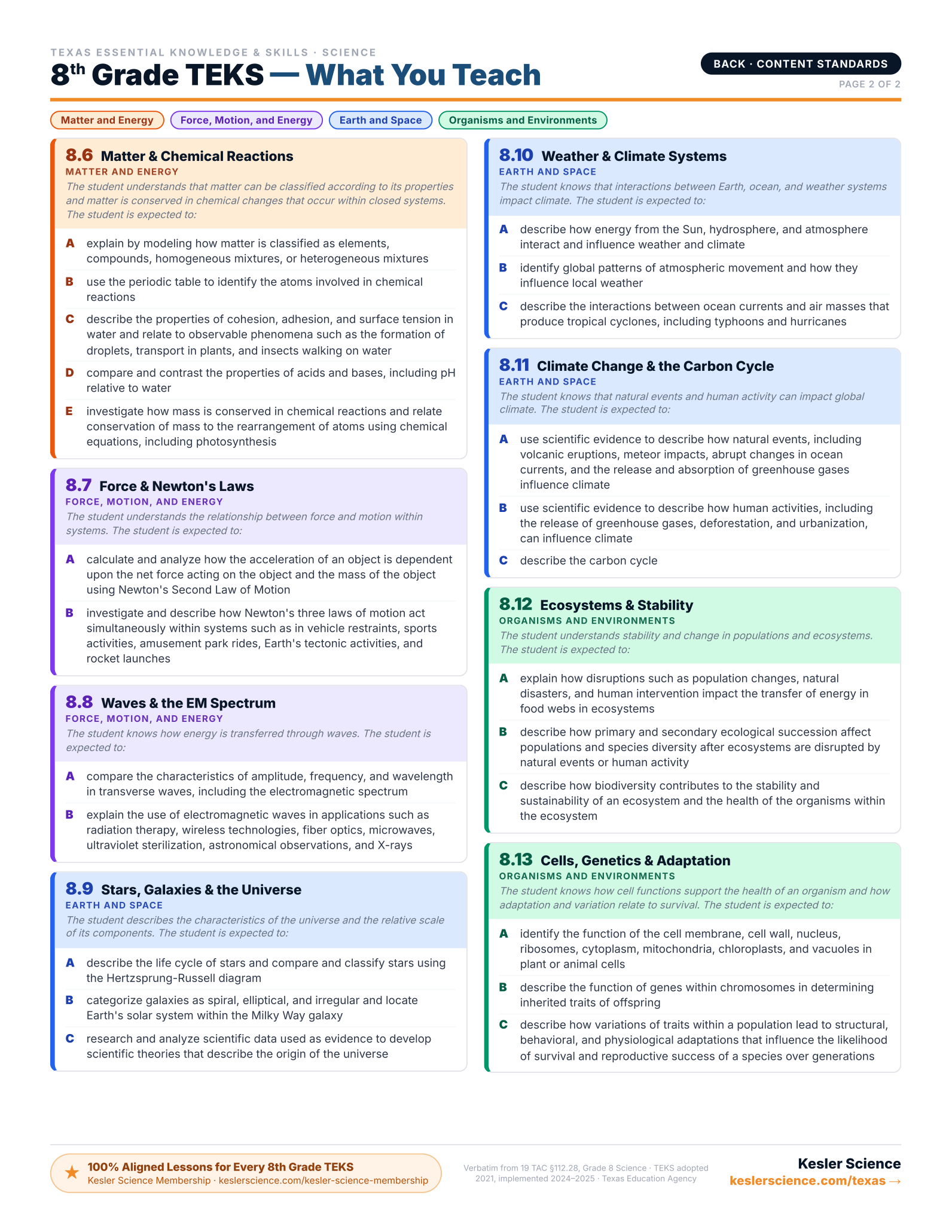
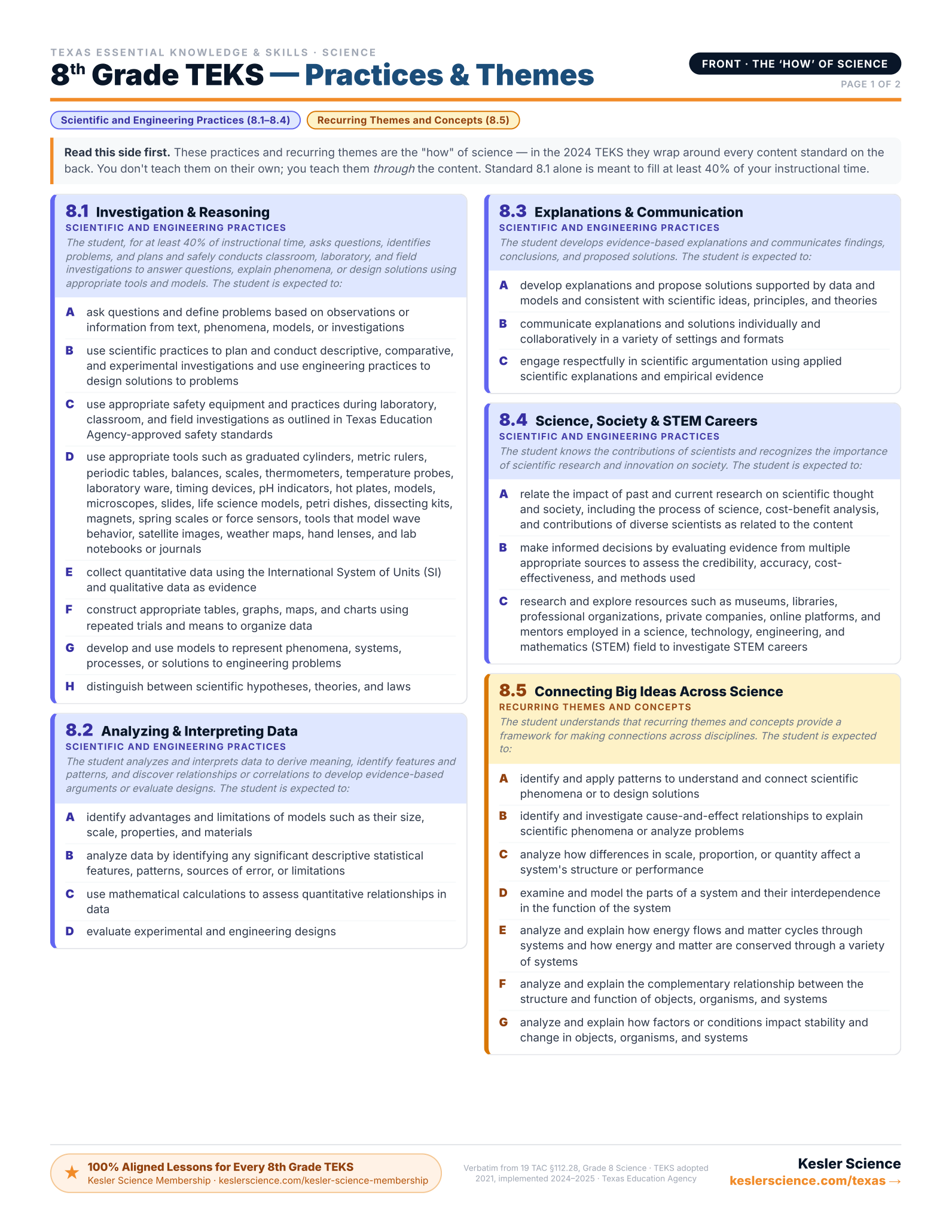
Every 8th-Grade Science TEKS on One Page
The color-coded, front-and-back cheat sheet I wish I'd had — every standard, organized by reporting category. Print it and reference it all year long. This will be your new favorite document!
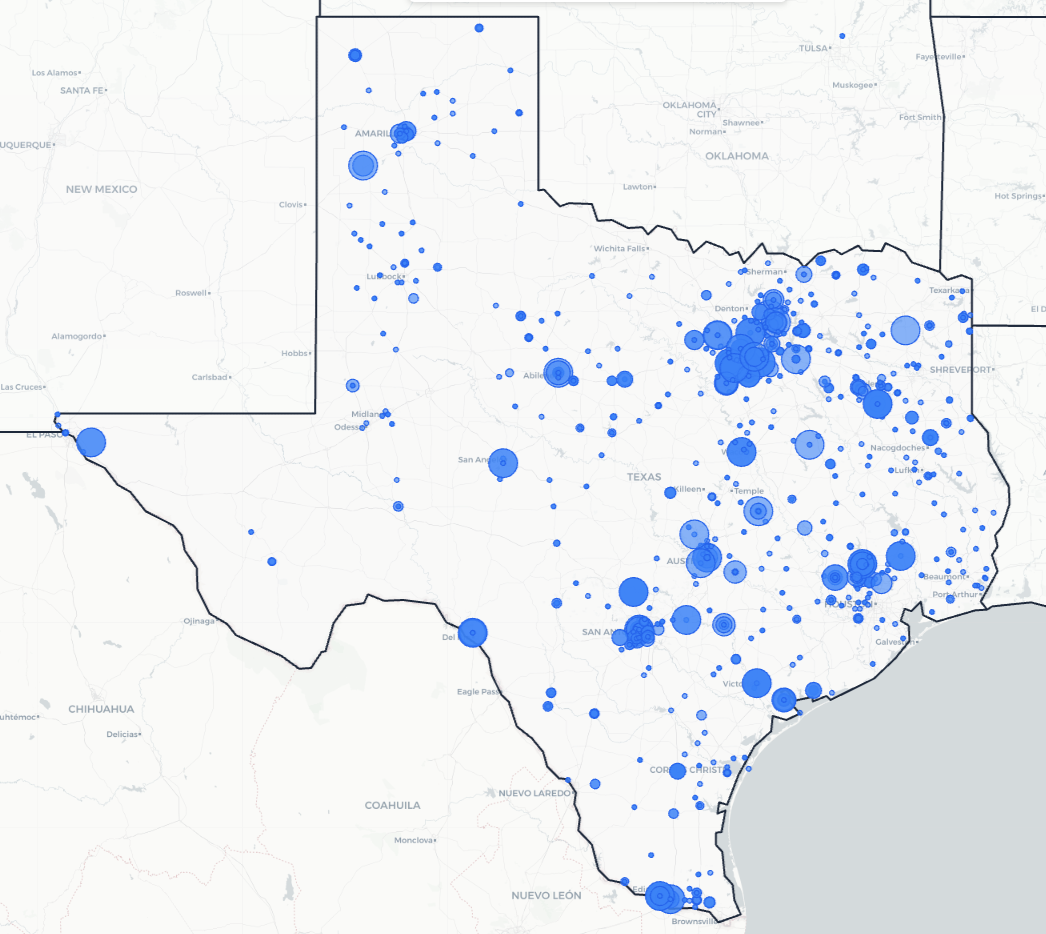
Trusted Across Texas
From the Rio Grande Valley to the Panhandle, Texas science teachers are using Kesler Science to save time and engage students.
Texas Schools and Districts
Love Kesler Science
What Teachers Are Saying
Give Your Science Teachers Everything They Need
School and district licenses give your teachers access to every resource they need, including station labs, inquiry labs, anchoring phenomena, presentations, escape rooms, and much more. One purchase covers the grade levels you need.
- PO-friendly. We accept purchase orders
- Volume discounts for 11+ teachers
- Complimentary Kesler Science Plus orientation for 4+ teachers
- Three free implementation PD sessions for departments of 11+
- Aligned to the 2024 TEKS standards
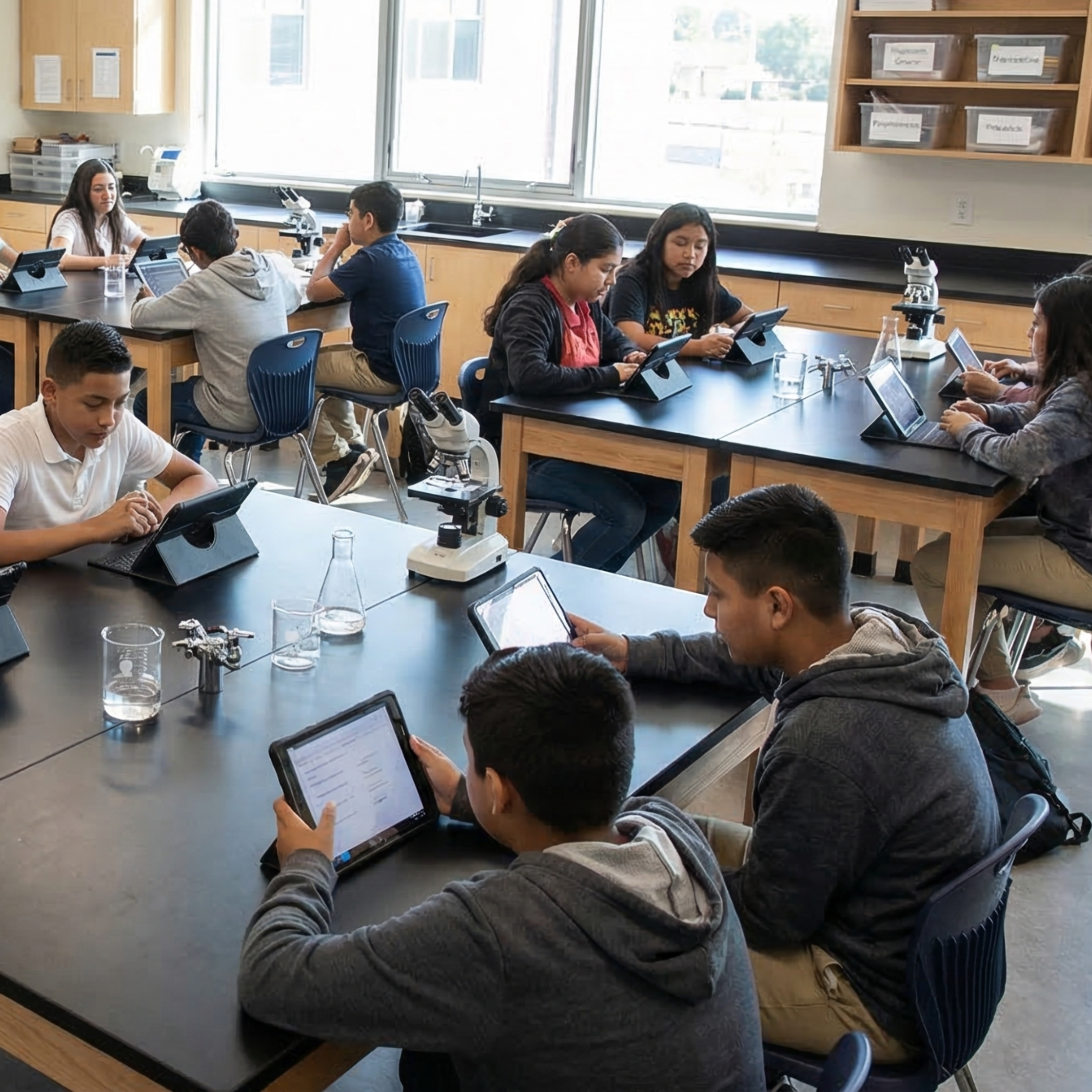
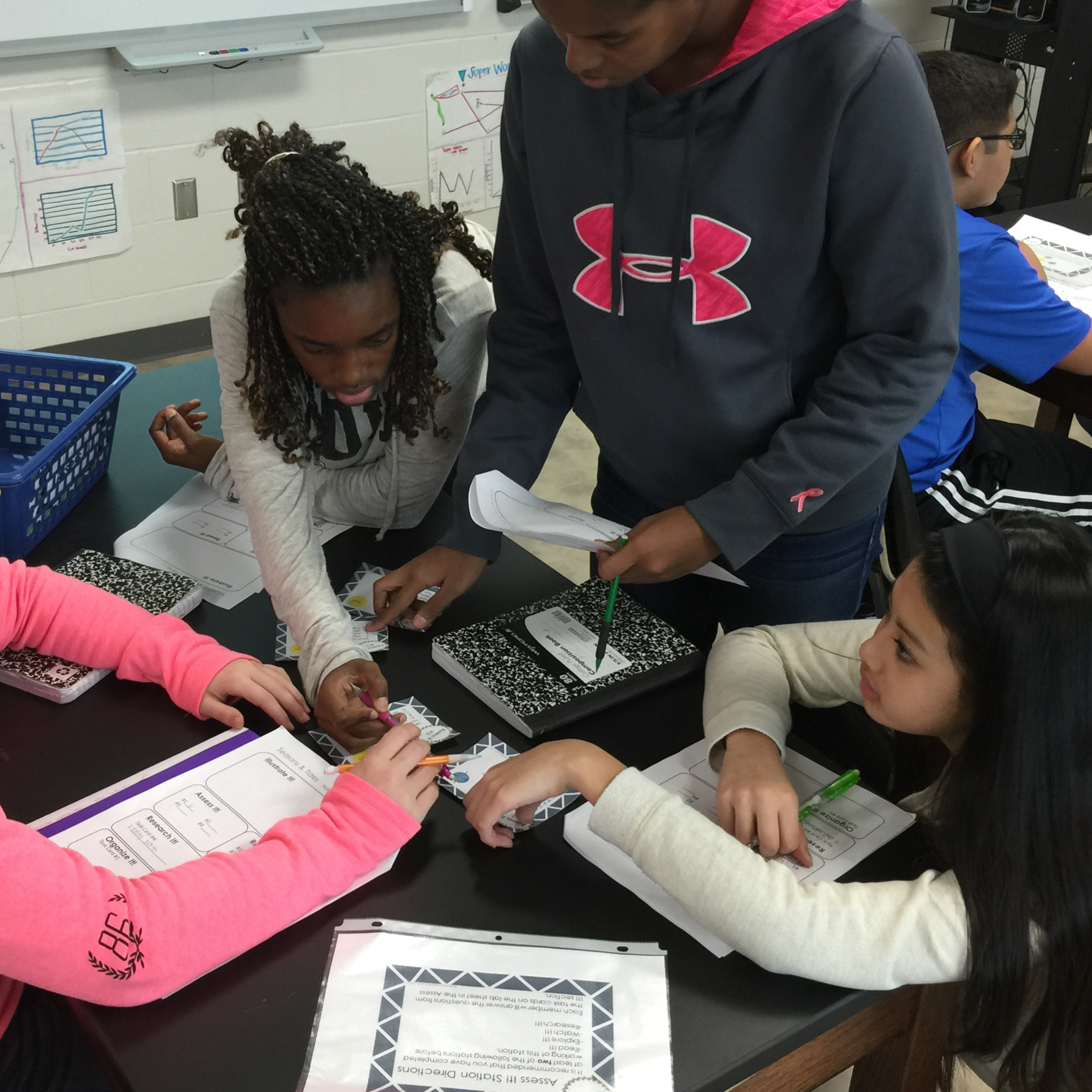
See It in Action
Book a walkthrough and we'll show you how Kesler Science fits your campus.
Book Demo CallNo pressure, no hard sell