.png?width=375&height=100&name=WebPage%20logo%20with%20curves%202026%20(8).png)
Describing the Carbon Cycle
"Describe the carbon cycle."
💡 What This Standard Actually Means
"Describe". Just four words in the whole standard, and "describe" is the verb. Students don't need to model atmospheric chemistry or calculate parts per million. They need to be able to tell the story of how carbon moves between the major reservoirs on Earth and identify the processes that move it. Students should be able to name the main carbon reservoirs (atmosphere, oceans, biosphere, lithosphere/fossil fuels) and the main processes (photosynthesis, cellular respiration, decomposition, combustion, ocean uptake) that connect them. Instruction can take many forms, such as labeled diagrams, flow charts, concept maps, written paragraphs, and short story-style explanations.
Carbon doesn't stay in one place. The same carbon atoms cycle endlessly between the air, the ocean, living things, and the ground. The four big reservoirs where carbon is stored are the atmosphere (mostly as CO2), the oceans (dissolved CO2 and bicarbonate), the biosphere (every plant and animal alive right now), and the lithosphere (rocks, soil, and fossil fuels like coal, oil, and natural gas, which are ancient stored carbon).
The processes that move carbon between reservoirs are familiar from other lessons. Plants pull CO2 out of the atmosphere through photosynthesis and lock the carbon into sugars, leaves, trunks, and roots. Animals eat plants (or other animals) and use cellular respiration to break down those sugars, releasing CO2 back into the atmosphere with every breath out. When a plant or animal dies, decomposition by bacteria and fungi releases more CO2 (and sometimes methane). Oceans constantly exchange CO2 with the atmosphere, absorbing CO2 in cooler waters and releasing it in warmer ones. Combustion, whether from a wildfire or from humans burning fossil fuels in cars and power plants, takes carbon out of the biosphere or lithosphere and dumps it into the atmosphere as CO2.
The core understanding students should walk away with is that carbon is constantly moving. The same atom of carbon could be in a tree, then in a deer that ate the tree, then in the air, then dissolved in the ocean, then locked in a shell on the ocean floor, all over a long enough timescale. The carbon cycle is the biggest connector between climate, ecosystems, oceans, and human activity, and being able to describe it sets students up for almost every Earth-systems standard that follows.
The first time I taught the carbon cycle, I tried to introduce all four reservoirs and all five processes at once. Kids checked out by the time I got to "lithosphere." What turned it around was telling the cycle as a story about a single carbon atom. I'd say, "Pretend you're one atom of carbon. You start out in the air as part of a CO2 molecule. A leaf grabs you. You become sugar in an apple. A kid eats the apple. You're breathed out. You drift back into the air. The ocean dissolves you. A clam locks you into its shell. Millions of years later, you're limestone." By the time I finished the story, students could see the loop. After that, we'd diagram it together with arrows and reservoir labels. Story first, diagram second. Works every time.
⚠️ Misconceptions Your Students May Have
These are some of the most common misconceptions. Knowing what to look for can help you get ahead of them.
"Carbon is only found in the air"
Carbon is stored in four major places, called reservoirs: the atmosphere (as CO2), the oceans (as dissolved CO2 and bicarbonate), the biosphere (every living plant and animal), and the lithosphere (rocks, soils, shells, and fossil fuels like coal, oil, and natural gas). The atmosphere actually holds a relatively small fraction of Earth's total carbon. Most of it is locked up in the oceans, in living things, and in the ground.
"Plants take in CO2 once and lock it up forever"
Plants do absorb CO2 during photosynthesis and store the carbon in their tissues, but that storage is temporary. When the plant is eaten, the carbon moves into the animal that ate it. When the plant or animal dies, decomposers release the carbon back into the atmosphere, mostly as CO2 when oxygen is around and as methane when decomposition happens without oxygen (in swamps, wetlands, or deep in a landfill). When a forest burns, the stored carbon is released as CO2. The carbon cycle is a cycle precisely because nothing stays put forever.
"Oceans don't have anything to do with the carbon cycle"
The oceans are one of the largest carbon reservoirs on the planet. Seawater absorbs huge amounts of CO2 from the air at the surface, especially in cooler regions. Ocean plankton use that dissolved CO2 to photosynthesize. Marine animals build shells out of carbon-containing minerals like calcium carbonate, and when those animals die, their shells settle to the seafloor and eventually become rock. Without the ocean, the carbon cycle as we know it doesn't work.
"Fossil fuels just appear in the ground; they have nothing to do with carbon in the air"
Fossil fuels are carbon. Coal, oil, and natural gas formed from the buried, compressed remains of plants and microorganisms that lived millions of years ago. Those organisms originally pulled their carbon out of the atmosphere through photosynthesis. When humans burn fossil fuels today, that ancient carbon goes back into the atmosphere as CO2. Burning fossil fuels essentially shortcuts millions of years of the carbon cycle into a few decades, which is why it has such a noticeable effect on the air today.
📓 Teaching Resources for 8.11C
These resources are aligned to this standard.


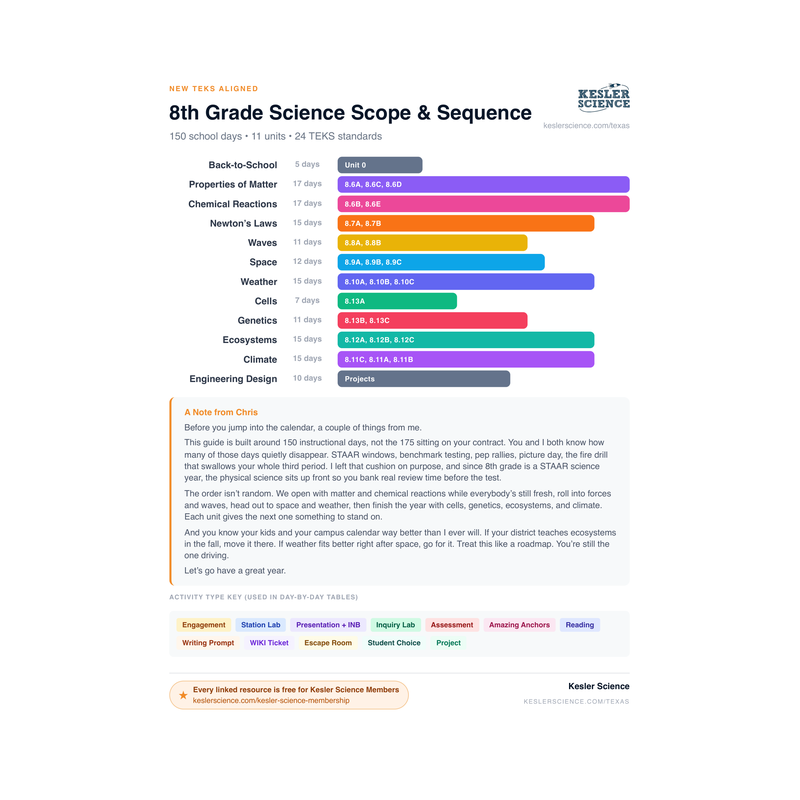
100% Aligned Lessons for Every TEKS You Teach
Kesler Science Plus puts thousands of ready-to-teach lessons and activities in your hands, so you can boost engagement and get your planning time back. Trusted by schools and districts all over the great state of Texas.
🌎 Phenomenon Ideas for 8.11C
Use these real-world phenomena to anchor your lesson. Show students the phenomenon first, let them wonder, then build toward Describing the Carbon Cycle as the explanation.
The Tree That Used to Be Air
A full-grown oak tree can weigh over 4 tons. If you ask most people where all that mass came from, they say "the soil." But scientists weighed soil before and after a tree's growth back in the 1600s and found the soil mass barely changed. The vast majority of a tree's dry mass actually comes from CO2 that the tree pulled out of the air. (Living trees also contain a lot of water drawn up through their roots.) The tree is, in a real sense, made of air.
"How can a tree be made of air? What process inside the tree's leaves takes CO2 and turns it into wood, leaves, and roots? Where does the carbon eventually go when that tree falls and rots?"
Limestone Cliffs Made From Ancient Sea Creatures
The white cliffs of Dover in England are a giant wall of limestone hundreds of feet high. Under a microscope you can see the shells of tiny sea creatures called coccolithophores embedded in the rock. Roughly 66 to 100 million years ago, those creatures pulled carbon out of seawater to build their shells. When they died, their shells piled up on the ocean floor, compressed over time, and turned into stone. Every cliff is made of locked-up carbon.
"How did carbon end up locked inside a giant cliff of rock? What path did that carbon take to get from the atmosphere into a sea creature's shell into a cliff? How long did the whole process take?"
A Jar of Decomposing Leaves
Pile a handful of fallen leaves in a clear jar with a little water and seal the lid. After a week or two in a warm spot, the leaves are slimy, dark, and smaller than they started. The jar smells like fresh dirt. Some of the leaf mass has clearly disappeared, and if you measured the air inside the jar, you'd find more CO2 than you did at the start. Decomposers have been turning leaf carbon back into atmospheric carbon.
"Where did the missing leaf mass go? Why is there more CO2 in the jar's air at the end than at the start? What does this experiment show about how dead plant material gets recycled back into the carbon cycle?"
💡 Free Engagement Ideas for 8.11C
Ready-to-run activities you can drop straight into a lesson. Where one of these looks like a phenomenon from the section above, that is on purpose: show it first as the hook, then let students run it themselves.
Carbon Atom Story Walk
Set up six stations around the room labeled atmosphere, ocean, plant, animal, soil, and fossil fuel. Each student gets a "Carbon Atom Passport." At each station, they roll a die or draw a card to see where their carbon atom moves next (e.g., from atmosphere to plant via photosynthesis, from plant to animal via eating, from animal back to atmosphere via respiration). After eight or ten moves, students write the story of their atom's journey, naming each process they passed through.
Photosynthesis vs. Respiration in Two Bottles
Set up two clear bottles. Put a sprig of fresh elodea (or any aquarium plant) plus pH indicator in one. Put just water with pH indicator and a little exhaled CO2 (have a student blow gently through a straw) in the other. Place both in bright light. The bottle with the plant should show its pH rise as photosynthesis pulls CO2 out of the water. The control stays the same. Reverse the experiment in the dark and observe respiration releasing CO2.
Carbon Cycle Diagram from Scratch
Give students a blank sheet of paper and four reservoir labels: Atmosphere, Oceans, Biosphere (Living Things), Lithosphere (Rocks/Fossil Fuels). They draw and label each reservoir, then draw arrows between them with the names of the processes that move carbon (photosynthesis, respiration, decomposition, combustion, ocean exchange). At the end, partners trade papers, check each other's arrows, and add anything missing. Forces them to put the cycle together themselves rather than copying a diagram off the board.
Fossil Fuel Time Machine
Show students a piece of coal, a sample of crude oil (or a photo), and a card describing natural gas. Tell them this carbon was pulled out of the atmosphere by living things hundreds of millions of years ago. Have them work in groups to draw a timeline showing the path of one carbon atom from the atmosphere of the dinosaur era, into a plant, into the ground, into a coal seam, and into the atmosphere today as CO2 from a power plant. Ties the carbon cycle directly to climate change without making it a debate.
🎯 What Approaches, Meets, and Masters Thinking Look Like
Here is what student thinking at each level looks like on this one task, so you know what to look for and how to move a student up.
Draw a diagram of the carbon cycle that shows all four major reservoirs where carbon is stored: the atmosphere, the oceans, the biosphere (living things), and the lithosphere (rocks, soil, and fossil fuels). Then describe how carbon moves from one reservoir to another, naming the process that does the moving in each case (photosynthesis, cellular respiration, decomposition, ocean uptake, and combustion).
- All four reservoirs labeled on the diagram: atmosphere, oceans, biosphere, and lithosphere (including fossil fuels), not just air and plants.
- Arrows that connect reservoirs in both directions, showing carbon moving in and out, not a one-way path.
- Photosynthesis named as the process that pulls CO2 out of the atmosphere and into plants.
- Cellular respiration and decomposition named as processes that return carbon to the atmosphere as CO2.
- Combustion (wildfires and burning fossil fuels) shown moving carbon from the biosphere or lithosphere back into the air.
- An explanation that treats this as a cycle: the same carbon keeps moving, nothing is stored permanently.
- The oceans and the lithosphere handled as real reservoirs, not left out. Those are the two students forget most often.
Carbon is in the air as CO2. Plants take in the CO2 from the air using photosynthesis and store the carbon inside them. That's where carbon lives, in the air and in the plants.
Carbon is stored in four reservoirs: the atmosphere as CO2, the oceans as dissolved CO2, the biosphere in living plants and animals, and the lithosphere in rocks, soil, and fossil fuels. Plants take CO2 from the air through photosynthesis. Animals eat the plants, and both plants and animals release CO2 back through cellular respiration. When they die, decomposers break them down and release more CO2. The ocean absorbs CO2 from the air at the surface. When fossil fuels or forests burn, combustion sends carbon back into the air. It's a cycle because the carbon keeps moving and doesn't stay in one place.
The four reservoirs are the atmosphere, oceans, biosphere, and lithosphere, and processes like photosynthesis, respiration, decomposition, ocean uptake, and combustion move carbon between them. What makes it a cycle is that the same carbon keeps cycling, just on different timescales.
I traced one carbon atom to show that. It starts as CO2 in the air, dissolves into the ocean, and gets used by tiny plankton to photosynthesize. A small sea animal builds it into a calcium carbonate shell. When that animal dies, the shell sinks and slowly turns into limestone rock in the lithosphere, where it can sit for millions of years. Much later, when that rock gets heated deep underground, a volcano can erupt and send the carbon right back into the atmosphere as CO2. So the ocean and the rock aren't dead ends, they're slow lanes of the same cycle.
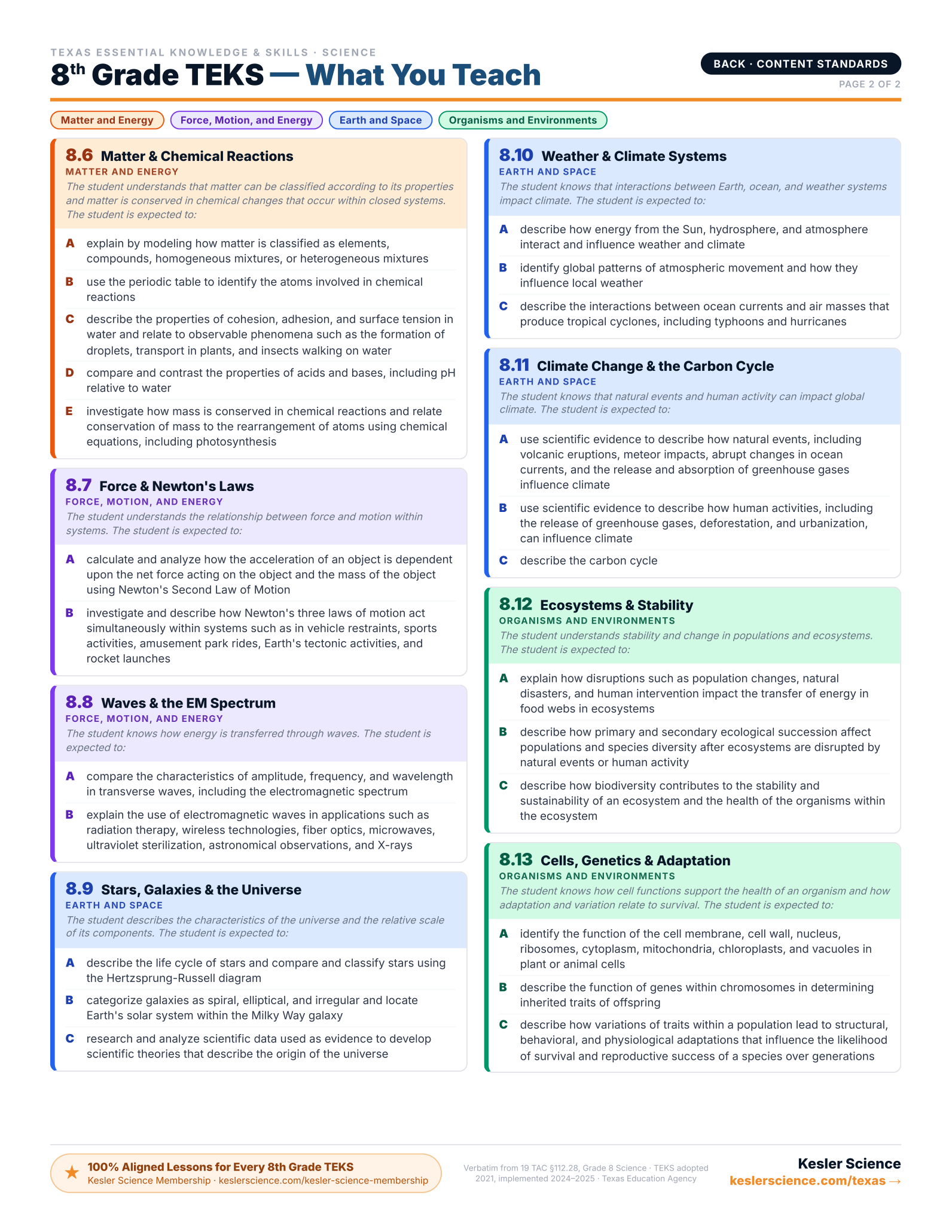
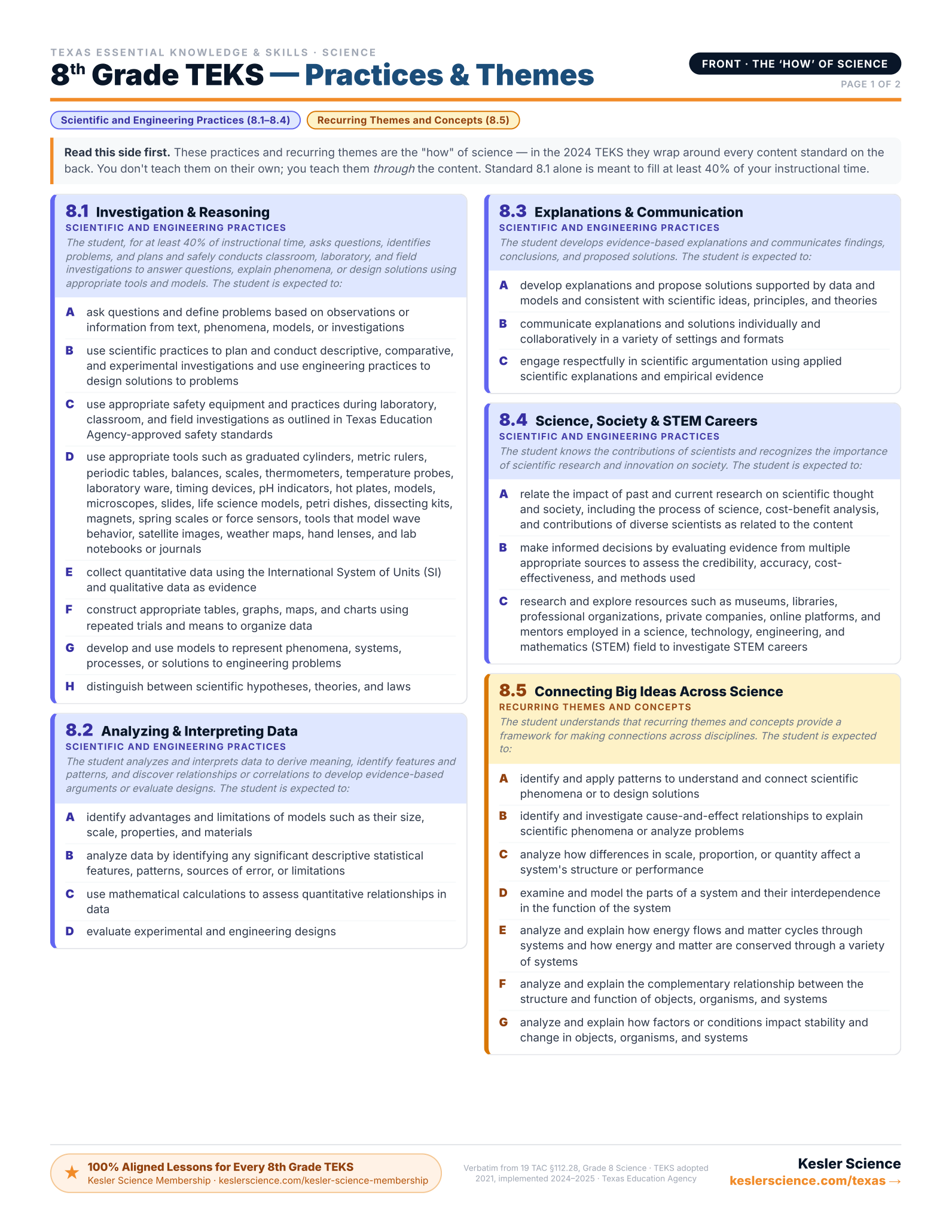
Every 8th-Grade Science TEKS on One Page
The color-coded, front-and-back cheat sheet I wish I'd had — every standard, organized by reporting category. Print it and reference it all year long. This will be your new favorite document!
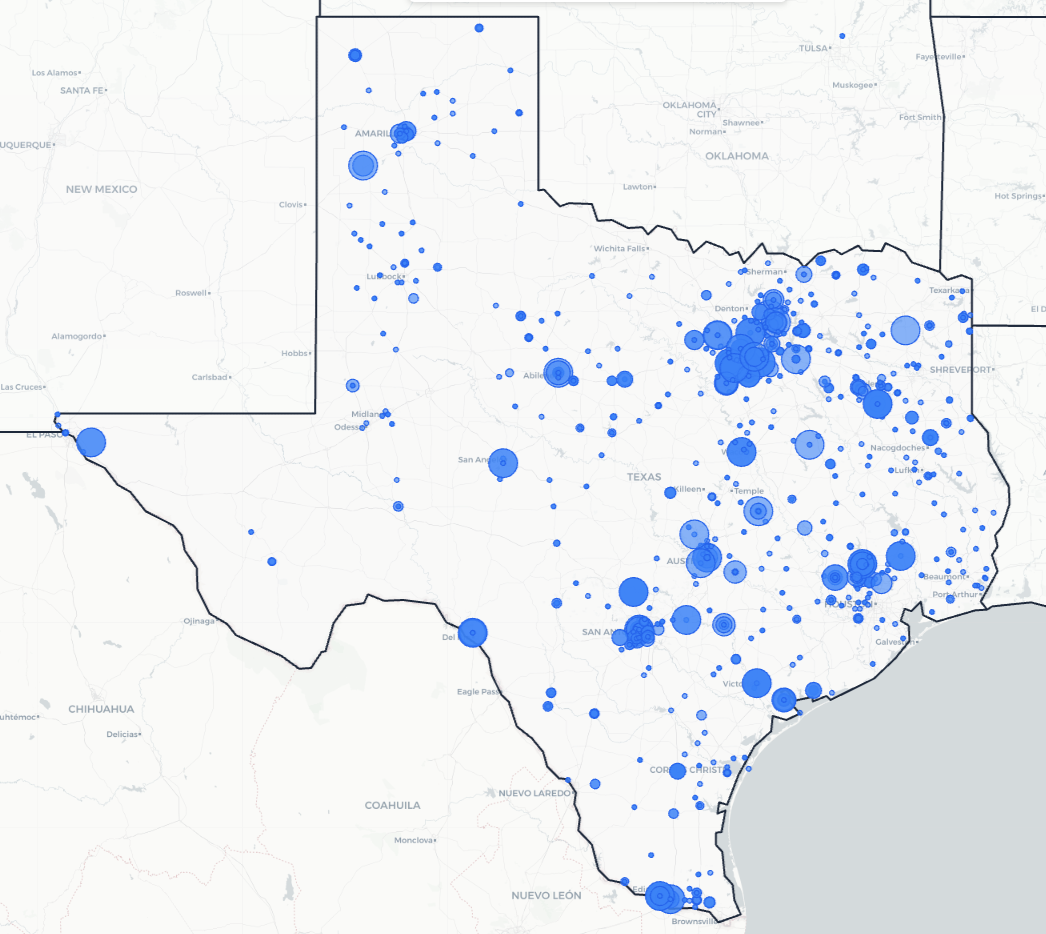
Trusted Across Texas
From the Rio Grande Valley to the Panhandle, Texas science teachers are using Kesler Science to save time and engage students.
Texas Schools and Districts
Love Kesler Science
What Teachers Are Saying
Give Your Science Teachers Everything They Need
School and district licenses give your teachers access to every resource they need, including station labs, inquiry labs, anchoring phenomena, presentations, escape rooms, and much more. One purchase covers the grade levels you need.
- PO-friendly. We accept purchase orders
- Volume discounts for 11+ teachers
- Complimentary Kesler Science Plus orientation for 4+ teachers
- Three free implementation PD sessions for departments of 11+
- Aligned to the 2024 TEKS standards
See It in Action
Book a walkthrough and we'll show you how Kesler Science fits your campus.
Book Demo CallNo pressure, no hard sell