.png?width=375&height=100&name=WebPage%20logo%20with%20curves%202026%20(8).png)
Conservation in Reactions
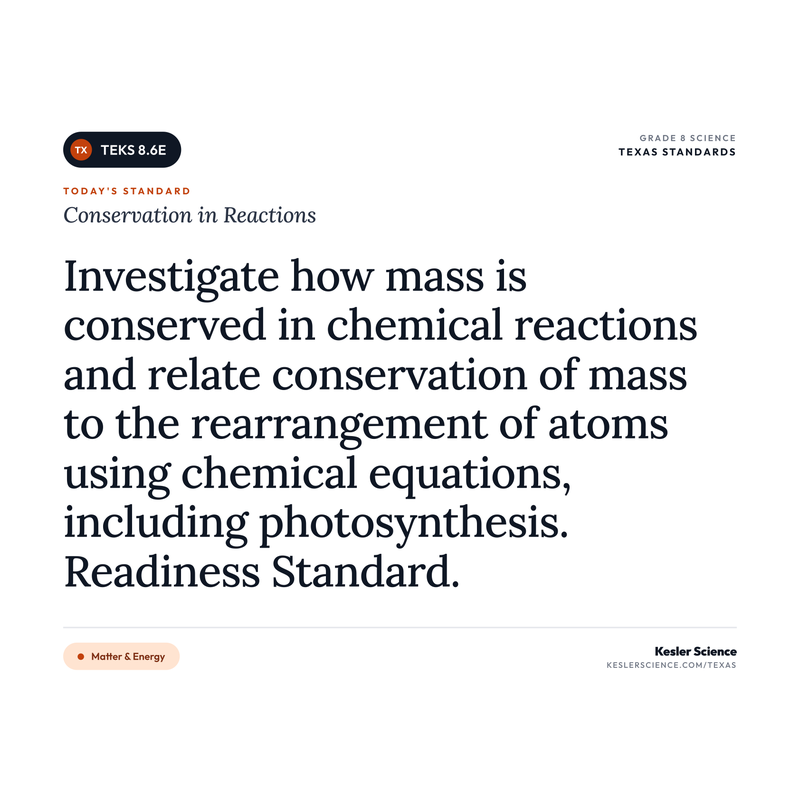
"Investigate how mass is conserved in chemical reactions and relate conservation of mass to the rearrangement of atoms using chemical equations, including photosynthesis."
💡 What This Standard Actually Means
"Investigate and relate". Students run reactions, measure mass, and then relate what they see back to the rearrangement of atoms using a chemical equation. The standard's "including" list signals what's required, not optional: students must work with photosynthesis (6CO2 + 6H2O → C6H12O6 + 6O2) as one of the reactions they balance and explain. Whatever reaction they investigate, the goal is the same: students should be able to point at a balanced equation and say "the atoms on the left match the atoms on the right, so mass is conserved." Instruction can take many forms, such as atom counts, before-and-after diagrams, and bar scales of mass.
The Law of Conservation of Mass says matter is neither created nor destroyed in a chemical reaction. The atoms that start the reaction are all still there at the end. They're just rearranged into new combinations. Antoine Lavoisier (late 1700s) is the scientist most associated with this law, which became a foundation for modern chemistry.
A balanced chemical equation shows that equal atom count: the same number of each atom on both sides. If 4 hydrogen atoms and 2 oxygen atoms go in (as in 2H2 + O2), they should be able to find 4 hydrogens and 2 oxygens somewhere in the products (in 2H2O). Balancing an equation means adding coefficients (the big numbers in front of the formulas) so each side has the same count of every element. The subscripts (the small numbers inside a formula) cannot be changed to balance an equation, because changing a subscript changes the substance itself. H2O is water. H2O2 is hydrogen peroxide. Different formula, different substance.
The core understanding students should walk away with is that atoms get rearranged in reactions, but the total count of each type of atom (and therefore the total mass) stays the same. A balanced equation is how chemists prove it on paper. The TEKS specifically calls out photosynthesis as a required example on this page, so students should be comfortable counting atoms on both sides of 6CO2 + 6H2O → C6H12O6 + 6O2 and explaining how a tree's mass comes mostly from the air (the carbon pulled from CO2 during photosynthesis), not the soil.
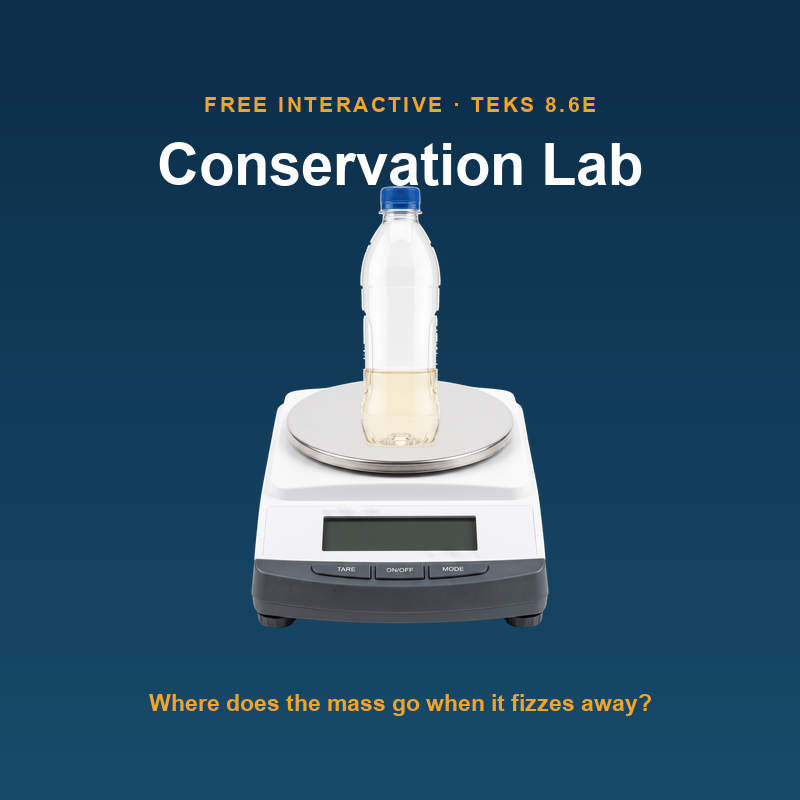
I used to introduce conservation of mass with the baking soda and vinegar reaction in an open cup. Students would mass it before and after and then get confused because the mass went down. That's my fault for not sealing the bag. The fix that changed everything was doing the same reaction in a sealed zip-top bag. Mass before, mass after, identical within a gram. Then I'd open the bag and let the gas out, and mass it again. Now it's lighter. The atoms didn't disappear, they just floated out of the container. That contrast drove the concept home in a way no lecture ever could.
⚠️ Misconceptions Your Students May Have
These are some of the most common misconceptions. Knowing what to look for can help you get ahead of them.
"When something burns, the mass is destroyed"
When a piece of paper burns, the mass doesn't vanish. The carbon and hydrogen in the paper combine with oxygen from the air and form carbon dioxide and water vapor, which float away as gas. If you could catch every bit of ash, smoke, and gas and weigh it with the oxygen that was consumed, the total mass would match the starting materials.
"You can balance an equation by changing the subscripts"
This is one of the biggest errors students make. Subscripts are part of the chemical formula, and changing them changes the substance itself. H2O is water. H2O2 is hydrogen peroxide, which is a completely different compound. Balancing is done by adjusting coefficients, the big numbers placed in front of each formula, not by rewriting the formulas themselves.
"Gas isn't really matter, so it doesn't count toward the mass"
Gases are matter. They have mass and take up space. A balloon full of air weighs more than an empty balloon. When a reaction produces or consumes a gas, that gas must be counted in the mass total. Sealing the reaction in a bag or closed flask is the best way to show students this in the classroom.
"A chemical reaction creates brand new atoms"
Chemical reactions rearrange existing atoms into new combinations. They do not create or destroy atoms. If 4 hydrogen atoms and 2 oxygen atoms react (as in 2H2 + O2 → 2H2O), the products will still contain 4 hydrogens and 2 oxygens, just rearranged into new molecules. This is literally the point of a balanced equation.
📓 Teaching Resources for 8.6E
These resources are aligned to this standard.


100% Aligned Lessons for Every TEKS You Teach
Kesler Science Plus puts thousands of ready-to-teach lessons and activities in your hands, so you can boost engagement and get your planning time back. Trusted by schools and districts all over the great state of Texas.
🌎 Phenomenon Ideas for 8.6E
Use these real-world phenomena to anchor your lesson. Show students the phenomenon first, let them wonder, then build toward Conservation in Reactions as the explanation.
Burning a Marshmallow
Hold a marshmallow over a flame and it puffs up, turns brown, and shrinks to a charred blob. Most of the original marshmallow seems to be gone. If you weigh the burned piece, it's lighter than when you started. At first glance, it looks like mass was destroyed.
"Where did the rest of the marshmallow go? If atoms can't be created or destroyed in a chemical reaction, what must have happened to the material that seems missing?"
Where Does the Mass of a Tree Come From?
A massive oak in the front yard weighs thousands of pounds. Ask students where all that wood came from and most of them will say "the soil" or "the roots." Back in the 1600s a scientist named Jan van Helmont planted a small willow in a pot, weighed the soil, watered it for five years, and weighed everything again. The tree had gained over 160 pounds. The soil had lost about 2 ounces. The wood didn't come from the dirt. It came from the air, through photosynthesis: 6CO2 + 6H2O → C6H12O6 + 6O2.
"If almost none of a tree's mass comes from the soil, where do the atoms in the wood actually come from? Use the photosynthesis equation to explain how mass is conserved when a tree grows."
Baking Soda and Vinegar in a Sealed Bag
Put baking soda and vinegar in a sealed zip-top bag. Weigh the whole thing. Mix them. The bag puffs up with gas. Weigh it again. The mass is the same. Now open the bag and let the gas out, then weigh it. The mass has dropped. The reaction didn't "lose" anything. The gas just escaped the container.
"Why does the mass stay the same in the sealed bag but change when the bag is opened? What does this tell you about what's happening to the atoms during the reaction?"
💡 Free Engagement Ideas for 8.6E
Ready-to-run activities you can drop straight into a lesson. Where one of these looks like a phenomenon from the section above, that is on purpose: show it first as the hook, then let students run it themselves.
Sealed Bag Reaction Challenge
Give each group a zip-top bag, a spoonful of baking soda, plus a small open cup of vinegar set upright inside the same bag (so the two do not mix until you tip the cup over). Mass it on a digital scale. Seal the bag, then tip the cup to mix. Mass it again while the bag is puffed up. The numbers should match. Now open the bag, let the gas escape, and mass it a third time.
Atom Count with Paperclips
Use two colors of paperclips to represent hydrogen and oxygen. Students build "reactants" on one side of a line and "products" on the other. Start with a simple unbalanced equation and have students add coefficients (represented by additional paperclip molecules) until the counts match. Makes balancing tactile.
Photosynthesis Atom-Count Showdown
Write the photosynthesis equation across the top of a piece of paper: 6CO2 + 6H2O → C6H12O6 + 6O2. Give each group three colors of dot stickers (or markers): one for carbon, one for hydrogen, one for oxygen. Students draw or stick the correct number of atoms for every molecule on the reactant side, then do the same on the product side. They tally each element and prove it matches: 6 C, 18 O, and 12 H on each side. Once they see it, have them try the same atom-count check on cellular respiration (the reverse equation) so they realize it works both directions.
Coefficient vs. Subscript Sort
Write a dozen chemical formulas on index cards, some correct and some with subscripts secretly changed. Give each pair a reference list of the correct formulas so they can compare each card, flag the ones with a changed subscript, and write out which atom count is different. Reinforces that subscripts define the substance and cannot be changed to balance an equation.
🎯 What Approaches, Meets, and Masters Thinking Look Like
Here is what student thinking at each level looks like on this one task, so you know what to look for and how to move a student up.
A student seals a small piece of paper inside a glass jar, sets the jar on a balance, and records the mass. She burns the paper inside the sealed jar. When the smoke settles and she weighs it again, the balance reads exactly the same. Explain what happened to the atoms inside that jar, and why the mass did not change. Then count the atoms of each element on both sides of the photosynthesis equation 6CO2 + 6H2O → C6H12O6 + 6O2. Use your counts to explain how a balanced equation shows the same thing the balance showed.
- A clear statement that mass is conserved: the total mass before the reaction equals the total mass after.
- An explanation tied to atoms, that the atoms are rearranged into new substances, not created or destroyed.
- An accurate atom count of the photosynthesis equation, showing the same number of each element on both sides (6 carbon, 18 oxygen, 12 hydrogen).
- Recognition that gases count as matter, so the gas leaving (or being made) is part of the mass total.
- The idea that a balanced equation is the proof: equal atom counts on each side means equal mass.
- Use of coefficients to balance, with subscripts left alone because changing them changes the substance.
- The burning case handled correctly: the mass did not vanish, the gas produced is trapped in the sealed jar. That is the easiest place to slip.
In photosynthesis the carbon dioxide and water turn into sugar and oxygen. I counted the atoms and they are pretty much the same on both sides. But when the paper burns, some of the mass is destroyed, because the paper turns into ash and smoke and the ash weighs way less than the paper did.
The mass stayed the same because the jar was sealed, so the gas from the burning paper got trapped instead of floating away. The atoms in the paper just rearranged into carbon dioxide and water vapor, but they are all still in the jar, so the balance did not change. In photosynthesis I counted the atoms: 6 carbon, 18 oxygen, and 12 hydrogen on the left, and the same 6 carbon, 18 oxygen, and 12 hydrogen on the right. The equation is balanced, which means no atoms were created or destroyed. That is how I know mass is conserved.
Nothing was destroyed in that jar. Burning rearranged the atoms in the paper into carbon dioxide and water vapor, and because the jar was sealed, every one of those atoms was still inside when she weighed it. The balance could not change, because the same atoms were sitting on it before and after, just bonded differently.
The photosynthesis equation shows the same rule in symbols. Left side: 6 carbon, 18 oxygen, 12 hydrogen. Right side: 6 carbon, 18 oxygen, 12 hydrogen. Same atoms, different molecules. The coefficients are what balance it, not the subscripts, because changing a subscript would make it a different substance.
This is also why a reaction can look like it breaks the rule when it does not. Leave steel wool out in the open and it gets heavier as it rusts, because oxygen atoms from the air join the iron, and that oxygen has mass too. Nothing was created. The mass that looks “new” walked in from outside. It is the burning paper in reverse, gas going in instead of coming out. Either way you have to weigh the whole system to see that mass was conserved the whole time.
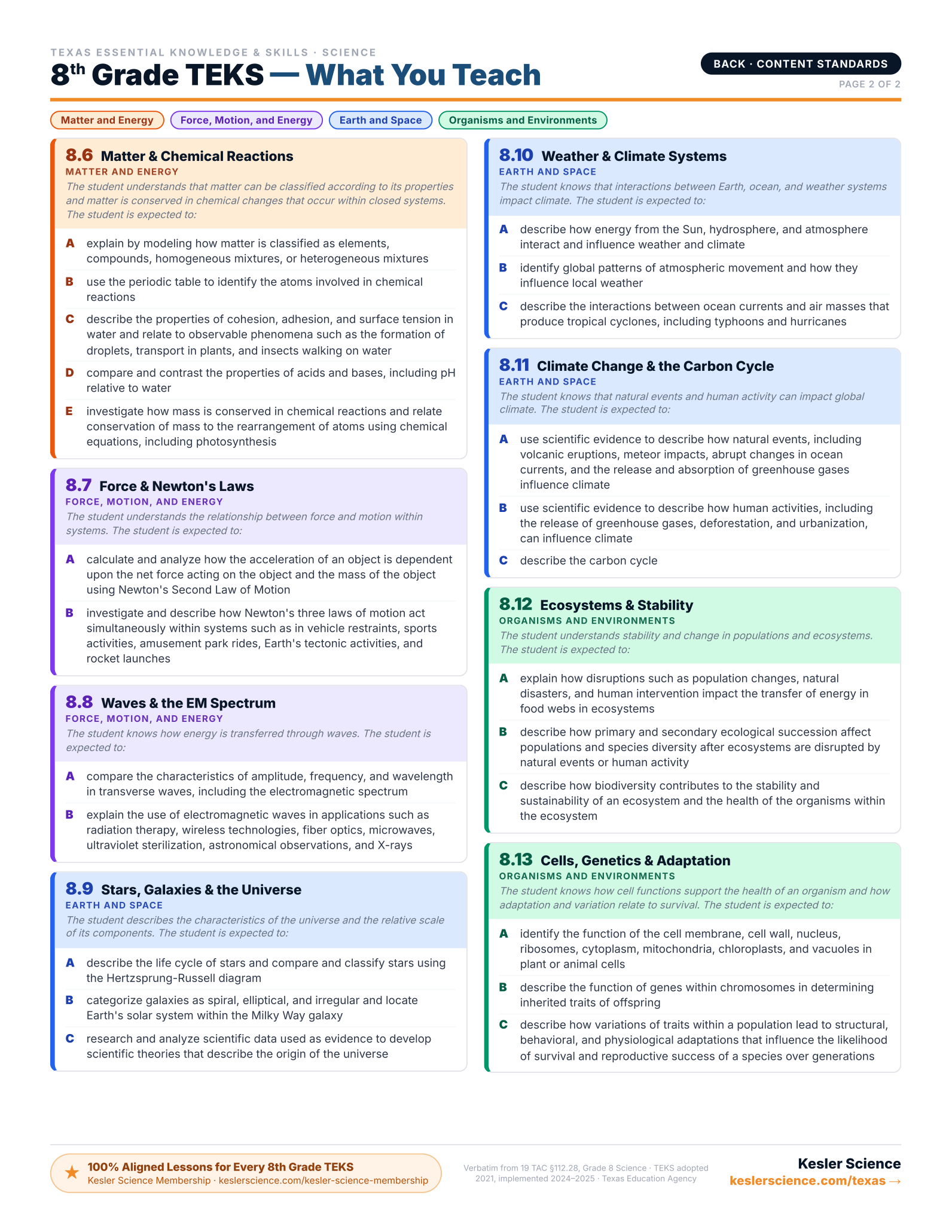
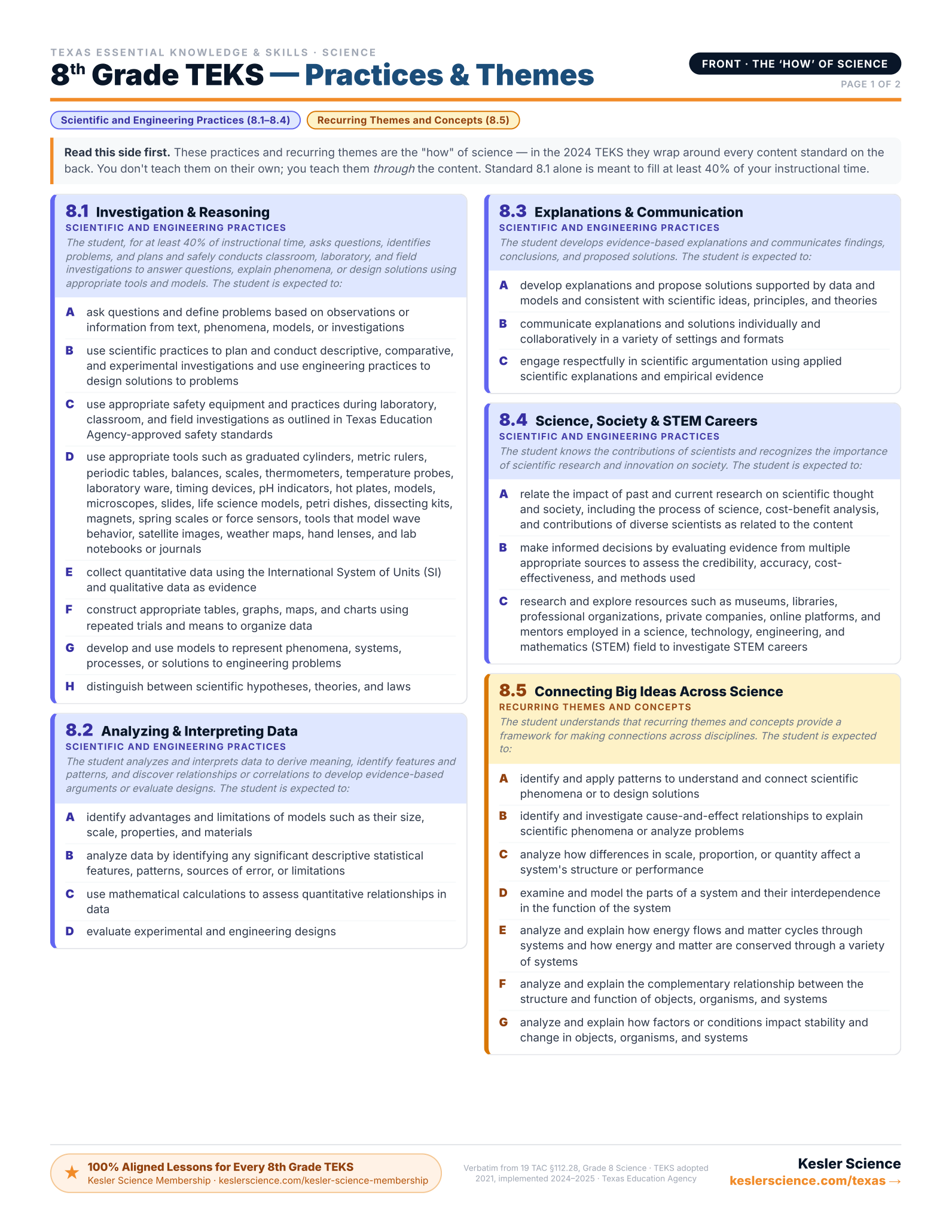
Every 8th-Grade Science TEKS on One Page
The color-coded, front-and-back cheat sheet I wish I'd had — every standard, organized by reporting category. Print it and reference it all year long. This will be your new favorite document!
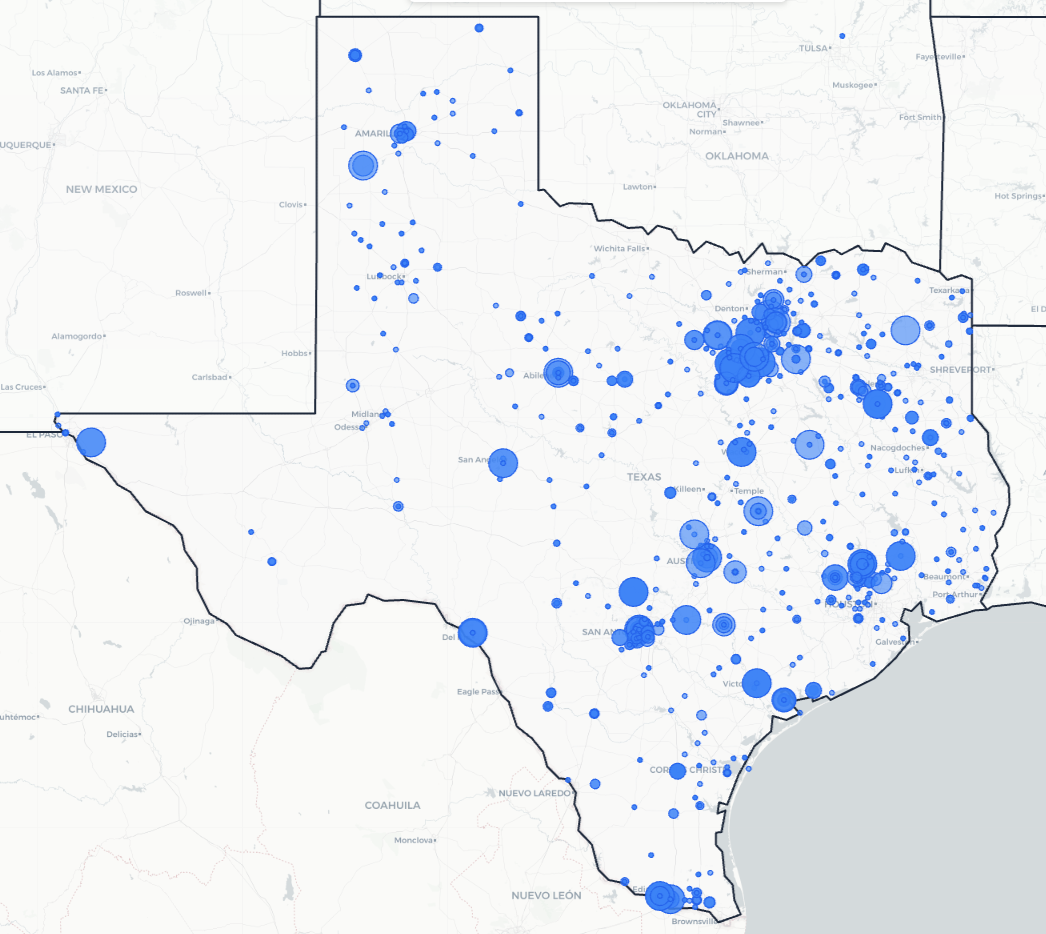
Trusted Across Texas
From the Rio Grande Valley to the Panhandle, Texas science teachers are using Kesler Science to save time and engage students.
Texas Schools and Districts
Love Kesler Science
What Teachers Are Saying
Give Your Science Teachers Everything They Need
School and district licenses give your teachers access to every resource they need, including station labs, inquiry labs, anchoring phenomena, presentations, escape rooms, and much more. One purchase covers the grade levels you need.
- PO-friendly. We accept purchase orders
- Volume discounts for 11+ teachers
- Complimentary Kesler Science Plus orientation for 4+ teachers
- Three free implementation PD sessions for departments of 11+
- Aligned to the 2024 TEKS standards
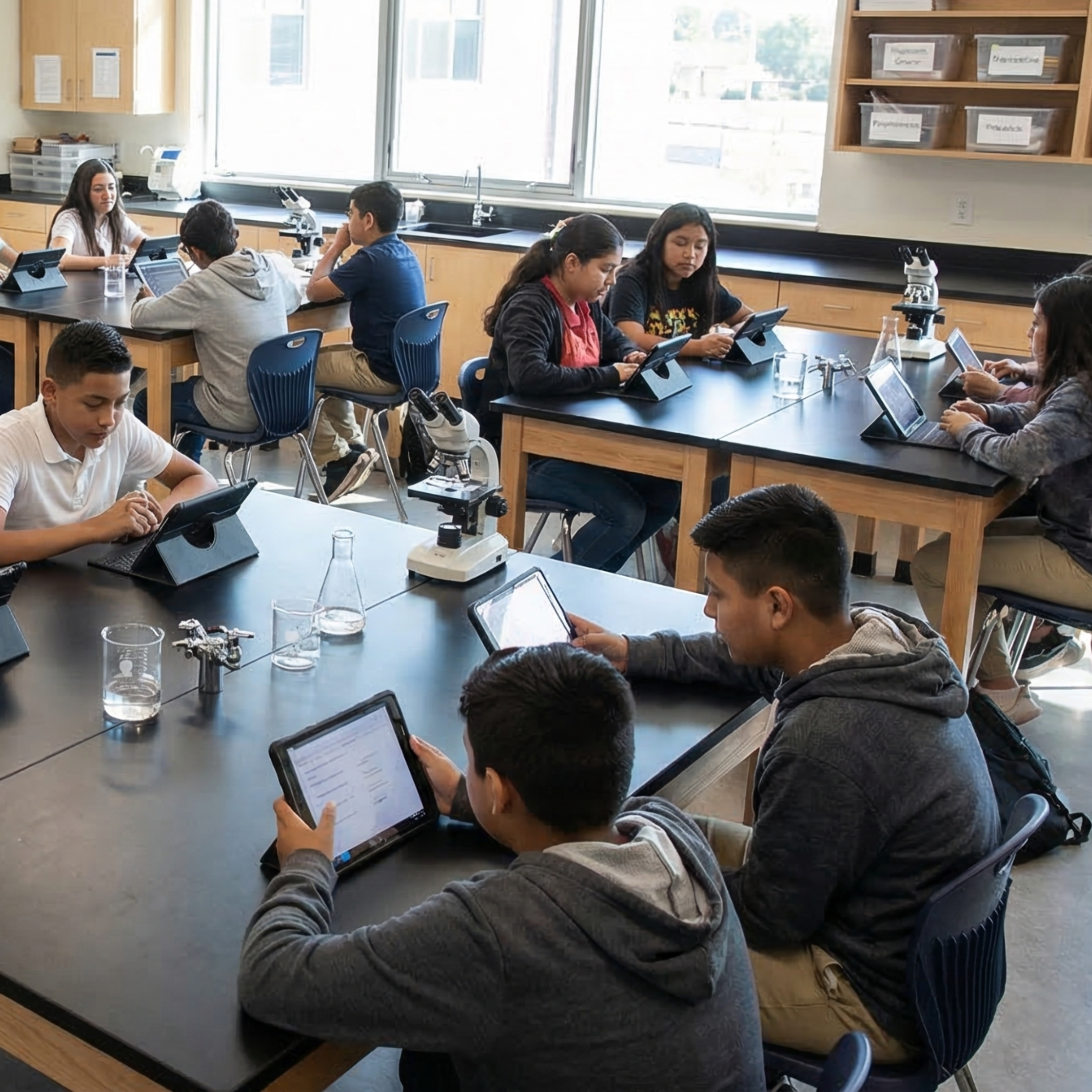
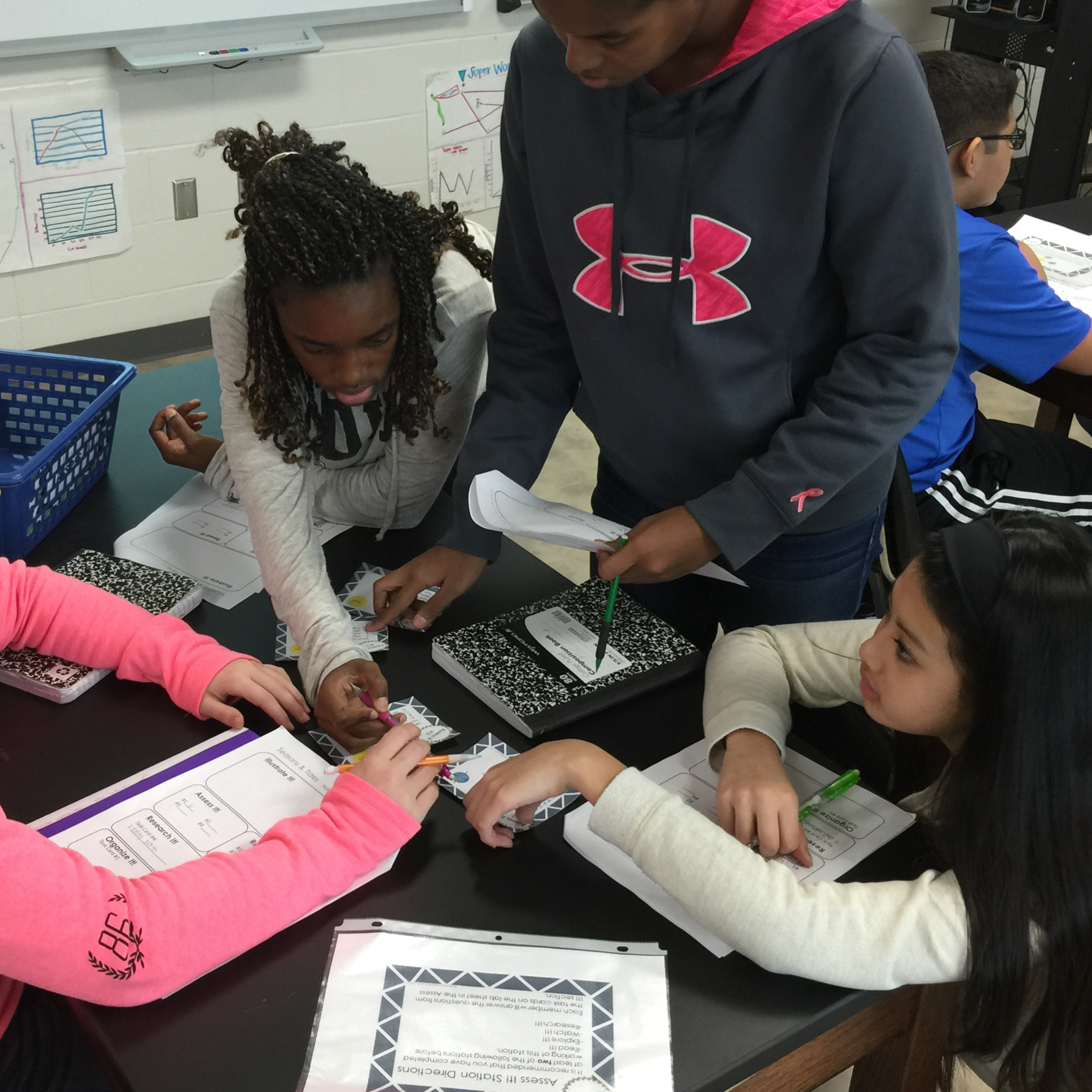
See It in Action
Book a walkthrough and we'll show you how Kesler Science fits your campus.
Book Demo CallNo pressure, no hard sell