.png?width=375&height=100&name=WebPage%20logo%20with%20curves%202026%20(8).png)
Energy Transfer in Motion, Waves & Sound
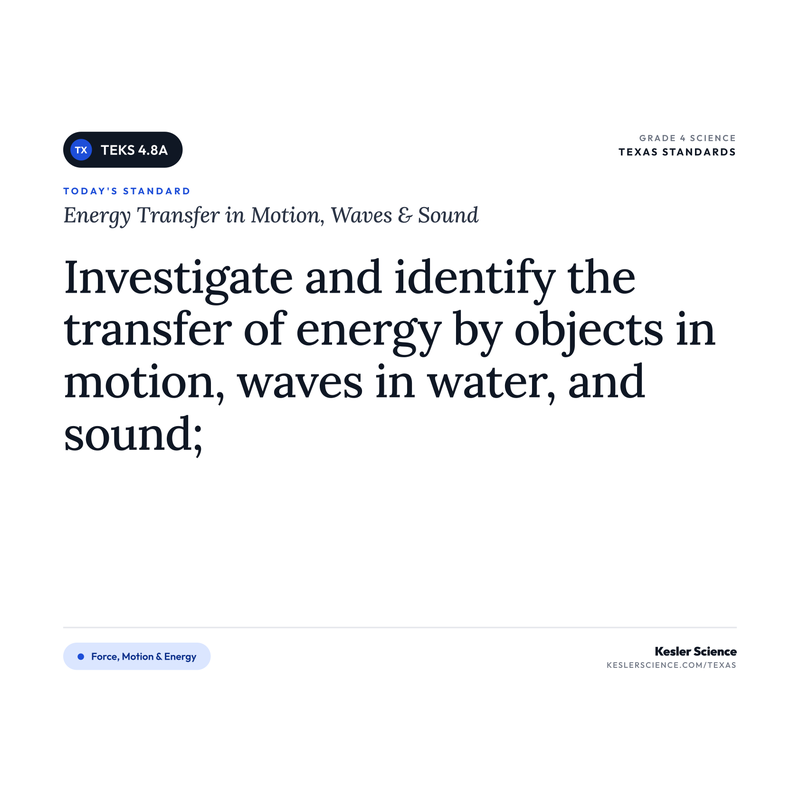
"Investigate and identify the transfer of energy by objects in motion, waves in water, and sound;"
💡 What This Standard Actually Means
"Investigate and identify". Fourth graders are doing the experiments first, then putting names on what they saw. The standard names three places where energy gets transferred from one thing to another: objects in motion (a rolling marble bumps into another marble and sends it flying), waves in water (a rock dropped in a puddle sends ripples to the edge), and sound (a clap travels through the air to your ears). All three are examples of energy moving from one place to another. The investigations show kids that energy doesn't appear out of nowhere. It gets passed along.
Energy is invisible. That's the challenge with this standard. You can't hold up a jar of energy and say "look at this." But you can absolutely show energy being transferred from one thing to another, and that's exactly what 4.8A asks for. The TEKS picks three perfect examples that 4th graders can see, hear, and feel.
Objects in motion is the easiest one to spot. Roll a marble across the desk into another marble. The first marble stops. The second marble starts moving. The energy of motion got transferred from the first to the second. Same thing happens when a kid kicks a soccer ball or when a domino falls and knocks over the next one in line. Waves in water shows the same thing in a different way. Drop a pebble in a calm tub of water. Ripples spread out in circles. The energy from the falling pebble traveled across the water as waves. Sound is the third example. Clap your hands. The energy from your hands pushed the air into a wave that traveled across the room and hit your ear, and that's why you heard it.
By the end of this unit, kids should be able to look at a moving marble, a rippling pond, or a buzzing speaker and explain that energy is being transferred from something to something else. They don't need to define energy in physics terms. They just need to recognize that something started the transfer and something else received it.
The demo I'd lead with for this standard is the marble-train demo. Line up five marbles touching each other in a row. Roll one extra marble into one end of the line. Watch what happens. The marble you rolled stops cold. The marble at the OTHER end shoots out. The energy traveled all the way through the line of marbles without the middle marbles even moving. Kids lose their minds over this every single time. It opens up a great conversation about how energy moves through stuff. From there, I'd connect it to dropping a rock in water (energy ripples out from one place to another) and clapping (energy travels through the air). Same big idea, three different examples. The TEKS gives you all three. Use all three.
⚠️ Misconceptions Your Students May Have
These are some of the most common misconceptions. Knowing what to look for can help you get ahead of them.
"Energy is something only batteries and outlets have"
Anything in motion has energy. A rolling ball, a falling raindrop, a spinning fan, your foot kicking a soccer ball. Sound has energy too. Waves in water have energy. Energy comes in lots of forms, not just electricity. Whenever something moves something else, energy is being transferred.
"In a wave, the water itself travels across the pond"
The water mostly stays in place. The energy is what travels. Drop a leaf on the surface of a pond and drop a pebble nearby. The waves spread out, but the leaf just bobs up and down where it started. It doesn't ride the wave to shore. The wave is energy moving through the water, not water moving across the pond.
"Sound just appears out of nowhere"
Sound always starts with something vibrating. Vocal cords. A guitar string. The skin of a drum. The vibration pushes the air around it into a wave, and the wave carries the energy to your ears. Touch the front of a speaker while music is playing. You can feel the vibration that's making the sound. No vibration, no sound.
"When two objects collide, the energy disappears"
The energy doesn't disappear. It gets transferred. When a moving marble hits a still marble, the first marble stops because its energy went into the second marble, which now starts moving. Some energy might also turn into a clicking sound (which is energy too) or a tiny bit of heat. The total amount of energy stays the same. It just moves around.
📓 Teaching Resources for 4.8A
These resources are aligned to this standard.


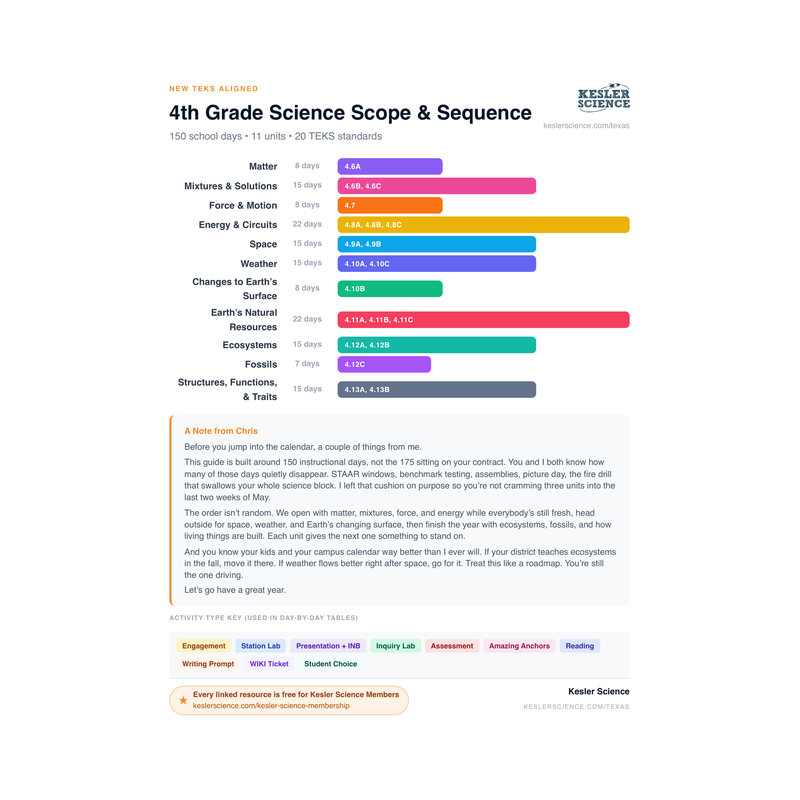
100% Aligned Lessons for Every TEKS You Teach
Kesler Science Plus puts thousands of ready-to-teach lessons and activities in your hands, so you can boost engagement and get your planning time back. Trusted by schools and districts all over the great state of Texas.
🌎 Phenomenon Ideas for 4.8A
Use these real-world phenomena to anchor your lesson. Show students the phenomenon first, let them wonder, then build toward Energy Transfer in Motion, Waves & Sound as the explanation.
The Marble Pass
Line up five marbles in a straight track (fold a piece of cardboard lengthwise into a V, or tape two rulers side by side with a small gap between them). Push them tight against each other so they all touch. Now roll one more marble into the end of the line. The marble you pushed stops. The middle marbles don't move. The marble at the very end shoots out by itself. The energy traveled all the way down the line.
"How did the marble at the far end start moving when nothing actually pushed it directly? What got passed from marble to marble?"
The Ripple Tank Story
Fill a clear baking pan with about an inch of water. Float a small piece of paper or a leaf in the middle. Drop a marble into one corner of the pan. Watch the ripples spread out in circles, hit the paper, and make it bob up and down. The paper rocks but doesn't travel. The ripples carry the energy across the water from the marble's splash to the paper.
"Why did the paper bob without floating across the pan? If the water itself didn't travel, what was traveling instead?"
The Speaker You Can Feel
Play music through a speaker with the bass turned up. Pour a small puddle of uncooked rice on a pan. Place the pan on top of the speaker. The rice grains start jumping and dancing all over the pan, even though nothing is touching them except the pan itself. The sound's energy is shaking the speaker, which shakes the pan, which shakes the rice.
"You can hear the music with your ears AND see it move the rice with your eyes. What does this tell you about sound? Why does louder music make the rice jump higher?"
💡 Free Engagement Ideas for 4.8A
Ready-to-run activities you can drop straight into a lesson. Where one of these looks like a phenomenon from the section above, that is on purpose: show it first as the hook, then let students run it themselves.
Marble Energy Transfer Lab
Each group gets a track (a folded piece of cardboard or two rulers taped together), five marbles, and a recording sheet. They run three tests: roll one marble into one stationary marble, roll one into a line of two, roll one into a line of four. Each time, they record how many marbles got knocked out the other end. The pattern shows energy transferring through the line.
Ripple Tank Investigation
Each group gets a clear baking pan with about an inch of water. They drop a small object (marble, paperclip, plastic bottle cap) from a low height and from a high height, and observe the ripples each time. They draw what they see and answer: "When did the ripples carry more energy? How could you tell?" Higher drop = bigger waves = more energy.
Sound Vibration Stations
Three stations show sound as energy. Station 1: kazoos or rubber-band-on-a-shoebox guitars (feel the vibration). Station 2: a tuning fork dipped in a cup of water (it splashes the water). Station 3: a balloon held to a speaker (vibrates against your hand). At each station, kids draw what they observed and write one sentence about how the energy of the sound is moving stuff.
Domino Energy Chain
Give each group 30 dominoes. They build a domino chain across the table. Push the first one over and watch the energy travel down the line, knocking over every domino. Then they design a chain with at least one corner turn and try again. Connects to "objects in motion" while letting kids actually see energy travel from one object to the next, all the way down the row.
🎯 What Approaches, Meets, and Masters Thinking Look Like
Here is what student thinking at each level looks like on this one task, so you know what to look for and how to move a student up.
A student rolls a marble across the table. It hits a second marble that is sitting still. The first marble stops. The second marble starts rolling away. Explain what happened to the energy. Where did it come from, and where did it go?
- A clear statement that the first marble was moving, so it had energy.
- Notices that the first marble stopped after it hit the second one.
- Notices that the second marble started moving after it got hit.
- Uses the word transfer, or says the energy moved from one marble to the other.
- Connects the cause and the effect: the second marble moves because the first marble gave it energy.
- Understands that the energy did not vanish when the first marble stopped. It went into the second marble.
- That last idea (the energy did not disappear, it moved) is the part that takes real reasoning. It is the easiest place to slip.
The first marble was rolling fast. Then it hit the other marble and stopped. The first marble's energy got used up when it stopped. The second marble started rolling because it got pushed.
The first marble had energy because it was moving. When it hit the second marble, the energy got transferred to it. That is why the first marble stopped and the second one started rolling. The energy did not get used up. It moved from the first marble into the second marble.
The first marble was moving, so it had energy. When it hit the still marble, it passed its energy to it. The first one stopped and the second one took off. The energy was not lost. It just moved to a new place.
This is the same thing that happens with dominoes. When the first domino falls, it bumps the next one and passes the energy down the whole row. Each domino gives its energy to the next one. The energy keeps getting transferred from one object to the next, just like it did with the marbles.
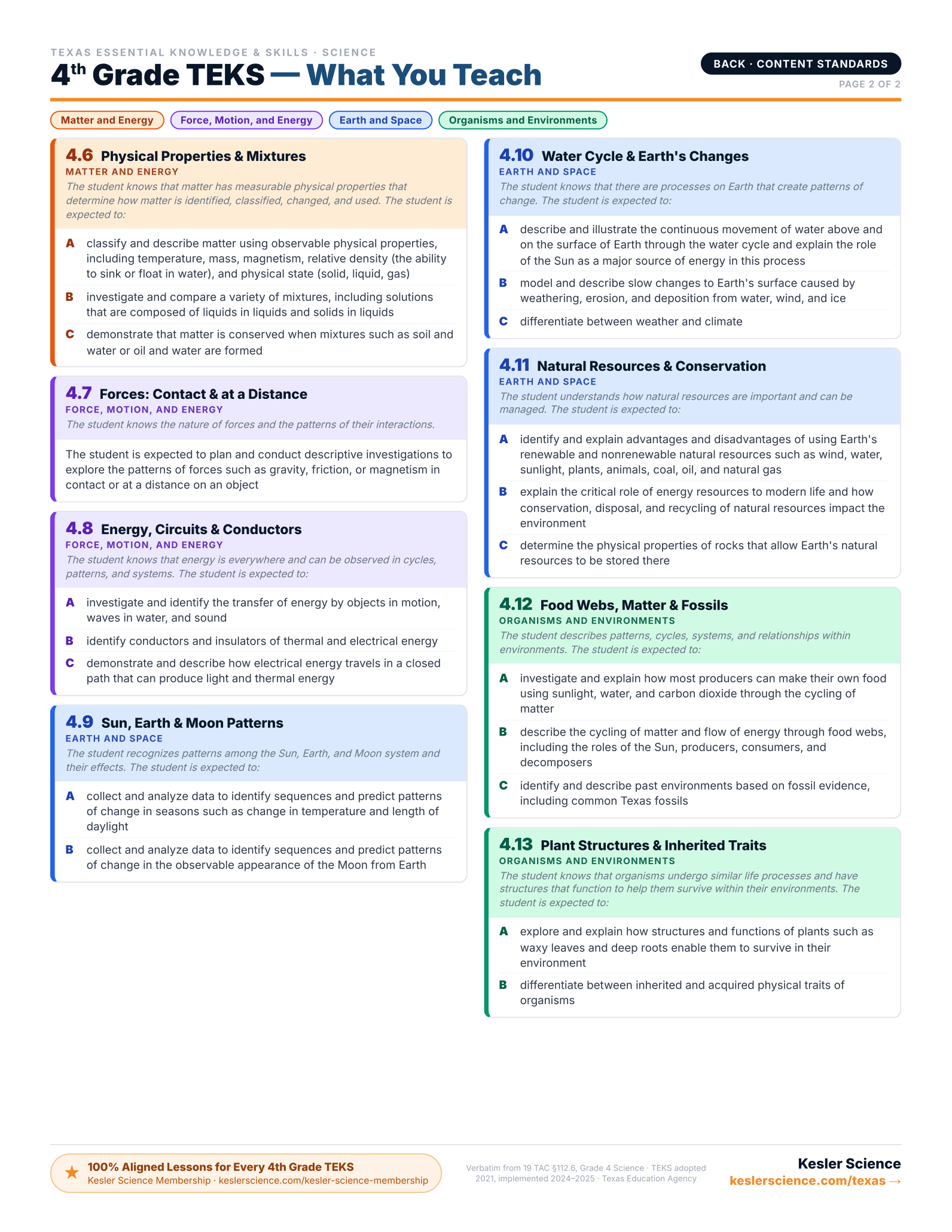
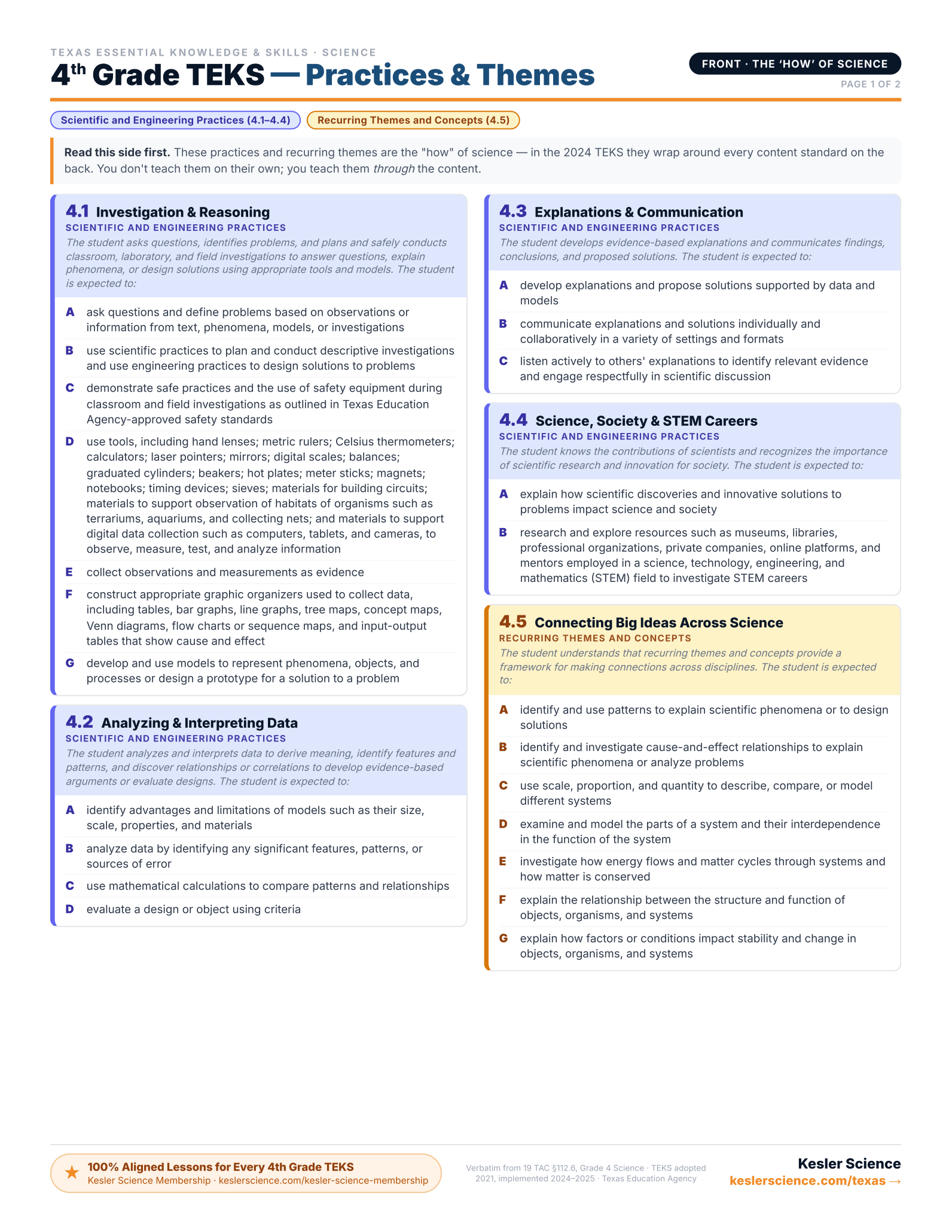
Every 4th-Grade Science TEKS on One Page
The color-coded, front-and-back cheat sheet I wish I'd had — every standard, organized by reporting category. Print it and reference it all year long. This will be your new favorite document!
Trusted Across Texas
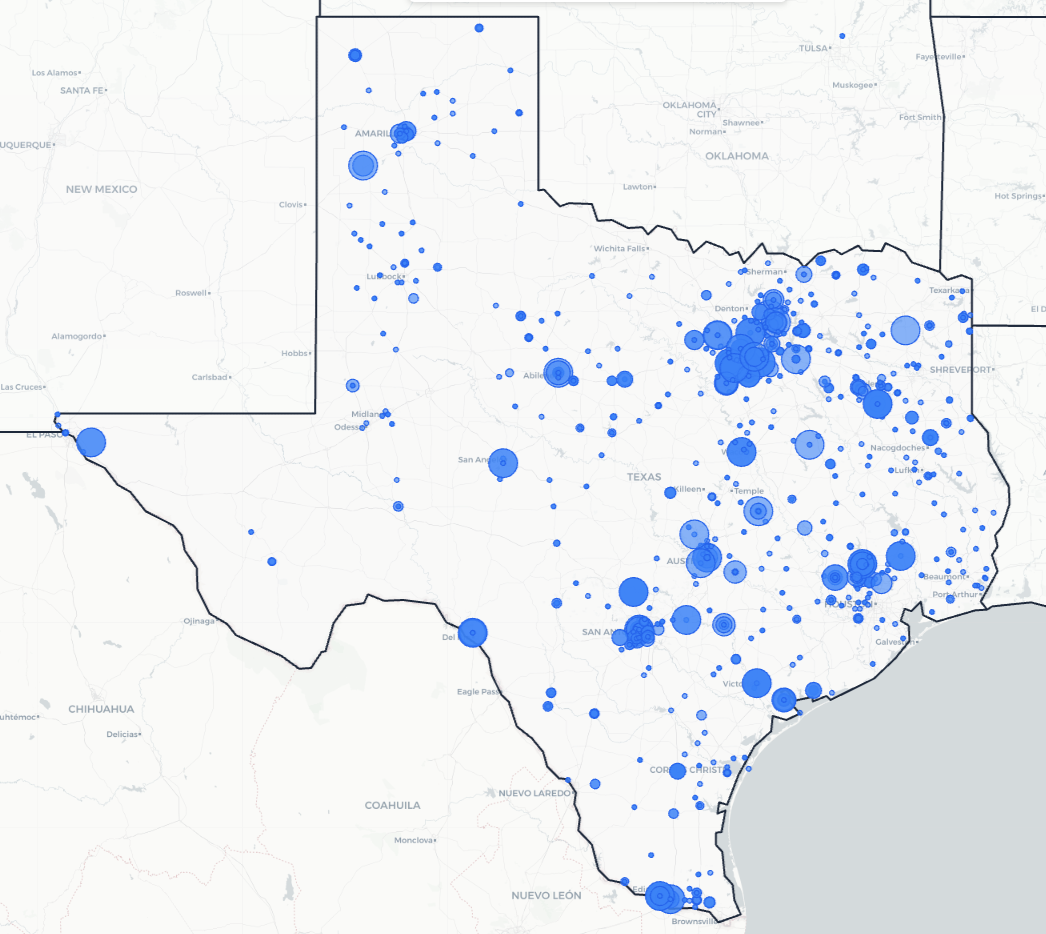
From the Rio Grande Valley to the Panhandle, Texas science teachers are using Kesler Science to save time and engage students.
Texas Schools and Districts
Love Kesler Science
What Teachers Are Saying
Give Your Science Teachers Everything They Need
School and district licenses give your teachers access to every resource they need, including station labs, inquiry labs, anchoring phenomena, presentations, escape rooms, and much more. One purchase covers the grade levels you need.
- PO-friendly. We accept purchase orders
- Volume discounts for 11+ teachers
- Complimentary Kesler Science Plus orientation for 4+ teachers
- Three free implementation PD sessions for departments of 11+
- Aligned to the 2024 TEKS standards
See It in Action
Book a walkthrough and we'll show you how Kesler Science fits your campus.
Book Demo CallNo pressure, no hard sell