.png?width=375&height=100&name=WebPage%20logo%20with%20curves%202026%20(8).png)
Patterns of Forces & Motion
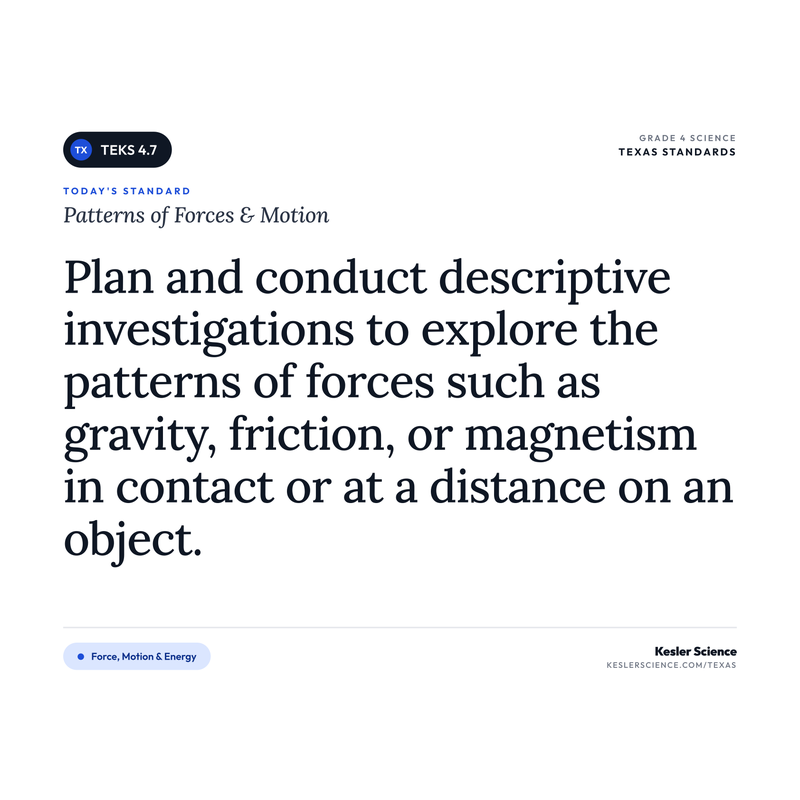
"Plan and conduct descriptive investigations to explore the patterns of forces such as gravity, friction, or magnetism in contact or at a distance on an object."
💡 What This Standard Actually Means
"Plan and conduct". This is the standard where 4th graders are running their own investigations. Not following a recipe out of a textbook, but actually thinking about what they want to test, setting it up, and writing down what they observe. The forces named in the standard are gravity, friction, and magnetism. Some forces work in contact (a finger pushing a book, a rough floor slowing down a sliding shoe). Others work at a distance (gravity pulling something to the ground without touching it, a magnet attracting a paperclip from across the desk). The pattern part is repeating the test over and over and noticing what happens every time.
4.7 is the force standard, but it's also the investigation standard. The TEKS doesn't just want kids to know what gravity, friction, and magnetism are. It wants them to design a test, run it, and describe the pattern they see in their data. That's what "plan and conduct descriptive investigations" means. Pick a force. Pick something to test it on. Run the test a few times. Write down what happened.
The three forces named in the standard each work a little differently. Gravity pulls everything toward Earth without ever touching it. Drop anything. It falls. Friction happens when two surfaces touch and rub against each other. A shoe sliding on a smooth floor goes far. The same shoe sliding on carpet stops fast. Magnetism is a force that pulls magnetic objects toward magnets. Some magnetism works through contact (a magnet stuck to a refrigerator) and some works at a distance (a magnet pulling a paperclip across a table without touching it).
The big idea hiding in the word "patterns" is that forces are predictable. If you drop a pencil 10 times, it falls down 10 times. If you slide the same toy car across the same surface 10 times, it stops at about the same spot. If you bring the same magnet close to the same paperclip 10 times, the paperclip sticks to it 10 times. By the end of this unit, kids should be designing simple tests, running them more than once, and using the results to describe the pattern of how a force behaves.
If I were teaching 4.7, I'd resist the temptation to do a single big "forces lab" with all three forces happening at once. Kids rolling cars, dropping objects, and waving magnets around together turns into chaos with nobody actually noticing patterns. I'd break it into three mini-investigations: a gravity day, a friction day, and a magnetism day. On gravity day, every kid drops the same paper at three different heights and times each fall three times. On friction day, every kid pushes the same toy car across three different surfaces (tile, paper towel, sandpaper) three times each. On magnetism day, every kid moves the same magnet at increasing distances from the same paperclip and records the closest distance where the paperclip still moves. Three days, three forces, three patterns. The repetition is what makes the patterns visible. Don't skip the "repeat each trial" step. That's where the science actually happens.
⚠️ Misconceptions Your Students May Have
These are some of the most common misconceptions. Knowing what to look for can help you get ahead of them.
"Heavier things fall faster than lighter things"
If air resistance isn't a problem, gravity pulls everything down at the same rate. Drop a heavy textbook and a small eraser from the same height at the same time. They hit the floor together. The only thing that messes this up is air slowing down very light, fluffy things like a feather or a tissue. The pull of gravity itself doesn't care how heavy the object is.
"Friction is bad and we should always try to get rid of it"
Friction stops you from sliding around like you're on ice all the time. When you walk, friction between your shoes and the floor keeps you from falling. When you write, friction between the pencil and the paper makes the line. Friction is what lets cars stop at red lights. Yes, sometimes engineers want less friction (slippery slides, oiled bike chains), but most of the time friction is the helpful force that keeps things in their place.
"Magnets attract anything metal"
Magnets only pull on certain metals: iron, nickel, steel, and a few others. They don't pull on aluminum, copper, or gold. Test it with a paperclip, a soda can, and a penny. The paperclip snaps right up. The soda can and penny don't move. "Metal" and "magnetic" aren't the same thing. You have to test it to know.
"Forces only work when things are touching"
Some forces don't need touch at all. Gravity pulls a falling pencil to the floor without ever touching it. A magnet can attract a paperclip from across a desk without making contact. Forces that work without touch are called "forces at a distance," and they're just as real as a hand pushing a book. The TEKS specifically calls out forces "in contact or at a distance."
📓 Teaching Resources for 4.7
These resources are aligned to this standard.


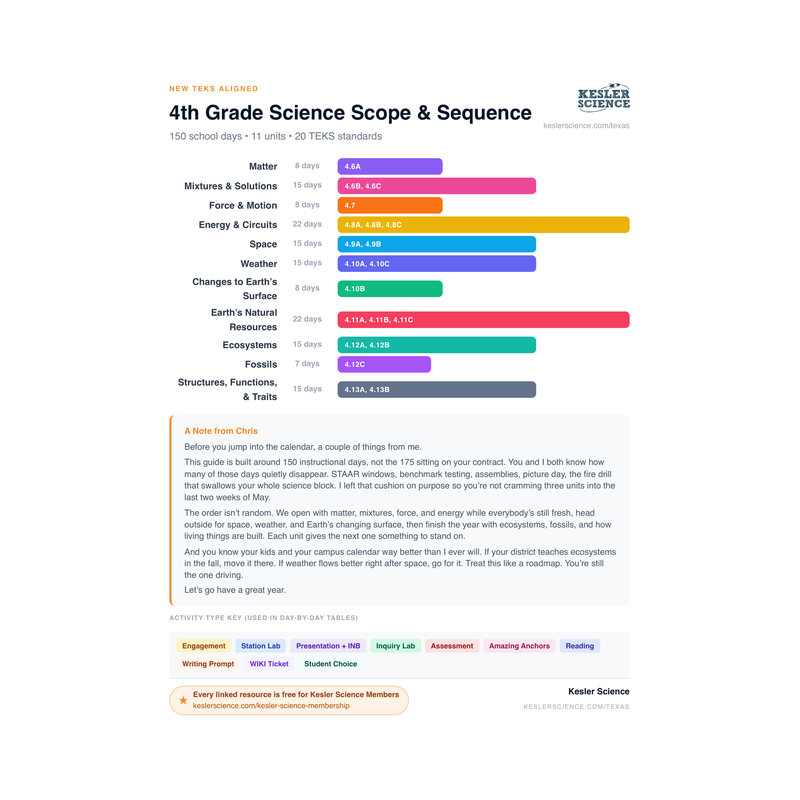
100% Aligned Lessons for Every TEKS You Teach
Kesler Science Plus puts thousands of ready-to-teach lessons and activities in your hands, so you can boost engagement and get your planning time back. Trusted by schools and districts all over the great state of Texas.
🌎 Phenomenon Ideas for 4.7
Use these real-world phenomena to anchor your lesson. Show students the phenomenon first, let them wonder, then build toward Patterns of Forces & Motion as the explanation.
The Drop Race
Hold a heavy textbook in one hand and a small eraser in the other. Stretch your arms out at the same height. Ask the kids to predict which will hit the floor first. Most will guess the textbook. Drop them at the same time. They hit together. Do it again. They hit together. Same pattern, every time. Gravity treats them both the same.
"You probably thought the heavier book would win. What pattern did we actually see? Why does gravity pull both objects toward the ground at the same speed?"
The Tablecloth Friction Hill
Lay three "ramps" on a stack of books at the same angle: one with no covering, one covered in slick paper, one covered in sandpaper. Roll the same toy car down each ramp. The slick paper ramp sends the car flying. The plain ramp sends it a medium distance. The sandpaper ramp barely lets the car move. Same car, same hill height, totally different distances.
"The car and the hill were the same every time. So why did the distance change so much? What was the only thing different about the three ramps?"
The Invisible Pull
Place a paperclip on the desk. Hold a strong magnet six inches above it. Slowly lower the magnet. Right at about three inches, the paperclip jumps off the desk and sticks to the magnet, even though they never touched. Repeat the demo with a piece of paper between the magnet and paperclip. Same thing happens. The paper doesn't block the magnet's pull.
"How did the magnet move the paperclip without ever touching it? Why didn't the paper get in the way? What does this tell us about forces that work at a distance?"
💡 Free Engagement Ideas for 4.7
Ready-to-run activities you can drop straight into a lesson. Where one of these looks like a phenomenon from the section above, that is on purpose: show it first as the hook, then let students run it themselves.
Plan-Your-Own Friction Investigation
Each group gets a toy car, a ramp made from a book, and three surface samples (tile floor, carpet, sandpaper, paper towel, fleece). They plan a test answering: "Which surface creates the most friction?" They write their plan, run three trials on each surface, measure how far the car traveled with a ruler or measuring tape, and graph the results. The "plan and conduct" verb gets practiced for real.
Head-to-Head Gravity Drops
Work in pairs, one dropper and one watcher. Drop two objects side by side from the same height, at the same instant, and watch which one lands first. Listen too: one thud means they tied. Run three rounds. Round 1: tennis ball and paperclip. Round 2: tennis ball and a flat sheet of paper. Round 3: the same sheet, crumpled into a ball, against the tennis ball. Record "tied" or which one landed first every time, then look at all three rounds together. Heavy and light land together. The flat sheet is the only one that loses, and crumpling the very same paper fixes it, so the difference was never the weight. It was the air.
Magnet Distance Measure-Off
Tape a ruler down to a tabletop and set a paperclip at the zero mark. Each pair of kids gets a magnet. They slowly slide the magnet closer to the paperclip until the paperclip pulls away and sticks to the magnet. Read the distance off the ruler and record it. Repeat three times to find the pattern. Then test through different barriers (paper, cardboard, a thin book) and see whether the distance changes. Hands-on intro to "force at a distance."
Force Hunt Around the Room
Hand each kid a clipboard with a chart: "Force I observed | What happened | Was it contact or at a distance?" Give them 10 minutes to walk around the room finding examples. A student pushing in a chair (friction, contact). A pencil rolling off a desk (gravity, at a distance). A magnet on the file cabinet (magnetism, contact). They have to find at least three examples of each force. Then they share with the class.
🎯 What Approaches, Meets, and Masters Thinking Look Like
Here is what student thinking at each level looks like on this one task, so you know what to look for and how to move a student up.
You want to find out how a floor changes the way a toy car rolls. You give the car the same push and let it roll across three floors: a smooth tile floor, a carpet, and a rubber bath mat. You measure how far the car goes each time. Plan a fair test, run it, and write down the pattern you see. Then explain why the car stops sooner on some floors than others.
- A plan that keeps the test fair: same car, same starting push, and only the floor is changed each time.
- The test run more than once on each floor, not just one roll, so the result is a real pattern.
- The distance written down or drawn for each floor (tile, carpet, bath mat).
- A clear pattern in the results: the car rolls farthest on the smooth tile and stops soonest on the rough floors.
- The word friction used to explain the stopping, with the idea that rougher floors rub the car more.
- An explanation that ties the force to the result: more friction means the car stops sooner.
- Friction named as the helpful reason the car stops, not as a problem to remove. That is the easiest place to slip.
I pushed the car on all three floors. It went the farthest on the smooth tile. It stopped fast on the carpet and the bath mat. The rough floors are bad because they have too much friction and friction slowed my car down. If I wanted the car to win, I would get rid of the friction so nothing could stop it.
I used the same car and the same push every time so it would be fair. I only changed the floor. I rolled it three times on each floor and wrote down how far it went. On tile it went about 80 cm each time. On carpet it went about 30 cm. On the bath mat it went about 20 cm. The pattern is that the rougher the floor, the sooner the car stops.
This happens because of friction. Friction is the rubbing force between the car and the floor. A rough floor has more friction, so it pulls on the car more and stops it sooner. The smooth tile has less friction, so the car keeps going.
I kept the car and the push the same and only changed the floor, and I rolled it three times on each one. On tile it went about 80 cm, on carpet about 30 cm, and on the bath mat about 20 cm. The pattern is clear: the rougher the floor, the more friction there is, and the sooner the car stops. Friction is the rubbing force between the two surfaces that touch.
Friction is not really bad here. It is the reason the car can stop at all. I can use this same idea outside of class. When I ride my bike and squeeze the brakes, the rubber pads rub the wheel and that friction stops me. On a rainy day the road is slippery and there is less friction, so a car needs more room to stop. The same rule that slowed my toy car is the rule that lets a bike and a car stop safely.
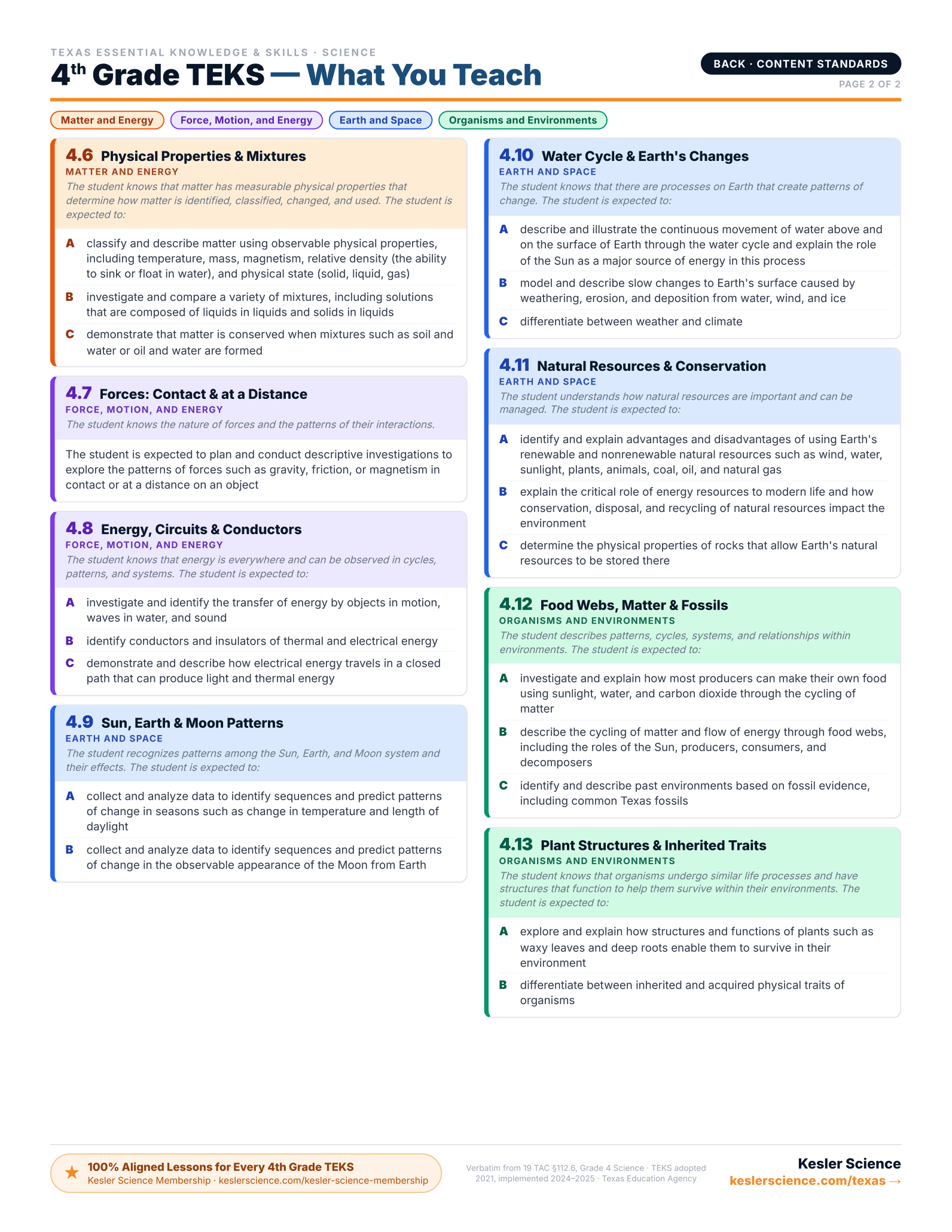
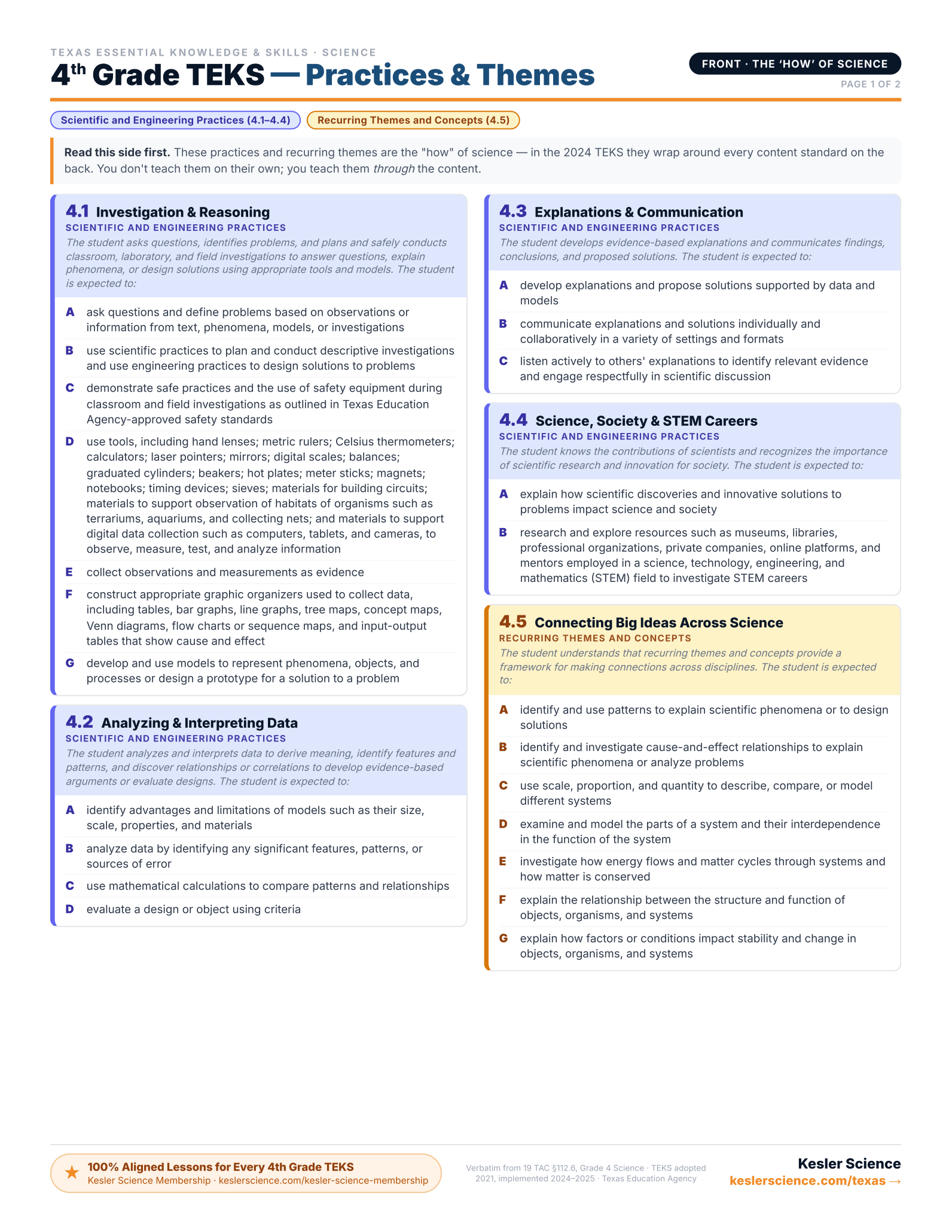
Every 4th-Grade Science TEKS on One Page
The color-coded, front-and-back cheat sheet I wish I'd had — every standard, organized by reporting category. Print it and reference it all year long. This will be your new favorite document!
Trusted Across Texas
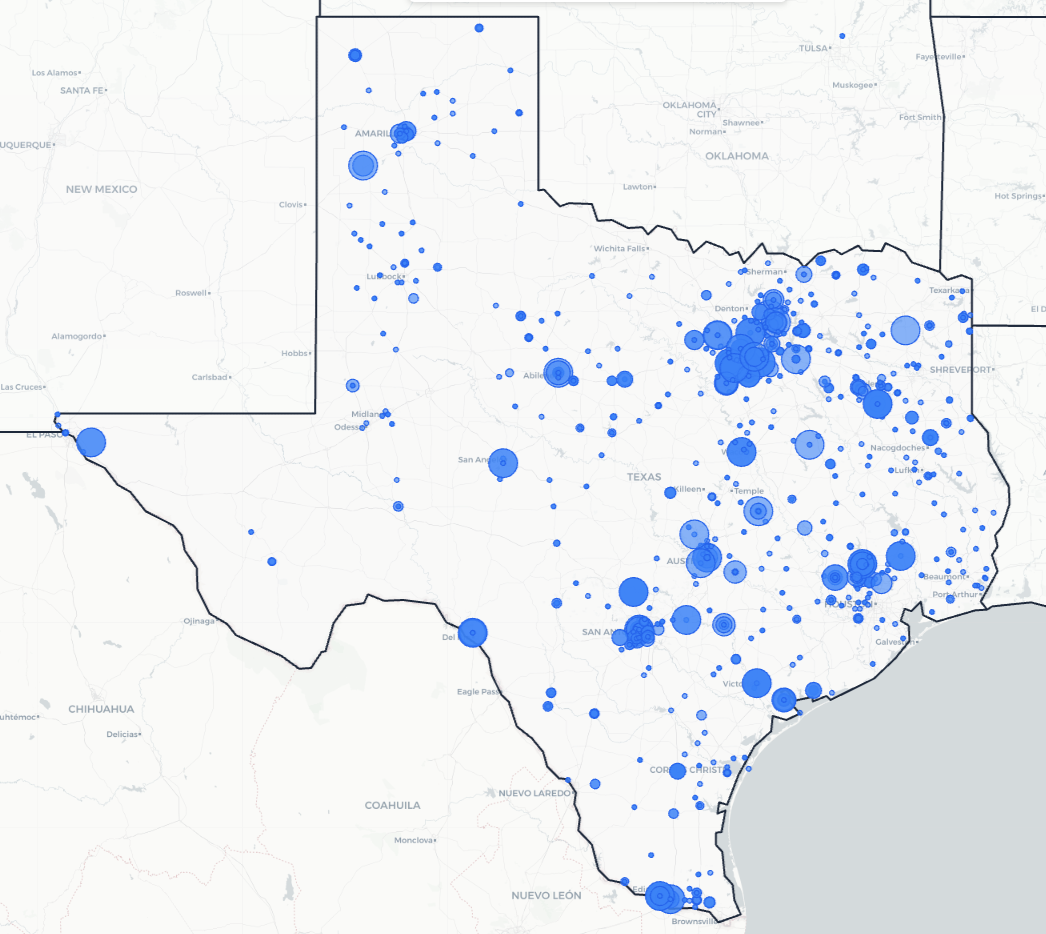
From the Rio Grande Valley to the Panhandle, Texas science teachers are using Kesler Science to save time and engage students.
Texas Schools and Districts
Love Kesler Science
What Teachers Are Saying
Give Your Science Teachers Everything They Need
School and district licenses give your teachers access to every resource they need, including station labs, inquiry labs, anchoring phenomena, presentations, escape rooms, and much more. One purchase covers the grade levels you need.
- PO-friendly. We accept purchase orders
- Volume discounts for 11+ teachers
- Complimentary Kesler Science Plus orientation for 4+ teachers
- Three free implementation PD sessions for departments of 11+
- Aligned to the 2024 TEKS standards
See It in Action
Book a walkthrough and we'll show you how Kesler Science fits your campus.
Book Demo CallNo pressure, no hard sell