.png?width=375&height=100&name=WebPage%20logo%20with%20curves%202026%20(8).png)
Weather vs. Climate
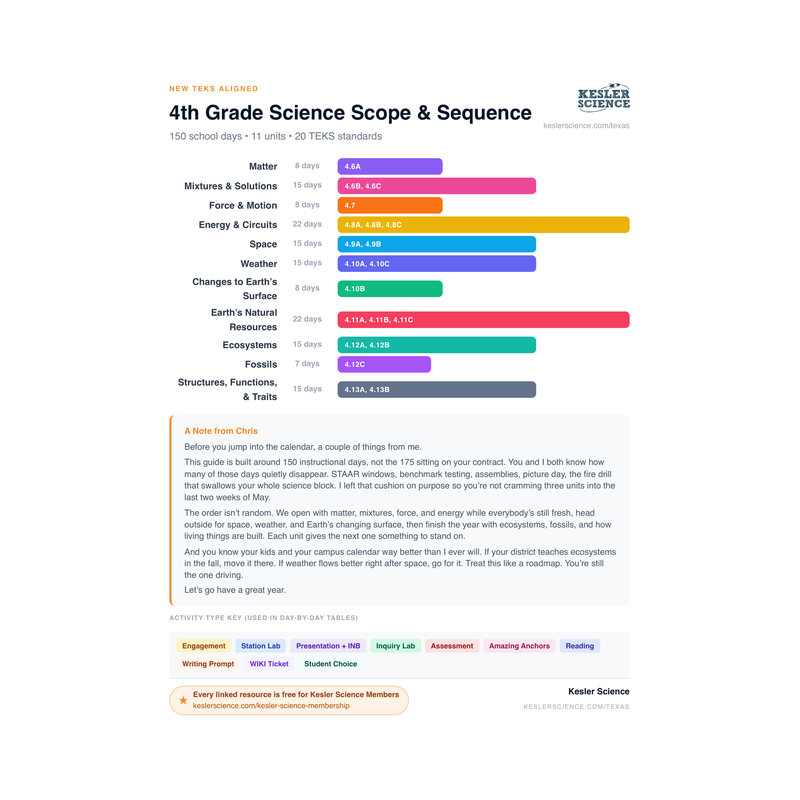
"Differentiate between weather and climate."
💡 What This Standard Actually Means
"Differentiate". Fourth graders are telling apart two ideas that sound alike. Weather is what's happening outside RIGHT NOW or this week: rainy, cold, sunny, windy, hot. It changes from day to day and even hour to hour. Climate is the AVERAGE PATTERN of weather in a place over a long time, usually 30 years or more. Houston has a humid, rainy climate. El Paso has a dry, hot climate. Today's weather might be unusual for both places, but the climate is the long-term picture. The verb is "differentiate," so kids should be able to look at any statement about the sky and tell you whether it's describing weather or climate.
Weather and climate sound like the same thing, but they're not. 4.10C is a short, focused standard with one job: teach kids the difference. The trick is the time scale. Weather is happening on a small time scale (right now, today, this week). Climate is happening on a big time scale (over many years).
If you say "It's raining today in Austin," that's weather. If you say "Austin gets about 35 inches of rain a year," that's climate. If you say "We had a freeze last Tuesday," that's weather. If you say "Texas winters usually have a few freezing days each year," that's climate. Same place, two different ways of describing what the sky does. Weather is what your raincoat experience is like today. Climate is what kind of clothes your closet needs to hold all year.
Texas is a great place to teach this standard because Texas has lots of climate types. The Gulf Coast has a humid, hot climate. West Texas has a dry, desert-like climate. The Hill Country sits in between. The weather any given day in any of those places might be wildly different from average, but the climate is what the place is like in general. By the end of this short unit, kids should be able to read a statement, decide whether it's about weather or climate, and explain how they knew. The verb is "differentiate," and that's exactly what the assessment should ask for.
The simplest, fastest way to teach this standard is the "your closet" analogy. Weather is what you wear TODAY. Climate is what your whole closet has in it for the whole year. In Houston, your closet has shorts, t-shirts, and a couple of light jackets, because the climate is mostly hot and humid. In Amarillo, your closet has heavier coats AND shorts, because the climate has both cold winters and hot summers. Today, you might be wearing shorts in Amarillo (weather), but your closet still needs the coat (climate) for next month. I'd literally hold up a t-shirt and a heavy coat and walk through it. Then I'd run a quick "weather or climate" sorting activity with statement cards. Five minutes and the kids own the difference. Don't make this harder than it is. The TEKS just says "differentiate." Hit that target and move on.
⚠️ Misconceptions Your Students May Have
These are some of the most common misconceptions. Knowing what to look for can help you get ahead of them.
"Weather and climate are the same thing"
They're related, but they're not the same. Weather is what's happening RIGHT NOW or this week. Climate is the average pattern over many years. The difference is time. Weather is short. Climate is long. One sunny day in winter doesn't change a place's climate. Decades of mostly sunny days do.
"If we have one really cold day, that means our climate is cold"
One cold day is just weather. To know a place's climate, you need to look at decades of data, not one Tuesday. Houston had a hard freeze in 2021, but Houston's climate is still humid and warm. Climate is the big picture you only see when you average a lot of weather days together.
"Climate doesn't change, only weather does"
Climate can change too, but it changes very slowly, over decades or centuries. Weather changes every few hours. The reason scientists need decades of data to talk about climate is because the changes are gradual. A single year doesn't show climate change. Many years averaged together do.
"All places with the same climate have the same weather every day"
Two places with similar climates can have very different weather on any given day. Two cities in the Texas Hill Country might both have a "warm and dry" climate, but on Tuesday one might have a rainstorm while the other is sunny. Climate is the average. Weather is the day-to-day variation around that average.
📓 Teaching Resources for 4.10C
These resources are aligned to this standard.


100% Aligned Lessons for Every TEKS You Teach
Kesler Science Plus puts thousands of ready-to-teach lessons and activities in your hands, so you can boost engagement and get your planning time back. Trusted by schools and districts all over the great state of Texas.
🌎 Phenomenon Ideas for 4.10C
Use these real-world phenomena to anchor your lesson. Show students the phenomenon first, let them wonder, then build toward Weather vs. Climate as the explanation.
The Closet Test
Hold up a t-shirt and a heavy winter coat. Ask: "Where in the world would your closet have ONLY t-shirts? Where would it have BOTH? Where would it have only coats?" Show photos of typical closets in Hawaii, Texas, and Alaska. The closet itself is climate. What you're wearing today is weather. The closet has to handle the climate; today's outfit just has to handle the weather.
"Why does someone in Texas need both shorts AND a coat in their closet, but someone in Hawaii probably doesn't? What does this tell us about the difference between weather and climate?"
The Weather Forecast vs. the Climate Map
Pull up the local weather forecast for the week. Show the day-by-day high and low temperatures. Then show a "climate map" of the United States that shows average annual temperatures by region (these are easy to find online). Compare the two. The forecast is detailed and short. The climate map is general and covers many years. Same data, two completely different time scales.
"Why does a weather forecast change every day but the climate map looks the same year after year? What's the same about both maps, and what's different?"
The Texas Snow Surprise
Show a photo of snow in Texas during the 2021 winter storm. Most kids will remember it or will have heard about it. Then show that Texas's climate is "humid subtropical" or "semi-arid" depending on the part of the state, with hot summers and mild winters. The 2021 storm was extreme weather, but it didn't change Texas's climate. The climate is still mostly warm. Snow is rare, even though that one week we got buried.
"How can Texas have a snowstorm one week but still have a warm climate? Why don't scientists call Texas a snowy state because of one storm?"
💡 Free Engagement Ideas for 4.10C
Ready-to-run activities you can drop straight into a lesson. Where one of these looks like a phenomenon from the section above, that is on purpose: show it first as the hook, then let students run it themselves.
Weather or Climate Sort
Print 20 statement cards. Half describe weather ("It rained yesterday afternoon," "It's 95 degrees right now," "There's a tornado warning in Tarrant County"). The other half describe climate ("Phoenix has hot, dry summers every year," "Texas averages about 35 days above 100 degrees per year," "Antarctica is the coldest continent"). Kids sort the cards into two columns. Quick, focused, hits the verb directly.
Texas Climate City Comparison
Each group picks two Texas cities (Houston, Austin, Lubbock, El Paso, Brownsville, Amarillo). They look up average temperature and average annual rainfall for each city. They make a side-by-side bar graph and write three sentences comparing the two cities' CLIMATES. Then they look up the day's actual WEATHER in both cities and add a fourth sentence comparing the weather right now. Hits both terms with real Texas data.
One-Week Weather Tracker
Every kid keeps a one-week weather log: each morning they record the temperature, conditions (sunny, rainy, etc.), and wind level. At the end of the week, they answer: "Did the weather change from day to day? If you only used this week's data, would you really know our climate?" Forces them to feel the difference between short-term data (weather) and long-term data (climate).
Climate Around the World Match
Print 8 country/region cards (Sahara Desert, Alaska, Texas Gulf Coast, Amazon Rainforest, Antarctica, Sahara, Hawaiian Beach, Russian Tundra) and 8 climate-description cards ("hot and dry all year," "cold and snowy most of the year," "warm and very rainy"). Kids match each region to its climate. Then they discuss: "If you went to Alaska in July, would the weather be cold or warm? Would the climate of Alaska still be cold?"
🎯 What Approaches, Meets, and Masters Thinking Look Like
Here is what student thinking at each level looks like on this one task, so you know what to look for and how to move a student up.
Read these two sentences about Houston. Sentence 1: "It is raining in Houston today." Sentence 2: "Houston is warm and rainy most of the year." For each sentence, tell whether it describes weather or climate, and explain how you knew.
- Labels Sentence 1 as weather (what is happening right now or today).
- Labels Sentence 2 as climate (the usual pattern over a long time).
- Uses the idea of time to explain the choice: weather is short, climate is long.
- Points to clue words in each sentence, like "today" for weather and "most of the year" for climate.
- Explains in their own words, not just by copying the sentence back.
- Keeps the two ideas separate instead of treating one rainy day as proof of the climate.
Sentence 1 is weather because it is raining right now. Sentence 2 is weather too, because it is talking about rain in Houston. If it rains a lot in Houston, then Houston's climate must be rainy, so one rainy day shows you the climate.
Sentence 1 is weather because it tells what is happening today. Weather is what is going on right now, like rain or sun. Sentence 2 is climate because it tells what Houston is like most of the year. Climate is the usual pattern over a long time. The clue is "today" for weather and "most of the year" for climate. Weather is short and climate is long.
Sentence 1 is weather because it is what is happening today, and weather can change in just a few hours. Sentence 2 is climate because it is the usual pattern in Houston over many years. The real difference is time. Weather is short and changes fast. Climate is the average you only see after watching for a long time.
That is how I would catch a tricky one. If someone said "Houston had a freezing day last winter, so Houston has a cold climate," they would be wrong. One freezing day is just weather. Houston's climate is still warm and rainy because you have to look at many years, not one cold day.
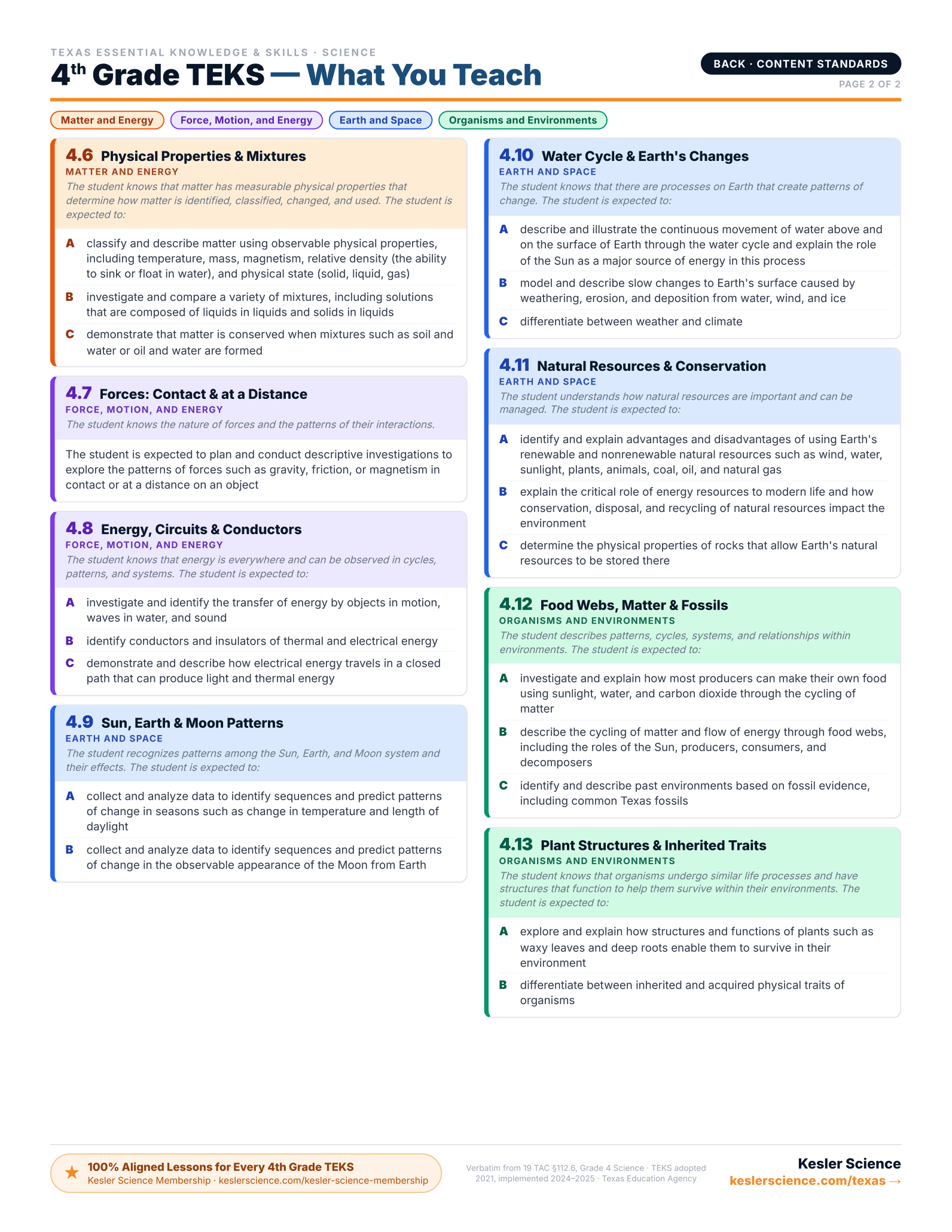
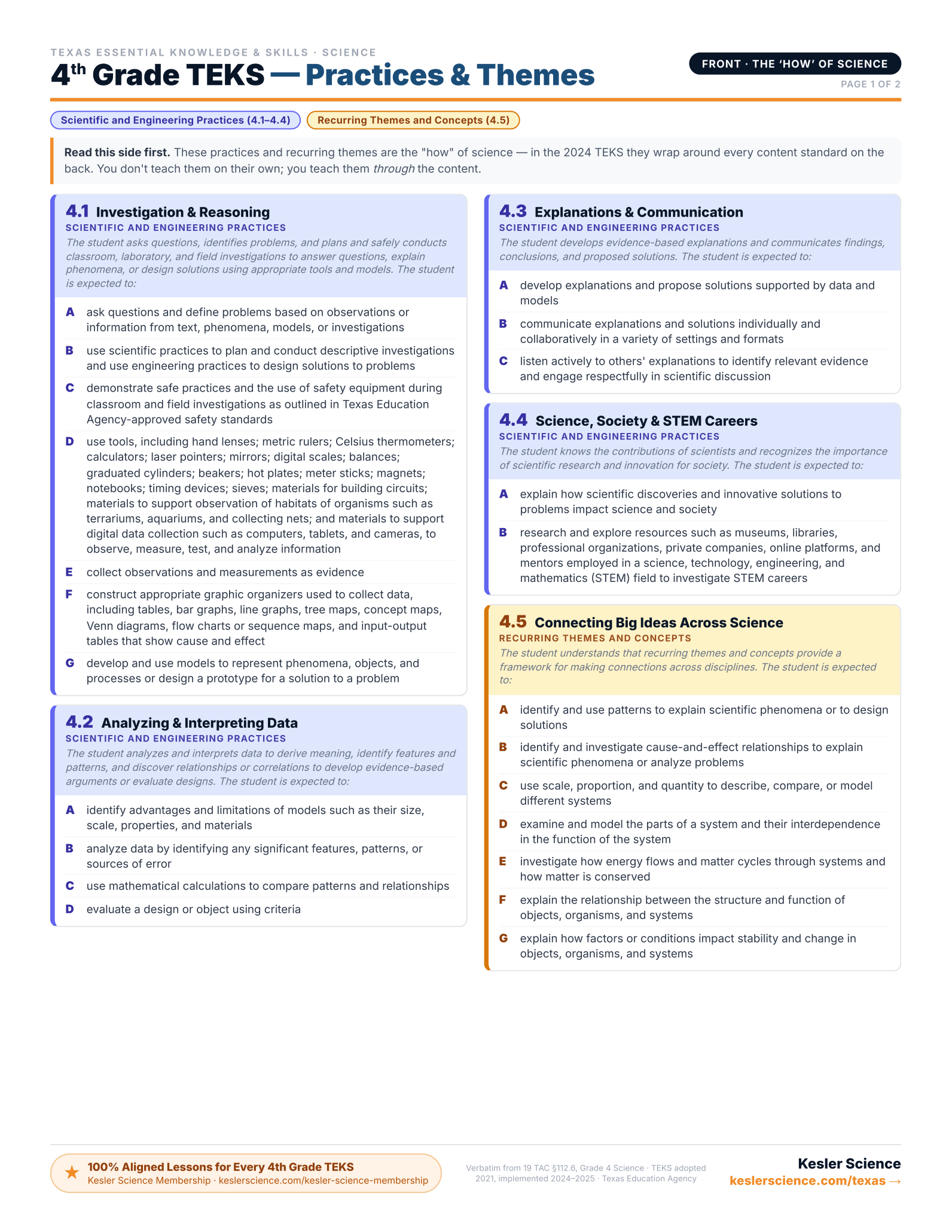
Every 4th-Grade Science TEKS on One Page
The color-coded, front-and-back cheat sheet I wish I'd had — every standard, organized by reporting category. Print it and reference it all year long. This will be your new favorite document!
Trusted Across Texas
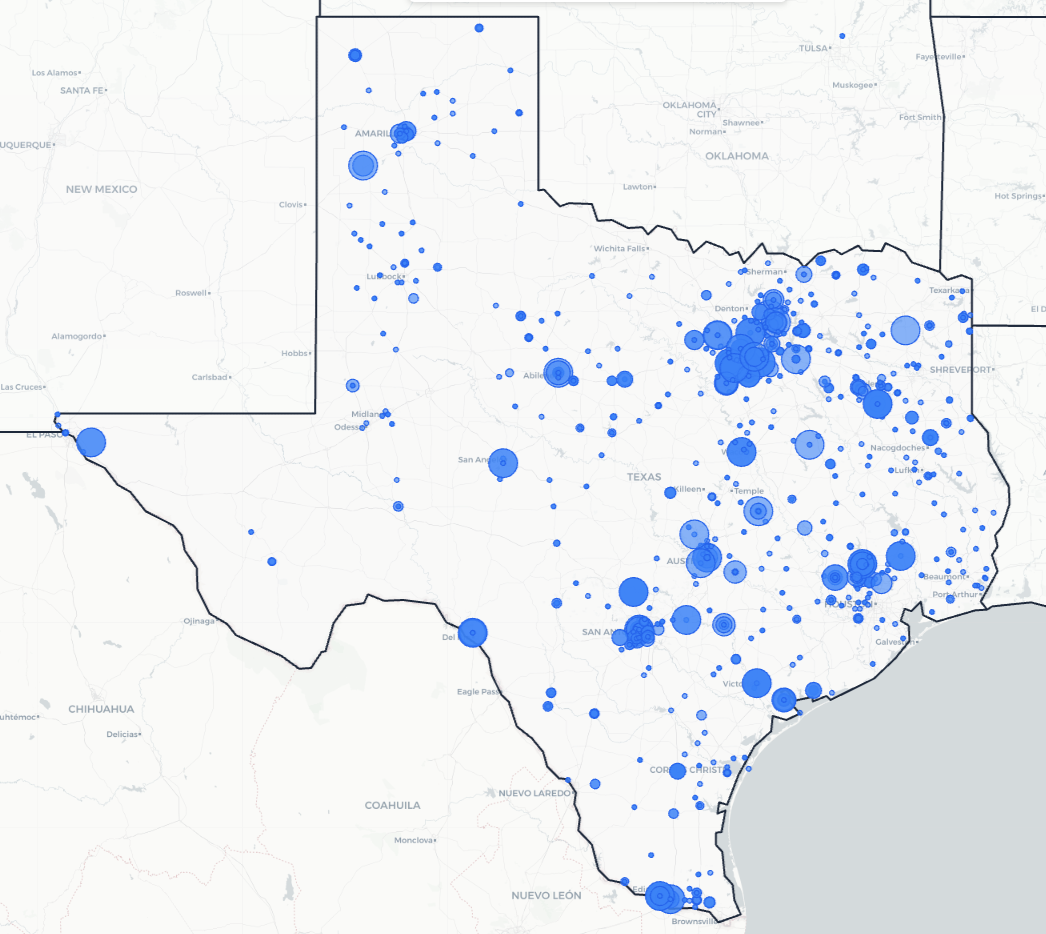
From the Rio Grande Valley to the Panhandle, Texas science teachers are using Kesler Science to save time and engage students.
Texas Schools and Districts
Love Kesler Science
What Teachers Are Saying
Give Your Science Teachers Everything They Need
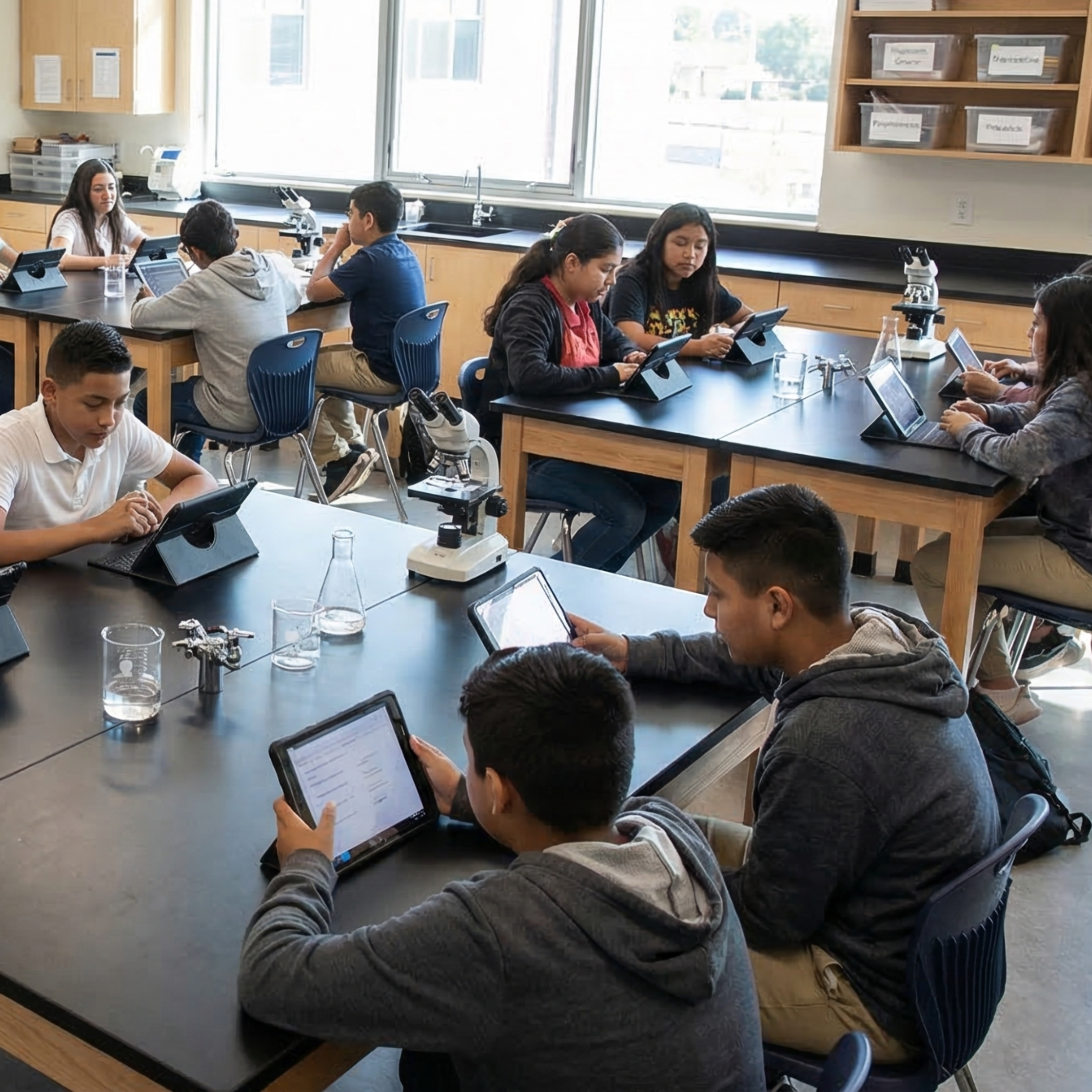
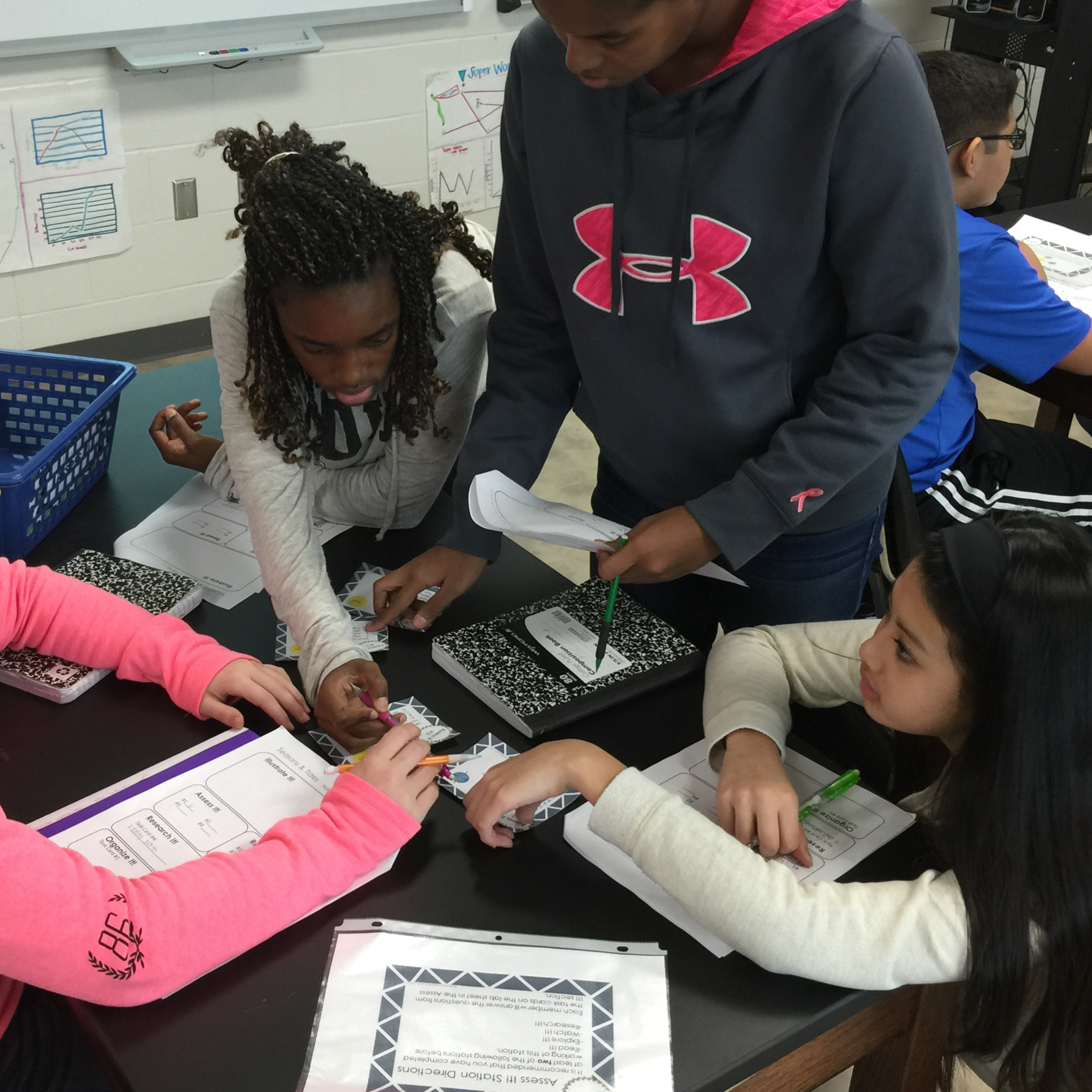
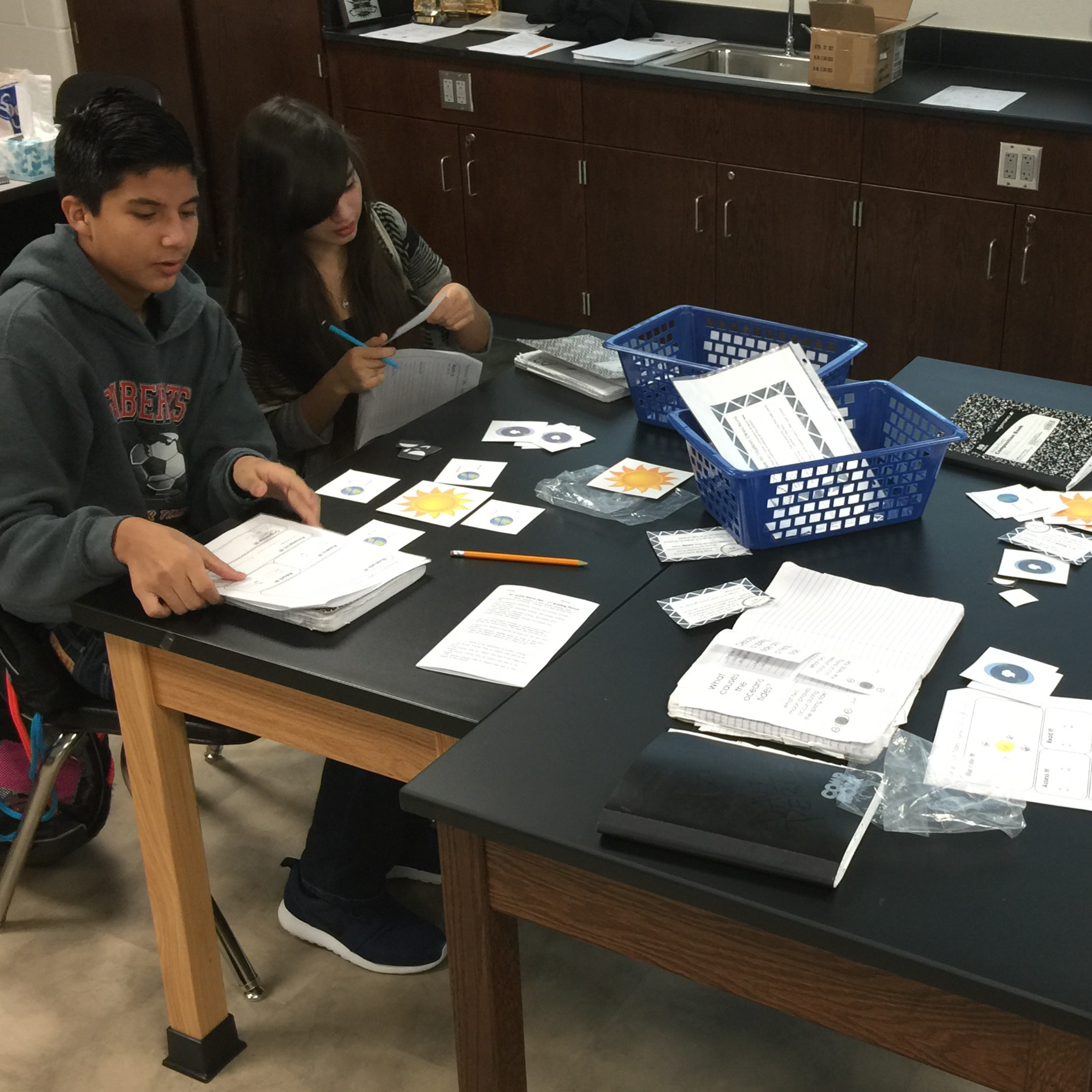
School and district licenses give your teachers access to every resource they need, including station labs, inquiry labs, anchoring phenomena, presentations, escape rooms, and much more. One purchase covers the grade levels you need.
- PO-friendly. We accept purchase orders
- Volume discounts for 11+ teachers
- Complimentary Kesler Science Plus orientation for 4+ teachers
- Three free implementation PD sessions for departments of 11+
- Aligned to the 2024 TEKS standards
See It in Action
Book a walkthrough and we'll show you how Kesler Science fits your campus.
Book Demo CallNo pressure, no hard sell