.png?width=375&height=100&name=WebPage%20logo%20with%20curves%202026%20(8).png)
Conservation, Disposal & Recycling
"Explain the critical role of energy resources to modern life and how conservation, disposal, and recycling of natural resources impact the environment; and"
💡 What This Standard Actually Means
"Explain". Fourth graders are putting two ideas into their own words. The first one: energy resources play a critical role in modern life. Lights, cars, phones, hospitals, schools, refrigerators all run on energy from natural resources. The second one: conservation, disposal, and recycling impact the environment. Conservation means using less. Disposal means how we get rid of waste. Recycling means turning used materials into new ones. All three choices have real effects on the world around us. Throw a plastic bottle in the trash, it ends up in a landfill. Recycle it, the same plastic gets turned into a new bottle.
Almost everything we do every day depends on energy from natural resources. The lights at school. The bus that brings kids in. The phone in someone's pocket. The fridge holding their lunch. Every one of those things runs on electricity or fuel that came from somewhere. 4.11B is the standard where 4th graders connect their daily lives to the resources behind the scenes, and then learn that the choices we make about those resources matter.
The first half of the standard is about energy's critical role in modern life. Without energy resources, hospitals couldn't run machines, cars couldn't drive, food couldn't be kept cold, and homes couldn't be heated or cooled. Modern life basically depends on a steady supply of energy. The second half is about three actions we can take that affect the environment: conservation (using less so resources last longer), disposal (how we throw things away, like landfills versus dumping), and recycling (turning used materials back into new ones).
Every action has an environmental impact. Turning off lights when you leave a room saves electricity, which means less coal or natural gas burned, which means less pollution. Throwing trash on the ground hurts wildlife and waterways. Putting a soda can in the recycling bin means a new can gets made without digging up new aluminum. By the end of this unit, kids should be able to explain why we need energy resources at all, and how their personal choices about saving, throwing away, and recycling actually do affect the environment around them.
The hook I'd lead with on this standard is a "day without energy" thought experiment. Ask the kids: "Imagine there's no electricity tomorrow. Not at school. Not at home. Not anywhere. What stops working?" The list gets long fast. No microwave. No fridge. No air conditioning. No video games. No phones. No school bus (no gas pumps). No traffic lights. No hospital. Kids realize how much of their world is powered by energy resources, which is exactly the "critical role" the TEKS asks them to explain. From there, I'd shift to the second half: "Since we depend on these resources, what choices can we make to take care of them?" That's where conservation, disposal, and recycling come in. The trick is making those abstract words concrete: turning off the lights IS conservation. Putting that paper in the green bin IS recycling. The standard works best when kids see their everyday actions as the answer.
⚠️ Misconceptions Your Students May Have
These are some of the most common misconceptions. Knowing what to look for can help you get ahead of them.
"Recycling means tossing something in any bin"
Recycling means putting the right material in the right bin so it can actually be turned into something new. Plastic bottles go in the recycling bin. Banana peels go in the trash or compost. A pizza box covered in grease usually can't be recycled even though it's cardboard. Recycling only works if we sort correctly.
"Throwing trash away makes it disappear"
Trash doesn't disappear. It goes to a landfill, where it sits for a very long time. Plastic bottles take hundreds of years to break down. Glass takes even longer. The trash truck takes it out of sight, but it doesn't go away. That's why disposal matters. Where we put our waste affects the environment for years.
"One person can't do anything that matters"
One person's choices add up over a year, and millions of people doing the same things turn into a big effect. Turning off the lights at home saves a little energy each time. Multiply that by every house in Texas and it's a huge amount. The TEKS asks kids to explain HOW conservation, disposal, and recycling impact the environment. Even small actions count.
"Conservation means we should never use any resources"
Conservation doesn't mean stopping. It means using carefully. Turn off the water while brushing your teeth instead of letting it run. Turn off the light when you leave the room. Don't waste paper. The point is to make resources last and reduce waste, not to live without them.
📓 Teaching Resources for 4.11B
These resources are aligned to this standard.


100% Aligned Lessons for Every TEKS You Teach
Kesler Science Plus puts thousands of ready-to-teach lessons and activities in your hands, so you can boost engagement and get your planning time back. Trusted by schools and districts all over the great state of Texas.
🌎 Phenomenon Ideas for 4.11B
Use these real-world phenomena to anchor your lesson. Show students the phenomenon first, let them wonder, then build toward Conservation, Disposal & Recycling as the explanation.
The Power-Out Thought Experiment
Tell the kids: "All electricity at school is going to be off for the rest of the day. List five things that won't work." Watch them realize: lights, computers, microwave in the staff room, electric pencil sharpener, the bell, the AC. Then expand to home. Then expand to the whole town. The list gets bigger and bigger, which is exactly what the TEKS means by energy's "critical role."
"How much of your day depends on energy from natural resources? What does that tell us about how important these resources are to modern life?"
The Bag-of-Trash Sort
Bring in a clean bag of "classroom trash" you put together (clean, safe items): paper, plastic bottle, aluminum can, banana peel, old pencil, foam cup. Pour it onto a tray. Ask the class: "Which of these could be recycled? Which has to go in the trash? Which could be composted?" Sort it together. Most kids assume way more is recyclable than actually is. Big eye-opener.
"Why do some items get recycled and others don't? What happens to the items that go in the regular trash? How could the way we throw things away affect the environment?"
The Drip Counter
Set a measuring cup under a faucet. Turn the water on so it drips slowly, about one drop per second. Time it for one minute. Measure how much water collected. Then calculate: how much in an hour? In a day? In a year? A small drip can waste hundreds of gallons over a year. Tiny choices add up.
"Just one drip per second adds up to that much in a year? What does this tell us about why conservation matters? What would happen if every house in Texas had one drippy faucet?"
💡 Free Engagement Ideas for 4.11B
Ready-to-run activities you can drop straight into a lesson. Where one of these looks like a phenomenon from the section above, that is on purpose: show it first as the hook, then let students run it themselves.
Energy in My Day Diagram
Each kid draws a giant clock face showing their day from waking up to going to bed. Around the clock, they draw 8 things they do. Next to each thing, they write the energy resource that powers it. Brushing teeth (electricity for the bathroom light, water from the city). Eating breakfast (gas or electric stove, fridge for the milk). Walking to school (sunlight to see). Connects every part of their day to natural resources.
The Three R's Sorting Race
Set out three labeled bins: REDUCE (an action like turning off lights), REUSE (an action like using a refillable water bottle), RECYCLE (an action like putting a can in the right bin). Print 20 action cards. Kids race to sort the actions into the right bin. The fastest team wins. Reinforces all three vocabulary words and gives kids realistic ideas for what conservation looks like.
Conservation Plan for Our Classroom
As a class, brainstorm five things in the classroom that use energy resources or create waste. Then for each one, plan a small action the class can take to conserve, dispose of, or recycle. Examples: turn off the projector when not in use, use both sides of paper, set up a paper recycling bin. Vote on three to actually do for the rest of the unit. Then track how it's going.
Recycling Round-Trip Story
Each kid picks one item (aluminum can, plastic bottle, cardboard box, newspaper) and writes/illustrates the journey of that item being recycled. They draw at least four scenes: getting used, going in the bin, being processed at a recycling facility, and becoming a new product. Forces them to actually think through what recycling does, instead of just saying "it helps the environment."
🎯 What Approaches, Meets, and Masters Thinking Look Like
Here is what student thinking at each level looks like on this one task, so you know what to look for and how to move a student up.
You finish a bottle of water. You can throw it in the trash, or you can put it in the recycling bin. Explain what happens to the bottle each way, and tell which choice is better for the environment and why.
- The student picks recycling as the better choice for the environment.
- They explain that the recycled bottle gets turned into something new (like a new bottle), instead of being made from scratch.
- They explain that the trashed bottle goes to a landfill, not nowhere.
- They show they know the bottle does not disappear when it goes in the trash.
- They connect recycling to using fewer new resources or making less waste.
- They use clear reasons, not just "recycling is good," to back up the choice.
- They explain where the trashed bottle ends up and that it stays there a long time. That is the part most kids skip.
You should recycle the bottle because recycling is good for the earth. If you throw it in the trash it just goes away and is gone. Recycling helps the planet so that is the better choice.
If the trash truck takes the bottle, where does it actually go? Does it really disappear?Once they picture a landfill, the reasoning gets real.
Recycling is the better choice. If I throw the bottle in the trash, it goes to a landfill and stays there for a really long time because plastic takes a long time to break down. If I put it in the recycling bin, the plastic gets turned into a new bottle instead. So recycling is better for the environment because the bottle does not just sit in a landfill.
Recycling is the better choice. In the trash, the bottle goes to a landfill and sits there for hundreds of years because plastic breaks down so slowly. In the recycling bin, the same plastic gets made into a new bottle, so the factory does not have to use as many brand new resources to make one.
That is why recycling helps the environment: it makes less landfill trash and it saves resources at the same time. It is kind of like reusing a water cup instead of grabbing a new one every time. You still get what you need, but you do not waste as much. If everyone recycled their bottles, all those little choices would add up to a lot less waste.
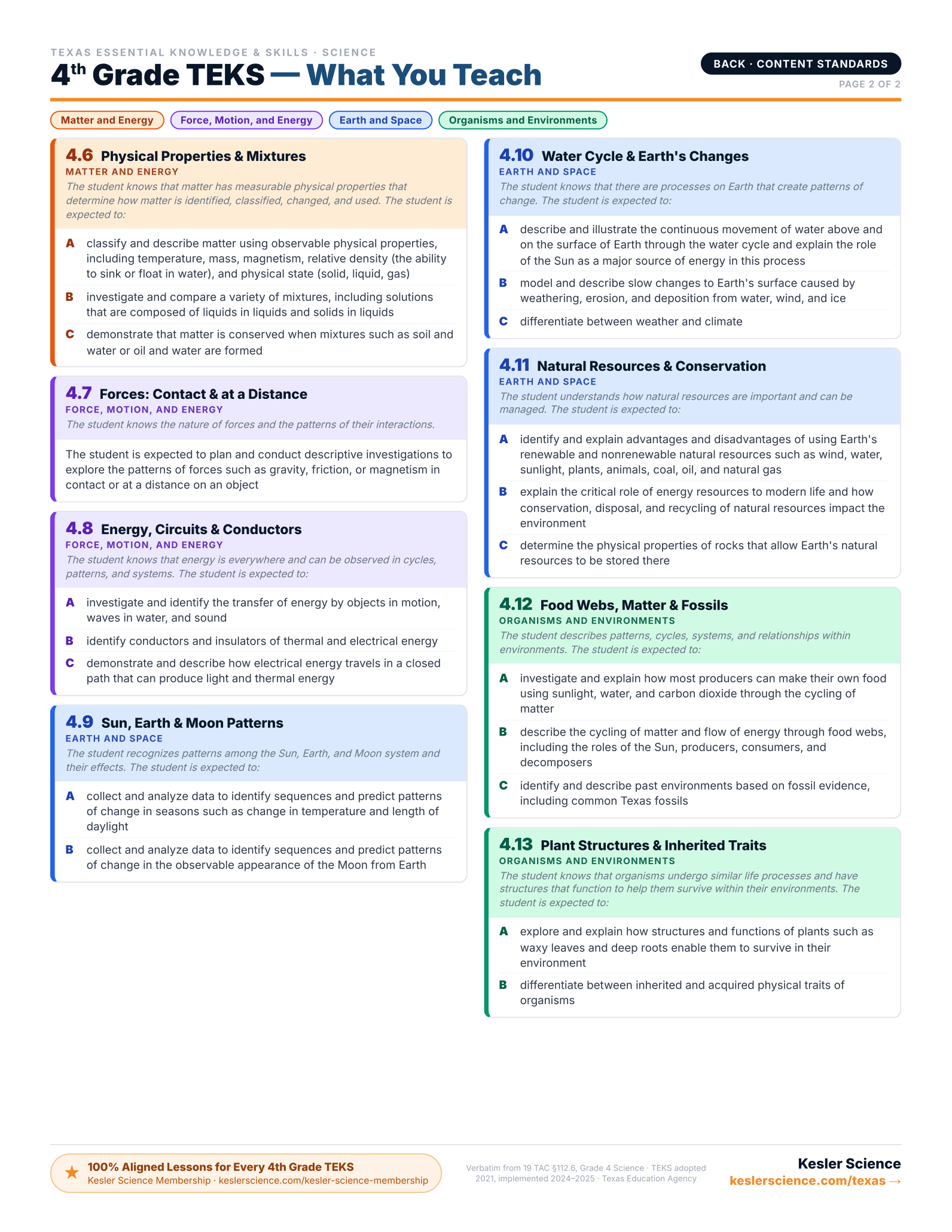
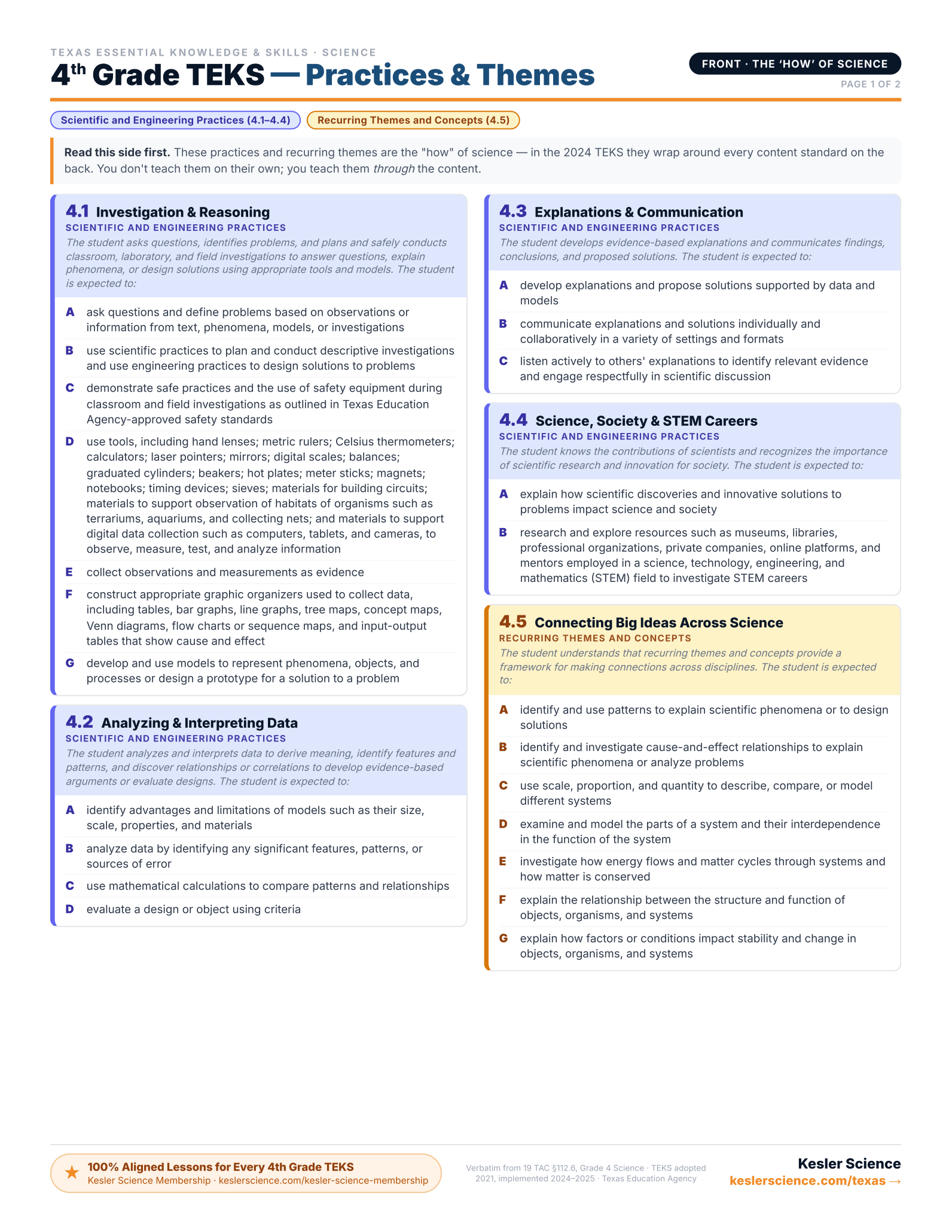
Every 4th-Grade Science TEKS on One Page
The color-coded, front-and-back cheat sheet I wish I'd had — every standard, organized by reporting category. Print it and reference it all year long. This will be your new favorite document!
Trusted Across Texas
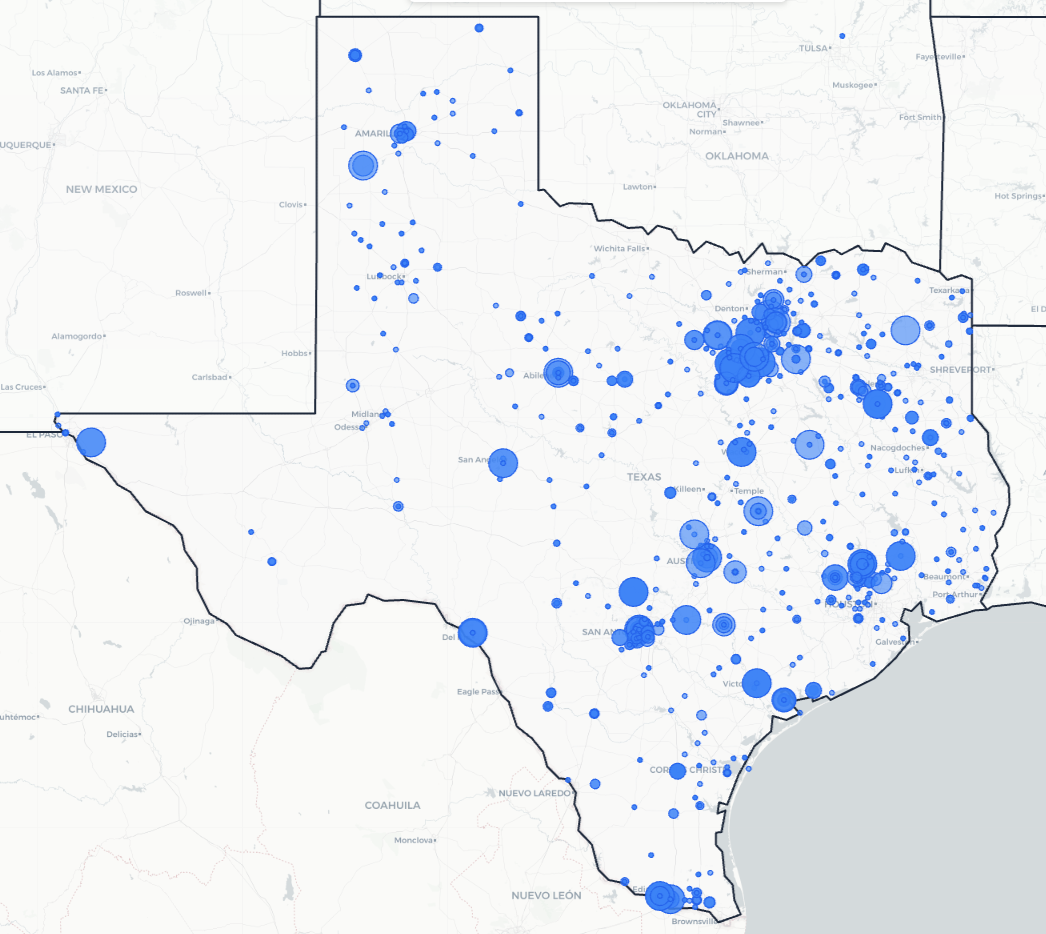
From the Rio Grande Valley to the Panhandle, Texas science teachers are using Kesler Science to save time and engage students.
Texas Schools and Districts
Love Kesler Science
What Teachers Are Saying
Give Your Science Teachers Everything They Need
School and district licenses give your teachers access to every resource they need, including station labs, inquiry labs, anchoring phenomena, presentations, escape rooms, and much more. One purchase covers the grade levels you need.
- PO-friendly. We accept purchase orders
- Volume discounts for 11+ teachers
- Complimentary Kesler Science Plus orientation for 4+ teachers
- Three free implementation PD sessions for departments of 11+
- Aligned to the 2024 TEKS standards
See It in Action
Book a walkthrough and we'll show you how Kesler Science fits your campus.
Book Demo CallNo pressure, no hard sell