.png?width=375&height=100&name=WebPage%20logo%20with%20curves%202026%20(8).png)
Fossils & Past Environments
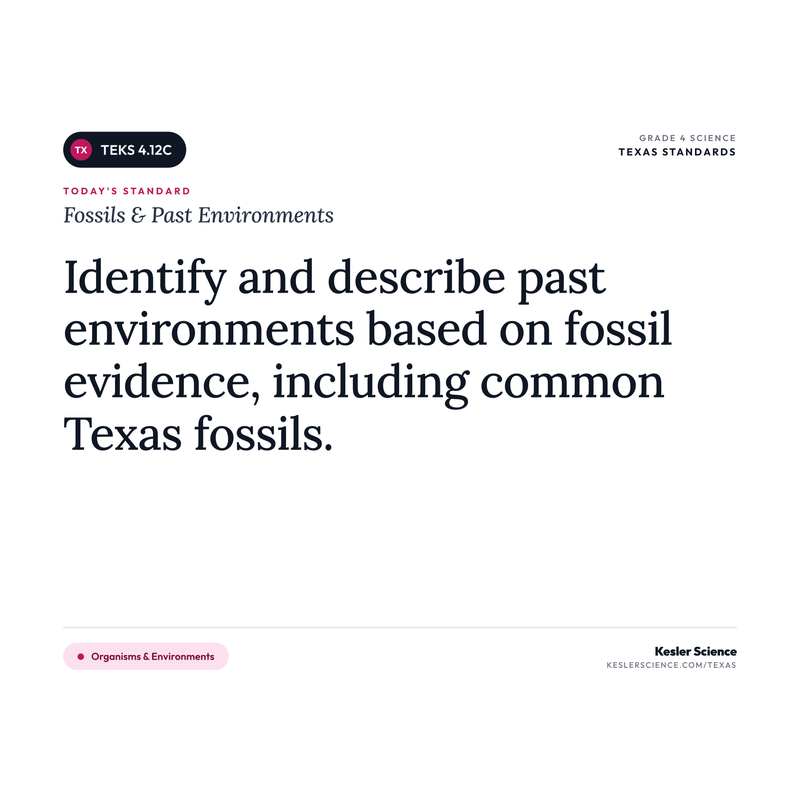
"Identify and describe past environments based on fossil evidence, including common Texas fossils."
💡 What This Standard Actually Means
"Identify and describe". Fourth graders are looking at fossils and using them like clues to figure out what an environment used to be like long ago. The TEKS specifically calls out common Texas fossils, which is a big deal. Texas has an amazing fossil record. Sea creatures like ammonites and crinoids (sea lilies) found in Texas limestone tell us much of Texas was once underwater. Dinosaur tracks at Glen Rose tell us about land animals walking on the edge of an ancient ocean. Mammoth bones from the Ice Age tell us about cooler grasslands and giant mammals. Each fossil is evidence of what the environment looked like at the time the creature was alive.
Fossils are time machines made of rock. When 4th graders see a fossilized seashell embedded in a piece of Texas limestone, they're looking at a clue from a past world. 4.12C is the standard where kids use fossil evidence to figure out what an environment used to look like, with a special focus on common Texas fossils.
Texas has an incredible fossil story to tell. Much of the state, including Central Texas, used to be covered by a shallow sea. We know this because the limestone in places like the Texas Hill Country is full of fossils of ammonites (extinct shelled sea creatures), crinoids (sea lilies that look like little stems with flowers), and other ocean animals. About 113 million years ago, the Glen Rose area was a coastline where dinosaurs walked through soft mud. Their footprints fossilized and you can still see dinosaur tracks at Dinosaur Valley State Park today. Way more recently, during the Ice Age (more than 60,000 years ago), giant mammoths roamed Texas grasslands. Their bones have been found at places like the Waco Mammoth National Monument.
The big idea is that the kind of fossil tells you the kind of environment. Sea creatures = the area was underwater. Dinosaur tracks in old mud = the area was a soft coastline. Mammoth bones in grasslands = the area was a cool, open prairie. By the end of this unit, kids should be able to look at a fossil, name what kind of environment it suggests, and explain how Texas's environments have changed over millions of years.
The most magical version of this lesson I've seen work is bringing in a real Texas limestone rock with crinoid stems and ammonite shells visible right on the surface. You can pick one up at a rock shop for about $6. Pass it around the room for 20 minutes. That little chunk of Hill Country rock blows kids' minds because they suddenly realize that where they live used to be at the BOTTOM OF AN OCEAN. If you can't get a real fossil, photos work fine. Show them three Texas fossil sites: ammonites in Hill Country limestone, dinosaur tracks at Glen Rose, mammoth bones at Waco. Each fossil tells a different story about a different time period when Texas looked completely different than it does now. The TEKS specifically asks for common Texas fossils, so don't drift into Tyrannosaurus Rex or trilobites from other states. Stay Texas-focused. Kids LOVE that the fossils came from their own backyard.
⚠️ Misconceptions Your Students May Have
These are some of the most common misconceptions. Knowing what to look for can help you get ahead of them.
"Fossils are just bones"
Fossils can be lots of things. Bones are common, but so are shells, teeth, footprints, leaf imprints, and even animal poop (yes, fossilized poop is real and is called coprolite). The dinosaur tracks at Glen Rose, Texas are footprints that hardened into rock. Crinoid fossils are stems and bodies of sea creatures. Any preserved evidence of an ancient living thing can be a fossil.
"Texas only has dinosaur fossils"
Texas has tons of fossils that aren't dinosaurs. Most of the limestone in Central Texas is full of ancient sea creature fossils like ammonites and crinoids. The Permian Basin has fossils from before dinosaurs even existed. The Waco area has Ice Age mammoth bones. Texas has fossils from many different time periods, not just the dinosaur age.
"If we find a fish fossil, it must have washed there from the ocean"
It's much more likely that the place USED to be underwater millions of years ago. Sea fossils get found all over Central Texas because that area was at the bottom of a shallow sea long ago. The animals lived where they died. The water has long since receded, but the fossils stayed in the rock. The fossil is evidence the place was once a sea, not that the fossil traveled.
"Fossils form fast, like in a few years"
Fossils take a long time to form. An animal has to be buried in the right kind of sediment, the soft parts decay away, and over thousands or millions of years, minerals slowly seep into the bones or shells, turning them into rock. The dinosaur tracks at Glen Rose are about 113 million years old. The ammonites in Texas limestone are even older. We're looking at things that took longer to form than humans have existed.
📓 Teaching Resources for 4.12C
These resources are aligned to this standard.


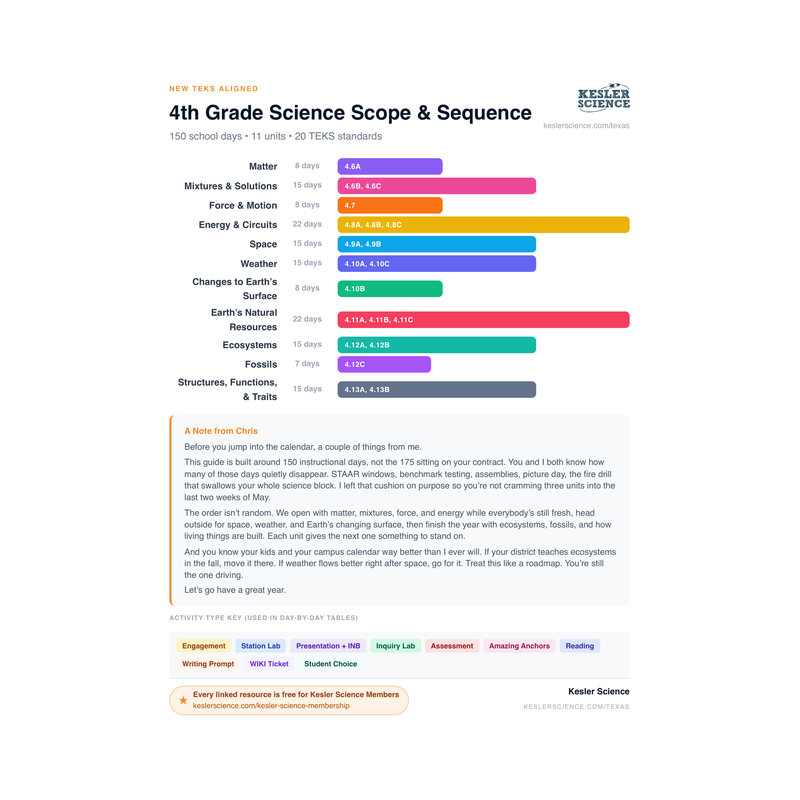
100% Aligned Lessons for Every TEKS You Teach
Kesler Science Plus puts thousands of ready-to-teach lessons and activities in your hands, so you can boost engagement and get your planning time back. Trusted by schools and districts all over the great state of Texas.
🌎 Phenomenon Ideas for 4.12C
Use these real-world phenomena to anchor your lesson. Show students the phenomenon first, let them wonder, then build toward Fossils & Past Environments as the explanation.
The Ocean in the Hill Country
Show a photo of a piece of Texas limestone with crinoid and ammonite fossils visible on the surface. Then show a map of Central Texas marked with all the places these fossils have been found. Then ask: "If we find sea creatures all over Hill Country, what does that tell us this area used to be?" The realization that the Hill Country used to be at the bottom of a sea is mind-blowing for 4th graders.
"Why would we find ocean fossils in places that are nowhere near the ocean today? What does that tell us about how the environment of Texas has changed over millions of years?"
Glen Rose Dinosaur Tracks
Show photos of the dinosaur footprints at Dinosaur Valley State Park near Glen Rose, Texas. The tracks are right there in the rock of the Paluxy River. Each track shows three giant toes pressed into what used to be soft mud 113 million years ago. Then ask: what kind of environment leaves muddy footprints behind to fossilize? Wet, soft ground near water. Glen Rose used to be a shoreline.
"How can a footprint turn into rock? What does the SHAPE of these tracks tell us about what kind of environment Glen Rose was 113 million years ago?"
The Waco Mammoth Surprise
Show photos from the Waco Mammoth National Monument. Workers digging there found bones from at least 24 mammoths, including a nursery herd that drowned about 65,000 to 72,000 years ago plus additional mammoths from later flood events at the same spot. Mammoths were giant Ice Age relatives of elephants. Show a size comparison: an adult Columbian mammoth was 12 to 14 feet tall at the shoulder. Then ask: "If mammoths lived in Waco, what kind of environment did Waco probably have at the time?" Cool, grassy, with rivers. Different from today.
"Mammoths were related to elephants. They needed lots of grass to eat and access to water. What does the fact that they lived in Waco tell us about what Waco used to look like?"
💡 Free Engagement Ideas for 4.12C
Ready-to-run activities you can drop straight into a lesson. Where one of these looks like a phenomenon from the section above, that is on purpose: show it first as the hook, then let students run it themselves.
Texas Fossil Match-Up
Print eight cards: four Texas fossils (ammonite, crinoid/sea lily, dinosaur track, mammoth bone) and four environment cards (shallow sea, ocean reef, muddy coastline, cool grassland with rivers). Kids match each fossil to the environment it points to. Use real photos of Texas fossil sites. The matching game forces them to use the fossil as evidence, exactly what the TEKS verb asks for.
Make-a-Mold Fossil Lab
Each kid gets a small ball of modeling clay. They press a shell, leaf, or small toy dinosaur into the clay and remove it, leaving an imprint. That imprint is a model of how a fossil track or mold forms. Then they pour a thin layer of plaster of Paris over the imprint. After it hardens, they have a "cast" fossil. Quick model that connects how real fossils are made.
Texas Fossil Site Map
Hand each kid a Texas outline map. Mark four real fossil sites: Hill Country (sea fossils), Glen Rose (dinosaur tracks), Waco (mammoths), and the Permian Basin (early reptiles and pre-dinosaur fossils). For each site, kids write what the environment was like at the time the creatures lived. Connects geography to time periods to environments.
Fossil Detective Story
Each kid picks one Texas fossil (ammonite, crinoid, dinosaur track, or mammoth bone). They write a one-page "detective story" from the fossil's point of view. Where they lived. What the environment was like. How they died and got buried. What they look like now. They illustrate at least three scenes. Locks in the use of fossils as evidence about ancient environments.
🎯 What Approaches, Meets, and Masters Thinking Look Like
Here is what student thinking at each level looks like on this one task, so you know what to look for and how to move a student up.
A class is digging in a hill in Central Texas. In the rock, they find lots of seashell fossils and a fossil of a sea snail. There is no ocean near this hill today. Use the fossils as clues. Describe what this place was probably like a long time ago, and explain how the fossils helped you know.
- The student names a past environment, not just the present-day hill.
- The fossils (seashells and a sea snail) are correctly read as ocean animals.
- The student says this place was once underwater, like a sea or ocean.
- The explanation connects the clue to the answer: sea animals lived here, so this used to be a sea.
- The student understands the animals lived here, instead of saying the fossils washed in from somewhere else.
- Bonus: the student notes that the environment changed over a very long time (the water dried up or moved away).
- The trickiest part: explaining that the sea came to the fossils long ago, not that the fossils traveled to the hill.
The fossils are seashells and a sea snail, so they came from the ocean. I think a big flood or a river washed them up the hill a long time ago and they got stuck in the rock. The hill itself was always a hill.
The seashells and the sea snail are ocean animals. They lived right here where we found them. That means this hill used to be underwater, like a sea or an ocean, a long time ago. The water is gone now, but the fossils stayed in the rock. So this dry hill was once covered by water.
The seashells and sea snail are ocean animals, and they lived here where we dug. So this hill used to be the bottom of a sea. Over millions of years the water dried up or moved away, the land became a hill, but the fossils stayed in the rock. The big idea is that the kind of fossil tells you the kind of place it used to be.
I can use that same idea on a different fossil. If a class found a giant mammoth bone in a flat grassy field instead, that would not mean a sea. A mammoth lived on cool, open grasslands, so the field was probably a cold prairie back in the Ice Age. Same rule: match the animal to the home it needed, and that tells you the old environment.
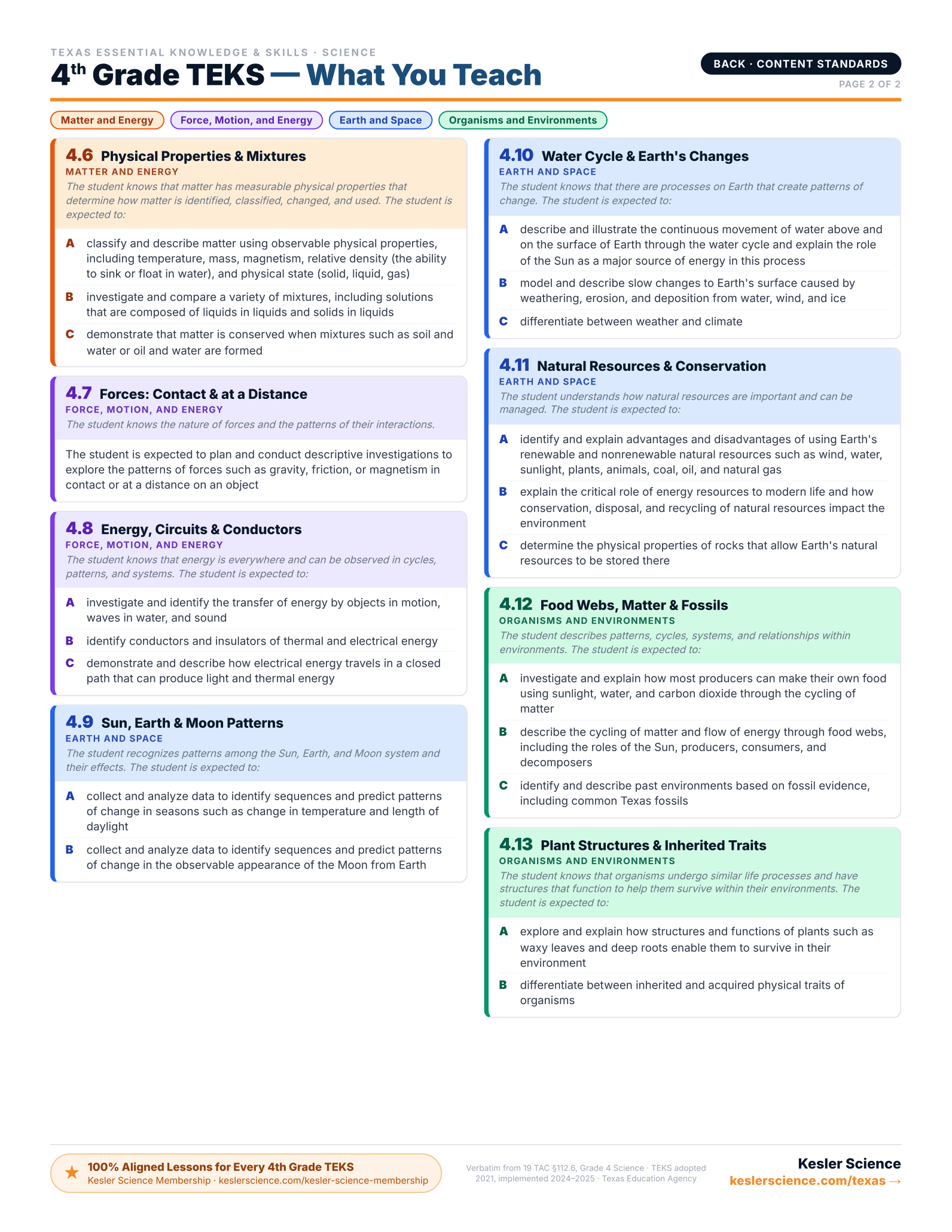
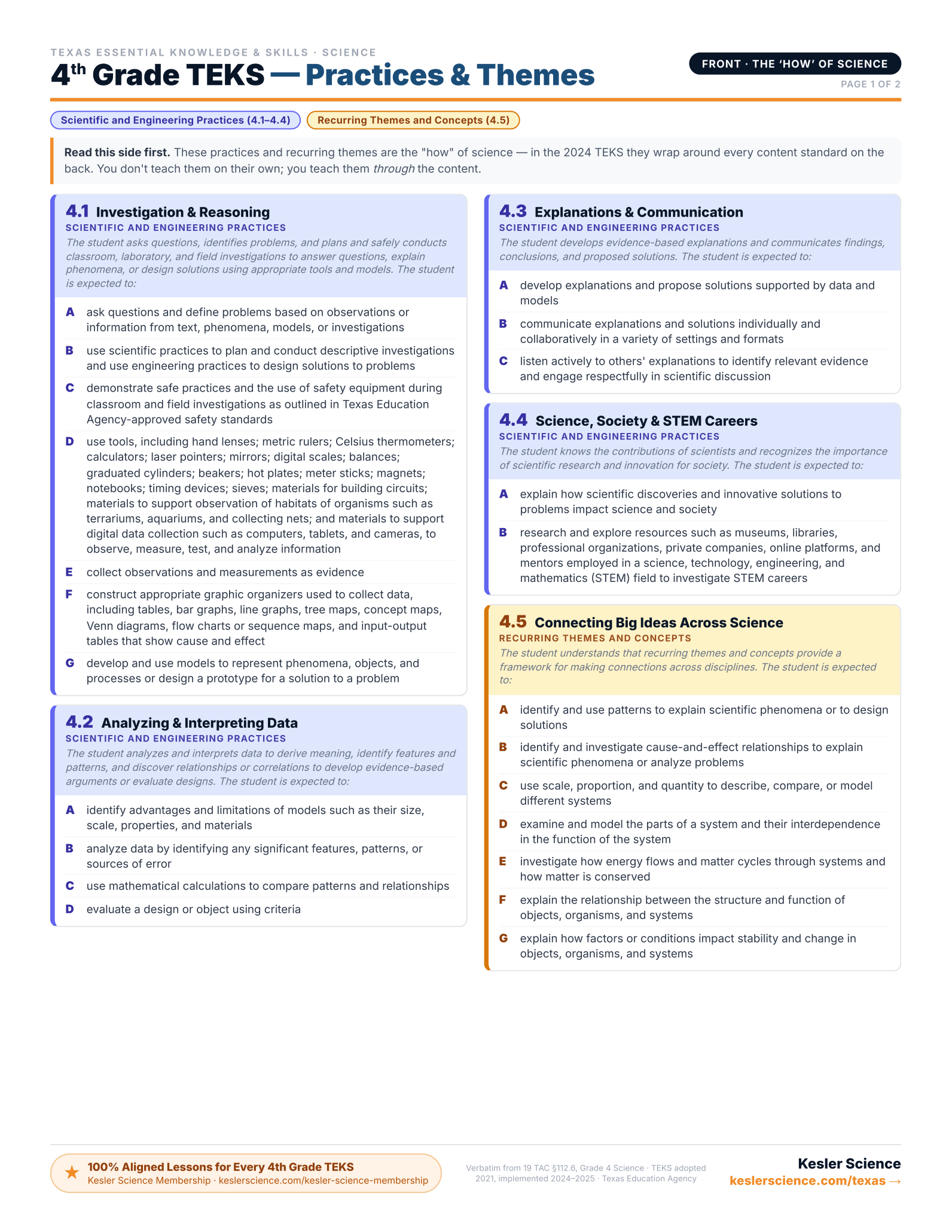
Every 4th-Grade Science TEKS on One Page
The color-coded, front-and-back cheat sheet I wish I'd had — every standard, organized by reporting category. Print it and reference it all year long. This will be your new favorite document!
Trusted Across Texas
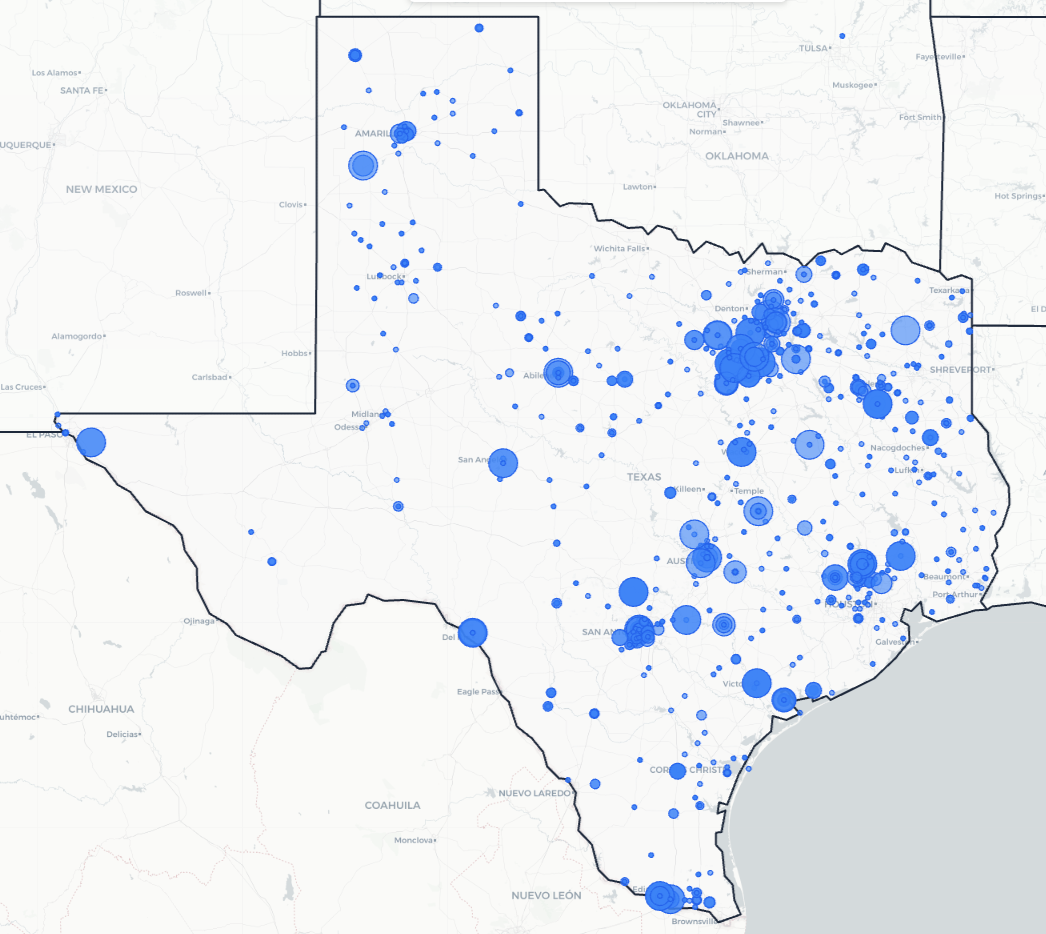
From the Rio Grande Valley to the Panhandle, Texas science teachers are using Kesler Science to save time and engage students.
Texas Schools and Districts
Love Kesler Science
What Teachers Are Saying
Give Your Science Teachers Everything They Need
School and district licenses give your teachers access to every resource they need, including station labs, inquiry labs, anchoring phenomena, presentations, escape rooms, and much more. One purchase covers the grade levels you need.
- PO-friendly. We accept purchase orders
- Volume discounts for 11+ teachers
- Complimentary Kesler Science Plus orientation for 4+ teachers
- Three free implementation PD sessions for departments of 11+
- Aligned to the 2024 TEKS standards
See It in Action
Book a walkthrough and we'll show you how Kesler Science fits your campus.
Book Demo CallNo pressure, no hard sell