.png?width=375&height=100&name=WebPage%20logo%20with%20curves%202026%20(8).png)
How Producers Make Food
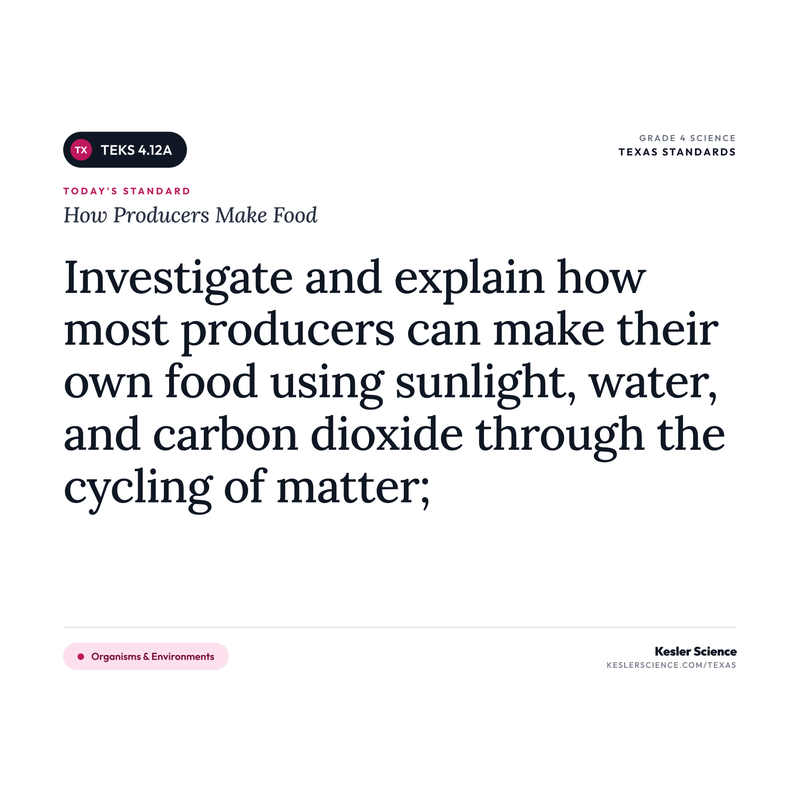
"Investigate and explain how most producers can make their own food using sunlight, water, and carbon dioxide through the cycling of matter."
💡 What This Standard Actually Means
"Investigate and explain". Fourth graders are doing the experiment first and then putting it into their own words. The TEKS names the three things plants need to make their own food: sunlight, water, and carbon dioxide. Plants take in those three ingredients and make food (sugar) inside their leaves. They're called producers because they produce their own food. The "cycling of matter" part means that the matter (water, gases, sugars) keeps moving through the plant and back into the environment as part of how it works.
Plants are the only living things in your local ecosystem that can make their own food. Animals can't. Mushrooms can't. People definitely can't. Plants can. That's why scientists call them producers. They produce food, not just for themselves but eventually for every animal that eats them and every animal that eats those animals. 4.12A is the standard where 4th graders learn HOW plants pull off this trick.
The TEKS names exactly three ingredients a plant needs: sunlight, water, and carbon dioxide. Sunlight is the energy source. Water comes up through the roots. Carbon dioxide comes from the air through tiny pores on the leaves. Inside the leaves, the plant uses these three ingredients to make sugar (the plant's food). Most kids will hear the word "photosynthesis" by the end of this unit, but the TEKS doesn't require the term. The TEKS requires that kids understand the inputs (sunlight, water, CO2), what the plant produces (food), and that matter is cycling through the plant.
By the end of this unit, kids should be able to look at a plant and explain that it's making its own food, name the three things it needs, and explain that animals can't do this (which is why animals have to eat plants or other animals). They should also see plants as the start of every food chain in the ecosystem. The standard says "investigate," so kids need real plant experiments, not just a slideshow about photosynthesis.
If I were teaching this, I'd run two simple plant experiments side by side. Experiment 1: two identical plants, one in the sunny window, one in a dark closet. After a week, the closet plant looks pale and sad. The sunny one is thriving. Experiment 2: two identical plants in the sun, one watered every day, one not watered at all. The unwatered one wilts. Together, the two experiments prove that BOTH sunlight AND water matter. Then I'd talk about the third ingredient, carbon dioxide, which is the one you can't really deny the plant in a 4th-grade classroom. Explain that we breathe out CO2, plants take it in through their leaves, and that's how the third ingredient gets in. The "cycling" piece comes back to the air because plants release oxygen as part of the process, which we breathe back in. The big "aha" moment is when kids realize that animals and plants depend on each other for the gases. Don't dive into the formula. Just hit the three ingredients and the idea that the plant is making food.
⚠️ Misconceptions Your Students May Have
These are some of the most common misconceptions. Knowing what to look for can help you get ahead of them.
"Plants get their food from the soil"
Plants get water and a few minerals from the soil, but not food. Plants MAKE their own food inside their leaves using sunlight, water, and carbon dioxide. Soil isn't lunch for a plant. It's more like the plumbing system that delivers water and a few extra ingredients. The actual food gets built inside the leaf.
"Plants only need water and dirt"
Plants need three things: sunlight, water, AND carbon dioxide. Without sunlight, the plant can't power the process of making food. Without water, the chemistry can't happen. Without carbon dioxide from the air, there's no carbon to build sugar molecules. All three ingredients are required. Skip any one and the plant struggles.
"Animals can make their own food too"
Animals cannot make their own food. People can't either. We have to eat plants or animals to get our energy. That's exactly why plants are called producers and animals are called consumers. Without plants doing the food-making job, animals would have nothing to eat and ecosystems would collapse.
"The food a plant makes goes straight into its roots"
The food (sugar) is made in the leaves and travels through the plant to wherever it's needed: down to the roots, up to the flowers and fruit, into the stem. The leaves are like the kitchen, and the rest of the plant is the dining table. The roots' main job is to bring up water, not to make food.
📓 Teaching Resources for 4.12A
These resources are aligned to this standard.


100% Aligned Lessons for Every TEKS You Teach
Kesler Science Plus puts thousands of ready-to-teach lessons and activities in your hands, so you can boost engagement and get your planning time back. Trusted by schools and districts all over the great state of Texas.
🌎 Phenomenon Ideas for 4.12A
Use these real-world phenomena to anchor your lesson. Show students the phenomenon first, let them wonder, then build toward How Producers Make Food as the explanation.
The Closet Plant
Sprout a handful of bean seeds in damp paper towels a week or two before you need them, then pot up two matched seedlings that already have green leaves. Water them both the same. Put one in the sunny windowsill. Put the other in a dark closet. Check both daily. After a week, the windowsill plant is green and still growing. The closet plant has gone pale and yellow and is stretched out and floppy, reaching for a light it cannot find. Same water, same soil. The only thing different was sunlight, and that one ingredient made all the difference.
"Both plants got the same water and the same dirt. So why is one healthy and one sick? What does this tell you about what plants need to make food?"
The Bag of Breath
Place a healthy potted plant inside a clear gallon zip-top bag. Right before sealing, have a kid blow into the bag (adding extra carbon dioxide from their breath). Seal it tight and place it in the sunny window. After a few hours, you can sometimes see tiny droplets of water on the inside of the bag (that's the plant releasing water vapor) and the plant is still happily green. Animals breathing out provide one of the three ingredients plants need.
"Why would the plant be doing well even though it's sealed in a bag with no fresh air? What did your breath give the plant?"
The Forgotten Plant
Show two photos. Photo 1: a healthy houseplant being watered every week. Photo 2: a sad, wilted plant someone forgot about during spring break. Same plant, two weeks apart. The wilted one couldn't keep making food because it ran out of water. The leaves drooped, the color faded, and the food production stopped. Add water and most plants come back, but the demo shows what happens when one of the three ingredients runs out.
"What ingredient was missing for the wilted plant? Why did missing that one thing affect the WHOLE plant? What would happen if we left it without water for another week?"
💡 Free Engagement Ideas for 4.12A
Ready-to-run activities you can drop straight into a lesson. Where one of these looks like a phenomenon from the section above, that is on purpose: show it first as the hook, then let students run it themselves.
Three-Cup Plant Experiment
Each group starts with three matched bean seedlings, already sprouted and green, in three identical cups of soil. Cup 1 gets sunlight + water (the control). Cup 2 gets sunlight but NO water. Cup 3 gets water but NO sunlight (covered with a box). Kids predict what will happen, then track all three for one week. The results clearly show that BOTH sunlight and water are required. Carbon dioxide is the harder one to test in class, so connect it through discussion.
Label-the-Plant Diagram
Each kid gets a printed plant diagram. They draw arrows for the three ingredients: sunlight (arrow pointing at the leaves from the sun), water (arrow going up from the roots), carbon dioxide (arrow into the leaves from the air). They draw an arrow for the food being made, with a label that says "sugar made in the leaves." Then they write three sentences explaining each input. Locks in the ingredients with both visuals and words.
Producer Hunt
Walk the class around the schoolyard or a nearby park. Each kid has a clipboard and has to find five different plants (a tree, grass, a flower, a weed, a bush). For each one, they sketch it and answer two questions: "Where is its sunlight coming from?" and "Where is its water coming from?" Connects the standard to the actual ecosystem outside the school.
Producer vs. Consumer Sort
Print a stack of 20 living-thing cards. Some are plants (oak tree, sunflower, grass, pine tree, cactus). Some are animals (deer, hawk, mouse, snake, person). Kids sort them into two columns: PRODUCERS (make their own food using sunlight, water, and CO2) and CONSUMERS (have to eat other living things). Then for each producer, they list the three ingredients it uses. Quick reinforcement of the term and the ingredients.
🎯 What Approaches, Meets, and Masters Thinking Look Like
Here is what student thinking at each level looks like on this one task, so you know what to look for and how to move a student up.
A bean plant is growing on a sunny windowsill. Name the three things this plant needs to make its own food. Then explain, in your own words, how the plant uses those three things to make its food.
- Names the plant a producer, or says the plant makes its own food.
- Lists all three things the plant needs: sunlight, water, and air (carbon dioxide).
- Says the sunlight gives the plant the energy to make food.
- Says the water comes up through the roots and the carbon dioxide comes in from the air.
- Explains that the food (sugar) is made inside the leaves, not pulled in from somewhere.
- Knows the soil is not the plant's food: the roots bring up water, but the food is built by the plant itself.
The plant needs sun and water to grow. It gets its food from the dirt. The roots pull the food up out of the soil so the plant can eat it and get big.
The plant needs three things: sunlight, water, and carbon dioxide from the air. The sunlight gives it energy. The water comes up through the roots. The air comes in through the leaves. The plant is a producer, so it makes its own food inside its leaves out of those three things. The food does not come from the dirt. The plant builds it.
The plant needs sunlight, water, and carbon dioxide from the air. The roots bring up the water, the leaves take in the air, and the sunlight gives the energy. The plant uses all three to make sugar inside its leaves, which is its food. We call it a producer because it makes its own food instead of eating something else.
This is why a plant in a dark closet can still have plenty of water and good soil but slowly die. It has the water and the air, but with no sunlight it has no energy to make food. It is also why animals are different. A rabbit cannot make its own food no matter how much sun it sits in, so it has to eat plants to get the food the plant already made.
Every 4th-Grade Science TEKS on One Page
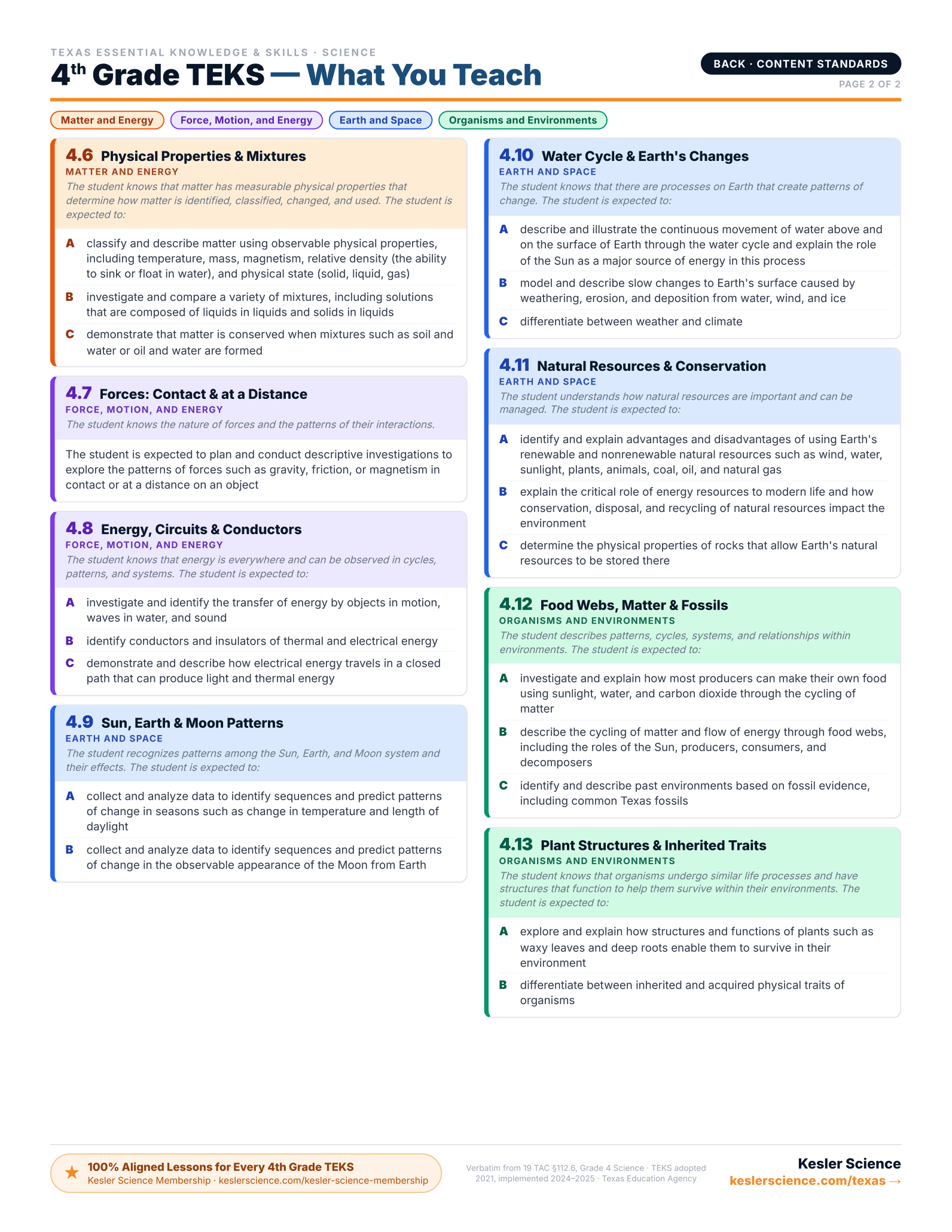
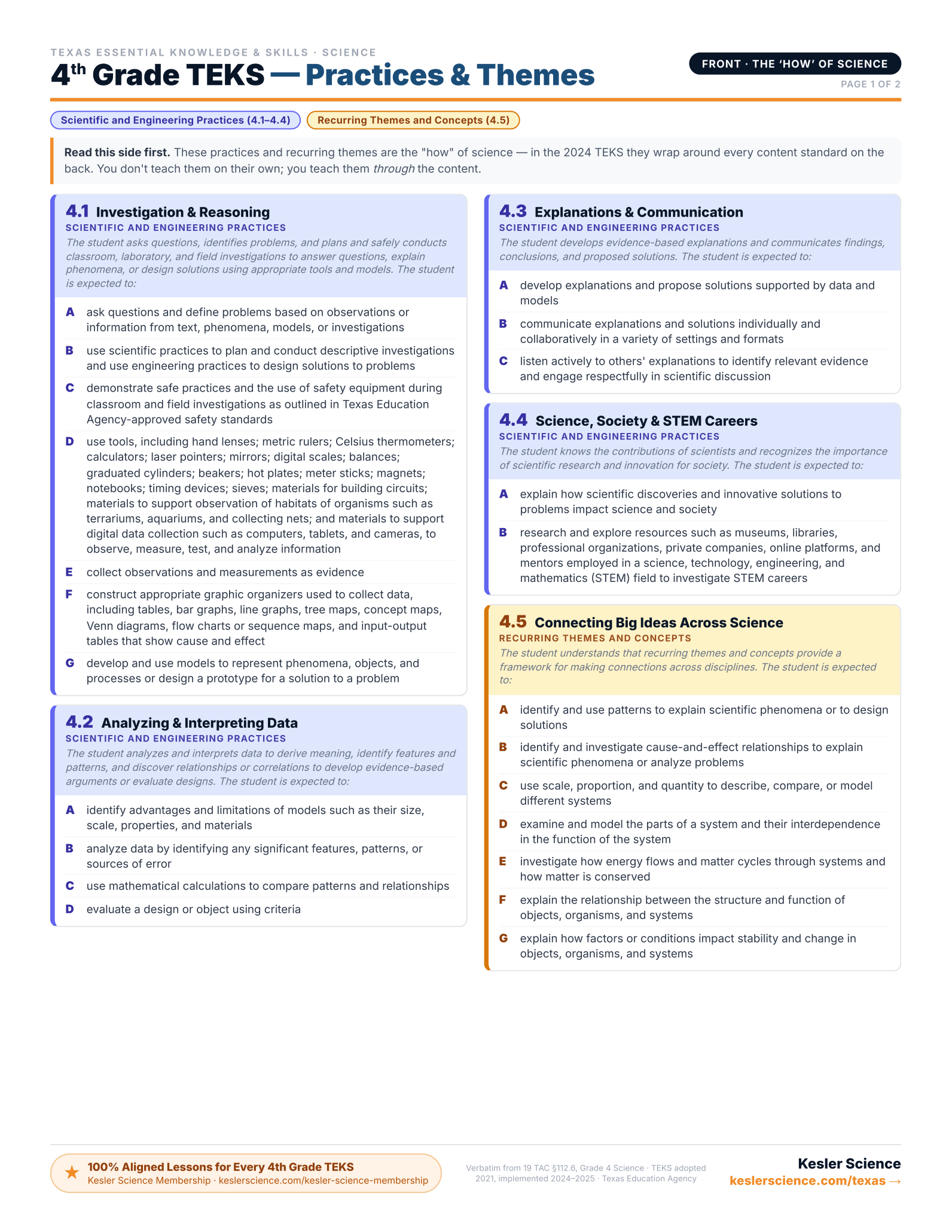
The color-coded, front-and-back cheat sheet I wish I'd had — every standard, organized by reporting category. Print it and reference it all year long. This will be your new favorite document!
Trusted Across Texas
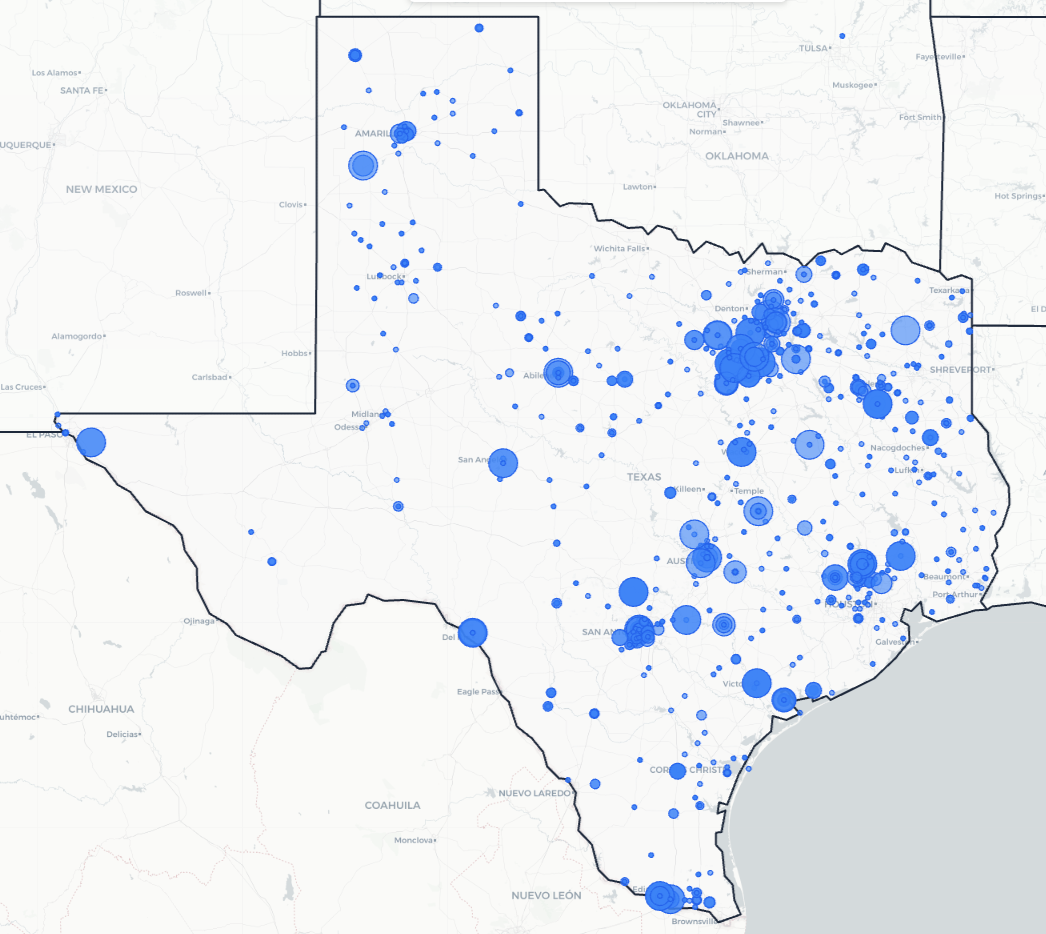
From the Rio Grande Valley to the Panhandle, Texas science teachers are using Kesler Science to save time and engage students.
Texas Schools and Districts
Love Kesler Science
What Teachers Are Saying
Give Your Science Teachers Everything They Need
School and district licenses give your teachers access to every resource they need, including station labs, inquiry labs, anchoring phenomena, presentations, escape rooms, and much more. One purchase covers the grade levels you need.
- PO-friendly. We accept purchase orders
- Volume discounts for 11+ teachers
- Complimentary Kesler Science Plus orientation for 4+ teachers
- Three free implementation PD sessions for departments of 11+
- Aligned to the 2024 TEKS standards
See It in Action
Book a walkthrough and we'll show you how Kesler Science fits your campus.
Book Demo CallNo pressure, no hard sell