.png?width=375&height=100&name=WebPage%20logo%20with%20curves%202026%20(8).png)
The Water Cycle & the Sun
"Describe and illustrate the continuous movement of water above and on the surface of Earth through the water cycle and explain the role of the Sun as a major source of energy in this process;"
💡 What This Standard Actually Means
"Describe and illustrate". Fourth graders are explaining the water cycle in words AND drawing it. The TEKS asks for two specific things: the continuous movement of water above and on Earth's surface, and the Sun's role as a major source of energy driving the whole thing. The water cycle is a loop: water on the ground turns into vapor (evaporation), that vapor rises and forms clouds (condensation), the clouds drop water back down (precipitation), and the water collects again (collection or runoff). The Sun is what makes the loop run. Without the Sun's energy, water wouldn't evaporate and the whole cycle would stop.
The water on Earth never sits still. Every drop of water in your cup, the puddle outside, and the clouds above your head is part of one giant cycle that's been running since long before you were born. 4.10A is the standard where 4th graders trace that loop and figure out what powers it.
Here's how the cycle works. The Sun heats up water on Earth, like the water in oceans, lakes, rivers, puddles, and even on plant leaves. That heat energy turns the liquid water into invisible water vapor that rises into the air. That step is called evaporation. Up in the cooler part of the sky, the vapor turns back into tiny liquid droplets that group together into clouds. That step is called condensation. When the droplets get heavy enough, they fall back to Earth as rain, snow, sleet, or hail. That step is called precipitation. Then the water collects in oceans, rivers, soil, and underground, and the whole cycle starts over.
The TEKS specifically calls out the Sun as a major source of energy in this process, and that's a critical part of the standard. Without the Sun's heat, very little water would evaporate. Without evaporation, almost no clouds would form. Without clouds, hardly any rain would fall. The Sun is the engine that keeps the whole water cycle running. By the end of this unit, kids should be able to draw the cycle, label every step, and explain why none of it would work without the Sun.
If I were teaching the water cycle, I'd lean on one demo and one drawing. The demo is a "water cycle in a bag." Take a clear zip-top bag, draw a sun on the top with a marker, and a wavy ocean line on the bottom. Pour in a little water with a few drops of blue food coloring. Tape the bag to a sunny window. Within an hour, kids can see water droplets up at the top of the bag, condensed there from the warmth of the sun. Within a day, those droplets are big enough to slide back down. There's the whole cycle in a sandwich bag. Then have every kid draw a labeled water cycle diagram with arrows showing the loop. The drawing locks it in. Don't skip making them put the Sun in their drawing with a label that says "energy source." That's what the TEKS is asking for, and it's the one piece kids forget if you don't make it explicit.
⚠️ Misconceptions Your Students May Have
These are some of the most common misconceptions. Knowing what to look for can help you get ahead of them.
"Water in a puddle just disappears"
The water doesn't disappear. It evaporates. The Sun's energy turns the liquid water into invisible water vapor that rises into the air. The water is still there, just floating around as a gas. It'll come back down later as rain or dew somewhere else. Same water, different form.
"Clouds are made of cotton, smoke, or fluff"
Clouds are made of millions of tiny liquid water droplets (or ice crystals up high). When water vapor rises and cools off, it changes back into liquid droplets. Lots of those droplets together make a cloud. They look fluffy from below, but if you flew through one, you'd just feel cold mist.
"The water cycle has a beginning and an end"
It's a continuous loop. Water never stops moving through the cycle. The same water that fell as rain a thousand years ago could be in your water bottle right now. Every step leads back into the next, and the cycle just keeps going. The TEKS uses the word "continuous" on purpose.
"The water cycle would still work without the Sun"
The Sun is the engine for the whole thing. The Sun's energy is what heats up water and causes evaporation. Without the Sun, water on Earth would just sit there. No evaporation, no clouds, no rain. The TEKS specifically says the Sun is a major source of energy in this process, and it's not optional. It's the start of every step.
📓 Teaching Resources for 4.10A
These resources are aligned to this standard.


100% Aligned Lessons for Every TEKS You Teach
Kesler Science Plus puts thousands of ready-to-teach lessons and activities in your hands, so you can boost engagement and get your planning time back. Trusted by schools and districts all over the great state of Texas.
🌎 Phenomenon Ideas for 4.10A
Use these real-world phenomena to anchor your lesson. Show students the phenomenon first, let them wonder, then build toward The Water Cycle & the Sun as the explanation.
The Cold-Glass Mystery
Pour a glass of ice water and set it on a desk in a warm room. Within five minutes, the outside of the glass is dripping wet. The kids will say the glass is leaking. It isn't. The water on the outside came from the air. Water vapor in the warm room hit the cold glass and condensed back into liquid. Same thing that makes clouds, happening on a cup right in front of them.
"Where did the water on the outside of the glass come from? What does this tell us about water that we can't always see?"
The Sidewalk Puddle Story
Pour a small puddle of water on a sidewalk on a sunny day, or take a photo of one outside the school. Come back two hours later. The puddle is gone. There's no drain, no animals drank it, nothing. The Sun heated it, the water evaporated, and now it's invisible vapor floating in the air above the school.
"The puddle vanished but no one took it away. Where did all that water go? What part of the water cycle did we just watch?"
The Water Cycle in a Bag
Take a zip-top bag, draw a sun on the top with a marker, and a wavy "ocean" on the bottom. Pour in a tablespoon of water with a few drops of blue food coloring. Seal it. Tape it to a sunny window. Two hours later, droplets have appeared at the top of the bag. By the next day, the droplets are sliding back down to the "ocean" at the bottom. The whole water cycle, looping inside a sandwich bag.
"Where are the droplets at the top coming from? Why do they slide back down? What's the role of the sun coming through the window in this whole thing?"
💡 Free Engagement Ideas for 4.10A
Ready-to-run activities you can drop straight into a lesson. Where one of these looks like a phenomenon from the section above, that is on purpose: show it first as the hook, then let students run it themselves.
Build-a-Bag Water Cycle
Every kid makes their own water cycle bag (zip-top bag, water with food coloring, drawn-on sun). Tape them to a sunny window for two days. Each kid keeps a daily observation log: drawings of what the bag looks like at hour 1, hour 4, day 1, and day 2. They label evaporation and condensation in their drawings. Easy hands-on win.
Water Cycle Mural
Draw a giant water cycle on butcher paper across the classroom wall. Each kid gets one component to draw and label: ocean, river, sun, evaporation arrows, clouds, rain, mountain runoff. Together they assemble the cycle on the wall. The Sun is colored bigger than anything else with the words "ENERGY SOURCE" written under it. The mural stays up the whole unit.
Trace-a-Drop Story
Each kid writes a one-page story from the perspective of a single drop of water. The drop has to start somewhere (ocean, lake, puddle), get evaporated by the Sun, condense into a cloud, fall as rain, and land somewhere new. They illustrate four scenes from their story. The writing forces them to use every step in the right order.
Sun-Powered Evaporation Race
Three identical small bowls with the same amount of water in each. Bowl 1 sits in direct sunlight. Bowl 2 sits in a shady corner of the room. Bowl 3 sits in a dark cabinet. After 24 hours, kids measure the leftover water in each bowl with a graduated cylinder. The sunny bowl has the least water left. The dark bowl is mostly full. Direct proof that the Sun's energy speeds up evaporation, exactly what the TEKS calls out.
🎯 What Approaches, Meets, and Masters Thinking Look Like
Here is what student thinking at each level looks like on this one task, so you know what to look for and how to move a student up.
After it rains, a puddle sits on the playground. The next day is sunny, and by the afternoon the puddle is gone. Draw and explain what happened to the water in the puddle. Be sure to tell what the Sun did and where the water went.
- A drawing of the puddle that shows the water going up into the air, not just an empty spot of dry ground.
- The word evaporation, or a clear plain-words version of it (the water turned into a gas and rose into the air).
- The Sun shown or named as the thing that heated the water.
- A clear statement that the water did not disappear, it changed into water vapor.
- The idea that the water is still around, just in a different form, and could come back later as rain.
- An explanation that connects the Sun's heat to the water leaving the puddle, not two facts sitting side by side.
- The Sun's role handled correctly: the Sun is the energy that powers the change, not just something that happened to be in the sky. That is the easiest part to leave out.
The puddle was full of water. Then the Sun came out and it got hot. The next day the water was all gone. The Sun dried it up and made the puddle disappear.
The water did not disappear. The Sun's heat warmed up the puddle and turned the water into water vapor. Water vapor is water as a gas, and you can't see it. The vapor floated up into the air. The water is still here, it just changed into a gas. That is called evaporation.
The Sun's heat gave the water energy and turned it into water vapor that rose into the air. That step is evaporation. The water did not disappear, it just changed into a gas we can't see. Later it can cool off, turn back into tiny drops, make a cloud, and fall again as rain. The Sun is what makes all of this happen, because without its heat the water would just sit in the puddle and nothing would change.
That is also why wet clothes dry faster on a sunny day than a cloudy one. The Sun's heat does the same job it did with the puddle. It turns the water in the clothes into vapor that floats away. More Sun means more energy, so the water leaves faster.
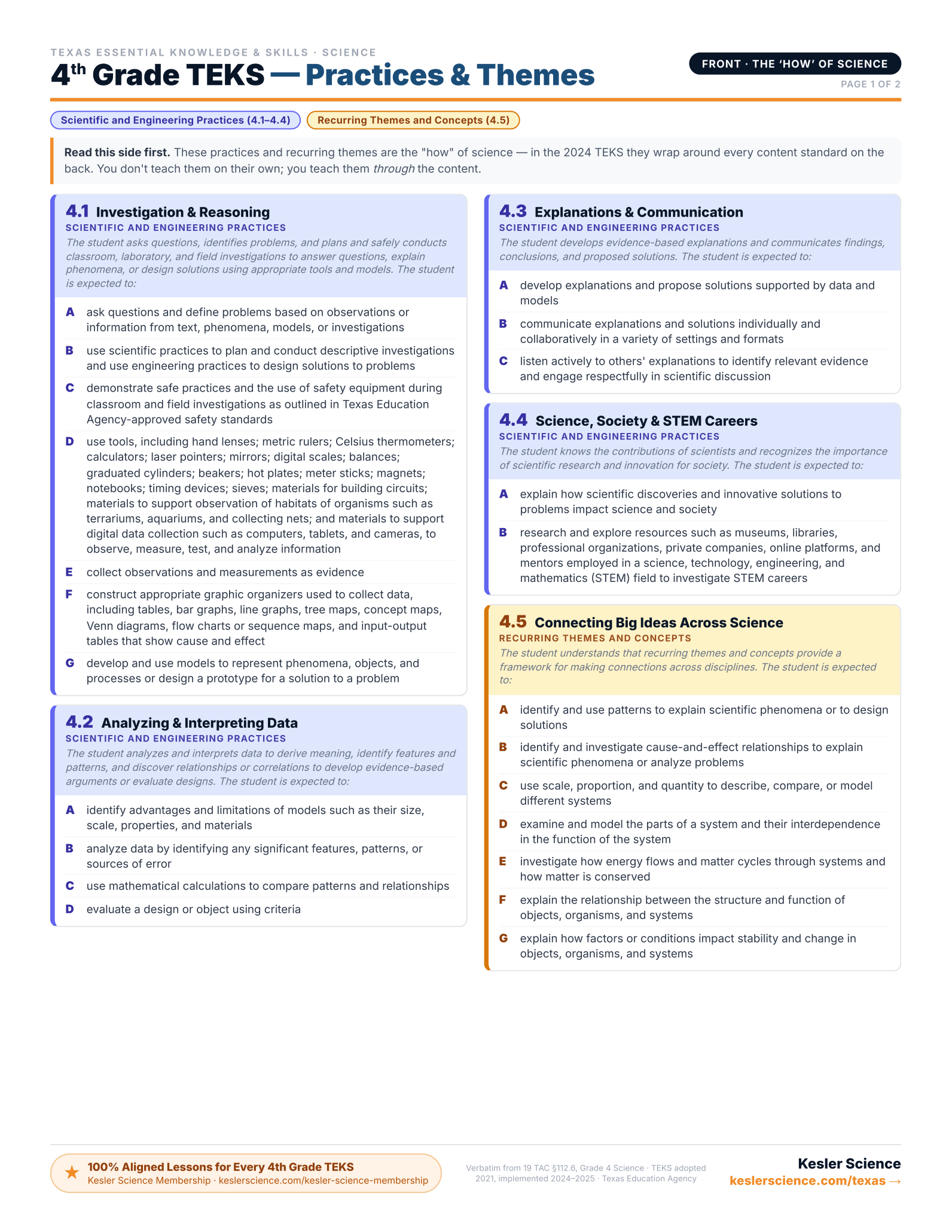
Every 4th-Grade Science TEKS on One Page
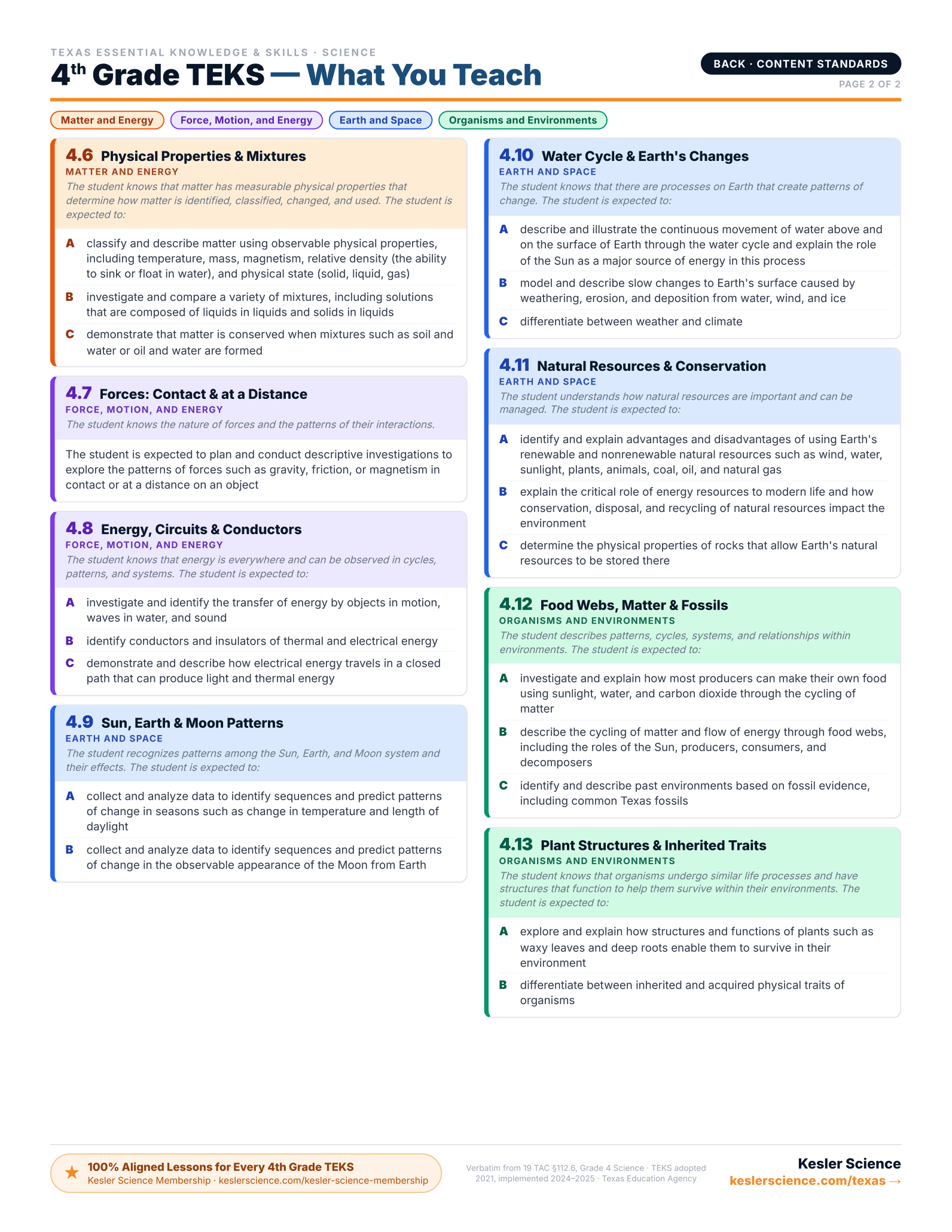
The color-coded, front-and-back cheat sheet I wish I'd had — every standard, organized by reporting category. Print it and reference it all year long. This will be your new favorite document!
Trusted Across Texas
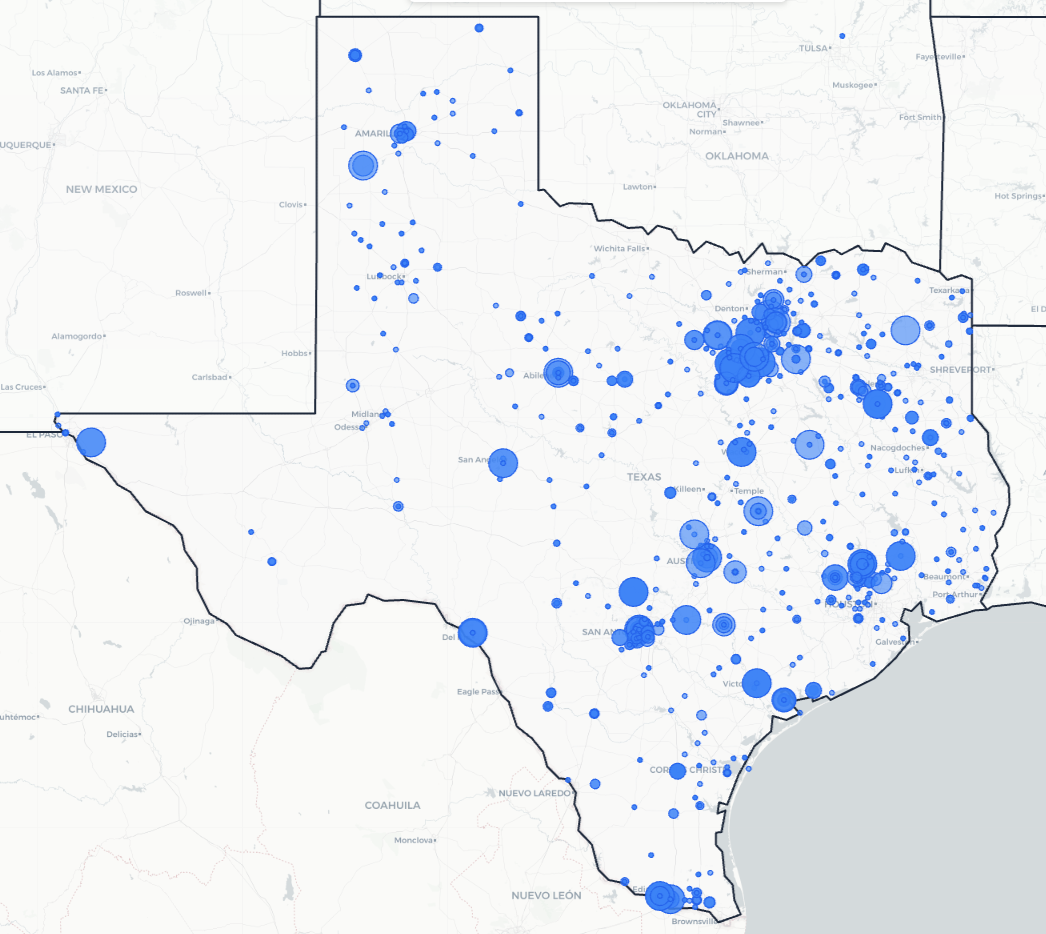
From the Rio Grande Valley to the Panhandle, Texas science teachers are using Kesler Science to save time and engage students.
Texas Schools and Districts
Love Kesler Science
What Teachers Are Saying
Give Your Science Teachers Everything They Need
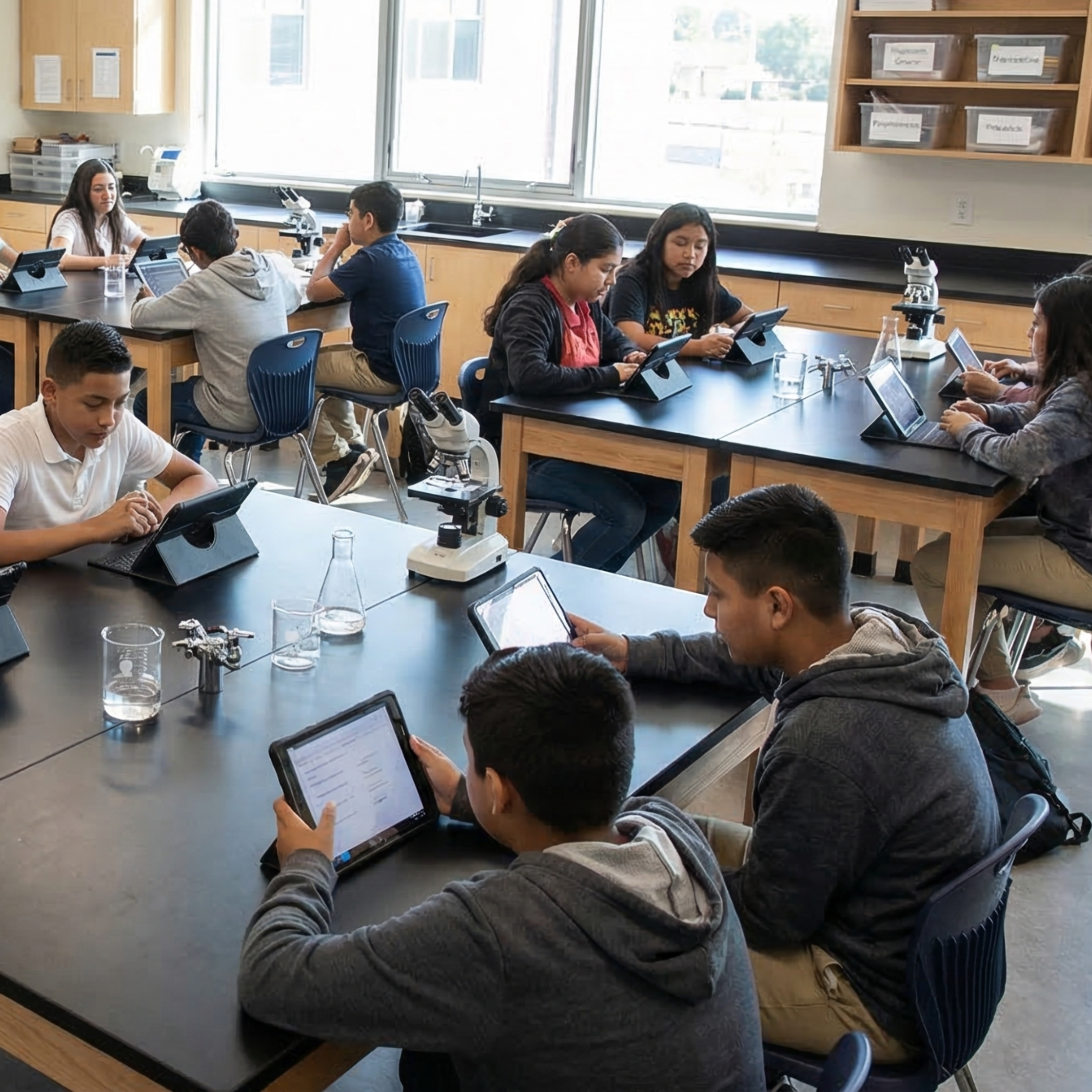
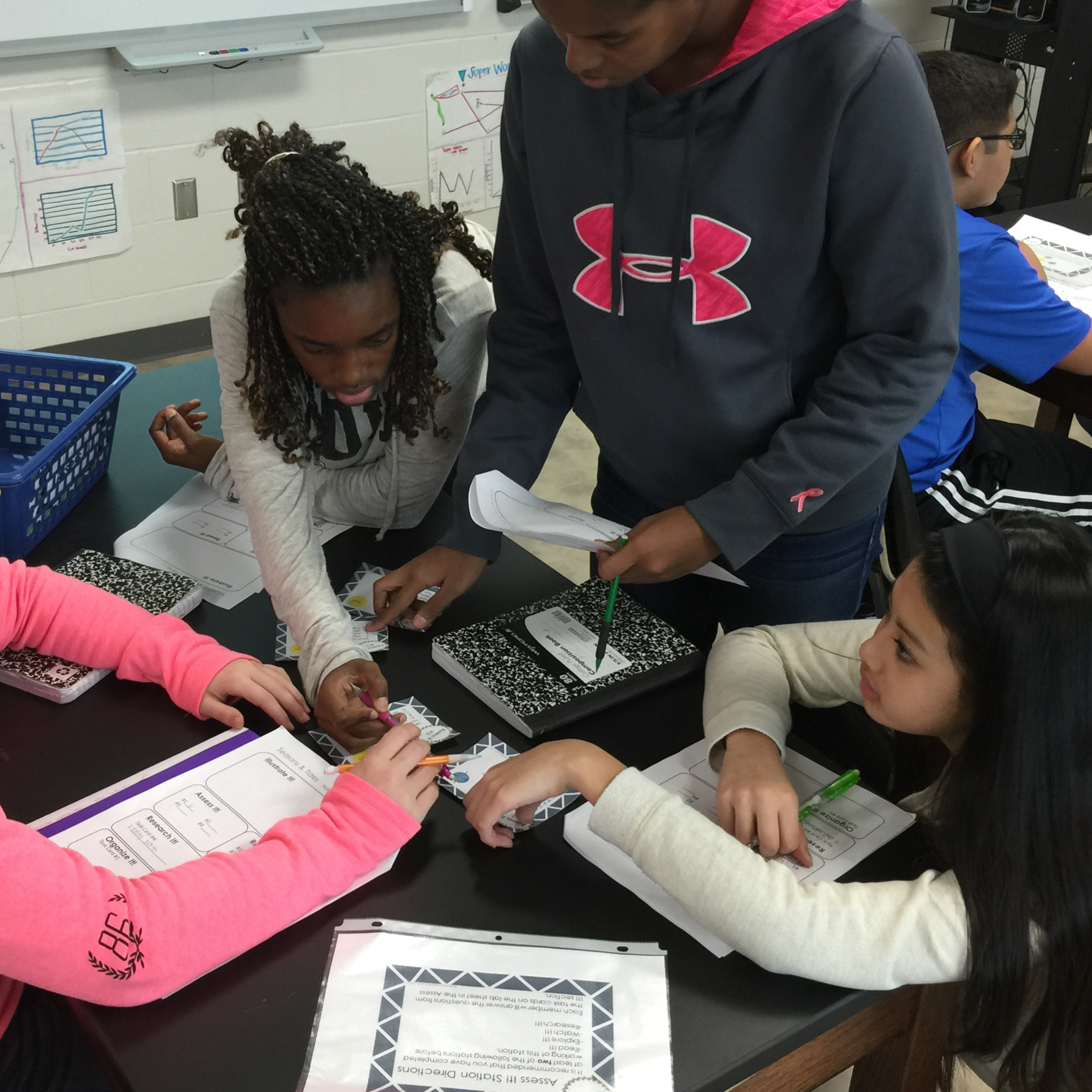
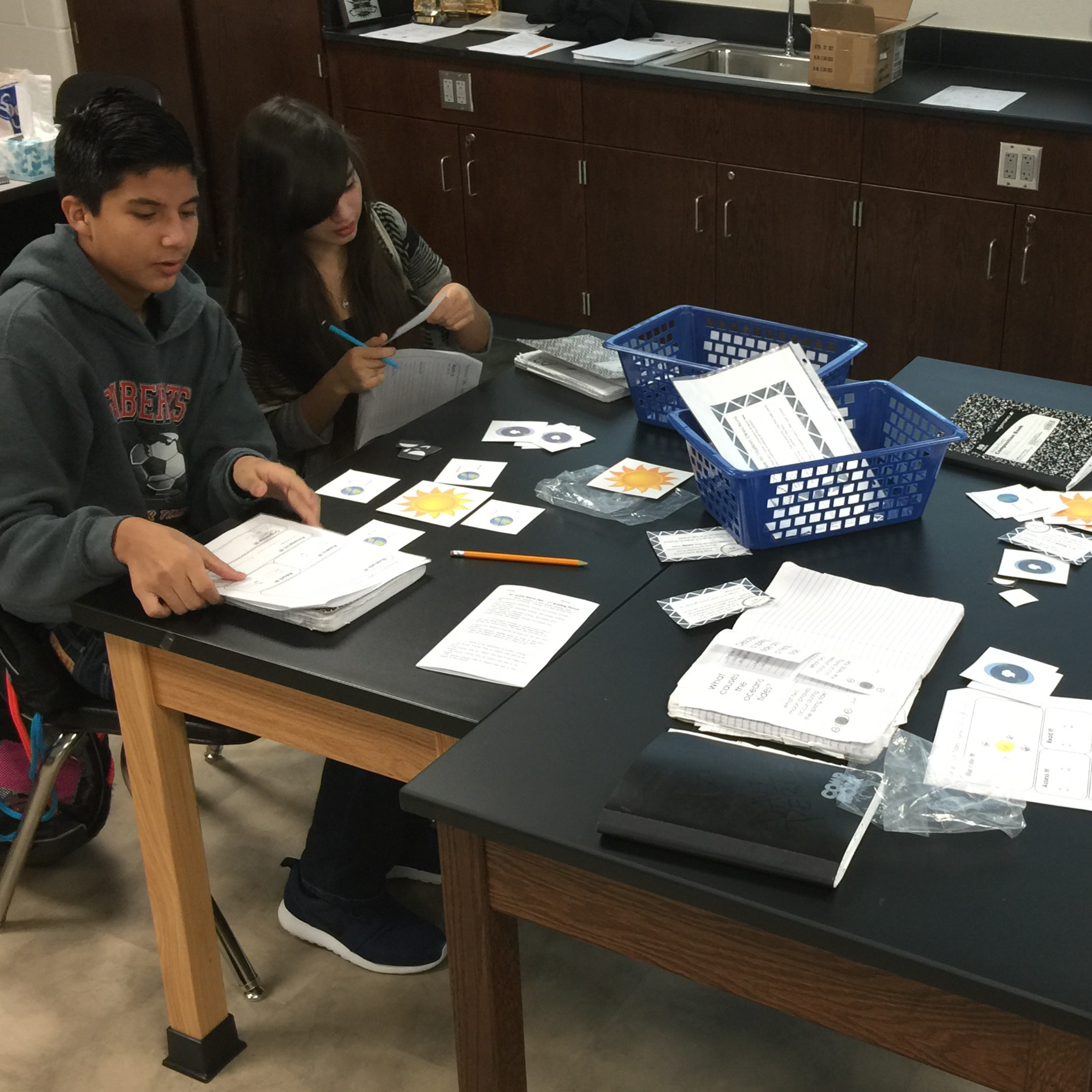
School and district licenses give your teachers access to every resource they need, including station labs, inquiry labs, anchoring phenomena, presentations, escape rooms, and much more. One purchase covers the grade levels you need.
- PO-friendly. We accept purchase orders
- Volume discounts for 11+ teachers
- Complimentary Kesler Science Plus orientation for 4+ teachers
- Three free implementation PD sessions for departments of 11+
- Aligned to the 2024 TEKS standards
See It in Action
Book a walkthrough and we'll show you how Kesler Science fits your campus.
Book Demo CallNo pressure, no hard sell