.png?width=375&height=100&name=WebPage%20logo%20with%20curves%202026%20(8).png)
Weathering, Erosion & Deposition
"Model and describe slow changes to Earth's surface caused by weathering, erosion, and deposition from water, wind, and ice; and"
💡 What This Standard Actually Means
"Model and describe". Fourth graders are building physical models and explaining what they show. The TEKS names three slow processes: weathering (rock breaking down into smaller pieces), erosion (those pieces being moved somewhere else), and deposition (the pieces being dropped off in a new spot). The TEKS also names three things that cause those processes: water, wind, and ice. Three processes times three causes equals nine combinations kids should be able to spot in the real world. None of it happens fast. The standard specifically calls these "slow changes."
The Earth's surface looks the way it does because of things that have been happening slowly for thousands and millions of years. Mountains used to be sharper. Beaches used to be cliffs. Rivers used to run in different places. 4.10B is the standard where 4th graders learn the three processes that constantly reshape the land, plus the three forces that drive them.
The processes go in order. First, weathering breaks rocks into smaller pieces. A crack in a sidewalk freezes overnight, expands, and chips a piece off. A wave smashes a chunk of cliff into pebbles. A windstorm sandblasts a rock face into sand. Second, erosion picks up those pieces and moves them. A river carries pebbles downstream. The wind blows sand across a desert. A glacier scrapes dirt and rocks for miles. Third, deposition drops the pieces off in a new place. The river slows down and dumps its load to make a sandbar. The wind drops its sand to build a dune. The glacier melts and leaves piles of rock behind.
The three causes are water, wind, and ice. All three can cause weathering, all three can cause erosion, and all three can cause deposition. By the end of this unit, kids should be able to look at any landscape (a Texas riverbed, a beach, a canyon, a sand dune) and explain which of the three processes shaped it and which of the three forces did the work. The standard wants both modeling (building a small example of it happening) and describing (explaining what they see in their model).
If I were teaching this standard, I'd build the lesson around a "stream table." A long, shallow plastic bin propped up on one end with a brick. Pour in a thin layer of damp sand and small pebbles and pat it flat. Slowly pour water down the high end. Within seconds, kids can see the water cutting little channels (erosion) and dropping the sand at the low end (deposition). It's the whole process happening in a tray in two minutes. Then add a "wind" station (a hair dryer pointed at a tray of sand) and an "ice" station (a frozen ice block sliding across a tray of dirt to mimic glaciers). Three causes, all visible. Don't try to teach this with just diagrams. Kids need the visual of stuff actually moving from one place to another. The "slow" part of the standard is fine to acknowledge in the class discussion: the model works in two minutes, but in real life, this took thousands of years to shape the Grand Canyon.
⚠️ Misconceptions Your Students May Have
These are some of the most common misconceptions. Knowing what to look for can help you get ahead of them.
"Weathering and erosion are the same thing"
They're two different steps. Weathering is rocks BREAKING DOWN into smaller pieces. Erosion is those pieces getting MOVED to a new spot. Weathering happens in place. Erosion involves transportation. A rock cracking on a mountain (weathering) is different from the broken pieces being washed downstream (erosion).
"Only water causes erosion"
Water is the most common one, but wind and ice cause erosion too. Wind picks up sand in the desert and moves it across miles. Glaciers (giant slow-moving ice) scrape up rocks and dirt and carry them along. The TEKS specifically names water, wind, AND ice as causes. All three matter.
"Deposition is when stuff just sits there"
Deposition is the active dropping-off step. After erosion moves pieces of rock or sand somewhere new, deposition is when the water, wind, or ice loses its energy and DROPS the load. Sandbars in rivers, sand dunes in deserts, and big piles of rock left behind by glaciers are all deposition in action. It's the opposite of erosion: erosion picks up, deposition drops off.
"Earth's surface used to look exactly the way it does now"
Earth's surface is constantly being reshaped. The Grand Canyon used to be a flat plateau before the Colorado River carved it for millions of years. Texas beaches used to be different shapes. Even the mountains have been wearing down a tiny bit each year. The changes are slow, but they never stop.
📓 Teaching Resources for 4.10B
These resources are aligned to this standard.


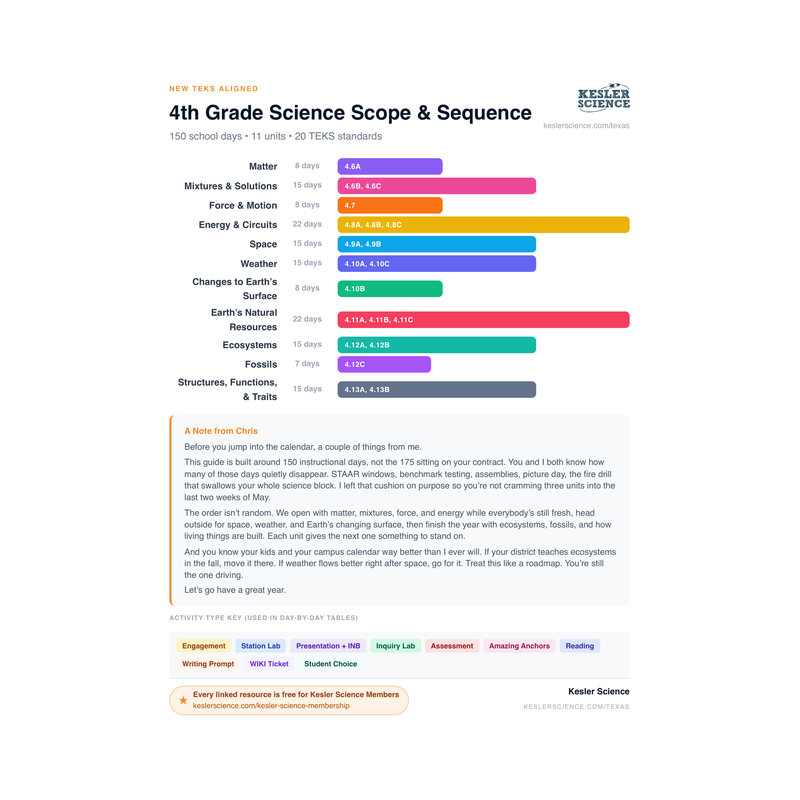
100% Aligned Lessons for Every TEKS You Teach
Kesler Science Plus puts thousands of ready-to-teach lessons and activities in your hands, so you can boost engagement and get your planning time back. Trusted by schools and districts all over the great state of Texas.
🌎 Phenomenon Ideas for 4.10B
Use these real-world phenomena to anchor your lesson. Show students the phenomenon first, let them wonder, then build toward Weathering, Erosion & Deposition as the explanation.
The Mini Canyon
Fill a long, shallow tray with damp sand and pat it flat. Prop one end up on a thick book so it's tilted. Slowly pour a cup of water down the high end. Watch the water cut a thin channel as it runs down the slope. Then it slows down at the bottom and drops a little fan of sand. Two-minute Grand Canyon. The kids will want to do it 12 more times.
"What did the water do at the top of the slope? What did it do at the bottom? How is this exactly like what real rivers do over thousands of years?"
The Hair Dryer Desert
Pour a flat layer of dry sand on a baking sheet. Put a small toy or rock on top of the sand to act as a barrier. Turn on a hair dryer (low setting) and aim it across the sand. The wind picks up grains of sand and carries them across the tray. Behind the toy, a small "dune" of sand piles up where the wind slowed down. Wind erosion AND wind deposition in 30 seconds.
"Why did sand pile up behind the toy and not in front of it? What does this tell us about how wind moves and drops sand? Where on Earth do you see this happening for real?"
The Freeze-Crack Demo
Day 1: Show a plastic bottle filled to the very top with water. Put the cap on. Place it in the freezer. Day 2: Take it out. The bottle has bulged or cracked because water expands when it freezes. Now imagine that same thing happening in a tiny crack in a rock, every winter, for thousands of years. The rock breaks apart a little bit each time. That's ice weathering.
"What did the ice do to the bottle? What would happen if water got into a crack in a rock and froze every winter for a thousand years? What kind of slow change would that cause?"
💡 Free Engagement Ideas for 4.10B
Ready-to-run activities you can drop straight into a lesson. Where one of these looks like a phenomenon from the section above, that is on purpose: show it first as the hook, then let students run it themselves.
Three-Tray Stream Lab
Set up three identical sand-and-pebble trays propped on books. At Tray 1, kids pour a slow trickle of water. At Tray 2, they pour a fast pour. At Tray 3, they dump a sudden flood. They observe how much erosion happens and how big the deposition fan is at the bottom of each. The faster the water, the more erosion. Real model, real comparison.
Wind Erosion Station
Each group gets a tray of dry sand, a small toy or rock, and a hair dryer. They run three trials: hair dryer on low, on medium, and on high. Each time they record how far the sand traveled and where the dune piled up. Connects wind erosion (sand moving) with wind deposition (sand piling up).
Ice-Glacier Demo
Freeze a small block of ice with bits of gravel and dirt embedded in it (use a small plastic container). Once frozen, slide the ice block across a tray of soft modeling clay or wet sand. The block scrapes a wide groove and leaves chunks of dirt behind as it melts. Models a glacier carving the ground and depositing rocks. Big "whoa" moment when kids see real grooves in the clay.
Spot the Process Photo Sort
Print 12 photos of real landscapes (Grand Canyon, Texas beaches, sand dunes in the Sahara, glacier valleys in Alaska, eroded farmland, Texas Hill Country rivers, deltas, sandbars). Kids work in pairs to sort each photo into "weathering," "erosion," or "deposition" piles, and underneath each photo write "water," "wind," or "ice." Forces kids to use the full vocabulary the TEKS asks for.
🎯 What Approaches, Meets, and Masters Thinking Look Like
Here is what student thinking at each level looks like on this one task, so you know what to look for and how to move a student up.
A river runs down a hill. Up high, the water moves fast and breaks little bits of rock off the riverbank. The water carries those bits downstream. Down low, the river slows down and drops the bits in a pile, making a sandbar. Describe what is happening, and name the three slow changes you see: weathering, erosion, and deposition.
- Weathering named as the rock breaking into smaller bits.
- Erosion named as the water moving those bits downstream.
- Deposition named as the bits being dropped in a new spot to make the sandbar.
- The three steps put in the right order (break, then move, then drop).
- Water named as the thing causing all three changes here.
- An answer that tells weathering and erosion apart instead of treating them as one step.
- Weathering vs. erosion kept separate (break in place vs. carried away). That is the easiest place to slip.
The river drops the rocks in a pile and that makes the sandbar. That is deposition. The water also breaks the rocks and carries them, and that is erosion. So erosion and weathering are the same thing because both happen to the rock.
First the fast water breaks little bits of rock off the bank. That is weathering, because the rock is breaking into smaller pieces. Then the water carries the bits downstream. That is erosion, because the bits are getting moved to a new place. Then the river slows down and drops the bits in a pile. That is deposition. The water did all three.
First the fast water breaks bits off the rock. That is weathering. Then the water carries the bits downstream, which is erosion. Then the slow water drops them and makes the sandbar, which is deposition. The water can move the bits only while it is moving fast. When it slows down, it cannot hold them, so it drops them.
That same pattern works without any water at all. Out in the desert, the wind sandblasts a rock and breaks bits off (weathering), the wind blows the sand across the desert (erosion), and when the wind slows down it drops the sand in a pile to build a sand dune (deposition). Wind and water do the very same three jobs, just with a different mover.
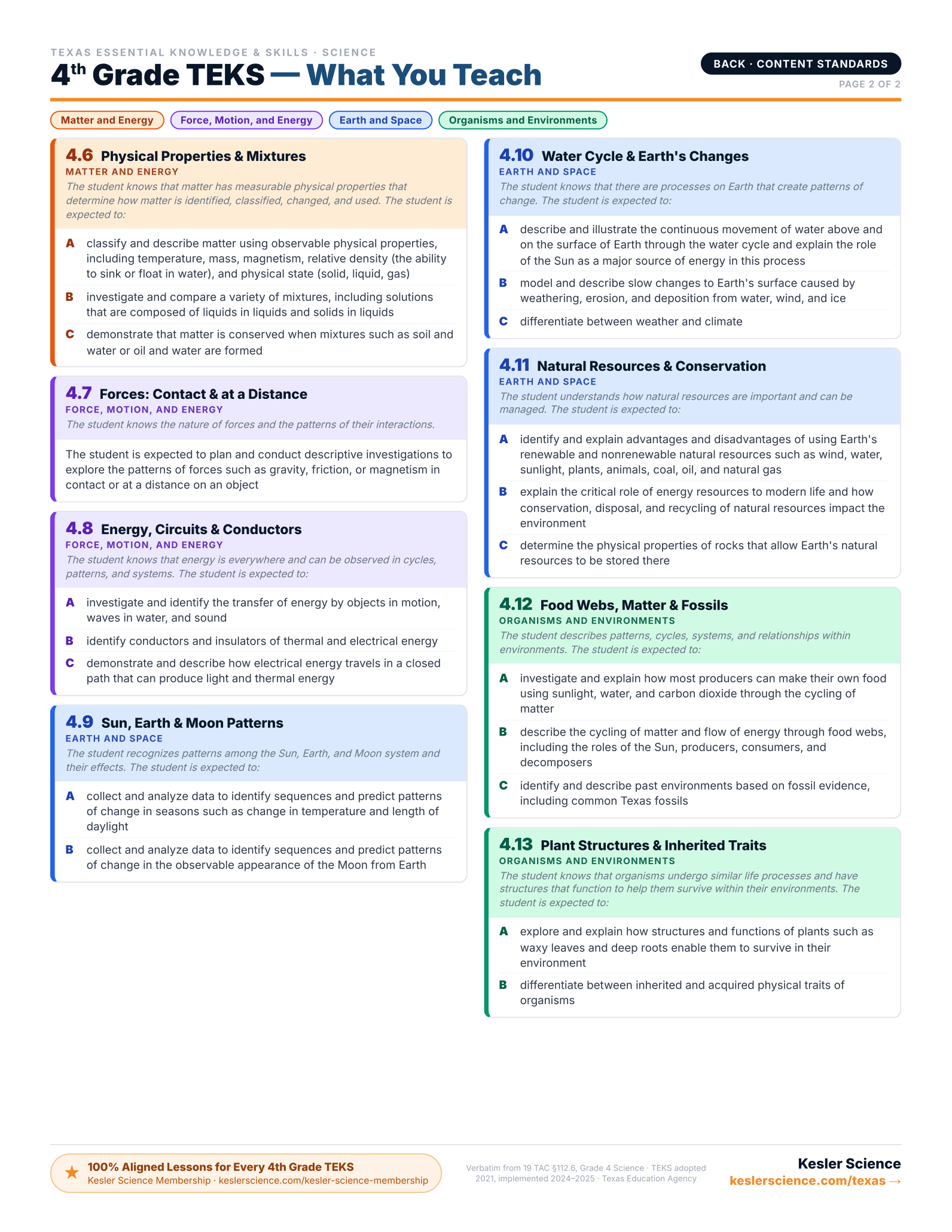
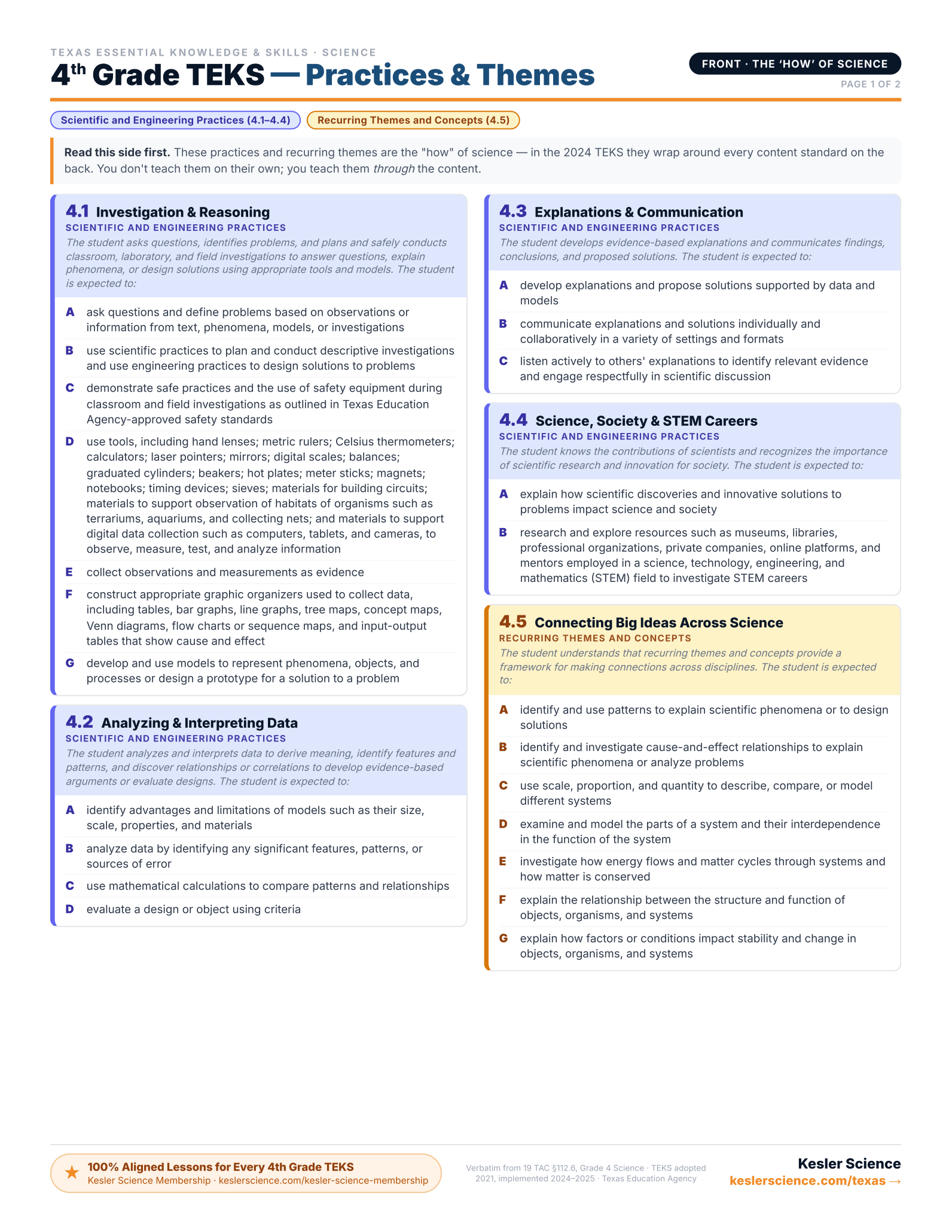
Every 4th-Grade Science TEKS on One Page
The color-coded, front-and-back cheat sheet I wish I'd had — every standard, organized by reporting category. Print it and reference it all year long. This will be your new favorite document!
Trusted Across Texas
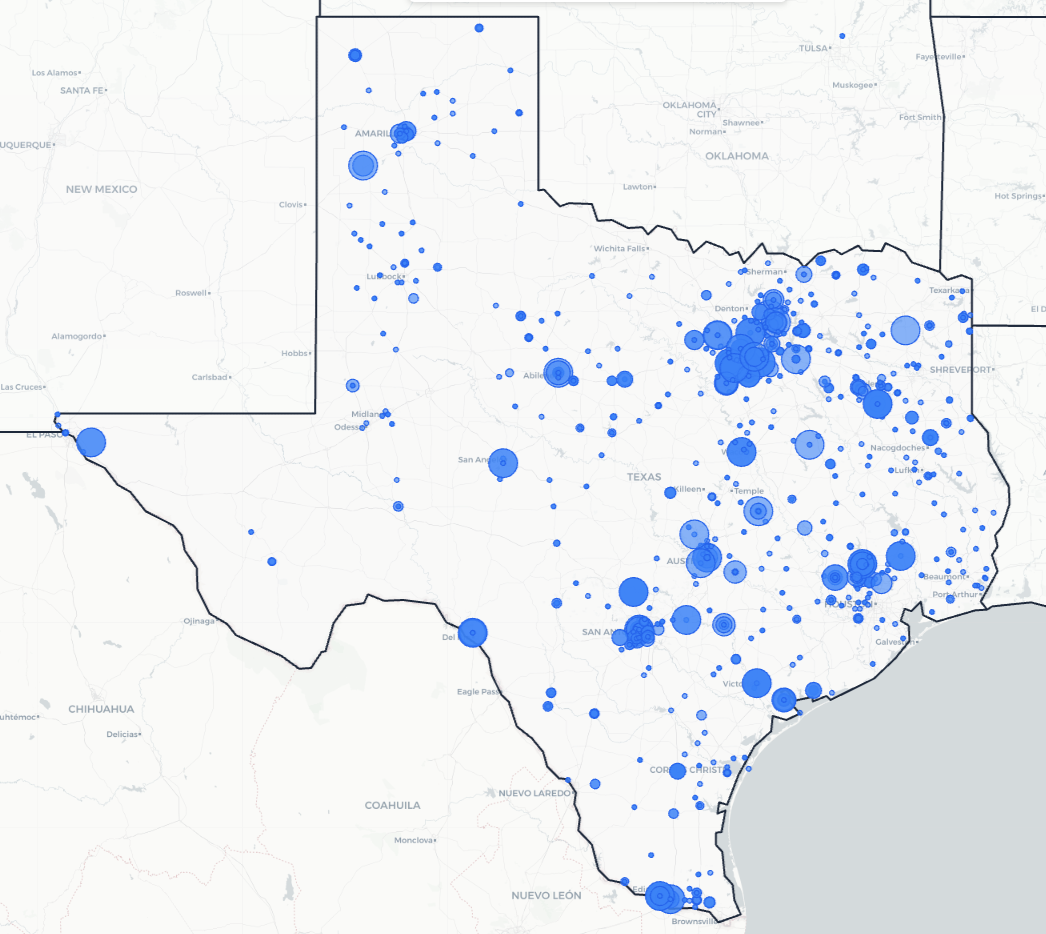
From the Rio Grande Valley to the Panhandle, Texas science teachers are using Kesler Science to save time and engage students.
Texas Schools and Districts
Love Kesler Science
What Teachers Are Saying
Give Your Science Teachers Everything They Need
School and district licenses give your teachers access to every resource they need, including station labs, inquiry labs, anchoring phenomena, presentations, escape rooms, and much more. One purchase covers the grade levels you need.
- PO-friendly. We accept purchase orders
- Volume discounts for 11+ teachers
- Complimentary Kesler Science Plus orientation for 4+ teachers
- Three free implementation PD sessions for departments of 11+
- Aligned to the 2024 TEKS standards
See It in Action
Book a walkthrough and we'll show you how Kesler Science fits your campus.
Book Demo CallNo pressure, no hard sell