.png?width=375&height=100&name=WebPage%20logo%20with%20curves%202026%20(8).png)
Natural & Artificial Selection
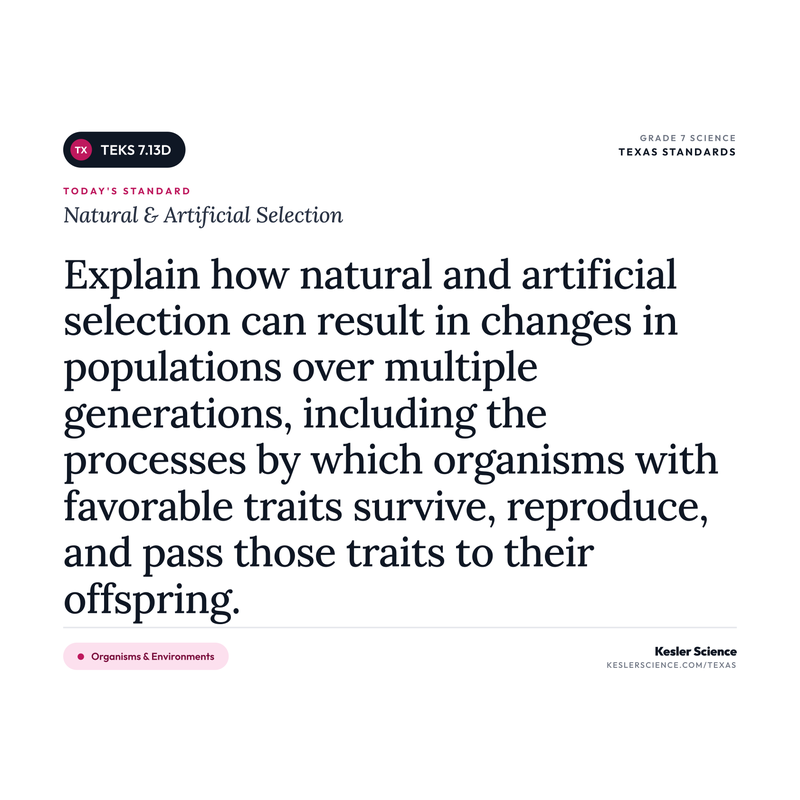
"Describe and give examples of how natural and artificial selection change the occurrence of traits in a population over generations."
💡 What This Standard Actually Means
"Describe and give examples". Students are describing both natural selection and artificial selection and giving examples of how each one changes the occurrence of traits in a population over generations. The wording here is slightly trimmed from the old standard, but the core ideas are the same. Kids need real examples (peppered moths, Darwin's finches, dog breeds, modern corn) and they need to be able to track how a trait becomes more or less common over time. Instruction can take many forms, such as bean-sorting natural selection simulations, dog breed evolution research, peppered moth case studies, and side-by-side artificial selection timelines for crops.
Natural selection happens when something in the environment (a predator, a disease, a climate shift, a food source) gives some members of a population an advantage. Individuals with traits that help them survive in that environment are more likely to live long enough to reproduce. Their offspring inherit those helpful traits. Over many generations, the population shifts in the direction of those traits. Charles Darwin worked this out while studying finches in the Galápagos. Peppered moths in industrial England are another classic example: when tree trunks darkened with soot, darker moths survived predator attacks more often and became more common in the population.
Artificial selection is the same basic idea, but humans choose the traits instead of the environment. Every breed of dog, from Chihuahuas to Great Danes, came from selective breeding by humans over many generations. Corn, wheat, and broccoli all look dramatically different from their wild ancestors because farmers picked plants with desirable traits and replanted their seeds. Chickens that lay more eggs, cows that produce more milk, apples that resist certain diseases. All artificial selection.
The most important piece for students to understand is that selection acts on populations over generations, not on individual organisms during a single lifetime. A giraffe does not stretch its own neck and pass the longer neck on to its kids. The variation was already there. Giraffes with genes for longer necks happened to reach more food, survive better, and have more offspring. Over generations, the population shifted. Same thing for both natural and artificial selection.
I'd start this unit with a photo of a Chihuahua next to a photo of a Great Dane and ask the class, "Same species. How?" The answers came flying. "People bred them." "They chose small dogs to breed with other small dogs." That gave me my bridge from a concept they already knew (breeding pets) to the bigger idea (populations change over generations when certain traits get selected). Once they had artificial selection down, I'd flip to Darwin's finches and ask, "If no human was picking, who was doing the selecting here?" That's where natural selection landed, and it never felt as strange to them as when I used to lead with the Galápagos first. Start with dogs. Then move to finches.
⚠️ Misconceptions Your Students May Have
These are some of the most common misconceptions. Knowing what to look for can help you get ahead of them.
"Giraffes stretched their necks to reach higher leaves and passed that on"
This is a Lamarckian misconception. Individual organisms don't change their own traits during their lifetime and pass them to offspring. The variation in neck length was already present in the giraffe population. Giraffes with longer necks happened to reach more food, survive better, and have more offspring. Over generations, longer necks became more common. The selection acts across generations, not within one animal's lifetime.
"Natural selection means the strongest survives"
"Strongest" is the wrong filter. What matters is which traits help an organism survive and reproduce in its specific environment. In some environments, camouflage wins. In others, it's speed. In others, it's the ability to go without water. A polar bear would not survive in the desert. Survival is about fit to the environment, not raw strength.
"Artificial selection and natural selection are totally different"
They use the same mechanism. Some members of a population have traits, those traits get passed on, and over generations the population shifts. The only difference is who or what is doing the selecting. In natural selection, the environment is the filter. In artificial selection, humans are the filter. Students should walk away seeing them as the same process with different selectors.
"Natural selection has a goal or direction"
Natural selection doesn't plan ahead. There's no finish line a species is moving toward. The process just responds to the current environment. If the environment changes, a trait that used to be favorable might stop being favorable, and the population can shift in a different direction. Nature isn't trying to perfect an organism. It's just filtering.
📓 Teaching Resources for 7.13D
These resources are aligned to this standard.


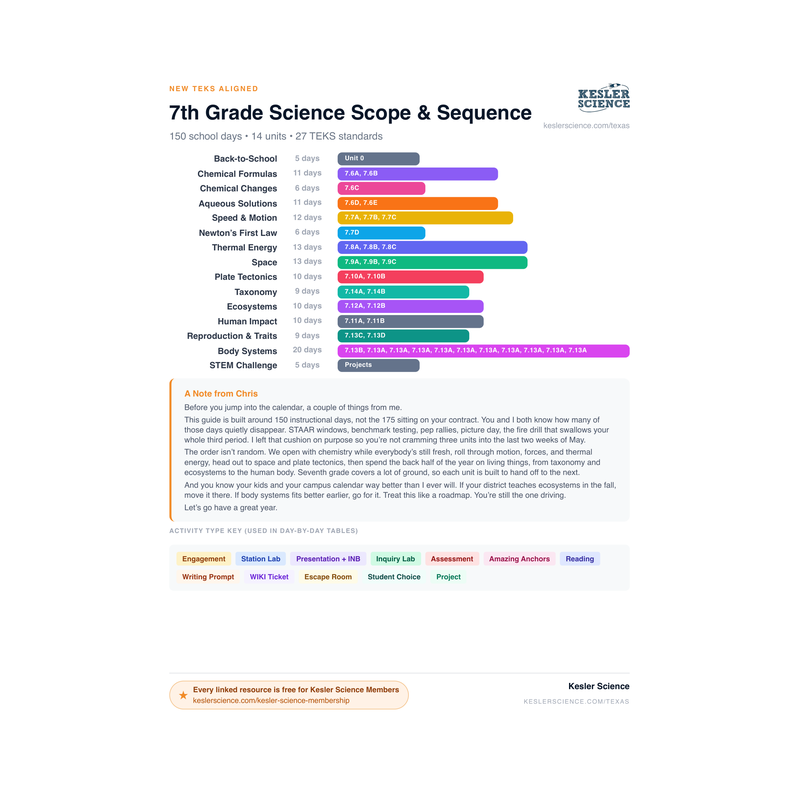
100% Aligned Lessons for Every TEKS You Teach
Kesler Science Plus puts thousands of ready-to-teach lessons and activities in your hands, so you can boost engagement and get your planning time back. Trusted by schools and districts all over the great state of Texas.
🌎 Phenomenon Ideas for 7.13D
Use these real-world phenomena to anchor your lesson. Show students the phenomenon first, let them wonder, then build toward Natural & Artificial Selection as the explanation.
Every Breed of Dog Came From Wolves
Show photos of a Great Dane, a Chihuahua, a Bulldog, a Poodle, and a Border Collie. All of them trace back to wolves. Humans selected wolves with traits they wanted (tameness, size, coat, herding behavior) and bred those individuals together over many generations. Over thousands of years, the process created hundreds of dog breeds that look almost nothing like the ancestor.
"If every modern dog came from wolves, how did humans end up with so many different breeds? Why did the process take generations instead of happening all at once?"
Peppered Moths in Industrial England
In the 1800s, most peppered moths in England were light-colored, which hid them well on light-colored tree bark. When industrial pollution darkened many tree trunks with soot, dark-colored moths were suddenly harder for birds to spot and the lighter moths became easier prey. Over several decades, the dark form of the moth became much more common in industrial areas. After pollution was reduced, the population shifted back toward the lighter form in many places.
"What was doing the selecting in this case? Why did one color of moth become more common and then less common again over time?"
Broccoli, Cauliflower, Cabbage, and Kale Are the Same Species
Broccoli, cauliflower, cabbage, kale, Brussels sprouts, and kohlrabi all descend from the same wild plant species (Brassica oleracea). Farmers selected for different traits over many generations. They picked for big flower heads (broccoli, cauliflower), tight leafy heads (cabbage), large leaves (kale), small side buds (Brussels sprouts), and swollen stems (kohlrabi). Same starting species, different human choices, dramatically different vegetables.
"How can one plant species turn into six different-looking crops? What does this tell us about how powerful artificial selection can be when it's repeated across many generations?"
💡 Free Engagement Ideas for 7.13D
Ready-to-run activities you can drop straight into a lesson. Where one of these looks like a phenomenon from the section above, that is on purpose: show it first as the hook, then let students run it themselves.
Bean Predator Simulation
Scatter a mix of colored beans on different fabric backgrounds (green, brown, speckled). Give students 15 seconds to act as a "bird" and pick up as many beans as they can. Count what's left on each background. The beans that survive are the ones best camouflaged. Repeat for a second generation using only the survivors. Populations shift in front of their eyes.
Dog Breed Detective
Give groups five photos of different dog breeds. They have to figure out one trait humans might have selected for in each breed, and why someone might have wanted that trait. Compare answers across groups. Drives home that artificial selection is driven by human goals (herding, hunting, guarding, companionship).
Paper Clip Birds
Give each student a "beak" (tweezers, spoon, fork, straw). Scatter "seeds" of different sizes (rice, beans, paper clips, pasta). Students have 30 seconds to pick up as many seeds as possible with their beak. Compare which beak types worked best for which seeds. This mimics the finch adaptation Darwin saw: beak shape matches the available food.
Population Over Generations Sketch
Students draw a starting population of 10 "critters" with different traits (fur color, body size, leg length). They roll a die to decide what the environment selects for (for example, "predators hunt long-leg critters"). They remove selected individuals, then draw the next generation by redrawing the survivors twice each. Repeat for three generations. They see population traits shift on paper.
🎯 What Approaches, Meets, and Masters Thinking Look Like
Here is what student thinking at each level looks like on this one task, so you know what to look for and how to move a student up.
Before factories, most tree trunks near an English town were light gray. Most peppered moths were light, and a few were dark. After factories covered the trunks in dark soot, the moths flipped: most were dark, and only a few were light. Describe how natural selection changed which color was most common in the moth population over many generations.
- A clear statement that both light and dark moths already existed in the population before the trees changed.
- The environment named as the thing that changed (light trunks became dark with soot).
- An idea about survival: on dark trunks, dark moths are harder for birds to see, so more of them survive.
- A link from surviving to reproducing: the moths that live long enough have babies and pass on their color.
- The shift happening over generations in the population, not to one moth during its life.
- A correct cause for the shift: dark moths survived and reproduced more, so the dark trait became more common.
- No claim that the moths turned dark on purpose or changed their own color to hide. That is the easiest place to slip.
The trees got dark from the soot. So the moths turned dark too to match the trees and hide from the birds. They needed to blend in, so their color changed to dark. That is why most of them are dark now.
There were always some dark moths and some light moths. When the trunks turned dark, the dark moths were harder for the birds to see, so more of them lived. The light ones stood out and got eaten more. The dark moths that survived had babies and passed down the dark color. After many generations, most of the moths were dark because the survivors kept passing on that trait.
Both colors already existed in the population, so when the trunks turned dark from soot, the environment started favoring whichever moth was hardest for birds to see. Dark moths now blended in, so more of them survived and reproduced, and they passed the dark color to their offspring. Over many generations the dark trait became more common. The moths did not change themselves. The environment just acted as a filter on the variation that was already there.
That same filter idea explains how farmers make corn. The difference is that humans do the selecting instead of the environment. A field of corn already has variation, and the farmer keeps seeds only from the plants with the biggest ears and replants them each year. Over generations the corn gets bigger, just like the moths got darker, because the same trait kept getting passed on. One is natural selection and one is artificial selection, but it is the same process with a different selector.
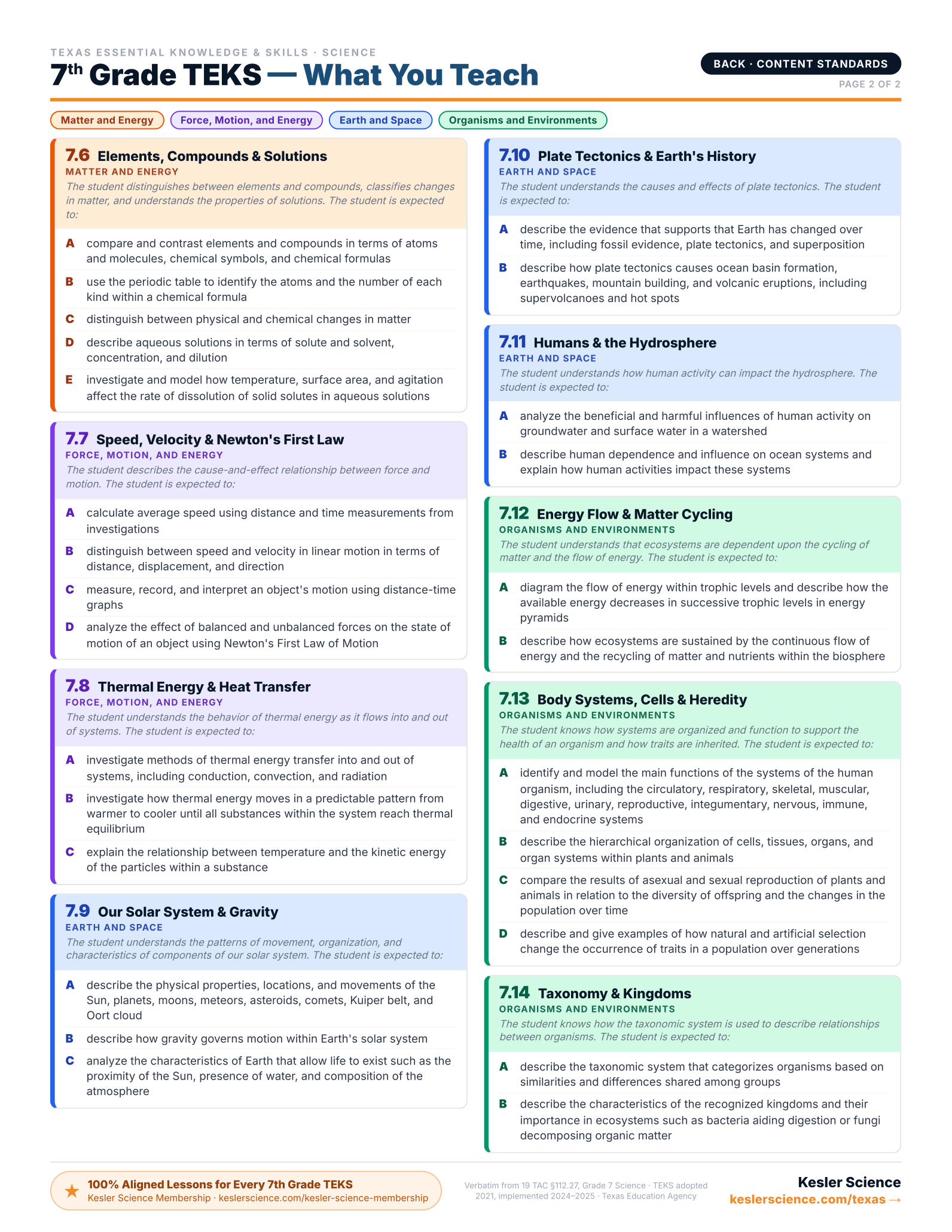
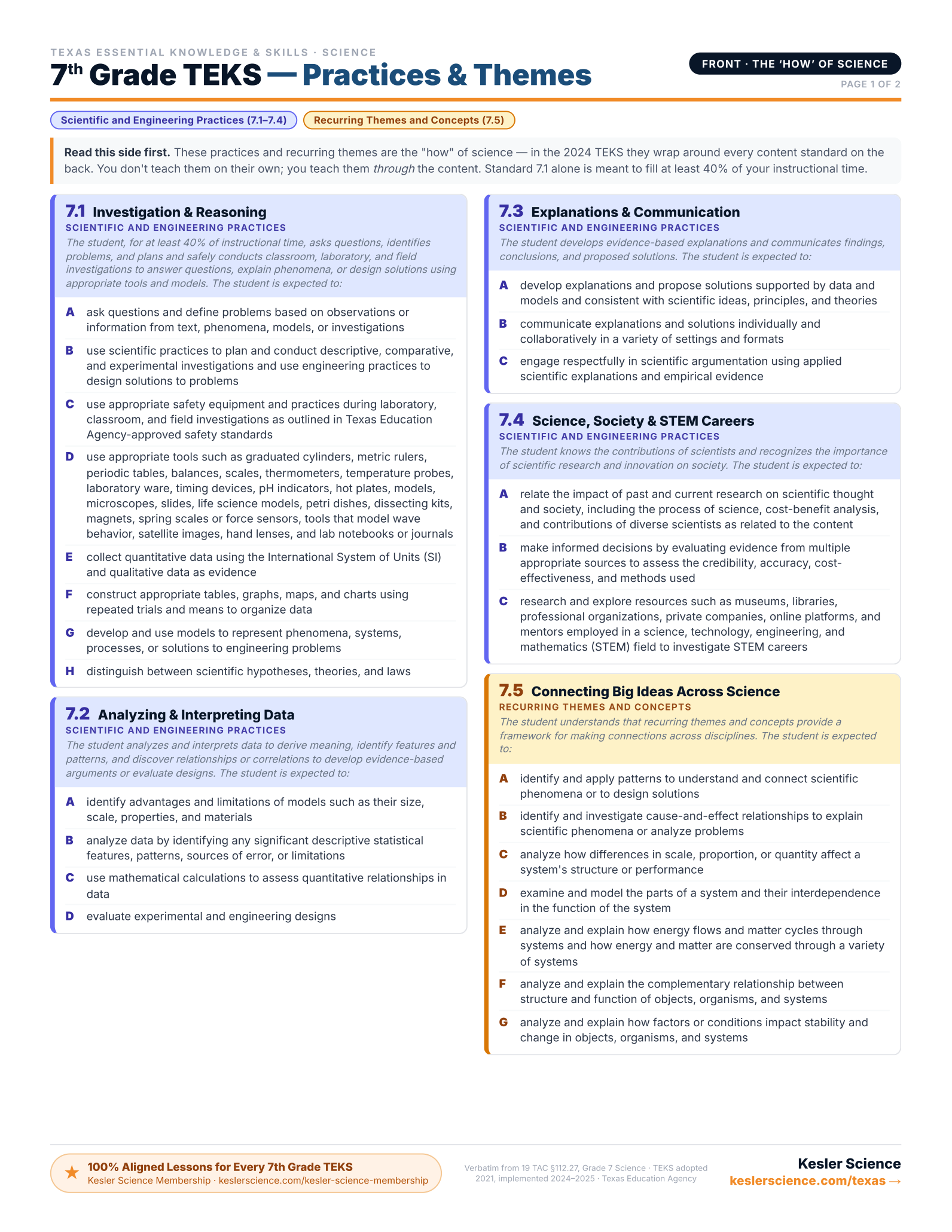
Every 7th-Grade Science TEKS on One Page
The color-coded, front-and-back cheat sheet I wish I'd had — every standard, organized by reporting category. Print it and reference it all year long. This will be your new favorite document!
Trusted Across Texas
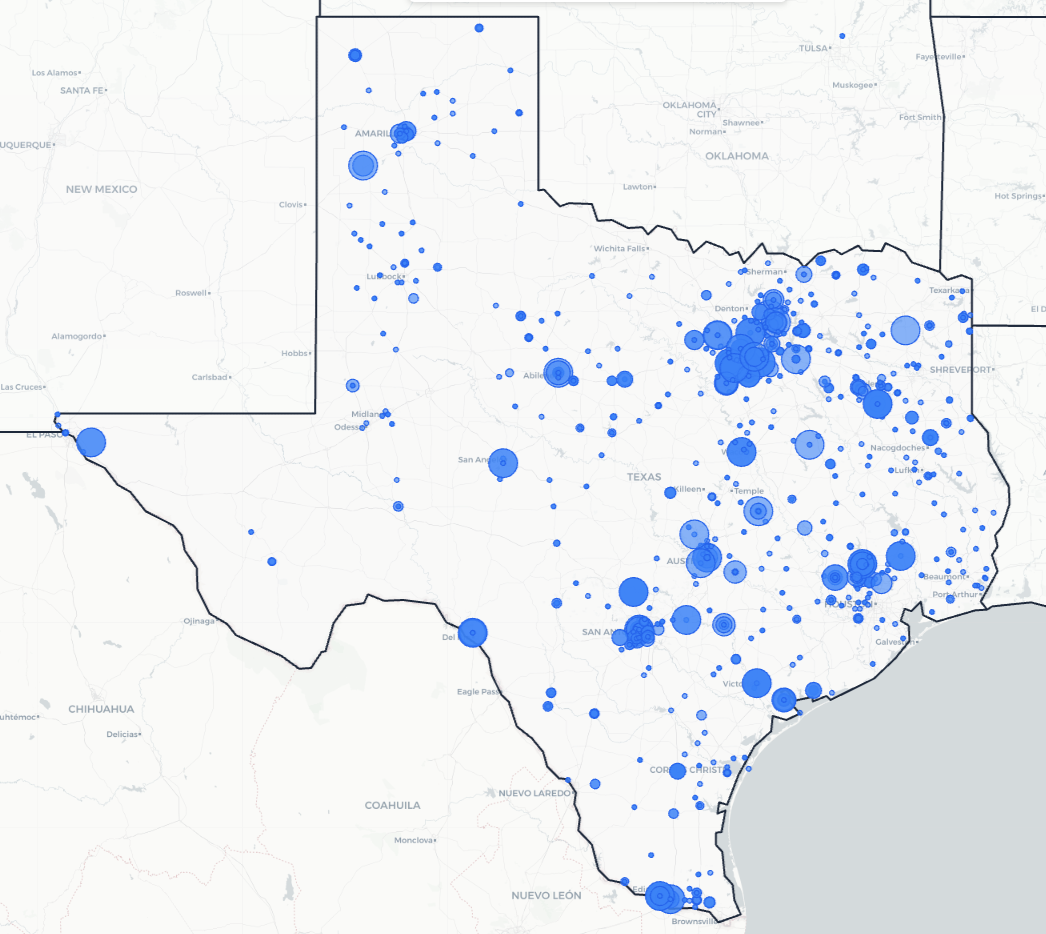
From the Rio Grande Valley to the Panhandle, Texas science teachers are using Kesler Science to save time and engage students.
Texas Schools and Districts
Love Kesler Science
What Teachers Are Saying
Give Your Science Teachers Everything They Need
School and district licenses give your teachers access to every resource they need, including station labs, inquiry labs, anchoring phenomena, presentations, escape rooms, and much more. One purchase covers the grade levels you need.
- PO-friendly. We accept purchase orders
- Volume discounts for 11+ teachers
- Complimentary Kesler Science Plus orientation for 4+ teachers
- Three free implementation PD sessions for departments of 11+
- Aligned to the 2024 TEKS standards
See It in Action
Book a walkthrough and we'll show you how Kesler Science fits your campus.
Book Demo CallNo pressure, no hard sell