.png?width=375&height=100&name=WebPage%20logo%20with%20curves%202026%20(8).png)
Thermal Energy in Systems
"Investigate methods of thermal energy transfer into and out of systems, including conduction, convection, and radiation."
💡 What This Standard Actually Means
"Investigate". Students are investigating how thermal energy moves into and out of systems using three methods: conduction, convection, and radiation. The small but real shift in this version is the explicit framing of "into and out of systems," which pushes kids to think about energy crossing boundaries. Instruction can take many forms, such as thermometer probe labs, heating and cooling investigations, hand-warmer demonstrations, and labeled-diagram activities for each method.
Thermal energy is the total energy of all the particles moving and vibrating inside an object. Every object has it. When thermal energy moves from one object or area to another, we call that transfer heat. Heat always flows from the hotter object to the cooler one until the two reach the same temperature.
There are three ways thermal energy transfers. Conduction happens when two objects are in direct contact. Fast-moving particles bump into slower ones and pass along their energy. A metal spoon warming up in hot soup is conduction. Convection happens inside fluids, meaning liquids or gases. Warmer fluid rises, cooler fluid sinks, and a circulating current forms. Boiling water in a pot and wind patterns in the atmosphere are both convection. Radiation is thermal energy traveling as electromagnetic waves. Radiation does not need any particles to travel through, which is how sunlight reaches Earth across the vacuum of space.
When students investigate thermal energy transfer, the core understanding they should walk away with is that all three methods move energy from hot to cold, but they do it in very different ways. Conduction needs contact. Convection needs a fluid that can flow. Radiation needs no medium at all. Most real-world situations involve more than one transfer method happening at the same time.
The trick I leaned on for this one was a single cup of hot cocoa. I'd bring in a mug of something warm, set it on a desk, and walk through every transfer method at once. Hand on the mug? Conduction. Steam rising off the top? Convection. Feeling the warmth on your face from six inches away without touching it? Radiation. One everyday object, three transfer methods, and kids could point to each one themselves. After that moment, the vocabulary finally stuck.
⚠️ Misconceptions Your Students May Have
These are some of the most common misconceptions. Knowing what to look for can help you get ahead of them.
"Heat and temperature are the same thing"
This one runs deep. Heat is the transfer of thermal energy from a hotter object to a cooler one. Temperature is a measurement of how fast particles are moving on average. A cup of boiling water and a bathtub of warm water have different temperatures, but the tub can hold way more total thermal energy because it has way more water. Keep the two words separate when you talk about them.
"Cold moves into warm things to cool them down"
Cold is not a thing that moves. When you hold an ice cube, it feels cold because thermal energy is leaving your hand and moving into the ice. The ice isn't sending coldness into you. Heat flows one direction: from hotter to cooler. Correcting this language early saves a lot of confusion later.
"Radiation means something dangerous, like nuclear radiation"
In this standard, radiation refers to thermal energy traveling as electromagnetic waves. Visible light, infrared from a heat lamp, and sunlight are all forms of radiation. The word has other meanings in other contexts, but here it's just energy traveling in waves. Point out that radiation is how the sun warms the Earth through the vacuum of space.
"Convection happens in solids too"
Convection requires particles that can flow freely past each other, which only happens in fluids (liquids and gases). In a solid, particles are locked in place and can only vibrate, so energy spreads through conduction instead. If students see a convection current diagram, make sure they can name the fluid that's moving.
📓 Teaching Resources for 7.8A
These resources are aligned to this standard.


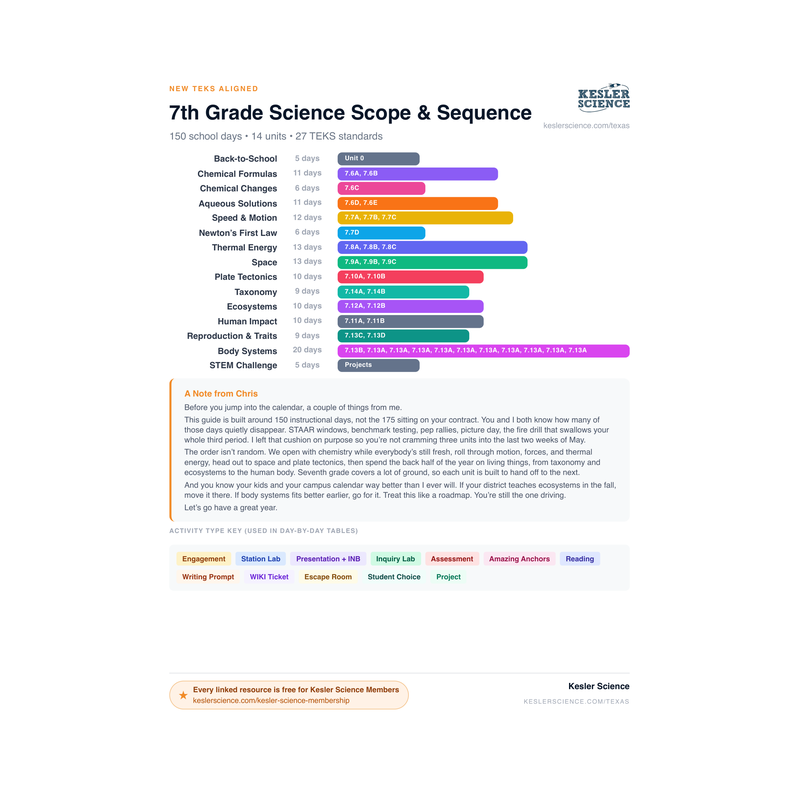
100% Aligned Lessons for Every TEKS You Teach
Kesler Science Plus puts thousands of ready-to-teach lessons and activities in your hands, so you can boost engagement and get your planning time back. Trusted by schools and districts all over the great state of Texas.
🌎 Phenomenon Ideas for 7.8A
Use these real-world phenomena to anchor your lesson. Show students the phenomenon first, let them wonder, then build toward Thermal Energy in Systems as the explanation.
A Metal Spoon in a Mug of Hot Cocoa
You stir a mug of hot cocoa with a metal spoon and leave it sitting in the cup. A few minutes later, the handle of the spoon is warm to the touch, even though the handle never touched the cocoa. Try the same thing with a plastic spoon and the handle barely changes at all. The cocoa didn't move. So how did the energy travel up the handle of the metal spoon?
"Why does the metal spoon warm up all the way to the handle, but the plastic spoon does not? What's happening to the particles inside each spoon?"
A Pot of Water Coming to a Boil
Drop a piece of pasta into a pot of water just as it starts to boil. Watch what happens. The pasta doesn't just sit there. It rides up to the surface, circles around, and sinks back down in a loop. The water itself is doing the same thing, carrying heat from the burner at the bottom all the way to the top of the pot without any stirring from you.
"The burner only touches the bottom of the pot. So how does the water at the top get hot? What pattern do you see when you watch the pasta move?"
Sunlight Warming Your Face on a Cold Day
It's 40 degrees outside. You step into direct sunlight and your face immediately feels warmer, even though the air temperature hasn't changed. The sun is about 93 million miles away, and most of the space between the sun and Earth is a vacuum. There's nothing in between for the heat to travel through. So how does the sun's energy reach your skin?
"Conduction needs objects to touch. Convection needs a fluid. Neither one works across empty space. What kind of energy transfer can cross a vacuum?"
💡 Free Engagement Ideas for 7.8A
Ready-to-run activities you can drop straight into a lesson. Where one of these looks like a phenomenon from the section above, that is on purpose: show it first as the hook, then let students run it themselves.
Butter on a Spoon Race
Press a small pat of butter onto the handle end of a metal spoon, a plastic spoon, and a wooden spoon, and stick a dry bean into each pat (the butter holds it, no tape needed). Stand all three spoons in a mug and pour in hot water so the bowls are covered to the same depth. Watch which bean drops first. Students rank the materials by how well they conduct thermal energy.
Food Coloring Convection Current
Fill a clear cup with cold water. Using a dropper, release one drop of warm red-dyed water and one drop of cold blue-dyed water at the same depth near the middle of the cup, a few inches apart. Watch the red rise and the blue sink from the same starting line. Students sketch the convection pattern and label warm and cool regions.
Black vs. White Can Radiation Test
Tape a thermometer to the inside of two identical aluminum cans, one wrapped in black paper and one wrapped in white paper. Place both in direct sunlight (or under a bright lamp) and record the temperature every two minutes for ten minutes. Students graph both cans and explain why the colors absorb radiation differently.
Three-Method Sort
Prepare a stack of 15 to 20 scenario cards (roasting a marshmallow, the sun warming a driveway, a room heater warming the air near the ceiling, touching an ice cube, etc.). In pairs, students sort each card into Conduction, Convection, or Radiation and defend one tricky card to the class. Great closing activity.
🎯 What Approaches, Meets, and Masters Thinking Look Like
Here is what student thinking at each level looks like on this one task, so you know what to look for and how to move a student up.
A student fills a metal cup with hot cocoa and sets a metal spoon in it. After a few minutes, the spoon handle feels warm even though it never touched the cocoa. Explain how thermal energy moved from the cocoa to the spoon handle. Name the type of transfer and describe what is happening to the particles.
- Names the transfer correctly as conduction (the spoon and the cocoa are in direct contact).
- States the direction of the energy flow: from the hotter cocoa to the cooler spoon.
- Describes the particles: fast-moving particles bump into slower ones and pass along energy.
- Explains that the energy travels up the spoon to the handle through particle-to-particle contact.
- Uses the words thermal energy or heat correctly, not as the same idea as temperature.
- Gets the direction right: energy moves from hot to cold. Cold is not a thing that moves into the cocoa. That is the easiest place to slip.
The spoon handle got warm because of conduction. The spoon was touching the hot cocoa, so they were connected. I think the cold in the handle moved down into the cocoa, and that pulled the warmth up so the handle could heat up. That is why the end you hold gets warm.
This is conduction because the spoon is touching the hot cocoa directly. Thermal energy moves from the hotter cocoa into the cooler spoon. The cocoa particles are moving fast, and they bump into the slower spoon particles at the bottom. Those particles speed up and bump the next ones, and the energy keeps passing up the metal until it reaches the handle. That is why the handle feels warm even though it never touched the cocoa.
This is conduction because the spoon and the cocoa are in direct contact. Heat always flows from the hotter object to the cooler one, so thermal energy moves from the cocoa into the spoon, never the other way. The fast cocoa particles collide with the slower spoon particles and pass energy along, particle to particle, all the way up to the handle. This keeps happening until the spoon and the cocoa reach the same temperature.
The reason the whole spoon heats up is that conduction only needs particles touching and passing energy. That is also why a metal pan handle gets dangerously hot on a stove even though only the bottom of the pan sits on the burner. The energy travels up the metal the same way it traveled up my spoon, which is why people grab a hot pan with a cloth.
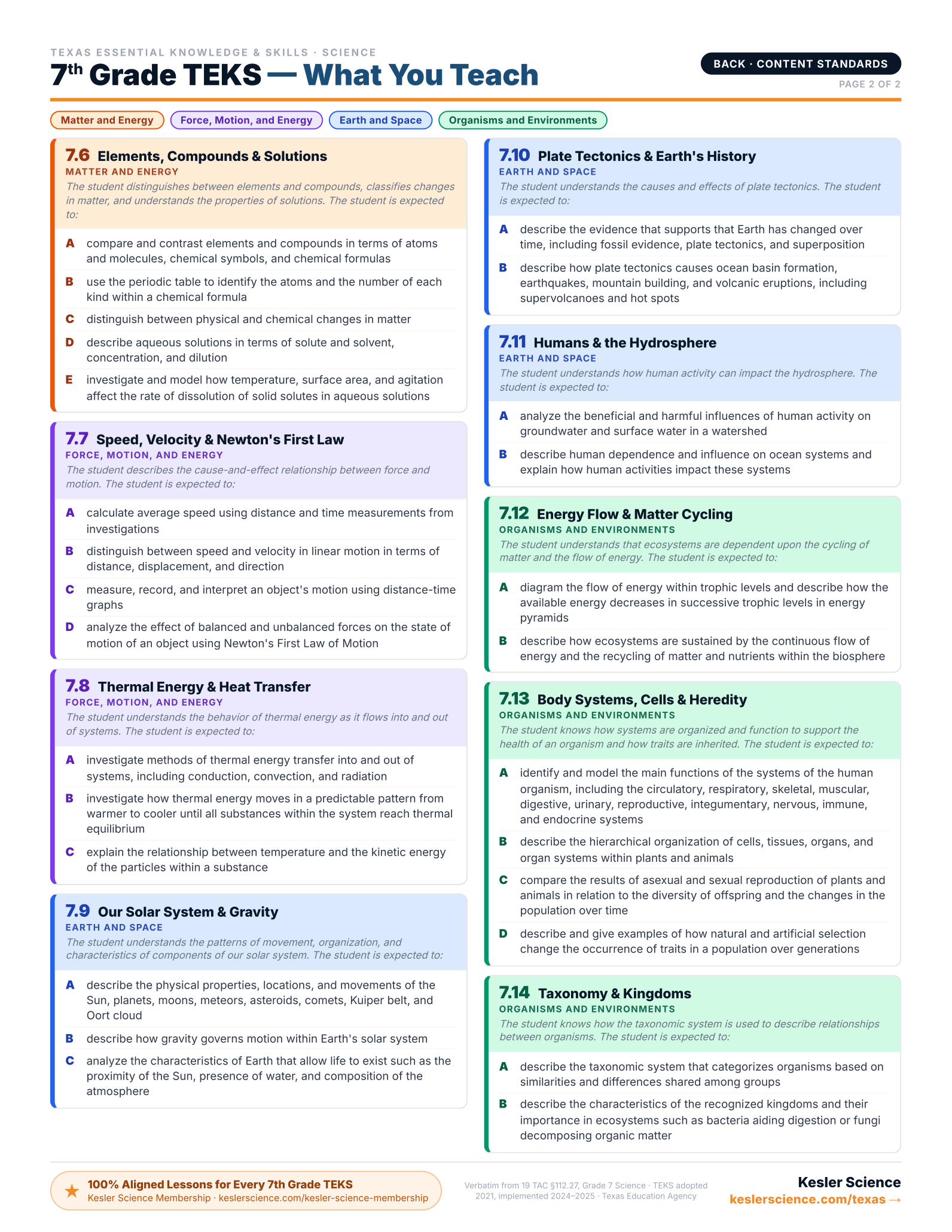
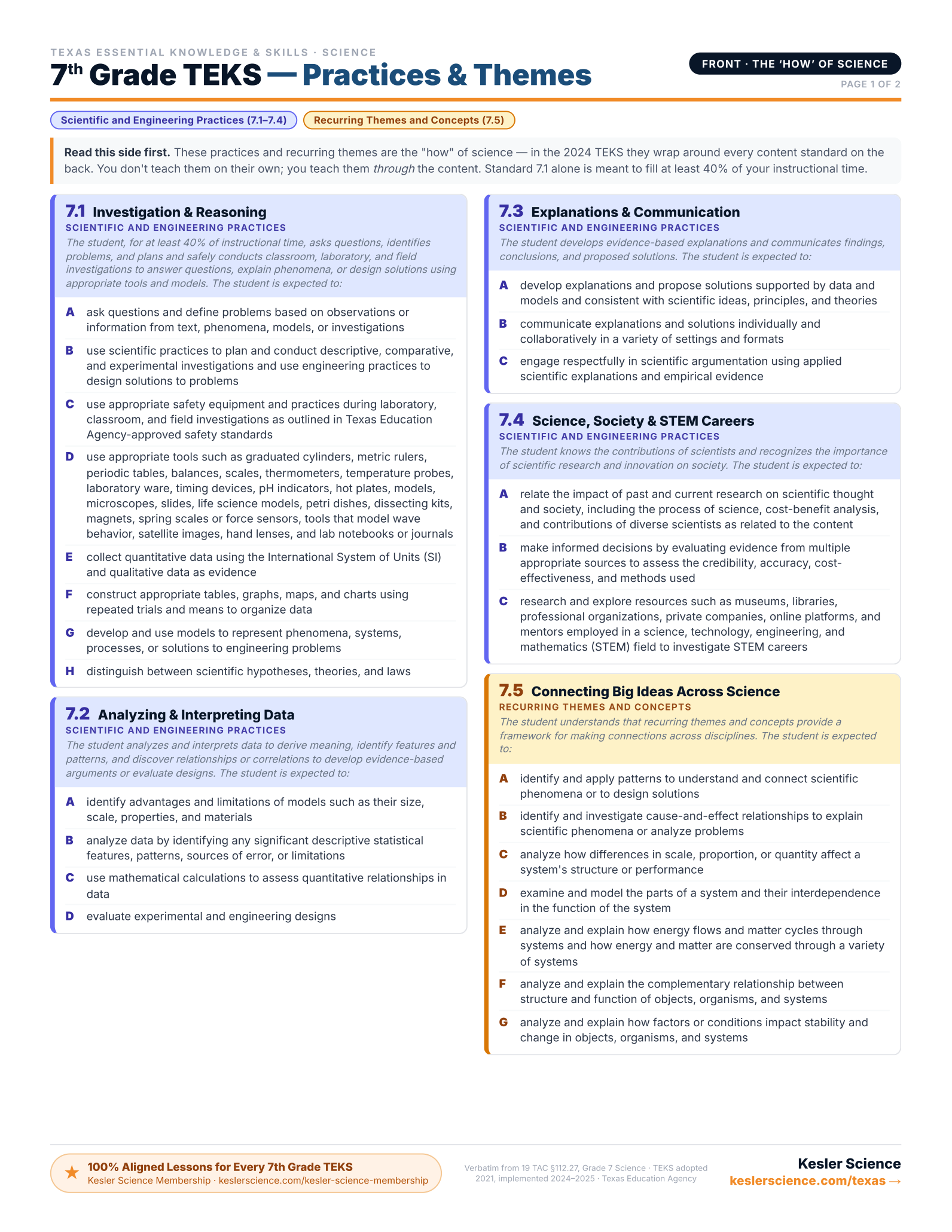
Every 7th-Grade Science TEKS on One Page
The color-coded, front-and-back cheat sheet I wish I'd had — every standard, organized by reporting category. Print it and reference it all year long. This will be your new favorite document!
Trusted Across Texas
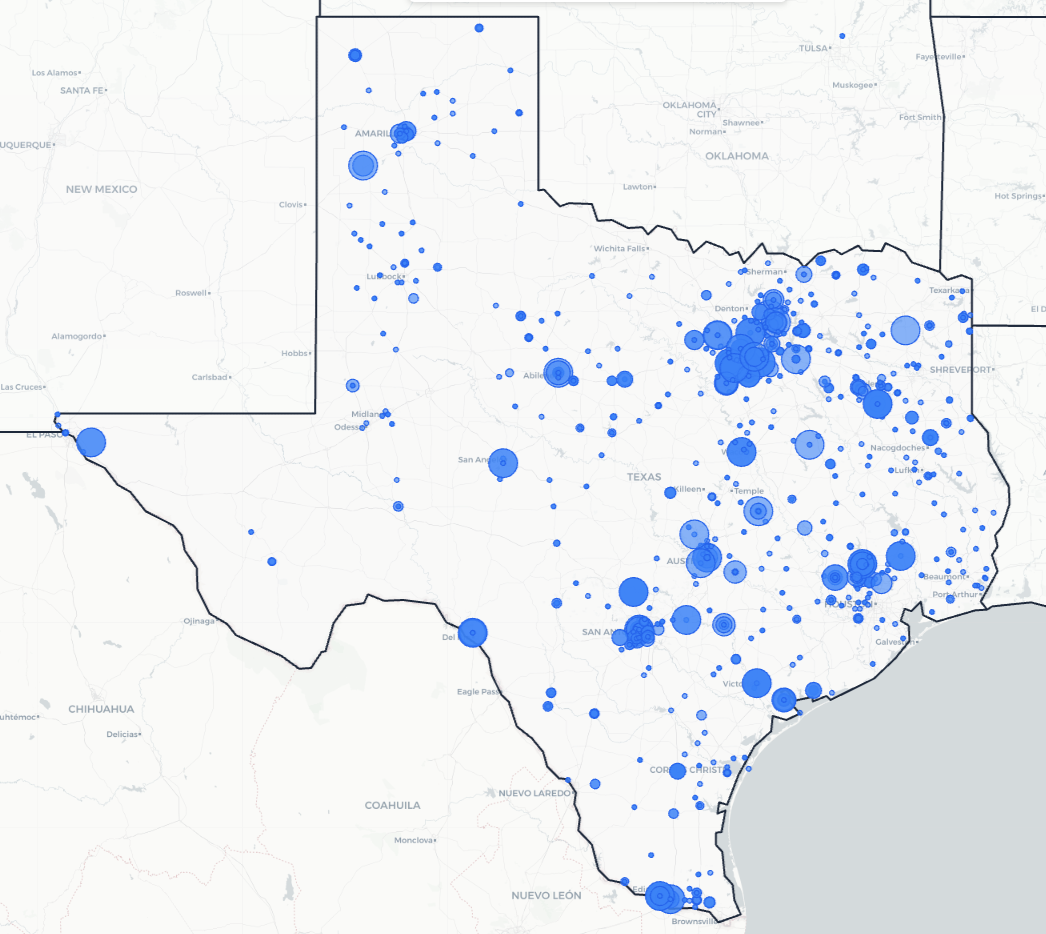
From the Rio Grande Valley to the Panhandle, Texas science teachers are using Kesler Science to save time and engage students.
Texas Schools and Districts
Love Kesler Science
What Teachers Are Saying
Give Your Science Teachers Everything They Need
School and district licenses give your teachers access to every resource they need, including station labs, inquiry labs, anchoring phenomena, presentations, escape rooms, and much more. One purchase covers the grade levels you need.
- PO-friendly. We accept purchase orders
- Volume discounts for 11+ teachers
- Complimentary Kesler Science Plus orientation for 4+ teachers
- Three free implementation PD sessions for departments of 11+
- Aligned to the 2024 TEKS standards
See It in Action
Book a walkthrough and we'll show you how Kesler Science fits your campus.
Book Demo CallNo pressure, no hard sell