.png?width=375&height=100&name=WebPage%20logo%20with%20curves%202026%20(8).png)
Life on Earth
"Analyze the characteristics of Earth that allow life to exist such as the proximity of the Sun, presence of water, and composition of the atmosphere."
💡 What This Standard Actually Means
"Analyze". Students are analyzing the characteristics of Earth that make life possible. The standard names three to focus on: proximity to the Sun, presence of water, and composition of the atmosphere. The shift from the old version is the verb. The old standard was "describe." The new one is "analyze," which pushes students past listing conditions to actually weighing how each one contributes. Instruction can take many forms, such as research activities comparing Earth with Mars and Venus, habitable zone analysis, atmosphere composition labs, and short-form persuasive writing tasks ("Why is Earth habitable?").
Earth is unusual. As far as we know, it is the only place in the solar system where living things exist. A handful of conditions come together here that don't come together on any other planet we've studied. Liquid water is one of the biggest. Every living organism on Earth needs water at some point in its life cycle. Water is a solid or a gas on most other worlds in our solar system, so Earth's liquid oceans, rivers, and groundwater set it apart.
A suitable temperature range keeps that water liquid. Earth's average surface temperature stays comfortably between the freezing and boiling points of water across most of the planet. Venus is way too hot. Mars is mostly too cold. Earth sits in a narrow range that supports life. Much of that comes from Earth's distance from the sun, often called the habitable zone or Goldilocks zone: not too close, not too far. Our atmosphere adds to that balance. It contains the oxygen many living things need to breathe, traps enough warmth to keep temperatures stable, and blocks harmful ultraviolet radiation thanks to the ozone layer.
These four conditions are what the TEKS calls out, but they work together as a system. Earth's magnetic field shields us from some of the sun's charged particles. Our one large moon helps stabilize Earth's tilt, which keeps seasons predictable. Tectonic activity recycles nutrients into the oceans. Students should walk away understanding that life on Earth depends on a combination of favorable conditions, not any single feature.
The hook I used for this standard was a side-by-side planet comparison on the board. Earth, Venus, Mars. I'd write the conditions for life down the side (liquid water, suitable temperature, breathable atmosphere, distance from the sun) and have students vote thumbs up or thumbs down for each planet. Venus has an atmosphere, but it's 900 degrees on the surface. Thumbs down. Mars has some evidence of ancient water, but its surface is frozen and its atmosphere is thin. Thumbs down. Earth gets four thumbs up. The pattern makes it obvious that no one single factor is enough. You need the whole recipe.
⚠️ Misconceptions Your Students May Have
These are some of the most common misconceptions. Knowing what to look for can help you get ahead of them.
"Any planet in the habitable zone would have life on it"
The habitable zone (Goldilocks zone) is only one piece of the picture. A planet also needs an atmosphere, a magnetic field to block harmful radiation, and a chemistry that supports liquid water. Venus sits at the inner edge of our habitable zone and has an atmosphere so thick with carbon dioxide that surface temperatures average around 870 degrees Fahrenheit. Distance from the sun is necessary, but it isn't enough on its own.
"Earth's atmosphere is mostly oxygen"
Earth's atmosphere is about 78 percent nitrogen, 21 percent oxygen, and 1 percent other gases (including argon, carbon dioxide, and water vapor). Oxygen gets the spotlight because we breathe it, but it's actually the second most common gas, not the first. That mix of gases is unique among the planets we've studied.
"Life can only exist where there's sunlight"
Scientists have found living organisms in places that never see the sun, including deep-sea hydrothermal vents and miles-deep caves. These extremophiles get their energy from chemical reactions rather than sunlight. Life as we know it still needs the right temperature range and liquid water, but it does not always need direct sunlight.
"Mars used to have life because it had water"
Evidence suggests Mars had liquid water on its surface billions of years ago. That makes Mars an interesting place to search for signs of past microbial life, but no confirmed fossils or organisms have been found yet. Be careful not to say Mars definitely had life. The correct statement is that Mars once had conditions that might have supported microbial life, and scientists are still investigating.
📓 Teaching Resources for 7.9C
These resources are aligned to this standard.


100% Aligned Lessons for Every TEKS You Teach
Kesler Science Plus puts thousands of ready-to-teach lessons and activities in your hands, so you can boost engagement and get your planning time back. Trusted by schools and districts all over the great state of Texas.
🌎 Phenomenon Ideas for 7.9C
Use these real-world phenomena to anchor your lesson. Show students the phenomenon first, let them wonder, then build toward Life on Earth as the explanation.
The "Blue Marble" Photo of Earth
Show students the famous "Blue Marble" photo of Earth taken by the Apollo 17 crew in 1972. No other planet we've seen from space looks anything like it. Venus is covered in pale yellow clouds. Mars is rusty red. Earth is blue, white, and green. What is it about Earth that produces those colors, and what do those colors tell us about the planet's chemistry?
"Blue means oceans. White means clouds and ice. Green means plants. What conditions have to be in place for us to see all three colors on one planet?"
Venus: A Planet With an Atmosphere That Roasts
Venus is often called Earth's sister planet because it's nearly the same size and made of similar materials. It's closer to the sun than Earth, but still inside what we call the habitable zone. Its surface temperature averages around 870 degrees Fahrenheit. Even at night. How can a planet with a thick atmosphere end up hotter than an oven?
"Having an atmosphere isn't enough. It matters what's IN the atmosphere. What does Venus tell us about the kind of atmosphere Earth needs to stay livable?"
Tardigrades: Earth's Toughest Animals
Tardigrades (often called water bears) are microscopic animals that can survive in a near-death dormant state when conditions turn extreme. In lab experiments, they have been exposed to the vacuum of space, temperatures near absolute zero, and extreme radiation. They can survive for years without water in this state and come back when rehydrated. Even these super-tough creatures still need liquid water to carry out their normal life functions.
"If tardigrades can survive in space in a dormant state, but still need water to truly live and reproduce, what does that tell us about water's role as a requirement for life?"
💡 Free Engagement Ideas for 7.9C
Ready-to-run activities you can drop straight into a lesson. Where one of these looks like a phenomenon from the section above, that is on purpose: show it first as the hook, then let students run it themselves.
Design a Habitable Planet
In pairs, students design an imaginary planet that could support life. They must include each TEKS condition (liquid water, temperature range, atmosphere, distance from a star) on a labeled poster or slide. Gallery walk at the end so students can question each other's designs. Any gaps become teaching moments.
Planet Report Card
Give each group a planet or moon in our solar system (Venus, Mars, Europa, Titan, Mercury, etc.). Students research and grade their world on each of the four TEKS conditions using an "A/B/C/D/F" scale. They defend their grades in a short presentation. Earth ends up as the only straight-A student.
Hot Zone, Cold Zone, Just Right
Tape a long strip on the floor and label three sections: "too hot," "habitable zone," and "too cold." Give students planet cards (Mercury, Venus, Earth, Mars, Jupiter, etc.) and have them place each card in the correct zone. Spark a discussion about how Venus fits in the habitable zone but still isn't habitable because of its atmosphere.
Sealed Terrarium Mini-Earth
Build a simple sealed terrarium in a clear plastic bottle with soil, small plants, and a little water. Close the lid and set it on a windowsill. Over the next week or two, students observe water cycling, plants growing, and a tiny version of Earth's conditions sustaining life. Great way to visualize how the four conditions work together.
🎯 What Approaches, Meets, and Masters Thinking Look Like
Here is what student thinking at each level looks like on this one task, so you know what to look for and how to move a student up.
A space agency finds a new planet that sits in the “habitable zone,” the right distance from its star to allow liquid water. A reporter says, “This planet is the right distance from its star, so it must have life.” Analyze that claim. Is the right distance enough to guarantee life? Use what you know about Earth's characteristics to explain your answer.
- Names at least two characteristics that allow life on Earth, such as liquid water, a suitable temperature range, or a breathable atmosphere.
- Connects distance from the star to temperature: too close is too hot, too far is too cold.
- Understands that distance is one piece, not the whole answer.
- States that a planet also needs an atmosphere with the right gases, not just the right distance.
- Treats these characteristics as working together as a system, not as one single feature that does everything.
- Evaluates the reporter's claim instead of just repeating it, and says clearly that the claim is not fully correct.
- Uses a real example (like Venus being far too hot even though it sits near our habitable zone) to show that distance alone does not guarantee life. That is the hardest move to make.
The reporter is right. The planet is in the habitable zone, so it is the right distance from its star. That means it is not too hot and not too cold, so liquid water can be there. Water is what life needs. If a planet is in the habitable zone, it will have life on it.
The reporter is not fully right. Distance is important because it controls the temperature. If the planet is too close to its star it is too hot, and if it is too far it is too cold. The habitable zone is the right distance for liquid water, and living things need water. But distance is only one of the characteristics that allow life.
The planet also needs an atmosphere with the right gases, like the oxygen we breathe, and it needs to trap enough warmth without trapping too much. So being the right distance is necessary, but it does not guarantee life by itself.
The reporter is wrong to say the planet “must” have life. The right distance is necessary but not enough, because the characteristics that allow life work as a team. Distance sets the temperature range, the atmosphere holds the right gases and traps the right amount of warmth, and together those keep water liquid. If even one of those is off, life can fail.
Venus proves it. Venus sits near the inner edge of our own habitable zone, so by the reporter's logic it should have life. But its atmosphere is packed with carbon dioxide (CO2) that traps so much heat the surface averages around 870 degrees Fahrenheit, way too hot for liquid water or living things. So before I believe this new planet has life, I would want to know about its atmosphere too, not just its distance.
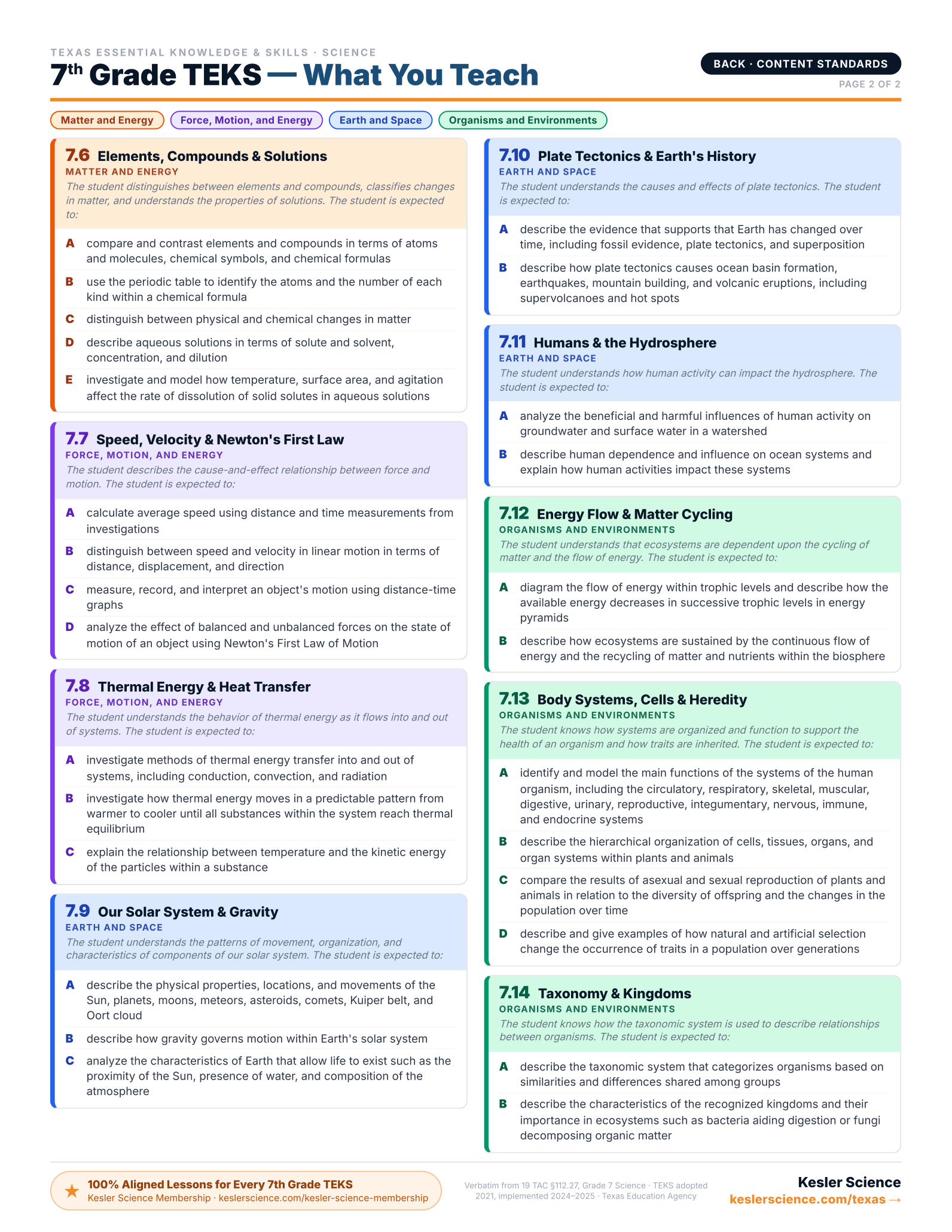
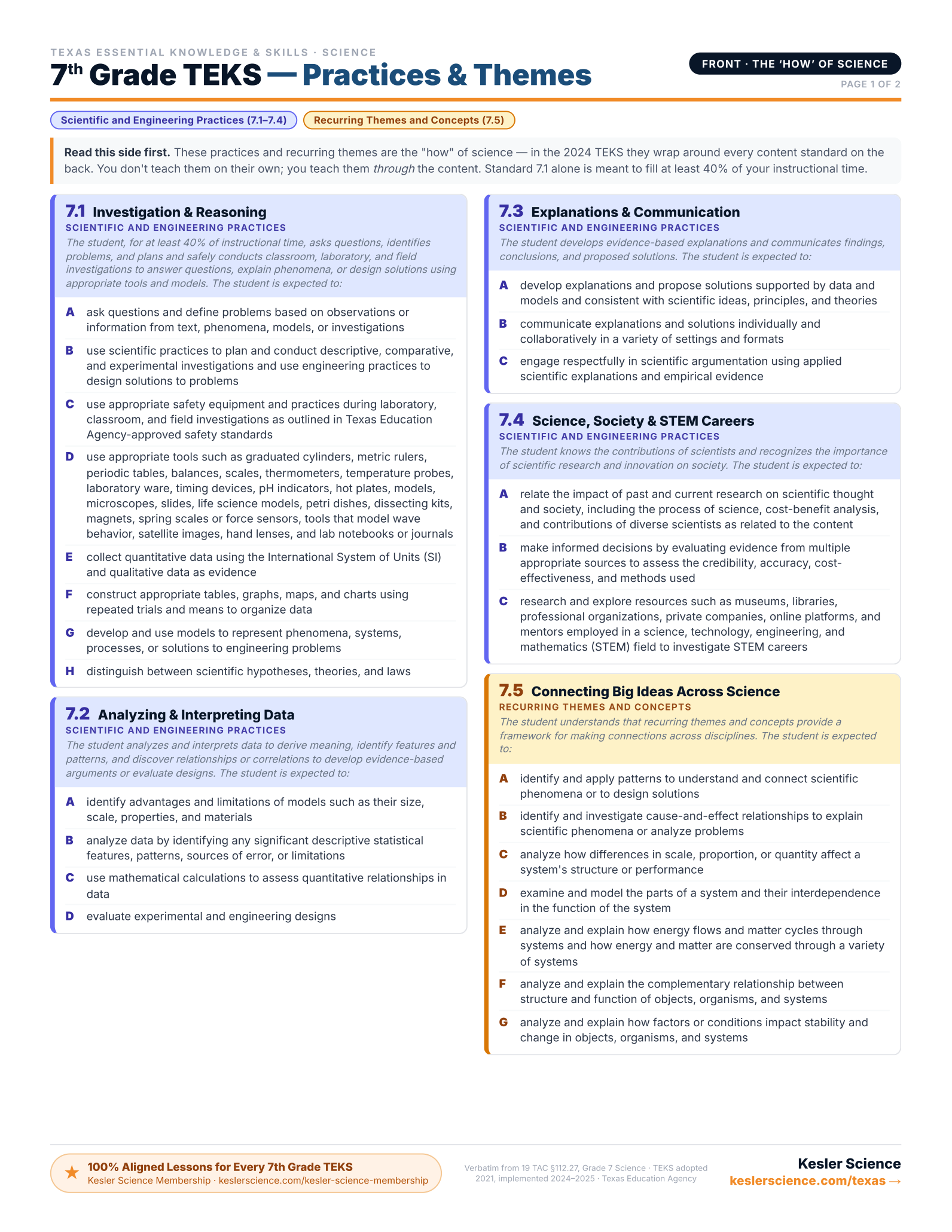
Every 7th-Grade Science TEKS on One Page
The color-coded, front-and-back cheat sheet I wish I'd had — every standard, organized by reporting category. Print it and reference it all year long. This will be your new favorite document!
Trusted Across Texas
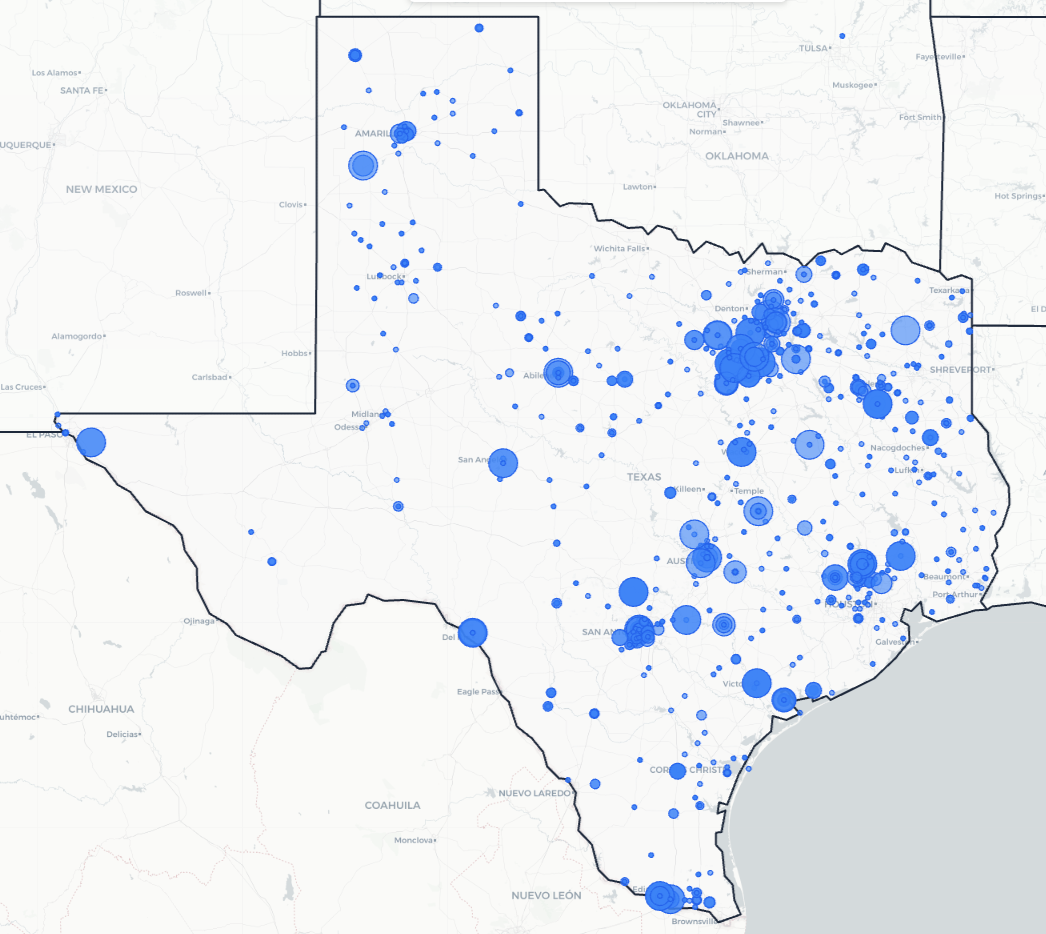
From the Rio Grande Valley to the Panhandle, Texas science teachers are using Kesler Science to save time and engage students.
Texas Schools and Districts
Love Kesler Science
What Teachers Are Saying
Give Your Science Teachers Everything They Need
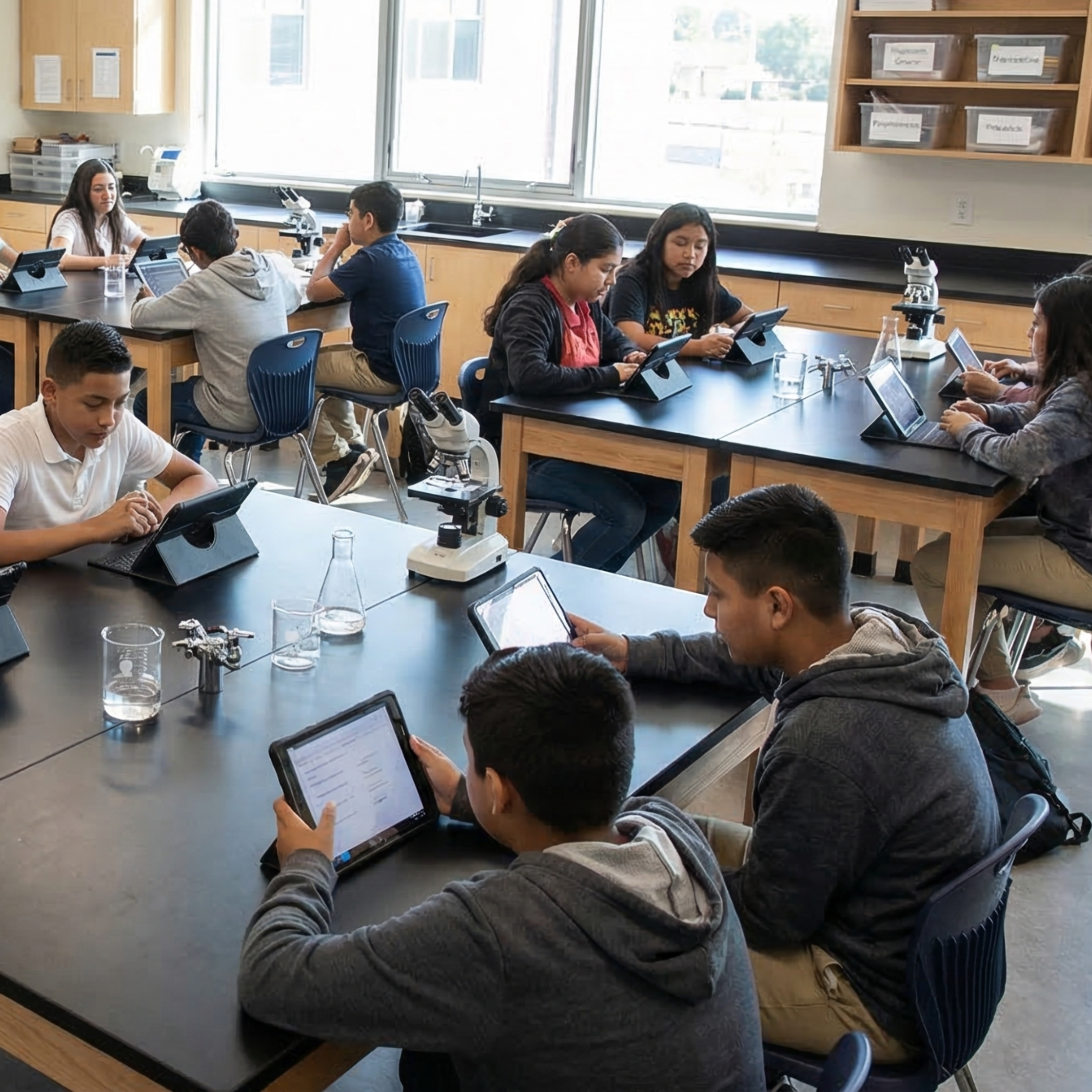
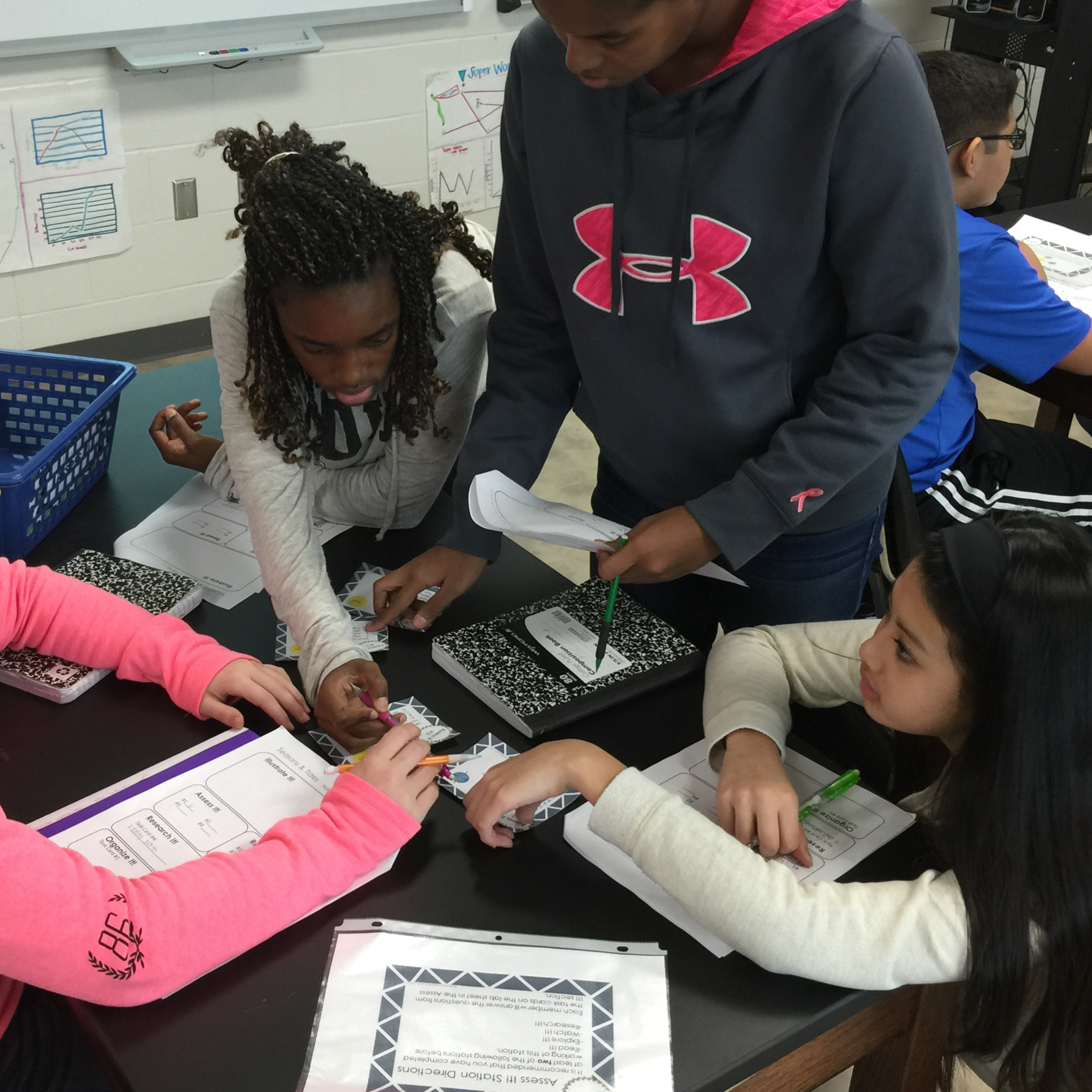
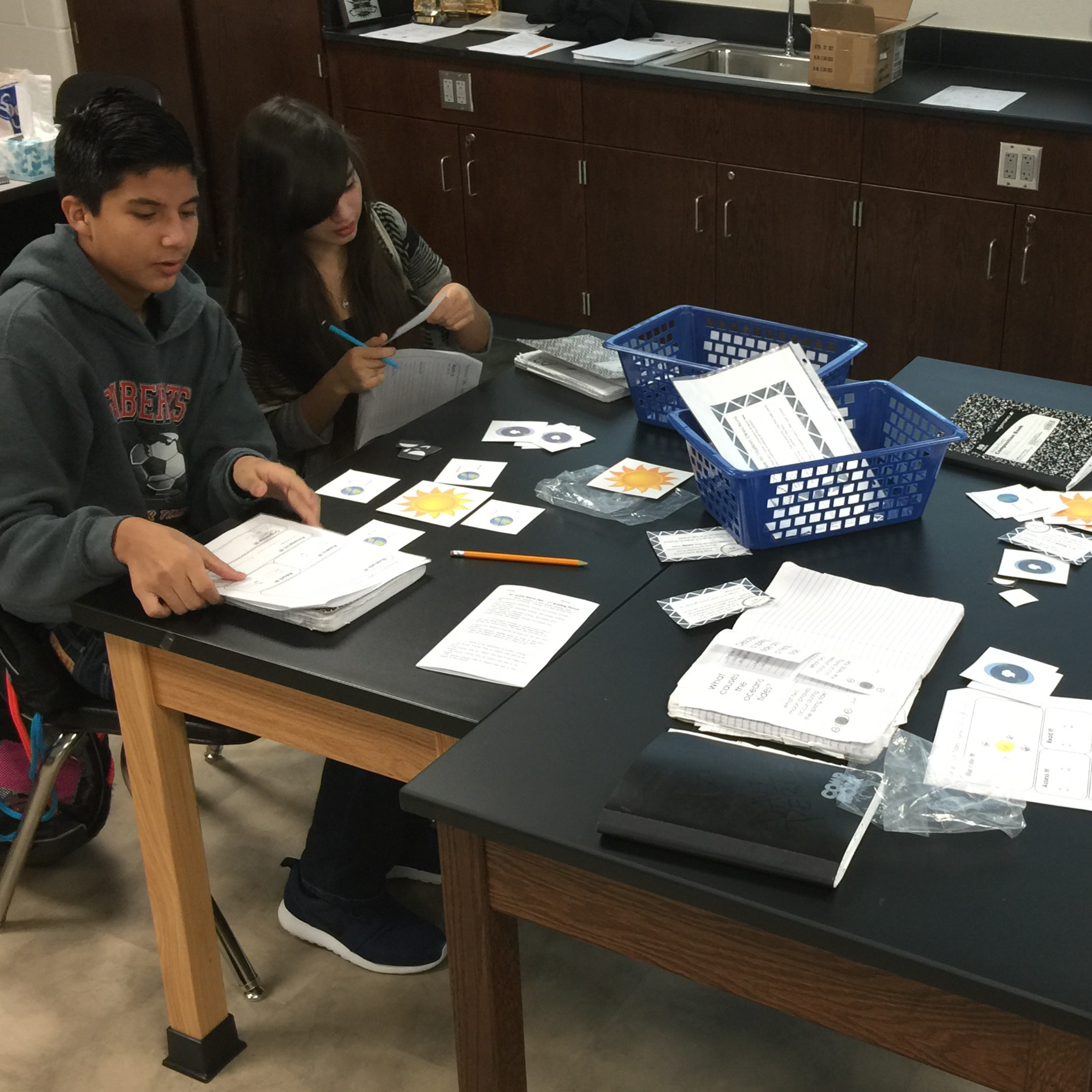
School and district licenses give your teachers access to every resource they need, including station labs, inquiry labs, anchoring phenomena, presentations, escape rooms, and much more. One purchase covers the grade levels you need.
- PO-friendly. We accept purchase orders
- Volume discounts for 11+ teachers
- Complimentary Kesler Science Plus orientation for 4+ teachers
- Three free implementation PD sessions for departments of 11+
- Aligned to the 2024 TEKS standards
See It in Action
Book a walkthrough and we'll show you how Kesler Science fits your campus.
Book Demo CallNo pressure, no hard sell