.png?width=375&height=100&name=WebPage%20logo%20with%20curves%202026%20(8).png)
Temperature & Kinetic Energy
"Explain the relationship between temperature and the kinetic energy of the particles within a substance."
💡 What This Standard Actually Means
"Explain". Students are explaining the relationship between temperature and the kinetic energy of the particles within a substance. The wording in the new version drops the word "average" from in front of kinetic energy, but the concept that temperature reflects the speed of particle motion is still the heart of the standard. Instruction can take many forms, such as hot-and-cold water particle simulations, drop-of-food-coloring diffusion observations, particle motion animations, and quick-write activities tying temperature to particle speed.
Everything around us is made of particles that are constantly moving. In solids they vibrate in place; in liquids and gases they also slide and bounce around. That motion is their kinetic energy. Temperature is our measure of the average kinetic energy of those particles: when they move faster on average, the temperature is higher, and when they slow down, it is lower.
Because temperature tracks how fast the particles are moving, heating a substance speeds its particles up and cooling it slows them down. That is why a thermometer reading tells you something real about what the particles are doing. Drop food coloring into hot water and it races through the cup; drop the same amount into ice water and it barely creeps, because the water particles themselves are moving much faster in the hot cup. Same water, same dye, different particle speed, different temperature.
One caution so students do not blur two ideas: temperature is the average kinetic energy per particle, while thermal energy is the total for the whole object and also depends on how much matter is present. For this standard, keep the focus on the relationship this page is about: temperature and how fast the particles are moving.
The demo that made this click every year was two clear cups of water side by side, one hot from the kettle and one full of ice water. I'd put a single drop of food coloring in each at the same moment and just let the class watch. In the hot cup the color bloomed and spread across the whole cup in seconds. In the cold cup it sank into a lazy little blob and mostly sat there. Then I'd ask one question: "Same water, same drop, so why is the color moving so much faster in this cup?" Within a minute a student would land on it themselves: the particles in the hot water are moving faster. That is the entire standard, and they could see it happening. From there we tied "faster particles" straight to "higher temperature," no lecture required.
⚠️ Misconceptions Your Students May Have
These are some of the most common misconceptions. Knowing what to look for can help you get ahead of them.
"Temperature and thermal energy are the same thing"
Temperature is a measure of the average kinetic energy of the particles. Thermal energy is the total kinetic energy of all the particles combined. Two objects can share the same temperature but hold very different amounts of thermal energy if their masses are different. A swimming pool and a bathtub can both sit at 80 degrees, but the pool contains way more thermal energy.
"Particles stop moving when something gets cold"
Particles keep moving at every temperature students will encounter in a middle school classroom. In a block of ice, the particles are still vibrating in place. They're just moving slower than the particles in a glass of warm water. Motion slowing down lowers the temperature. Motion never fully stops at ordinary temperatures.
"If something has a high temperature, it must have more thermal energy than something with a low temperature"
Not necessarily. Thermal energy depends on both temperature AND the amount of matter. A tiny candle flame is very hot, but because it has so little matter, it holds very little total thermal energy compared to a bathtub of warm water. Size and mass matter just as much as temperature when you're asking about total energy.
"Temperature measures how much heat is in an object"
Temperature is a measure of average kinetic energy, not an amount of heat stored inside. Heat is the name we give thermal energy when it's moving from one object to another. Objects don't "contain heat." They contain thermal energy. Temperature just tells us how fast the particles are moving, on average.
📓 Teaching Resources for 7.8C
These resources are aligned to this standard.


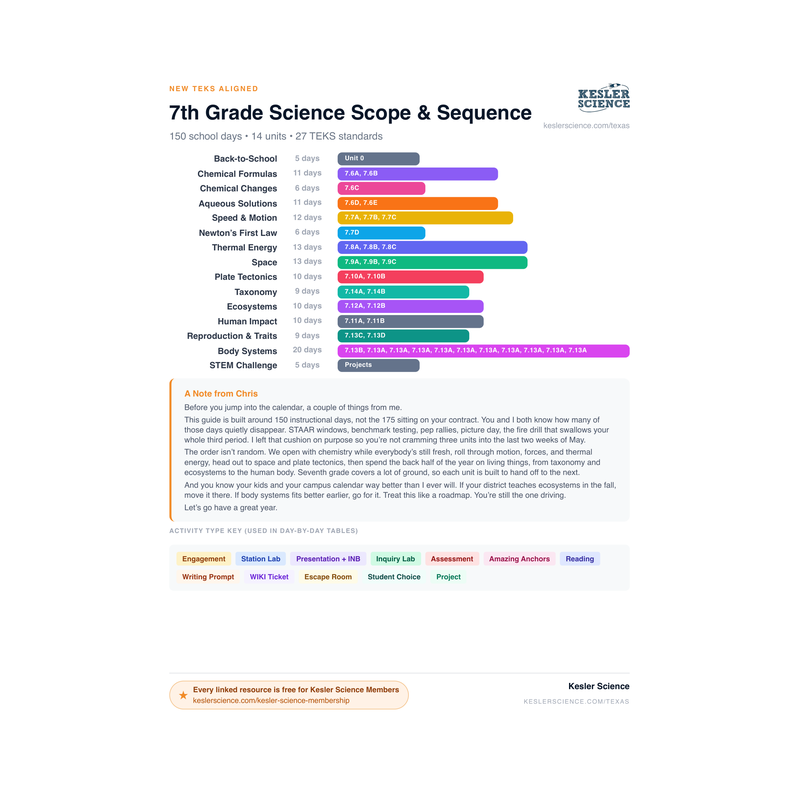
100% Aligned Lessons for Every TEKS You Teach
Kesler Science Plus puts thousands of ready-to-teach lessons and activities in your hands, so you can boost engagement and get your planning time back. Trusted by schools and districts all over the great state of Texas.
🌎 Phenomenon Ideas for 7.8C
Use these real-world phenomena to anchor your lesson. Show students the phenomenon first, let them wonder, then build toward Temperature & Kinetic Energy as the explanation.
Food Coloring in Hot vs. Cold Water
Fill two identical glasses, one with very hot water and one with ice water. Drop a single drop of food coloring in each at the same time. Don't stir. The color spreads through the hot water fast, but moves through the cold water slowly. Both glasses are the same size. Both drops are the same size. So why the difference?
"The water looks still in both glasses. What must be going on at the particle level that makes the color spread faster in one glass than the other?"
The Coffee Cup vs. The Swimming Pool
A cup of coffee is 185 degrees Fahrenheit. A backyard swimming pool sits at 82 degrees Fahrenheit. The coffee is hotter by a long shot. But if you had to warm a whole house, which one has more energy available to do the job? Why do we say the pool has more thermal energy even though the coffee has a higher temperature?
"How can the cooler object hold more total energy? What's the difference between how fast particles move and how many particles are in the object?"
A Balloon Left in the Sun
Blow up a balloon to a medium size and leave it on a sunny windowsill on a warm day. Come back an hour later. The balloon looks bigger. Nothing was pumped in. No air was added. So where did the extra size come from?
"The same number of air particles are inside the balloon. What changed about them to make the balloon get bigger? How does this connect to what temperature actually measures?"
💡 Free Engagement Ideas for 7.8C
Ready-to-run activities you can drop straight into a lesson. Where one of these looks like a phenomenon from the section above, that is on purpose: show it first as the hook, then let students run it themselves.
Food Coloring Race
Fill clear cups with water at three different temperatures: ice cold, room temperature, and very hot tap water. Add one drop of food coloring to each at the same time without stirring. Students time how long it takes the color to spread and graph the results against temperature. A direct window into faster-moving particles.
Balloon on a Bottle
Stretch a balloon over the mouth of an empty plastic water bottle. Place the bottle in a cup of hot tap water and watch the balloon slowly inflate. Move it to a cup of ice water and watch it deflate. Students draw the particles inside the bottle at each stage.
Particle Pantomime
Clear a space in the classroom and have students stand in it as "particles." Call out temperatures ("freezer," "room temperature," "boiling pot") and students act out how fast they're moving. Pause and ask: "If the room gets bigger but there are still 20 of you, did the total energy change? What about the average?"
Same Temp, Different Energy
Fill a paper cup and a large pitcher with water at the same temperature. Drop an ice cube in each and time how long each takes to melt. The ice in the small cup melts much slower because the cup holds less thermal energy than the pitcher, even at identical temperatures. Great visual for separating temperature from thermal energy.
🎯 What Approaches, Meets, and Masters Thinking Look Like
Here is what student thinking at each level looks like on this one task, so you know what to look for and how to move a student up.
A teacher has two clear cups of water. One cup is warm tap water. The other cup has been sitting in the freezer and is now ice cold, but still liquid. The teacher puts one drop of food coloring in each cup at the same time. The color spreads out faster in the warm cup. Explain why the color spreads faster in the warm water than in the cold water. Use what you know about the particles in each cup and how they are moving.
- A clear statement that the warm water particles are moving faster than the cold water particles.
- A connection between temperature and particle speed: higher temperature means faster average particle motion.
- The faster motion explains why the color spreads quicker (the moving particles bump and carry the color around).
- Particle motion described as kinetic energy (energy of motion), even in simple words.
- The cold water particles described as still moving, just slower, not stopped.
- An answer that ties the whole chain together: warmer means more particle energy means faster motion means faster spreading.
- The cold-water side handled correctly. Saying the cold particles have stopped or frozen in place is the easiest mistake to make here.
The color spreads faster in the warm water because the warm water particles are moving and the cold water particles are not moving. The cold water is so cold that the particles stopped, so the color just sits there. The warm ones are moving so they push the color around.
The color spreads faster in the warm water because the particles in the warm water are moving faster than the particles in the cold water. Higher temperature means the particles have more kinetic energy, so they move quicker. When they move quicker they bump into the food coloring and spread it out faster. The cold water particles are still moving, but they are slower because the temperature is lower, so the color spreads slower in that cup.
The color spreads faster in the warm water because temperature is really a measure of how fast the particles are moving on average. Warmer water means the particles have more kinetic energy, so they move faster, bump around more, and carry the color through the cup quicker. In the cold cup the particles still move, but they have less kinetic energy, so they move slower and spread the color slower.
This is the same reason sugar dissolves faster in hot tea than in iced tea. The hot tea particles are moving faster, so they crash into the sugar more often and break it apart sooner. Anytime something is warmer, its particles are moving faster, and that faster motion is what speeds things up.
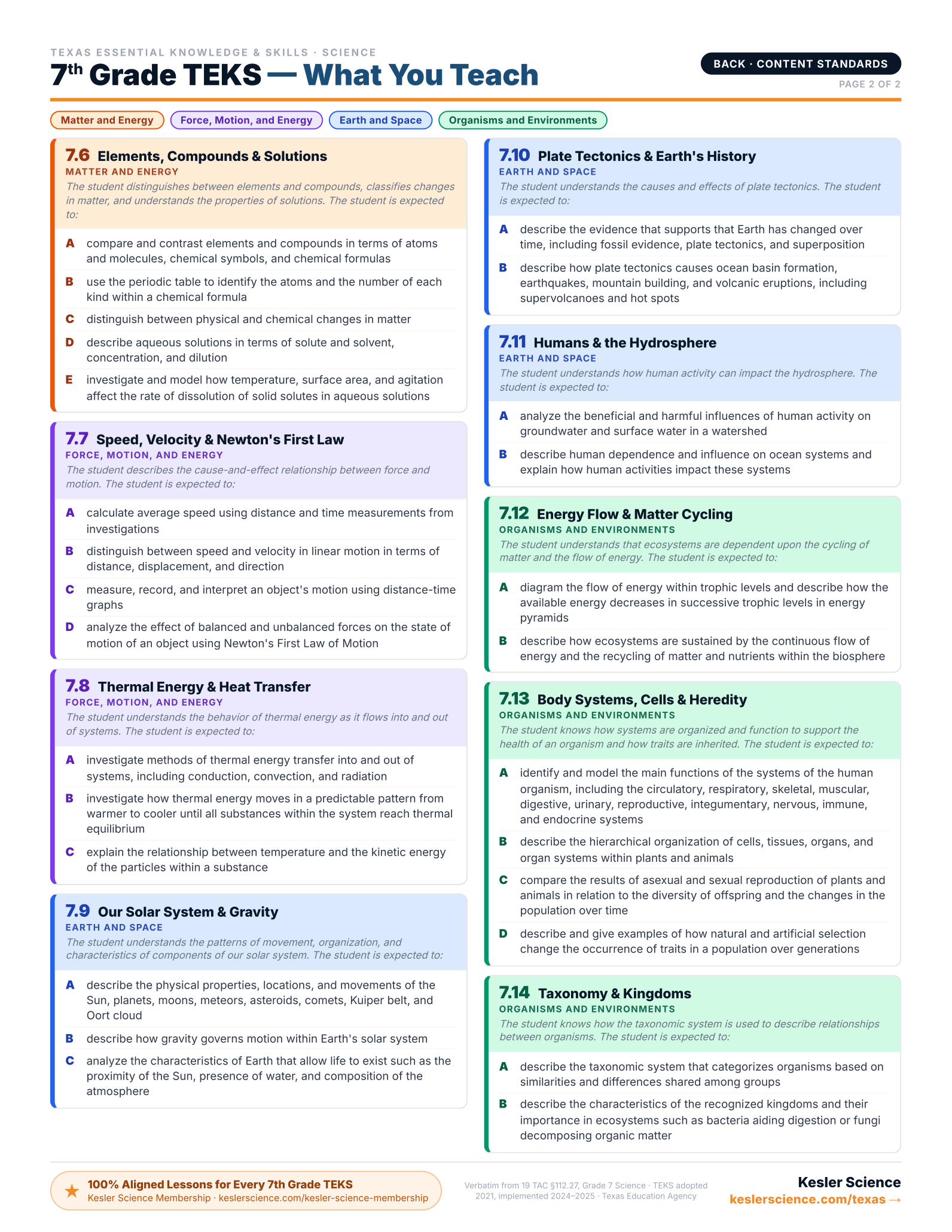
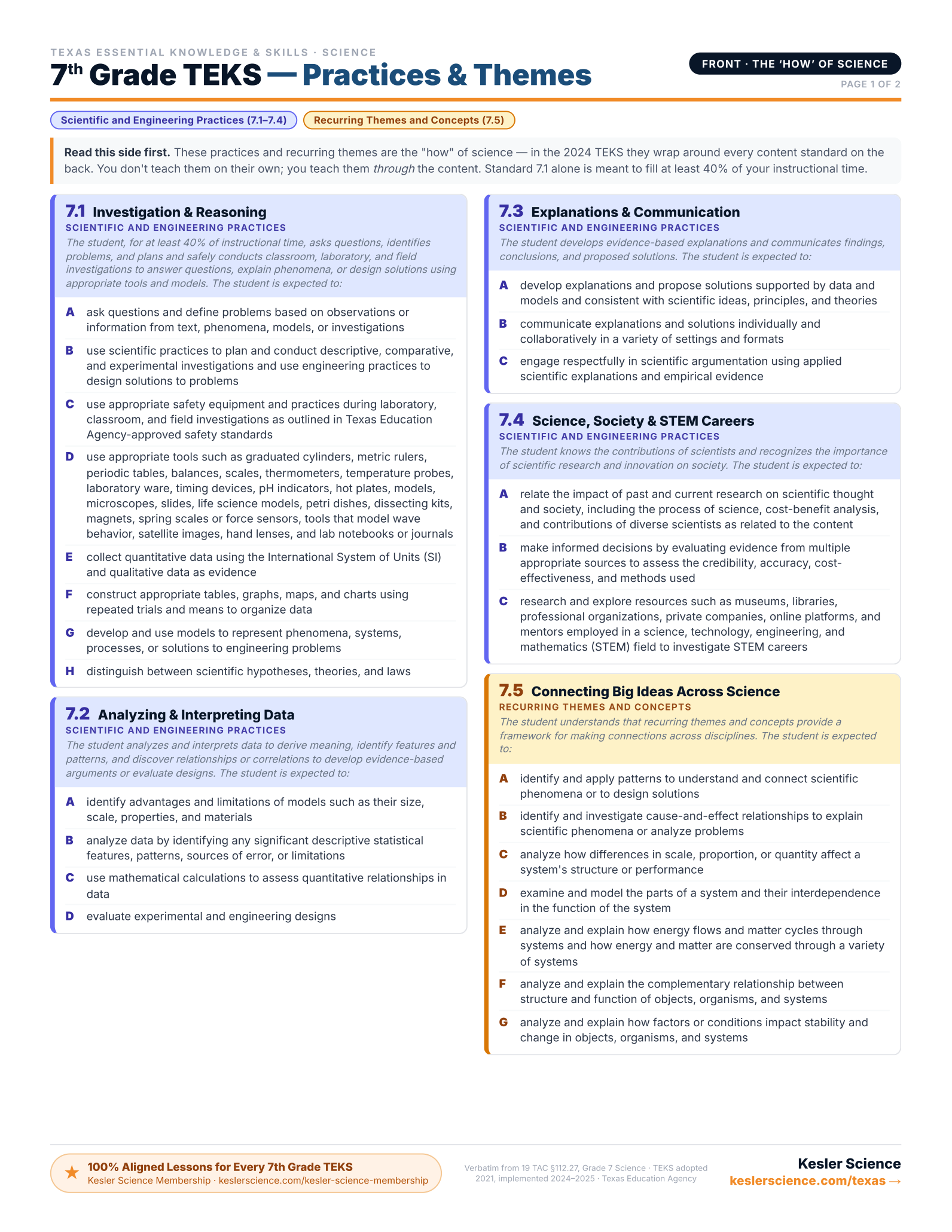
Every 7th-Grade Science TEKS on One Page
The color-coded, front-and-back cheat sheet I wish I'd had — every standard, organized by reporting category. Print it and reference it all year long. This will be your new favorite document!
Trusted Across Texas
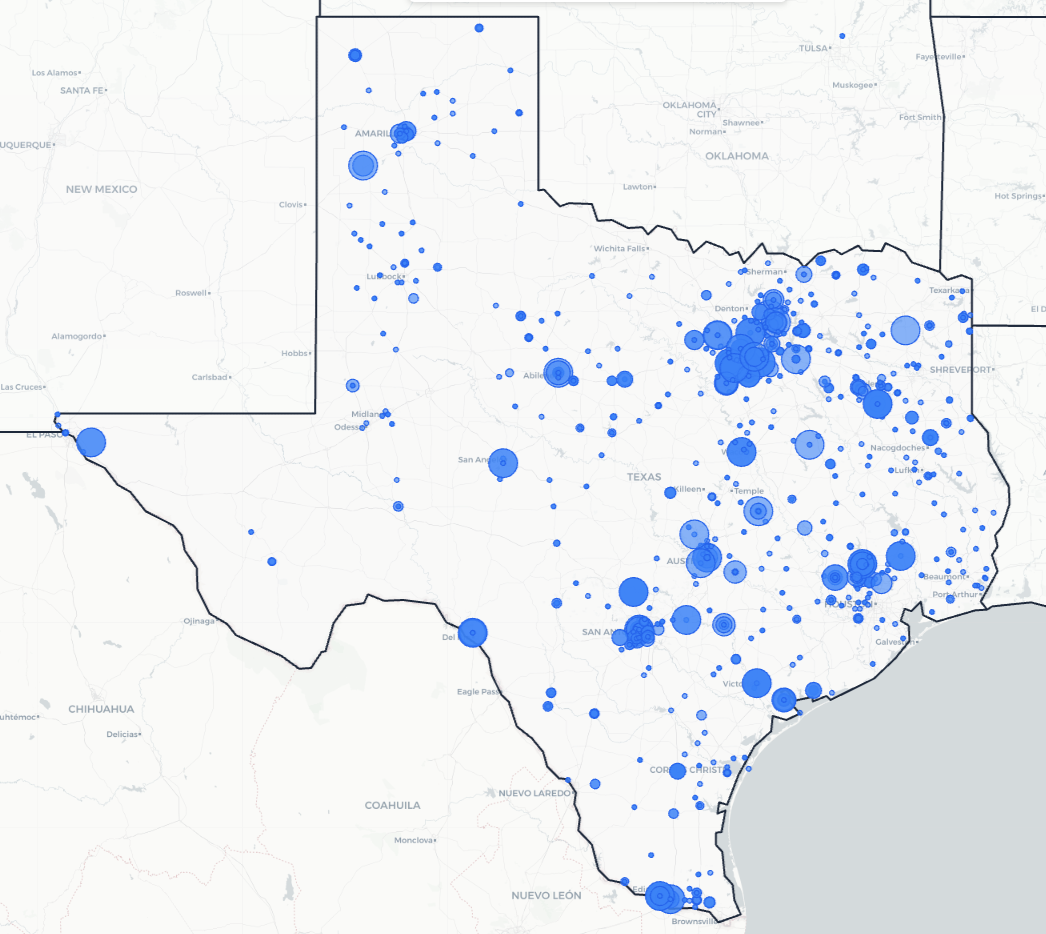
From the Rio Grande Valley to the Panhandle, Texas science teachers are using Kesler Science to save time and engage students.
Texas Schools and Districts
Love Kesler Science
What Teachers Are Saying
Give Your Science Teachers Everything They Need
School and district licenses give your teachers access to every resource they need, including station labs, inquiry labs, anchoring phenomena, presentations, escape rooms, and much more. One purchase covers the grade levels you need.
- PO-friendly. We accept purchase orders
- Volume discounts for 11+ teachers
- Complimentary Kesler Science Plus orientation for 4+ teachers
- Three free implementation PD sessions for departments of 11+
- Aligned to the 2024 TEKS standards
See It in Action
Book a walkthrough and we'll show you how Kesler Science fits your campus.
Book Demo CallNo pressure, no hard sell