.png?width=375&height=100&name=WebPage%20logo%20with%20curves%202026%20(8).png)
Gravity & Motion in Space
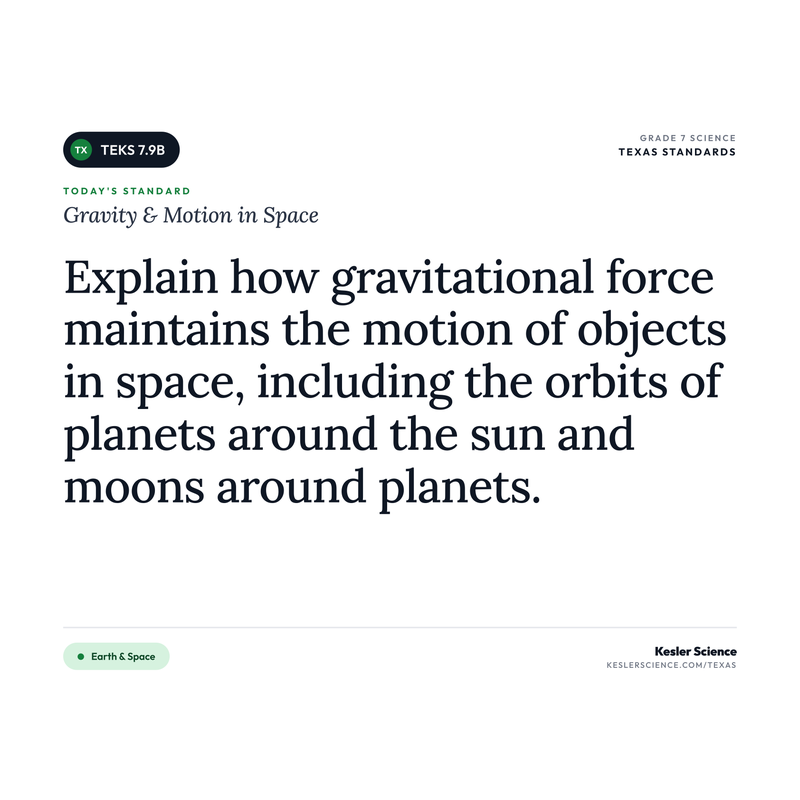
"Describe how gravity governs motion within Earth’s solar system."
💡 What This Standard Actually Means
"Describe". Students are describing how gravity governs motion within Earth's solar system. The new wording is broader than the old version. Instead of listing planets and moons specifically, the standard asks kids to explain gravity's role in driving motion across the whole solar system. That includes orbits of planets, dwarf planets, moons, asteroids, comets, and the path of the Sun itself. Instruction can take many forms, such as orbit simulations, gravity-and-mass investigations, model demonstrations with marbles on a stretched fabric, and Newton's-cannonball thought experiments.
Gravity is a force of attraction between any two objects that have mass. The bigger the mass, the stronger the gravitational pull. The closer the objects, the stronger the pull between them. The Sun contains nearly all the mass in the solar system, so its gravity reaches all the way to the edge of the system and shapes the motion of everything inside it.
Every object in the solar system is held in motion by gravity. Planets move in elliptical orbits around the Sun because the Sun's gravity is constantly pulling them inward. They don't fall into the Sun because they're moving sideways fast enough that the inward pull just curves their forward path into a closed loop. Moons do the same thing around their planets. Earth's moon stays in orbit because Earth's gravity keeps it from flying off in a straight line. Asteroids and comets travel along their own orbital paths under the Sun's pull. Comets that come from the Kuiper belt or Oort cloud swing through the inner solar system on long, stretched-out elliptical orbits and head back out again.
One important clarification students need: gravity doesn't "turn off" in space. Astronauts on the International Space Station appear weightless because they and the station are falling toward Earth together while moving forward fast enough to stay in orbit. Their forward speed plus Earth's gravitational pull keeps them curving around the planet. The big idea students should walk away with is that gravity is the invisible force running the whole show. Nothing in the solar system moves the way it does without gravity. Mass and distance determine how strong the pull is, and that pull determines the path.
The demo that made this click for my students was a tennis ball on a string. I'd stand in the middle of the room, tie a ball to a string, and swing it in a circle around my head. The ball wanted to fly off in a straight line. The string pulled it inward. That tension was my stand-in for gravity. I'd ask, "What happens if I let go of the string?" They'd yell, "It flies off!" And I'd point out that the same thing would happen to Earth if gravity suddenly disappeared. From there, the conversation about orbits got a lot easier. Kids could picture the invisible pull that keeps planets from flying off into space.
⚠️ Misconceptions Your Students May Have
These are some of the most common misconceptions. Knowing what to look for can help you get ahead of them.
"There's no gravity in space"
Gravity exists everywhere in space. The International Space Station orbits about 250 miles above Earth, where gravity is still about 90 percent as strong as it is on the ground. Astronauts appear to float because they and the station are continuously falling toward Earth together while also moving forward fast enough to keep circling. Scientists call this microgravity, not zero gravity.
"Planets orbit the sun in perfect circles"
Planetary orbits are ellipses, which are stretched-out ovals, not circles. Most planet orbits are fairly close to circular, so textbook pictures simplify them, but the sun is not at the exact center. It sits at one of two points called a focus inside the ellipse. Comets have much more stretched-out elliptical orbits, which is why they swing close to the sun and then travel far away.
"Gravity only pulls things down toward the ground"
Gravity pulls two objects toward each other. On Earth, we mostly notice how Earth's gravity pulls us "down," but "down" is just "toward the center of Earth." In space, the sun's gravity pulls every planet toward the sun. Jupiter's gravity pulls its many moons toward Jupiter. Gravity works in every direction, not just downward. In fact every object with mass pulls on every other object, and you pull on Earth exactly as hard as it pulls on you. You never notice because how strong the pull is depends on how much mass each object has: Earth is so massive that its pull is the one you feel.
"Astronauts float because they are too far from Earth for gravity to reach them"
Astronauts float because they are in continuous free-fall. They are falling toward Earth, but their forward motion is fast enough that they keep missing Earth as they go. The station is essentially falling in a curve that matches the curve of the planet. Gravity is still pulling on them the whole time.
📓 Teaching Resources for 7.9B
These resources are aligned to this standard.


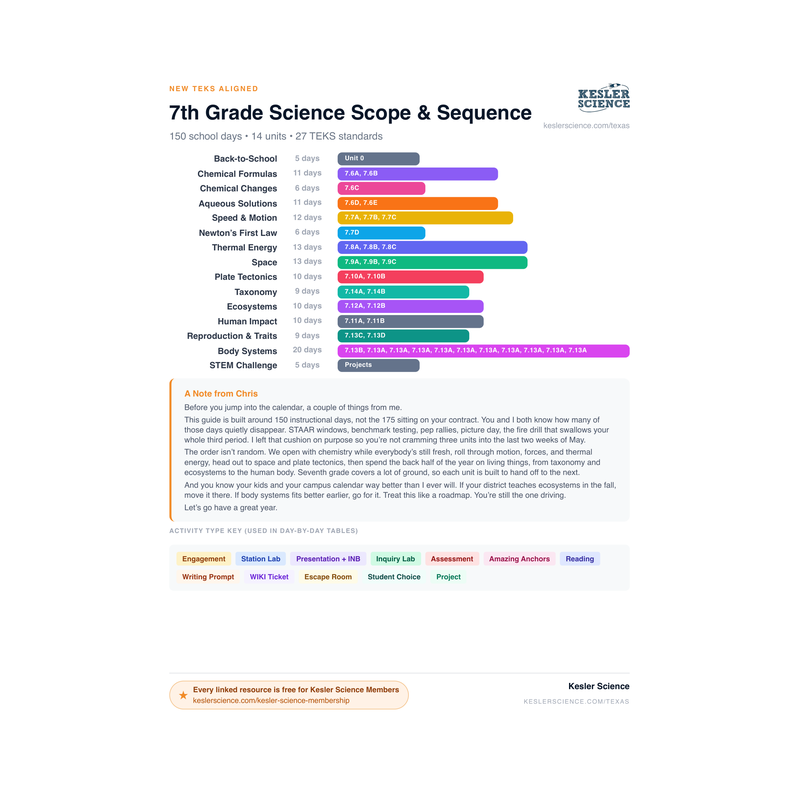
100% Aligned Lessons for Every TEKS You Teach
Kesler Science Plus puts thousands of ready-to-teach lessons and activities in your hands, so you can boost engagement and get your planning time back. Trusted by schools and districts all over the great state of Texas.
🌎 Phenomenon Ideas for 7.9B
Use these real-world phenomena to anchor your lesson. Show students the phenomenon first, let them wonder, then build toward Gravity & Motion in Space as the explanation.
Astronauts Floating Inside the ISS
Play a short clip of astronauts on the International Space Station floating, pushing off walls, and letting water form into blobs in the air. The ISS orbits only about 250 miles above Earth's surface. Yet everyone inside looks weightless. If gravity is still pulling on them, why don't they fall down?
"The astronauts aren't out of reach of gravity. So what has to be happening for them to float like that? How can 'falling' and 'floating' look the same?"
The Moon Orbits Earth, Earth Orbits the Sun
The moon is about 240,000 miles away from Earth, on average. It hasn't drifted off into space in over four billion years. Earth is about 93 million miles from the sun, and it hasn't wandered off either. Somehow, both objects keep looping around without ever stopping or escaping. What invisible force is holding them in place?
"If Earth wasn't moving, what would the sun's gravity do to it? If the sun's gravity suddenly disappeared, what path would Earth take?"
You Weigh Less on the Moon Than on Earth
A student who weighs 100 pounds on Earth would weigh only about 16 pounds on the moon. Their body didn't change. The amount of matter in them is the same. So why does the scale read differently?
"The moon has much less mass than Earth. What does that tell you about gravity? How would your weight change on a bigger planet like Jupiter?"
💡 Free Engagement Ideas for 7.9B
Ready-to-run activities you can drop straight into a lesson. Where one of these looks like a phenomenon from the section above, that is on purpose: show it first as the hook, then let students run it themselves.
Ball on a String Orbit Model
Tie a small ball or bean bag to a 2-foot string. Swing it in a horizontal circle overhead. The string represents gravity, constantly pulling the "planet" inward. Ask students: What happens if I let go? What happens if I slow the ball down? Great kickoff for the idea that orbiting objects are always being pulled in and moving forward at the same time.
Marble on a Stretched Sheet
Stretch an old bedsheet or plastic tablecloth between four students or across a hula hoop. Place a heavy ball (medicine ball or bowling ball) in the middle to create a dip. Roll marbles past it and watch their paths curve. The dip represents the sun's gravity bending space. Marbles that pass close follow tighter curves. Marbles going too slowly spiral in.
Weight on Every Planet
Have each student calculate their weight on Mercury, Venus, Mars, Jupiter, Saturn, Uranus, Neptune, and the moon using a multiplier chart (Earth weight times the gravity factor). They build a bar graph comparing their weight on each world. Making it personal is what hooks them, and it reinforces that gravity depends on the mass of the planet or moon.
Drop Two Masses
Drop a pencil and a textbook from the same height at the same time (over carpet or a soft surface). They hit at nearly the same moment. Then crumple a piece of paper and drop it against a flat sheet of paper. Ask why one falls faster than the other even though they have the same mass. Link it to Galileo and to the universal pull of Earth's gravity.
🎯 What Approaches, Meets, and Masters Thinking Look Like
Here is what student thinking at each level looks like on this one task, so you know what to look for and how to move a student up.
The International Space Station orbits about 250 miles above Earth, and astronauts inside it appear to float. Describe how gravity is acting on the astronauts, and explain why they look weightless even though gravity is still pulling on them.
- A clear statement that gravity is still acting on the astronauts, not turned off.
- Earth named as the source of the pull, and the pull described as still strong this close to Earth.
- The idea that the astronauts and the station are falling toward Earth together.
- The forward motion of the station mentioned, not just the downward pull.
- The two ideas connected: falling inward plus moving forward fast equals staying in orbit.
- An explanation that "floating" means continuously falling, not escaping gravity.
- Free-fall correctly separated from "no gravity." That is the easiest place to slip.
The astronauts float because there is no gravity in space. They are way up high above Earth, so gravity can't reach them anymore. That is why they drift around inside the station instead of standing on the floor like we do.
Gravity is still pulling on the astronauts. The space station is close enough to Earth that gravity is almost as strong as it is on the ground. The astronauts look weightless because they are falling toward Earth, but the station is moving forward really fast at the same time. So they keep falling and keep moving forward, and that makes them circle the planet instead of crashing into it. They are not floating because gravity is gone. They are floating because they are falling and the station is falling with them.
Gravity never turns off in space. Earth's gravity is still pulling the astronauts and the station downward the whole time. They look weightless because they are in free-fall: they are constantly falling toward Earth, but the station is also moving forward so fast that it keeps curving around the planet instead of hitting it. The forward speed and the inward pull work together to make a closed loop, which is an orbit. Since everything inside is falling at the same rate, nothing pushes the astronauts against a floor, so they float.
This is the same reason the Moon stays near Earth instead of flying away. Earth's gravity keeps pulling the Moon inward, but the Moon is moving sideways fast enough that the pull just bends its path into an orbit. The Moon is basically falling around Earth forever, the exact same way the space station is. The size of the pull depends on mass and distance, but the rule is the same: gravity bends a fast forward motion into an orbit.
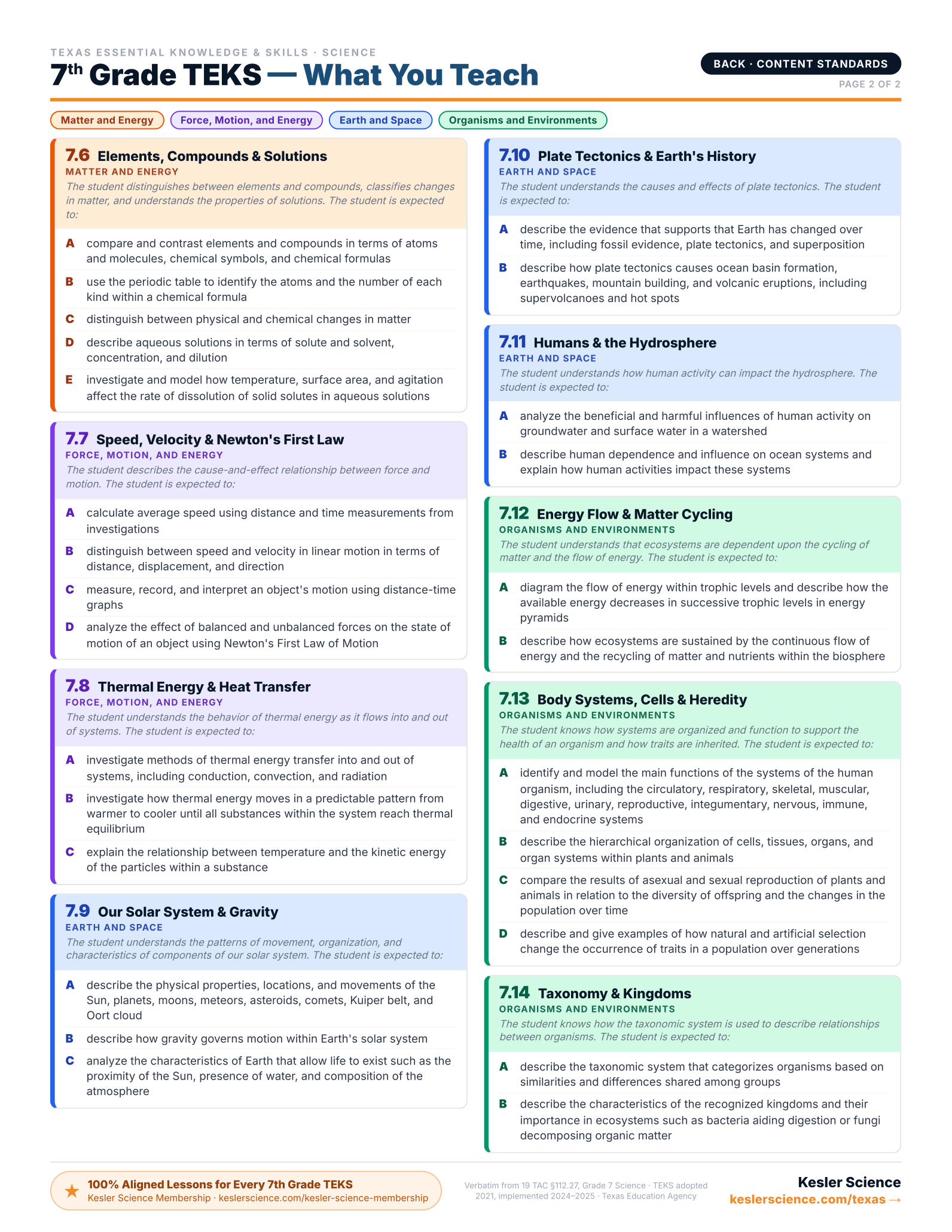
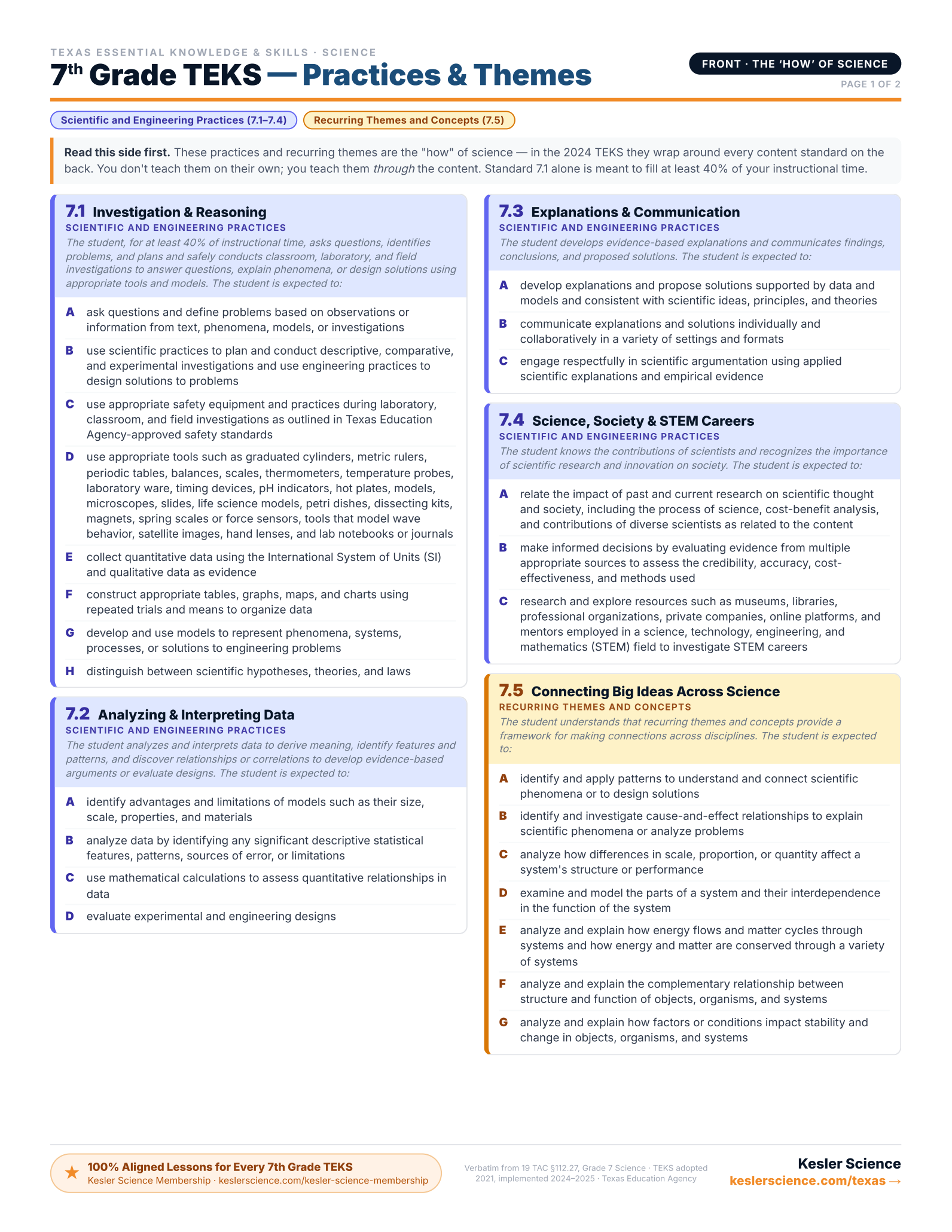
Every 7th-Grade Science TEKS on One Page
The color-coded, front-and-back cheat sheet I wish I'd had — every standard, organized by reporting category. Print it and reference it all year long. This will be your new favorite document!
Trusted Across Texas
From the Rio Grande Valley to the Panhandle, Texas science teachers are using Kesler Science to save time and engage students.
Texas Schools and Districts
Love Kesler Science
What Teachers Are Saying
Give Your Science Teachers Everything They Need
School and district licenses give your teachers access to every resource they need, including station labs, inquiry labs, anchoring phenomena, presentations, escape rooms, and much more. One purchase covers the grade levels you need.
- PO-friendly. We accept purchase orders
- Volume discounts for 11+ teachers
- Complimentary Kesler Science Plus orientation for 4+ teachers
- Three free implementation PD sessions for departments of 11+
- Aligned to the 2024 TEKS standards

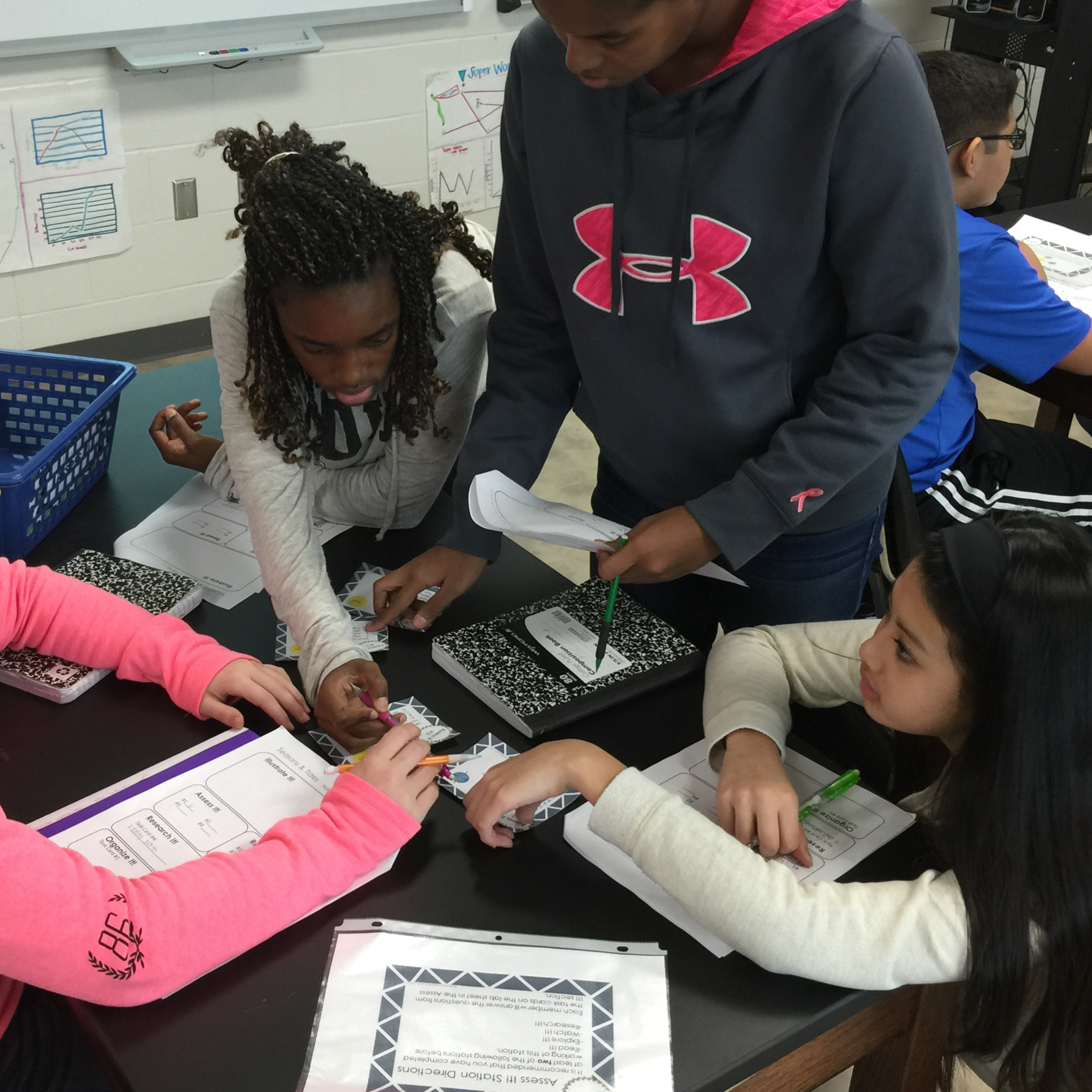
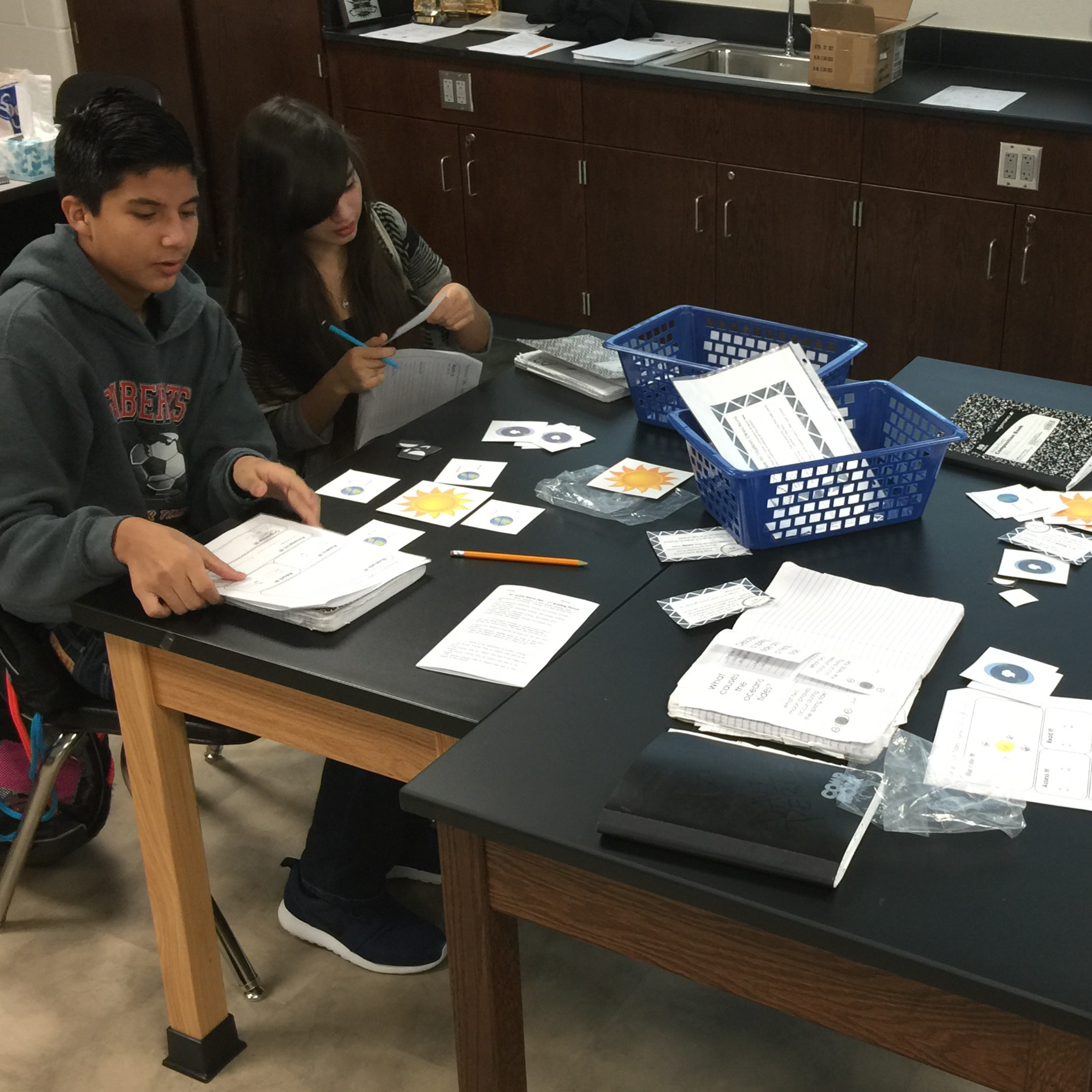
See It in Action
Book a walkthrough and we'll show you how Kesler Science fits your campus.
Book Demo CallNo pressure, no hard sell