.png?width=375&height=100&name=WebPage%20logo%20with%20curves%202026%20(8).png)
Changes in Matter
"Distinguish between physical and chemical changes in matter."
💡 What This Standard Actually Means
"Distinguish". Students are telling the difference between physical changes and chemical changes in matter. The wording in the new TEKS is shorter and broader. There's no required list of evidence built in, but the evidence (gas, color change, temperature change, precipitate, light) is still the natural way kids identify a chemical change. The verb is just "distinguish" now, so the focus is making the call: physical or chemical. Instruction can take many forms, such as observation labs with everyday materials, physical-vs-chemical sorting activities, demonstration stations with quick reactions, and lab notebooks where students explain their reasoning.
A physical change changes the form or appearance of matter, but the substance itself stays the same. Melting ice, ripping paper, dissolving salt in water, and breaking a pencil are physical changes. The stuff is still the same stuff, just in a different shape, size, or state. Physical changes can often be reversed.
A chemical change produces a new substance with different properties. The original atoms rearrange and form new bonds. Rusting iron, burning wood, digesting food, and baking a cake are chemical changes. Once the change happens, you can't easily get the original substances back. Scientists also call a chemical change a chemical reaction.
When you're trying to tell them apart, look for evidence. A bubbling reaction that produces gas, a sudden temperature jump or drop, an unexpected color change, a solid forming when you mix two clear liquids (called a precipitate), or a glow or flame all point to a chemical change. Important note for students: more than one of these signs happening at the same time makes chemical change much more likely. A color change by itself is not always chemical. Mixing food coloring in water changes the color, but it's still a physical change. Teach students to look at multiple pieces of evidence together.
I used to lose kids on this one because I'd give them a list of signs and expect them to memorize it. What actually worked was running a quick demo day where I'd do a bunch of small changes back to back. Crushed an Alka-Seltzer tablet into water (gas, fizzing). Mixed vinegar and baking soda (gas, temperature drop). Folded and ripped some paper (nothing, it's physical). Melted a piece of chocolate in my hand (state change, physical). After each one, kids wrote down what evidence they saw and voted on physical or chemical. By the end, they had the signs memorized without ever being told to memorize them.
⚠️ Misconceptions Your Students May Have
These are some of the most common misconceptions. Knowing what to look for can help you get ahead of them.
"If something changes color, it's a chemical change"
A color change can be evidence of a chemical change, but not every color change is chemical. Food coloring dropped into water changes the color without forming a new substance, so it's still a physical change. The trick is to look for a color change plus another sign (gas, temperature change, precipitate). Multiple signs together make a chemical change much more likely.
"Melting is a chemical change because the substance looks different"
Melting, freezing, boiling, and dissolving are all physical changes, not chemical. An ice cube melting into water is still water. Its molecules didn't change. They just have more energy and move around more freely. A chemical change requires new substances to form.
"In a chemical change, atoms disappear or new atoms are created"
Atoms are rearranged in a chemical change, not created or destroyed. This is called the law of conservation of mass. If you could weigh everything that goes into a reaction and everything that comes out, the mass would be the same. If gas escapes during a reaction, the mass seems to drop, but that gas still has mass. The atoms are just somewhere else now.
"Cutting, tearing, and crushing are chemical changes because the thing looks different"
Cutting paper gives you smaller pieces of paper. Crushing an aluminum can gives you a smaller-looking can. No new substance forms. The substance is just in a different shape or size. These are physical changes even though the thing looks very different than it did before.
📓 Teaching Resources for 7.6C
These resources are aligned to this standard.


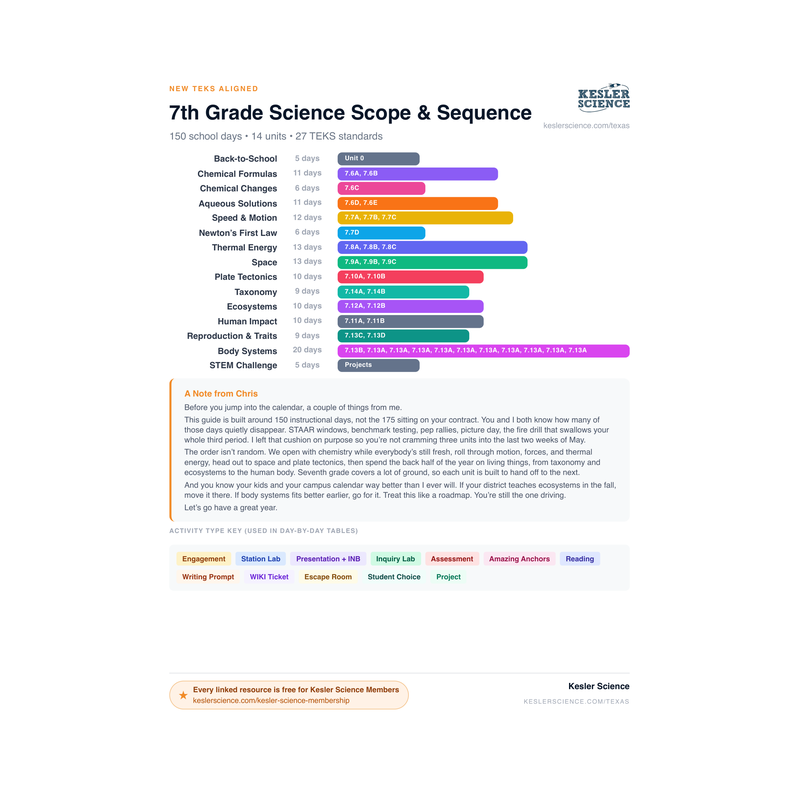
100% Aligned Lessons for Every TEKS You Teach
Kesler Science Plus puts thousands of ready-to-teach lessons and activities in your hands, so you can boost engagement and get your planning time back. Trusted by schools and districts all over the great state of Texas.
🌎 Phenomenon Ideas for 7.6C
Use these real-world phenomena to anchor your lesson. Show students the phenomenon first, let them wonder, then build toward Changes in Matter as the explanation.
Batter Becomes Cake
Cake batter is a thick, sticky liquid you could pour into a bowl. You pop it in the oven, and 30 minutes later, it's a fluffy, spongy cake that holds its shape. No matter what you do after that, you can't un-bake the cake and get the batter back. The batter is chemically transformed by the heat and the reactions inside it.
"What evidence did you see that a chemical change happened in the oven? Why can we not un-bake the cake to get the original batter back?"
A Rusty Bike Left Outside
A shiny silver bike gets left out in the rain for a few weeks. The next time you look, the chain and frame are covered in orange-brown rust. The iron in the metal is reacting with oxygen in the air and water, forming a new substance called iron oxide. The rust doesn't have the same properties as the metal underneath. It flakes off, it's weaker, and it doesn't go back to being metal.
"What evidence shows that rust is a new substance and not just dirty metal? Why is this a chemical change rather than a physical one?"
Alka-Seltzer in Water
Drop an Alka-Seltzer tablet into a glass of water. Bubbles erupt right away, the tablet starts to disappear, and if you're watching closely, the water feels slightly cooler. A gas is being produced (carbon dioxide), which is strong evidence of a chemical change. Multiple signs at once make the call clear.
"Which signs of chemical change did you observe? How does seeing more than one sign help you decide whether a change is physical or chemical?"
💡 Free Engagement Ideas for 7.6C
Ready-to-run activities you can drop straight into a lesson. Where one of these looks like a phenomenon from the section above, that is on purpose: show it first as the hook, then let students run it themselves.
Baking Soda & Vinegar Station
In a clear cup, have students add 2 tablespoons of baking soda. Then pour in a splash of vinegar. They'll see bubbling (gas), feel the outside of the cup (temperature drop), and can touch the liquid left over to notice it's thinner than before. Students list every sign of chemical change they observed.
Physical or Chemical? Carousel
Set up five stations: tearing paper, dissolving sugar in water, mixing baking soda and vinegar, melting chocolate in a warm hand, and burning a tiny piece of paper (teacher only, in a ceramic dish). Students rotate and record evidence at each stop, then decide physical or chemical and justify with the specific signs.
Steel Wool & Vinegar Heat Test
Soak a small piece of steel wool (from the hardware store) in white vinegar for a minute, then wrap it around a thermometer and put both inside a dry glass. Watch the temperature rise over a few minutes. The iron in the steel wool reacts with oxygen faster once the vinegar removes its protective coating. A clear temperature change as evidence of a chemical reaction.
Conservation of Mass Check
Place a sealable plastic bag on a balance. Put about half a teaspoon of baking soda inside, then tuck a small cup of vinegar into one corner without spilling. Record the mass. Seal the bag tightly and tip it to mix. The bag will puff up with gas. Measure the mass again. It stays the same, even though a chemical change happened, because mass is conserved.
🎯 What Approaches, Meets, and Masters Thinking Look Like
Here is what student thinking at each level looks like on this one task, so you know what to look for and how to move a student up.
A student mixes a spoonful of baking soda into a cup of vinegar. The mixture bubbles, gets foamy, and the cup feels a little colder. Decide whether this is a physical change or a chemical change. Use the evidence you can observe to explain how you know.
- A clear call: the student names this as a chemical change, not just "a change."
- At least one piece of observed evidence pulled straight from the prompt (the bubbling, the foam, the cup feeling colder).
- The bubbling read as gas being produced, which is a sign a new substance formed.
- The temperature change (the cup getting colder) named as a second sign of a chemical change.
- The idea that a new substance formed, so you can't easily get the baking soda and vinegar back.
- Reasoning that ties the evidence to the conclusion, not just a guess (gas plus a temperature change together point to chemical).
- Using more than one sign together instead of leaning on a single clue. That is the easiest place to slip.
This is a chemical change because the mixture turned foamy and white and it looked different than before. When something changes how it looks, that means a chemical change happened. The white foam is a new color, so it has to be chemical.
This is a chemical change. I can tell because the mixture bubbled, and the bubbles mean a gas was made. Making a new gas is a sign a new substance formed. The cup also got colder, and a temperature change is another sign of a chemical change. Two signs happened at the same time, so I'm pretty sure it's chemical and not physical.
This is a chemical change. The bubbling shows a gas (carbon dioxide, CO2) was made, and the cup getting colder shows energy changed during the reaction. Both of those are signs a brand new substance formed, so you couldn't easily turn it back into plain baking soda and vinegar. That's the real test: a chemical change makes something new, but a physical change just changes the shape or state of the same stuff.
That rule helps me with trickier cases too. If I drop food coloring into water, the color changes, but no gas forms, the temperature stays the same, and it's still just colored water. Only one clue, and nothing new was made, so that one is only a physical change, even though it looks different. The baking soda and vinegar gave me two real signs and a new substance, so that one is chemical.
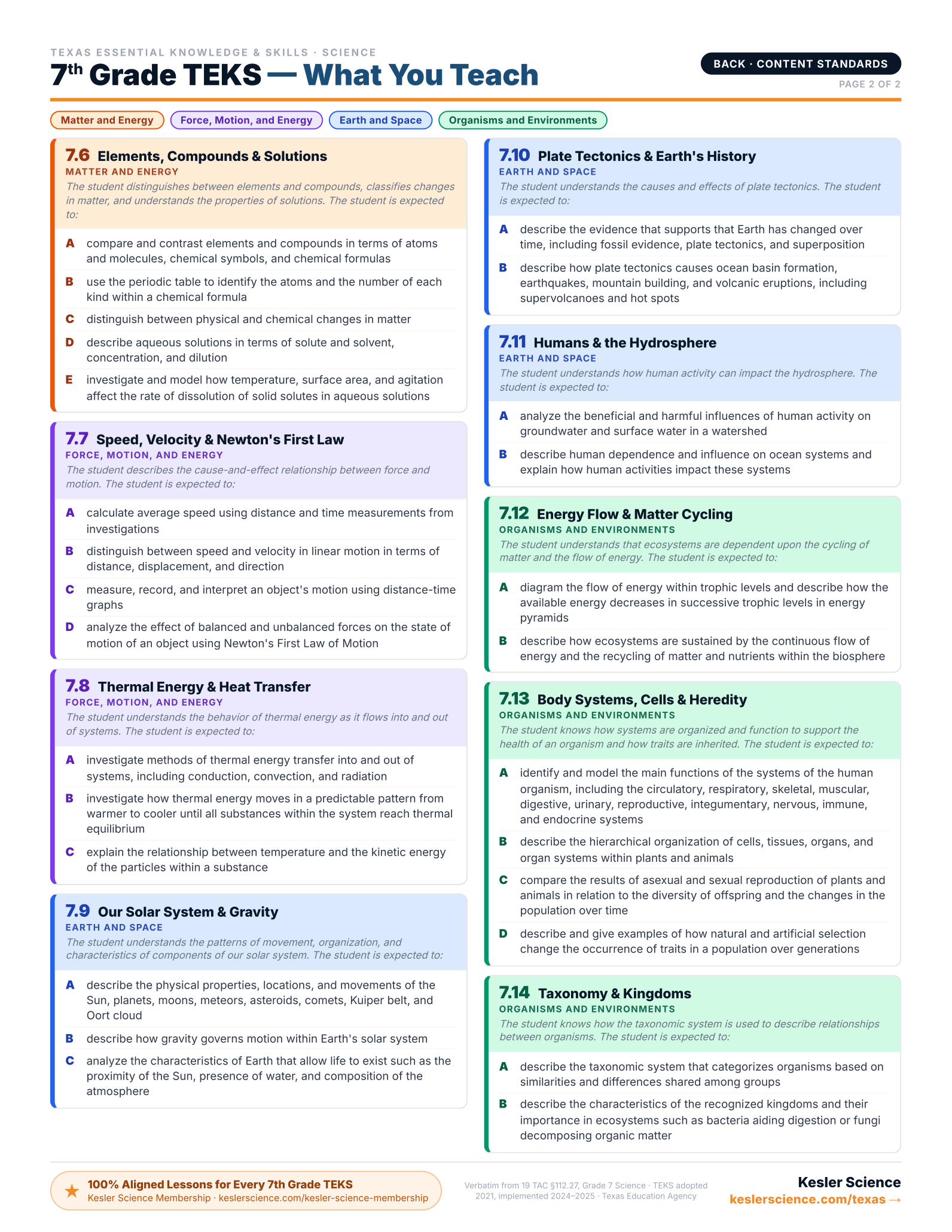
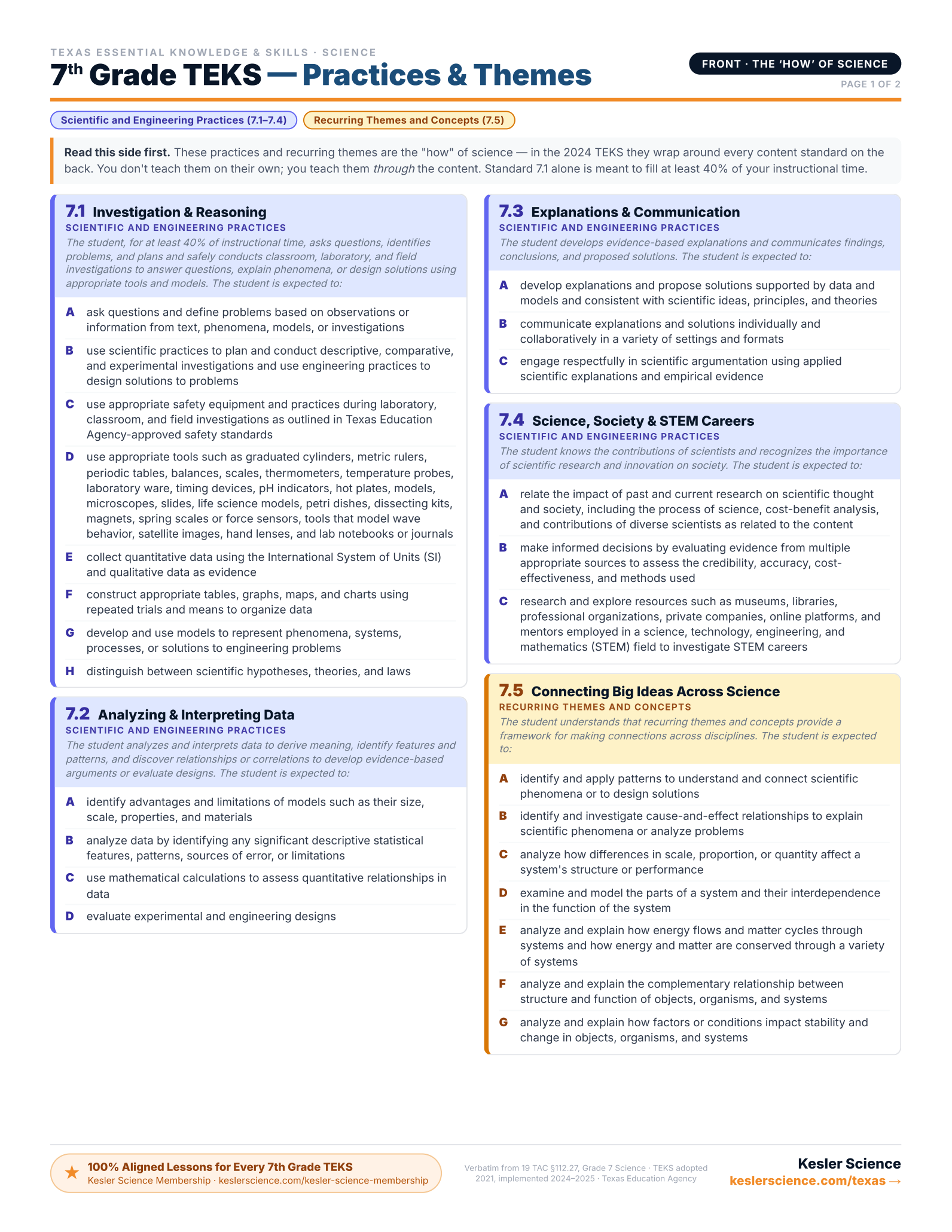
Every 7th-Grade Science TEKS on One Page
The color-coded, front-and-back cheat sheet I wish I'd had — every standard, organized by reporting category. Print it and reference it all year long. This will be your new favorite document!
Trusted Across Texas
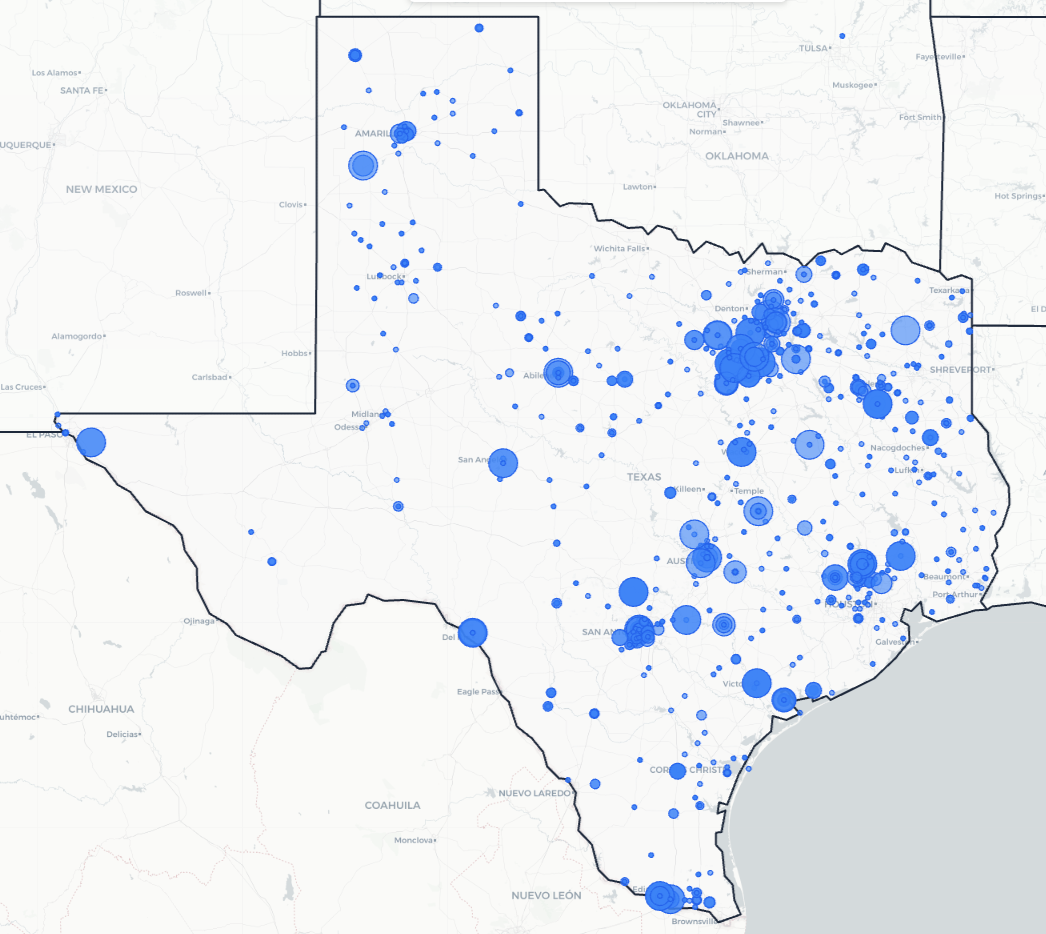
From the Rio Grande Valley to the Panhandle, Texas science teachers are using Kesler Science to save time and engage students.
Texas Schools and Districts
Love Kesler Science
What Teachers Are Saying
Give Your Science Teachers Everything They Need
School and district licenses give your teachers access to every resource they need, including station labs, inquiry labs, anchoring phenomena, presentations, escape rooms, and much more. One purchase covers the grade levels you need.
- PO-friendly. We accept purchase orders
- Volume discounts for 11+ teachers
- Complimentary Kesler Science Plus orientation for 4+ teachers
- Three free implementation PD sessions for departments of 11+
- Aligned to the 2024 TEKS standards
See It in Action
Book a walkthrough and we'll show you how Kesler Science fits your campus.
Book Demo CallNo pressure, no hard sell