.png?width=375&height=100&name=WebPage%20logo%20with%20curves%202026%20(8).png)
Humans & Ocean Systems
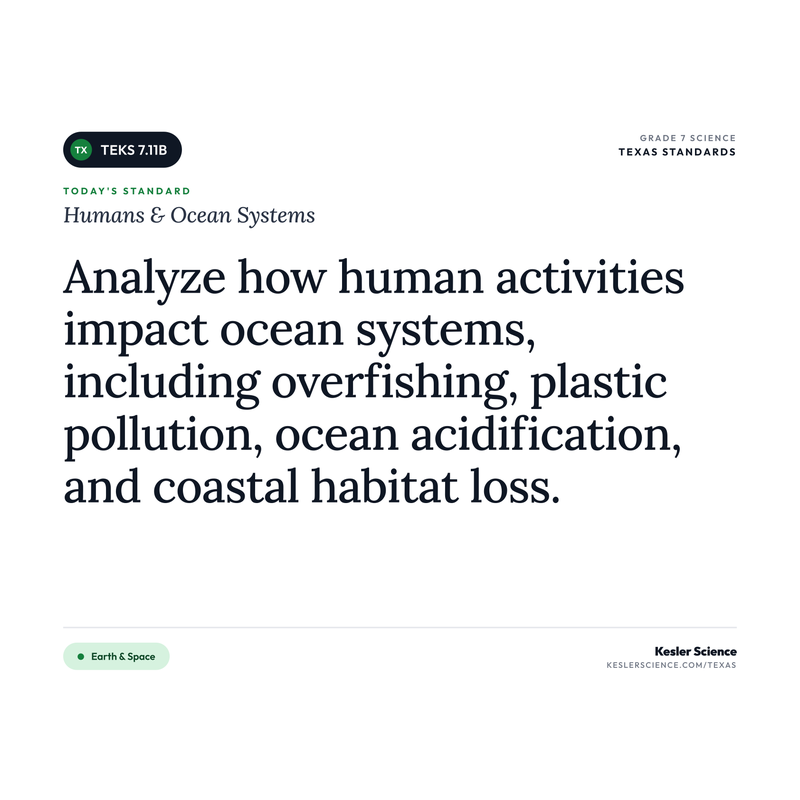
"Describe human dependence and influence on ocean systems and explain how human activities impact these systems."
💡 What This Standard Actually Means
"Describe". Students are describing two things: how humans depend on ocean systems, and how human activities impact them. The new wording broadens the scope from a list of specific issues (overfishing, plastic, acidification, habitat loss) to the bigger picture of dependence and influence. Kids need to look at oceans both as a resource humans need and as a system humans affect. Instruction can take many forms, such as ocean dependence research projects, real-world impact case studies, ecosystem service mapping, and pro-and-con debate activities.
The oceans cover about 71 percent of Earth's surface, and they shape almost everything about life on this planet, including human life. The 2024 TEKS frames the standard around two ideas: how humans depend on ocean systems, and how human activities impact them.
Start with dependence. Oceans give us food. Billions of people rely on seafood as a major source of protein. Oceans regulate climate by absorbing huge amounts of heat from the atmosphere and storing carbon dioxide. They drive the water cycle by evaporating massive amounts of water that fall as rain over land. They produce more than half of the oxygen we breathe through marine algae, phytoplankton, and photosynthetic bacteria. Oceans are highways for global trade. They support tourism economies along every coast. Their currents move warm and cold water around the globe and affect weather patterns thousands of miles inland. Students should be able to name multiple ways humans depend on ocean systems, not just "food."
Then look at impact. Overfishing pulls fish out faster than populations can rebuild. Plastic pollution adds millions of tons of waste to ocean ecosystems each year, much of which breaks down into microplastics that enter the food chain. Excess carbon dioxide from human activity dissolves into seawater and lowers the ocean's pH, which is called ocean acidification. More acidic water makes it harder for shellfish, corals, and some plankton to build their skeletons and shells. Coastal development destroys mangroves, salt marshes, seagrass beds, and coral reefs that serve as nurseries for huge portions of ocean life. Warming water from climate change stresses coral reefs and shifts where species can live. The big idea students should walk away with is that the relationship runs both ways. We rely on oceans for food, climate, oxygen, and economy. The choices we make on land affect oceans, and the health of oceans loops back and affects us.
The move that worked for me on this one started with dependence before impact. Before I handed out a single threat, I'd have groups brainstorm everything we get from the ocean: food, the oxygen that ocean plankton produce, weather and rainfall, shipping and jobs, and we'd fill a whole board. Only then did I bring out the "ocean pressure" case files: an index card for bluefin tuna, another for Pacific oysters, another for sea turtles, another for a coral reef. Each card had photos and a short blurb, and their job was to figure out which of the four big impacts (overfishing, plastic, acidification, habitat loss) hit that species hardest, and why. Every card had more than one threat, which drove home that these aren't separate problems happening to separate animals. And because we'd started with everything the ocean gives us, the punch line landed on its own: our own activities are putting pressure on the very system we depend on. That arc landed harder than any lecture I ever gave on the topic.
⚠️ Misconceptions Your Students May Have
These are some of the most common misconceptions. Knowing what to look for can help you get ahead of them.
"Ocean acidification is just another way of saying plastic pollution"
These are two different problems with different causes. Plastic pollution is physical debris, from large pieces down to microplastics, that accumulates in the water and food web. Ocean acidification is a chemistry change. When the ocean absorbs carbon dioxide, some of it reacts to form carbonic acid, which lowers the ocean's pH. Students should be able to describe the mechanism of each separately.
"Coral bleaching is caused by ocean acidification"
Coral bleaching is primarily caused by warmer water, not lower pH. When sea temperatures rise even a couple degrees above normal for extended periods, corals get stressed and expel the symbiotic algae (zooxanthellae) that live in their tissues. Without those algae, the coral turns white and eventually starves. Acidification is a separate stressor that also harms reefs by making it harder to build skeletons, but the "bleaching" itself is a temperature response.
"The Great Pacific Garbage Patch is a giant floating island of trash you can walk on"
It's much less visible than that. The Pacific Garbage Patch is a large area where ocean currents concentrate floating debris and microplastics. A lot of the plastic is tiny, below the surface, or spread thinly across a huge region. Students often picture a literal island, when in reality much of the damage is from microplastics small enough for plankton and fish to eat, which then moves up the food chain.
"The ocean is so big that human activity can't really hurt it"
Volume alone doesn't protect the ocean. Fisheries can be depleted faster than populations rebound. Plastic accumulates because it doesn't biodegrade the way organic material does. A small pH drop across the entire ocean affects shell-builders everywhere. Scale works both ways. A large ocean can absorb a lot, but it can also carry the effects of human activity across the entire globe.
📓 Teaching Resources for 7.11B
These resources are aligned to this standard.


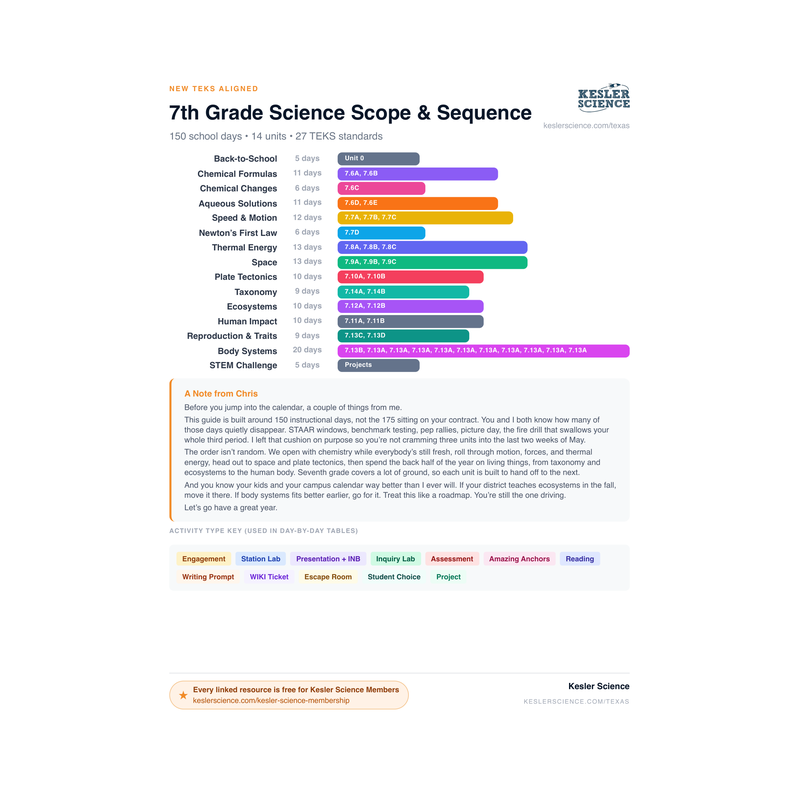
100% Aligned Lessons for Every TEKS You Teach
Kesler Science Plus puts thousands of ready-to-teach lessons and activities in your hands, so you can boost engagement and get your planning time back. Trusted by schools and districts all over the great state of Texas.
🌎 Phenomenon Ideas for 7.11B
Use these real-world phenomena to anchor your lesson. Show students the phenomenon first, let them wonder, then build toward Humans & Ocean Systems as the explanation.
The Midway Albatross Chick
On Midway Atoll, hundreds of miles from any major city, photographer Chris Jordan documented albatross chicks that died from starvation despite being fed regularly. When scientists opened their stomachs, they found bottle caps, lighters, toothbrushes, and chunks of hard plastic. The parents, hunting over open ocean, mistake floating plastic for squid and fish and feed it to their young.
"Midway is thousands of miles from any city. How could bottle caps and lighters end up inside the stomachs of chicks born on an uninhabited island in the middle of the Pacific?"
Disappearing Oysters in Washington State
Oyster farmers in the Pacific Northwest noticed something alarming about 15 years ago: baby oysters were dying by the millions before they could form shells. Scientists traced the problem to seawater that had become slightly more acidic, which makes it harder for young oysters to pull calcium carbonate from the water to build their shells. The ocean's average pH has dropped by about 0.1 since the Industrial Revolution, which sounds tiny but represents a roughly 30 percent increase in acidity.
"If CO2 in the air is making the ocean slightly more acidic, why would that make it harder for shellfish to build their shells? What other animals might this affect?"
The Atlantic Cod That Didn't Come Back
For centuries, the Grand Banks off Newfoundland supplied so much cod that sailors said they could practically walk across the ocean on their backs. In 1992, the Canadian government shut down the cod fishery entirely because the population had collapsed. More than 30 years later, the cod have only partially recovered. A fishery that supported communities for 500 years changed in a single generation.
"If people have been fishing the Grand Banks for 500 years, what changed in the past 50 or 100 years that could cause a crash this big? What does this tell us about how fast humans can affect a species?"
💡 Free Engagement Ideas for 7.11B
Ready-to-run activities you can drop straight into a lesson. Where one of these looks like a phenomenon from the section above, that is on purpose: show it first as the hook, then let students run it themselves.
Goldfish Overfishing Simulation
Place 40 goldfish crackers (or pennies) in a bowl. Each round, students "fish" by scooping what they want. After each round, the "ocean" reproduces by adding half of what remains. Run several rounds with aggressive fishing and several with limits. Students see population crashes happen fast and recoveries happen slowly.
Cabbage Juice pH Shift
Make pH indicator by boiling red cabbage. Pour a small amount into a clear cup. Students blow through a straw into the cup for 60 seconds. The CO2 from their breath forms carbonic acid in the water, and the indicator shifts color. That's ocean acidification in action, on a desk, in one minute.
Microplastic Beach Sort
Fill a tray with sand mixed with small plastic pieces (cut from grocery bags, bottle caps, confetti, chopped straws). Students use tweezers and spoons to "clean" a set square of beach in 3 minutes. They record how much plastic they removed and what was left behind. Discussion pivots to microplastics that are too small to pick up.
Ocean Impact Case File
Give groups four cards: a bluefin tuna, a coral reef, an oyster bed, and a sea turtle. Each card shows a photo and basic facts. Students research (using textbooks, handouts, or a teacher-vetted article) which of the four major human impacts hit each species hardest and why. Groups present findings in 2-minute pitches.
🎯 What Approaches, Meets, and Masters Thinking Look Like
Here is what student thinking at each level looks like on this one task, so you know what to look for and how to move a student up.
A coastal town gets most of its food and most of its jobs from the ocean. People fish there, and tourists come to see the reefs. Describe one way the people in this town depend on the ocean, and explain how one human activity could impact the ocean system they depend on.
- At least one clear way humans depend on the ocean (food, jobs, oxygen, climate, or trade).
- At least one human activity that affects the ocean (overfishing, plastic pollution, or warming water).
- A real cause-and-effect link, not just two facts sitting next to each other.
- The student treats the ocean as a system that can be harmed, not as something too big to hurt.
- The explanation connects the impact back to the people: if the ocean is harmed, the thing they depend on is harmed too.
- Correct, separate ideas (for example, overfishing is taking too many fish, which is not the same as pollution).
- The "loops back" thinking: the activity hurts the ocean, and that hurt comes back around to hurt the people. That is the hardest part to get.
The people depend on the ocean for food because they catch fish to eat and to sell. That is how they get money too. People might drop some trash in the water, but the ocean is so huge that a little bit of fishing or trash can't really hurt something that big. There is way too much water for people to mess it up.
The people in the town depend on the ocean for food and jobs. They catch fish to eat and to sell, so the ocean is how they make a living. One human activity that could impact the ocean is overfishing. If people keep catching fish faster than the fish can reproduce, the number of fish will drop. The ocean is big, but each kind of fish does not have an unlimited amount. So overfishing really can hurt the ocean system the town depends on.
The town depends on the ocean two ways: for food and for jobs. They catch fish to eat and sell, and tourists pay to come see the reefs. One human activity, overfishing, can impact that system. If boats catch fish faster than the fish can reproduce, the fish population shrinks, so there are fewer fish to catch. Then the people who depend on fishing lose their food and their money. The harm doesn't just stay in the ocean, it loops back to the people.
The same two-way idea works for the tourist side. Warmer ocean water can stress the reefs and make the coral turn white and die. The town depends on healthy reefs to bring tourists, so if a human activity harms the reef, it also harms the jobs that depend on it. Either way, what we do to the ocean comes back around to us.
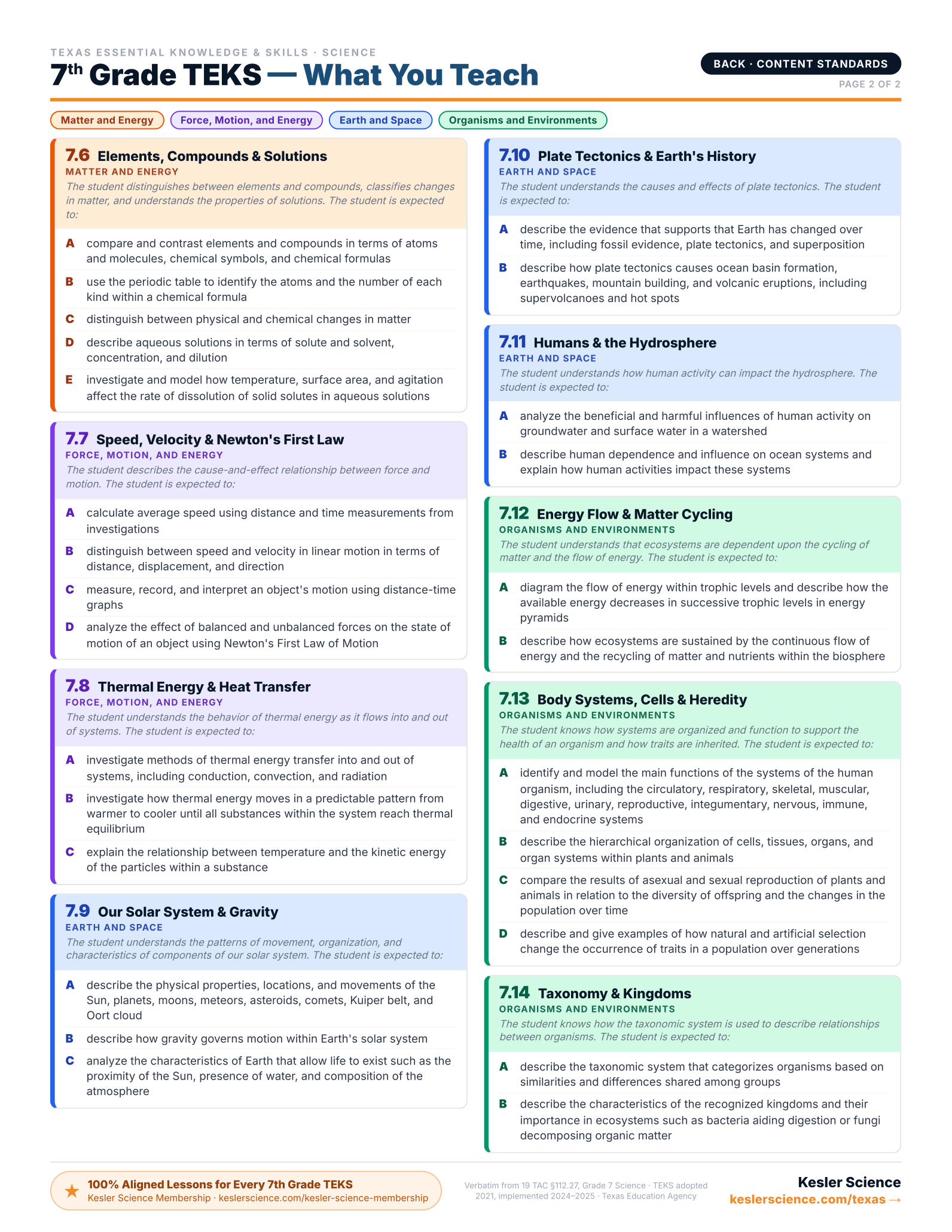
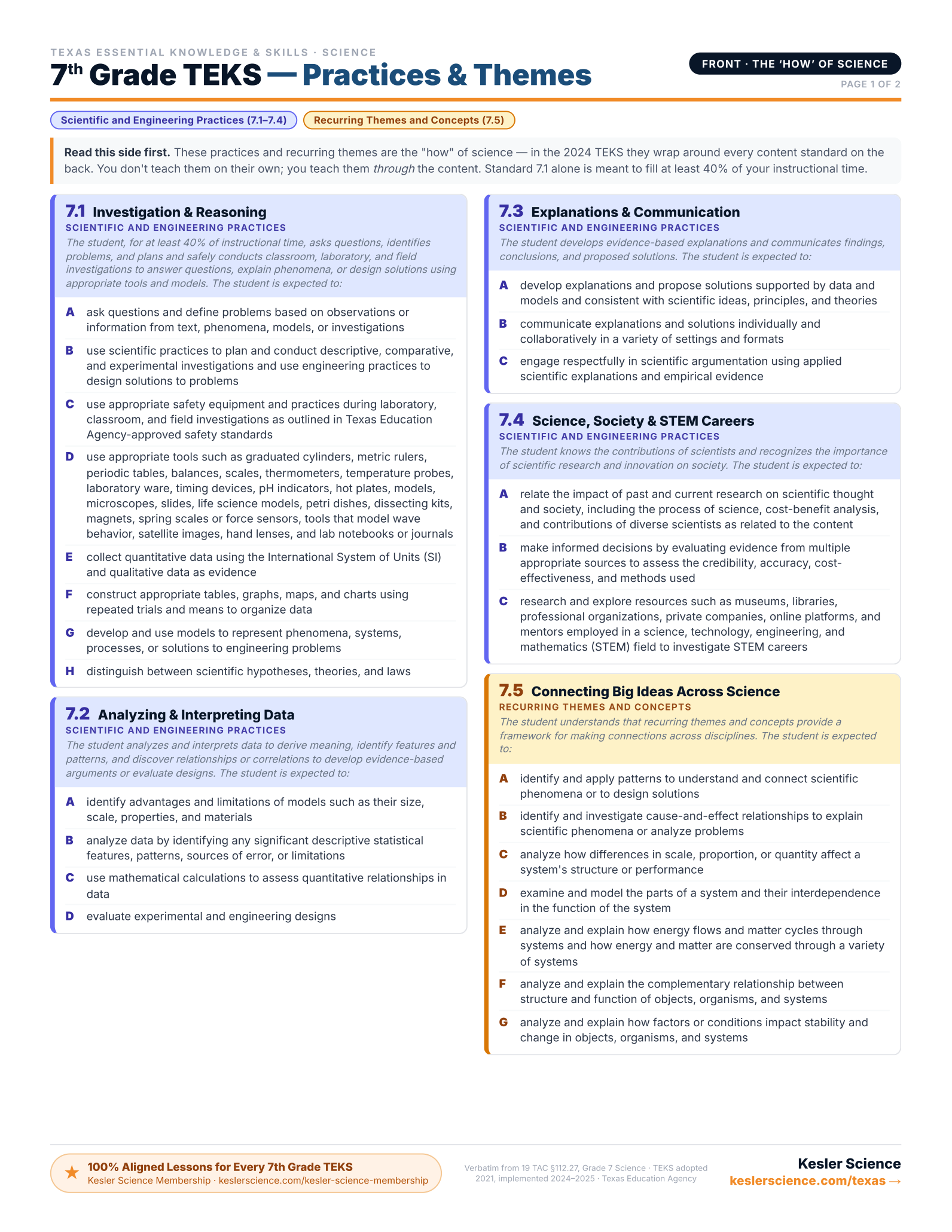
Every 7th-Grade Science TEKS on One Page
The color-coded, front-and-back cheat sheet I wish I'd had — every standard, organized by reporting category. Print it and reference it all year long. This will be your new favorite document!
Trusted Across Texas
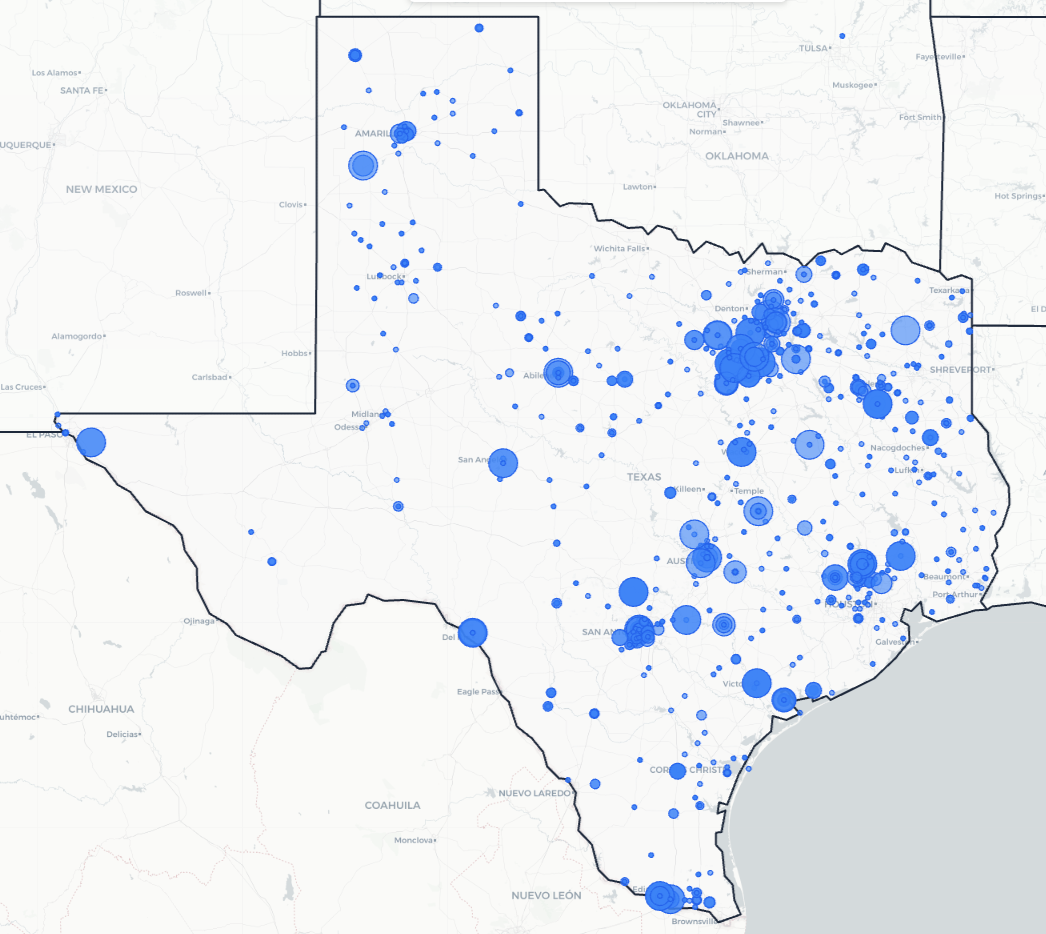
From the Rio Grande Valley to the Panhandle, Texas science teachers are using Kesler Science to save time and engage students.
Texas Schools and Districts
Love Kesler Science
What Teachers Are Saying
Give Your Science Teachers Everything They Need
School and district licenses give your teachers access to every resource they need, including station labs, inquiry labs, anchoring phenomena, presentations, escape rooms, and much more. One purchase covers the grade levels you need.
- PO-friendly. We accept purchase orders
- Volume discounts for 11+ teachers
- Complimentary Kesler Science Plus orientation for 4+ teachers
- Three free implementation PD sessions for departments of 11+
- Aligned to the 2024 TEKS standards
See It in Action
Book a walkthrough and we'll show you how Kesler Science fits your campus.
Book Demo CallNo pressure, no hard sell