.png?width=375&height=100&name=WebPage%20logo%20with%20curves%202026%20(8).png)
Matter in the Biosphere
"Describe how ecosystems are sustained by the continuous flow of energy and the recycling of matter and nutrients within the biosphere."
💡 What This Standard Actually Means
"Describe". Students are explaining two things that work hand in hand inside every ecosystem: the continuous flow of energy and the recycling of matter and nutrients. Energy flows in one direction, sun to producers to consumers, lost as heat at every step. Matter (carbon, nitrogen, water, and other nutrients) gets reused over and over by living and nonliving processes. Students should be able to describe how those two ideas work together to keep an ecosystem going. Instruction can take many forms, such as cycle diagrams, role-play simulations, decomposition observations, and follow-the-atom journaling.
The biosphere is the part of Earth where life exists, from the deepest ocean trenches to the upper atmosphere. Inside the biosphere, two big ideas shape how ecosystems work. Energy flows in one direction (sun to producers to consumers, lost as heat at every step). Matter cycles. The atoms that make up your body, the trees outside, and the air you breathe have been here for billions of years. They never leave. They just get reused, over and over, by different organisms and processes.
The carbon cycle is a great example. Carbon dioxide in the air gets pulled into plants during photosynthesis. The plant uses that carbon to build leaves, roots, and fruit. An animal eats the plant and the carbon becomes part of the animal's tissues. When the animal breathes out, some of that carbon goes back to the atmosphere as CO2. When the animal eventually dies, decomposers break down its body and release the carbon back into the soil and air. The same atoms keep cycling. Some carbon takes a longer route through fossil fuels, the ocean, or rocks, but it all eventually moves back through living systems.
The water cycle overlaps with this. Plants absorb water from the soil and release water vapor into the air through their leaves (transpiration). Animals drink water and release it back through breathing, sweating, and waste. Water evaporates from oceans, lakes, and even the surface of leaves, condenses into clouds, falls as rain, and gets used again. Producers capture matter from the air, soil, and water and turn it into food. Consumers get their matter by eating other organisms. Decomposers are the recyclers. Without fungi and bacteria breaking down dead matter, nutrients would stay locked up forever, and producers would run out of raw materials. Decomposers are the reason matter keeps moving.
The hook that worked for me on this one was telling kids that the air they just breathed in probably contained an atom that was once part of a dinosaur. They'd give me that look. So I'd run through it. Carbon atoms don't get destroyed. The same carbon that was in a T-rex's lung 70 million years ago is still here, just bouncing around. It's been part of swamp plants, ancient ferns, fossil fuel, ocean water, the lawn outside, the kid sitting next to you, and now you. That blew their minds in a way that made the whole "matter cycles" idea click. From there, the carbon cycle and water cycle weren't abstract diagrams anymore. They were the actual story of every atom in their body.
⚠️ Misconceptions Your Students May Have
These are some of the most common misconceptions. Knowing what to look for can help you get ahead of them.
"Plants get most of their mass from the soil"
This one is intuitive but wrong. Most of a plant's mass comes from carbon dioxide pulled out of the air during photosynthesis, plus water from the soil. The actual soil itself contributes a tiny fraction of the plant's mass. A 200-foot redwood didn't grow because the ground gave up that much soil. It built itself out of air and water. This is the single most powerful illustration that matter is constantly moving between the atmosphere and living things.
"When a leaf decomposes, the matter is destroyed"
Matter is never destroyed in any natural process. When a leaf decomposes, the atoms in that leaf get broken down by fungi and bacteria into simpler compounds. Some return to the soil as nutrients that other plants can absorb. Some get released into the air as carbon dioxide and water vapor. Some become part of the bodies of the decomposers themselves. Same total mass, just spread across new locations. This is the law of conservation of mass at work in the biosphere.
"Decomposers are just nature's garbage collectors"
Decomposers are not just cleaning up. They're the reason ecosystems can keep functioning. By breaking down dead organisms and waste, decomposers return critical matter (nitrogen, carbon, phosphorus, water) to the soil and atmosphere where producers can use them again. If decomposers stopped working, plants would run out of the nutrients they need, dead matter would pile up, and the whole cycle would stall. Without decomposers, the biosphere doesn't work.
"The carbon cycle and water cycle work separately"
The cycles overlap and depend on each other. Photosynthesis takes in both carbon dioxide and water at the same time. Cellular respiration releases both back together. When you exhale, you release water vapor and carbon dioxide simultaneously. Plants pull water from the soil while also pulling carbon dioxide from the air. The cycles aren't separate diagrams. They're two views of the same connected system, and many of the same processes drive both.
📓 Teaching Resources for 7.12B
These resources are aligned to this standard.


100% Aligned Lessons for Every TEKS You Teach
Kesler Science Plus puts thousands of ready-to-teach lessons and activities in your hands, so you can boost engagement and get your planning time back. Trusted by schools and districts all over the great state of Texas.
🌎 Phenomenon Ideas for 7.12B
Use these real-world phenomena to anchor your lesson. Show students the phenomenon first, let them wonder, then build toward Matter in the Biosphere as the explanation.
An Atom in Your Breath Was Once Part of a Dinosaur
Atoms of carbon don't get destroyed. They cycle through the biosphere over and over. The same carbon atom that was in a T-rex's lung 70 million years ago is still on Earth somewhere. Statistically, every breath you take contains atoms that were once inside a dinosaur, inside an ancient fern, inside an oak tree that was alive in the year 1500, and inside the friend sitting next to you. Same atoms, different bodies, different times.
"If atoms of carbon never get destroyed, how could a single carbon atom move from a dinosaur to the air to a plant to your body? What kinds of processes have to be happening to make that journey possible?"
The Tree That Grew Out of Air
A redwood seedling weighs a fraction of a gram. A fully grown redwood weighs over a million pounds. Most people assume the difference came from the soil. But scientists have weighed soil before and after a tree grew in it, and the soil barely changed. So where did all that mass come from? Almost all of it came from carbon dioxide in the air, plus water. The tree literally pulled itself out of the atmosphere.
"If a redwood weighs more than a million pounds and the soil it grew in barely changed, where did all that matter come from? What does this tell us about how matter moves between the atmosphere and living things?"
Fertilizer in Iowa Reaches the Gulf of Mexico
Farmers in Iowa apply nitrogen fertilizer to their cornfields every spring. Rain washes some of that nitrogen into small streams, which flow into the Mississippi River, which carries it more than a thousand miles to the Gulf of Mexico. Once there, the extra nitrogen feeds massive blooms of algae. When the algae die and decompose, oxygen gets used up and a "dead zone" forms where almost nothing can live. A choice in Iowa changes an ecosystem in Texas.
"How does matter applied to a field in one state end up affecting an ecosystem more than a thousand miles away? What does this tell us about how the biosphere is connected?"
💡 Free Engagement Ideas for 7.12B
Ready-to-run activities you can drop straight into a lesson. Where one of these looks like a phenomenon from the section above, that is on purpose: show it first as the hook, then let students run it themselves.
Carbon Atom Journey Role Play
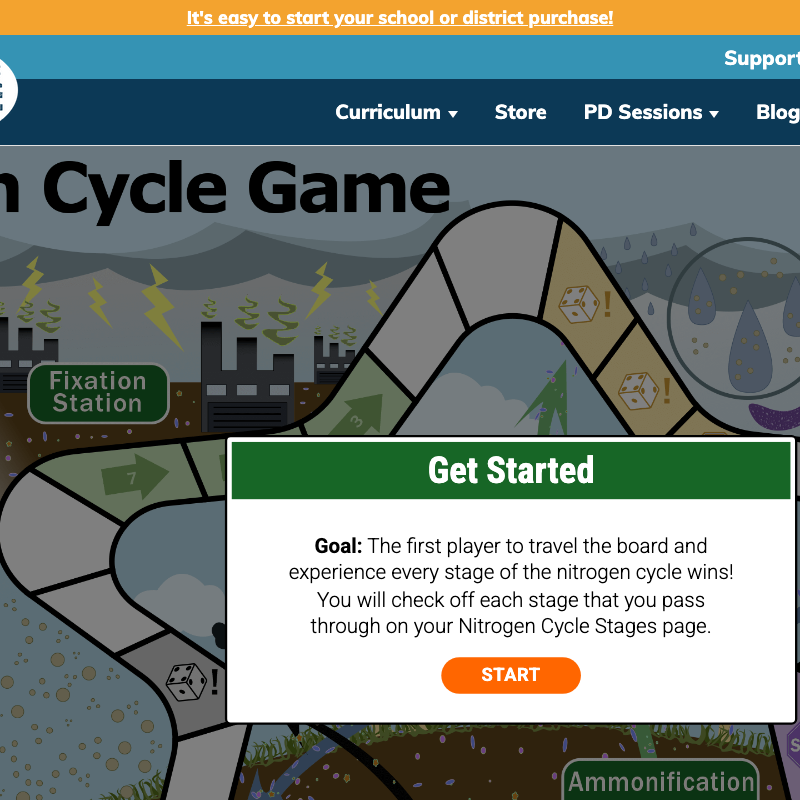
Set up six stations around the room labeled atmosphere, plants, animals, soil/decomposers, oceans, and fossil fuels. At each station, put a die or a spinner with directions ("Atmosphere → go to plants" or "Stay another round," etc.). Give each student a "carbon atom" tracking sheet. Students start at the atmosphere and roll/spin at each station to determine where they go next. After 10 rounds, students compare their journey paths. They'll see that no two carbon atoms followed the same path, but every path was real.
Mass-of-a-Plant Investigation
Weigh a small potted plant (a basil seedling or fast-growing bean works great) and the soil it's in separately if possible. Record the data. Place the plant in a sunny window and water it consistently for two weeks. After two weeks, weigh both again. The plant has gained mass. The soil has barely lost any. So where did the mass come from? Have students debate, then explain it came mostly from carbon dioxide in the air during photosynthesis. The "matter from air" idea sticks once they see it on a balance.
Decomposition Observation Jar
Place a piece of bread or a small banana slice in a clear glass jar with a little moist soil. Cover with plastic wrap with a few small holes. Set on a windowsill. Over two weeks, students take daily photos and write short observations. They'll see mold appear, the food shrink, condensation form on the inside of the jar (water released by decomposition), and the soil darken. Discuss what's happening to the matter, none of it is "gone," it's just been transformed and redistributed.
Water Cycle in a Bag
Tape a large clear plastic bag to a sunny window. Inside the bag, add a small cup of water with blue food coloring and a fresh leaf or two. Seal the bag. Over a few hours, students watch evaporation pull water up into the bag, then condensation form droplets on the inside, then "rain" run back down. Connect the model to the real biosphere: how does water move through plants (transpiration), animals (breathing, sweat), and the atmosphere? Students draw a labeled diagram of what they observed.
🎯 What Approaches, Meets, and Masters Thinking Look Like
Here is what student thinking at each level looks like on this one task, so you know what to look for and how to move a student up.
An oak tree grows for 20 years until it weighs about 1,000 pounds. Describe where most of that new matter came from, and explain how the atoms in the tree keep moving through the ecosystem after a leaf falls and decomposes on the ground.
- A clear statement that most of the tree's added mass came from carbon dioxide (CO2) in the air, plus water from the soil, not from the soil itself.
- A link to photosynthesis: the tree uses CO2 and water to build leaves, wood, and roots.
- An explanation that when a leaf decomposes, the matter is not destroyed, it just moves to new places.
- Decomposers (fungi and bacteria) named as the recyclers that break the leaf down.
- Where the atoms go: some return to the soil as nutrients, some return to the air as CO2 and water vapor.
- A sense that the same atoms get reused by other living things, so matter cycles instead of running out.
- The "where did the mass come from" part handled correctly (air and water, not soil). That is the easiest place to slip.
The tree got most of its weight from the soil. It pulls food and minerals out of the ground with its roots, and that is what makes it grow so big. When a leaf falls, it rots away into the dirt and turns into more soil for the tree to use.
Most of the tree's new weight came from carbon dioxide in the air, not the soil. During photosynthesis the tree takes in CO2 from the air and water from the soil and uses them to build wood, leaves, and roots. The soil only gives a little bit.
When a leaf falls and decomposes, the matter is not destroyed. Decomposers like fungi and bacteria break the leaf down. Some of the atoms go back into the soil as nutrients, and some go back into the air as carbon dioxide and water vapor. Then other plants can use that matter again.
Most of the tree's mass came from carbon dioxide in the air, with water from the soil. In photosynthesis the tree turns CO2 and water into the sugars it uses to build wood and leaves, so the tree is basically made out of air and water that got rearranged. The soil adds only a tiny part.
When a leaf decomposes, none of the matter is destroyed, it just moves. Decomposers break it down, sending some atoms back to the soil as nutrients and some back to the air as CO2 and water vapor. The same carbon atom that was in that leaf can get pulled into a new plant later, so matter keeps cycling.
This is why a single carbon atom from a rotting log could end up inside a mushroom, then in the air, then inside a blade of grass, then in a deer that eats the grass. The atoms never get used up, they just keep getting reused by different living things. That is what keeps the ecosystem going.
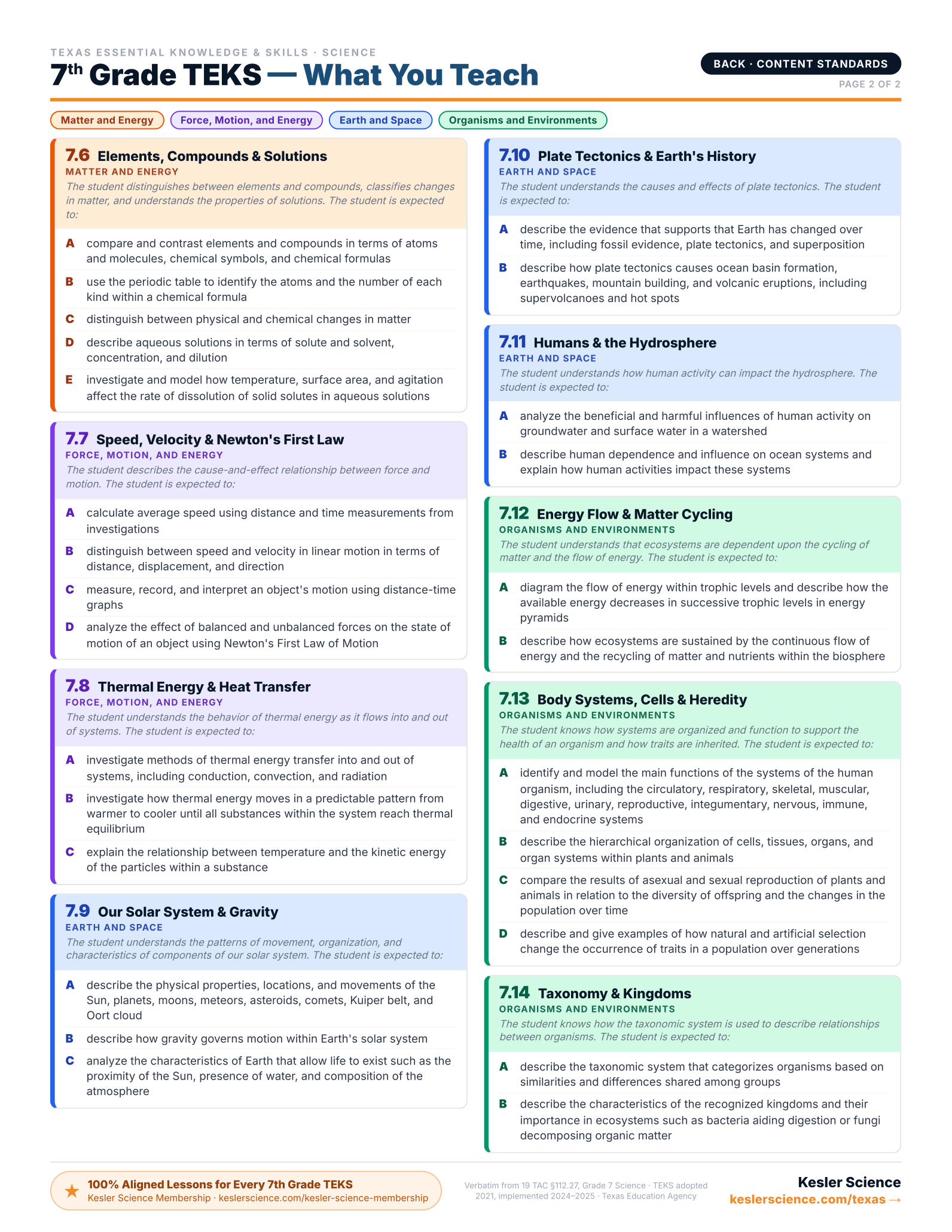
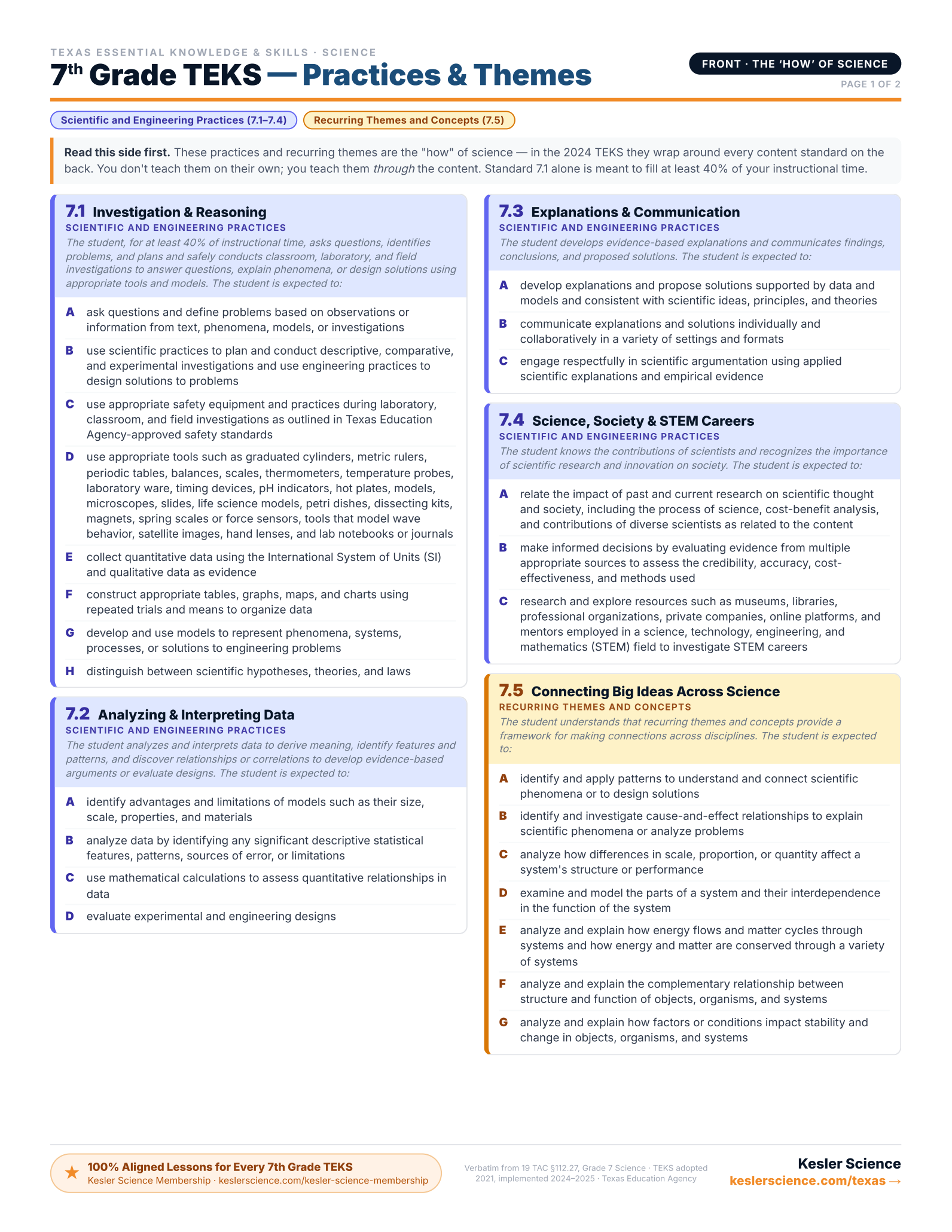
Every 7th-Grade Science TEKS on One Page
The color-coded, front-and-back cheat sheet I wish I'd had — every standard, organized by reporting category. Print it and reference it all year long. This will be your new favorite document!
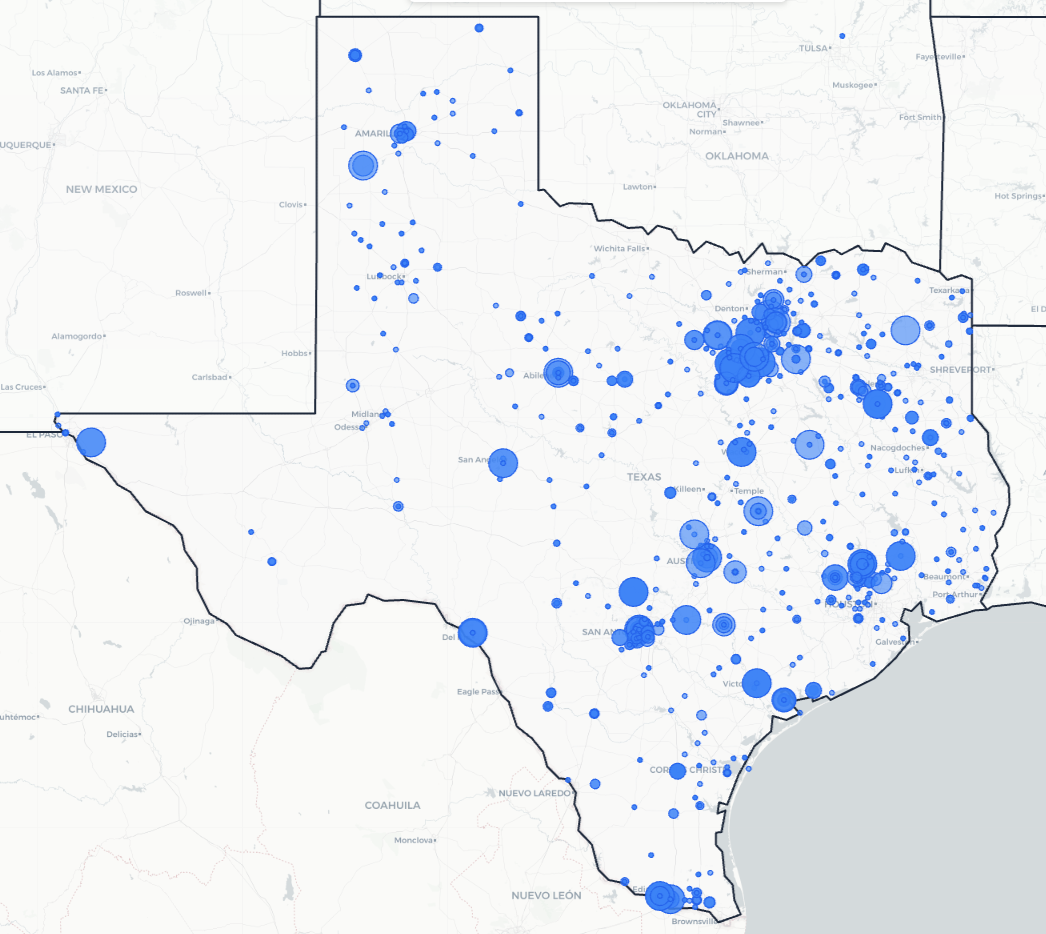
Trusted Across Texas
From the Rio Grande Valley to the Panhandle, Texas science teachers are using Kesler Science to save time and engage students.
Texas Schools and Districts
Love Kesler Science
What Teachers Are Saying
Give Your Science Teachers Everything They Need
School and district licenses give your teachers access to every resource they need, including station labs, inquiry labs, anchoring phenomena, presentations, escape rooms, and much more. One purchase covers the grade levels you need.
- PO-friendly. We accept purchase orders
- Volume discounts for 11+ teachers
- Complimentary Kesler Science Plus orientation for 4+ teachers
- Three free implementation PD sessions for departments of 11+
- Aligned to the 2024 TEKS standards
See It in Action
Book a walkthrough and we'll show you how Kesler Science fits your campus.
Book Demo CallNo pressure, no hard sell