.png?width=375&height=100&name=WebPage%20logo%20with%20curves%202026%20(8).png)
Day & Night Cycle
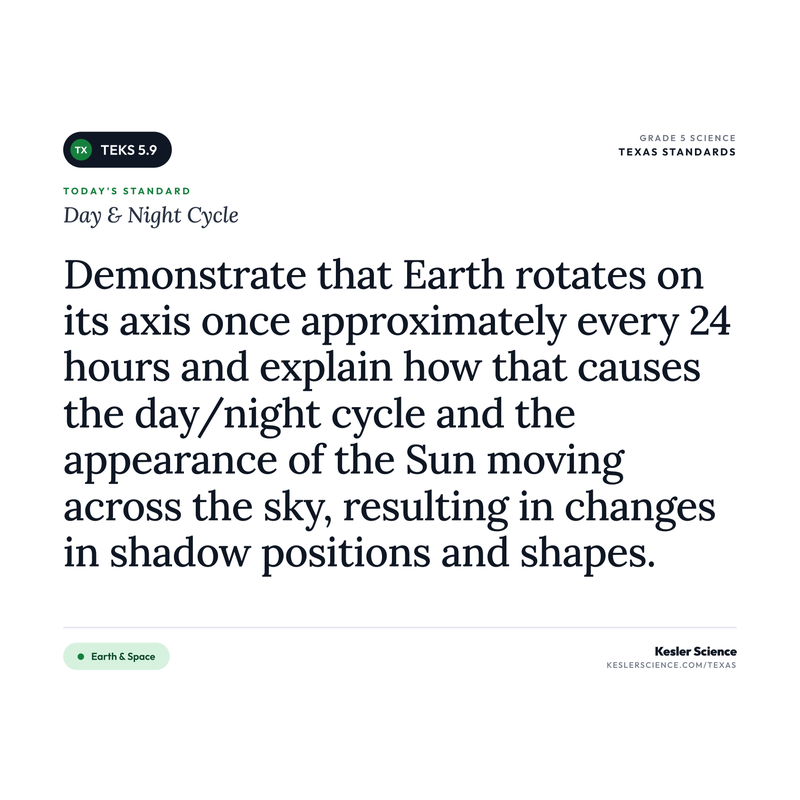
"Demonstrate that Earth rotates on its axis once approximately every 24 hours and explain how that causes the day/night cycle and the appearance of the Sun moving across the sky, resulting in changes in shadow positions and shapes."
💡 What This Standard Actually Means
"Demonstrate" and "explain". Students use models (a globe, a flashlight, a stick in the ground) to show how Earth's rotation works. They have to nail three connected ideas: Earth rotates on its axis once approximately every 24 hours, that rotation causes day and night (the side facing the Sun is in daytime, the side away is in nighttime), and the rotation also makes the Sun appear to move across the sky, which causes shadow positions and shapes to change over the course of the day. The shadow piece is huge for this standard. Long shadows in the morning and evening, short shadows at noon, and the way shadows sweep across the ground as the day goes on are all evidence of Earth turning.
From a 5th grader's bedroom window, the Sun seems to come up in the east, climb across the sky, and set in the west every single day. It looks like the Sun is moving. The trick of this standard is that the Sun isn't doing the moving. Earth is. Our planet spins on its axis once approximately every 24 hours, and that spin is what makes the Sun appear to travel across the sky.
The day and night cycle is the simplest piece. As Earth rotates, half of the planet faces the Sun (daytime) and half is turned away (nighttime). Texas is in daytime when the Sun is shining on it. Twelve hours later, Earth has turned and Texas is on the dark side, so it's nighttime. The whole rotation takes about 24 hours, which is why one day is 24 hours long.
The shadow piece is what really locks the concept down. In the morning, the Sun is low in the eastern sky and shadows are long and pointing west. (In Texas, the Sun stays in the southern sky most of the year, so shadows actually point more toward the northwest in the morning, north at noon, and northeast in the afternoon.) As the morning goes on, the Sun appears to climb higher (Earth keeps rotating), and shadows get shorter. At noon, the Sun is highest in the sky and shadows are at their shortest. By afternoon, the Sun appears to move toward the west and shadows stretch out long again, but now pointing east. By the end of the day, watching a stick's shadow change is watching Earth rotate. By the end of this unit, kids should be able to explain why the Sun seems to move and why shadows do what they do, both because of one big idea: Earth is spinning.
Shadow tracking is the demo that makes this standard real for kids. If I were teaching this, I'd plant a stick or pencil straight up in a small lump of clay on a piece of poster paper, then take the whole setup outside on a sunny day. Every hour, walk the class out and trace the shadow with a colored marker. Each shadow gets a time written next to it. By the end of the school day, you've got five or six shadows fanning out in different directions and lengths around the stick. Kids can SEE Earth turning. They can SEE the Sun appearing to move. Then come inside and trace the same pattern with a flashlight on a globe at the front of the room. Now they're connecting the model to what they just watched outside. If you skip the outdoor shadow lap, the model on the globe never lands the same way. Get them outside.
⚠️ Misconceptions Your Students May Have
These are some of the most common misconceptions. Knowing what to look for can help you get ahead of them.
"The Sun moves across the sky"
The Sun isn't moving across the sky. Earth is rotating, which makes the Sun APPEAR to move. Imagine sitting on a merry-go-round watching a tree on the playground. The tree looks like it's moving, but really you're the one going around. Same thing with the Sun. We're spinning. The Sun is staying put. The motion we see is our motion, just from our point of view on the ground.
"It's night because the Sun goes away"
The Sun doesn't go anywhere. It's always shining. It's nighttime because Earth has rotated, and the spot you're standing on is now turned away from the Sun. While Texas is in nighttime, kids in places like Japan or Australia are in daytime because their part of Earth is facing the Sun. Half the planet is always lit up. The half you're on changes every 12 hours.
"Shadows look the same all day long"
Shadows change a lot during the day. They're long in the morning when the Sun is low in the east. They get shorter as the Sun climbs higher in the sky. They're shortest near noon when the Sun is at its highest point. They get long again as the Sun moves toward the west and the day winds down. They also change direction, sweeping from west (morning) to east (afternoon) as Earth rotates. Watching a shadow over a day is watching Earth spin.
"Earth rotates once a year"
Earth rotates once approximately every 24 hours, which is one day. The trip around the Sun takes a year (about 365 days), but that's a different motion called revolution. Rotation is the daily spin, like a top. Revolution is the yearly trip around the Sun, like a runner on a track. Don't mix them up. Day and night come from rotation. Years come from revolution.
📓 Teaching Resources for 5.9
These resources are aligned to this standard.



100% Aligned Lessons for Every TEKS You Teach
Kesler Science Plus puts thousands of ready-to-teach lessons and activities in your hands, so you can boost engagement and get your planning time back. Trusted by schools and districts all over the great state of Texas.
🌎 Phenomenon Ideas for 5.9
Use these real-world phenomena to anchor your lesson. Show students the phenomenon first, let them wonder, then build toward Day & Night Cycle as the explanation.
The Disappearing Shadow
A pencil is stuck upright in a lump of clay on a piece of poster paper outside in the morning. The shadow is long and points across the paper. By lunchtime, students go back outside and the shadow has shrunk to a small dot just under the pencil. By the end of the school day, the shadow is long again, but now it's pointing in a totally different direction. Same pencil. Same paper. Three completely different shadows.
"Why does the same pencil have three different shadows during the day? What does that tell you about what's happening to either the Sun or the Earth between morning and afternoon?"
The Sunrise on the Other Side of the World
A teacher pulls up a live world map on the board showing where it's currently day and night across the planet. Texas is in the middle of daytime. Japan is dark, around 11 p.m. Australia is just starting morning. China is sleeping. The line between day and night cuts across the planet like a soft curtain, and as the kids watch, the line slowly creeps westward. At the end of the school day, the line has moved noticeably across the map.
"Why is it day in some parts of the world and night in others at the exact same moment? Why does the line between day and night slowly move? Make a model with a flashlight and a globe to show what's happening."
The Spinning Globe and the Flashlight
In a darkened classroom, the teacher holds a flashlight steady at one side of the room. A student stands holding a globe and slowly turns it on its tilted axis. As the globe spins, students can see Texas move from the dark side, around to the lit side, across the front, and back to the dark side. One full rotation. The flashlight (the Sun) never moves. But Texas goes from "night" to "morning" to "noon" to "afternoon" to "evening" to "night" again, exactly because the globe is spinning.
"Did the flashlight have to move for Texas to go through a whole day on the globe? What does this tell you about whether the Sun moves around Earth or Earth rotates? Use the model to explain why the Sun seems to move across the sky."
💡 Free Engagement Ideas for 5.9
Ready-to-run activities you can drop straight into a lesson. Where one of these looks like a phenomenon from the section above, that is on purpose: show it first as the hook, then let students run it themselves.
Outdoor Shadow Tracking
On a sunny day, plant a pencil upright in clay on a sheet of poster paper and place it on a flat outdoor spot. Trace the shadow with a colored marker every hour throughout the school day, writing the time next to each tracing. By the end of the day, students have a map of the shadow's journey. They use the map to discuss when the Sun was lowest, when it was highest, and how Earth's rotation made the shadow change. Best lesson of the unit by far.
Globe-and-Flashlight Day-Night Model
In a darkened room, one student holds a flashlight while another slowly rotates a globe. Place a small sticker on Texas on the globe. As the globe rotates, students watch Texas move through "morning" (just rotating into the light), "noon" (directly facing the light), "afternoon" (rotating away), and "night" (on the dark side). Each pair sketches a quick before-and-after diagram of where Texas was at four different times in the rotation.
Shadow Length Investigation
Each pair gets a small flashlight and a wooden block standing upright on a piece of paper. They shine the flashlight at the block from a low angle (near the surface) and trace the long shadow it produces. Then they raise the flashlight higher and higher, tracing the shadow each time. They notice the shadow gets shorter as the "Sun" gets higher. They write a sentence connecting their results to why noon shadows are short.
24-Hour Cycle Comic Strip
Each student draws a 6-panel comic strip showing what's happening to a person in Texas at 6 a.m., 9 a.m., noon, 3 p.m., 6 p.m., and midnight. Each panel shows the position of the Sun in the sky (or below the horizon) and the length and direction of the person's shadow. They label each panel with what part of Earth's rotation is responsible for the scene. Brings the standard together as a story.
🎯 What Approaches, Meets, and Masters Thinking Look Like
Here is what student thinking at each level looks like on this one task, so you know what to look for and how to move a student up.
A class puts a stick straight up in the ground outside. They trace the stick's shadow in the morning, again at noon, and again in the late afternoon. The morning shadow is long, the noon shadow is short, and the afternoon shadow is long again. Explain why the shadow keeps changing during the day.
- A clear statement that the shadow changes because of where the Sun appears in the sky during the day.
- The morning and afternoon shadows are long because the Sun looks low in the sky, and the noon shadow is short because the Sun looks high in the sky.
- The idea that the Sun only appears to move, it is not really traveling across the sky.
- The reason the Sun appears to move: Earth is rotating (spinning) on its axis.
- A link from rotation back to the shadow: as Earth turns, the Sun looks like it moves, so the shadow moves and changes length.
- The Sun-appears-to-move idea handled correctly (Earth spins, the Sun stays put). That is the easiest place to slip.
The shadow changes because the Sun moves across the sky. In the morning the Sun is over here, so the shadow is long. At noon the Sun is up high, so the shadow is short. Then the Sun moves to the other side and the shadow gets long again. The shadow follows the Sun all day.
The shadow changes because the Sun looks like it moves across the sky during the day, but it really doesn't move. Earth is spinning on its axis, so from where we stand the Sun looks low in the morning, high at noon, and low again in the afternoon. When the Sun looks low, the shadow is long. When the Sun looks high at noon, the shadow is short. As Earth keeps turning, the shadow moves and changes length.
The shadow changes because Earth rotates on its axis about once every 24 hours. The Sun stays in one place, but as Earth spins, the Sun looks like it moves across the sky to us on the ground. In the morning and afternoon the Sun looks low, so the stick blocks the light at an angle and the shadow stretches out long. At noon the Sun looks high, so the shadow is short. The shadow is really showing us that Earth is turning.
This is the same reason we have day and night. The side of Earth facing the Sun has daytime, and as Earth keeps spinning, our side turns away and it becomes night. So the shadow moving across the ground and day turning into night are both caused by the same thing, Earth rotating on its axis.
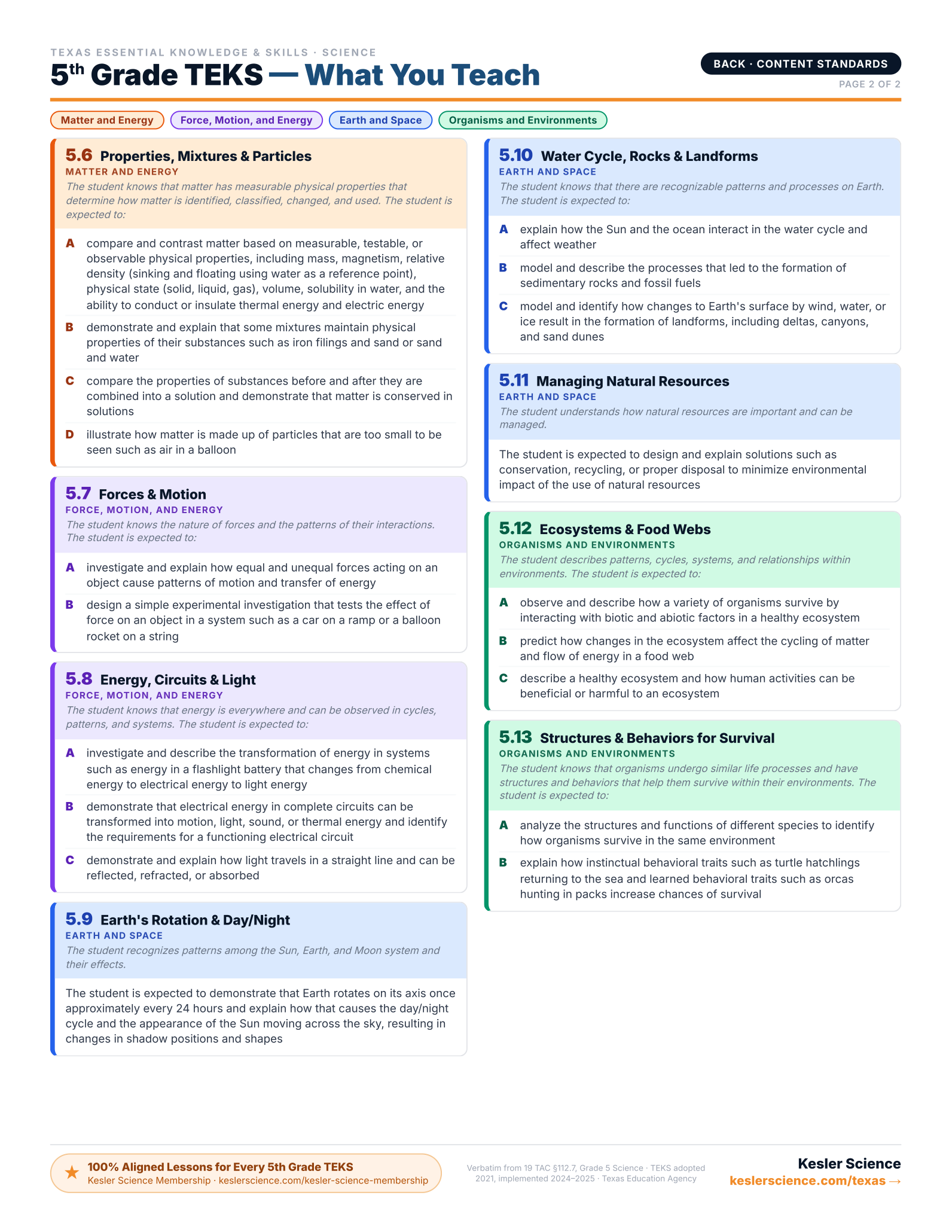
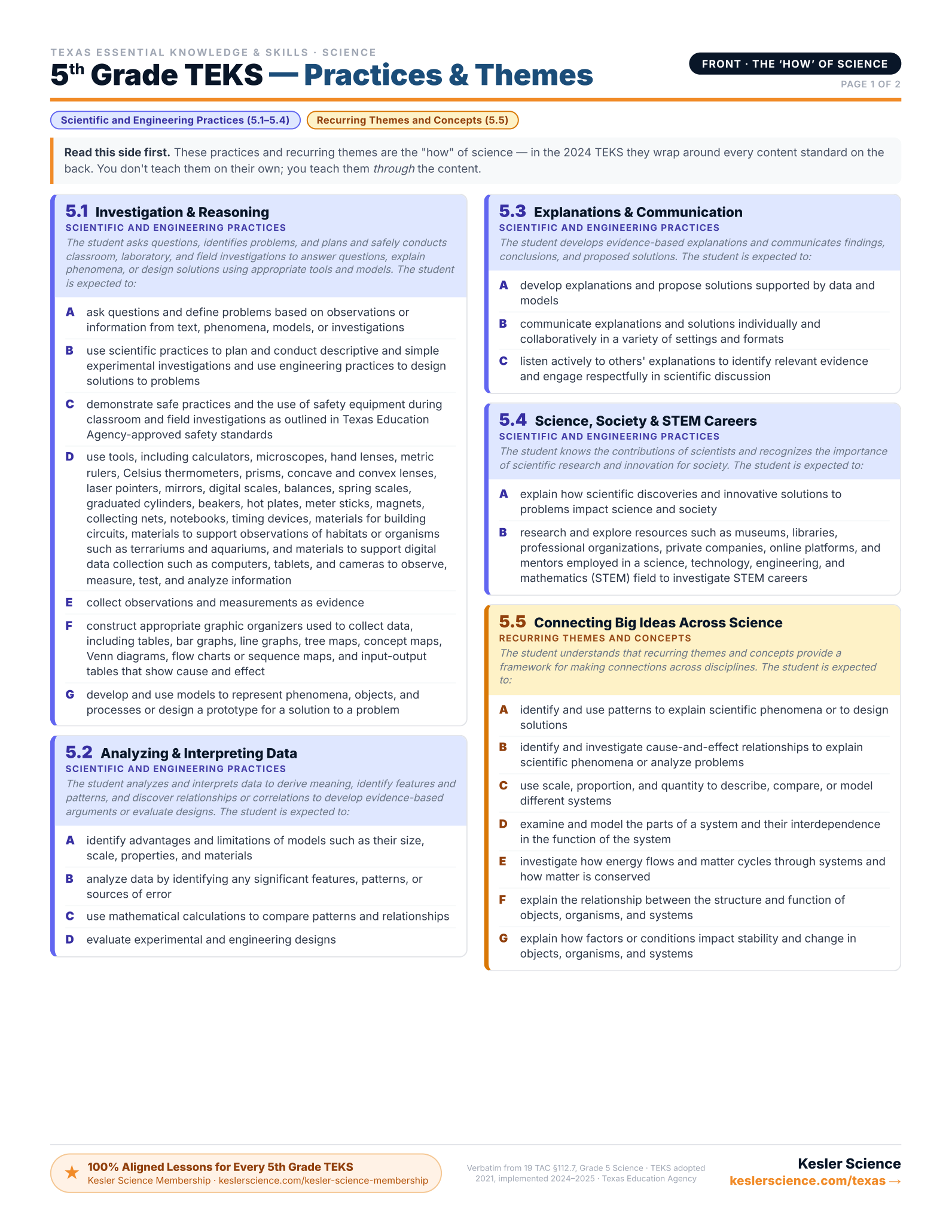
Every 5th-Grade Science TEKS on One Page
The color-coded, front-and-back cheat sheet I wish I'd had — every standard, organized by reporting category. Print it and reference it all year long. This will be your new favorite document!
Trusted Across Texas
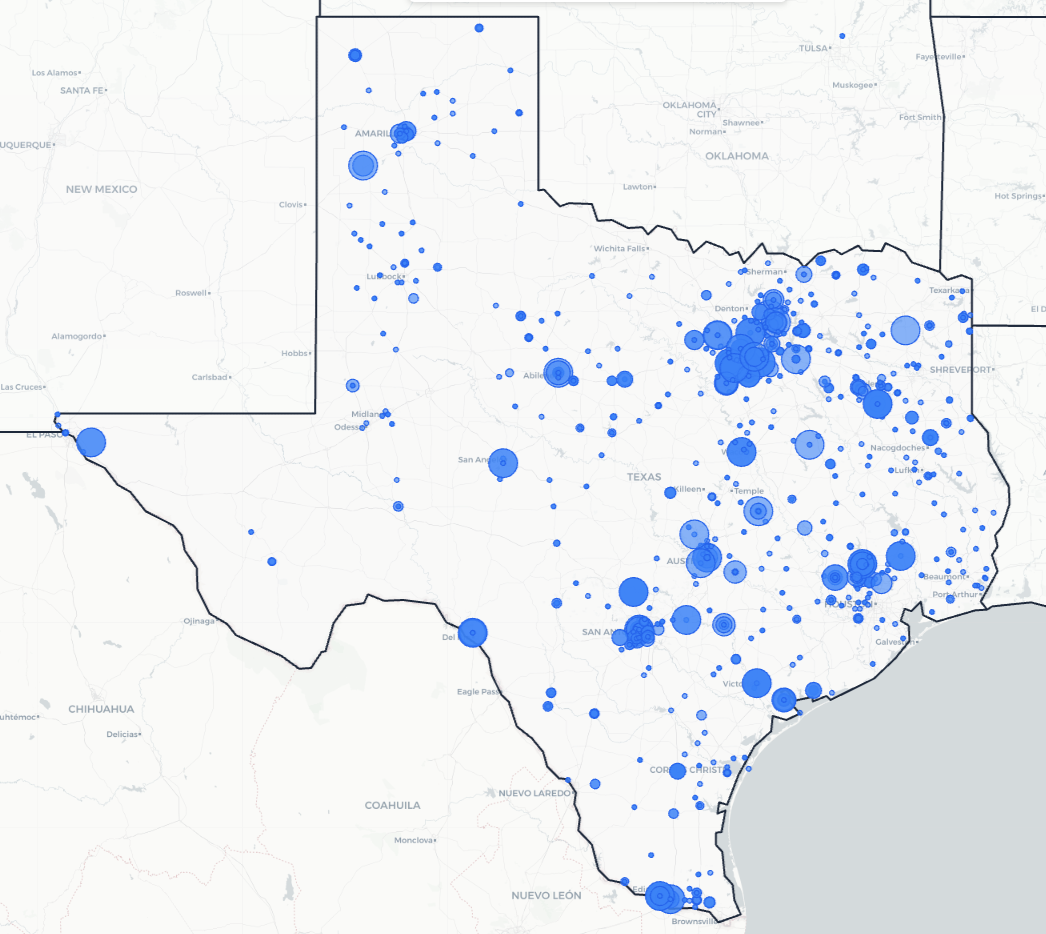
From the Rio Grande Valley to the Panhandle, Texas science teachers are using Kesler Science to save time and engage students.
Texas Schools and Districts
Love Kesler Science
What Teachers Are Saying
Give Your Science Teachers Everything They Need
School and district licenses give your teachers access to every resource they need, including station labs, inquiry labs, anchoring phenomena, presentations, escape rooms, and much more. One purchase covers the grade levels you need.
- PO-friendly. We accept purchase orders
- Volume discounts for 11+ teachers
- Complimentary Kesler Science Plus orientation for 4+ teachers
- Three free implementation PD sessions for departments of 11+
- Aligned to the 2024 TEKS standards

See It in Action
Book a walkthrough and we'll show you how Kesler Science fits your campus.
Book Demo CallNo pressure, no hard sell