.png?width=375&height=100&name=WebPage%20logo%20with%20curves%202026%20(8).png)
Illustrating Particles of Matter
"Illustrate how matter is made up of particles that are too small to be seen such as air in a balloon."
💡 What This Standard Actually Means
"Illustrate". Students are drawing or modeling something they cannot see directly. Matter is made of particles too small to be seen, and the only way kids can show what they understand is by drawing what those particles look like inside an object. The TEKS gives one perfect anchor example: air in a balloon. The balloon is full of something. We can't see anything in there. But it pushes the rubber outward, makes the balloon stretchy and round, and rushes out when we let go. Students illustrate that "something" as little particles bouncing around inside the balloon. The illustration is the evidence of their thinking.
Hold up an inflated balloon. To a 5th grader, it looks empty. But the balloon clearly has something inside it. It's bigger than before. It feels firm if you squeeze it. Let go of the end and a rush of air shoots out. That something is matter, and the trick of this standard is that the matter is made of particles too small to be seen.
Every solid, liquid, and gas around us is made of particles too tiny for our eyes to detect. The water in a cup. The wood in a desk. The air in the room. All particles. Just way too small to spot, even with most magnifying glasses. The job for 5th graders is to illustrate what those particles might look like, especially in the case where the substance looks like nothing. Air in a balloon is the perfect example because the balloon is obviously full of something even though kids can't see what.
The takeaway: matter is everywhere, even when it looks like nothing. The way scientists deal with stuff they can't see is to draw a model of it. A model isn't a perfect picture. It's a way to show what we think is happening at a scale our eyes can't reach. By the end of the unit, kids should be able to look at any object and draw what its tiny particles might look like inside it.
The hardest part of teaching this standard is convincing kids that air is "stuff." They've been told their whole lives that something they can't see is "nothing." So if I were planning this lesson, I'd start it the same way every time. Take an empty plastic bottle, lay it on its side on the desk with the open end a few inches from a volunteer's cheek, and smack it flat with your hand. They feel the air hit them before they hear it. Then pick up an inflated balloon and squeeze it. It pushes back. Look at the kids and ask, "Why is the balloon doing that if it's empty?" The conversation that follows always lands at the same place. The balloon isn't empty. There's something in there. And once they're at "there's something in there," hand them paper and colored pencils and tell them to draw what that something looks like. Whatever they draw, even if it's a mess of dots, that's the win. They're illustrating particles. Then refine from there.
⚠️ Misconceptions Your Students May Have
These are some of the most common misconceptions. Knowing what to look for can help you get ahead of them.
"Air is nothing because you can't see it"
Air is definitely something. It's a mixture of gases (mostly nitrogen and oxygen) made of tiny particles. You can feel air pushing against your hand when you swing it through the room. You can see the wind move leaves on a tree. You can blow up a balloon with it and watch the balloon get bigger. None of that would be possible if air was actually nothing. The particles are just way too small to spot.
"Particles are like little dots floating in some kind of invisible "stuff" inside an object"
The particles ARE the matter. There aren't particles floating in something else. In a solid, the particles are packed tight against each other. In a liquid, they're close together but slide around. In a gas, they're spread out and moving fast, but the space between them is empty. So when you draw air in a balloon, the particles should be spread out, not packed together, and there should be just empty space between them.
"You can see particles with a regular magnifying glass"
Particles are way too small to see with a regular magnifying glass or even most school microscopes. Scientists need extremely powerful microscopes to spot them, and even then they only see indirect signs that the particles are there. That's why we draw models. We can't take a picture of the actual particles, so we illustrate what they might look like based on how the matter behaves.
"An empty bottle has nothing in it"
An "empty" bottle is full of air. To prove it, push an empty bottle (cap off) sideways under water in a sink or aquarium. Watch the bubbles glub out as water rushes in to take the air's place. There was definitely air in that bottle the whole time. The bottle was never empty. It just looked empty because the air particles are too small to see.
📓 Teaching Resources for 5.6D
These resources are aligned to this standard.


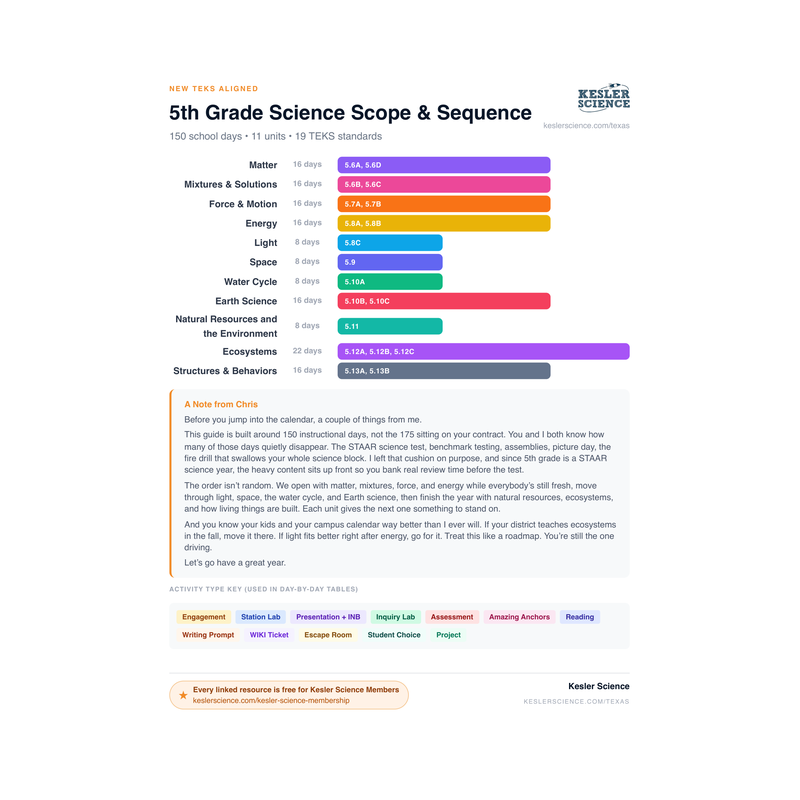
100% Aligned Lessons for Every TEKS You Teach
Kesler Science Plus puts thousands of ready-to-teach lessons and activities in your hands, so you can boost engagement and get your planning time back. Trusted by schools and districts all over the great state of Texas.
🌎 Phenomenon Ideas for 5.6D
Use these real-world phenomena to anchor your lesson. Show students the phenomenon first, let them wonder, then build toward Illustrating Particles of Matter as the explanation.
The Balloon That Won't Squish
An inflated balloon sits on the table. A student presses down on it gently. The balloon flattens a little but pushes right back, springing back to its round shape the second the hand comes off. Squeeze it from the sides and it bulges out the top. Sit on it carefully and it rolls or pops. The balloon doesn't go flat under pressure the way an empty paper bag would. Something inside is fighting back.
"If the balloon is empty, why does it push back when you squeeze it? What do you think is inside the balloon, and how would you draw a picture of it?"
The Underwater Bottle
A clear water bottle with the cap off gets pushed sideways into a clear bin of water. The instant it goes under, big bubbles glub up out of the bottle's mouth and float to the surface. The bottle fills up with water as the bubbles leave. If you hold the bottle straight upside-down before pushing it under, no bubbles come out and the bottle stays "empty" of water for a long time, perfectly trapping whatever was inside.
"What were the bubbles that came out of the bottle made of? If the bottle looked empty before, what was actually in there? Draw a picture of what the inside of the bottle looked like before it went underwater."
The Smell from Across the Room
A teacher opens a small bottle of vanilla extract or peppermint oil at the front of the room and sets it on the desk. No fan. No spray. Just a bottle sitting open. Within thirty seconds, the kids in the back row raise their hands. They can smell it. The scent has traveled all the way across the room without anyone moving the bottle. The students closest can smell it strongest. The smell got there somehow.
"How did the smell get all the way across the room when the bottle never moved? What do you think traveled through the air, and how could you draw a picture that explains it?"
💡 Free Engagement Ideas for 5.6D
Ready-to-run activities you can drop straight into a lesson. Where one of these looks like a phenomenon from the section above, that is on purpose: show it first as the hook, then let students run it themselves.
Particle Drawing in Three States
Give every student a paper folded into three boxes labeled solid, liquid, and gas. They draw what the particles look like inside an ice cube (solid), a glass of water (liquid), and an inflated balloon (gas). The first box should have particles packed tight in a pattern. The second should have particles close but messy. The third should have particles spread out with empty space between them. Walk the room and refine misconceptions in real time.
Air-in-the-Bottle Demo
Each group has a clear cup of water and an "empty" plastic water bottle with the cap off. They predict what will happen when they push the bottle sideways into the water. Then they push it under and watch the air bubbles glub out. They sketch a "before" picture of the bottle (with particles drawn inside) and an "after" picture (with water replacing the particles). Connects the invisible air to a visible result.
Squeeze-the-Balloon Particle Model
Each pair of students has an inflated balloon. They squeeze it gently from different angles and feel how the balloon pushes back. Then they draw a model of the inside of the balloon with little particles bouncing around. They draw a second picture showing what happens when they squeeze: the same number of particles but bunched into a smaller space, hitting the balloon's rubber harder. Connects pressure to particle behavior without using any vocabulary the kids can't handle.
Smell Travels Investigation
Open a small container of something strong-smelling (vanilla extract, lemon, peppermint) at the front of the room. Students at four different distances raise their hands when they smell it. Time how long it takes for each row. Discuss how the smell traveled: tiny particles drifting through the air, bumping their way across the room. Each student then draws what they think the air looked like in the path between the bottle and their nose.
🎯 What Approaches, Meets, and Masters Thinking Look Like
Here is what student thinking at each level looks like on this one task, so you know what to look for and how to move a student up.
You blow up a balloon and tie it shut. It looks like there is nothing inside, but the balloon is bigger, it feels firm, and air rushes out if you untie it. Draw a model of what is inside the balloon. Then write a few sentences explaining what your drawing shows and how you know something is in there.
- A drawing that shows tiny particles inside the balloon, not an empty balloon or just a label.
- The particles drawn spread out with empty space between them (a gas), not packed tight like a solid.
- Many small particles, drawn the same as each other, scattered all around inside.
- Words that say the particles are matter and are just too small to see.
- Evidence from the balloon itself: it got bigger, it feels firm, air rushes out when you open it.
- An explanation that connects the drawing to the evidence: the particles are what push the balloon out and make it feel full.
- The student treats the air as real something made of particles, not as empty space or "nothing." That is the easiest place to slip.
I left the inside empty because air is nothing. You can't see anything in there, so there is nothing to draw. The balloon got bigger when I blew into it, but air is just air. It is not really a thing like water or a rock.
The balloon is not empty. It is full of air, and air is made of tiny particles. I drew them as little dots spread out because air is a gas. The particles are way too small to really see, so I just drew what I think they look like. I know something is in there because the balloon got bigger and it feels firm when I squeeze it.
The balloon is full of air particles. I drew them spread out and bouncing because a gas moves fast and the particles bump the walls. That bumping is what pushes the balloon out and makes it feel firm. I drew them too small to really see, so the dots are just a model of what I think is there, not a real picture.
This helped me figure out something else. I just finished my water at lunch and put the cap back on. The bottle looks empty now, but it is not really empty. It has air particles in it just like the balloon, bouncing around and too small to see. If I pushed it under water with the cap off, bubbles would come out, and that would prove the air was in there the whole time.
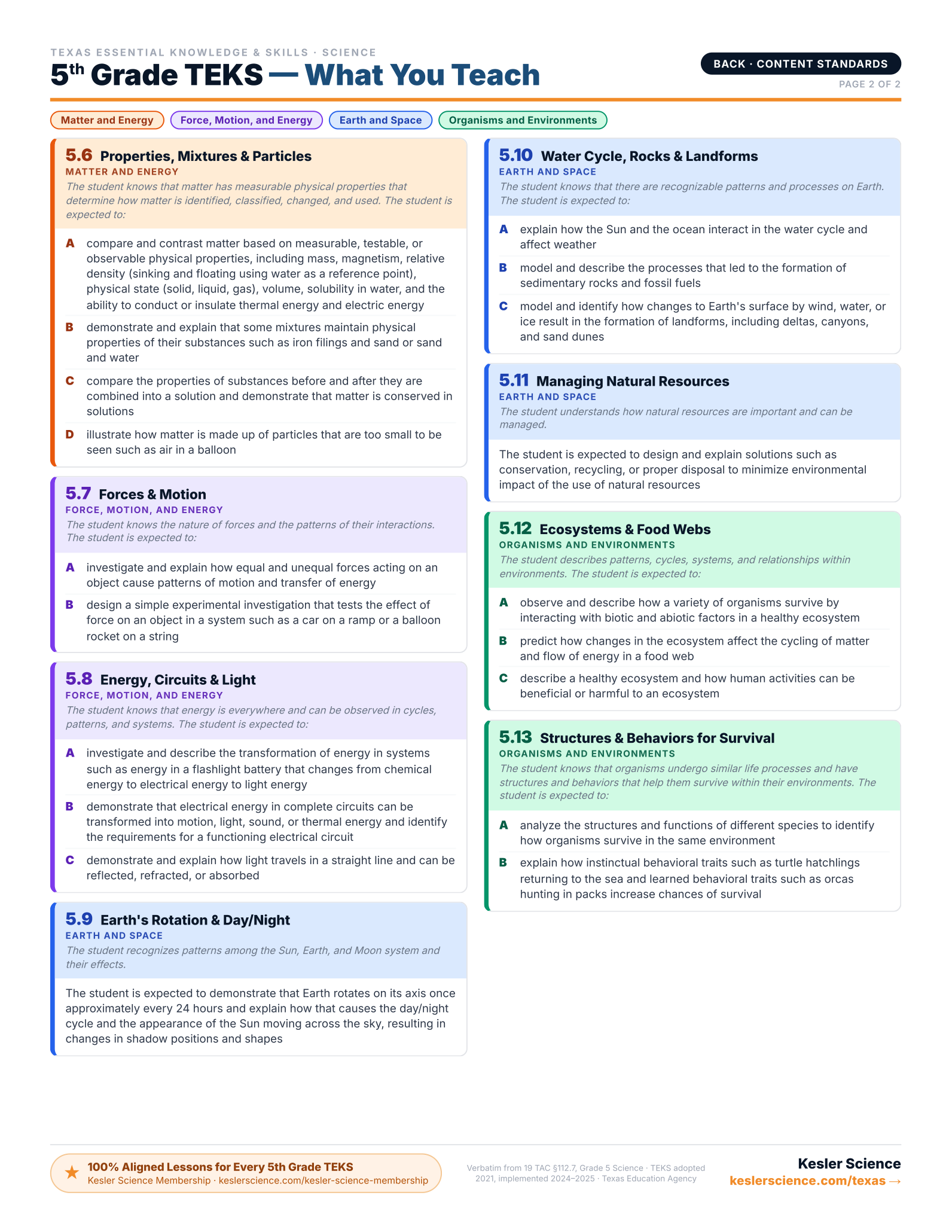
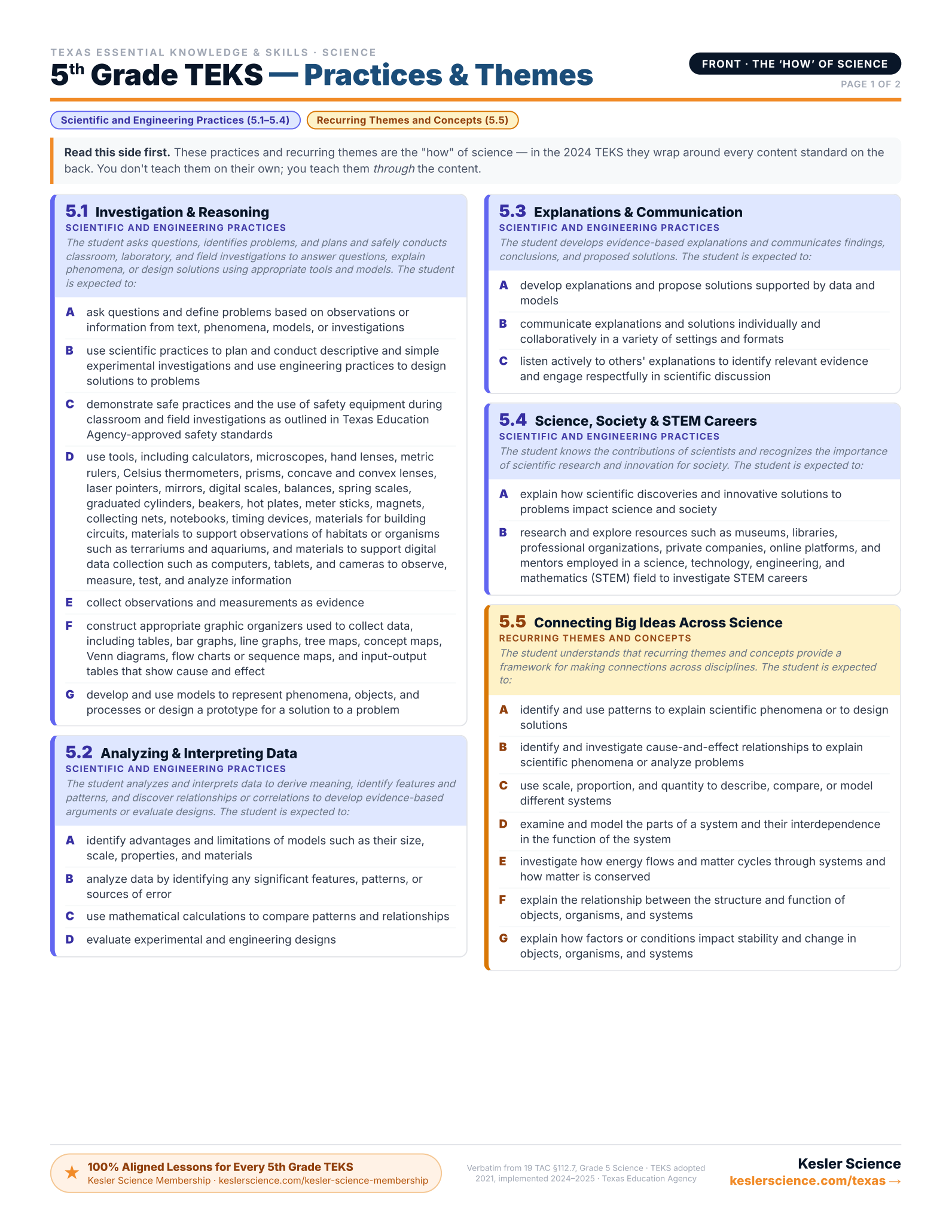
Every 5th-Grade Science TEKS on One Page
The color-coded, front-and-back cheat sheet I wish I'd had — every standard, organized by reporting category. Print it and reference it all year long. This will be your new favorite document!
Trusted Across Texas
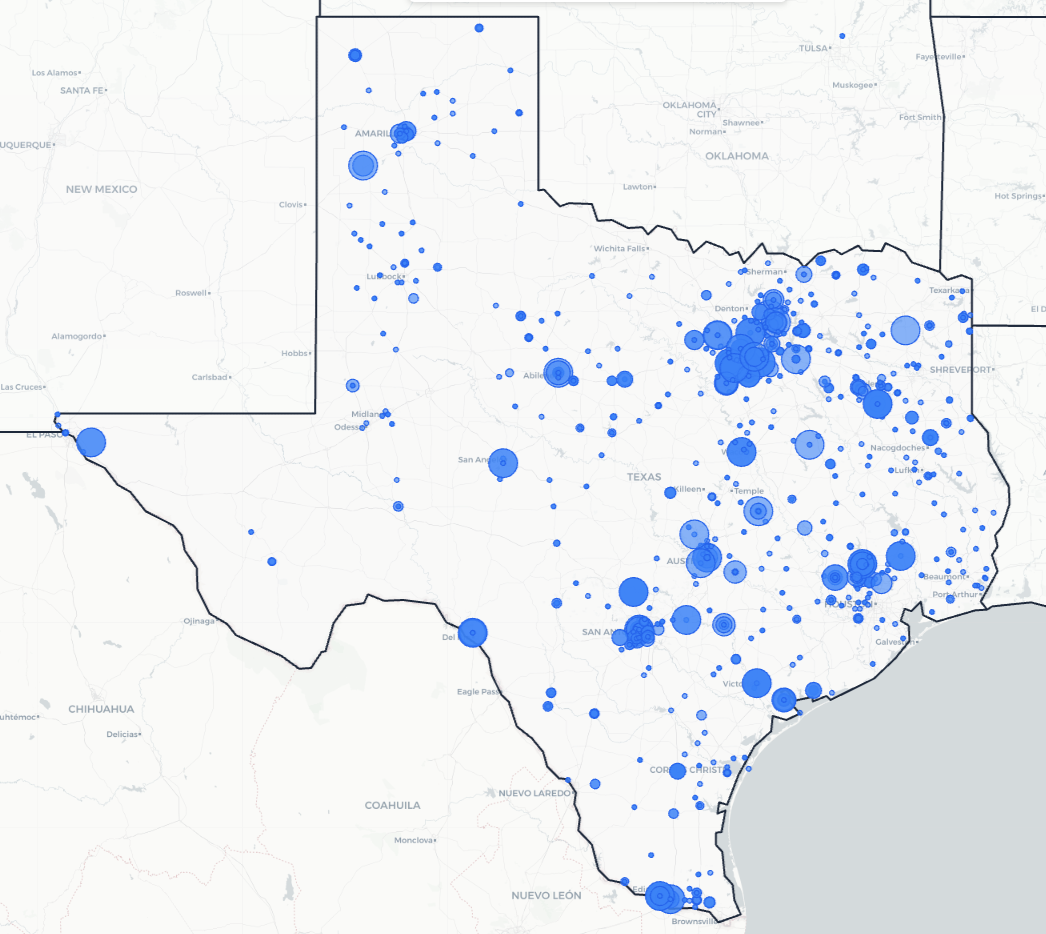
From the Rio Grande Valley to the Panhandle, Texas science teachers are using Kesler Science to save time and engage students.
Texas Schools and Districts
Love Kesler Science
What Teachers Are Saying
Give Your Science Teachers Everything They Need
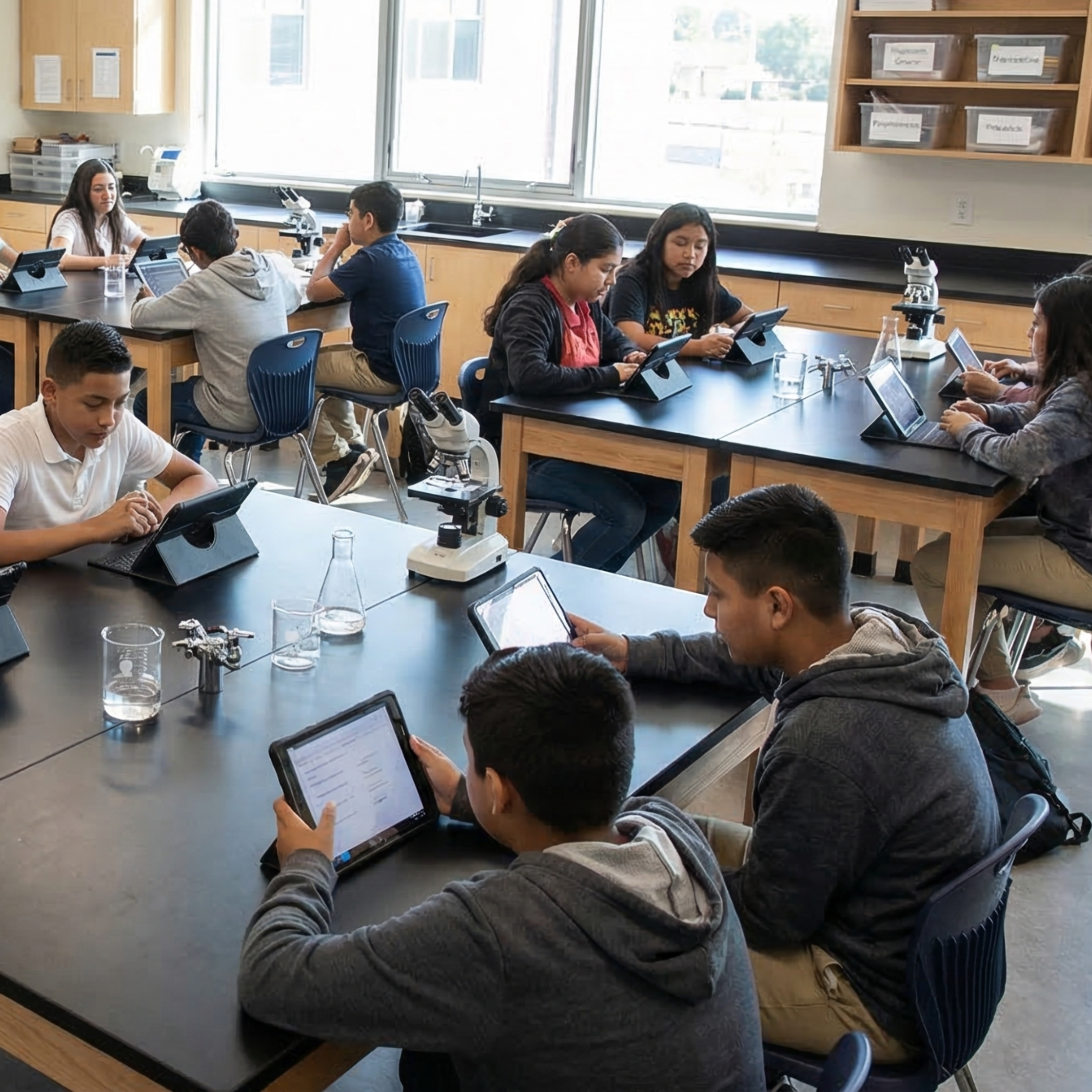
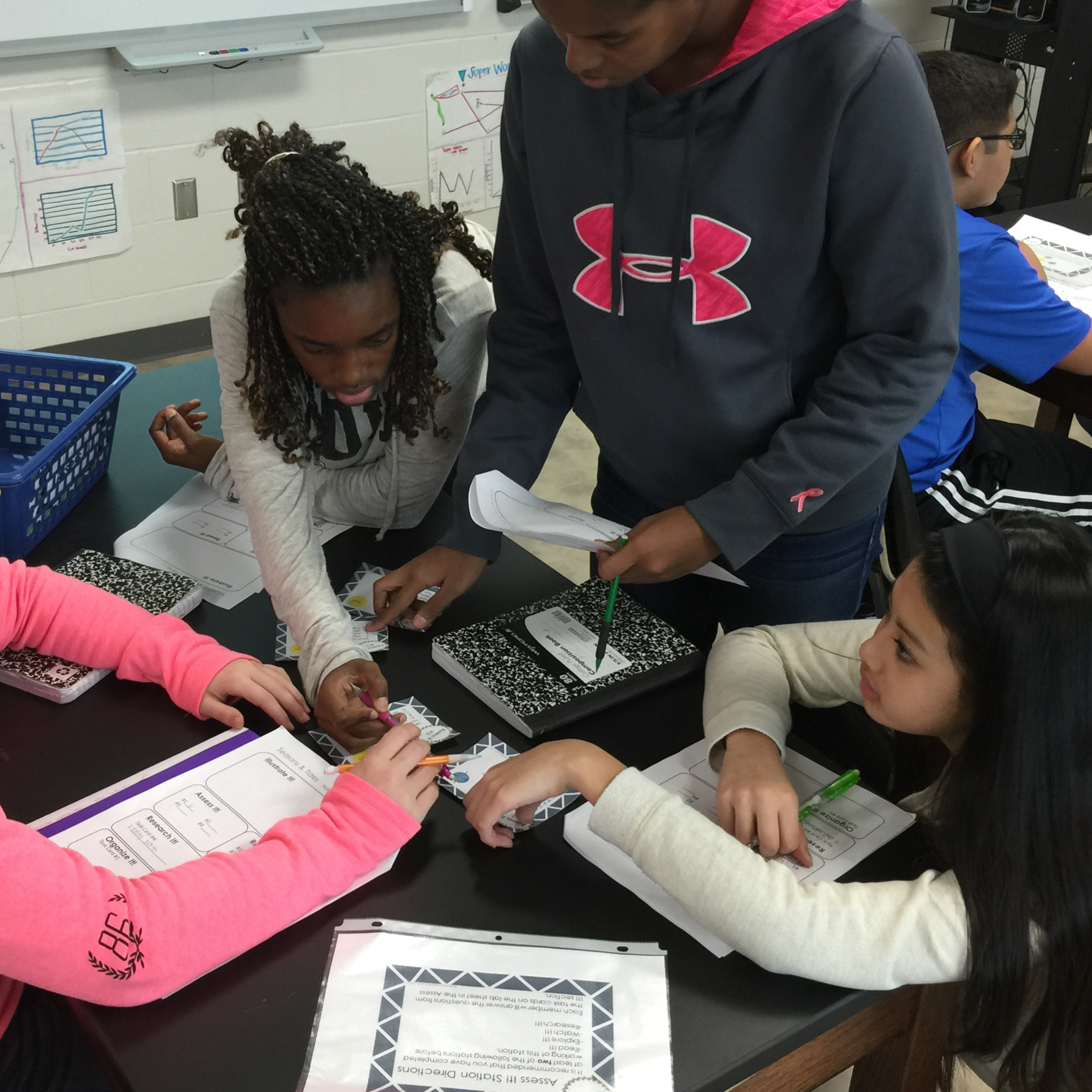
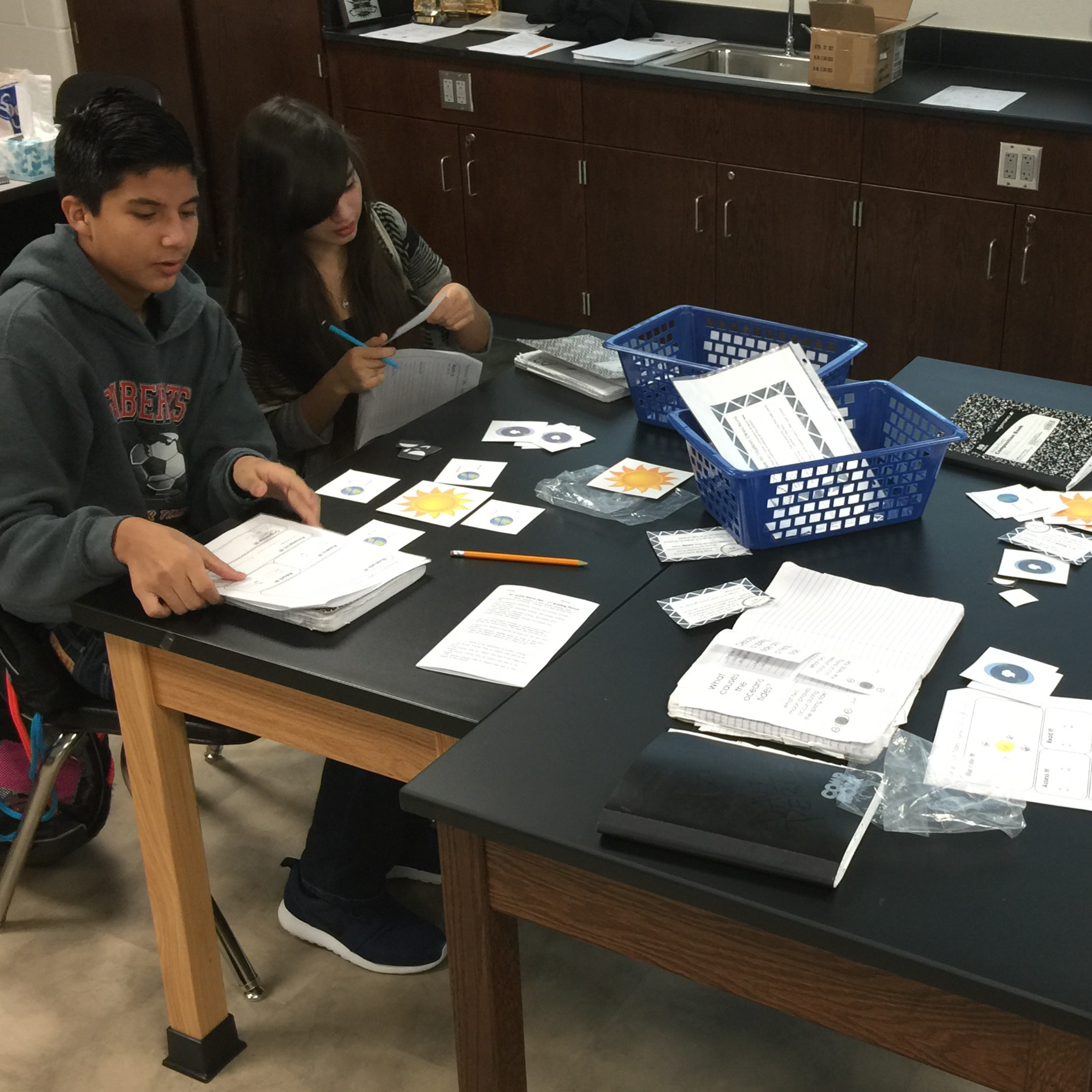
School and district licenses give your teachers access to every resource they need, including station labs, inquiry labs, anchoring phenomena, presentations, escape rooms, and much more. One purchase covers the grade levels you need.
- PO-friendly. We accept purchase orders
- Volume discounts for 11+ teachers
- Complimentary Kesler Science Plus orientation for 4+ teachers
- Three free implementation PD sessions for departments of 11+
- Aligned to the 2024 TEKS standards
See It in Action
Book a walkthrough and we'll show you how Kesler Science fits your campus.
Book Demo CallNo pressure, no hard sell