.png?width=375&height=100&name=WebPage%20logo%20with%20curves%202026%20(8).png)
Describe Energy Transformations
"Investigate and describe the transformation of energy in systems such as energy in a flashlight battery that changes from chemical energy to electrical energy to light energy;"
💡 What This Standard Actually Means
"Investigate and describe". Students study real systems where energy starts as one form and changes into another. The TEKS gives one anchor example that's the gold standard for 5th grade: a flashlight battery. Energy starts as chemical energy stored inside the battery. When the flashlight is turned on, that chemical energy becomes electrical energy flowing through the wires. The electrical energy becomes light energy shining out of the bulb. The big idea: energy doesn't get used up. It just changes from one form to another, sometimes through a whole chain of changes.
Flip on a flashlight. The dark room lights up. Where did that light come from? It didn't come from nowhere. It came from energy that was already inside the battery, just sitting there in a different form, waiting to be released. That's the heart of this standard: energy transformation. Energy changes from one form into another, but it doesn't disappear and it doesn't get created from scratch.
The flashlight is the perfect 5th-grade example because the chain is so clear. Step one: chemical energy is stored inside the battery in the way the chemicals are arranged. Step two: when the flashlight switch closes the circuit, that chemical energy turns into electrical energy as electrons flow through the wires. Step three: the electrical energy reaches the bulb and turns into light energy that shines out into the room. Three forms of energy, one device, one tidy chain.
Energy transformations show up everywhere students look. Solar lights turn light energy into electrical energy. A toaster turns electrical energy into thermal energy. A wind-up car turns mechanical energy (the spring) into motion. Even your body is doing it: chemical energy from food turns into the energy you use to walk, talk, and learn. The takeaway for kids is to spot the chain. Where did the energy come from, what did it change into, and where did it go?
The flashlight is the cheat code for this standard. If I were planning this lesson, I'd bring in five or six cheap flashlights and a pack of fresh batteries on day one. Each group takes one flashlight apart and looks inside. Battery, wires, switch, bulb. That's it. Have them sketch the inside of the flashlight, then ask, "Where is the energy in this flashlight before you turn it on?" They always point at the battery. "What kind of energy is in the battery?" That's where chemical energy comes in. Then turn it on, the bulb lights up, and trace the energy step by step from battery to wire to bulb. By the time you're done, kids can recite chemical-electrical-light without a worksheet because they followed it with their fingers. Once they own the flashlight chain, every other example (solar, toaster, fan) clicks fast.
⚠️ Misconceptions Your Students May Have
These are some of the most common misconceptions. Knowing what to look for can help you get ahead of them.
"When you use a battery, the energy gets used up and disappears"
The energy doesn't disappear. It just changes forms and leaves the system. Chemical energy in the battery becomes electrical energy in the wires becomes light energy from the bulb (and a tiny bit of heat). The energy is now scattered out into the room as light and heat. The battery dies because the chemicals inside have all been used to send out energy. The energy is still around. It's just not in the battery anymore.
"Light is the only kind of energy a flashlight produces"
Most energy transformations don't end at one form. Hold a flashlight on for a few minutes and the bulb gets warm. That heat is thermal energy. Some of the energy from the battery turned into light AND some turned into heat. Real systems usually produce more than one form of energy at the end of the chain.
"Energy transformations only happen in machines"
Energy transformations happen in just about everything, machine or not. When a kid eats a sandwich, chemical energy in the food becomes the chemical energy in their body, which becomes mechanical energy when they walk and thermal energy as their body warms up. A burning candle changes chemical energy in the wax into light and heat. A solar panel changes light energy into electrical energy. Living things and natural systems are full of energy changes too.
"Electricity and light are the same thing"
They are different forms of energy. Electrical energy is the energy of charges flowing through wires. Light energy is the energy that travels through space and lights things up. In a flashlight, the electrical energy gets converted into light energy when it reaches the bulb. They're related (one becomes the other) but they're not identical. You can't see electricity in a wire. You can see light coming out of a bulb.
📓 Teaching Resources for 5.8A
These resources are aligned to this standard.


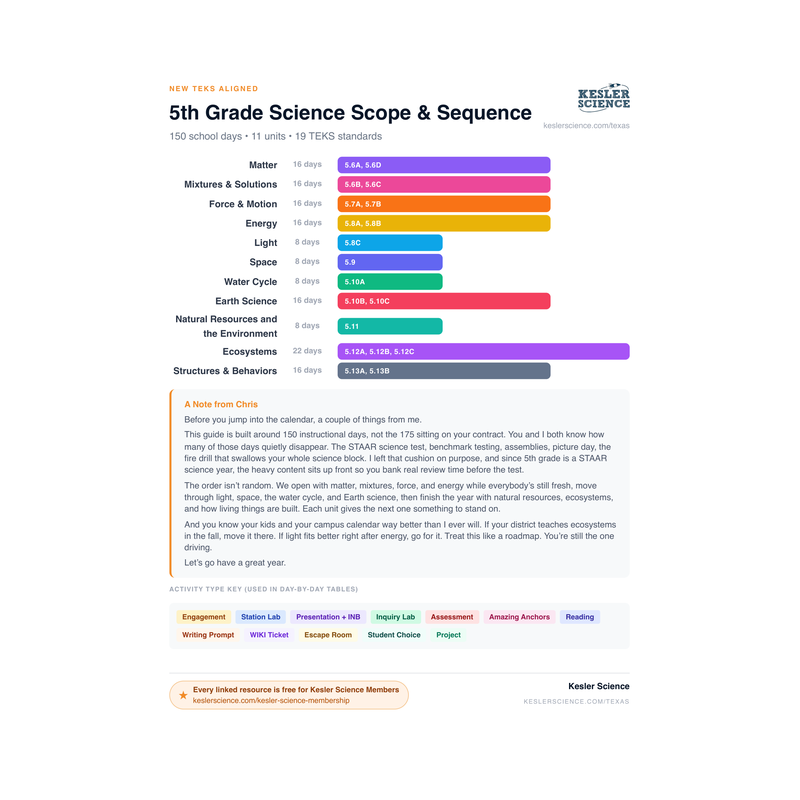
100% Aligned Lessons for Every TEKS You Teach
Kesler Science Plus puts thousands of ready-to-teach lessons and activities in your hands, so you can boost engagement and get your planning time back. Trusted by schools and districts all over the great state of Texas.
🌎 Phenomenon Ideas for 5.8A
Use these real-world phenomena to anchor your lesson. Show students the phenomenon first, let them wonder, then build toward Describe Energy Transformations as the explanation.
The Flashlight at the Camp Out
A teacher stands in a darkened classroom holding a flashlight. Click. The room lights up. The kids in the back can see clearly. Click off. Total darkness. The flashlight didn't move. Nothing else changed in the room. But somehow flipping a tiny switch turned a dark room bright. Where did all that light come from? The flashlight was sitting there the whole time, but the energy to light up the room had to come from somewhere inside it.
"Trace the energy from where it started inside the flashlight to where it ended up. What forms did it take along the way? Draw a diagram of the energy chain."
The Solar Garden Light
A small solar garden light sits in a sunny window all day, doing nothing visible. As the sun goes down, the light suddenly starts to glow on its own. No one plugged it in. No one flipped a switch. Yet there it is, shining gently through the night. By morning, it switches off and starts soaking up sunlight again. It's been turning energy from one form to another and back all day long.
"What kind of energy did the solar light collect during the day? What kind of energy did it release at night? How many transformations happened between sunlight hitting the panel and the bulb glowing in the dark?"
The Wind-Up Toy Car
A small plastic toy car sits motionless on the desk. A kid pulls it backward across the desk, hears the click-click-click of the spring inside winding up, and lets it go. The car shoots forward across the desk, traveling several feet before slowing down and stopping. Same car, no batteries, no remote, but suddenly racing across the desk. Pulling it backward gave it something it didn't have before.
"What happened when the kid pulled the car backward? What kind of energy got stored in the car? What kind of energy did that turn into when the car was released?"
💡 Free Engagement Ideas for 5.8A
Ready-to-run activities you can drop straight into a lesson. Where one of these looks like a phenomenon from the section above, that is on purpose: show it first as the hook, then let students run it themselves.
Take-Apart Flashlight Investigation
Each group gets a cheap flashlight, fresh batteries, and a small screwdriver. They open the flashlight up, identify the parts (battery, wires, switch, bulb), and sketch what's inside. They label each part with the form of energy it handles: battery (chemical), wires (electrical), bulb (light + thermal). Then they put it back together, turn it on, and write a sentence that traces the energy from chemical to electrical to light.
Energy Transformation Sort
Print picture cards of common everyday objects: solar panel, toaster, hair dryer, candle, flashlight, microwave, ceiling fan, glow stick, wind turbine, lightbulb. Students sort the cards by what energy goes IN and what energy comes OUT. They write a small chain on each card (electrical → thermal, light → electrical, etc.). Great as a station or a quick partner game.
Energy Chain Diagram
Students pick one common system from a list (flashlight, toaster, solar light, wind-up toy, blender, hair dryer, ceiling fan, lamp). They draw a flow chart with arrows showing every energy form involved, starting at the original source and ending at the final form. They include thermal energy as a "side branch" wherever they think heat is being released. Adds depth without adding new vocabulary.
Solar Lab with a Magnifying Glass
On a sunny day, take students outside with a magnifying glass and a piece of black paper. Focus the sunlight onto a tiny spot on the paper and watch it darken. Hold the magnifier for only a few seconds at a time. Sunlight focused on dark paper can scorch and ignite quickly. Stop the moment the paper starts to smoke. (The warmth and color change is plenty without going further.) Discuss how light energy from the sun became thermal energy on the paper. Pure 5th-grade magic with a one-step transformation kids can feel.
🎯 What Approaches, Meets, and Masters Thinking Look Like
Here is what student thinking at each level looks like on this one task, so you know what to look for and how to move a student up.
You turn on a flashlight and it lights up a dark room. Describe how the energy changes from one form to another inside the flashlight, from the battery to the bulb. Then explain what happens to that energy after the flashlight has been left on for a long time.
- The energy chain in order: chemical energy in the battery, then electrical energy in the wires, then light energy from the bulb.
- The correct energy words used for each step (chemical, electrical, light), not just “energy.”
- A clear idea that the energy changes form, it does not just travel along unchanged.
- The starting energy named as chemical energy stored inside the battery, not “battery energy.”
- A mention that some energy also turns into heat (the bulb gets warm), not only light.
- An explanation that the energy is not used up or gone. It leaves the flashlight as light and heat, so the battery dies because the chemicals are used up, not the energy.
The battery has energy in it. The energy goes through the wires as electricity and makes the bulb light up. After the flashlight is on for a long time, the energy gets used up and disappears, so the battery dies and the light goes out. The energy is gone.
The energy starts as chemical energy stored inside the battery. When you turn the flashlight on, the chemical energy changes into electrical energy that flows through the wires. When it gets to the bulb, the electrical energy changes into light energy that shines out. So the energy changes form three times: chemical, then electrical, then light. The bulb also gets a little warm, so some of it turns into heat too. The energy is not used up. It leaves the flashlight as light and heat. The battery dies because the chemicals inside got used up.
Inside the flashlight, chemical energy stored in the battery changes into electrical energy in the wires, and then into light energy (and a little heat) at the bulb. The energy is never used up. It just keeps changing form and then spreads out of the flashlight into the room. The battery dies because the chemicals that stored the energy are used up, not the energy itself.
That is the same thing my body does at lunch. The chemical energy in my sandwich changes into the energy I use to run at recess, and into heat that makes me warm. It is not a machine with wires, but it follows the same rule: the energy is not made or destroyed, it just changes from one form into another.
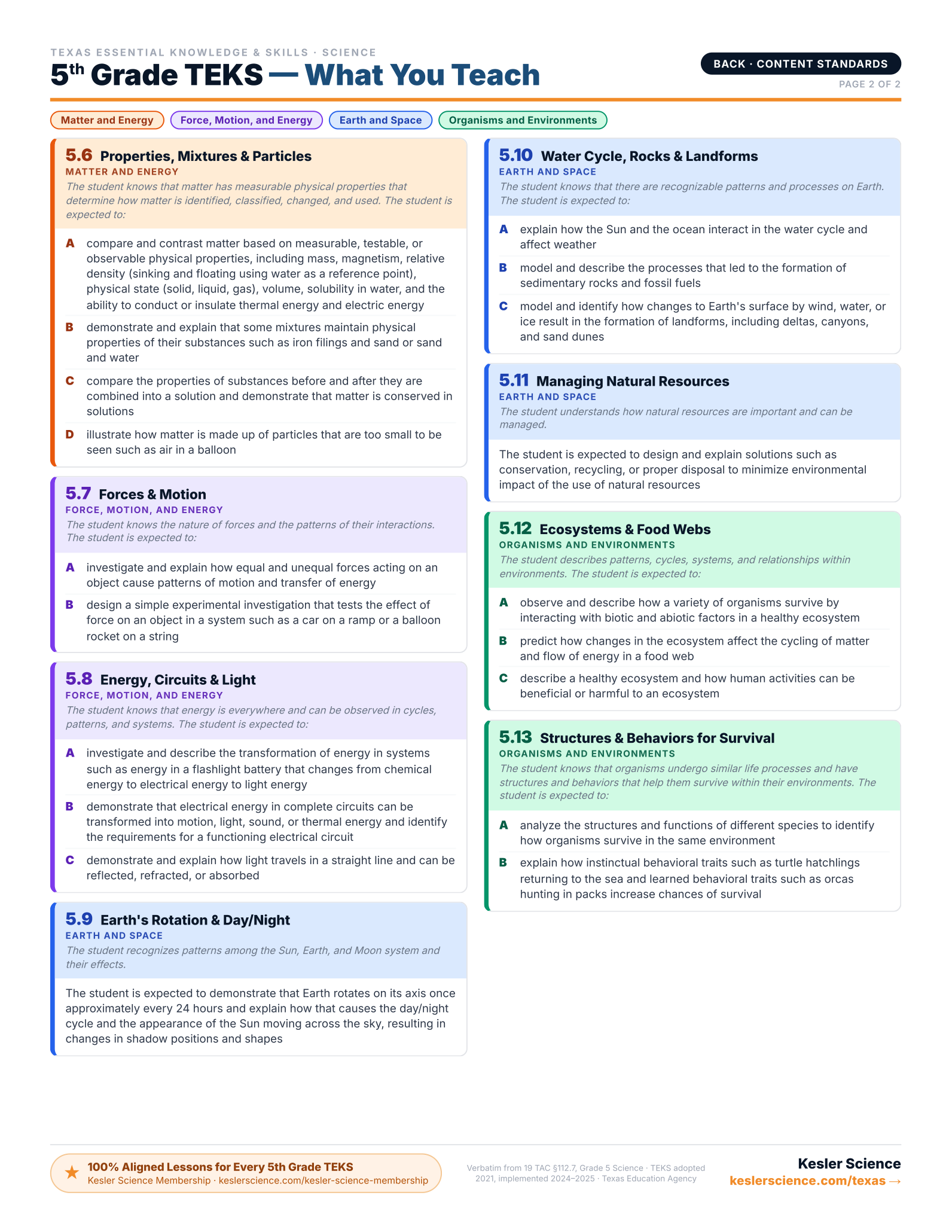
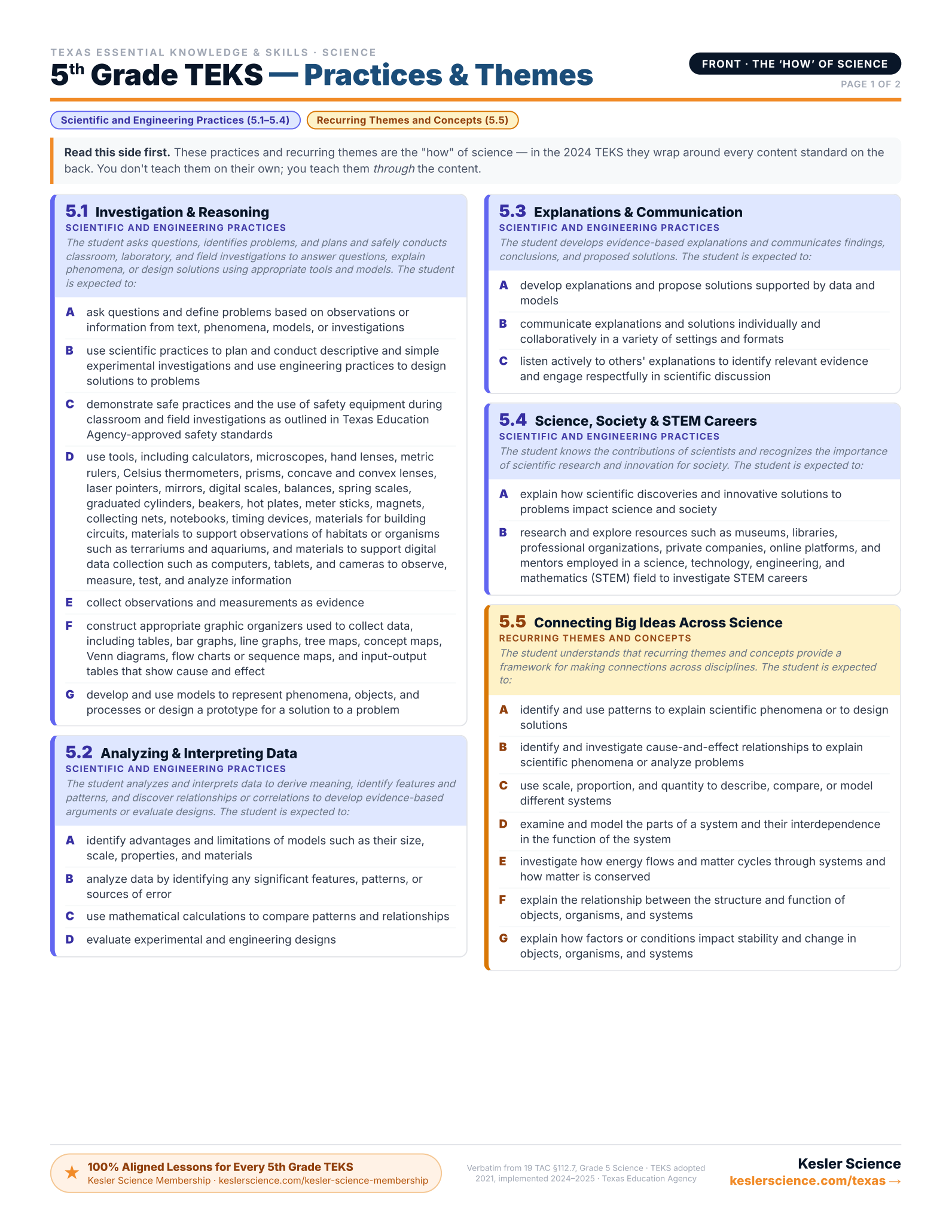
Every 5th-Grade Science TEKS on One Page
The color-coded, front-and-back cheat sheet I wish I'd had — every standard, organized by reporting category. Print it and reference it all year long. This will be your new favorite document!
Trusted Across Texas
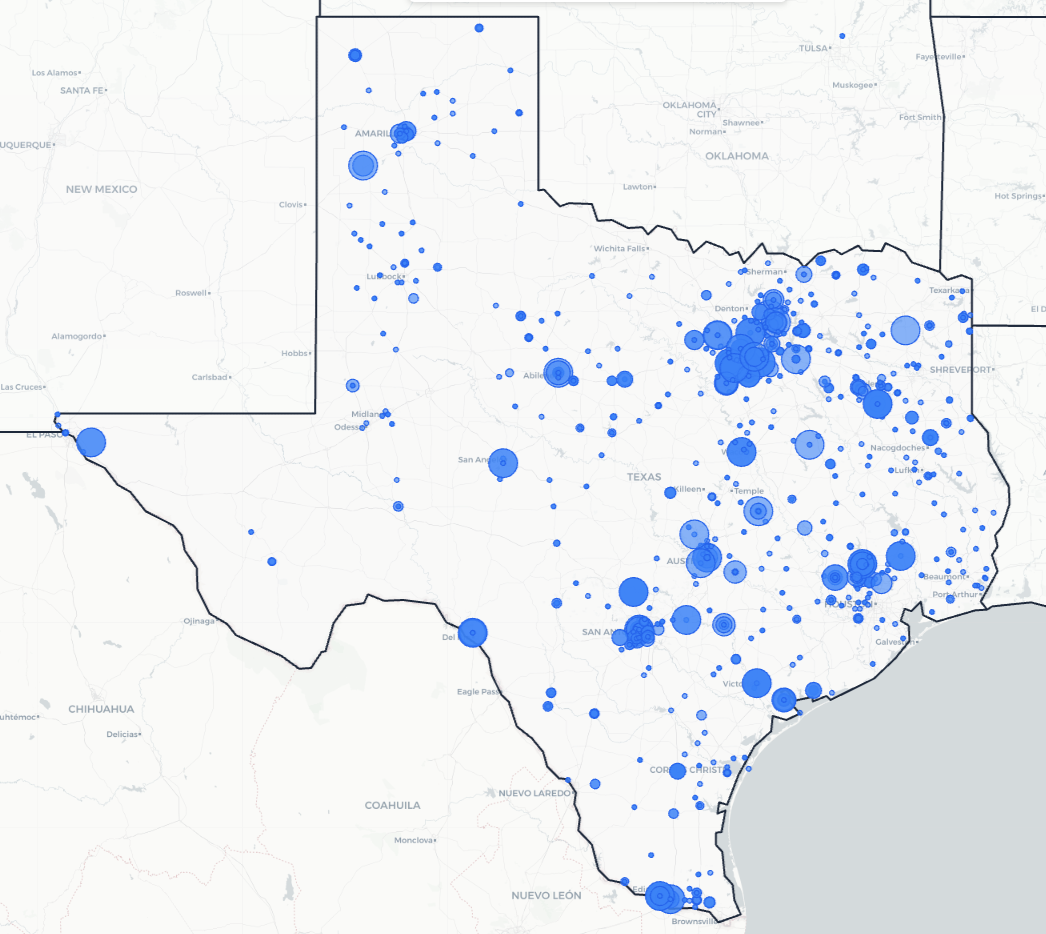
From the Rio Grande Valley to the Panhandle, Texas science teachers are using Kesler Science to save time and engage students.
Texas Schools and Districts
Love Kesler Science
What Teachers Are Saying
Give Your Science Teachers Everything They Need
School and district licenses give your teachers access to every resource they need, including station labs, inquiry labs, anchoring phenomena, presentations, escape rooms, and much more. One purchase covers the grade levels you need.
- PO-friendly. We accept purchase orders
- Volume discounts for 11+ teachers
- Complimentary Kesler Science Plus orientation for 4+ teachers
- Three free implementation PD sessions for departments of 11+
- Aligned to the 2024 TEKS standards
See It in Action
Book a walkthrough and we'll show you how Kesler Science fits your campus.
Book Demo CallNo pressure, no hard sell