.png?width=375&height=100&name=WebPage%20logo%20with%20curves%202026%20(8).png)
Biotic & Abiotic Interactions
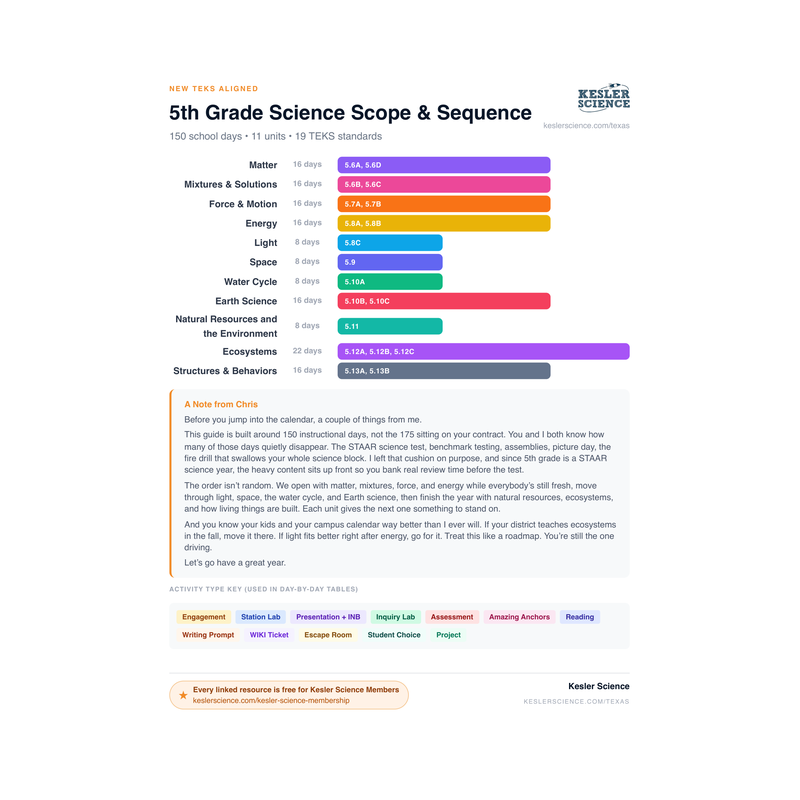
"Observe and describe how a variety of organisms survive by interacting with biotic and abiotic factors in a healthy ecosystem;"
💡 What This Standard Actually Means
"Observe and describe". Students watch real or modeled ecosystems and describe how living things stay alive by depending on both biotic and abiotic factors. Biotic factors are the living parts: other plants, animals, fungi, bacteria. Abiotic factors are the non-living parts: water, soil, sunlight, air, temperature, rocks. Every living thing in an ecosystem relies on both types. A frog needs the pond water (abiotic), the bugs it eats (biotic), the rocks to hide under (abiotic), the lily pads to sit on (biotic), and the air it breathes (abiotic). The standard wants a variety of organisms in a healthy ecosystem, so kids should be looking at multiple species and describing the web of biotic and abiotic interactions that keep them all alive.
Walk into a healthy backyard pond and look around. There's a frog on a lily pad. Cattails growing along the edge. Dragonflies skimming over the water. Mud at the bottom. Rocks along the shore. Sunlight reflecting off the surface. The whole pond is one ecosystem, and every plant and animal in it depends on a mix of living things and non-living things to survive.
Scientists call the living parts biotic factors and the non-living parts abiotic factors. Bio means life, so biotic things are alive: the frog, the cattails, the dragonflies, the bacteria in the mud. A-bio-tic means not alive, so abiotic factors are everything that isn't living: the water, the rocks, the air, the sunlight, the dirt, the temperature.
Every organism survives by interacting with both types. The frog eats bugs (biotic), keeps its skin wet in the pond water (abiotic), hides under rocks (abiotic) and behind cattails (biotic) when a heron (biotic) comes hunting, and warms itself in the sunlight (abiotic). The cattails take in water and minerals from the soil (abiotic), use sunlight to make their food (abiotic), and provide shelter for frogs and dragonflies (biotic interaction). A healthy ecosystem has lots of biotic and abiotic factors all working together so that every organism has what it needs. Mess up one piece (drain the pond, kill the bugs, knock down the cattails) and other organisms suffer because the system is connected. By the end of this unit, kids should be able to look at any ecosystem and list both kinds of factors and how organisms in it use each one.
The fastest way to make biotic and abiotic stick is to take kids outside for ten minutes with a clipboard. Pick any spot on the school grounds. The flower bed near the front door, the corner of the playground, the patch of grass under a tree. Have them split a page into two columns: BIOTIC on the left, ABIOTIC on the right. Then they fill in everything they can see, hear, or feel. Living things go on the left (the squirrel, the dandelion, the worm, the kid sneaking past). Non-living things go on the right (the sunlight, the dirt, the brick wall, the air, the temperature). Set a goal of 10 in each column. After ten minutes, they come back inside with a packed list and a real understanding that ecosystems are EVERYWHERE, even at school. From there, show pictures of a desert, a rainforest, and a coral reef and ask them to do the same exercise. Now they get it: every ecosystem has both.
⚠️ Misconceptions Your Students May Have
These are some of the most common misconceptions. Knowing what to look for can help you get ahead of them.
"Animals only need food and water to survive"
Food and water are the most obvious needs, but animals depend on a lot more. They need air to breathe (abiotic), shelter from weather and predators (could be a tree, a rock, or a den), the right temperature range, sunlight (or shade), and other organisms in their food web. A frog without lily pads and rocks to hide under wouldn't last long, even if there was plenty of food and water. The whole ecosystem matters.
"Plants are biotic, but the soil they grow in is just dirt"
The soil itself is abiotic (it's not alive), but it's full of biotic factors. Soil contains bacteria, fungi, worms, insects, and tiny roots, all living things. The minerals and water in the soil are abiotic. So a handful of dirt is actually a tiny ecosystem with both kinds of factors mixed together. The plant takes water and minerals (abiotic) from the soil, and the worms and bacteria (biotic) help keep the soil rich enough for the plant to thrive.
"All ecosystems need the same things"
Every ecosystem has biotic and abiotic factors, but the specific factors are different. A desert ecosystem has very little water (abiotic), high temperatures, and species like cactus and roadrunners that are adapted to it. A rainforest has tons of water, warm temperatures, and species like monkeys and tropical birds that thrive there. The rules are the same (everything depends on biotic and abiotic factors), but the actual factors look completely different in each place.
"If one species disappears, the rest of the ecosystem is fine"
Removing one species can have big effects across the whole ecosystem because the species are connected. If all the bees disappeared, the flowers wouldn't get pollinated and many plants would die. If the plants died, the animals that ate them would lose food. If those animals died, the predators that ate them would lose food. The ecosystem is a web. Pull one strand and others wobble.
📓 Teaching Resources for 5.12A
These resources are aligned to this standard.


100% Aligned Lessons for Every TEKS You Teach
Kesler Science Plus puts thousands of ready-to-teach lessons and activities in your hands, so you can boost engagement and get your planning time back. Trusted by schools and districts all over the great state of Texas.
🌎 Phenomenon Ideas for 5.12A
Use these real-world phenomena to anchor your lesson. Show students the phenomenon first, let them wonder, then build toward Biotic & Abiotic Interactions as the explanation.
The Pond on the Way to School
A small pond sits next to a sidewalk on the way to school. Look closely on a warm spring morning and you'll spot a frog sitting on a flat rock at the edge, dragonflies hovering over the water, cattails reaching up from the mud, ducks paddling near the middle, water bugs skating on the surface, and a hawk circling overhead. The pond holds water that came from rain. The mud is full of bacteria and worms. The whole place is teeming with both living and non-living things, all interacting at once.
"List five biotic factors and five abiotic factors you can find in this pond. How does the frog use each one? How does the cattail plant use each one? Why does the pond need both kinds of factors to be a healthy ecosystem?"
The Backyard at Sunset
A kid sits on a back porch at sunset. The yard is full of activity. Birds chirp from the oak tree. A squirrel chases another up the trunk. Bees buzz around the flower bed. The grass sways in the breeze. The sun is sinking, the air is cooling, and a worm pokes out of a damp patch of dirt. None of these things would survive on their own. The bee needs the flower. The squirrel needs the tree. The worm needs the moist soil. The bird needs the worms and bugs. Everyone is depending on something else.
"Pick one organism in this scene and trace at least three biotic factors and three abiotic factors that it depends on to survive. What would happen to that organism if one of those factors disappeared?"
Two Habitats, One Question
Two photographs sit side by side on the screen: a hot, dry desert with a saguaro cactus and a roadrunner, and a cool rainforest with giant ferns and a tree frog. The desert has almost no water and very few plants. The rainforest has water everywhere and plants stacked on top of plants. Yet both ecosystems have living and non-living factors that work together to keep their organisms alive. The same rules apply, but the factors look completely different.
"Make a chart comparing biotic and abiotic factors in the desert and the rainforest. How does the same kind of organism (like an animal or plant) survive differently when the factors around it are different?"
💡 Free Engagement Ideas for 5.12A
Ready-to-run activities you can drop straight into a lesson. Where one of these looks like a phenomenon from the section above, that is on purpose: show it first as the hook, then let students run it themselves.
Schoolyard Biotic & Abiotic Hunt
Take students outside with a clipboard and a recording sheet split into BIOTIC and ABIOTIC columns. They have ten minutes to walk around a chosen area and list at least 10 living things and 10 non-living things they can observe. Back in the classroom, they pick one organism from their list and write three sentences about how it interacts with the biotic and abiotic factors around it.
Mini Ecosystem in a Jar
Each group builds a small terrarium-style ecosystem in a clear jar with a lid: gravel at the bottom (abiotic), soil (a mix of both), small live plants (biotic), a couple of twigs (biotic, they came off a plant), a few pebbles (abiotic), a spray of water (abiotic), and a sealed lid. Over the next two weeks, students observe how the plants grow, condensation forms inside, and the small ecosystem cycles its own water and air. They record both biotic and abiotic factors and how they interact.
Ecosystem Trading Cards
Students each get an "organism card" with a picture and a habitat (cactus in the desert, frog in a pond, hawk in a forest, etc.). They write the organism's name on top and list five biotic factors and five abiotic factors it depends on. Then they swap cards with a partner and check each other's lists. Great game version: one student names a factor, the other has to say if it's biotic or abiotic and how it helps the organism.
What's Missing? Ecosystem Removal Game
Show a picture of a healthy ecosystem (like a forest or a pond) with all parts visible. Then show a version with one factor missing (no water, no insects, no sunlight, no plants). Students predict what would happen to the rest of the ecosystem if that factor disappeared. They write a short paragraph explaining the chain of effects. Reinforces the connectedness of biotic and abiotic factors.
🎯 What Approaches, Meets, and Masters Thinking Look Like
Here is what student thinking at each level looks like on this one task, so you know what to look for and how to move a student up.
Look at the picture of a healthy pond. A frog is sitting on a lily pad, eating a bug. List the biotic (living) and abiotic (non-living) factors the frog uses to survive. Then describe how the frog depends on both kinds of factors to stay alive.
- At least two biotic (living) factors the frog uses, such as the bugs it eats or the lily pad it sits on.
- At least two abiotic (non-living) factors the frog uses, such as the pond water, the air, the sunlight, or the rocks.
- Each factor sorted into the correct group, biotic for living and abiotic for non-living.
- A description that tells how the frog uses each factor, not just a list of words.
- The idea that the frog needs both kinds of factors, not only one.
- Air counted as an abiotic factor the frog needs, not just food and water. That is the easiest part to forget.
The frog needs the bug to eat (biotic). It lives in the pond water (abiotic). The bug is alive so it is biotic and the water is not alive so it is abiotic. As long as the frog has food and water it can survive.
Biotic factors: the bug the frog eats and the lily pad it sits on. Both of those are living. Abiotic factors: the pond water, the air, and the sunlight. Those are not living.
The frog eats the bug for food and sits on the lily pad to rest. It stays in the pond water to keep its skin wet and breathes the air. It warms up in the sunlight. So the frog uses living things and non-living things to stay alive. It needs both kinds.
Biotic (living): the bug it eats, the lily pad it rests on. Abiotic (non-living): the pond water, the air it breathes, the sunlight that warms it, the rocks it hides under.
The frog can't survive on just one kind of factor. The living things give it food and a place to sit, and the non-living things give it water, air, and warmth. They all work together. If you took the water away, the frog would dry out even if there were still bugs to eat. That is why a healthy ecosystem needs lots of both kinds.
It works the same way in a desert. A lizard there eats insects (biotic) and hides in the shade of a cactus (biotic), but it also needs the warm sunlight, the air, and the sand (all abiotic). The living things are different from the pond, but the rule is the same: every animal survives by using both biotic and abiotic factors.
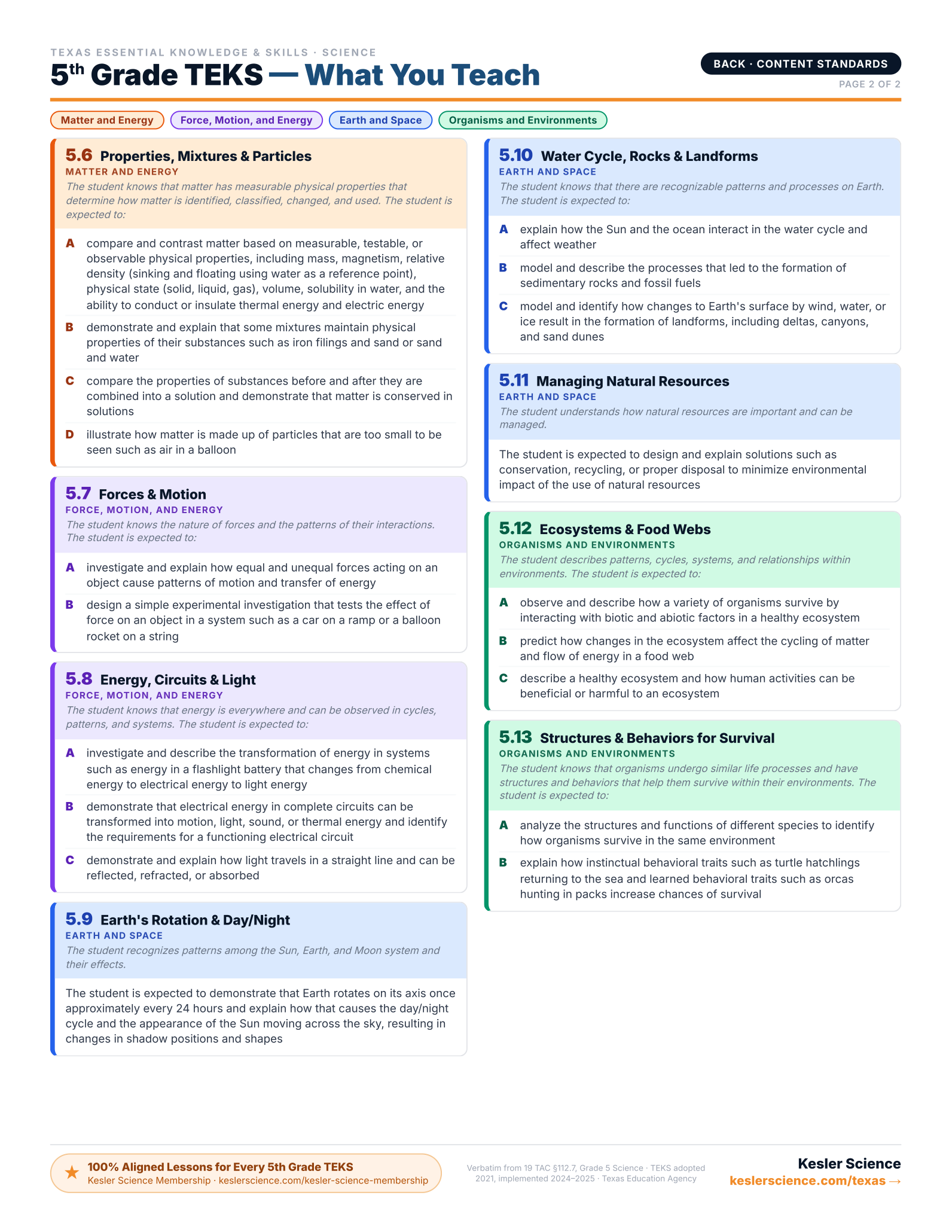
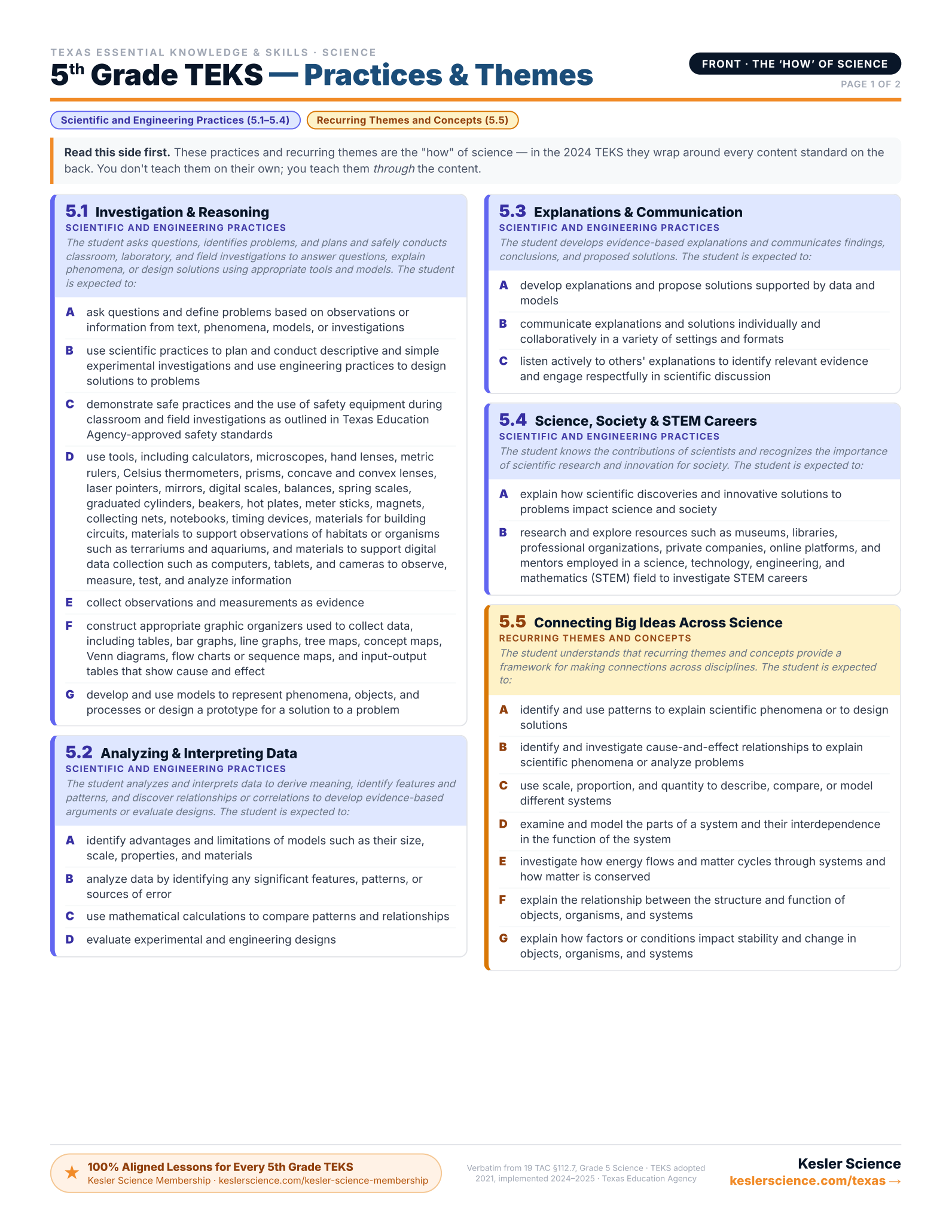
Every 5th-Grade Science TEKS on One Page
The color-coded, front-and-back cheat sheet I wish I'd had — every standard, organized by reporting category. Print it and reference it all year long. This will be your new favorite document!
Trusted Across Texas
From the Rio Grande Valley to the Panhandle, Texas science teachers are using Kesler Science to save time and engage students.
Texas Schools and Districts
Love Kesler Science
What Teachers Are Saying
Give Your Science Teachers Everything They Need
School and district licenses give your teachers access to every resource they need, including station labs, inquiry labs, anchoring phenomena, presentations, escape rooms, and much more. One purchase covers the grade levels you need.
- PO-friendly. We accept purchase orders
- Volume discounts for 11+ teachers
- Complimentary Kesler Science Plus orientation for 4+ teachers
- Three free implementation PD sessions for departments of 11+
- Aligned to the 2024 TEKS standards
See It in Action
Book a walkthrough and we'll show you how Kesler Science fits your campus.
Book Demo CallNo pressure, no hard sell