.png?width=375&height=100&name=WebPage%20logo%20with%20curves%202026%20(8).png)
Sedimentary Rock Formation
"Model and describe the processes that led to the formation of sedimentary rocks and fossil fuels; and"
💡 What This Standard Actually Means
"Model and describe". Students build physical models or draw diagrams to show two related stories that play out over millions of years. Story one: sedimentary rocks. Tiny bits of rock, sand, mud, and shells settle into layers in lakes and oceans. Over a long time, the layers get pressed down by the weight above them and stuck together by minerals, forming a solid rock with stripes you can still see (sandstone, limestone, shale). Story two: fossil fuels. Plants and animals that died millions of years ago got buried in mud and sand. Over enormous time and pressure, those buried organisms turned into coal, oil, and natural gas. Both stories involve burial, layering, and time. The fossil fuels piece is non-negotiable for this standard. Don't skip it.
Walk along a riverbank or a beach and you'll see them: layers of mud, sand, pebbles, and broken shell pieces piled up against each other. Those tiny bits are called sediments. Over millions of years, when sediments settle in calm places (like the bottom of a lake or the sea floor), they stack up. The layers below get pressed harder and harder by the weight of more layers piling on top. Minerals seep in between the grains and act like glue. Eventually those layers harden into sedimentary rock. Sandstone is sand that turned into rock. Limestone is shells and ocean bits that turned into rock. Shale is mud that turned into rock. The stripes you see in cliffs and canyon walls are the layers, frozen in stone.
The same burial process produced something else humans rely on every day: fossil fuels. Long ago, when plants died, fell to the ground, and got buried under sediment, the heat and pressure over millions of years turned that ancient plant material into coal. When tiny ocean plants and animals died and got buried under layers of mud on the sea floor, the same kind of long, slow process turned them into oil and natural gas. That's why we call them fossil fuels. The fuel really did come from fossils, sort of. The energy stored in coal, oil, and gas is the energy that ancient living things originally got from the Sun, locked away under layers of rock for millions of years.
The takeaway: sedimentary rocks and fossil fuels are made by the same kind of process. Layers of stuff (sediment, dead plants, dead sea life) get buried, pressed, and changed over enormous amounts of time. The cliffs at Palo Duro Canyon and the gas in your family's car both come from this story.
Sedimentary rock formation is one of those topics that can sound abstract until you do the layered jar demo. If I were teaching this, I'd grab a tall clear jar and have kids dump in spoonfuls of different colored sand, gravel, and crushed shells, one at a time. Talk through what each layer represents and write the timeline on the side of the jar (this layer is from 100 years ago, this one is from 1,000 years ago, this one is from a million years ago). Then press your hand down on the top layer and remind them that real rocks have a million layers all squeezing the bottom layers together. Kids can SEE the stripes. Now when you show them a piece of real sandstone or limestone with visible bands, they're like, "oh, that's just our jar." For fossil fuels, drop a leaf and a small plastic bug between two layers and bury them. The mental link from "buried plant" to "coal" gets so much easier when they've watched it happen, even if it's faked.
⚠️ Misconceptions Your Students May Have
These are some of the most common misconceptions. Knowing what to look for can help you get ahead of them.
"All rocks form the same way"
There are three big types of rocks and they form differently. Sedimentary rocks form from layers of sediment getting pressed and cemented together. Igneous rocks form from cooled lava or magma. Metamorphic rocks form when other rocks get squeezed and heated underground without melting. This standard is specifically about sedimentary rocks, which are recognized by their layers and the fact that they often contain fossils.
"Sedimentary rocks form quickly"
Real sedimentary rocks take millions of years to form. The sediments have to settle in layers, get buried under more sediment, slowly press together, and have minerals seep in to glue them. This isn't a process that happens in a year, or even a thousand years. The cliffs at the Grand Canyon are made of layers that were laid down hundreds of millions of years ago. Time is one of the main ingredients.
"Coal and oil are made from melted dinosaurs"
Most fossil fuels are not from dinosaurs. Coal mainly comes from ancient plants that grew in huge swamps, died, and got buried. Oil and natural gas mainly come from tiny ocean plants and animals (plankton) that died and got buried under layers of sediment on the sea floor. Pressure and heat over millions of years changed them into the fuels we use today. The "fossil" in fossil fuel mostly means ancient plants and ocean microbes, not big dinosaur skeletons.
"You can find fossils in any kind of rock"
Fossils are almost always found in sedimentary rocks. That's because sedimentary rocks form from layers of sediment that can gently bury and preserve dead plants and animals. Igneous rocks form from molten magma so hot that any organisms would be destroyed, and metamorphic rocks usually have too much pressure and heat to keep fossils intact. So when paleontologists go fossil hunting, they look at sedimentary rock layers.
📓 Teaching Resources for 5.10B
These resources are aligned to this standard.


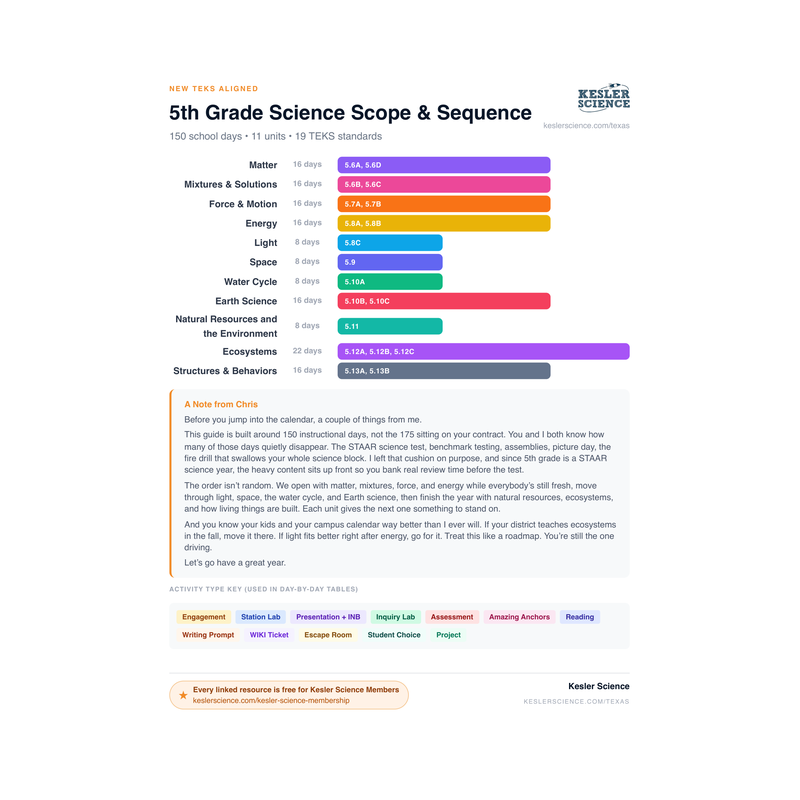
100% Aligned Lessons for Every TEKS You Teach
Kesler Science Plus puts thousands of ready-to-teach lessons and activities in your hands, so you can boost engagement and get your planning time back. Trusted by schools and districts all over the great state of Texas.
🌎 Phenomenon Ideas for 5.10B
Use these real-world phenomena to anchor your lesson. Show students the phenomenon first, let them wonder, then build toward Sedimentary Rock Formation as the explanation.
The Striped Cliff
A photograph of Palo Duro Canyon in Texas shows a cliff face with horizontal stripes in tan, red, orange, and white. The stripes go on for hundreds of feet up the cliff. Each layer is a different color and a different thickness. The bottom layer is the oldest, around 250 million years old, and the top layer is the youngest, around 5 to 10 million years old. Each stripe is a chapter of Earth's history, locked in stone.
"Why does the cliff have stripes? What had to happen, and over how much time, for those layers to get there? Sketch what you think this cliff looked like a million years ago and what it might look like in another million years."
The Coal in the Backyard
A teacher places a chunk of black coal on the desk. She holds up an old leaf next to it. "These two things might not look connected, but coal started out as plants. Like this leaf. Three hundred million years ago this spot was a swamp forest, full of giant ferns and club mosses as tall as trees, standing in shallow water. When those plants died they sank into the soggy muck they were growing in. There was so little oxygen down there that they never rotted away. Layer after layer piled up, got buried under mud, and over millions of years the weight and the heat pressed all of it into the rock you're looking at right now." She points at the lights on the ceiling. The plants got their energy from the Sun. That energy sat in this rock for 300 million years, and some of it is what is keeping those lights on.
"How is it possible that a black piece of rock used to be a green leaf? What had to happen for the leaf to become the rock? Trace the path of the energy from the Sun all the way to the lights in this room."
The Fossil in the Limestone
A piece of limestone sits on the desk with a small spiral shape pressed into it. The spiral is the fossil of a tiny sea creature called an ammonite that lived in the ocean around 100 million years ago. The rock came from a quarry in Central Texas, hundreds of miles from any ocean. But the ammonite is right there, baked into the rock, like a stamp. That spot in Texas used to be the bottom of a sea, and the rock that formed there preserved the dead creatures inside.
"How did a tiny sea creature end up inside a rock in Central Texas, hundreds of miles from any ocean? What does the fossil tell you about what was happening in this spot around 100 million years ago?"
💡 Free Engagement Ideas for 5.10B
Ready-to-run activities you can drop straight into a lesson. Where one of these looks like a phenomenon from the section above, that is on purpose: show it first as the hook, then let students run it themselves.
Layered Sediment Jar
Each group has a tall clear jar and small dishes of different-colored sand, gravel, crushed seashells, and small pebbles. They build their own "sedimentary rock" by spooning in alternating layers, pressing each one down before adding the next. They label their layers with imaginary time periods (this layer was 1,000 years ago, this one is from a million years ago, etc.). At the end, they tape a paper cutout of a "fossil" into one of the layers and explain what story their jar tells.
Bread Compaction Demo
Each pair gets two slices of bread (one white, one wheat). They lay them flat and stack one on top of the other. A heavy book or several textbooks goes on top. After several minutes, they remove the books and the bread is now compressed into a much thinner layered structure. They use this to talk about how millions of years of pressure compresses sediments into solid rock. Visceral way to connect pressure to compaction.
Fossil Fuel Story Chain
Students draw a 4-panel comic strip showing how coal forms over millions of years. Panel 1: a swampy ancient forest with giant ferns. Panel 2: the plants die and get buried under mud. Panel 3: pressure and time build up over millions of years. Panel 4: the result, a black coal rock today. They draw the same chain for oil (with ocean plankton instead of forest plants). Forces them to track time and process visually.
Real Rock Comparison
Lay out small samples of three sedimentary rocks: sandstone, limestone, and shale. Each pair examines them with a hand lens, sketches each rock, and writes one sentence describing the texture and any visible layers or grains. They predict what kind of sediment formed each rock (sand, ocean shells, mud) and check their guesses against the names. Connects the lab demos to real geology.
🎯 What Approaches, Meets, and Masters Thinking Look Like
Here is what student thinking at each level looks like on this one task, so you know what to look for and how to move a student up.
A cliff has layers of sandstone, with the oldest layer on the bottom and the newest layer on top. Draw a model that shows how those layers turned into sedimentary rock. Then describe the steps your model shows, in order, that turned loose sand into solid rock.
- A model that shows layers stacked up, with the bottom layer drawn under the newer layers (not all jumbled together).
- Loose sediment (sand, mud, or tiny rock bits) settling and piling up in the model.
- The weight of the upper layers pressing down on the layers below.
- Minerals seeping in between the grains and acting like glue to cement the layers together.
- A description that puts the steps in the right order: settle, pile up, press down, glue together, harden into rock.
- Some sign that this takes a very long time, not a few days or weeks.
- The student treats time as a real step in the process, not just decoration. That is the easiest part to leave out.
First the sand settles into layers. Then the layers on top press down on the bottom layers. Then it turns into rock. This can happen pretty fast, like after a big rainstorm the sand gets packed down and turns hard.
First, tiny bits of sand settle in layers at the bottom of a lake. More and more layers pile on top over a really long time. The weight of all the upper layers presses the bottom layers down hard. Then minerals in the water seep into the spaces between the grains and act like glue. Over millions of years, the pressing and the gluing harden the layers into solid sandstone. You can still see the stripes because each stripe is one of the old layers.
Sand settles in layers at the bottom of a lake. More layers pile on top, and the weight presses the bottom layers down. Minerals seep in and glue the grains together, and over millions of years the layers harden into sandstone. The two big reasons it turns to rock are pressure from the weight above and the mineral glue between the grains, plus a huge amount of time.
The same burying and pressing makes fossil fuels too. When ancient plants died in a swamp, they got buried under layers of mud, just like the sand. Over millions of years the weight and heat slowly changed that buried plant material into coal. So coal and sandstone are not the same thing, but they form the same way: stuff gets buried in layers, pressed, and changed over a really long time.
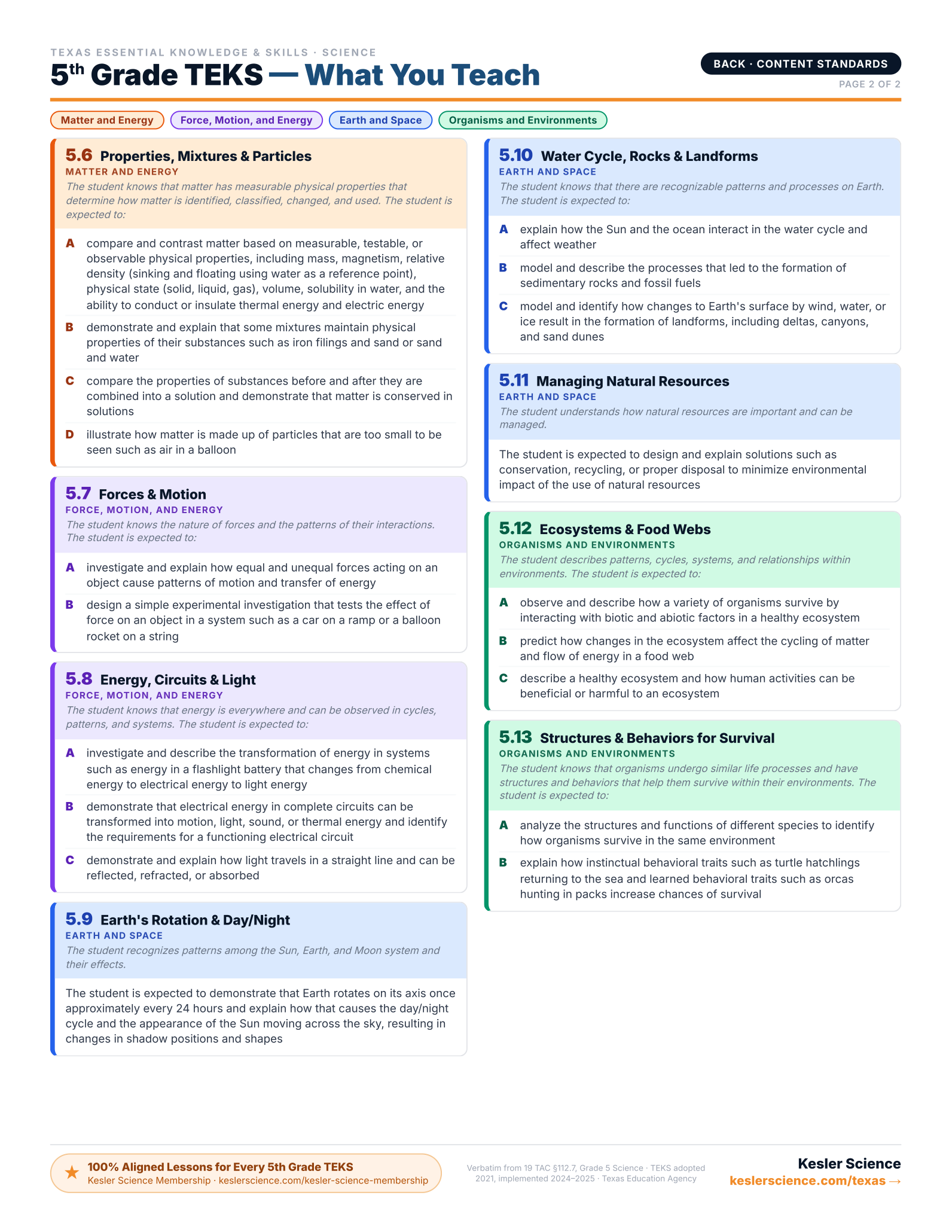
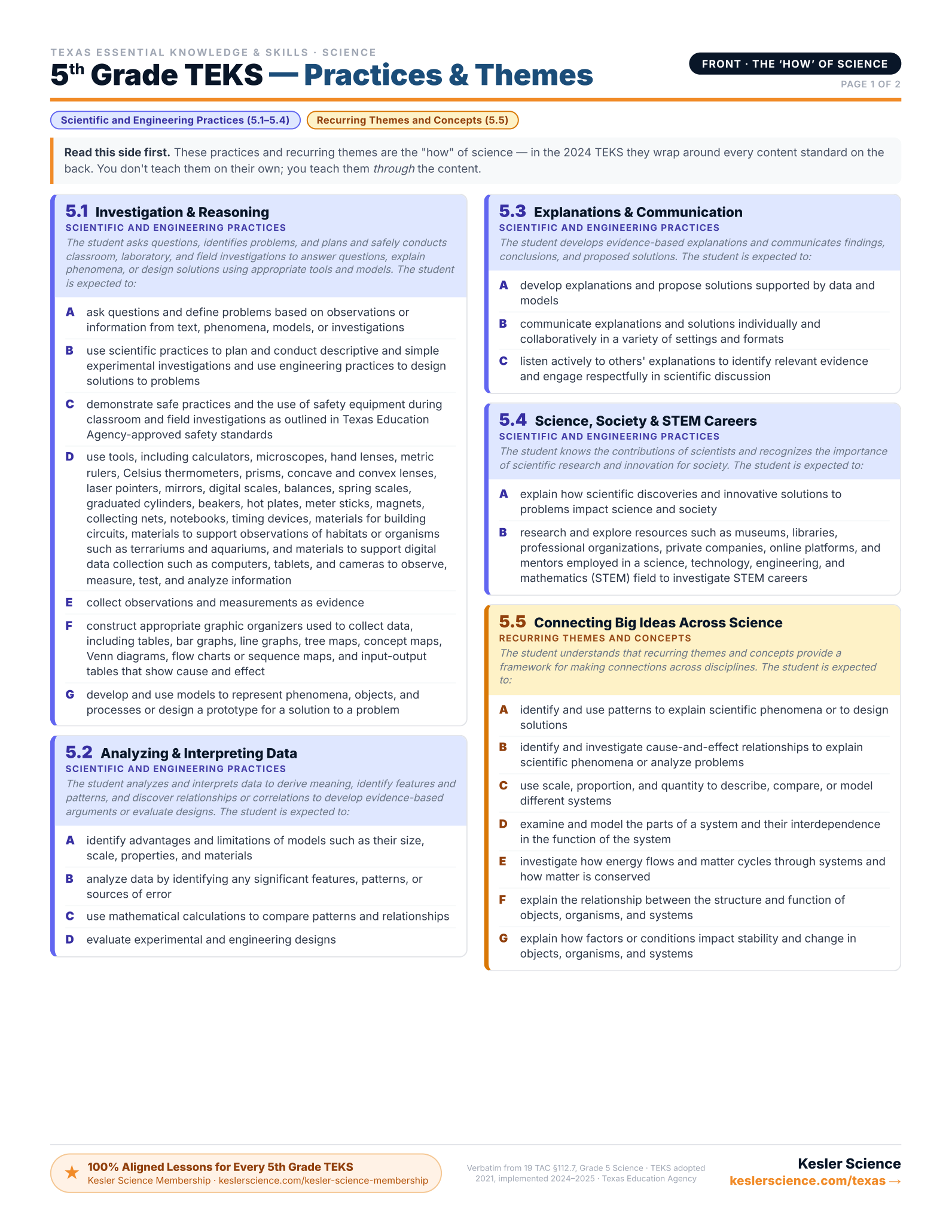
Every 5th-Grade Science TEKS on One Page
The color-coded, front-and-back cheat sheet I wish I'd had — every standard, organized by reporting category. Print it and reference it all year long. This will be your new favorite document!
Trusted Across Texas
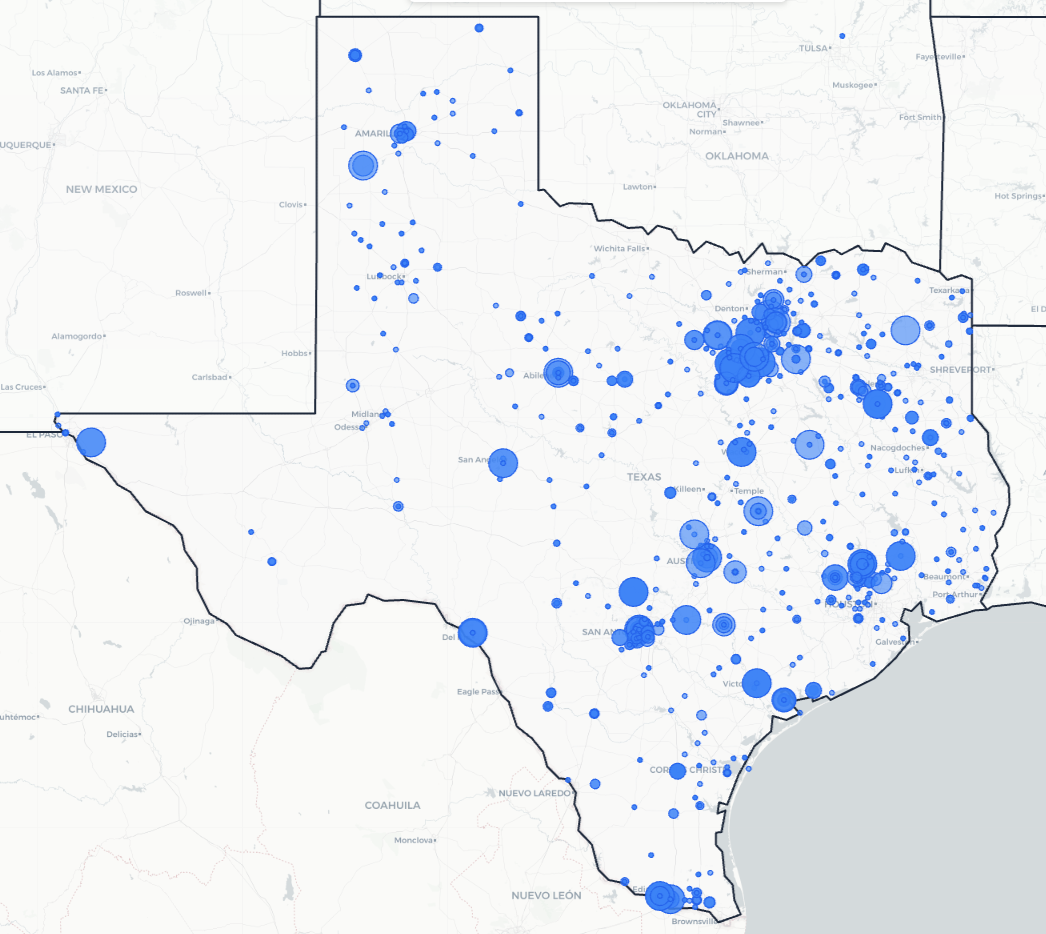
From the Rio Grande Valley to the Panhandle, Texas science teachers are using Kesler Science to save time and engage students.
Texas Schools and Districts
Love Kesler Science
What Teachers Are Saying
Give Your Science Teachers Everything They Need
School and district licenses give your teachers access to every resource they need, including station labs, inquiry labs, anchoring phenomena, presentations, escape rooms, and much more. One purchase covers the grade levels you need.
- PO-friendly. We accept purchase orders
- Volume discounts for 11+ teachers
- Complimentary Kesler Science Plus orientation for 4+ teachers
- Three free implementation PD sessions for departments of 11+
- Aligned to the 2024 TEKS standards
See It in Action
Book a walkthrough and we'll show you how Kesler Science fits your campus.
Book Demo CallNo pressure, no hard sell