.png?width=375&height=100&name=WebPage%20logo%20with%20curves%202026%20(8).png)
Predicting Changes in Ecosystems
"Predict how changes in the ecosystem affect the cycling of matter and flow of energy in a food web; and"
💡 What This Standard Actually Means
"Predict". Students take a healthy food web, change one thing about it (a drought, a wildfire, a new predator, a disease that kills off one species), and predict what happens to the cycling of matter and the flow of energy through the rest of the web. The standard isn't about how populations change. It's about how matter and energy move through the food web. Energy flows from the Sun, into producers (plants), into consumers (animals that eat plants), into other consumers (predators), and gets passed up the chain. Matter cycles through the same path: nutrients in soil into plants into animals back into soil through decomposers. When something disrupts the web, the energy flow and matter cycle get disrupted too.
An ecosystem is alive with energy and matter flowing through it. The Sun pours energy onto plants every day. Plants use that energy to grow. A grasshopper eats the plant and now the energy and matter from that plant are inside the grasshopper. A bird eats the grasshopper. A hawk eats the bird. When the hawk eventually dies, decomposers like fungi and bacteria break the body down and return the matter to the soil, where new plants can use it again. That's the basic flow of a healthy food web: energy moves up the chain (and is mostly lost as heat at each step), matter cycles around in a loop.
This standard asks students to predict what happens when the ecosystem changes. The change can be all kinds of things: a long drought that kills lots of plants, a new species that eats the same food as a native species, a wildfire that wipes out a forest, a disease that kills frogs in a pond, a hurricane that floods a marsh. Whatever the change is, it disrupts the food web, and that means the energy flow and matter cycling change too.
If a drought kills off most of the plants in a meadow, less energy enters the food web from the Sun. Grasshoppers don't have enough food. Birds don't have enough grasshoppers to eat. Hawks don't have enough birds. Less matter cycles through the system because there's less plant material to start with. If a new predator gets introduced and starts eating frogs, the energy and matter that used to flow into the frogs now flows into the predator. Other animals that ate frogs might starve. Insects that frogs ate might explode in numbers. The takeaway: any change ripples through the entire web, changing how matter cycles and how energy flows. Kids should be able to take a food web diagram, change one thing, and trace the effects through the whole web.
The yarn web is the demo every 5th grader needs for this standard. If I were running it, I'd have a class of 25 kids each take a card with a different organism on it (grass, grasshopper, mouse, snake, hawk, owl, decomposer fungi, etc.) and stand in a big circle. Hand out a ball of yarn. The first kid (the Sun) holds the end and tosses the ball to a producer (a grass card). The grass tosses to a consumer that eats grass (the grasshopper). The grasshopper tosses to whoever eats it (the mouse). And so on. The yarn ends up crisscrossed through the whole circle in a giant web. Then announce, "Drought. The grass dies." The kid with the grass card sits down and gives the yarn a tug as they go. Every kid connected to the grass feels the tug. Then say "Hawks lost their food because the mice are starving" and the hawk sits down. Soon kids are sitting all over the circle. The food web didn't just lose one species. It collapsed. They feel it through the yarn. Best 15 minutes you'll spend on this standard.
⚠️ Misconceptions Your Students May Have
These are some of the most common misconceptions. Knowing what to look for can help you get ahead of them.
"If one species disappears, only the species that ate it are affected"
The effects ripple in both directions through a food web. If frogs disappear, the snakes that ate frogs lose food (effect goes UP the chain), and the bugs that frogs ate explode in numbers (effect goes DOWN the chain). Then those extra bugs eat more plants, which affects the plant population, which affects every other animal that eats plants. The change always touches more parts of the web than expected.
"Energy keeps flowing the same way no matter what changes in an ecosystem"
Energy flow depends entirely on the food web staying intact. If the producers (plants) get wiped out, less energy enters the system in the first place. If the consumers that pass energy up the chain disappear, the energy stops flowing to higher levels. Energy flow can slow down, redirect, or shrink whenever something changes in the web.
"Decomposers aren't important to the cycling of matter"
Decomposers (fungi, bacteria, worms) are the unsung heroes of every food web. They break down dead plants and animals and return the matter to the soil so plants can use it again. Without decomposers, dead organisms would pile up and the matter trapped inside them couldn't get back into the cycle. Plants would run out of nutrients. The whole ecosystem would crash.
"Adding a new species to an ecosystem always helps it"
New species introduced to an ecosystem (especially ones that didn't naturally belong there) often cause big problems. Without natural predators, an introduced species can take over, eat all the food, and outcompete native species. The fire ant in Texas, the kudzu vine in the southeastern US, and zebra mussels in the Great Lakes are all examples of introduced species that disrupted the energy flow and matter cycle in ways nobody predicted.
📓 Teaching Resources for 5.12B
These resources are aligned to this standard.


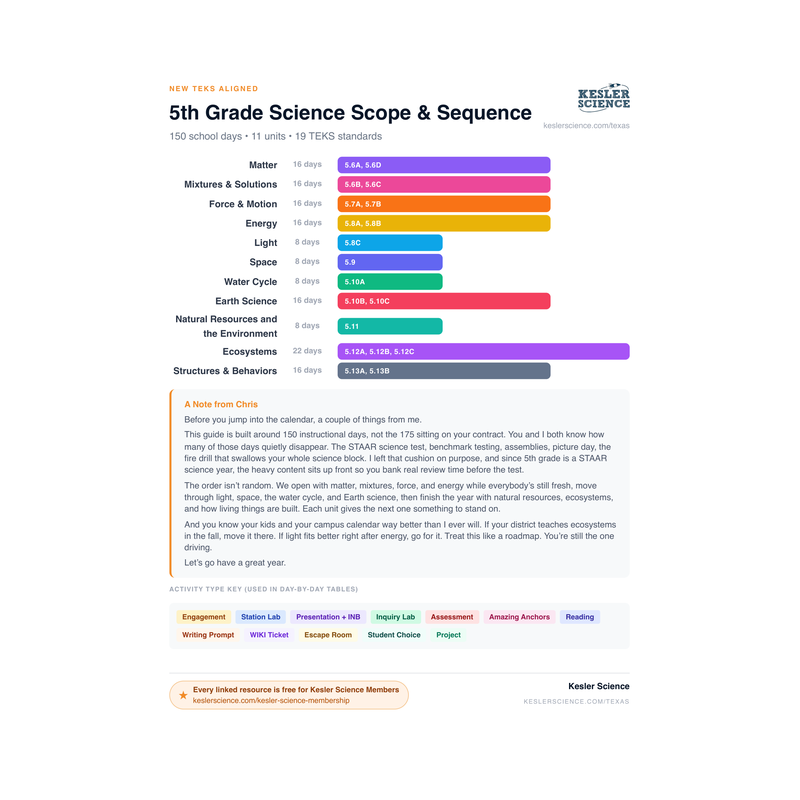
100% Aligned Lessons for Every TEKS You Teach
Kesler Science Plus puts thousands of ready-to-teach lessons and activities in your hands, so you can boost engagement and get your planning time back. Trusted by schools and districts all over the great state of Texas.
🌎 Phenomenon Ideas for 5.12B
Use these real-world phenomena to anchor your lesson. Show students the phenomenon first, let them wonder, then build toward Predicting Changes in Ecosystems as the explanation.
The Drought That Changed the Meadow
A wide green meadow in Texas turns brown over a long, dry summer. The grass that used to grow waist-high is now patchy and yellow. The grasshoppers that lived in the grass are nowhere to be seen. The birds that ate the grasshoppers have flown to other areas. The hawks that hunted the birds are circling somewhere else now. By fall, the entire food web that lived in this meadow has fallen apart. Less energy is reaching every level. Less matter is cycling through.
"Trace the path of energy and matter through this meadow before and after the drought. What changed? Predict what would happen if the rain came back next summer. How long might it take the food web to recover?"
The Wolf Returns to Yellowstone
For 70 years, there were no wolves in Yellowstone National Park. The elk population grew huge with no predators to keep them in check, and the elk ate so many tree seedlings that whole forests stopped growing back. In 1995, scientists brought wolves back to Yellowstone. The wolves hunted some of the elk. The elk started avoiding open areas. In many areas, trees and bushes started growing back. Beavers were able to return to streams where new willow growth gave them food. Birds, fish, and frogs returned because the rivers and forests were healthier.
"How did adding ONE species back to Yellowstone change the whole ecosystem? Trace the path of matter and energy through the food web before and after the wolves returned. What does this tell you about how connected a food web is?"
The Frog Disease in a Pond
A small pond used to have hundreds of frogs. Then a fungal disease swept through and killed almost all of them within a single summer. The next year, the mosquitoes (which the frogs used to eat) exploded in numbers. Snakes that had eaten frogs went hungry and started moving to other ponds. Birds that hunted snakes left too. The pond looks emptier and quieter, but the mosquito population is huge.
"What happened to the cycling of matter when the frogs died? Where did the matter from the dead frogs end up? Predict three more changes that might happen to this pond's food web in the next year because the frogs are gone."
💡 Free Engagement Ideas for 5.12B
Ready-to-run activities you can drop straight into a lesson. Where one of these looks like a phenomenon from the section above, that is on purpose: show it first as the hook, then let students run it themselves.
The Yarn Web
Each student gets a food web card, one of them the Sun, and stands in a big circle. The teacher passes a ball of yarn from card to card, building the food web (Sun to producer to consumer to consumer, with branches everywhere). The yarn becomes a giant web with every kid holding multiple strands. The teacher then announces a change ("Drought! Plants die.") and the affected kid sits down with a tug. Every kid who feels the tug has to think about how the disturbance affects them. Repeat with new disturbances and watch the web fall apart.
Food Web Disruption Cards
Each pair gets a printed food web diagram for a specific ecosystem (Texas meadow, pond, forest). They draw a "disruption card" out of a hat (drought, wildfire, new predator, disease, pollution, hunting). They write a paragraph predicting how this disruption changes the energy flow and matter cycling through the entire web. They share predictions with the class and discuss which species are most affected.
Energy Flow Pyramid
Students build a 4-tier energy pyramid out of construction paper, with producers at the bottom, primary consumers above, secondary consumers above that, and top predators at the top. They label each tier with how much energy is available (10,000 units at the bottom, 1,000 in the next tier, 100, then 10) to show how energy is lost at each step. They then "remove" one tier and discuss what happens to the levels above and below.
Decomposer Investigation
Set up two sealed clear containers. One contains a small piece of bread or fruit and a sprinkle of soil. The other has the same food but no soil. Over two weeks, students observe how the food breaks down differently. The container with soil shows mold and decomposition. They sketch the changes and discuss what's happening to the matter (and where the matter goes if there are no decomposers). Connects directly to the matter-cycling part of the standard.
🎯 What Approaches, Meets, and Masters Thinking Look Like
Here is what student thinking at each level looks like on this one task, so you know what to look for and how to move a student up.
Here is a meadow food web: grass is eaten by grasshoppers, grasshoppers are eaten by birds, and birds are eaten by hawks. Decomposers in the soil break down dead plants and animals. One summer, a long drought kills off most of the grass. Predict how this change affects the flow of energy and the cycling of matter in this food web. Explain what happens to at least three living things in the web.
- A clear prediction that starts at the grass: with less grass, less energy from the Sun enters the food web.
- The energy idea traced up the chain: fewer grasshoppers means fewer birds, which means fewer hawks.
- The matter idea included: with less grass to eat, less matter moves through the animals and back to the soil.
- At least three living things named, with what happens to each one.
- The word predict used as a real prediction (what will happen), not just a description of the food web as it is now.
- Some sense that the change touches more than one animal, not just the grasshoppers that eat the grass.
- The effect reaching parts of the web that do not eat grass directly (hawks, decomposers). That is the easiest part to miss.
When the grass dies, the grasshoppers will not have food. So the grasshoppers will be hungry and a lot of them will die. The birds and the hawks will be fine because they do not eat grass. Only the grasshoppers are hurt because they are the ones that eat the grass.
When the drought kills most of the grass, less energy gets into the food web because the grass is what catches energy from the Sun. The grasshoppers do not have enough to eat, so there are fewer grasshoppers. Then the birds do not have enough grasshoppers to eat, so there are fewer birds. Then the hawks do not have enough birds, so there are fewer hawks too. Less matter moves through the web because it all starts with the grass, and there is not much grass left.
The grass is the producer, so it is where the Sun's energy enters the food web. When the drought kills most of the grass, less energy comes in at the very start, so every level above it gets less. Fewer grasshoppers, then fewer birds, then fewer hawks. Less matter cycles through too, because matter starts in the grass and moves into the animals.
It also changes the decomposers, even though they do not eat grass. At first the decomposers might have extra to break down, like all the dead grass and the animals that starved. But after that there are fewer plants and animals dying in the meadow, so less matter goes back into the soil for new grass to use. The whole loop slows down, not just the parts right next to the grass.
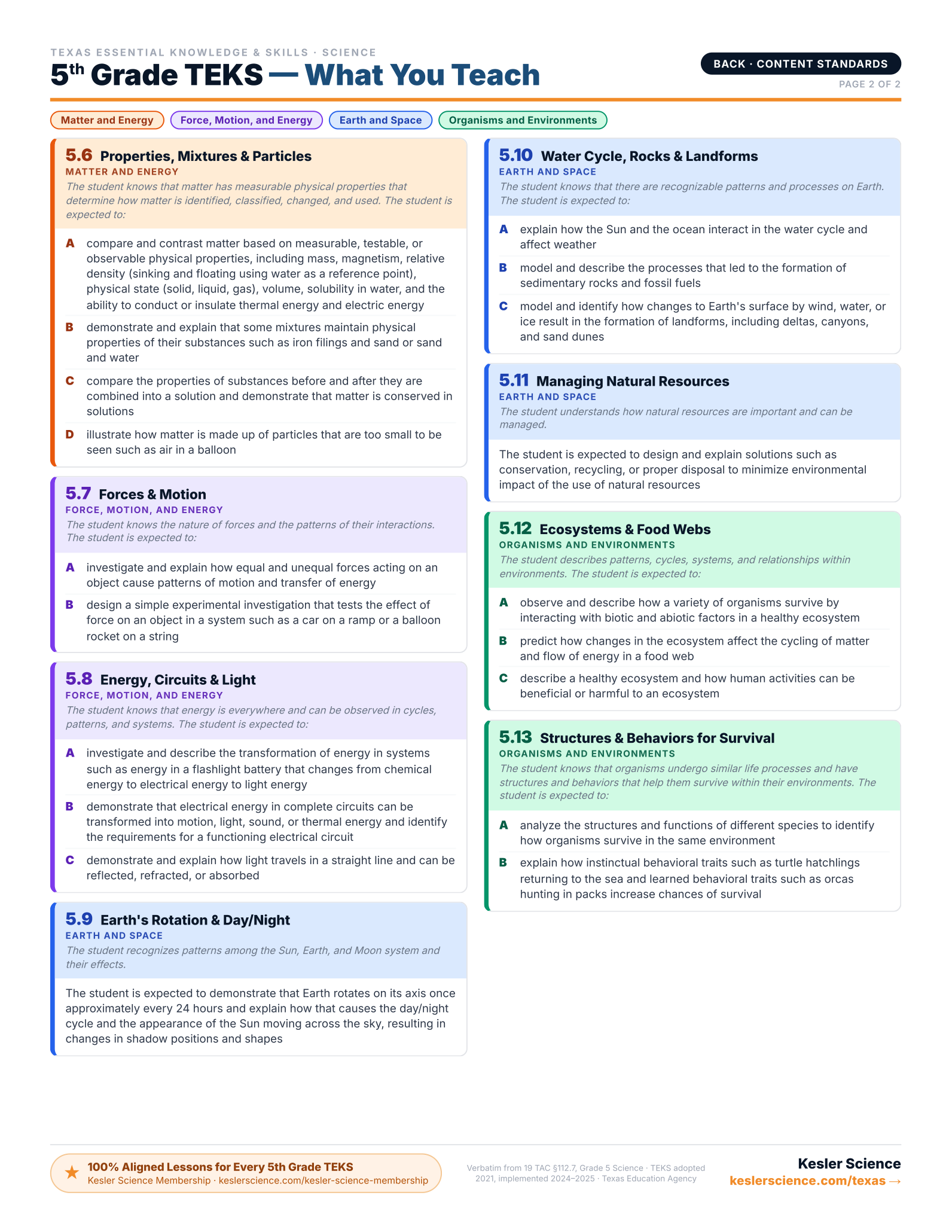
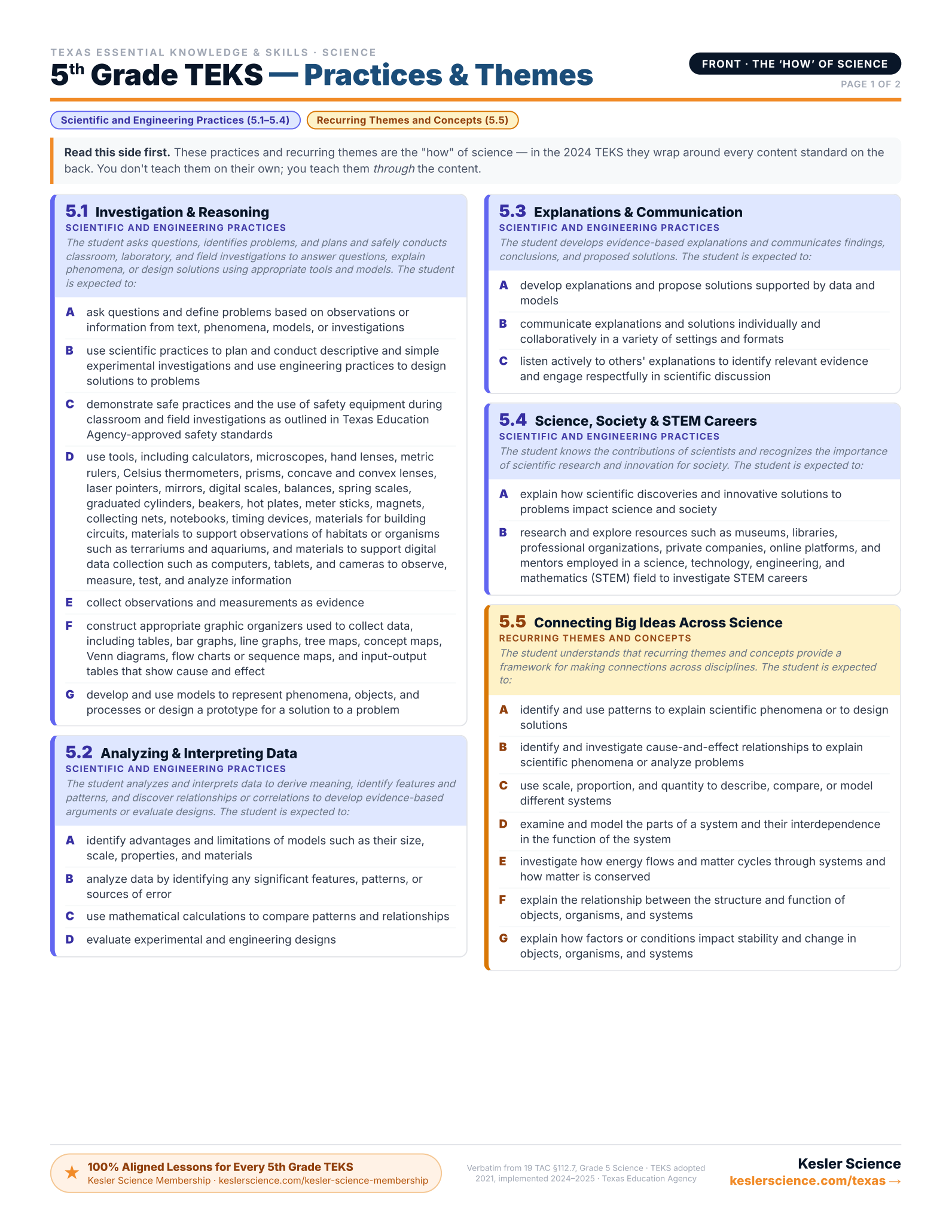
Every 5th-Grade Science TEKS on One Page
The color-coded, front-and-back cheat sheet I wish I'd had — every standard, organized by reporting category. Print it and reference it all year long. This will be your new favorite document!
Trusted Across Texas
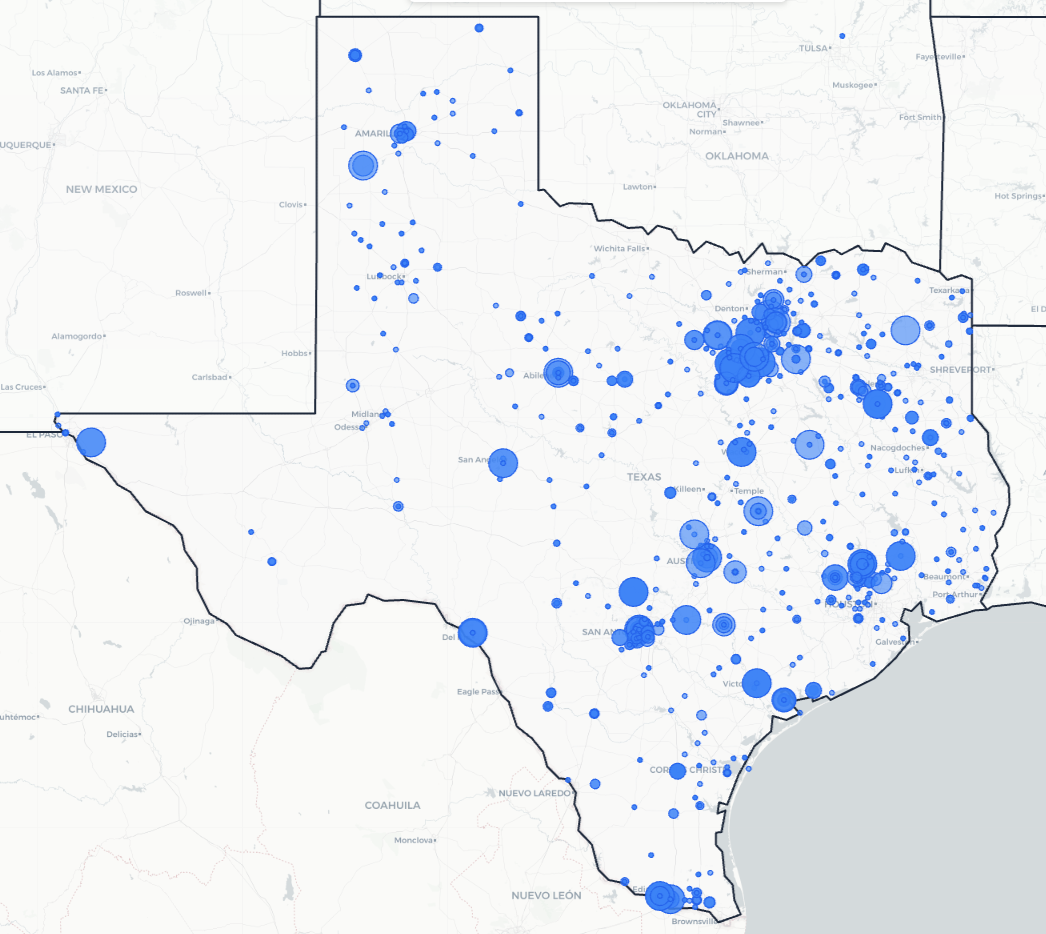
From the Rio Grande Valley to the Panhandle, Texas science teachers are using Kesler Science to save time and engage students.
Texas Schools and Districts
Love Kesler Science
What Teachers Are Saying
Give Your Science Teachers Everything They Need
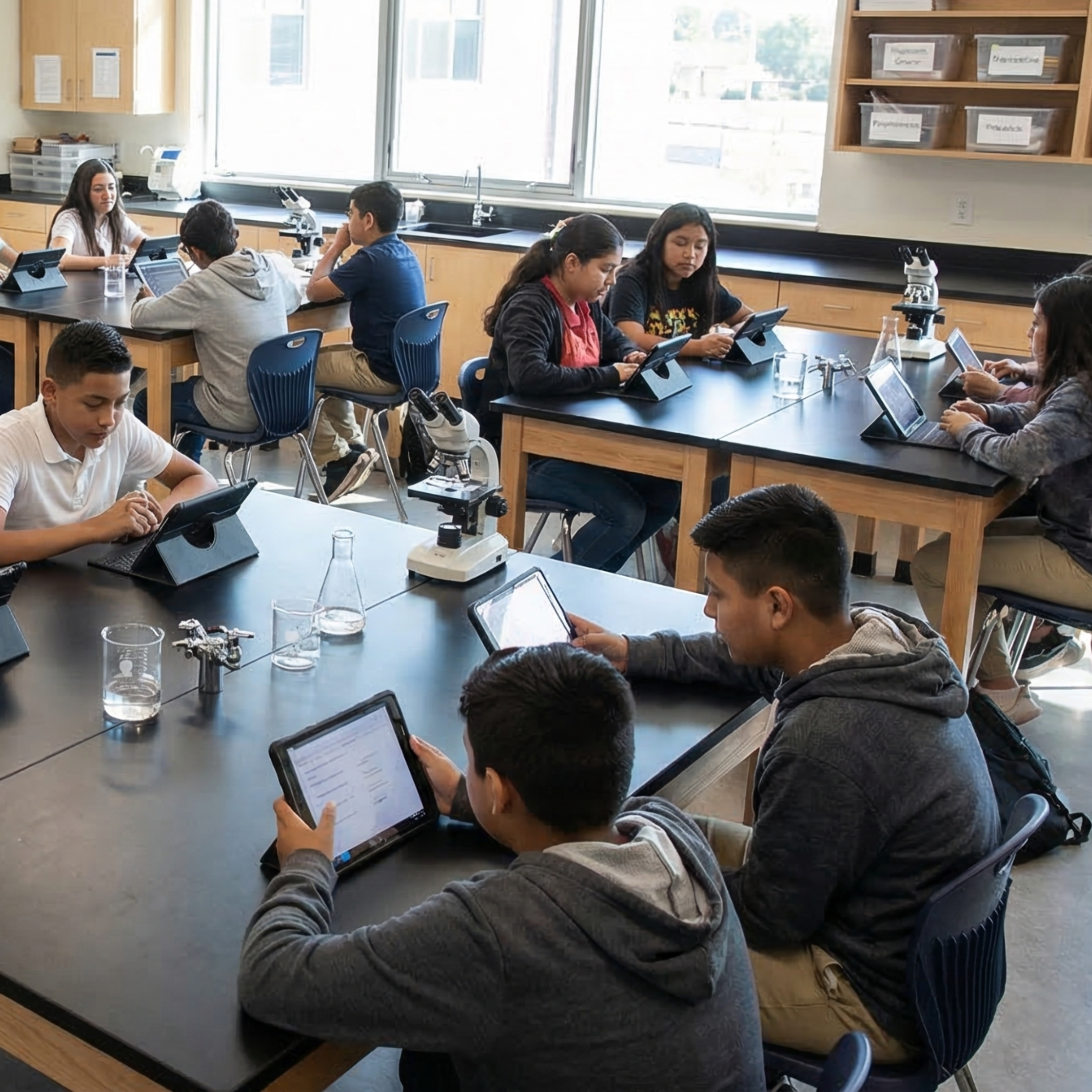
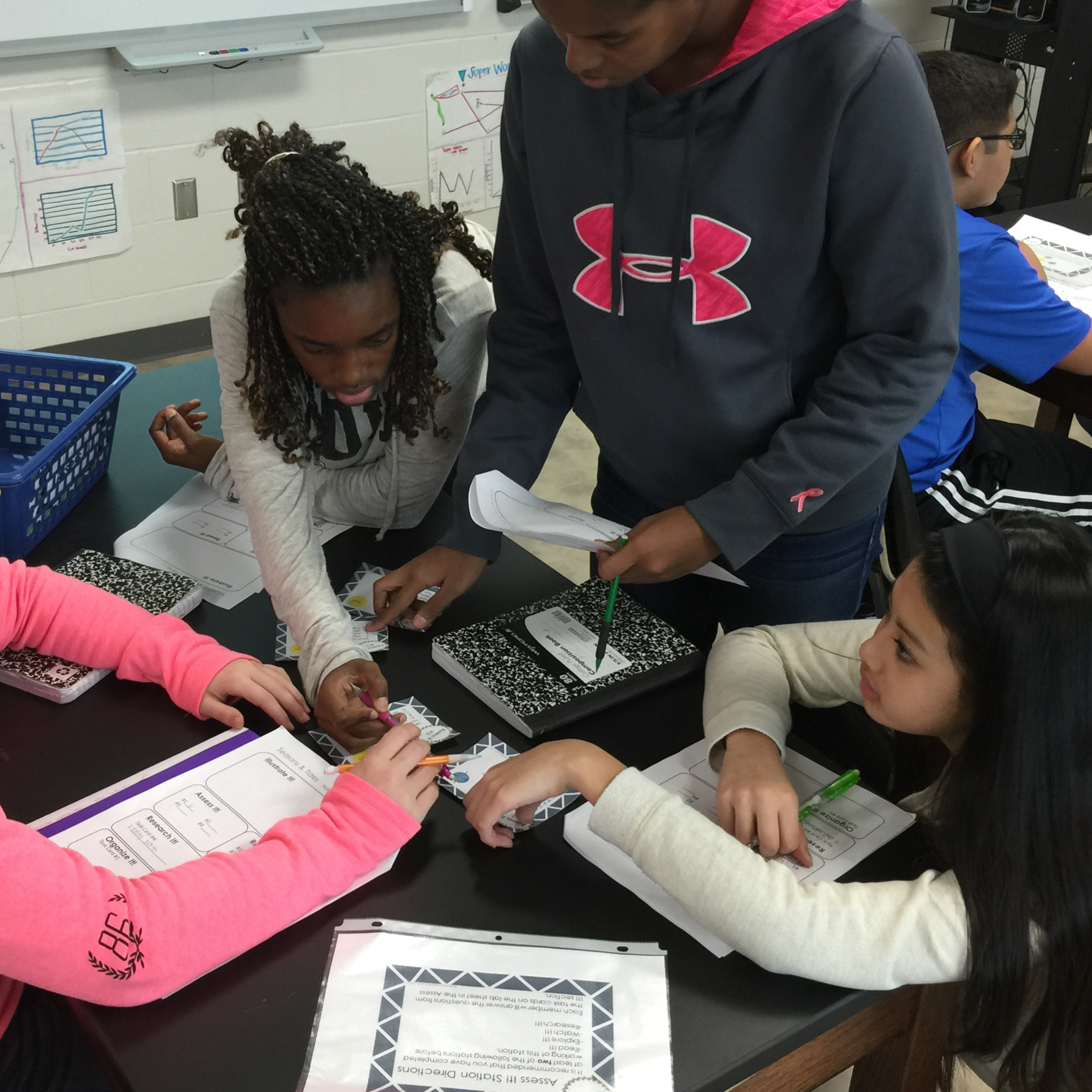
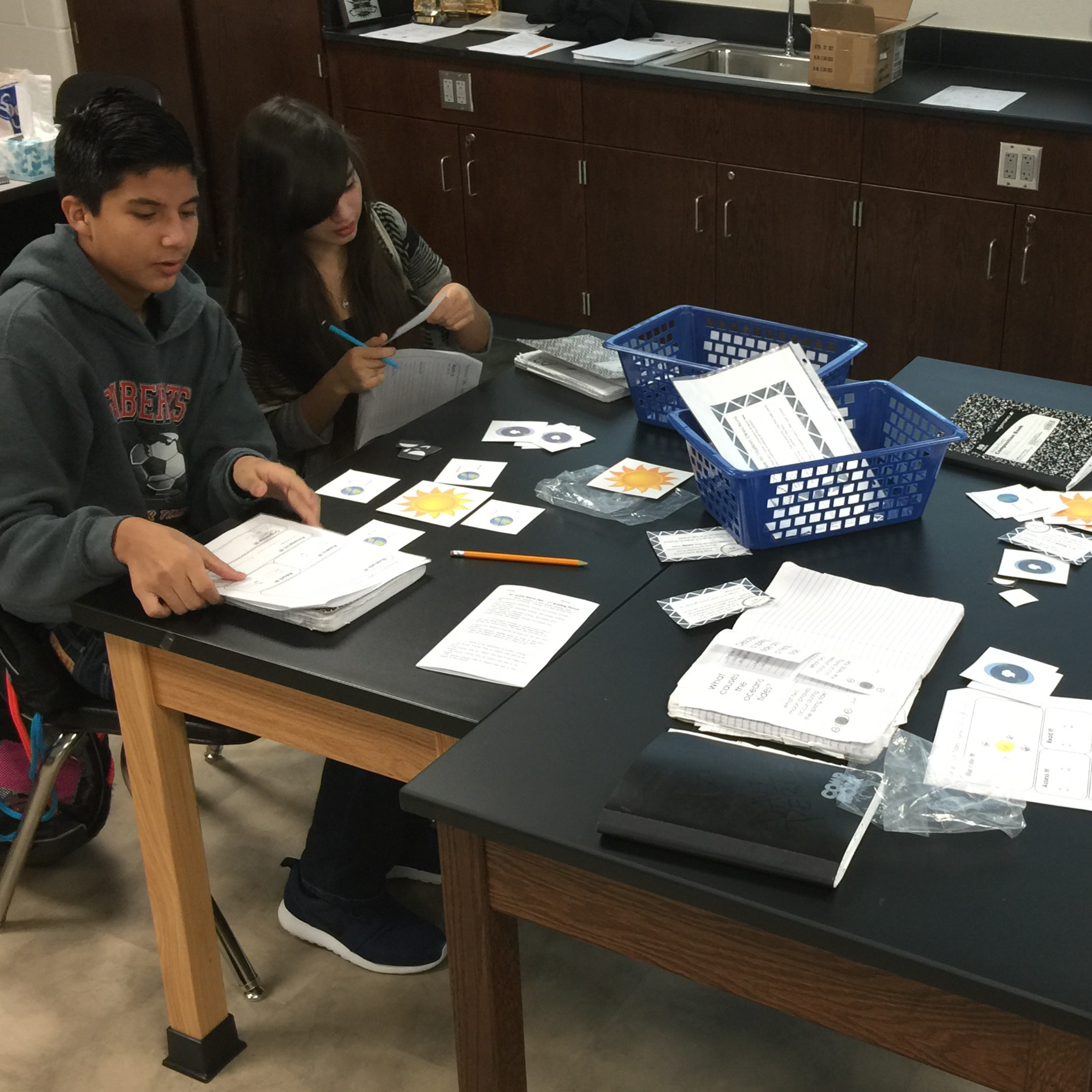
School and district licenses give your teachers access to every resource they need, including station labs, inquiry labs, anchoring phenomena, presentations, escape rooms, and much more. One purchase covers the grade levels you need.
- PO-friendly. We accept purchase orders
- Volume discounts for 11+ teachers
- Complimentary Kesler Science Plus orientation for 4+ teachers
- Three free implementation PD sessions for departments of 11+
- Aligned to the 2024 TEKS standards
See It in Action
Book a walkthrough and we'll show you how Kesler Science fits your campus.
Book Demo CallNo pressure, no hard sell