.png?width=375&height=100&name=WebPage%20logo%20with%20curves%202026%20(8).png)
Sun & Ocean Interactions
"Explain how the Sun and the ocean interact in the water cycle and affect weather;"
💡 What This Standard Actually Means
"Explain". Students explain (in writing, with diagrams, or out loud) how two huge players in the water cycle work together to drive weather. The Sun heats the surface of the ocean. That heat causes ocean water to evaporate into water vapor. The water vapor rises, cools, and condenses into clouds. The clouds eventually drop the water back as precipitation (rain, snow, hail). The water cycle is the engine, and the Sun and ocean are the fuel and the workhorse. The Sun's energy moves the water around. The ocean is where most of the world's water is and where most of the evaporation happens. Together they affect weather everywhere, including in places far from the ocean.
Most of the water on Earth is in the ocean. About 97 percent of it. The Sun pours energy onto the ocean's surface every day, warming the water. When water gets warm enough, some of it turns from liquid into water vapor and rises up into the air. That's evaporation. Up in the sky, the water vapor cools off and turns back into tiny liquid droplets that gather into clouds. That's condensation. When the clouds get heavy enough, the water falls back to Earth as rain, snow, or hail. That's precipitation. The water lands on the ocean again, on land, in lakes, or in rivers, and the whole cycle starts over.
Without the Sun, none of this would happen. The Sun is the energy source that drives the entire water cycle. Without the ocean, there wouldn't be enough water in the system to fuel weather across an entire planet. Together, they keep moving water from the ocean, into the sky, over the land, and back to the ocean.
This cycle is why we have weather. When warm, moist air from the ocean drifts over land and meets cooler air, the moisture condenses into clouds and falls as rain. Hurricanes form over warm ocean water. Snowstorms happen when ocean moisture meets very cold air. Even in a place like Central Texas, the rain falling on the school playground started as ocean water in the Gulf of Mexico, evaporated by the Sun, blown inland by the wind, and dropped on the school as a thunderstorm. The takeaway: the Sun and ocean are working together every day to make our weather happen.
The water cycle in a bag is the demo I'd lean on for this standard every time. Take a quart-size zip-top bag, draw the Sun in the upper corner with a permanent marker, and add an ocean wave at the bottom. Pour in about a half-inch of warm water tinted blue with food coloring, seal the bag, and tape it to a sunny classroom window. Within an hour, you can see drops forming on the inside of the bag at the top, rolling down the sides, and dripping back into the "ocean." That's evaporation, condensation, and precipitation in a sandwich bag. Each kid makes their own. They watch it for a few days, sketch what they see at different times, and label every part. Once they've watched it happen at their desk, they can take any weather event and trace it back to the Sun heating the ocean. The bag does the explaining. You just point at it.
⚠️ Misconceptions Your Students May Have
These are some of the most common misconceptions. Knowing what to look for can help you get ahead of them.
"Rain comes from clouds, but clouds just appear out of nowhere"
Clouds don't come from nowhere. They form from water vapor that evaporated from oceans, lakes, and rivers. The Sun's heat lifts the water up into the sky as invisible vapor. When that vapor cools, it condenses into the tiny droplets that make up clouds. Without evaporation from water on Earth, there would be no clouds and no rain.
"The water cycle only matters near the ocean"
The water cycle drives weather across the entire planet, not just near the ocean. Evaporated ocean water gets carried inland by wind currents and falls as rain or snow on places thousands of miles from the coast. The thunderstorm in Dallas might be made of water that was sitting in the Gulf of Mexico last week. Even mountain snow far from any ocean started as evaporated water from the sea.
"The Sun makes the ocean evaporate completely"
Only a small amount of ocean water evaporates at any time, and it gets replaced by precipitation falling back. The water cycle is a balanced loop. The Sun heats the ocean's surface, evaporates some water, and that water comes back as rain or snow. The ocean stays full because as some water leaves, more water returns. It's been working like this for billions of years.
"Hot weather and rainy weather aren't connected"
Hot weather and rainy weather are deeply connected. Heat from the Sun is what evaporates ocean water in the first place. Warm air can hold more water vapor than cool air, which is why thunderstorms often pop up on hot summer afternoons. The hotter the Sun warms the surface, the more energy goes into the water cycle, the more weather we get. Hurricanes only form over warm ocean water for exactly this reason.
📓 Teaching Resources for 5.10A
These resources are aligned to this standard.


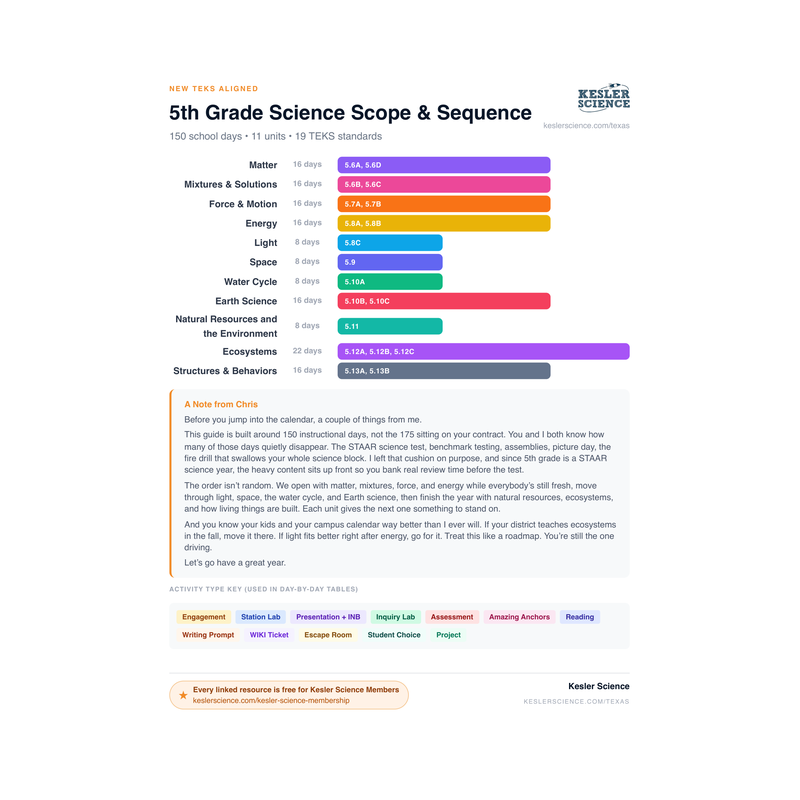
100% Aligned Lessons for Every TEKS You Teach
Kesler Science Plus puts thousands of ready-to-teach lessons and activities in your hands, so you can boost engagement and get your planning time back. Trusted by schools and districts all over the great state of Texas.
🌎 Phenomenon Ideas for 5.10A
Use these real-world phenomena to anchor your lesson. Show students the phenomenon first, let them wonder, then build toward Sun & Ocean Interactions as the explanation.
The Sandwich Bag Water Cycle
A sealed sandwich bag is taped to a sunny classroom window. Inside is a small puddle of blue water with a tiny paper Sun drawn on the top corner of the bag. By the next morning, the bag has tiny droplets clinging to the top half. By the end of the day, those droplets have grown bigger, slid down the sides, and dripped back into the puddle at the bottom. The water has been cycling around inside the closed bag without anyone adding or removing anything.
"How did the water get from the puddle at the bottom of the bag to the drops at the top of the bag, with no one opening the bag? What are the three things that happened to the water inside the bag?"
The Rainstorm in Texas
A weather radar map shows a thunderstorm rolling across Central Texas. The storm dropped two inches of rain on a school playground. None of that water was on the ground in Texas yesterday. None of it was in the clouds. So where was it? Trace the storm back on the radar and the moist air came from the Gulf of Mexico, hundreds of miles to the south, where it was ocean water just days ago. The Sun warmed the Gulf, water evaporated, the wind blew the moist air north, and it rained on the school.
"How did water from the Gulf of Mexico end up falling as rain on a school in Texas? Draw a diagram showing the Sun, the ocean, and the path the water took to reach the playground."
The Cool Glass Mystery
On a hot summer day, a glass of cold lemonade sits on a porch table. After ten minutes, the outside of the glass is wet, with droplets of water rolling down the sides into a small puddle on the table. No one poured water on the glass. The lid is on. The lemonade isn't leaking. So where did the water come from? It was already in the air, even though no one could see it, until it touched the cold glass and condensed into liquid drops.
"Where did the water on the outside of the glass come from? What does this tell you about whether there's water in the air on a hot day, even when it's not raining? How does this connect to how clouds form?"
💡 Free Engagement Ideas for 5.10A
Ready-to-run activities you can drop straight into a lesson. Where one of these looks like a phenomenon from the section above, that is on purpose: show it first as the hook, then let students run it themselves.
Sandwich Bag Water Cycle
Each student gets a quart-size zip-top bag. They draw a Sun in the top corner and ocean waves at the bottom with permanent markers. They pour in a half-inch of warm water tinted with a drop of blue food coloring, seal the bag tightly, and tape it to a sunny window. Over the next two days, they sketch what they see at different times: condensation at the top, water rolling down the sides, the puddle refilling. They label evaporation, condensation, and precipitation on their final sketch.
Cloud in a Jar Demo
Teacher demo, about five minutes. Pour hot water into a clear glass jar to fill the bottom inch and swirl it to warm the sides. Set a metal pie pan with several ice cubes on top and leave it about 30 seconds. Lift the pan, spray one quick burst of aerosol hairspray into the jar, and put the pan straight back. A cloud forms and swirls in the space between the warm water and the cold pan. Hold black paper behind the jar and shine a flashlight in from the side so the whole class can see it. Lift the pan at the end and the cloud rolls out over the rim. Students sketch the jar and label where evaporation happened (the warm water at the bottom), where condensation happened (the cooled air under the pan), and what the hairspray stood in for (the dust and salt particles that real water vapor condenses onto). Let it sit a few minutes longer and drips fall off the underside of the pan, which is your precipitation.
The hairspray is not optional. Water vapor needs a tiny solid particle to condense onto, and classroom air usually does not have enough of them to give you a cloud anyone can see. Without it you get a faint wisp at best. Teacher handles the hot water and the spray: one short burst, away from any flame or hot plate, in a ventilated room, and check first for students with asthma.
Weather Map Tracing
Pull up a weather map of the United States showing a recent storm system. Students trace the storm's path back from where the rain or snow fell to where the moist air came from (usually the Gulf, Pacific, or Atlantic). They draw arrows on a printed map showing the path the water took: ocean evaporation, cloud formation, wind movement, precipitation. Connects the standard to actual weather they can read about.
Cold Glass Condensation Test
Each pair fills a metal can or glass with ice water and lets it sit on the desk for five minutes. They observe and feel the outside of the can. Within minutes, water droplets form on the outside. They sketch the can, label "water vapor in the air" and "liquid water drops on the can," and write a sentence explaining where the water came from. Connects condensation to cloud formation.
🎯 What Approaches, Meets, and Masters Thinking Look Like
Here is what student thinking at each level looks like on this one task, so you know what to look for and how to move a student up.
A class is looking at a rain cloud over their school. The school is far from the ocean. Explain how the Sun and the ocean worked together to make that rain cloud. Use the words evaporation, condensation, and precipitation in your answer.
- The Sun named as the source of energy that warms the water.
- The ocean named as the place where most of the water starts.
- Evaporation: the Sun's heat turns liquid ocean water into water vapor that rises into the sky.
- Condensation: the water vapor cools high up and turns back into tiny droplets that form the cloud.
- Precipitation: the cloud gets heavy and the water falls back down as rain.
- The three steps put in the right order, with the Sun and ocean working together to drive them.
- An explanation that the cloud's water came from the ocean and traveled inland, even though the school is far from the coast. That last link is the easiest one to miss.
The Sun heats things up and makes it hot outside. The cloud is up in the sky and when it gets heavy it rains. That is precipitation. The ocean is far away so it did not really help. The cloud just formed in the sky over our school.
The Sun heats the top of the ocean. The heat makes some of the ocean water turn into water vapor and float up into the sky. That is evaporation. High up the air is cooler, so the vapor cools off and turns back into tiny water droplets that make the cloud. That is condensation. When the cloud gets heavy, the water falls down as rain. That is precipitation. So the Sun gives the energy and the ocean gives the water, and together they made our rain cloud.
The Sun heats the ocean's surface, and that energy makes some ocean water evaporate into water vapor that rises. Up high the air is cooler, so the vapor condenses into tiny droplets and forms a cloud. When the cloud gets heavy, the water falls as precipitation. The Sun is the energy and the ocean is most of the water, so neither one could make weather alone.
Even though our school is far from any ocean, that rain still started in the ocean. The water vapor from the Gulf got blown over the land by the wind, then it cooled and made the cloud above us. So the puddle on our playground is really ocean water that the Sun lifted up and the wind carried all the way here.

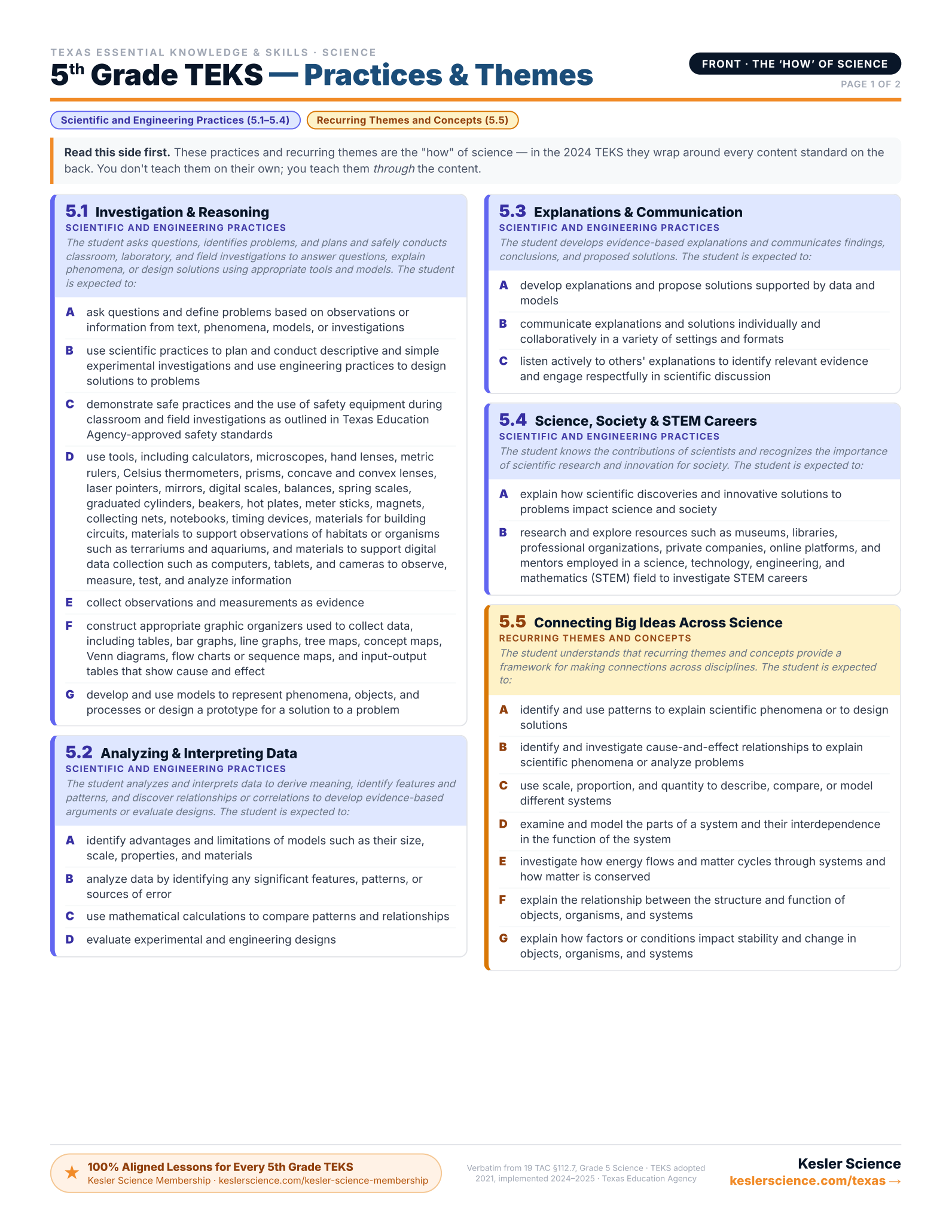
Every 5th-Grade Science TEKS on One Page
The color-coded, front-and-back cheat sheet I wish I'd had — every standard, organized by reporting category. Print it and reference it all year long. This will be your new favorite document!
Trusted Across Texas
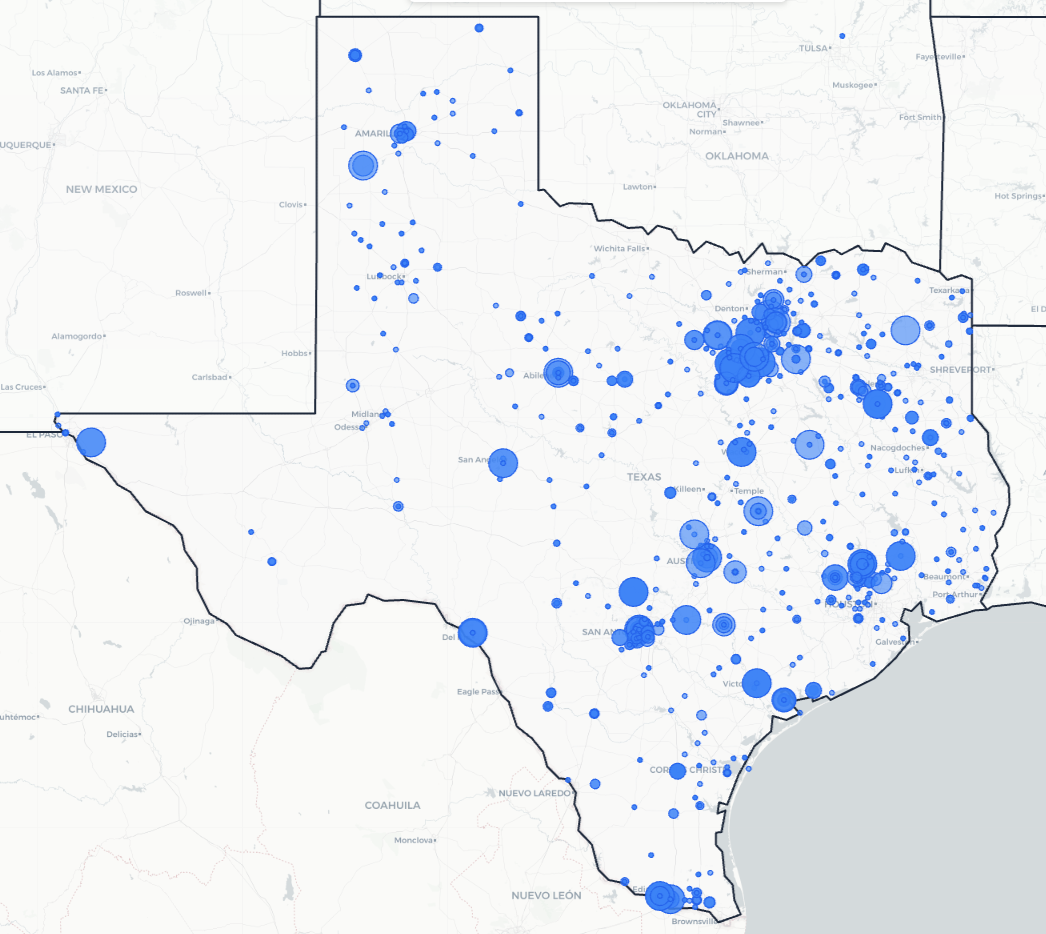
From the Rio Grande Valley to the Panhandle, Texas science teachers are using Kesler Science to save time and engage students.
Texas Schools and Districts
Love Kesler Science
What Teachers Are Saying
Give Your Science Teachers Everything They Need
School and district licenses give your teachers access to every resource they need, including station labs, inquiry labs, anchoring phenomena, presentations, escape rooms, and much more. One purchase covers the grade levels you need.
- PO-friendly. We accept purchase orders
- Volume discounts for 11+ teachers
- Complimentary Kesler Science Plus orientation for 4+ teachers
- Three free implementation PD sessions for departments of 11+
- Aligned to the 2024 TEKS standards
See It in Action
Book a walkthrough and we'll show you how Kesler Science fits your campus.
Book Demo CallNo pressure, no hard sell