.png?width=375&height=100&name=WebPage%20logo%20with%20curves%202026%20(8).png)
Human Activities & Ecosystems
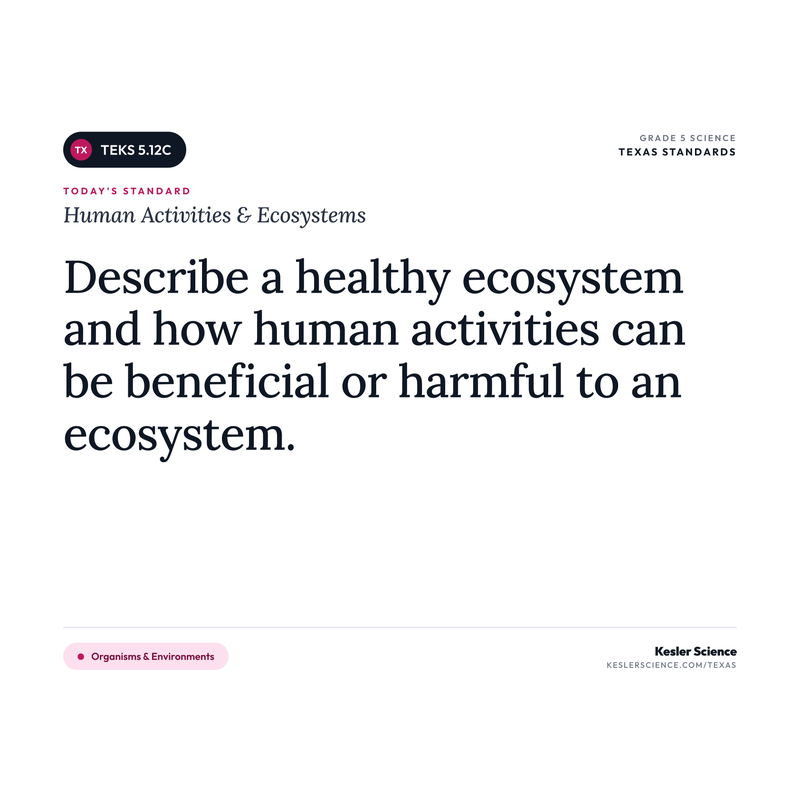
"Describe a healthy ecosystem and how human activities can be beneficial or harmful to an ecosystem."
💡 What This Standard Actually Means
"Describe" two related things. First, what does a healthy ecosystem look like? It has lots of different species (biodiversity), enough resources to go around, balanced food webs, clean air and water, and the ability to bounce back from small disturbances. Second, how can human activities change an ecosystem in ways that are beneficial (helpful) or harmful? Beneficial actions include planting trees, restoring wetlands, cleaning up pollution, protecting endangered species, and creating nature preserves. Harmful actions include deforestation, pollution, urban sprawl, overfishing, and littering. The standard wants kids to recognize both directions: humans can damage ecosystems AND humans can repair and protect them.
A healthy ecosystem is one where lots of different living things (biodiversity) have everything they need to survive. The air is clean. The water is clean. There are enough plants for the plant-eaters and enough animals for the meat-eaters. Decomposers are doing their job to recycle matter back into the soil. The food web is balanced. When something small goes wrong (a small fire, a quick drought, one species dropping in numbers), the ecosystem has enough variety and resources to bounce back.
Human activities can change ecosystems in two directions: beneficial (helpful) or harmful. Harmful activities reduce biodiversity, pollute resources, or remove habitat. When forests get cut down to build neighborhoods, the animals and plants that lived there lose their homes. When factories or cars release pollution into the air, plants and animals get sick. When people throw trash into rivers and oceans, fish and sea creatures suffer. Overhunting, overfishing, and bringing in non-native species can throw whole ecosystems out of balance.
But humans can also help ecosystems. Beneficial activities restore damaged ecosystems and protect healthy ones. Planting trees in a deforested area gives animals a place to live again. Cleaning up trash from a beach or river protects the wildlife. Building wildlife corridors lets animals move safely between habitats. Creating national parks and preserves gives wild places a chance to stay wild. Reducing pollution, recycling, and conserving resources all support healthier ecosystems. The takeaway: kids should be able to look at any human action and ask, "Is this making the ecosystem healthier or weaker?" That habit of mind is the goal.
The move I'd reach for on this one is a "two pictures" exercise. Project two photos of the same place side by side. Photo one is taken before humans built anything: a forest with a stream running through. Photo two is the same spot 50 years later, but now it's a parking lot with a drainage pipe where the stream used to be. As a class, list every change. Trees gone. Stream gone. Animals gone. Pavement instead of soil. Then flip to a third picture: same parking lot, but ten years after a community came in and replanted trees, restored the stream, and turned half the lot into a park. The animals are slowly coming back. Now you've got HARMFUL activities (the parking lot) and BENEFICIAL activities (the restoration) right next to each other in the same spot. Kids walk away with the idea that humans don't just damage ecosystems. We can repair them too. That's the part most lessons forget to teach, and it's the most empowering part for kids.
⚠️ Misconceptions Your Students May Have
These are some of the most common misconceptions. Knowing what to look for can help you get ahead of them.
"Humans can only damage ecosystems, never help them"
Humans can absolutely help ecosystems. Planting trees, cleaning up pollution, removing invasive species, restoring wetlands, and protecting endangered species are all examples of humans making ecosystems healthier. The bald eagle was once nearly extinct, and human conservation efforts brought it back. Yellowstone's wolves came back because humans worked to reintroduce them. Beneficial human activity is just as real as harmful human activity, and kids deserve to know both sides.
"A healthy ecosystem is one with no people in it"
People can be part of a healthy ecosystem. Indigenous communities have lived in ecosystems for thousands of years while keeping the land healthy through careful land management. The question isn't whether humans are present. It's whether human activity is sustainable, balanced, and respectful of the rest of the ecosystem. People AND ecosystems can thrive together when humans are careful.
"Pollution and trash are the only ways humans damage ecosystems"
Pollution and trash are big problems, but they're not the only ones. Cutting down forests for farmland or buildings (deforestation) destroys habitats. Building dams changes how rivers flow. Hunting or fishing too much can wipe out species. Bringing in non-native species can disrupt food webs. Even using too much water for crops can dry up nearby ecosystems. Humans affect ecosystems in lots of ways beyond just pollution.
"Once an ecosystem is damaged, it's ruined forever"
Ecosystems can recover, especially with help. After Mount St. Helens erupted in 1980, scientists thought the area would take centuries to recover. Within a few years, plants and animals were already returning. Damaged forests can be replanted. Polluted rivers can be cleaned. Endangered species can be protected and grow in numbers again. Recovery takes time, but it's possible. That's exactly why beneficial human activities matter.
📓 Teaching Resources for 5.12C
These resources are aligned to this standard.


100% Aligned Lessons for Every TEKS You Teach
Kesler Science Plus puts thousands of ready-to-teach lessons and activities in your hands, so you can boost engagement and get your planning time back. Trusted by schools and districts all over the great state of Texas.
🌎 Phenomenon Ideas for 5.12C
Use these real-world phenomena to anchor your lesson. Show students the phenomenon first, let them wonder, then build toward Human Activities & Ecosystems as the explanation.
Two Pictures of the Same Place
A teacher projects two photographs of the same Texas creek bed, taken 60 years apart. The first picture shows a clean, flowing creek with trees on both sides, fish visible in the shallow water, and birds nesting in the branches. The second picture, from today, shows the same creek choked with plastic bottles, fast food wrappers, and runoff from a nearby parking lot. The water is murky. The trees are gone. There are no fish or birds visible. Same spot, two completely different ecosystems.
"What changed between the two pictures? Which changes were caused by human activities? What could humans do to help this creek become healthier again?"
The Comeback of the Bald Eagle
In the 1960s, there were fewer than 500 nesting pairs of bald eagles in the entire lower 48 states. The chemical DDT (used as a pesticide on crops) was making their eggshells too thin to hatch. The eagles were close to extinction. Then humans took action: DDT was banned, eagles were protected by law, and people built artificial nesting platforms in safe areas. Today, there are an estimated 316,000 bald eagles in the lower 48 states, including more than 71,000 breeding pairs, and the species is no longer endangered. The same humans who almost wiped them out are why they're back.
"What human activities harmed the bald eagle population? What human activities helped them recover? What does this tell you about the role humans can play in ecosystems?"
The Schoolyard Garden Project
Five years ago, the back corner of a school playground was a patch of dead grass with a few empty cans and broken glass scattered around. Then a 5th-grade class decided to make it a butterfly garden. They cleaned out the trash, dug up the dirt, planted native wildflowers, and built a little stone path. Now, five years later, the same spot is full of monarch butterflies, bees, ladybugs, and birds. Insects come to feed. Animals come to drink from the small bird bath. A whole little ecosystem grew in a place that used to be lifeless.
"What was the schoolyard ecosystem like before the kids planted the garden? What did the students change to make the area healthier? List five different living things that probably came back because of their work."
💡 Free Engagement Ideas for 5.12C
Ready-to-run activities you can drop straight into a lesson. Where one of these looks like a phenomenon from the section above, that is on purpose: show it first as the hook, then let students run it themselves.
Healthy Ecosystem Checklist
Each group gets a printed photograph of an ecosystem (a forest, a pond, a meadow, a coral reef). They use a checklist to evaluate whether the ecosystem looks healthy: variety of species, clean water, clean air, food sources, evidence of decomposers, balance of producers and consumers. They give the ecosystem a "health score" and write a paragraph defending their score with evidence from the photo.
Beneficial vs. Harmful Sort
Print 20 cards, each describing a human activity (planting trees, dumping oil, building a bird sanctuary, cutting down forests, recycling, littering, using too much water, restoring wetlands, etc.). Students sort cards into "Beneficial" or "Harmful" piles and explain their reasoning. Discussion catches gray areas: a dam can both create habitat for some species and destroy it for others. Helps kids see the standard isn't black and white.
Restore-the-Ecosystem Challenge
Each group is given a "before" picture of a damaged ecosystem (a polluted river, a clear-cut forest, a trash-filled beach). Their challenge is to design a recovery plan: what would they do to restore the ecosystem? They sketch a "after" picture showing the recovered area, list five specific actions they'd take, and explain how each action helps. Reinforces the beneficial side of the standard.
Schoolyard Action Survey
Take students outside and ask them to identify two things at the school that are HELPING the local ecosystem (trees, gardens, recycling bins, bird houses, native plants) and two things that are HARMING it (litter, parking lot runoff, lack of trees, idling cars). They write up their observations and propose one beneficial change the school could make. Real-world application of the standard.
🎯 What Approaches, Meets, and Masters Thinking Look Like
Here is what student thinking at each level looks like on this one task, so you know what to look for and how to move a student up.
A pond near a town has trash floating in it, very few fish, and no plants growing along the edge. People want to fix it. List two things people could do to make this pond a healthier ecosystem. Then explain how each thing would help the living things in the pond.
- At least two clear actions people could take to help the pond (for example, picking up the trash, planting plants, or stopping pollution from getting in).
- The actions are beneficial (helpful) human activities, not harmful ones.
- An explanation for each action that connects it to the living things, not just "it makes the pond clean."
- Some sign they understand a healthy ecosystem: clean water, more kinds of living things, plants and animals that have what they need.
- They name something the fish or other living things would get back (food, oxygen, a safe place to live).
- The biggest thing to watch: do they see that people can help the pond, not only hurt it? That is the part that takes real reasoning.
People made this pond bad. They threw trash in it and that is why the fish are gone. People always mess up nature and hurt the animals. The pond is ruined now because of what people did to it.
One thing people could do is clean all the trash out of the pond. That would make the water cleaner so the fish do not get sick and can live there again. Another thing is to plant plants along the edge of the pond. The plants give the animals food and a place to hide. With clean water and more plants, more kinds of living things could come back to the pond and it would be a healthier ecosystem.
People could clean the trash out of the pond and plant plants along the edge. The trash is bad because it dirties the water and the fish breathe that water, so cleaning it lets the fish stay healthy. The plants matter even more than they look. They give small animals a place to hide and food to eat, and when small animals come back, bigger animals have something to eat too. So one change helps the whole food web, not just one animal.
This is the same idea for any place people hurt. If a forest gets cut down, people can plant trees again so the birds and squirrels get their homes back. The land is not ruined forever. People can repair an ecosystem the same way they can damage it.
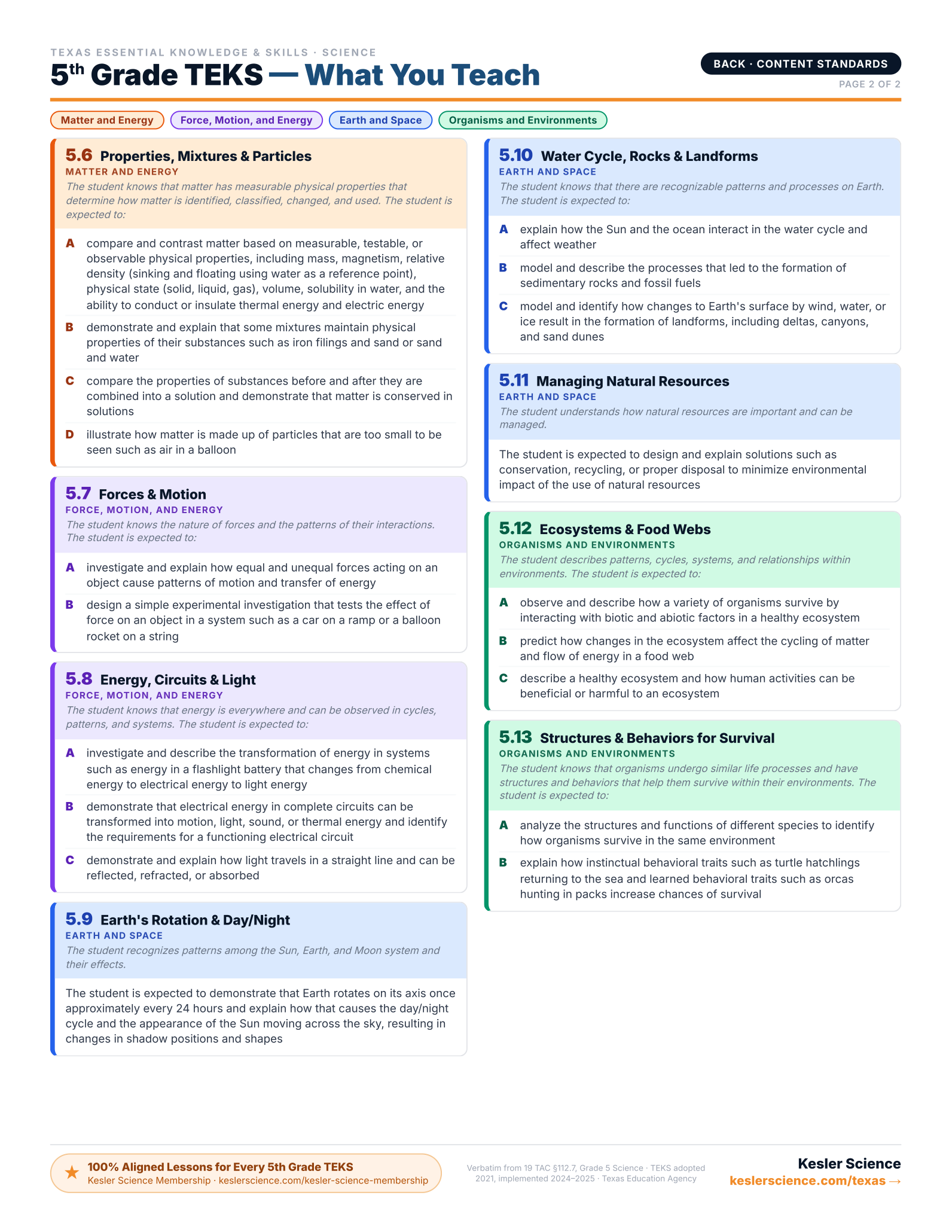
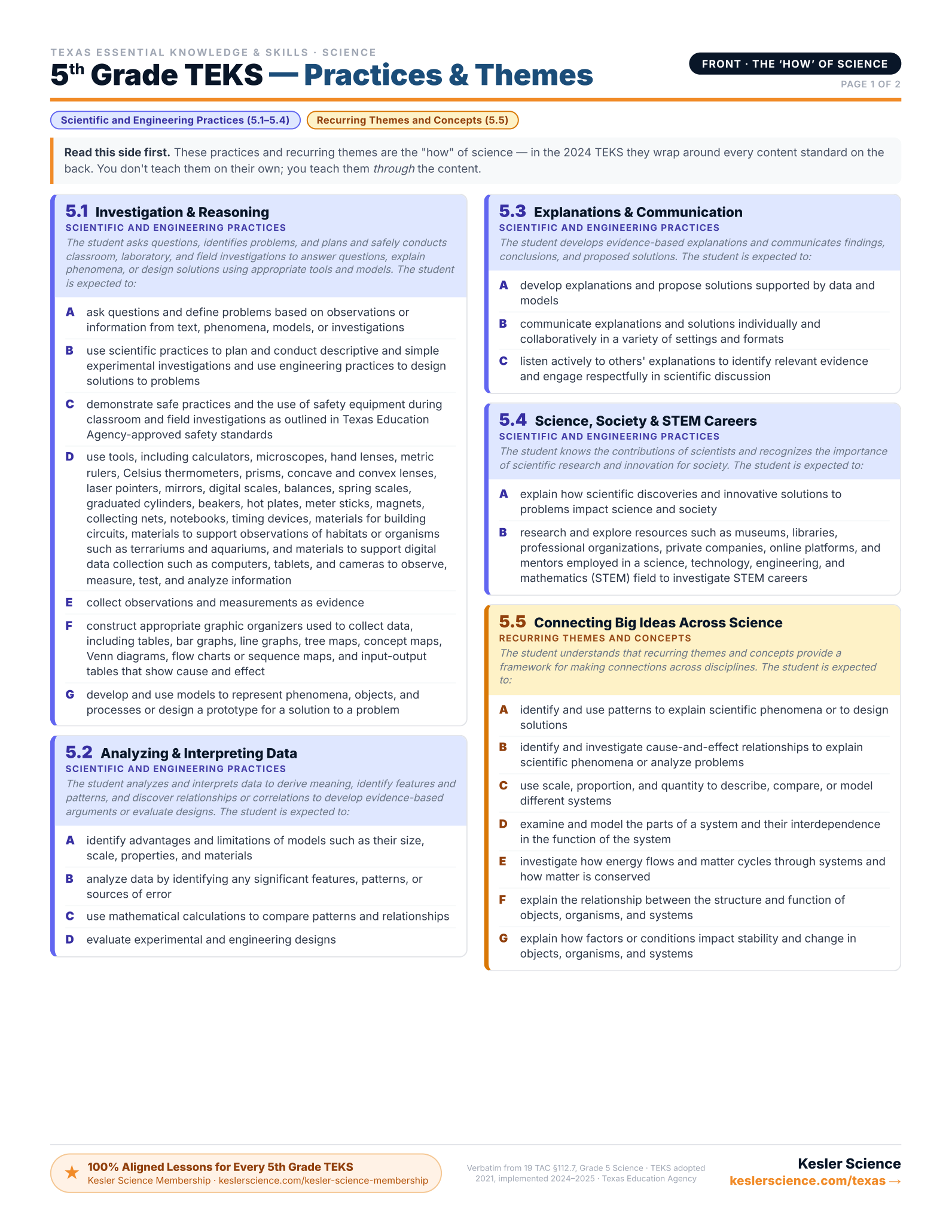
Every 5th-Grade Science TEKS on One Page
The color-coded, front-and-back cheat sheet I wish I'd had — every standard, organized by reporting category. Print it and reference it all year long. This will be your new favorite document!
Trusted Across Texas
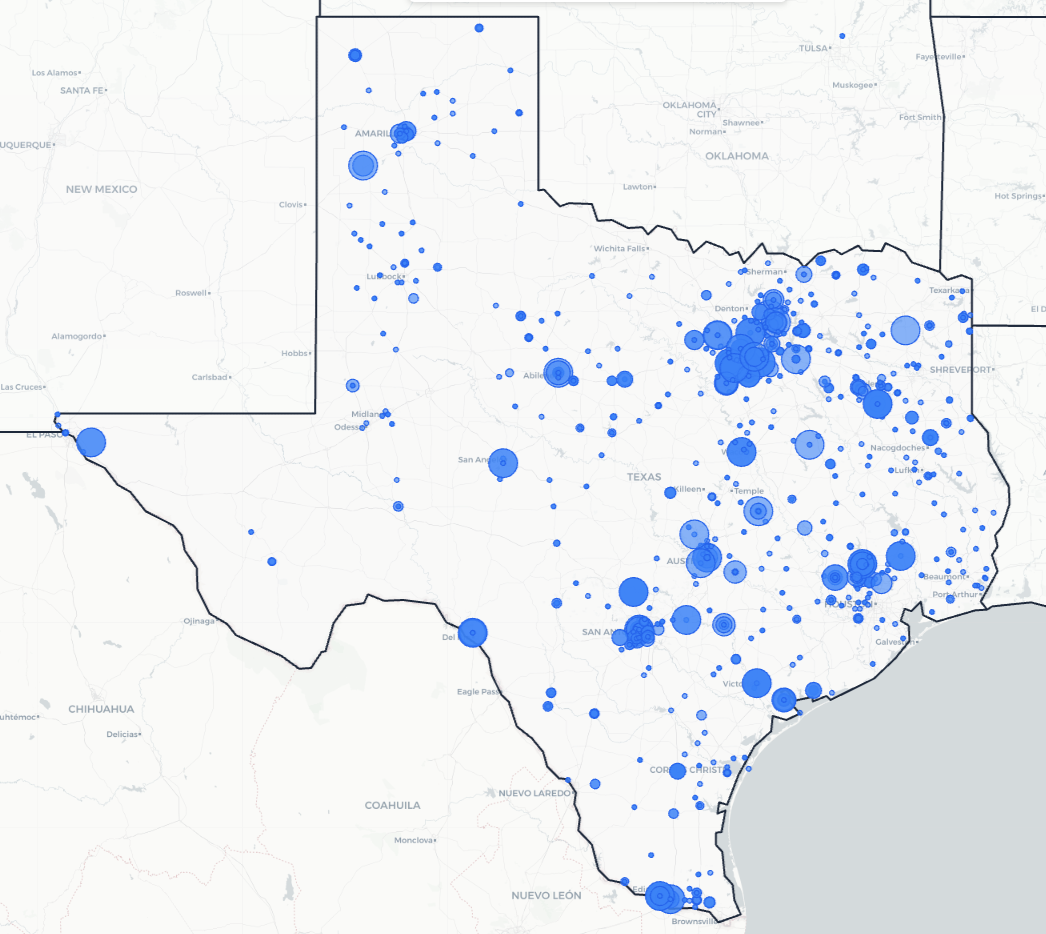
From the Rio Grande Valley to the Panhandle, Texas science teachers are using Kesler Science to save time and engage students.
Texas Schools and Districts
Love Kesler Science
What Teachers Are Saying
Give Your Science Teachers Everything They Need
School and district licenses give your teachers access to every resource they need, including station labs, inquiry labs, anchoring phenomena, presentations, escape rooms, and much more. One purchase covers the grade levels you need.
- PO-friendly. We accept purchase orders
- Volume discounts for 11+ teachers
- Complimentary Kesler Science Plus orientation for 4+ teachers
- Three free implementation PD sessions for departments of 11+
- Aligned to the 2024 TEKS standards
See It in Action
Book a walkthrough and we'll show you how Kesler Science fits your campus.
Book Demo CallNo pressure, no hard sell