.png?width=375&height=100&name=WebPage%20logo%20with%20curves%202026%20(8).png)
Properties of Mixtures
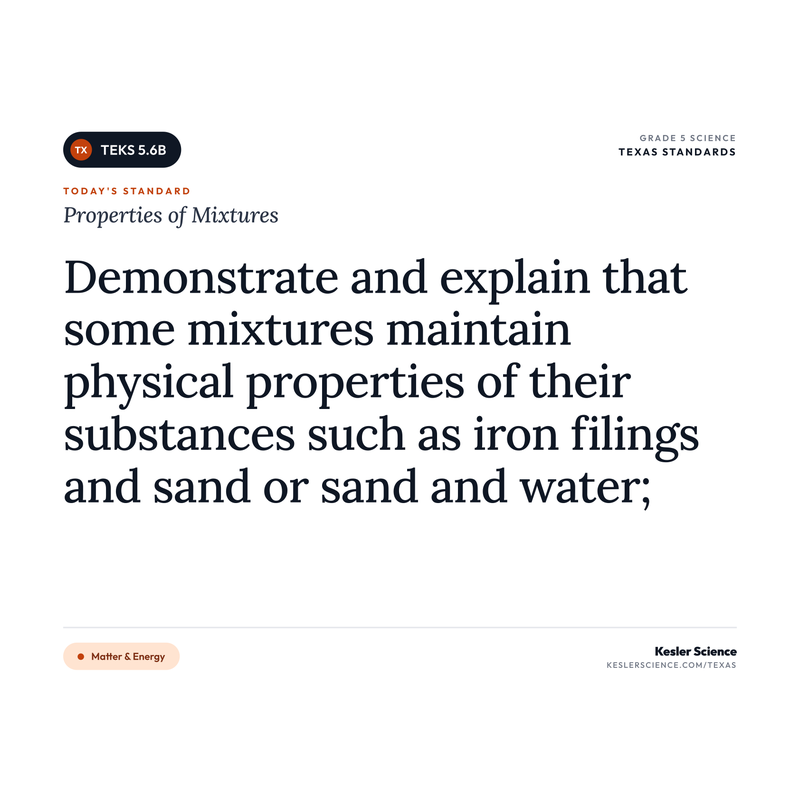
"Demonstrate and explain that some mixtures maintain physical properties of their substances such as iron filings and sand or sand and water;"
💡 What This Standard Actually Means
"Demonstrate and explain". Students aren't just defining a mixture. They're combining two substances, watching what happens, and explaining why each substance still has its own properties after the mixing. The standard's "such as" examples lock in exactly the kind of mixing kids should see: iron filings and sand (the iron is still magnetic) and sand and water (the sand still settles to the bottom). The big idea is that when these substances are mixed, the iron is still iron, the sand is still sand, and the water is still water. Nothing changed about the substances themselves. That's why a magnet can still pull the iron out and a strainer can still separate the sand from the water.
Mixing two things together doesn't always change what those things are. Stir iron filings into a pile of sand and you've got a gritty gray mess, but the iron filings are still iron filings. Run a magnet over the pile and the iron leaps out, leaving the sand behind. The mixing didn't change either substance. They were both still themselves the whole time.
That's the big idea of this standard. Some mixtures maintain the physical properties of their substances. The iron is still magnetic. The sand still feels gritty. Pour sand into water and the sand still sinks to the bottom. The water is still wet. Neither one became something new. Because each substance keeps its properties, you can use those properties to separate the mixture back out. A magnet pulls iron out of sand. A strainer or filter pulls sand out of water. Letting the water evaporate leaves the sand sitting in the bottom of the pan.
The takeaway for kids is this: when you mix two substances and they each keep their own properties, you've made a mixture, and you can almost always pull them apart again using those same properties. That's a different idea from a chemical change, where two substances combine into something brand new that you can't easily get back.
Iron filings and sand is the demo I'd lead with on this standard. Dump a small pile on a paper plate at the front of the room and stir it together with a craft stick. Looks like one gross gray mixture. Then take a magnet wrapped in a sandwich bag, hold it just above the pile, and the iron filings jump up to the bag like they were waiting for permission. The sand sits there. Kids gasp every time. Pull the bag off, peel it inside-out, and the iron filings drop into a clean cup. The sand never moved. It was still sand. The iron was still iron. That one demo does more than a week of definitions. After they see it, the question "is this still iron?" answers itself.
⚠️ Misconceptions Your Students May Have
These are some of the most common misconceptions. Knowing what to look for can help you get ahead of them.
"When you mix two things, they both change into something new"
In a mixture, the substances stay exactly what they were. The iron filings are still iron filings after they're mixed with sand. The sand is still sand. Nothing turned into anything new. That's the whole point of calling it a mixture instead of a chemical reaction. Show this by separating the mixture back out and letting kids hold the original ingredients in their hands again.
"Once it's mixed, you can't get it back apart"
Because each substance still has its own properties, you can usually separate them. Iron filings are magnetic, so a magnet pulls them out of the sand. Sand sinks in water, so a coffee filter or letting the water evaporate brings the sand back. The same property that makes each substance different is the tool you use to undo the mix.
"If a mixture looks like one thing, the substances must have combined into one thing"
Looking like one thing doesn't mean it is one thing. Iron filings and black sand might look like the same gray pile. But run a magnet over it and the iron jumps out and proves it never stopped being iron. The eye can be fooled. The properties tell the truth. Always test before you decide.
"Sand dissolves in water"
Sand does not dissolve in water. Stir it as much as you want and the sand still settles to the bottom as soon as you stop. That's because sand and water is a mixture where the sand keeps its property of sinking and the water keeps being wet. Salt dissolves in water (different standard, 5.6C), but sand stays sand. Watch a glass of sandy water sit on the counter for two minutes and the proof is right there.
📓 Teaching Resources for 5.6B
These resources are aligned to this standard.


100% Aligned Lessons for Every TEKS You Teach
Kesler Science Plus puts thousands of ready-to-teach lessons and activities in your hands, so you can boost engagement and get your planning time back. Trusted by schools and districts all over the great state of Texas.
🌎 Phenomenon Ideas for 5.6B
Use these real-world phenomena to anchor your lesson. Show students the phenomenon first, let them wonder, then build toward Properties of Mixtures as the explanation.
The Magnet Trick
A small pile of iron filings is mixed thoroughly into a cup of sand. The two look almost identical. Stir them with a stick and you can't tell where one ends and the other begins. Wave a magnet a few inches above the pile and the iron filings leap up out of the sand and stick to the magnet. The sand stays put. The same magnet, swept again, pulls out a few more iron filings each pass.
"How did the iron know to jump to the magnet when it was mixed in with so much sand? What does that tell you about whether the iron really 'mixed in' with the sand or if it was still being itself the whole time?"
Sand in the Bottom of the Glass
Stir a big spoonful of sand into a clear cup of water. While you're stirring, the sand swirls around and the water turns cloudy. Stop stirring. Watch what happens over the next sixty seconds. The sand drifts down and settles into a flat layer on the bottom. The water clears up to almost normal. Tip the cup carefully and you can pour out clear water from the top while the sand stays behind.
"If sand and water made a brand-new substance, would the sand still sit in the bottom by itself? What property of the sand and what property of the water are still showing up after they got mixed?"
Trail Mix Sort
Pour a small bag of trail mix onto a paper plate: peanuts, raisins, M&M's, sunflower seeds, and pretzels all jumbled together. The whole bag has been shaken for hours, but the M&M's are still M&M's. The raisins are still raisins. With a little time, you can pull each ingredient back out one at a time. Nothing in the bag turned into anything else just because they were sitting next to each other.
"Why is it so easy to pick the M&M's out of the trail mix? How is that the same as iron filings being pulled out of sand? What does it tell you about what happens when substances are mixed but not chemically changed?"
💡 Free Engagement Ideas for 5.6B
Ready-to-run activities you can drop straight into a lesson. Where one of these looks like a phenomenon from the section above, that is on purpose: show it first as the hook, then let students run it themselves.
Iron Filings & Sand Magnet Demo
Each group gets a paper plate, a small pile of pre-mixed sand and iron filings, and a magnet wrapped inside a sandwich bag. They sketch the mixed pile, sweep the magnet across the pile, sketch the iron filings jumping into the bag, and then peel the bag off to drop the iron back into a separate cup. They write a one-sentence explanation of why the magnet worked. The sandwich bag wrap makes cleanup easy.
Sand & Water Filtering Station
Each group mixes a spoonful of sand into a clear cup of water and stirs hard. They watch it settle. Then they pour the cloudy water through a coffee filter set in a funnel into a second cup. The sand collects on the filter. The water that drips through is mostly clear. Compare the cup of clear water to the gritty sand on the filter. Both substances still exist. They were just held apart by the filter.
Mixture Separation Challenge
Each group gets a small zip-top bag containing salt, sand, and iron filings all mixed together. The challenge: separate the three ingredients into three labeled cups using whatever tools they want from a supply table (magnet, water, coffee filter, evaporation dish, hand lens). Strategy is the magic. Pull the iron out first with the magnet, then dissolve the salt in water, filter out the sand, and let the salt water evaporate to recover the salt. They write up their step-by-step plan and which property they used at each step.
Trail Mix Property Sort
Hand each pair a small portion of trail mix on a plate. They sort the ingredients into separate piles and then write down which property they used to identify each one (color, shape, size, texture). It's a low-stakes way to introduce the idea that even when substances are mixed, you can still spot each one because they each kept their own properties. Eat the trail mix at the end, of course.
🎯 What Approaches, Meets, and Masters Thinking Look Like
Here is what student thinking at each level looks like on this one task, so you know what to look for and how to move a student up.
A student stirs iron filings (tiny bits of iron) into a cup of sand until it looks like one gray pile. Then the student slides a magnet across the top of the pile. Explain what happens to the iron filings, and explain why it happens.
- A clear statement that the magnet pulls the iron filings out of the sand.
- The word mixture used correctly for the iron and sand together.
- A reason that connects to a property: iron is magnetic, so the magnet grabs it.
- The idea that the sand stays behind because sand is not magnetic.
- A statement that the iron is still iron and the sand is still sand after mixing. Nothing turned into something new.
- The reason the magnet can separate them: each substance kept its own property, so that property is the tool that pulls them apart.
- That the pile looking like one thing does not mean it became one thing. That is the easiest place to slip.
The magnet picks up the iron filings. They come up out of the sand and stick to the magnet. When you mix the iron and the sand together they both turn into one new gray stuff, so now it is all the same thing.
The magnet pulls the iron filings out of the sand. The sand stays in the cup. This works because iron is magnetic and sand is not magnetic. The iron and sand are a mixture, so they did not change. The iron is still iron and the sand is still sand. The iron still has its property of being magnetic, so the magnet can grab it and leave the sand behind.
The magnet pulls the iron filings out and the sand stays behind. This works because the iron and sand are just mixed together, not changed. The iron kept its property of being magnetic and the sand kept its property of not being magnetic. In a mixture each substance stays itself, so the property that makes it different is the same tool you use to pull it back apart.
That is how I could separate sand and water too. The sand is not magnetic, so a magnet would not help. But sand keeps its property of sinking and water keeps being a liquid. So I could pour the sandy water through a coffee filter, or let the water sit until the sand settles, and the sand comes back out. Same idea, different property.
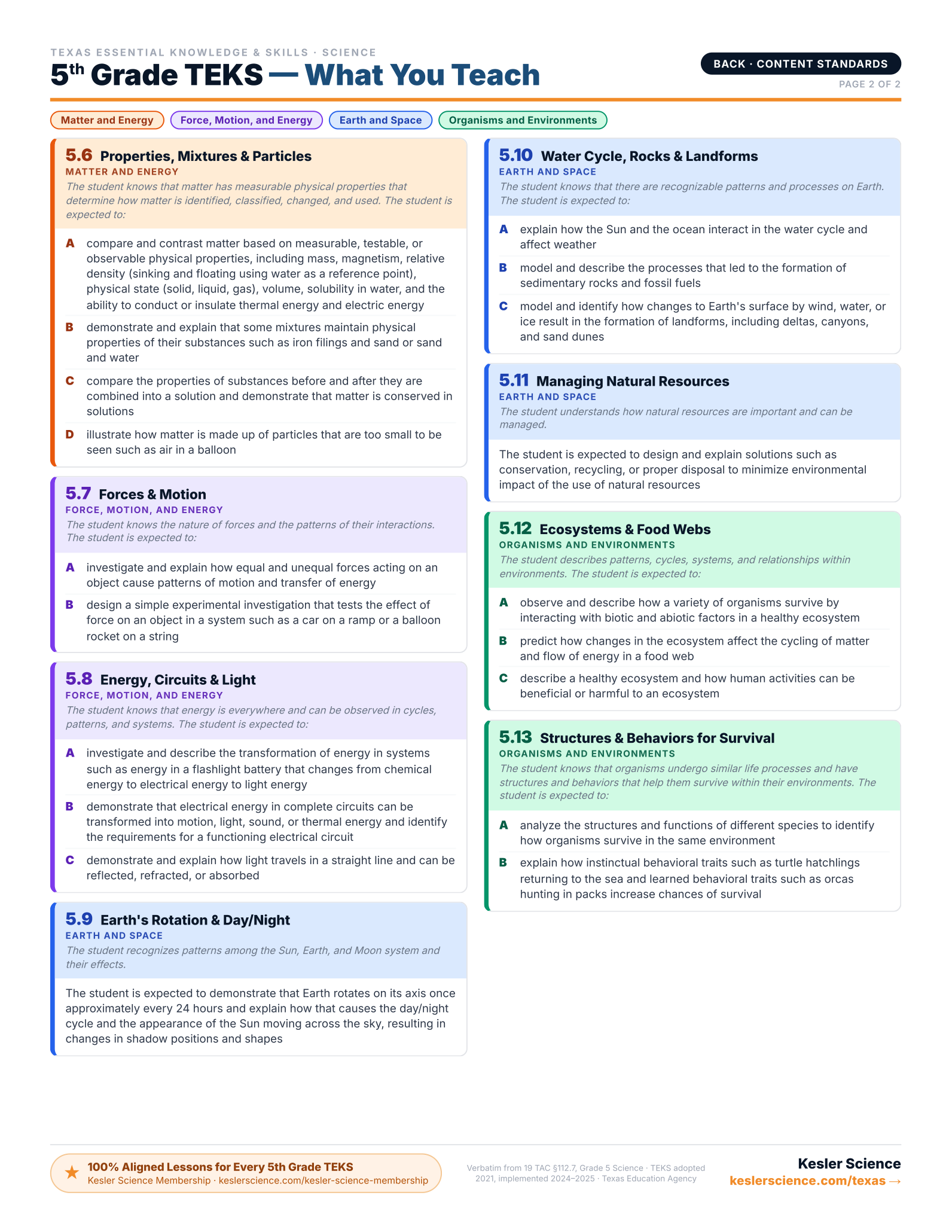
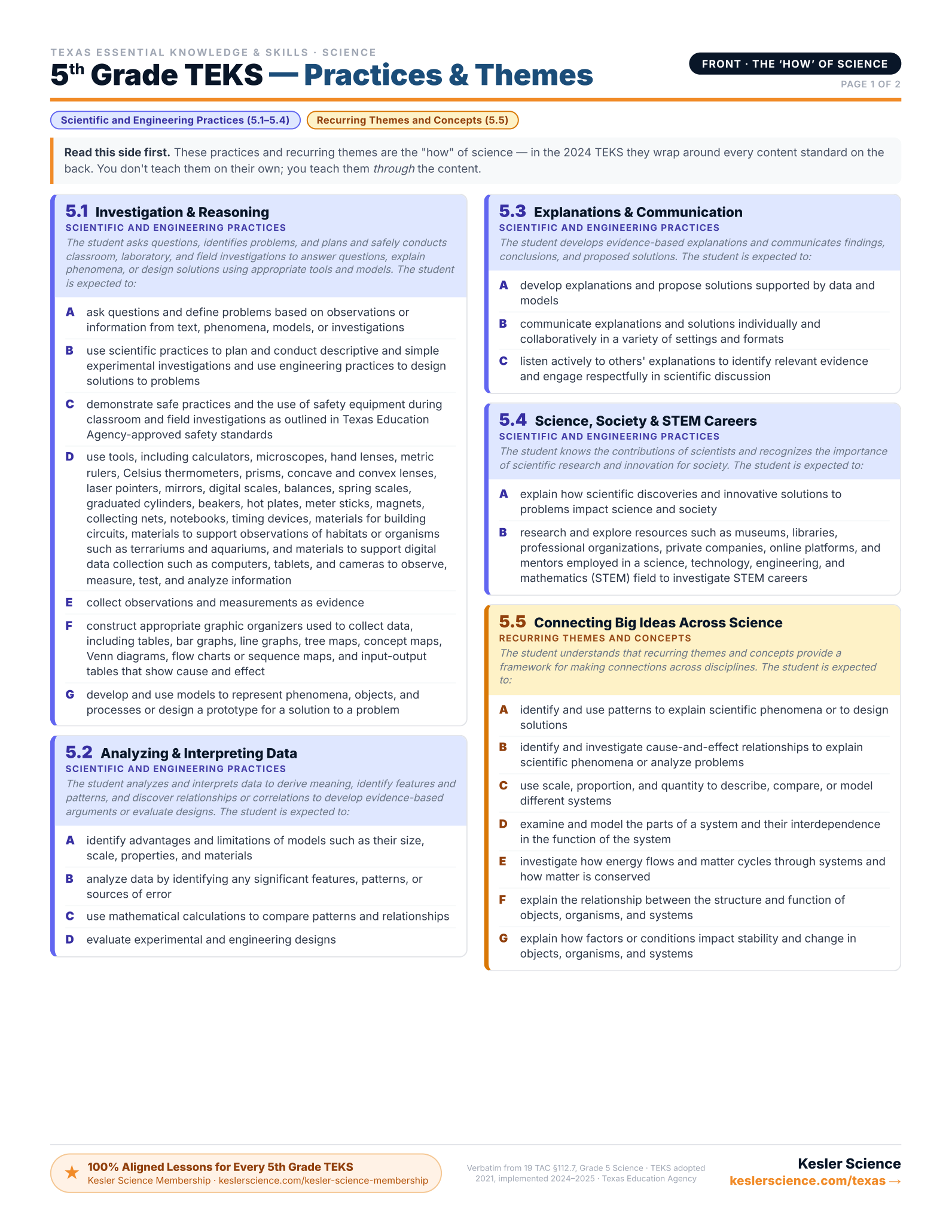
Every 5th-Grade Science TEKS on One Page
The color-coded, front-and-back cheat sheet I wish I'd had — every standard, organized by reporting category. Print it and reference it all year long. This will be your new favorite document!
Trusted Across Texas
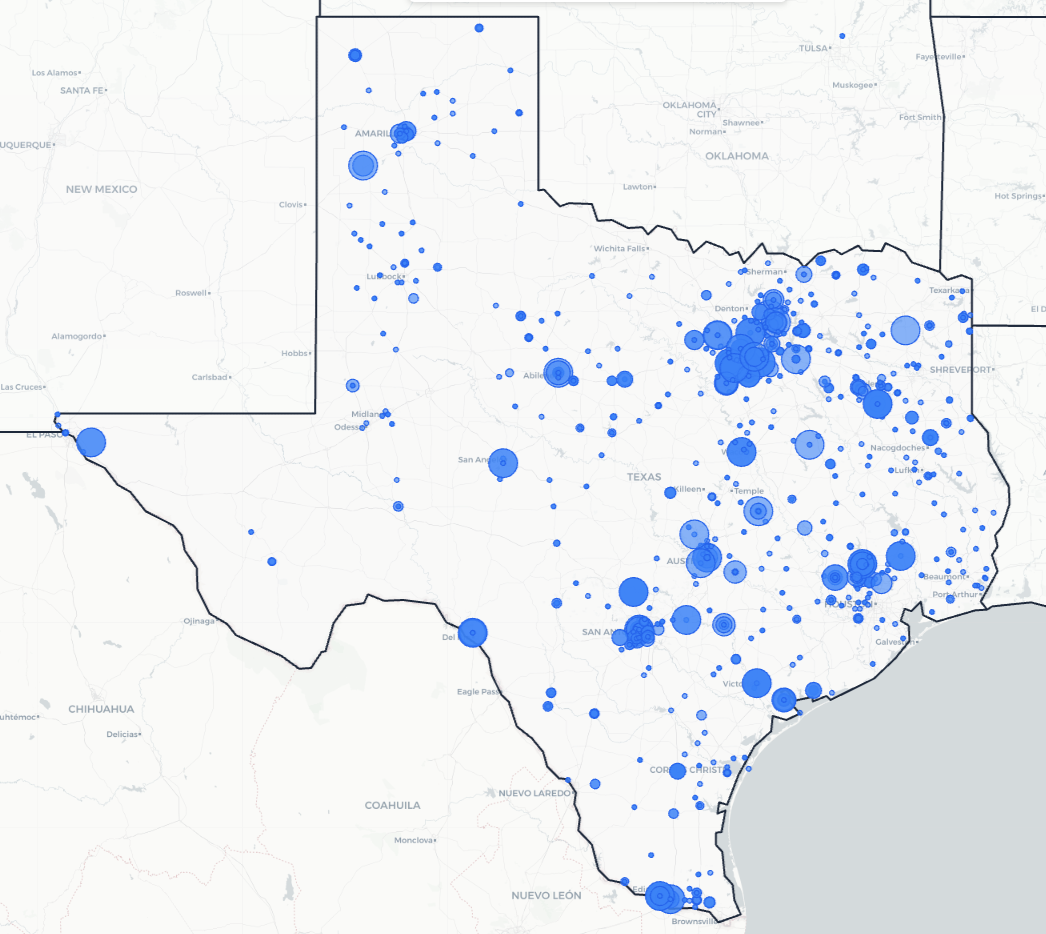
From the Rio Grande Valley to the Panhandle, Texas science teachers are using Kesler Science to save time and engage students.
Texas Schools and Districts
Love Kesler Science
What Teachers Are Saying
Give Your Science Teachers Everything They Need
School and district licenses give your teachers access to every resource they need, including station labs, inquiry labs, anchoring phenomena, presentations, escape rooms, and much more. One purchase covers the grade levels you need.
- PO-friendly. We accept purchase orders
- Volume discounts for 11+ teachers
- Complimentary Kesler Science Plus orientation for 4+ teachers
- Three free implementation PD sessions for departments of 11+
- Aligned to the 2024 TEKS standards

See It in Action
Book a walkthrough and we'll show you how Kesler Science fits your campus.
Book Demo CallNo pressure, no hard sell