.png?width=375&height=100&name=WebPage%20logo%20with%20curves%202026%20(8).png)
Properties of Water
"Describe the properties of cohesion, adhesion, and surface tension in water and relate to observable phenomena such as the formation of droplets, transport in plants, and insects walking on water."
💡 What This Standard Actually Means
"Describe" and "relate". Students describe three specific properties of water and connect them to things they can actually see happening. The standard's "such as" list signals where to focus your students: cohesion, adhesion, and surface tension, related to the formation of droplets, transport in plants, and insects walking on water. Students should be able to define each property and tie it to a concrete observable phenomenon. Instruction can take many forms, such as quick demos, labeled diagrams, observation journals, and property-to-example matching.
Water seems ordinary until you look closely at how it behaves. Drop a bead of water on a waxed car and it pulls itself into a tight little dome. Place a paper towel into a puddle and the water climbs up the towel against gravity. Set a needle gently on a glass of water and it can sit on top without sinking. None of those things would happen with most other liquids. Three properties of water are doing the heavy lifting: cohesion, adhesion, and surface tension.
Cohesion is water sticking to itself. Water molecules are attracted to each other, which is why a drop of water pulls into a rounded shape instead of spreading out flat. Adhesion is water sticking to other substances. That's why water climbs up a paper towel, soaks into a sponge, or rises through the tiny tubes (xylem) inside a plant stem. Surface tension is what cohesion looks like at the surface of a body of water. The molecules at the top are pulled inward by the molecules beside and below them, which creates a thin "skin" that's strong enough to hold up a water strider or let you fit 30 drops on top of a penny before it spills.
The core understanding students should walk away with is that these three properties are why droplets form into beads, how water gets from a tree's roots to its leaves, and how some insects can walk across a pond. Cohesion, adhesion, and surface tension are the simple ideas behind a lot of everyday things students have already seen.
This standard is a gift because every part of it can be demonstrated in about a minute with stuff from home. I used to open with the penny drop. I'd hold up a penny, an eyedropper, and a cup of water, and ask kids how many drops they thought would fit before the water spilled over. Most guesses came in around 5 or 10. Then we'd test it. The first time a student gets to 25 or 30 drops and watches the water dome up over the edge of the coin without falling, you've got them. Cohesion stops being a vocabulary word and becomes the thing they just watched with their own eyes. From there, celery in food coloring shows adhesion pulling water up the celery's xylem, and a needle floating on water nails surface tension. Three demos, three properties, done.
⚠️ Misconceptions Your Students May Have
These are some of the most common misconceptions. Knowing what to look for can help you get ahead of them.
"Water spreads out flat because that's just what liquids do"
Water actually pulls itself together into rounded drops because of cohesion. The water molecules are attracted to each other and pull inward from every direction. That's why a drop of water on a waxed car forms a tight bead instead of spreading out into a thin film. On a clean glass surface where adhesion takes over, the same drop will spread, because now water is also attracted to the glass.
"Cohesion and adhesion are the same thing"
Cohesion is water sticking to itself. Adhesion is water sticking to other substances. Both happen at the same time in real-world situations (like water climbing up a paper towel), but they answer different questions. The water-to-water attraction is cohesion. The water-to-paper attraction is adhesion.
"Water striders float because they're really light"
Weight matters, but the real reason a water strider stays on top of the water is surface tension. The water molecules at the very top are tugged inward by the molecules beside and below them, creating a thin, stretchy "skin" at the surface. The strider's legs spread its weight out and dent that skin without breaking through. Add a drop of dish soap and the surface tension drops, and the strider sinks immediately.
"Water gets pumped up trees by the roots"
There is no pump in a tree. Water rises through tiny tubes in the trunk because of adhesion (water sticking to the tube walls) and cohesion (water sticking to itself in a continuous chain). As water evaporates from the leaves at the top, the chain pulls more water up from the roots. That's how a 100-foot oak can move water from the ground all the way to its highest leaf without any moving parts.
📓 Teaching Resources for 8.6C
These resources are aligned to this standard.


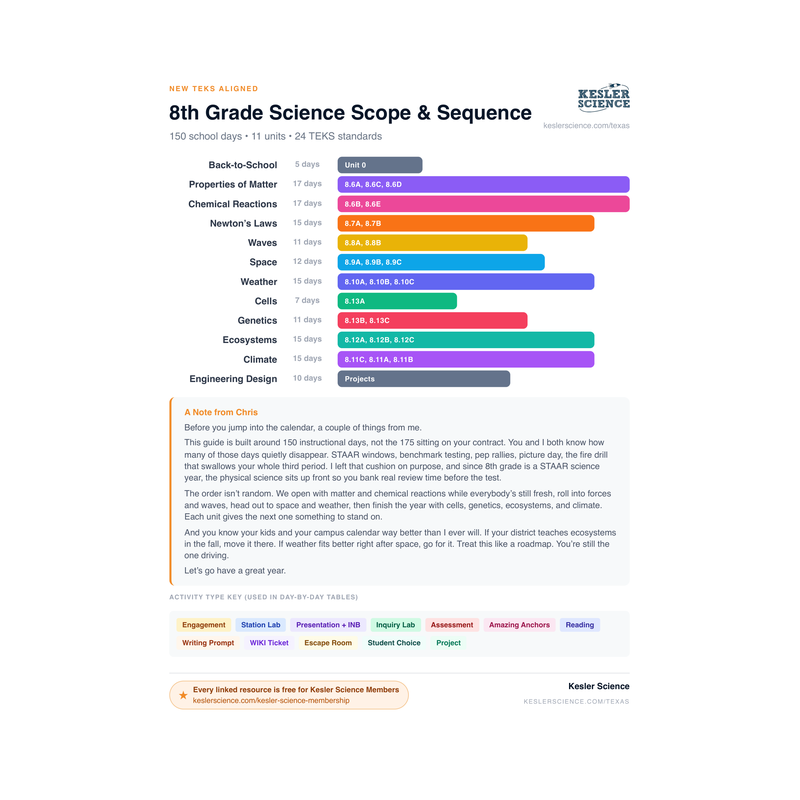
100% Aligned Lessons for Every TEKS You Teach
Kesler Science Plus puts thousands of ready-to-teach lessons and activities in your hands, so you can boost engagement and get your planning time back. Trusted by schools and districts all over the great state of Texas.
🌎 Phenomenon Ideas for 8.6C
Use these real-world phenomena to anchor your lesson. Show students the phenomenon first, let them wonder, then build toward Properties of Water as the explanation.
Water Striders Walking on a Pond
A water strider is an insect that can scoot across the surface of a still pond without breaking the surface. Its feet dent the water but never sink through. The same insect dropped into a cup of water with a drop of dish soap will sink immediately. Something about the water's surface is acting almost like a thin, flexible film, and soap destroys it.
"What could be holding up the water strider on top of the pond? Why would adding soap change what's happening at the surface?"
How Water Climbs a Tree
A tall oak tree can move water from its roots all the way up to the leaves at the top, sometimes a hundred feet or more, without a pump or a motor. The water travels up through tiny tubes inside the trunk. Both the water sticking to the tubes and the water pulling itself along play a role. No other common substance does this quite like water.
"How could water climb upward through a tree with no pump? What kind of attraction might be happening between the water and the inside of the tube, and between the water molecules themselves?"
How Many Drops Fit on a Penny?
Hold a penny flat and use an eyedropper to add water one drop at a time. Most people guess 5 or 10 drops before the water spills. A clean penny can actually hold 25 to 40 drops because the water domes up over the edge of the coin instead of running off. Add a tiny bit of dish soap and the dome collapses with just a few drops.
"What is holding all of that water on top of the penny without spilling? Why would a single drop of soap completely change how much water you can fit?"
💡 Free Engagement Ideas for 8.6C
Ready-to-run activities you can drop straight into a lesson. Where one of these looks like a phenomenon from the section above, that is on purpose: show it first as the hook, then let students run it themselves.
Penny Drops (Cohesion Demo)
Have each student predict how many drops of water will fit on the flat side of a penny before spilling. Most guess five or ten. Then they test. A clean penny can often hold 25 to 40 drops because cohesion pulls the water into a dome. Repeat with a drop of soapy water to see the dome collapse.
Celery Color Climb (Adhesion + Cohesion)
Place a stalk of celery in a cup of water mixed with food coloring. After an hour, the color has climbed up the stalk. Slice the celery to see the colored tubes inside. Students connect what they see to water moving up plants in the real world.
Float a Paperclip on Water
Fill a cup or small bowl with water. Lay a small piece of tissue paper on the surface, set a paperclip gently on top of the tissue, and wait. The tissue absorbs water and sinks, but the paperclip stays floating on the surface tension. Then squeeze a single drop of dish soap into the water and watch the paperclip drop straight to the bottom.
Capillary Action Race
Cut strips of paper towel about 1 inch wide and 6 inches long. Add a few drops of food coloring to a shallow cup of water and stir until evenly colored. Let students dip the bottom edge of the paper towel into the colored water and time how fast the colored water climbs up the strip. Try it with different paper types (paper towel, coffee filter, cardstock) and compare. The water is climbing because of adhesion to the paper plus cohesion pulling more water up behind it.
🎯 What Approaches, Meets, and Masters Thinking Look Like
Here is what student thinking at each level looks like on this one task, so you know what to look for and how to move a student up.
Three things are happening in a science lab: a drop of water beads up into a tight dome on a waxed surface, water climbs up a paper towel dipped in a puddle, and a water strider walks across the top of a dish of water without sinking. Describe the property of water responsible for each one (cohesion, adhesion, or surface tension), and explain how that property causes what you observe.
- A clear definition of cohesion (water sticking to itself) tied to the beaded water drop.
- A clear definition of adhesion (water sticking to other substances) tied to water climbing the paper towel.
- A clear definition of surface tension (the inward pull on the top molecules creating a thin "skin") tied to the water strider.
- Each property connected to why the phenomenon happens, not just the property named next to it.
- Molecules described as attracting and pulling on each other, not just sitting there.
- An understanding that surface tension comes from cohesion acting at the surface, so the two are related, not unrelated.
- Cohesion and adhesion kept straight (water-to-water vs. water-to-something-else). That is the easiest place to slip.
The water drop beads up because of cohesion, the water sticks to itself. The water goes up the paper towel because of cohesion too, the water is sticking to the towel. The water strider walks on the water because it is really light and the water is strong.
The beaded drop is cohesion, because water molecules are attracted to each other and pull inward from every direction, so the drop rounds up instead of spreading. The water climbing the paper towel is adhesion, because the water is attracted to the towel and sticks to it, which pulls the water up. The water strider stays on top because of surface tension. The molecules at the very top get pulled inward by the molecules below them, which makes a thin skin that the bug's legs can press on without breaking through.
The beaded drop is cohesion (water pulling on itself), the climbing water is adhesion (water pulling on the towel), and the strider is held up by surface tension, which is really just cohesion acting at the surface: the top molecules have nothing above them, so they get pulled inward and sideways and form a skin. So surface tension and cohesion are the same attraction, just in different spots.
That same teamwork is how a tall tree moves water up to its leaves. Adhesion sticks the water to the walls of the tiny tubes inside the trunk, and cohesion keeps the water molecules linked in one long chain. When water evaporates off the leaves at the top, it tugs on that chain and pulls more water up from the roots, no pump needed. It is the exact same two properties from the drop and the towel, just working together inside a tree.
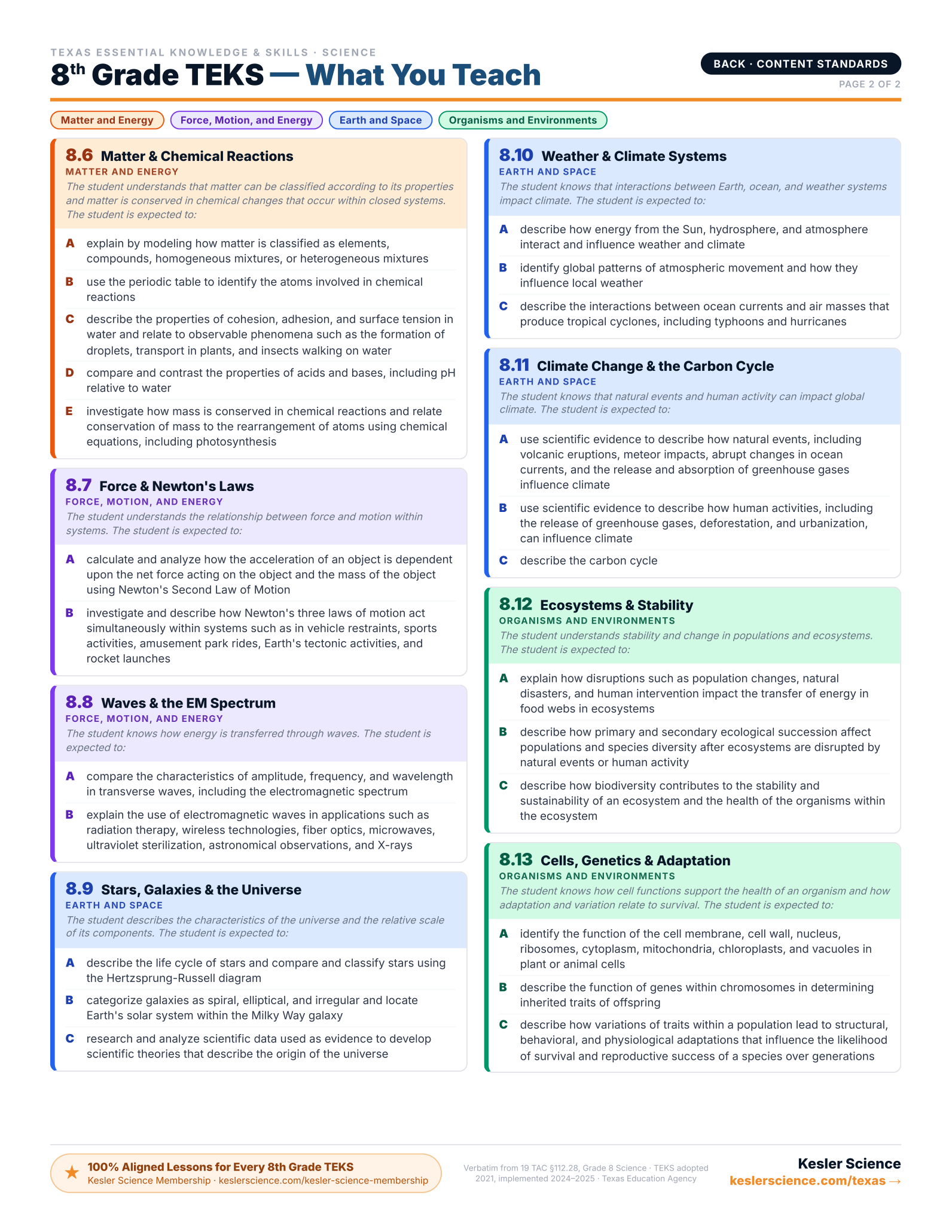
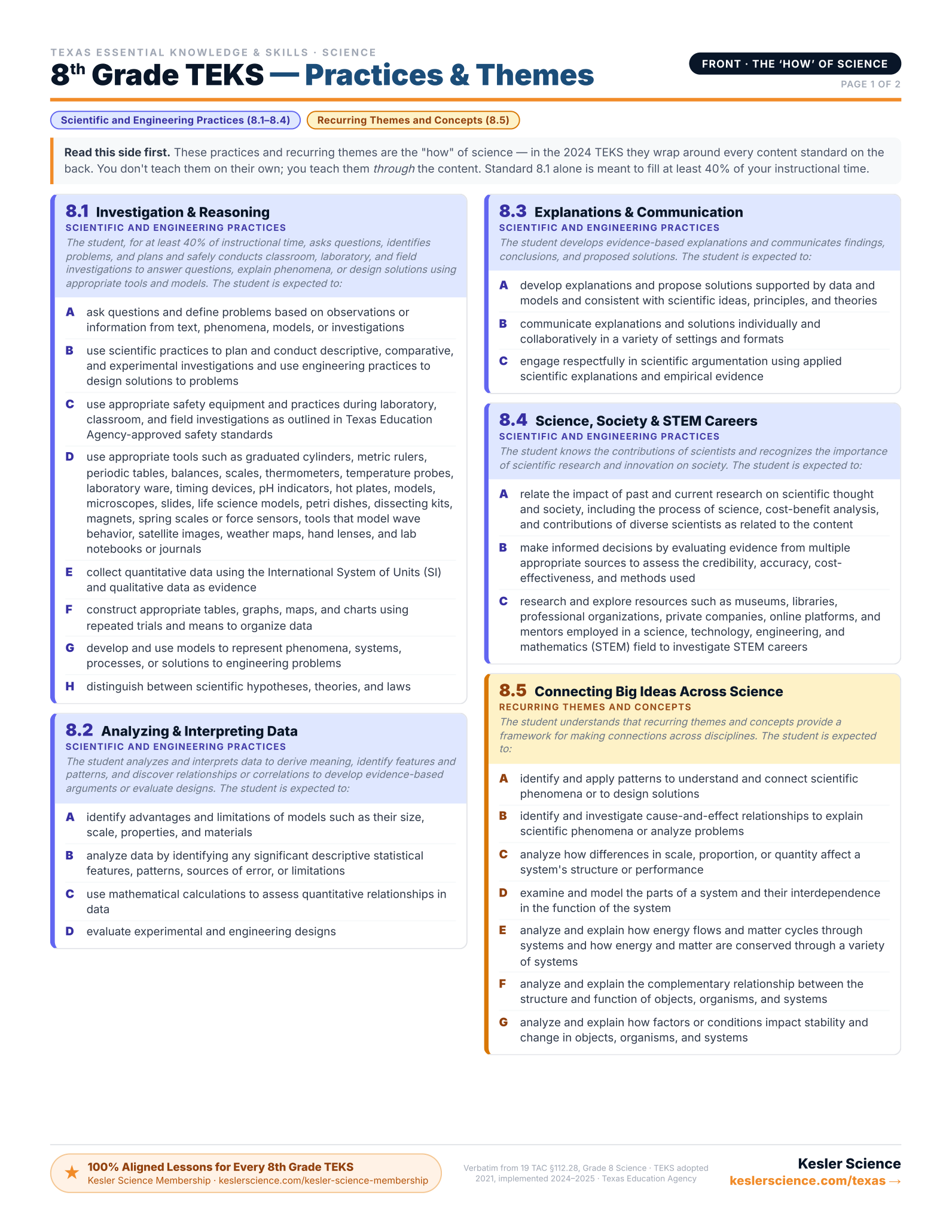
Every 8th-Grade Science TEKS on One Page
The color-coded, front-and-back cheat sheet I wish I'd had — every standard, organized by reporting category. Print it and reference it all year long. This will be your new favorite document!
Trusted Across Texas
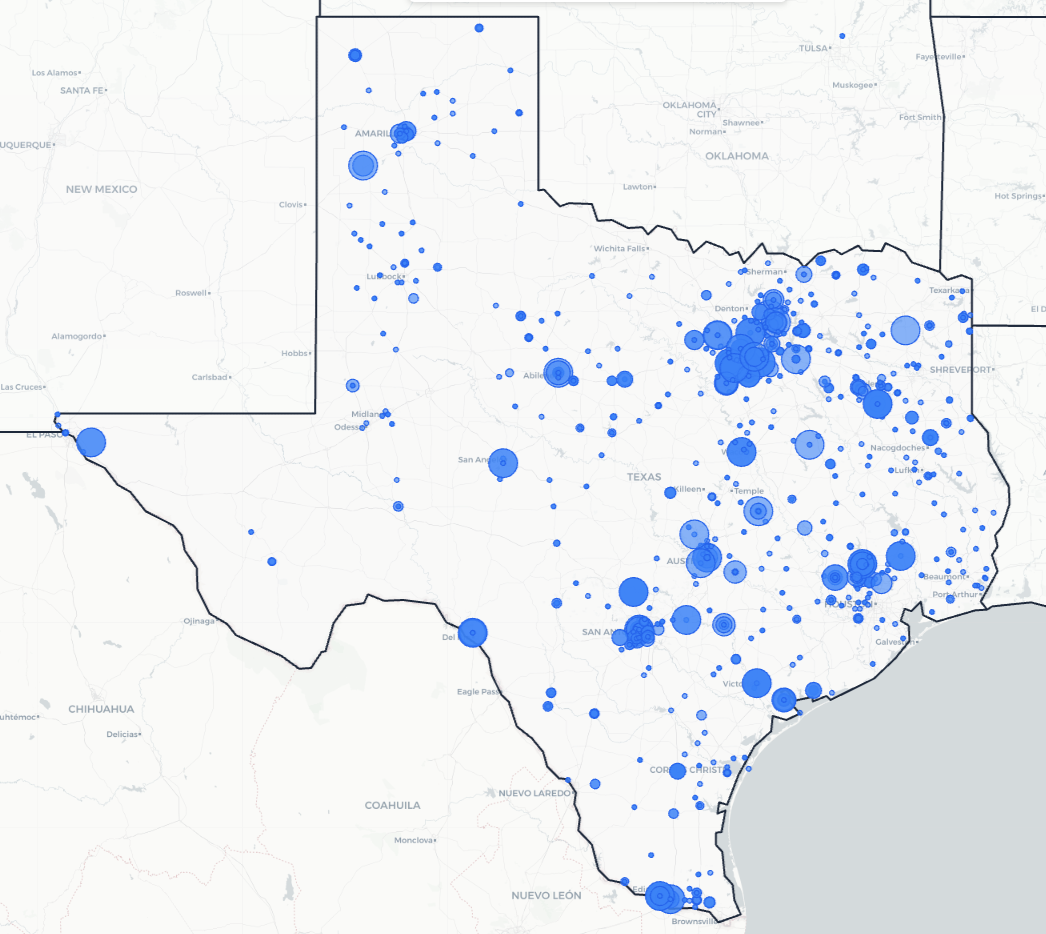
From the Rio Grande Valley to the Panhandle, Texas science teachers are using Kesler Science to save time and engage students.
Texas Schools and Districts
Love Kesler Science
What Teachers Are Saying
Give Your Science Teachers Everything They Need
School and district licenses give your teachers access to every resource they need, including station labs, inquiry labs, anchoring phenomena, presentations, escape rooms, and much more. One purchase covers the grade levels you need.
- PO-friendly. We accept purchase orders
- Volume discounts for 11+ teachers
- Complimentary Kesler Science Plus orientation for 4+ teachers
- Three free implementation PD sessions for departments of 11+
- Aligned to the 2024 TEKS standards
See It in Action
Book a walkthrough and we'll show you how Kesler Science fits your campus.
Book Demo CallNo pressure, no hard sell