.png?width=375&height=100&name=WebPage%20logo%20with%20curves%202026%20(8).png)
Predicting Tides
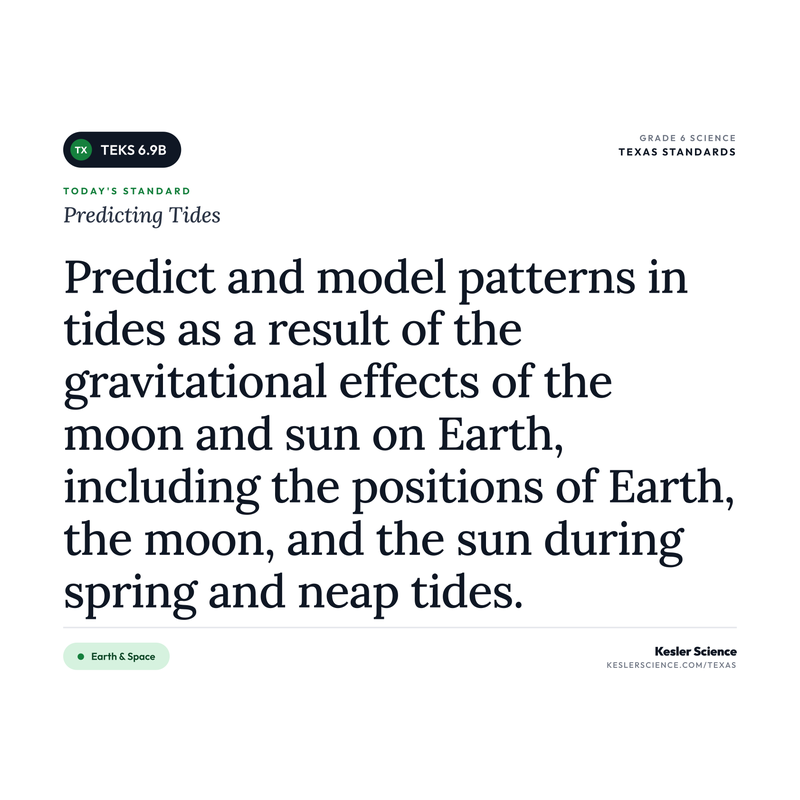
"Describe and predict how the positions of the Earth, Sun, and Moon cause daily, spring, and neap cycles of ocean tides due to gravitational forces."
💡 What This Standard Actually Means
"Describe and predict". Students are using the positions of the Earth, Sun, and Moon to describe and predict three different tide patterns: daily tides, spring tides, and neap tides. The cause of all of it is gravitational forces. Notice the standard explicitly names the daily cycle plus spring and neap, so kids need to predict and describe each one. Instruction can take many forms, such as physical models with foam balls, animated tide simulations, real tide-chart analysis, and Earth-Sun-Moon alignment diagrams.
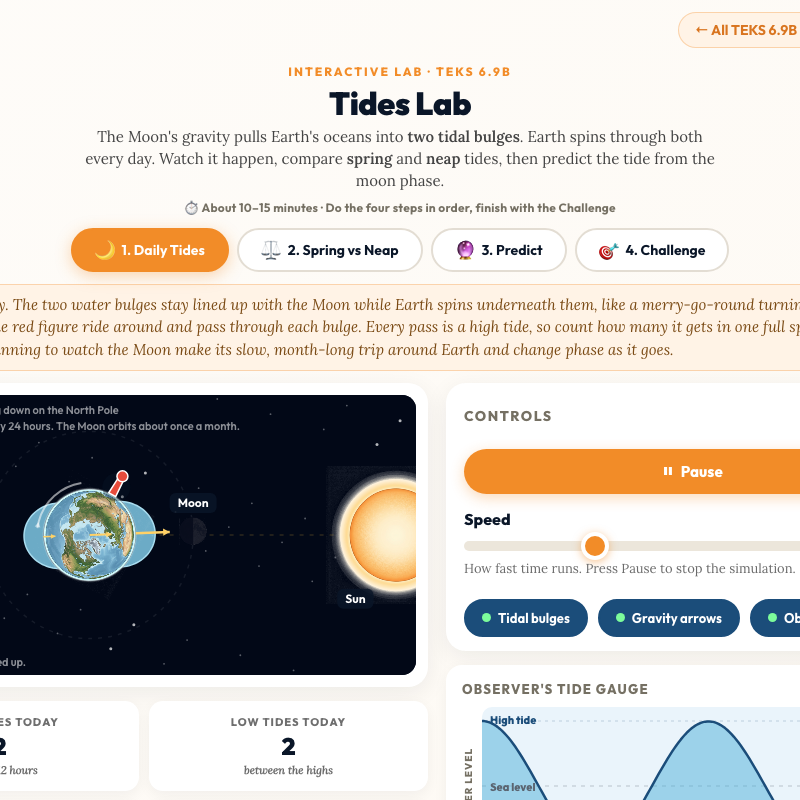
Tides are the rise and fall of ocean water caused mostly by the gravitational pull of the Moon, with the Sun adding a smaller pull. Even though the Sun is way more massive, the Moon is so much closer that its pull on Earth's oceans is the bigger player. The Moon's gravity creates a bulge of water on the side of Earth facing it, and a second bulge on the opposite side because of how gravity pulls Earth itself slightly differently than it pulls the far-side ocean.
Daily tides happen as Earth rotates through those two bulges. As any coastal location spins past one bulge, then the lower water in between, then the second bulge, then the lower water again, it experiences two high tides and two low tides in about 24 hours 50 minutes (one lunar day). That's the daily cycle students need to be able to predict. Look at the position of the Moon relative to a coastline and you can describe which water level it's about to see.
Spring tides happen at the new moon and full moon, when the Sun, Earth, and Moon are lined up. The Sun and Moon's gravitational pulls combine, creating the biggest difference between high and low tide of the month. Neap tides happen at the first and third quarter moons, when the Sun and Moon pull on the ocean at right angles to each other. Their pulls partly cancel, so the difference between high and low tide is the smallest of the month. (Side note: "spring" here doesn't mean the season. It comes from the older meaning of "springing up.") Students should walk away able to look at a Sun-Earth-Moon diagram and predict which tide pattern that alignment produces and why.
When I first taught tides, I rushed straight to spring and neap and the class glazed over. The thing that finally made it land was starting with "two high tides every day, not one." I'd pull up a real tide chart from Galveston on the board and have students point out the pattern before I ever said the words "spring" or "neap." Once they saw two humps and two dips per day, the follow-up question wrote itself: "Why do you think some weeks the humps are taller and some weeks they're smaller?" That opened the door to positions of the moon and sun without me lecturing at them. Chart first, vocabulary second.
⚠️ Misconceptions Your Students May Have
These are some of the most common misconceptions. Knowing what to look for can help you get ahead of them.
"There's only one high tide a day because the moon only pulls on one side"
Most coastlines experience two high tides and two low tides per day. There's a water bulge on the side of Earth facing the moon AND a second bulge on the far side. Earth rotates through both bulges in about 24 hours, so a given coastline passes through two high tides. Looking at a real tide chart makes this obvious before students have to explain why.
"The sun doesn't affect tides because it's too far away"
The sun absolutely affects tides. It's much farther away than the moon, so its tidal pull is weaker, roughly half the strength of the moon's effect on tides. But when the sun and moon line up at new and full moons, their combined pull creates the extra-large spring tides. When they pull at right angles at the quarter moons, the effects partly cancel and produce the smaller neap tides. The sun is a supporting player, not a no-show.
"Spring tides only happen in the spring season"
The name is confusing. Spring tides have nothing to do with the spring season. The word comes from an older meaning of "spring" as in "leap up" or "spring forth." Spring tides happen twice a month every month of the year, at the new moon and full moon, when Earth, the moon, and the sun are in a line.
"Tides happen because waves push water onto the shore"
Waves and tides are not the same thing. Waves are mostly caused by wind pushing on the surface of the water. Tides are caused by the gravitational pull of the moon and sun creating long-wavelength bulges of water that Earth rotates through. A beach still experiences tides on a perfectly calm day with zero waves.
📓 Teaching Resources for 6.9B
These resources are aligned to this standard.


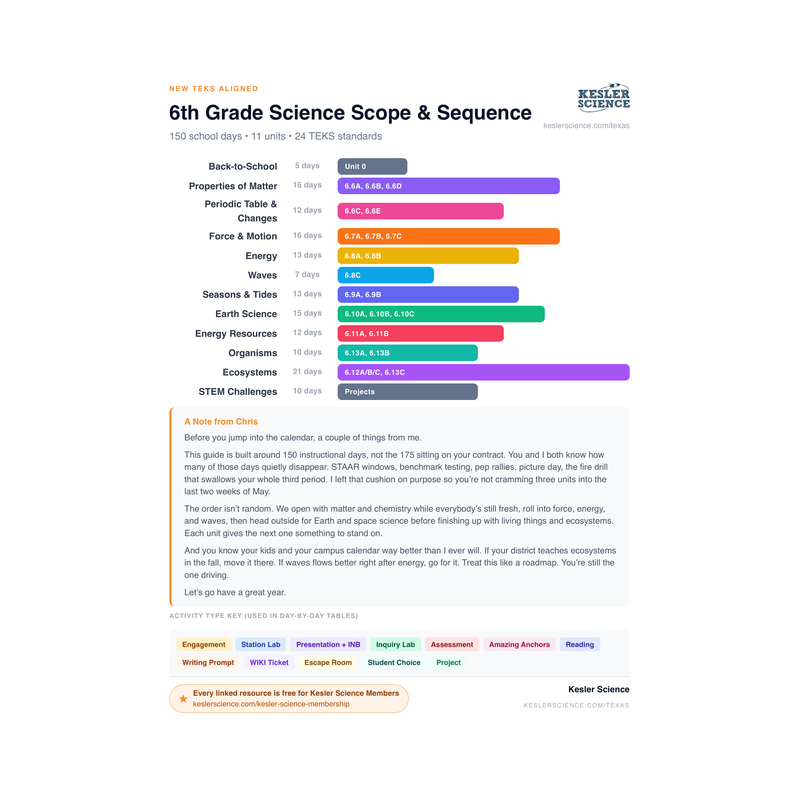
100% Aligned Lessons for Every TEKS You Teach
Kesler Science Plus puts thousands of ready-to-teach lessons and activities in your hands, so you can boost engagement and get your planning time back. Trusted by schools and districts all over the great state of Texas.
🌎 Phenomenon Ideas for 6.9B
Use these real-world phenomena to anchor your lesson. Show students the phenomenon first, let them wonder, then build toward Predicting Tides as the explanation.
Boats Grounded on the Seafloor at Low Tide
At the Bay of Fundy in Canada, the water level between high tide and low tide can change by more than 40 feet. Fishing boats that were floating in the morning end up sitting on dry mud in the afternoon. Tourists walk on the ocean floor. Six hours later, the boats are floating again. Same harbor, same day.
"Where does all that water go when the tide drops? What force could be pulling an entire ocean up and down like that twice a day?"
Why a Full Moon Often Brings a Bigger High Tide
Coastal communities know that the biggest high tides of the month tend to show up right around the full moon and the new moon. That's when flood warnings go up for low-lying streets, and when fishermen plan their best trips. Two weeks later, around the quarter moon, the tides are much calmer. The moon looks different in the sky on those nights, too.
"Why would the size of the tides be connected to the phase of the moon? What might be different about where the sun, moon, and Earth are during a full moon compared to a quarter moon?"
A Tide Chart That Actually Works
NOAA publishes tide predictions a year in advance for ports like Galveston, Corpus Christi, and Port Aransas. A surfer can look up what the water level will do at 3:45 PM on a Tuesday in August and plan their day around it. Those predictions are usually within minutes of what actually happens. How can we predict water levels months in advance with that kind of accuracy?
"If tides were random, we couldn't write a chart months in advance. What about tides is predictable enough that scientists can calendar them out for a whole year?"
💡 Free Engagement Ideas for 6.9B
Ready-to-run activities you can drop straight into a lesson. Where one of these looks like a phenomenon from the section above, that is on purpose: show it first as the hook, then let students run it themselves.
Tide Chart Pattern Hunt
Pull up a free week-long tide chart from NOAA for Galveston, Texas. Print it or project it. Have students circle the high tides and low tides, count how many of each happen per day, and calculate the average time between high tides. The pattern (two highs and two lows, about every 12 hours and 25 minutes) jumps off the page, and the tides drift later by roughly 50 minutes each day.
Styrofoam Ball Earth-Moon-Sun Alignment
Give each group three different-sized foam balls (big for sun, medium for Earth, small for moon) and a pencil. Have them arrange the balls in a line for a spring tide (new moon or full moon), then arrange them in a right angle for a neap tide (quarter moon). They sketch each arrangement and label the expected tide size.
The Rotating Earth Walk-Through
Tape two paper "water bulges" on opposite sides of a globe. The globe is Earth. Slowly rotate the globe and have students watch a single point (a city sticker) as it passes through both bulges. That point goes high, low, high, low every time the globe makes one full rotation. Students physically see why most coasts get two high tides a day.
Match the Moon Phase to the Tide
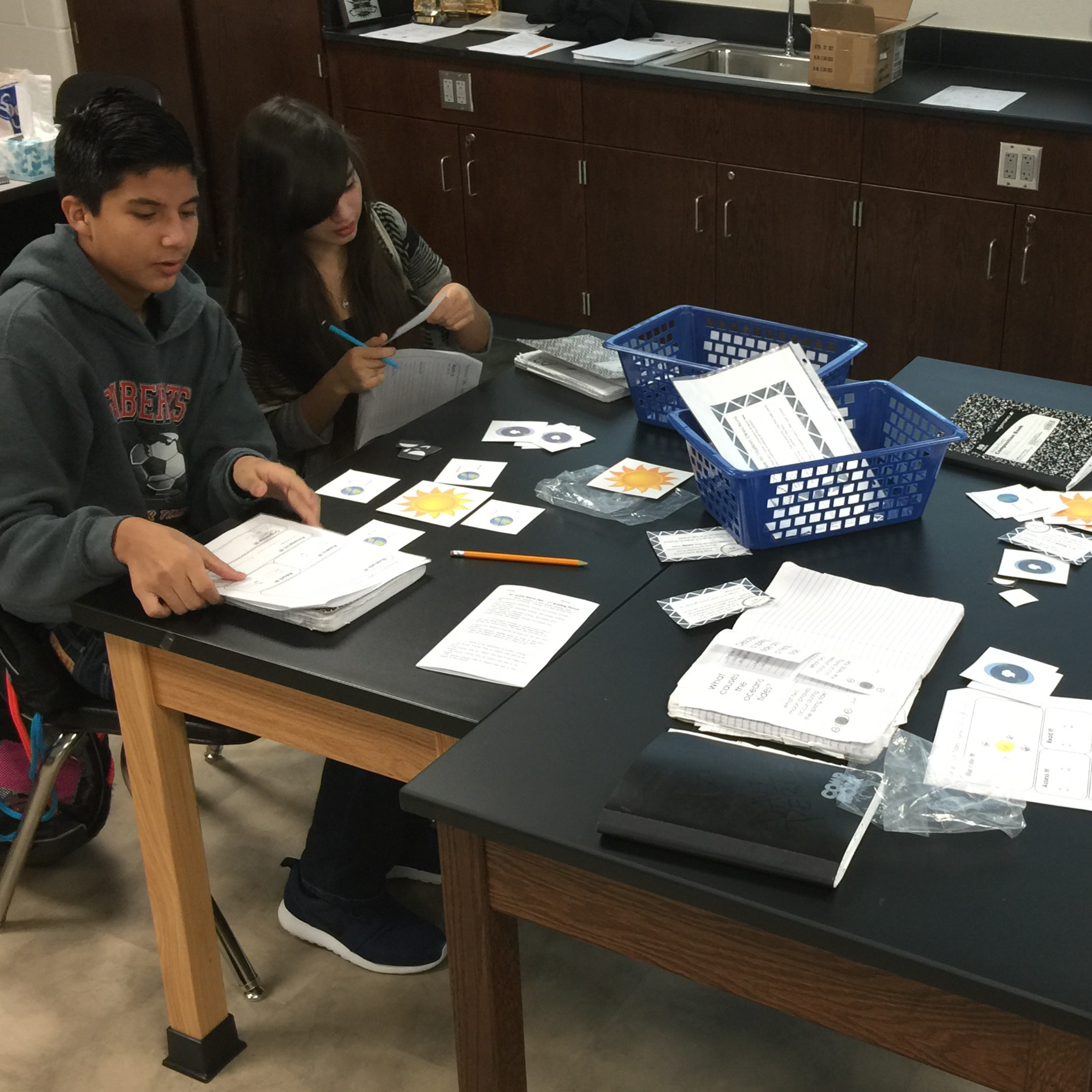
Make 8 index cards with moon phases (new, waxing crescent, first quarter, waxing gibbous, full, waning gibbous, third quarter, waning crescent) and 4 cards with tide labels (spring tide, neap tide, spring tide, neap tide). Students work in pairs to match each moon phase to the correct tide type based on the Earth-moon-sun geometry.
🎯 What Approaches, Meets, and Masters Thinking Look Like
Here is what student thinking at each level looks like on this one task, so you know what to look for and how to move a student up.
A diagram shows the Sun, Earth, and the Moon. In the picture, the Moon is at the first quarter, so the Sun and the Moon are pulling on Earth's oceans from two directions that make a right angle (an L shape). Will this lineup make a spring tide (the biggest gap between high and low tide) or a neap tide (the smallest gap)? Name which one it is and explain why that lineup causes it.
- The student names the correct tide pattern for this lineup: a neap tide.
- They notice the Sun and the Moon are pulling from two directions that make a right angle, not a straight line.
- They connect the pull of the Moon's gravity (and the Sun's) to the height of the tides.
- They say a neap tide has the smallest gap between high tide and low tide.
- They explain why: when the Sun and Moon pull at a right angle, their pulls partly cancel each other out.
- They show they know the Sun pulls on the oceans too, just not as strongly as the closer Moon.
- The "why it cancels" part is the trickiest piece. Naming neap is easier than explaining the right-angle pulls working against each other.
This is a neap tide because the Moon is at the first quarter. The Moon pulls on the ocean and makes the tide. The Sun is really far away, so the Sun does not change the tides. Only the Moon matters here.
This is a neap tide. The Sun and the Moon are pulling on the ocean from two directions that make a right angle. The Moon pulls harder because it is closer, but the Sun still pulls too. When they pull at a right angle, their pulls partly cancel each other out. So the high tide is not very high and the low tide is not very low. That makes the smallest gap between high and low tide, which is a neap tide.
This is a neap tide. The Sun and the Moon are pulling on the ocean at a right angle to each other. The Moon's gravity pulls harder because it is much closer than the Sun, but the Sun's pull is not zero. Because the two pulls point in directions that make an L, they work against each other and partly cancel. So the high tides are lower than usual and the low tides are higher than usual, which is the smallest gap of the month. That is a neap tide.
The real rule is how the two pulls line up. When the Sun, Earth, and Moon are all in a straight line, like at a new moon or a full moon, the Sun's pull and the Moon's pull add together instead of canceling. That is when you get a spring tide with the biggest gap. So the same idea, gravity from the Sun and Moon, can give you a big tide or a small tide just by changing the angle.
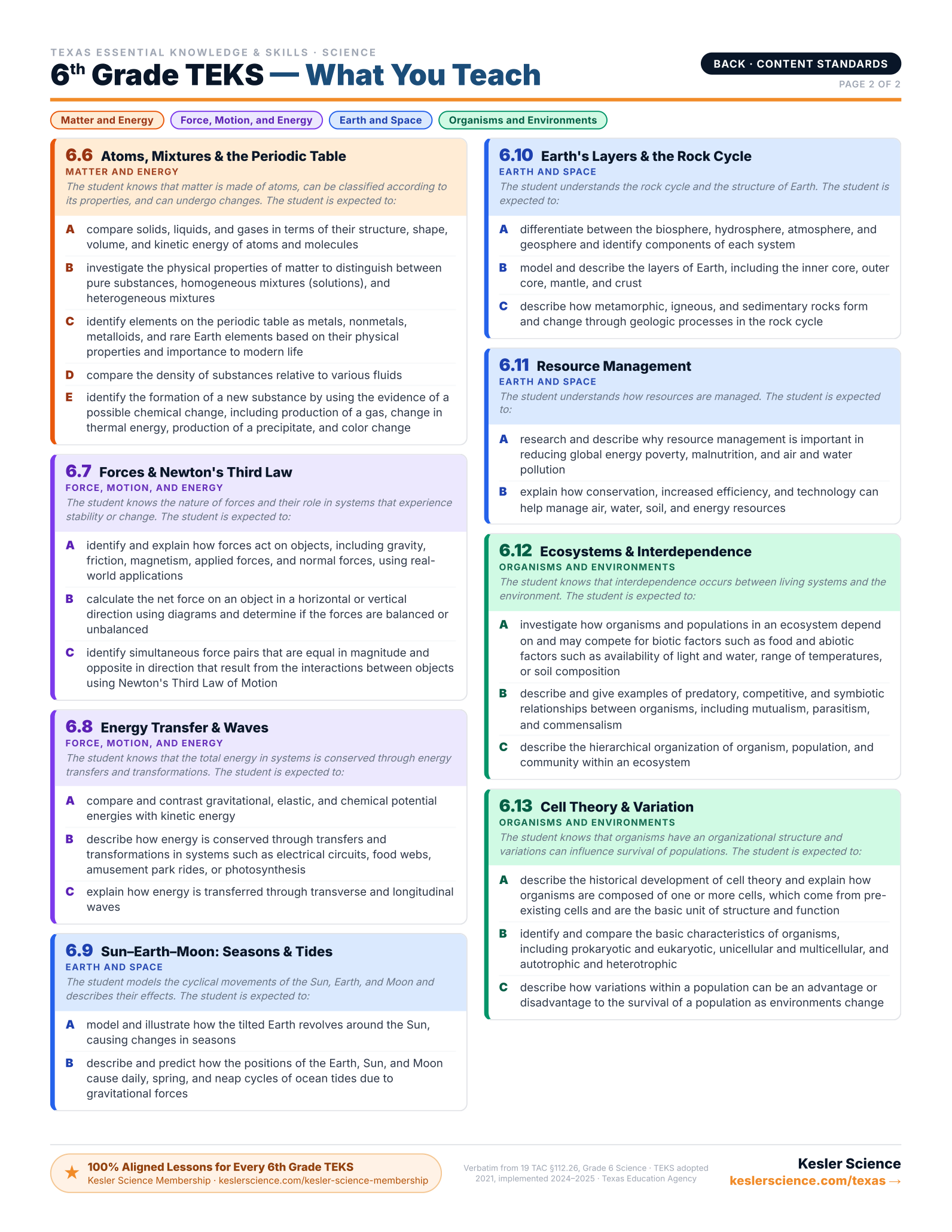
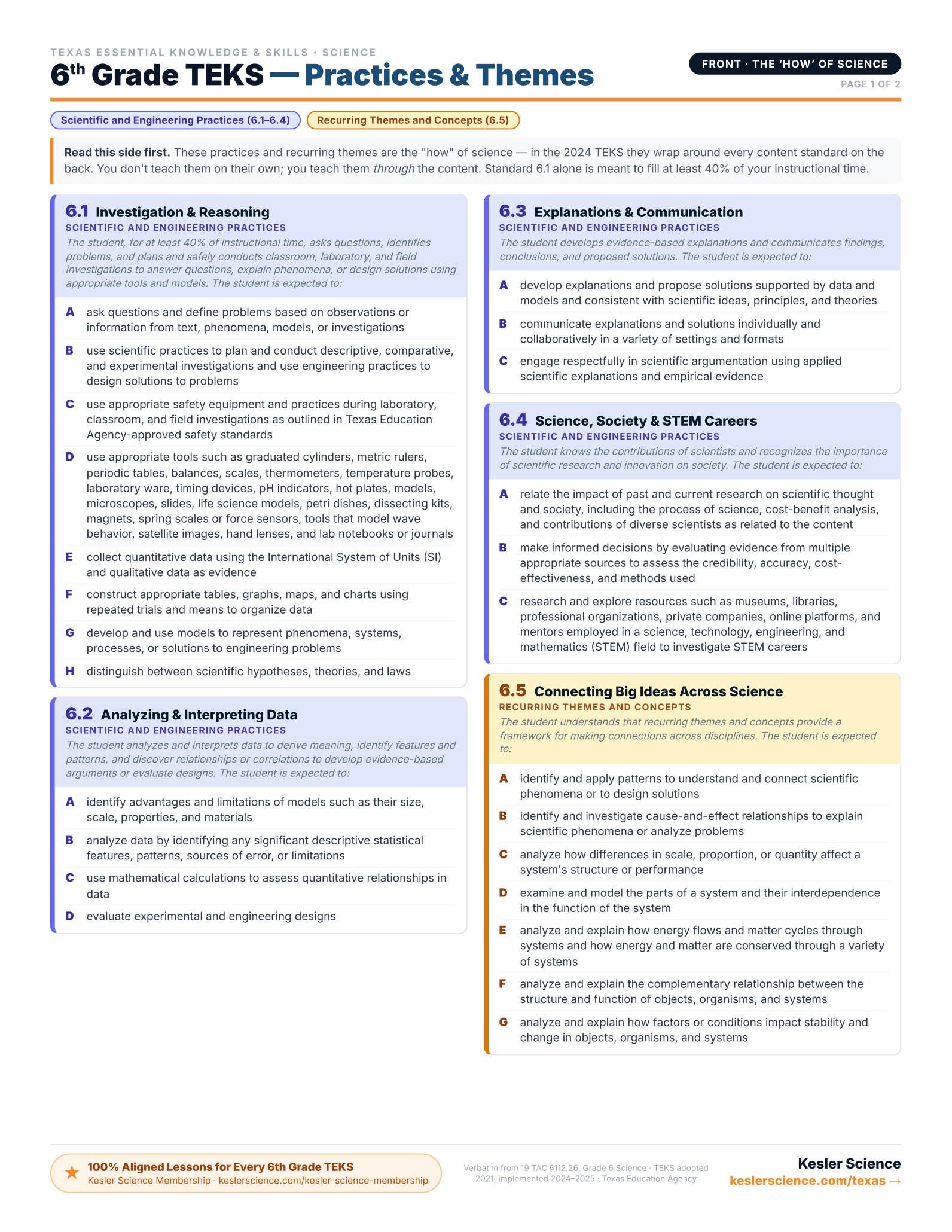
Every 6th-Grade Science TEKS on One Page
The color-coded, front-and-back cheat sheet I wish I'd had — every standard, organized by reporting category. Print it and reference it all year long. This will be your new favorite document!
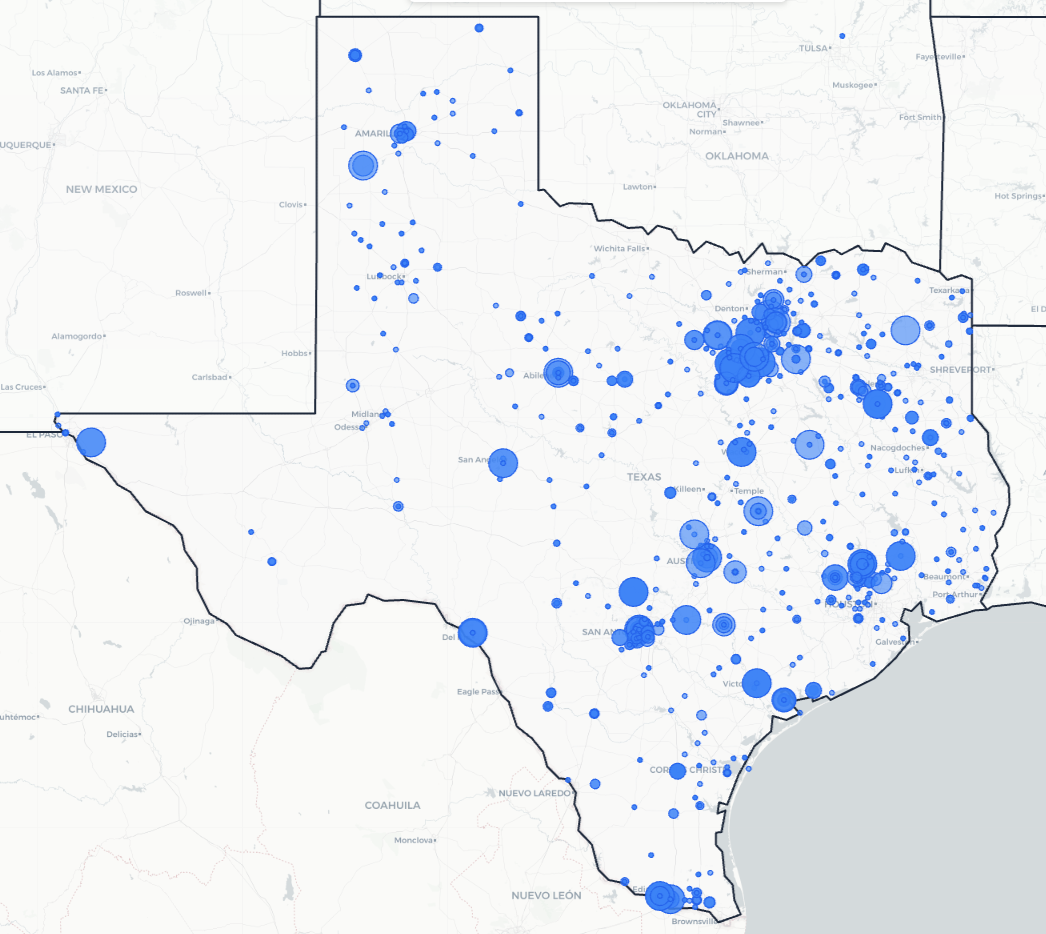
Trusted Across Texas
From the Rio Grande Valley to the Panhandle, Texas science teachers are using Kesler Science to save time and engage students.
Texas Schools and Districts
Love Kesler Science
What Teachers Are Saying
Give Your Science Teachers Everything They Need
School and district licenses give your teachers access to every resource they need, including station labs, inquiry labs, anchoring phenomena, presentations, escape rooms, and much more. One purchase covers the grade levels you need.
- PO-friendly. We accept purchase orders
- Volume discounts for 11+ teachers
- Complimentary Kesler Science Plus orientation for 4+ teachers
- Three free implementation PD sessions for departments of 11+
- Aligned to the 2024 TEKS standards
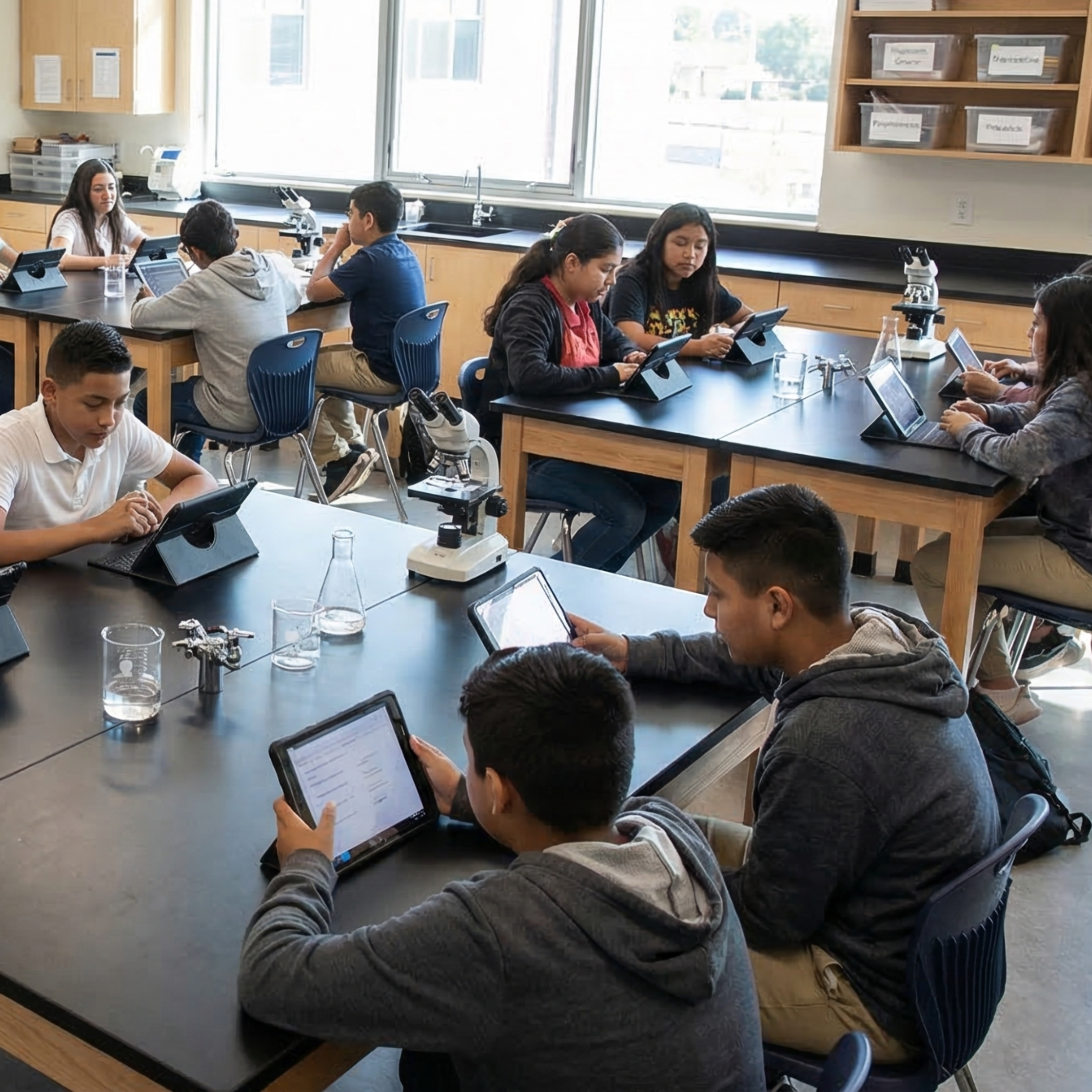
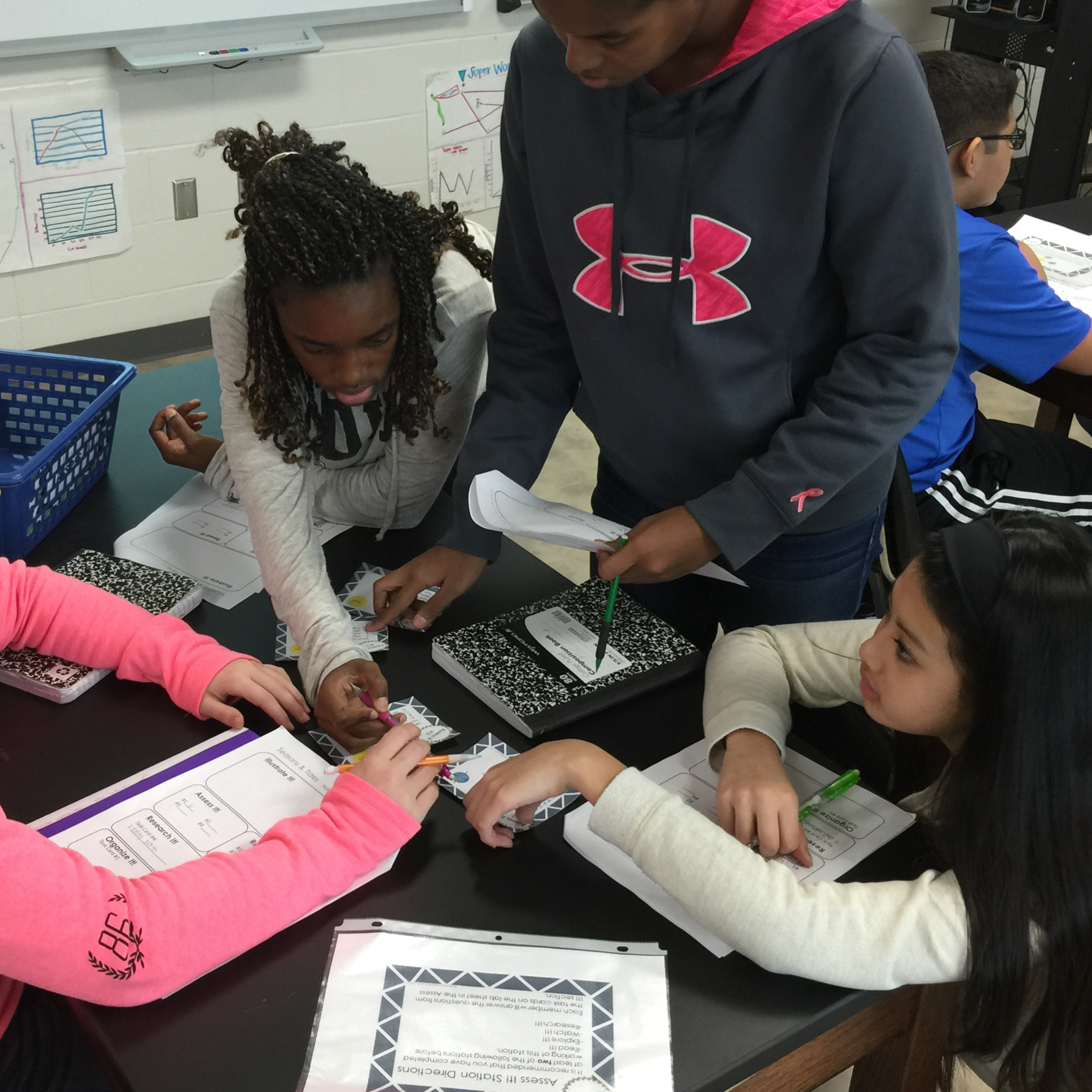
See It in Action
Book a walkthrough and we'll show you how Kesler Science fits your campus.
Book Demo CallNo pressure, no hard sell