.png?width=375&height=100&name=WebPage%20logo%20with%20curves%202026%20(8).png)
Ecological Relationships
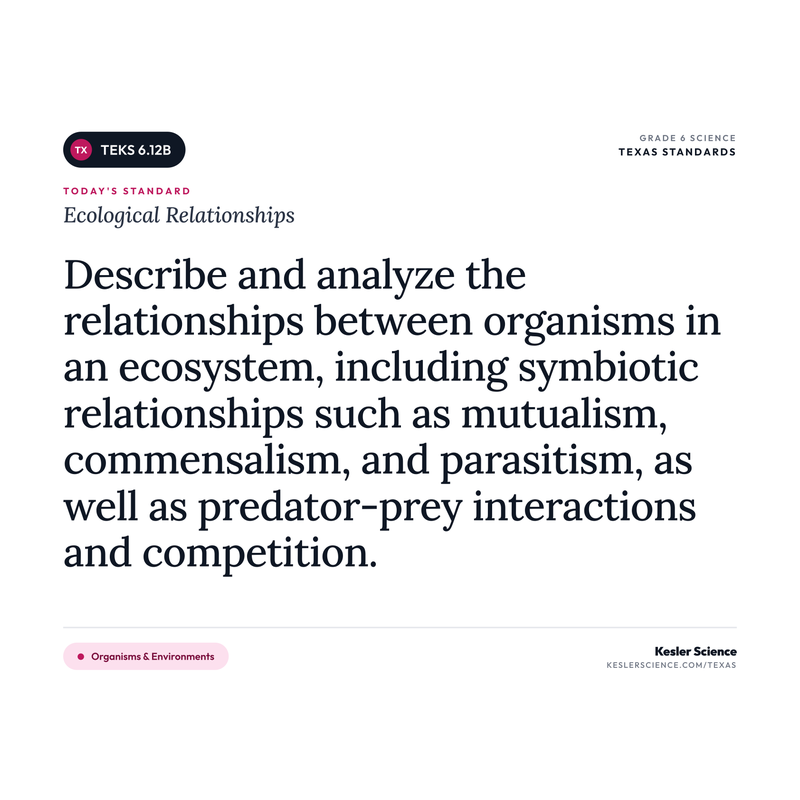
"Describe and give examples of predatory, competitive, and symbiotic relationships between organisms, including mutualism, parasitism, and commensalism."
💡 What This Standard Actually Means
"Describe and give examples". Students are describing three kinds of relationships between organisms and giving examples of each: predatory, competitive, and symbiotic. Inside symbiotic, the standard calls out three sub-types kids need by name: mutualism, parasitism, and commensalism. The shift here is that competition is now grouped alongside predation and symbiosis as one of the three main relationship categories, instead of being treated separately. Instruction can take many forms, such as relationship card sorts, animal-pair research projects, ecosystem field observations, and "who benefits, who is harmed" diagram activities.
Living things in an ecosystem don't exist in isolation. They interact constantly. Scientists organize those interactions into three main types of relationships, all of which kids need to be able to describe and give examples of.
Predatory relationships are when one organism (the predator) hunts and eats another (the prey). A hawk catching a mouse, a lion taking down an antelope, or a frog flicking out its tongue at a fly are all predator-prey relationships. The predator benefits. The prey is harmed. This relationship keeps populations in balance and shapes the behavior of both species (predators get faster and sneakier, prey get better at hiding and running). Competitive relationships are when two or more organisms need the same limited resource, like food, water, sunlight, space, or mates. Two squirrels reaching for the same acorn, two oak trees competing for sunlight, or two male elk fighting for territory are all examples. Both organisms put energy into the competition, and only one usually wins.
Symbiotic relationships are close, long-term relationships between two species that live in contact with each other. The standard names three to teach. Mutualism means both species benefit. A bee gets nectar from a flower while pollinating it. Both win. Parasitism means one species benefits while the other is harmed. A tick attaches to a deer, drinks its blood, and can spread disease. The tick wins, the deer loses. Commensalism means one species benefits while the other is mostly unaffected. A remora hitches a ride on a shark and snags scraps without bothering the shark. The easiest way for students to keep them straight is the "+ / - / 0" trick: mark each organism as helped (+), harmed (-), or unaffected (0), and that combination tells you the relationship.
The "plus minus zero" method saved me on this unit. I stopped asking students to memorize definitions and started asking them to draw a quick table: organism A on one side, organism B on the other, then mark each one plus, minus, or zero. If both are plus, it's mutualism. Plus and zero, commensalism. Plus and minus, parasitism or predation. Minus and minus, competition. We'd run through example after example as bell-ringers: clownfish and sea anemone, barnacle and whale, mosquito and human, lion and zebra, two squirrels and one pile of acorns. The pattern locks in fast. After a week they weren't memorizing definitions anymore, they were analyzing relationships.
⚠️ Misconceptions Your Students May Have
These are some of the most common misconceptions. Knowing what to look for can help you get ahead of them.
"Symbiosis only means mutualism, where both organisms help each other"
Symbiosis is the bigger category. It simply means two species live in close contact over time. Mutualism is one type of symbiosis (both benefit). Commensalism and parasitism are also types of symbiosis. Students often hear "symbiotic" in everyday speech and assume it means "helpful partnership". In biology, it's a broader term that includes relationships where one organism is harmed.
"A predator-prey relationship is a type of parasitism"
They look similar because in both, one organism is harmed and the other benefits. The key difference is time and contact. A predator hunts and kills its prey quickly. A parasite lives on or inside the host for an extended period, usually without killing it right away. A hawk catching a mouse is predation. A tapeworm inside a dog is parasitism.
"Parasites want to kill their hosts"
A successful parasite usually does not kill its host, at least not quickly. The parasite needs the host alive so it has a place to live and food to take. If the host dies fast, the parasite loses its home. Parasites typically harm the host while keeping it alive enough to keep the relationship going. Students picture parasites as villains, but the reality is slower and more complicated.
"Competition and predator-prey are the same because both are negative"
They are both "negative" relationships, but for different reasons. In predator-prey, one organism eats the other (+ and -). In competition, two organisms want the same limited resource, and neither is eating the other (- and -). Two deer eating from the same patch of clover are competing. A coyote eating a deer is predation.
📓 Teaching Resources for 6.12B
These resources are aligned to this standard.


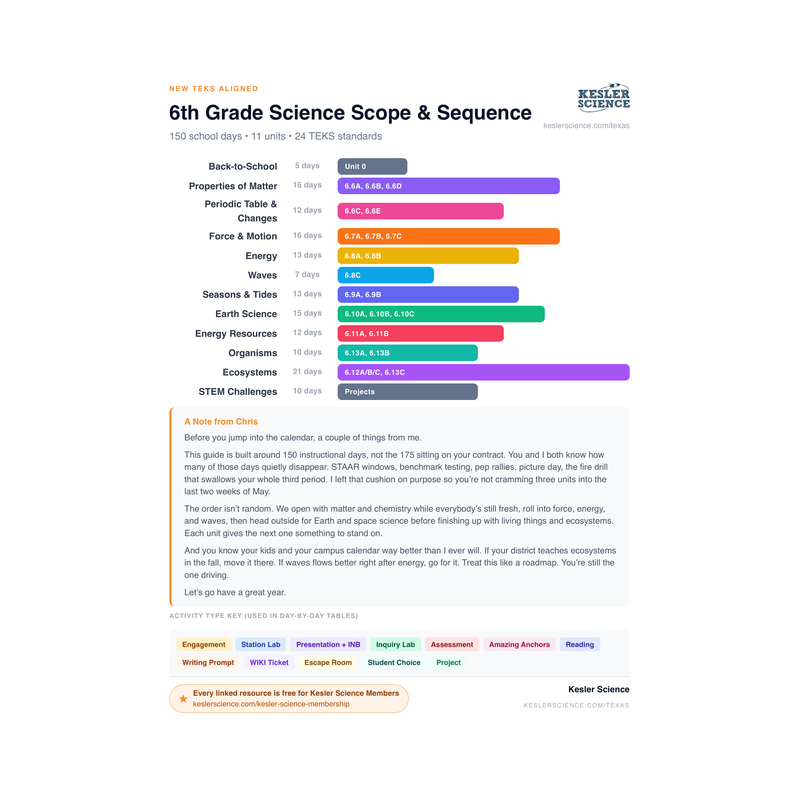
100% Aligned Lessons for Every TEKS You Teach
Kesler Science Plus puts thousands of ready-to-teach lessons and activities in your hands, so you can boost engagement and get your planning time back. Trusted by schools and districts all over the great state of Texas.
🌎 Phenomenon Ideas for 6.12B
Use these real-world phenomena to anchor your lesson. Show students the phenomenon first, let them wonder, then build toward Ecological Relationships as the explanation.
The Clownfish and the Sea Anemone
A clownfish lives inside the stinging tentacles of a sea anemone. Those tentacles would kill most fish, but the clownfish has a coating on its skin that protects it. In exchange, the clownfish chases away fish that try to eat the anemone and can bring bits of food that fall near the anemone's mouth. Two very different animals, sharing a home, and both coming out ahead.
"Mark each organism as helped (+), harmed (-), or unaffected (0). What relationship is this? How do you know?"
The Tick on the White-Tailed Deer
A white-tailed deer walking through East Texas picks up ticks without noticing. Those ticks dig in, take the deer's blood as food, and can spread diseases. The deer gets nothing out of it. The tick gets everything it needs to grow and reproduce. The tick isn't trying to kill the deer, it just takes what it needs.
"Mark each organism as helped (+), harmed (-), or unaffected (0). How is this different from a predator-prey relationship, like a coyote hunting a deer?"
The Bee and the Wildflower
Every spring, Texas bluebonnets stretch across the countryside, and bees crawl all over them. The bees push into each flower to drink nectar, and leave covered in yellow pollen. When they land on the next flower, that pollen rubs off, allowing the flower to make seeds for next year. Without the bees, many flowering plants would struggle. Without the flowers, the bees would starve.
"Mark each organism as helped (+), harmed (-), or unaffected (0). What would happen to this ecosystem if every bee disappeared?"
💡 Free Engagement Ideas for 6.12B
Ready-to-run activities you can drop straight into a lesson. Where one of these looks like a phenomenon from the section above, that is on purpose: show it first as the hook, then let students run it themselves.
The + / - / 0 Card Sort
Prepare 15 to 20 index cards, each describing a pair of organisms (bee and flower, tick and deer, remora and shark, clownfish and anemone, lion and zebra, two deer and one water hole). Students work in pairs to mark each organism with +, -, or 0, then classify the relationship. Finish by having students create their own example card and swap with another group.
Relationship Skits
Assign each group a relationship type: mutualism, commensalism, parasitism, predator-prey, or competition. Groups create a 30-second skit showing the interaction without ever naming the type. The rest of the class watches and identifies the relationship based on what they see. Fast, loud, and effective.
Symbiosis Storyboards
Each student picks one relationship type and creates a four-panel storyboard showing: meet the organisms, what each one needs, the interaction, and the outcome. Require labels under each panel marking the + / - / 0 for each organism. Great formative assessment without writing a paragraph.
Mystery Organism Interview
Give each student a card with a secret organism (shark, remora, oak tree, mistletoe, honeybee, coyote, rabbit, tick, clownfish, sea anemone). Students walk around asking yes-or-no questions to other students about their organisms. Their goal: find a partner they have a real ecological relationship with and correctly name the relationship type.
🎯 What Approaches, Meets, and Masters Thinking Look Like
Here is what student thinking at each level looks like on this one task, so you know what to look for and how to move a student up.
Read these three pairs of living things in a coral reef. (1) A clownfish lives inside a sea anemone. The anemone's stingers keep the clownfish safe, and the clownfish chases away fish that try to eat the anemone. Both are helped. (2) A barnacle attaches to a whale's skin and rides along to find food. The whale is not helped and not bothered. (3) A sea louse attaches to a fish and feeds on its skin, which hurts the fish. For each pair, name the type of symbiotic relationship (mutualism, commensalism, or parasitism) and explain how you know.
- The clownfish and anemone named correctly as mutualism, because both living things are helped.
- The barnacle and whale named correctly as commensalism, because one is helped and the other is not helped or harmed.
- The sea louse and fish named correctly as parasitism, because one is helped and the other is harmed.
- An explanation that tells who is helped, who is harmed, and who is unaffected in each pair, not just the label.
- An understanding that all three pairs are kinds of symbiosis, not just the one where both are helped.
- The barnacle and whale pair handled correctly. Commensalism (one helped, one unaffected) is the trickiest one to spot, because nothing is getting hurt.
The clownfish and the anemone are symbiosis because they both help each other. The barnacle and the whale are not symbiosis because the whale doesn't get helped. The sea louse and the fish are not symbiosis either, because the fish gets hurt. Symbiosis is when two animals work together and both get something good.
The clownfish and anemone are mutualism because both of them are helped. The clownfish is safe and the anemone gets protected. The barnacle and whale are commensalism because the barnacle is helped but the whale is not helped or hurt. The sea louse and fish are parasitism because the sea louse is helped and the fish is harmed. They are all symbiosis because the two living things live close together.
The clownfish and anemone are mutualism because both are helped (+ and +). The barnacle and whale are commensalism because the barnacle is helped and the whale is unaffected (+ and 0). The sea louse and fish are parasitism because the sea louse is helped and the fish is harmed (+ and -). They are all symbiosis, which just means two species living close together for a long time. The real trick is to ask who is helped, who is harmed, and who is unaffected.
I can use the same trick on a pair that wasn't on the list. A flea lives on a dog and bites it to feed on its blood, which hurts the dog. That is parasitism, because the flea is helped and the dog is harmed (+ and -). It is not predation, because the flea doesn't catch and eat the dog. It just lives on it for a long time.
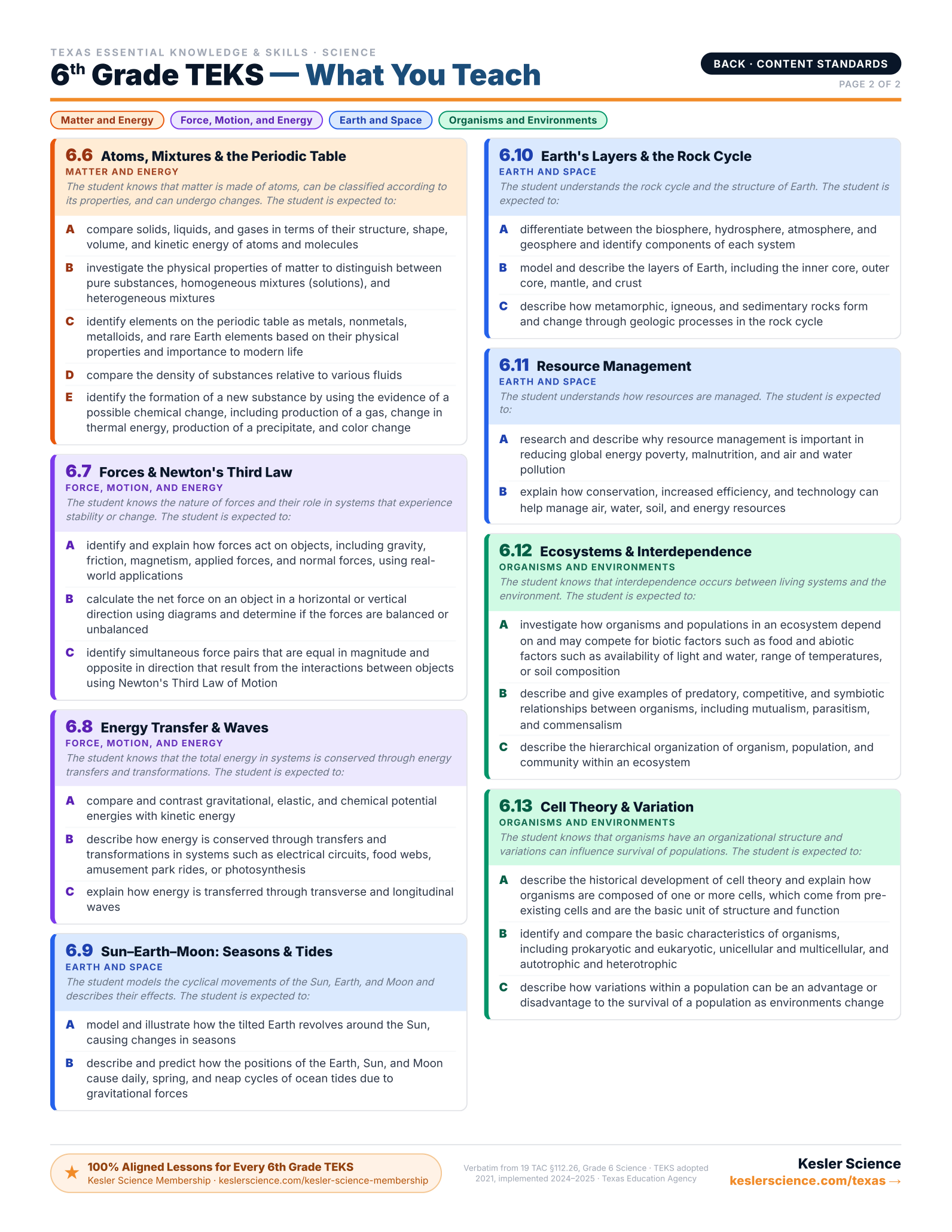
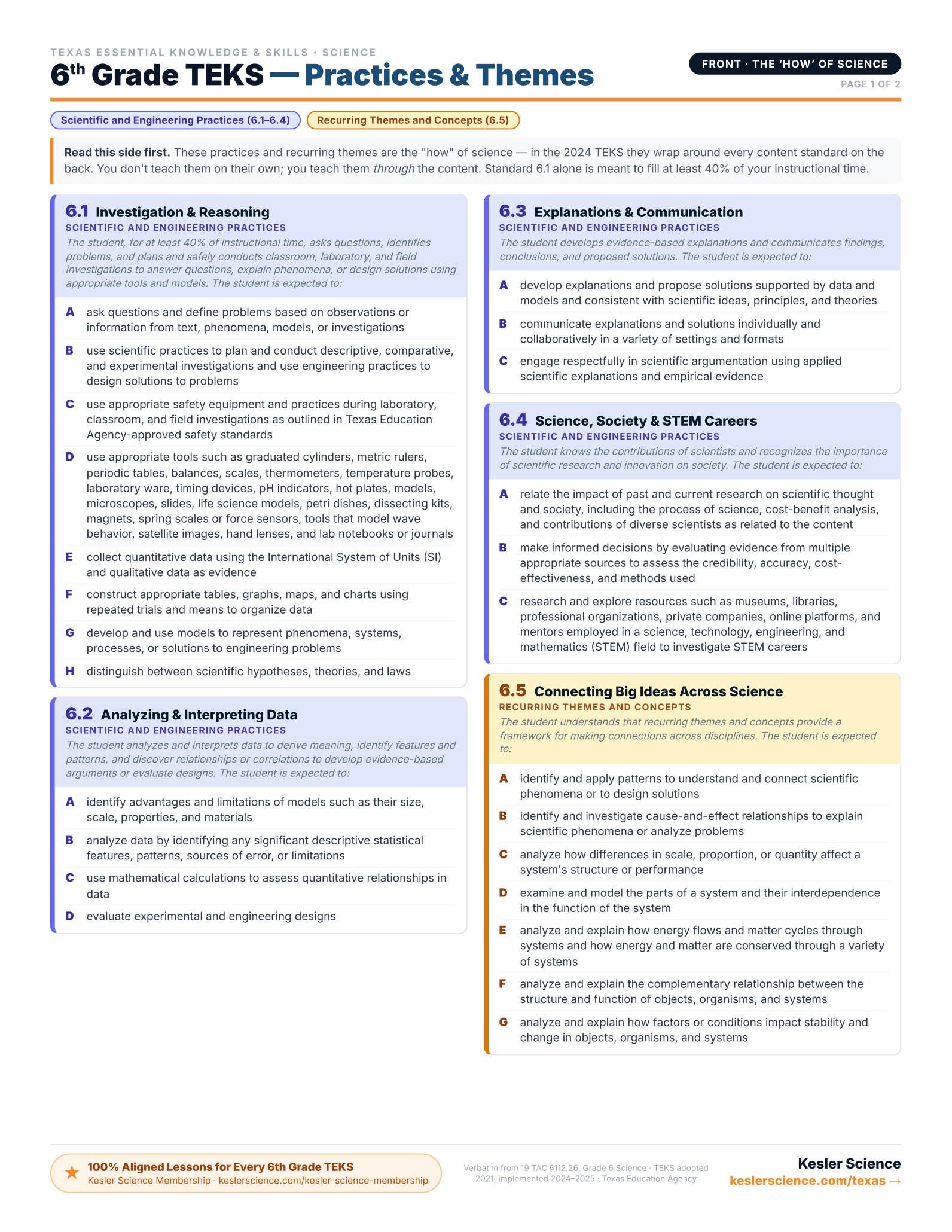
Every 6th-Grade Science TEKS on One Page
The color-coded, front-and-back cheat sheet I wish I'd had — every standard, organized by reporting category. Print it and reference it all year long. This will be your new favorite document!
Trusted Across Texas
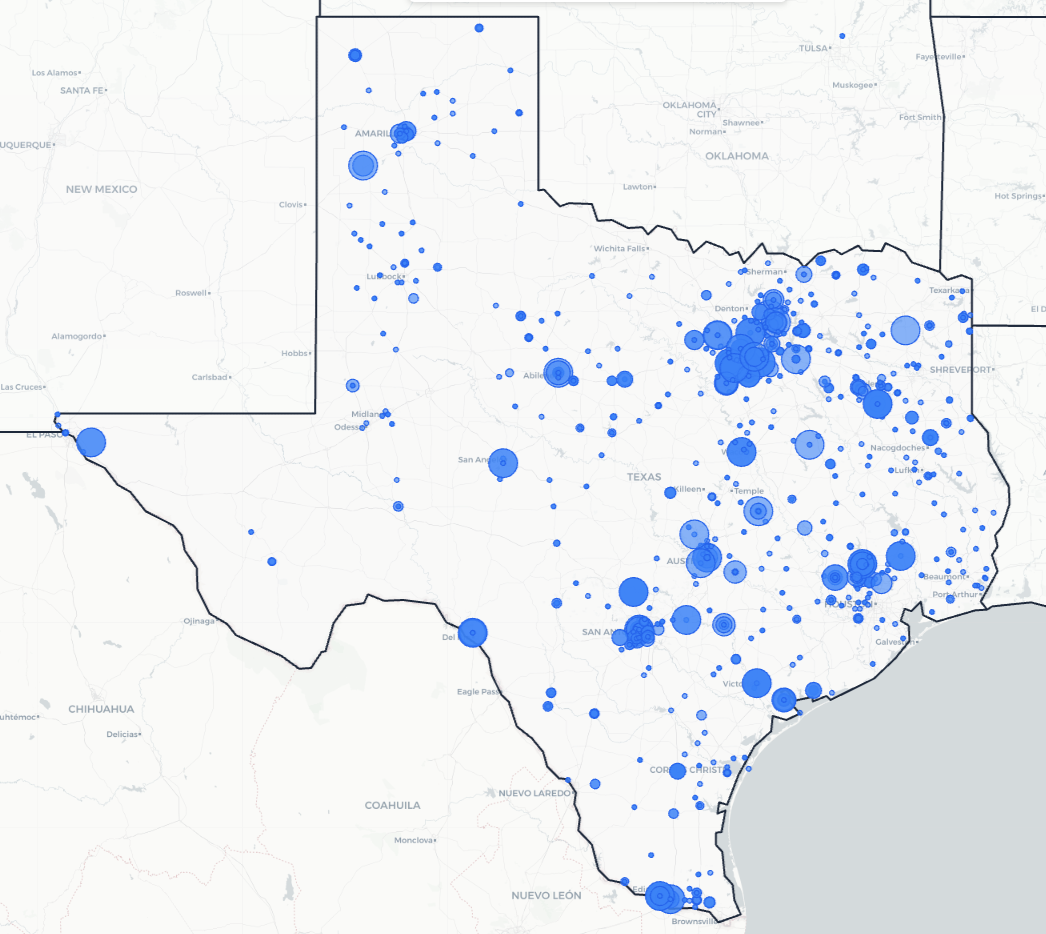
From the Rio Grande Valley to the Panhandle, Texas science teachers are using Kesler Science to save time and engage students.
Texas Schools and Districts
Love Kesler Science
What Teachers Are Saying
Give Your Science Teachers Everything They Need
School and district licenses give your teachers access to every resource they need, including station labs, inquiry labs, anchoring phenomena, presentations, escape rooms, and much more. One purchase covers the grade levels you need.
- PO-friendly. We accept purchase orders
- Volume discounts for 11+ teachers
- Complimentary Kesler Science Plus orientation for 4+ teachers
- Three free implementation PD sessions for departments of 11+
- Aligned to the 2024 TEKS standards
See It in Action
Book a walkthrough and we'll show you how Kesler Science fits your campus.
Book Demo CallNo pressure, no hard sell