.png?width=375&height=100&name=WebPage%20logo%20with%20curves%202026%20(8).png)
Development of Cell Theory
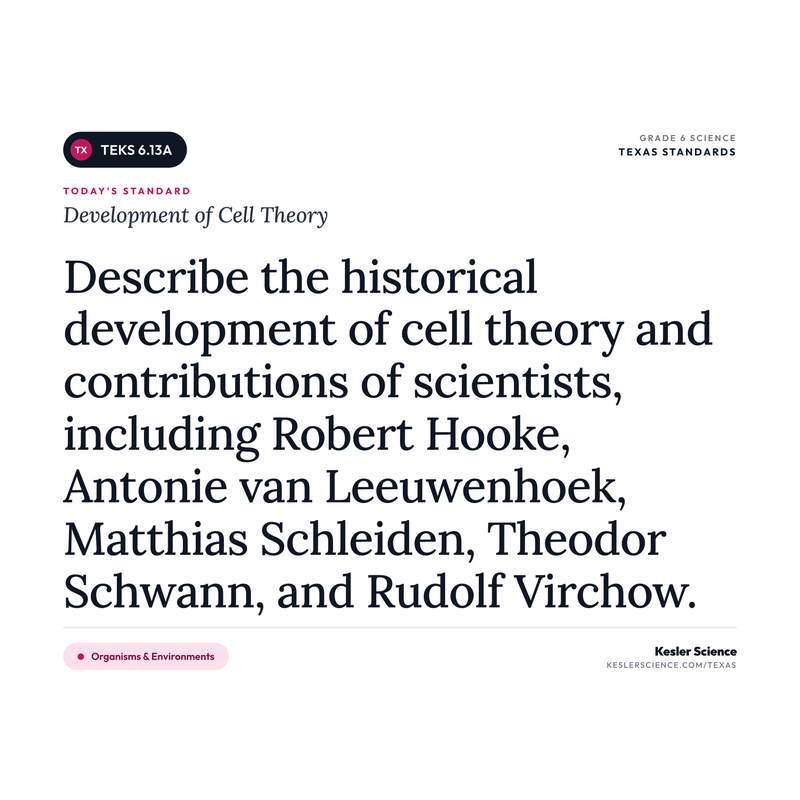
"Describe the historical development of cell theory and explain how organisms are composed of one or more cells, which come from pre-existing cells and are the basic unit of structure and function."
💡 What This Standard Actually Means
"Describe". Students are describing the historical development of cell theory and explaining the three big ideas it gave us: organisms are made of one or more cells, cells come from pre-existing cells, and cells are the basic unit of structure and function. Notice the shift in the new wording. The old standard listed five specific scientists by name. The new version focuses on the development of the theory and the conclusions it produced. The famous scientists are still useful background, but the standard's focus is on the ideas. Instruction can take many forms, such as timeline-building activities, microscope observation labs, cell theory storyboard projects, and short reading passages tied to the historical scientists.
Cell theory is a story told across nearly 200 years, and each step along the way produced one of the big ideas we still teach today. In 1665, Robert Hooke looked at a thin slice of cork through an early compound microscope and saw tiny empty boxes. He called them "cells" because they reminded him of the small rooms in a monastery. He hadn't seen living cells, just the dried-out cell walls of dead plant tissue, but he gave us the word.
A few years later, Antonie van Leeuwenhoek built better lenses and saw living, moving microorganisms in pond water and tooth scrapings. He was the first to see actual living cells. Decades later, Matthias Schleiden and Theodor Schwann concluded that plants and animals are both made of cells. In 1855, Rudolf Virchow added the line that cells come from pre-existing cells. Together, these contributions formed the modern cell theory, which has three big parts students need to describe: (1) all living things are made of one or more cells, (2) cells are the basic unit of structure and function in organisms, and (3) all cells come from pre-existing cells.
The big idea this standard wants students to walk away with is what cell theory says, not just who said it. Every living thing on Earth, from a single bacterium to a 200-foot redwood to a human being, is made of cells. Those cells are the smallest unit of life. And every cell traces back to another cell, generation after generation, all the way down. The historical scientists are the support that helps the story stick. The theory itself is the core understanding.
The move that worked for me on this one was turning it into a relay race instead of a lecture. Five scientists, five batons. I'd give each small group one scientist, a short reading, and a simple prompt: "What did they do, what did they see, and what did they add to cell theory?" Then groups taught each other in chronological order. By the time the last group presented Virchow, the class could already feel the three parts of cell theory clicking into place because they'd built it themselves. Kids remembered Leeuwenhoek looking at his own teeth scrapings for years after.
⚠️ Misconceptions Your Students May Have
These are some of the most common misconceptions. Knowing what to look for can help you get ahead of them.
"Hooke was the first person to see cells"
Hooke was the first person to describe what he called "cells," but what he was looking at were the empty cell walls of dead cork tissue. Leeuwenhoek, working a few years later, was the first to observe living single-celled organisms. Both contributions matter. Hooke named the structure; Leeuwenhoek showed that cells can be alive and moving.
"One scientist discovered cell theory"
Cell theory came together over nearly 200 years and required the work of at least five different scientists. It wasn't a single discovery moment. Students should be able to explain how the theory was built up in pieces over time, with each piece depending on better tools and on the work that came before it, and how the three-part theory we use today is the sum of that work.
"Cell theory has always existed"
Before microscopes were invented in the late 1500s, no one knew cells existed. Scientists once thought living things could appear from non-living matter, a belief called spontaneous generation. Virchow's statement in 1855 that all cells come from pre-existing cells helped replace that idea. Cell theory is a relatively recent framework.
"Cells are too small to study without a really powerful microscope"
Most plant and animal cells are easily visible with a basic student microscope, even one that magnifies just 40 or 100 times. Robert Hooke saw cork cells in 1665 with a relatively simple microscope. You can see your own cheek cells in a classroom microscope in about five minutes. Bacterial cells are smaller and need higher magnification, but the cells that built cell theory were all visible with simple optics.
📓 Teaching Resources for 6.13A
These resources are aligned to this standard.


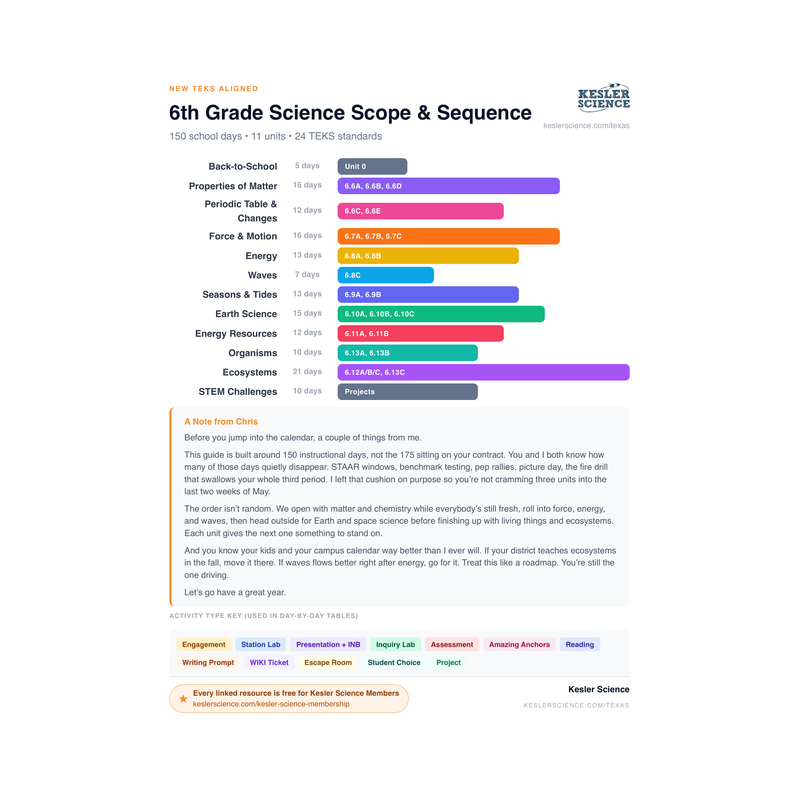
100% Aligned Lessons for Every TEKS You Teach
Kesler Science Plus puts thousands of ready-to-teach lessons and activities in your hands, so you can boost engagement and get your planning time back. Trusted by schools and districts all over the great state of Texas.
🌎 Phenomenon Ideas for 6.13A
Use these real-world phenomena to anchor your lesson. Show students the phenomenon first, let them wonder, then build toward Development of Cell Theory as the explanation.
The Cork in a Wine Bottle
A cork from a wine bottle is light, squishy, and floats. Cut it open and it looks solid, but it's actually full of tiny empty compartments. In 1665, Robert Hooke sliced a piece of cork, looked at it through one of the earliest compound microscopes, and saw rows of tiny boxes that reminded him of the small rooms (cells) where monks lived. He coined the word "cell" based on that comparison. He did not know at the time that he was looking at the walls of dead plant tissue.
"Why is cork so light and so good at floating? What might the tiny boxes Hooke saw have to do with how cork behaves in the real world?"
A Drop of Pond Water Under Magnification
A single drop of pond water looks clear and still to the naked eye. Under strong magnification, that same drop is full of darting, swimming, wriggling single-celled organisms. In the 1670s, Antonie van Leeuwenhoek used lenses he made himself to look at pond water and scrapings from his own teeth. He was the first person to describe living microorganisms, which he called "animalcules."
"If you had never seen a microscope before and someone told you there were living creatures inside a drop of water, would you believe them? What tools or evidence helped scientists prove that cells are real?"
A Giant Redwood and a Tiny Moss Both Grow
A redwood tree can reach over 300 feet tall. A patch of moss can cover a single rock. A blue whale can weigh 150 tons. A bacterium can fit a thousand copies on the head of a pin. As different as these living things look, they have one thing in common: they are all built from cells, and every cell they have came from an earlier cell. That's the heart of what Schleiden, Schwann, and Virchow worked out almost 200 years ago.
"Plants, animals, and tiny organisms look almost nothing alike. What could they possibly have in common on the inside? How did scientists figure out that all living things are built from the same basic unit?"
💡 Free Engagement Ideas for 6.13A
Ready-to-run activities you can drop straight into a lesson. Where one of these looks like a phenomenon from the section above, that is on purpose: show it first as the hook, then let students run it themselves.
Cell Theory Timeline on the Wall
Give each group one scientist (Hooke, Leeuwenhoek, Schleiden, Schwann, Virchow) and a short info card. Each group makes a poster with the year, the scientist's name, what they saw, and their contribution. Hang them across one wall in order. Students walk the timeline and write down how each piece added to cell theory.
Be Hooke: Why the Tool Mattered
Give each student a thin slice cut from a natural wine cork (teacher-cut with a blade beforehand), a hand lens, and a square of paper. Step 1: sketch the cork using just their eyes. Step 2: sketch it again through the hand lens and write one sentence about what changed. They will see it is full of tiny holes, and they will not be able to make out individual boxes. That is the point. Step 3: show them Hooke's 1665 drawing and tell them he was looking at the same material through a microscope about thirty times stronger than their lens. Then ask the question that runs this whole standard: what did he have that you don't, and what does that tell you about why cell theory took 200 years? If you have microscopes, put the same slice under 40x or 100x afterward and let them see what Hooke saw.
Scientist Trading Cards
Students create a "trading card" for each of the five scientists. Front of the card has the name, year, and a simple portrait or icon. Back of the card lists three facts: what they used, what they saw, and what they added to cell theory. Trade cards around the room so students quiz each other. Great for visual learners.
Three-Part Cell Theory Sort
Write the three parts of cell theory on three sheets of paper on the floor or whiteboard. Give students statements on small cards (examples: "A redwood is made of cells," "Cells come from cells that came before them," "Cells do jobs inside living things"). Students sort each card under the correct part of cell theory and defend their placement.
🎯 What Approaches, Meets, and Masters Thinking Look Like
Here is what student thinking at each level looks like on this one task, so you know what to look for and how to move a student up.
A science timeline shows four moments in the development of cell theory.
1665: Robert Hooke uses an early microscope to look at a thin slice of cork. He sees rows of tiny empty boxes and names them cells.
1670s: Antonie van Leeuwenhoek grinds stronger lenses, looks at pond water and at scrapings from his own teeth, and sees tiny living things moving.
1838 to 1839: Matthias Schleiden studies plants and Theodor Schwann studies animals. They conclude that both are made of cells.
1855: Rudolf Virchow studies dividing cells and concludes that every cell comes from a cell that already existed.
Describe how cell theory developed across these four moments. Explain what each one added to what people already knew. Then explain why the theory took almost 200 years to come together instead of arriving all at once.
- Each moment matched to what it added, not just copied back off the timeline.
- The moments kept in order and connected to each other, rather than four facts sitting alone.
- At least one part of cell theory said in plain words: living things are made of one or more cells, cells are the basic unit of structure and function, cells come from cells that already existed.
- A reason the theory took 200 years, with the tools as part of that reason. Each scientist could only add what their lenses let them see.
- 1665 and the 1670s kept straight. The 1665 boxes were the empty walls of dead cork. Living cells came later. That is the easiest place to slip.
- Names are a bonus here, not the answer. Nothing in 6.13A asks a student to recall who did what, so a student who describes the development correctly without using a single name has met the standard.
The first one is Robert Hooke. Hooke looked at cork under a microscope and saw little boxes. He called them cells. Hooke discovered cell theory in 1665. He is the one who figured out the cell theory we use today, and the other scientists just found more stuff about cells later.
In 1665 Hooke looked at a slice of cork under a microscope and saw tiny empty boxes. He called them cells, but they were really the dead walls of plant cells. A few years later, Leeuwenhoek used better lenses and saw living tiny things moving in pond water. He was the first to see living cells. Then Schleiden and Schwann found that plants and animals are both made of cells.
These fit together because Hooke gave us the word "cells," Leeuwenhoek showed that cells can be alive, and Schleiden and Schwann showed that everything living is built out of them. That is one of the big parts of cell theory.
The 1838 moment and the 1855 moment are the two that finish the theory. Schleiden studied plants and Schwann studied animals, and they concluded that all plants and all animals are made of cells. That gave us the idea that living things are built from cells. Later, in 1855, Virchow added that cells come from other cells that already exist.
These pieces fit together because Schleiden and Schwann told us what living things are made of, and Virchow told us where new cells come from. You need both to have the full theory. This shows why cell theory took almost 200 years and many scientists, not one discovery. Each person could only add the piece their tools and ideas let them see. It is like a class building one big timeline poster, where each student adds a different event and the whole picture only makes sense when all the parts are together.
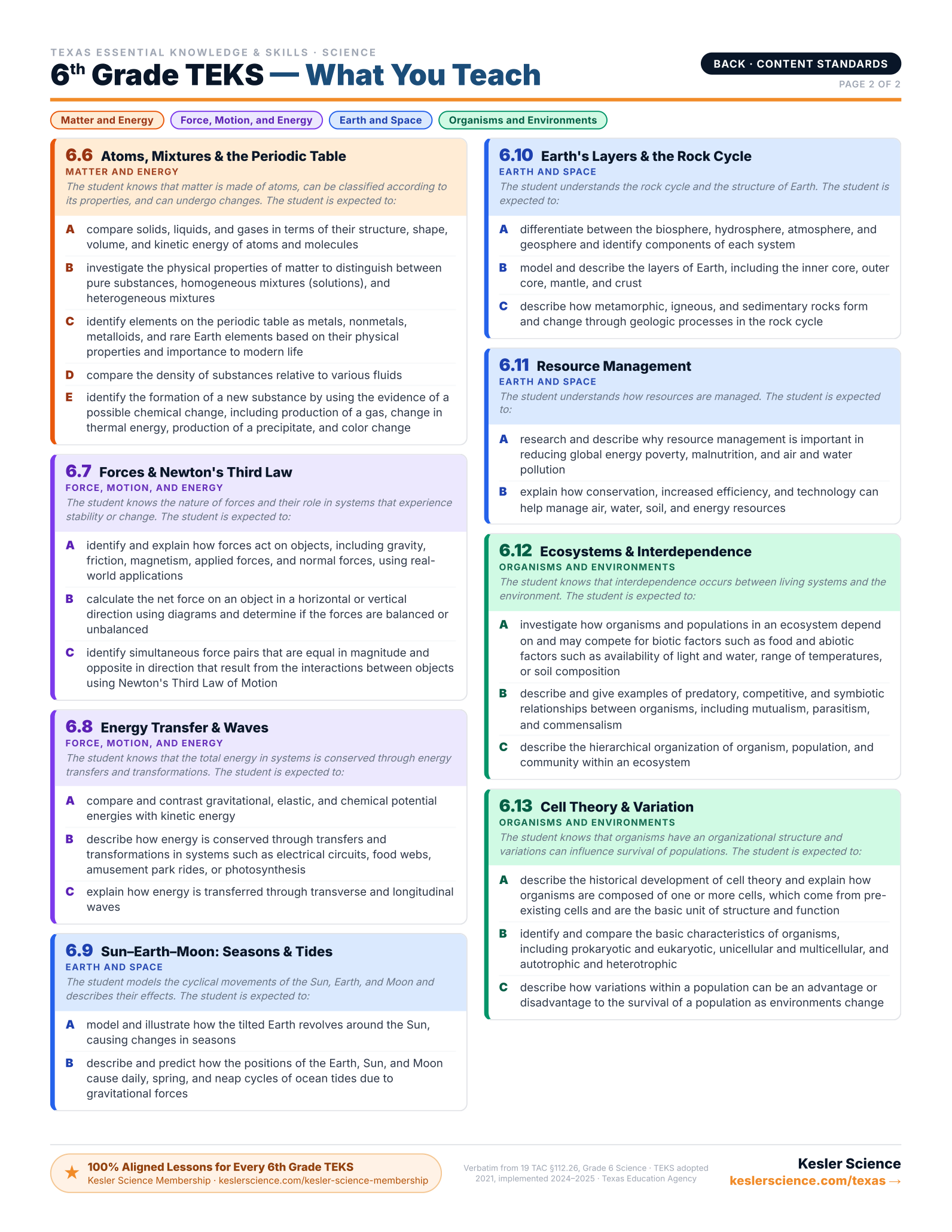
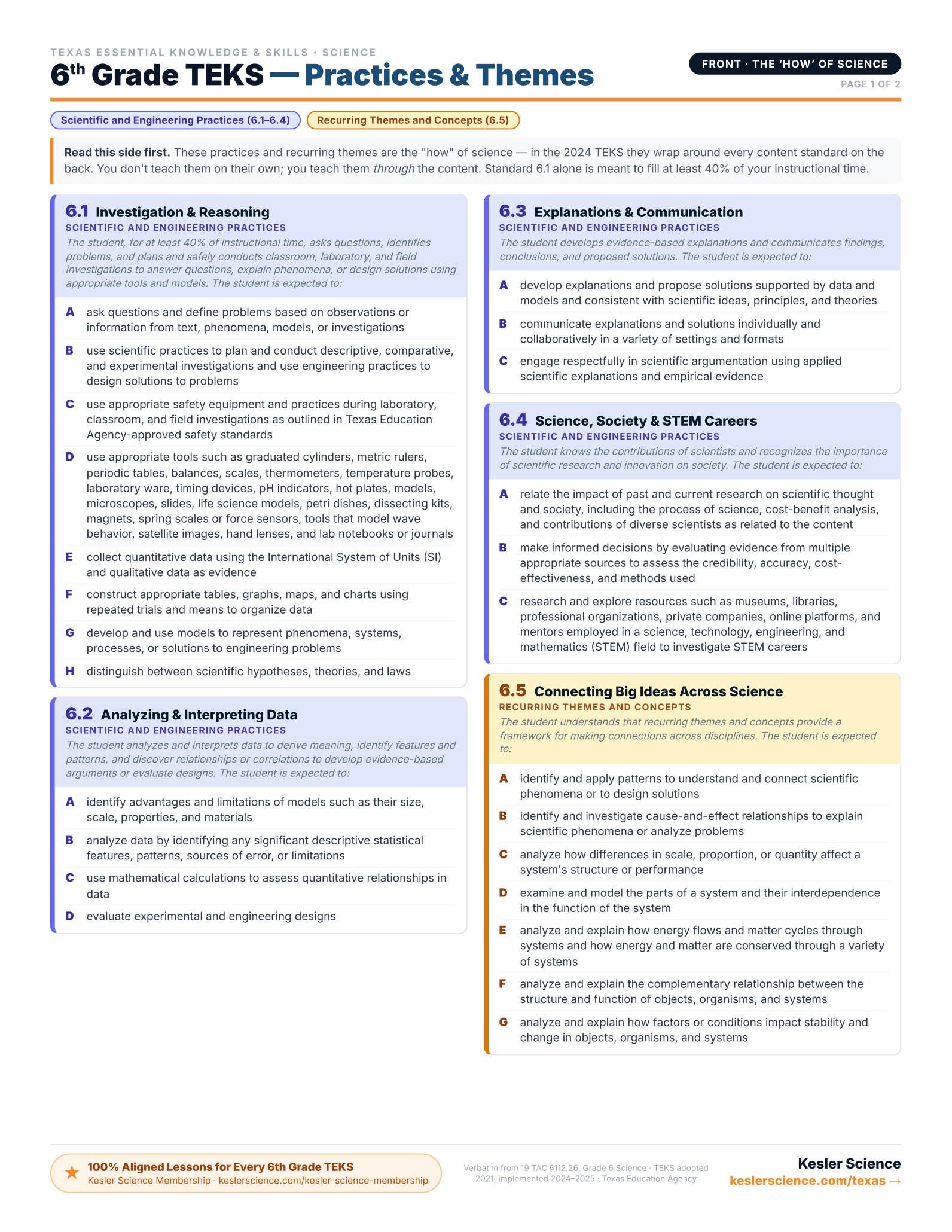
Every 6th-Grade Science TEKS on One Page
The color-coded, front-and-back cheat sheet I wish I'd had — every standard, organized by reporting category. Print it and reference it all year long. This will be your new favorite document!
Trusted Across Texas
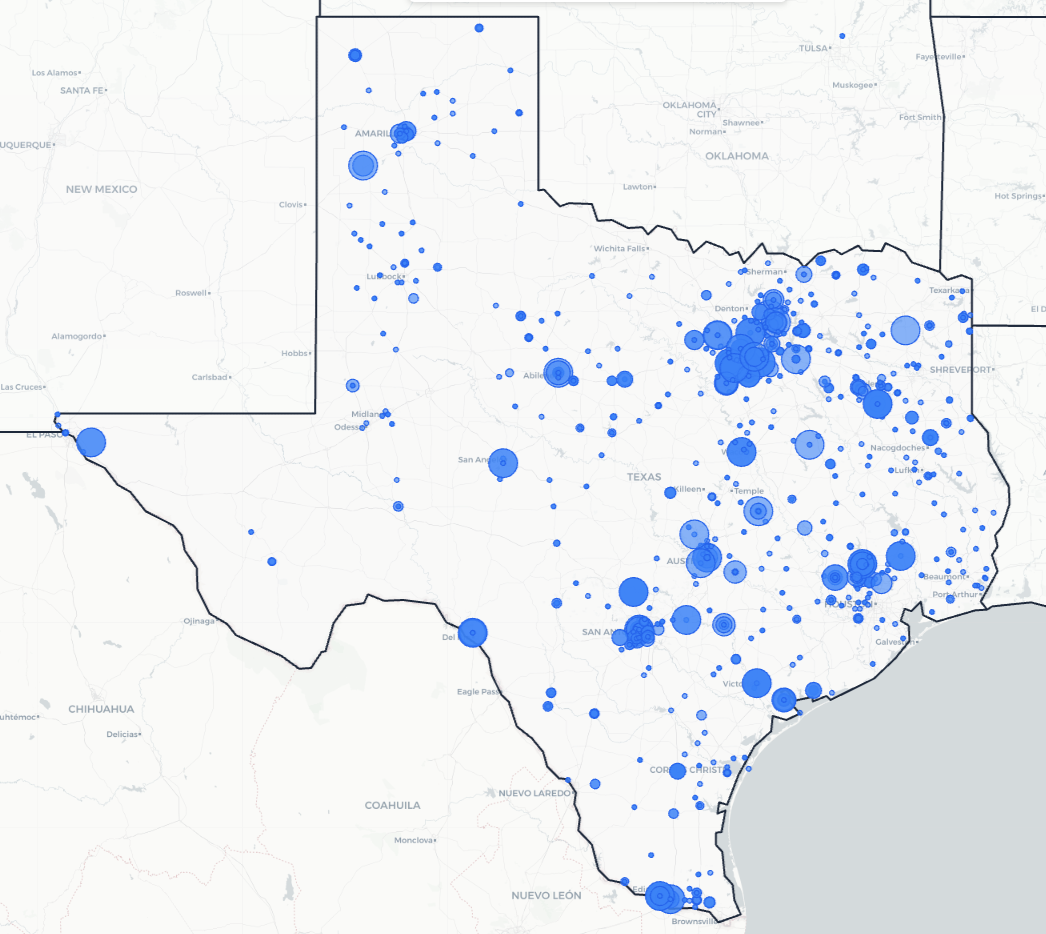
From the Rio Grande Valley to the Panhandle, Texas science teachers are using Kesler Science to save time and engage students.
Texas Schools and Districts
Love Kesler Science
What Teachers Are Saying
Give Your Science Teachers Everything They Need
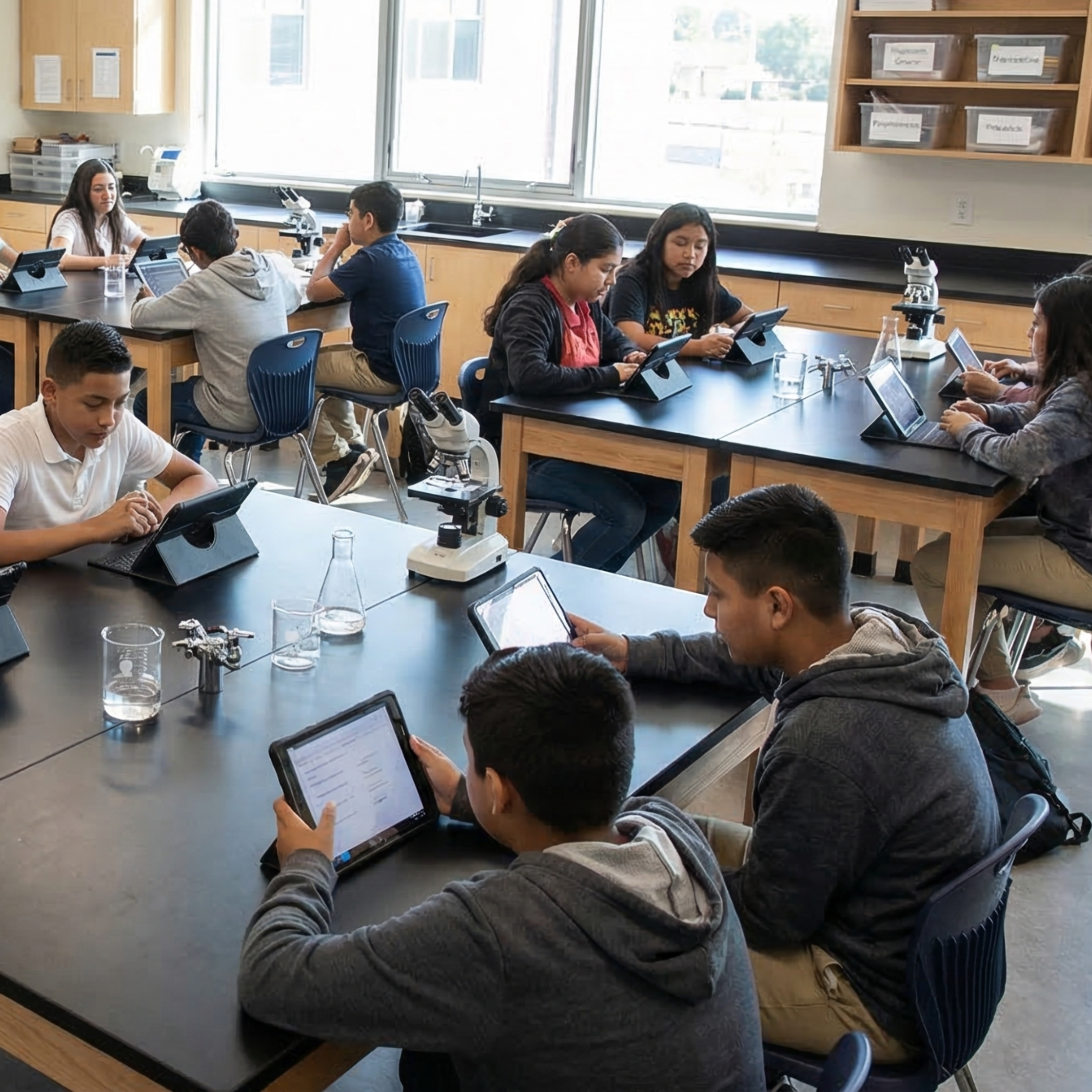
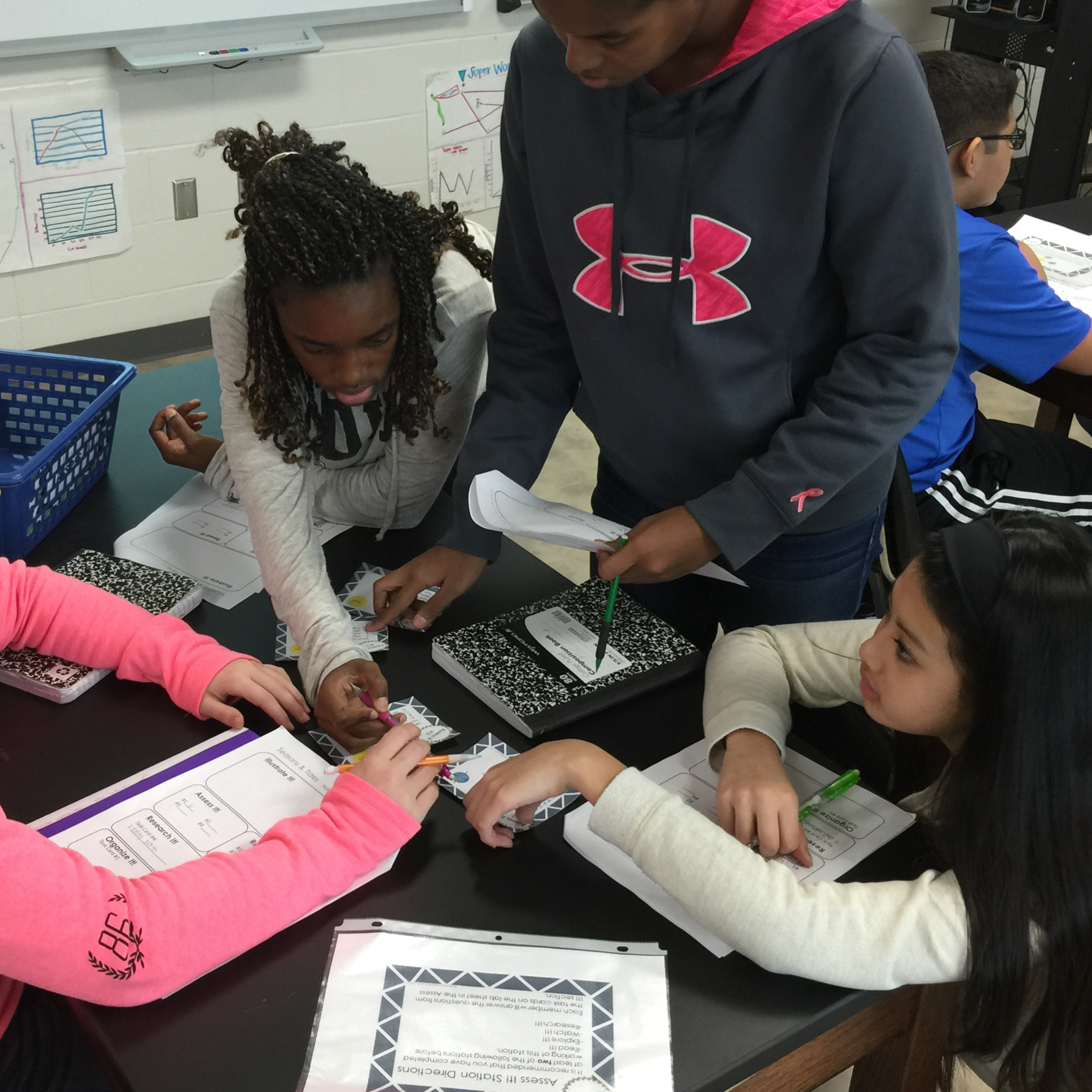
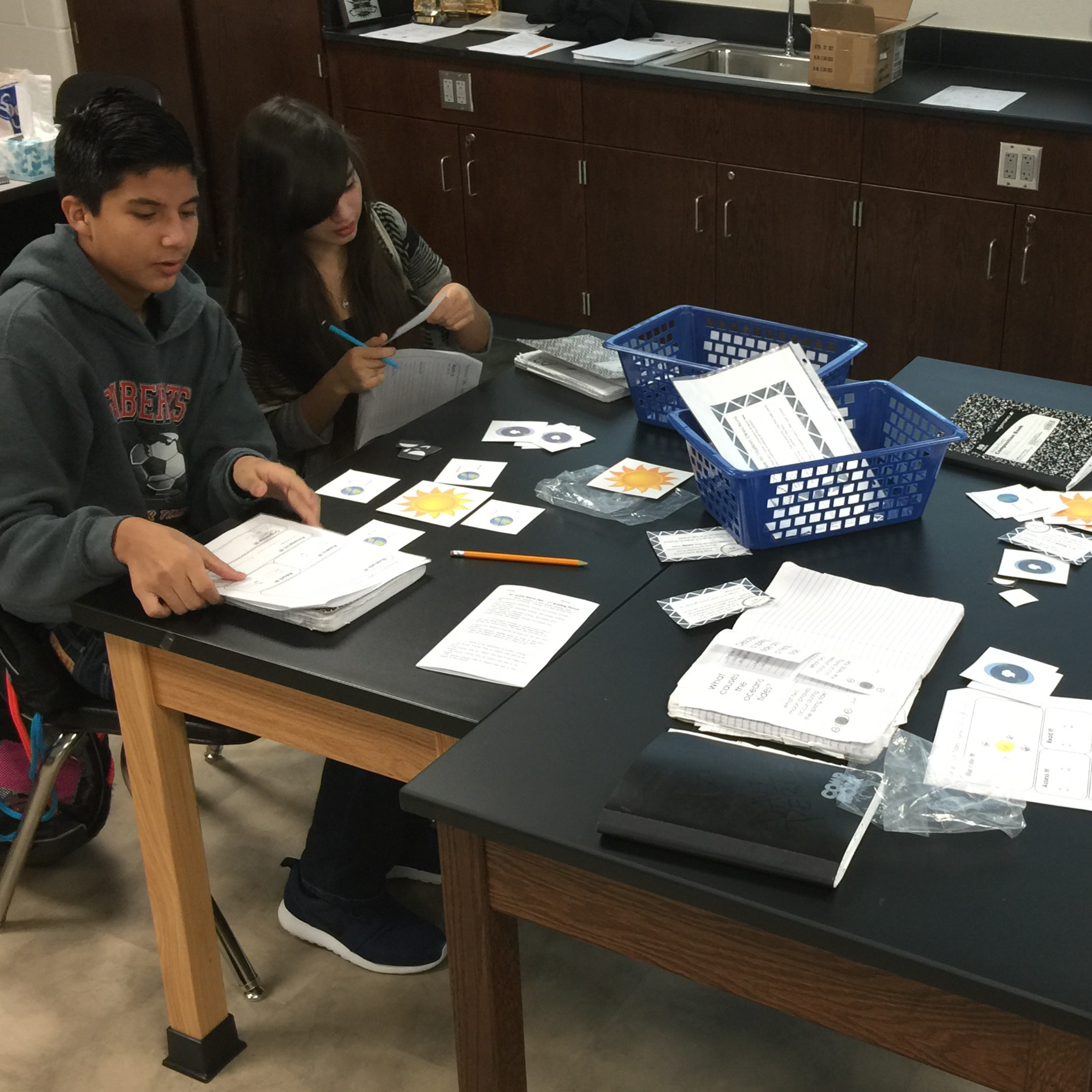
School and district licenses give your teachers access to every resource they need, including station labs, inquiry labs, anchoring phenomena, presentations, escape rooms, and much more. One purchase covers the grade levels you need.
- PO-friendly. We accept purchase orders
- Volume discounts for 11+ teachers
- Complimentary Kesler Science Plus orientation for 4+ teachers
- Three free implementation PD sessions for departments of 11+
- Aligned to the 2024 TEKS standards
See It in Action
Book a walkthrough and we'll show you how Kesler Science fits your campus.
Book Demo CallNo pressure, no hard sell