.png?width=375&height=100&name=WebPage%20logo%20with%20curves%202026%20(8).png)
Evidence of Chemical Changes
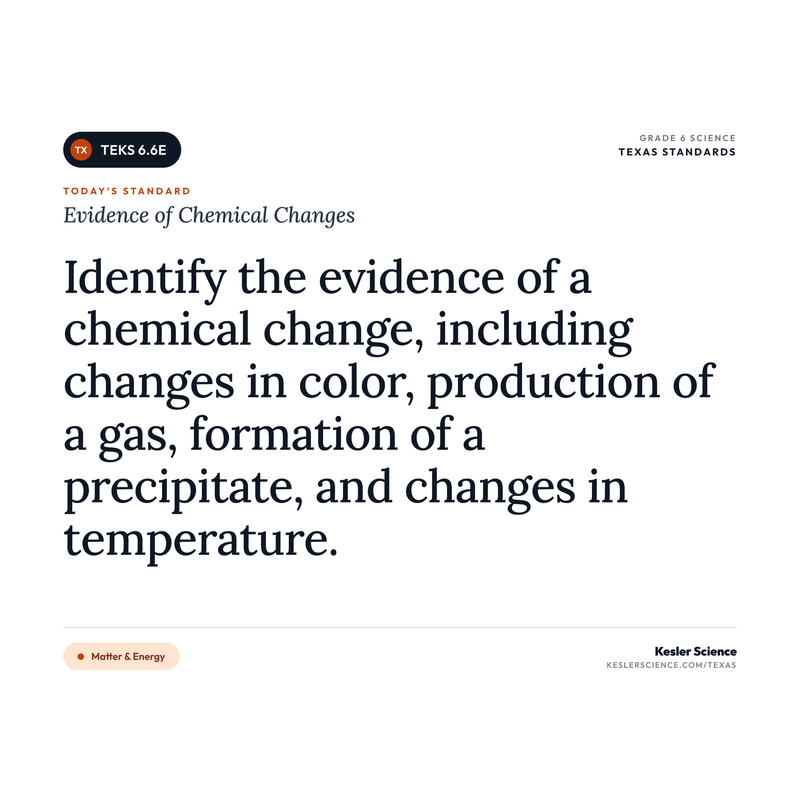
"Identify the formation of a new substance by using the evidence of a possible chemical change, including production of a gas, change in thermal energy, production of a precipitate, and color change."
💡 What This Standard Actually Means
"Identify". Students are looking at a reaction or change and identifying that a new substance has formed by spotting the evidence of a chemical change. The standard names four pieces of evidence to focus on: production of a gas, change in thermal energy, production of a precipitate, and color change. Notice the wording shift here. The standard isn't just about chemical change in general, it's about using these specific clues to identify that a new substance has formed. Instruction can take many forms, such as classic baking soda and vinegar reactions, hand-warmer demonstrations, mixing-clear-liquids precipitate labs, and observation logs that ask kids to name the evidence by category.
A chemical change happens when one or more substances turn into one or more different substances. New particles have formed. The starting material isn't the same as what you end up with. A physical change, by contrast, changes the way something looks but not what it's made of. Tearing paper is physical. Burning paper is chemical. The whole point of this standard is teaching kids how to spot when a new substance has formed.
Four classic kinds of evidence are written into the standard. Production of a gas: bubbles forming in a liquid that wasn't bubbling before, like the foamy reaction when baking soda hits vinegar. Change in thermal energy: the reaction releases heat (warmer to the touch) or absorbs heat (cooler to the touch) without an outside heat source. A hand warmer cracking on a cold morning is a chemical reaction releasing thermal energy. Production of a precipitate: a solid suddenly forms when two clear liquids are mixed, settling out at the bottom or floating as cloudy bits. Color change: a color appears or shifts that wasn't caused by simple mixing of two pre-colored substances.
The big idea students should walk away with is that one piece of evidence is a clue, not proof. Plenty of physical changes also show some of these signs (boiling water bubbles, mixing food coloring changes color). Two or more pieces of evidence happening together makes the case for a chemical change much stronger. The evidence is what points students toward the conclusion that a brand-new substance has formed.
The trick I used for this one was building a "detective notebook" for each kid. Every demo I ran, they had to write down every piece of evidence they noticed in the Observation column, then decide Chemical Change or Physical Change and justify it with the specific clues. Mixing baking soda and vinegar? Gas production and temperature drop, both clues. Crumpling a piece of aluminum foil? No clues at all. That kept them from guessing. They had to point to the actual evidence before they could make a call. By the end of the unit, "evidence" was a word they used naturally.
⚠️ Misconceptions Your Students May Have
These are some of the most common misconceptions. Knowing what to look for can help you get ahead of them.
"Any color change means a chemical change happened"
Students hear "color change" and lock in on it. But stirring blue food coloring into water turns the water blue, and nothing chemical has happened. That's just mixing. The kind of color change that signals a chemical change is one that can't be explained by mixing two colors. A shiny metal turning dull and reddish from rust is a real chemical color change.
"Bubbles always mean a chemical change"
Bubbles come from any kind of gas, including a gas that was already in the liquid. When you open a soda, the bubbles are dissolved carbon dioxide escaping. No chemical change, just a physical release. When baking soda meets vinegar, however, the bubbles are brand-new carbon dioxide being created. Students have to ask: is gas being produced from a reaction, or released from something it was already in?
"If the temperature changes, the heat must be coming from somewhere outside"
Students are used to thinking heat comes from a stove or a sun. The idea that a reaction itself can release or absorb heat is new. Mixing baking soda and vinegar gets colder without anyone adding ice. Steel wool dipped in vinegar gets warmer without a heater. The reaction itself is the source of that temperature change, and that's the clue they should catch.
"Chemical changes can be reversed if you try hard enough"
Students sometimes assume every reaction can be undone. Most chemical changes are difficult to reverse with the simple methods used in a classroom. Burnt toast is the clearest example. Scraping the black off just removes it, it doesn't turn that part back into bread. Physical changes (ice melting, water evaporating) are usually easy to reverse. Chemical changes usually aren't, which is another signal that something new has formed.
📓 Teaching Resources for 6.6E
These resources are aligned to this standard.


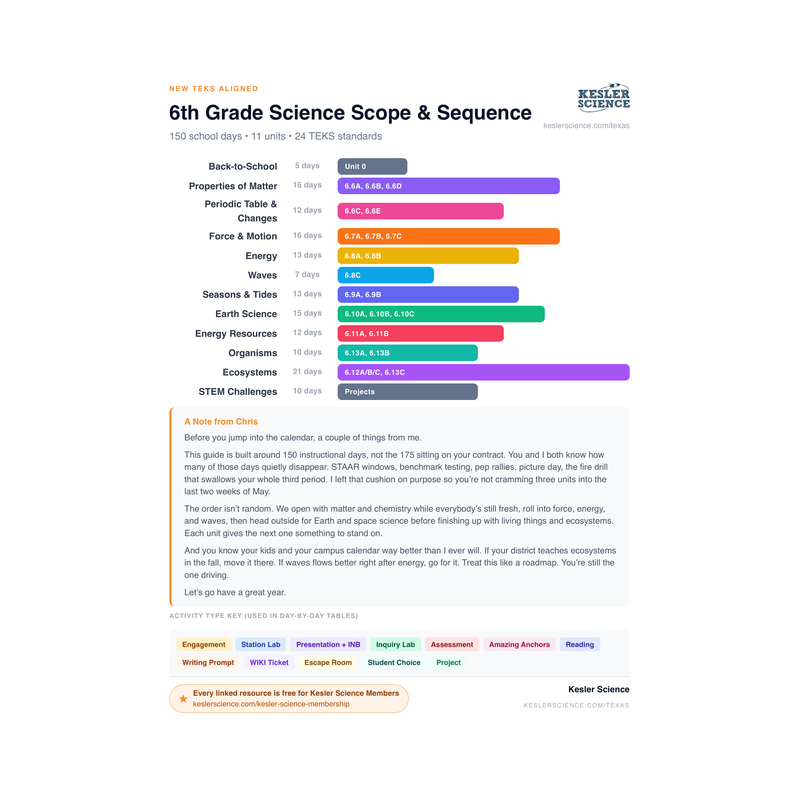
100% Aligned Lessons for Every TEKS You Teach
Kesler Science Plus puts thousands of ready-to-teach lessons and activities in your hands, so you can boost engagement and get your planning time back. Trusted by schools and districts all over the great state of Texas.
🌎 Phenomenon Ideas for 6.6E
Use these real-world phenomena to anchor your lesson. Show students the phenomenon first, let them wonder, then build toward Evidence of Chemical Changes as the explanation.
A Rusted Bike Left in the Rain
A shiny silver bike gets left out in the backyard for a month. When you come back, parts of it are covered in flaky, reddish-brown rust. You didn't paint it. Nobody replaced any of the metal. The metal itself slowly reacted with oxygen and moisture in the air and turned into a new substance called iron oxide.
"The color of the metal clearly changed. But this isn't just paint. What kind of evidence is the color change giving us? What does rusting tell us happened to the iron in the bike?"
An Apple Slice Turning Brown
Cut an apple in half and walk away for 20 minutes. Come back and the flesh has turned brown. Nobody added food coloring or painted it. The apple's insides reacted with oxygen in the air, producing new compounds that show up as that brown color. You can slow it down with lemon juice, but once the browning has happened you can't undo it. Cutting the brown part away just removes it, it doesn't turn it back into fresh white apple.
"The apple changed color without anything being added on top. What evidence do we have that this was a chemical change and not just a physical one? Why does lemon juice slow it down?"
A Campfire Burning Wood to Ash
Start with a stack of wood logs. Light them. Hours later, you're looking at a pile of gray ash, and heat and smoke have poured off during the burn. The wood didn't just change shape, it changed identity. Wood has mostly turned into gases that rose into the air and into ashes that stayed behind. The original wood is gone.
"How many of the four clues for a chemical change can you spot when wood burns? Color change, gas, temperature, precipitate. Which ones show up, and how do you know?"
💡 Free Engagement Ideas for 6.6E
Ready-to-run activities you can drop straight into a lesson. Where one of these looks like a phenomenon from the section above, that is on purpose: show it first as the hook, then let students run it themselves.
Baking Soda & Vinegar Temperature Check
Give each group a cup with a little vinegar, a thermometer, and a teaspoon of baking soda. Students record the starting temperature of the vinegar, add the baking soda, stir, and record the new temperature. They note the bubbles, the fizzing, and the temperature drop. Then they list which of the four signs of chemical change showed up.
Epsom Salt Precipitate
Dissolve two spoonfuls of Epsom salt in a cup of warm water. In a second cup, dissolve two spoonfuls of washing soda (sodium carbonate, laundry aisle) in warm water. Both are clear. Pour them together and a cloudy white solid appears right away. That solid is a precipitate (magnesium carbonate), and it is the evidence that a new substance formed. Students document the change and explain which of the four signs of chemical change they saw.
Steel Wool in Vinegar
Soak a small piece of steel wool in vinegar for about a minute, then wrap it around the bulb of a thermometer and place in a cup to hold it steady. Record the temperature every minute for 5 minutes. The temperature will rise as the iron reacts with oxygen. Students notice the temperature change and connect it to one of the four signs.
Chemical or Physical Sort Stations
Set up 6 stations around the room. At each, demonstrate a change: crumpling paper, tearing foil, dissolving sugar in water, mixing baking soda and vinegar, lighting a match (teacher only), and rusting a nail in salt water (overnight setup). Students rotate, observe, and classify each as chemical or physical. They must cite at least one piece of evidence for every chemical change.
🎯 What Approaches, Meets, and Masters Thinking Look Like
Here is what student thinking at each level looks like on this one task, so you know what to look for and how to move a student up.
A student watches two setups at the lab table. In Cup A, she stirs a few drops of blue food coloring into clear water, and the water turns blue. In Cup B, she drops a clean iron nail into a clear liquid, waits, and the shiny nail slowly turns dull and reddish-brown. Both setups showed a color change. For each cup, decide whether a new substance formed, and explain how you know.
- A clear decision for each cup: did a new substance form, yes or no.
- Cup A correctly called a physical change (no new substance), just mixing two things together.
- Cup B correctly called a chemical change, with the reddish-brown color named as evidence a new substance formed.
- The reasoning ties to the color, not just a guess: in Cup A the blue came from a color the student added, in Cup B the new color appeared on its own.
- Language showing color change is a clue, not automatic proof, of a chemical change.
- The Cup A vs. Cup B difference explained correctly: mixing two colors versus a brand-new color appearing. That is the easiest place to slip.
Both cups had a color change, so both made a new substance. Cup A turned blue and Cup B turned reddish-brown. A color change means a chemical change happened, so a new substance formed in both of them.
Cup A is not a chemical change. The water turned blue, but that is just because you stirred in blue food coloring. You only mixed two things, so no new substance was made. Cup B is a chemical change. The shiny nail turned dull and reddish-brown all by itself, and nobody added that color. That new reddish-brown stuff is rust, which is a new substance. So a new substance formed in Cup B but not in Cup A.
Cup A is a physical change. The water only looks different because blue food coloring was stirred in. The color was already there, you just spread it around, so no new substance was made. Cup B is a chemical change. The nail turned reddish-brown on its own with no color added, so a new substance (rust) formed.
The real rule is this: a color change is only a clue, not proof. You have to ask where the color came from. If you mixed in something that was already that color, it is just mixing. If a new color shows up on its own, a new substance probably formed. That is how I know a sliced apple turning brown on the counter is a chemical change too. Nobody painted it brown, and the brown color appeared all by itself, so the apple made a new substance.
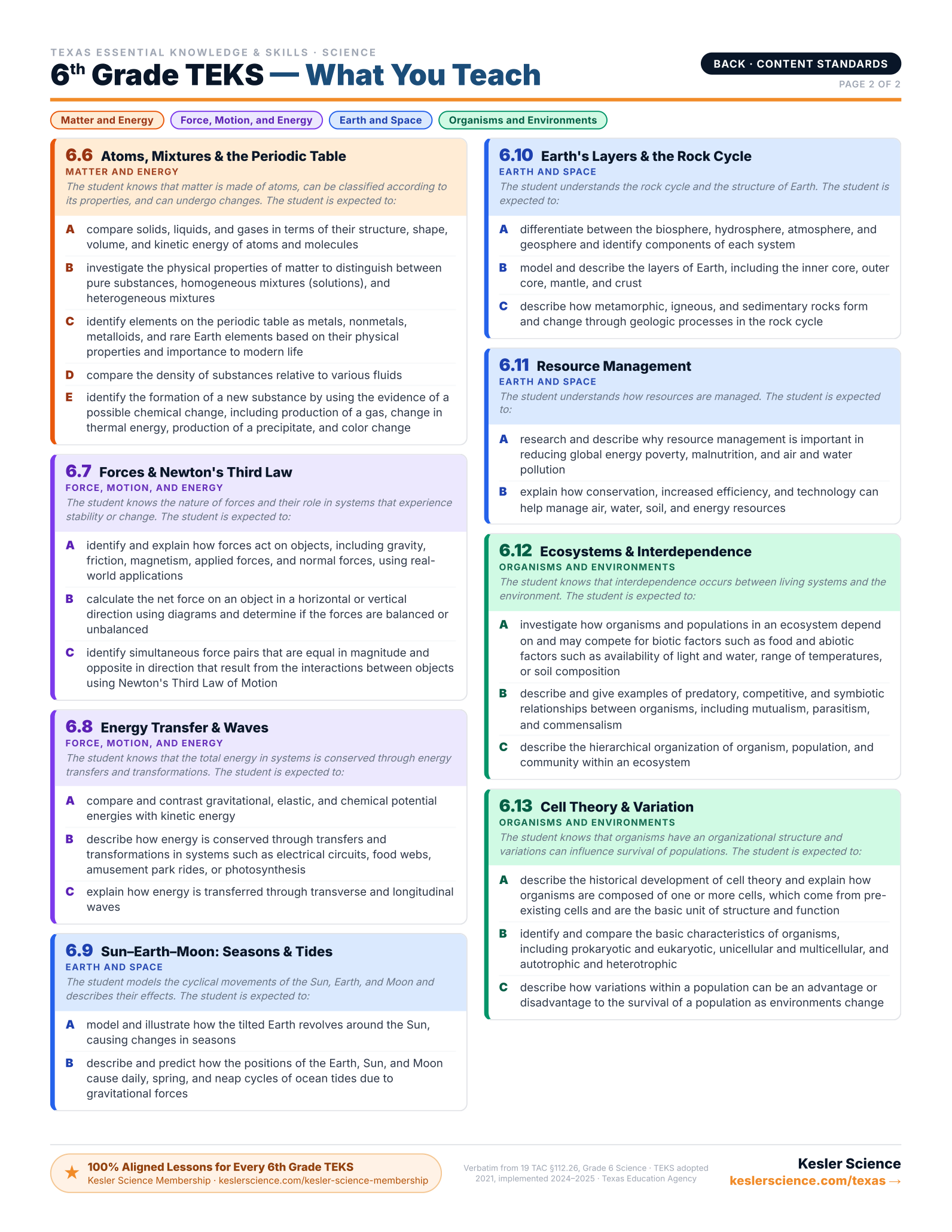
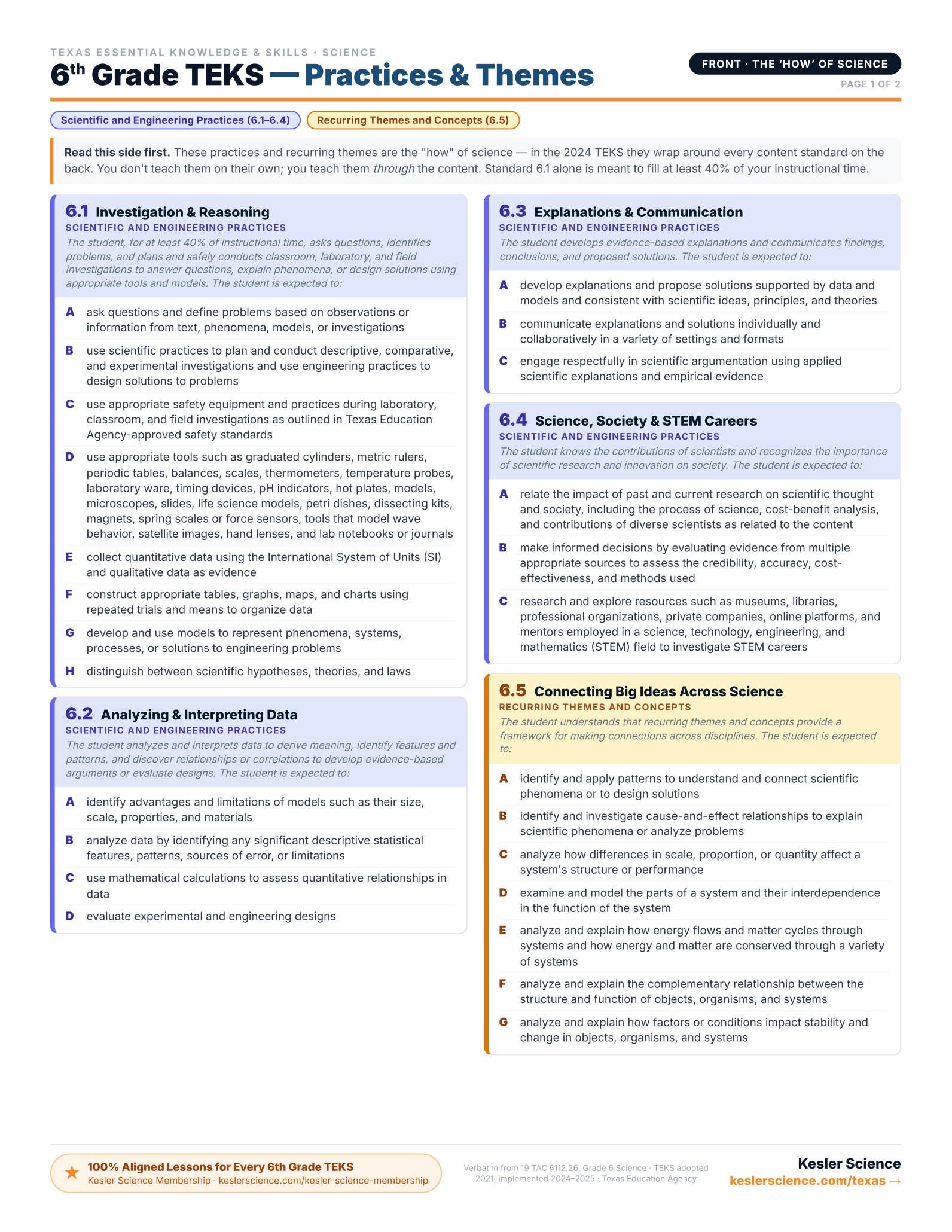
Every 6th-Grade Science TEKS on One Page
The color-coded, front-and-back cheat sheet I wish I'd had — every standard, organized by reporting category. Print it and reference it all year long. This will be your new favorite document!
Trusted Across Texas
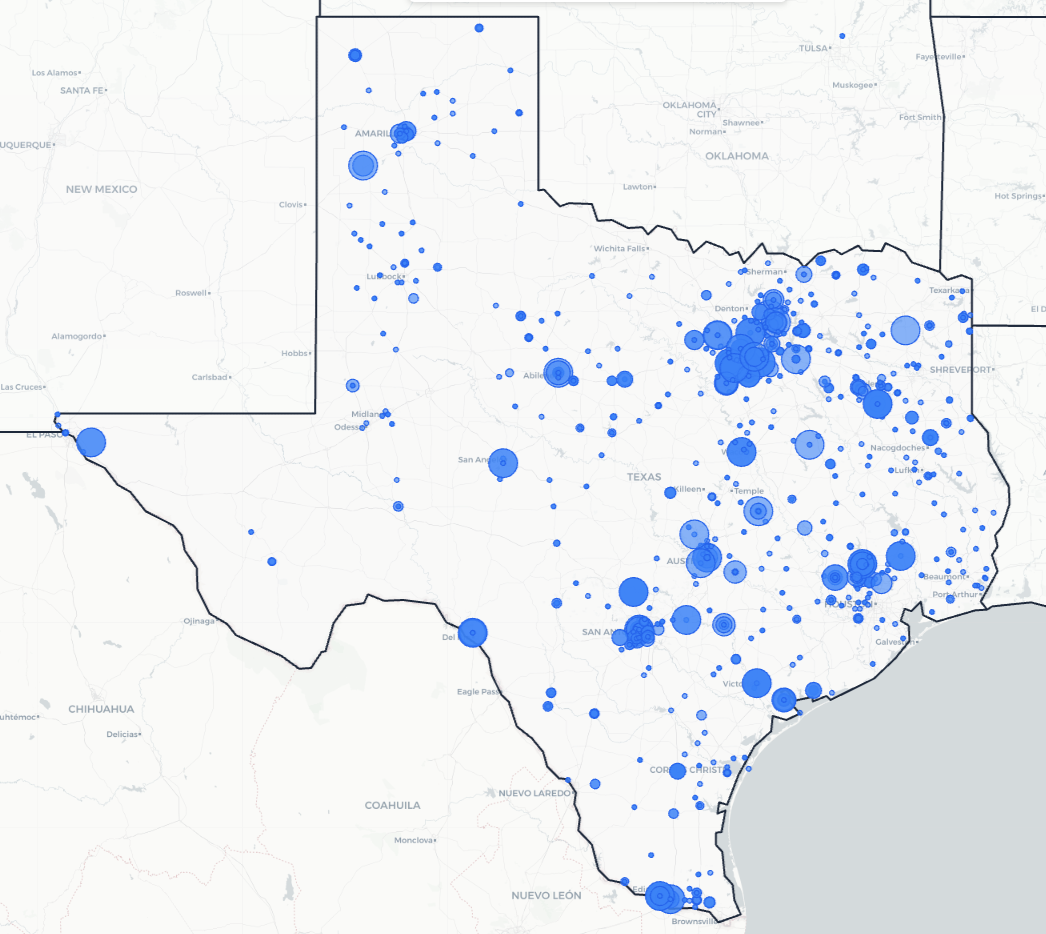
From the Rio Grande Valley to the Panhandle, Texas science teachers are using Kesler Science to save time and engage students.
Texas Schools and Districts
Love Kesler Science
What Teachers Are Saying
Give Your Science Teachers Everything They Need
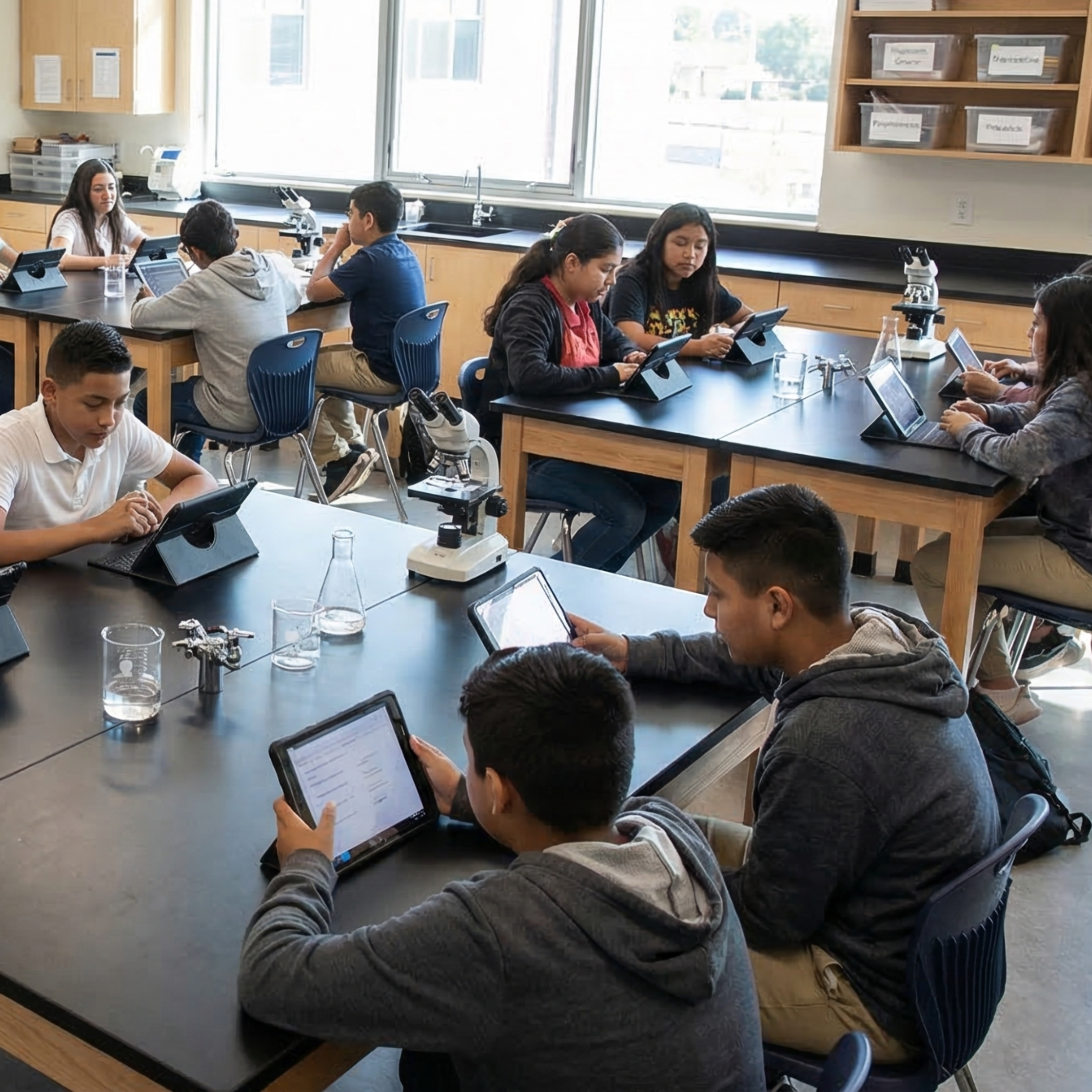
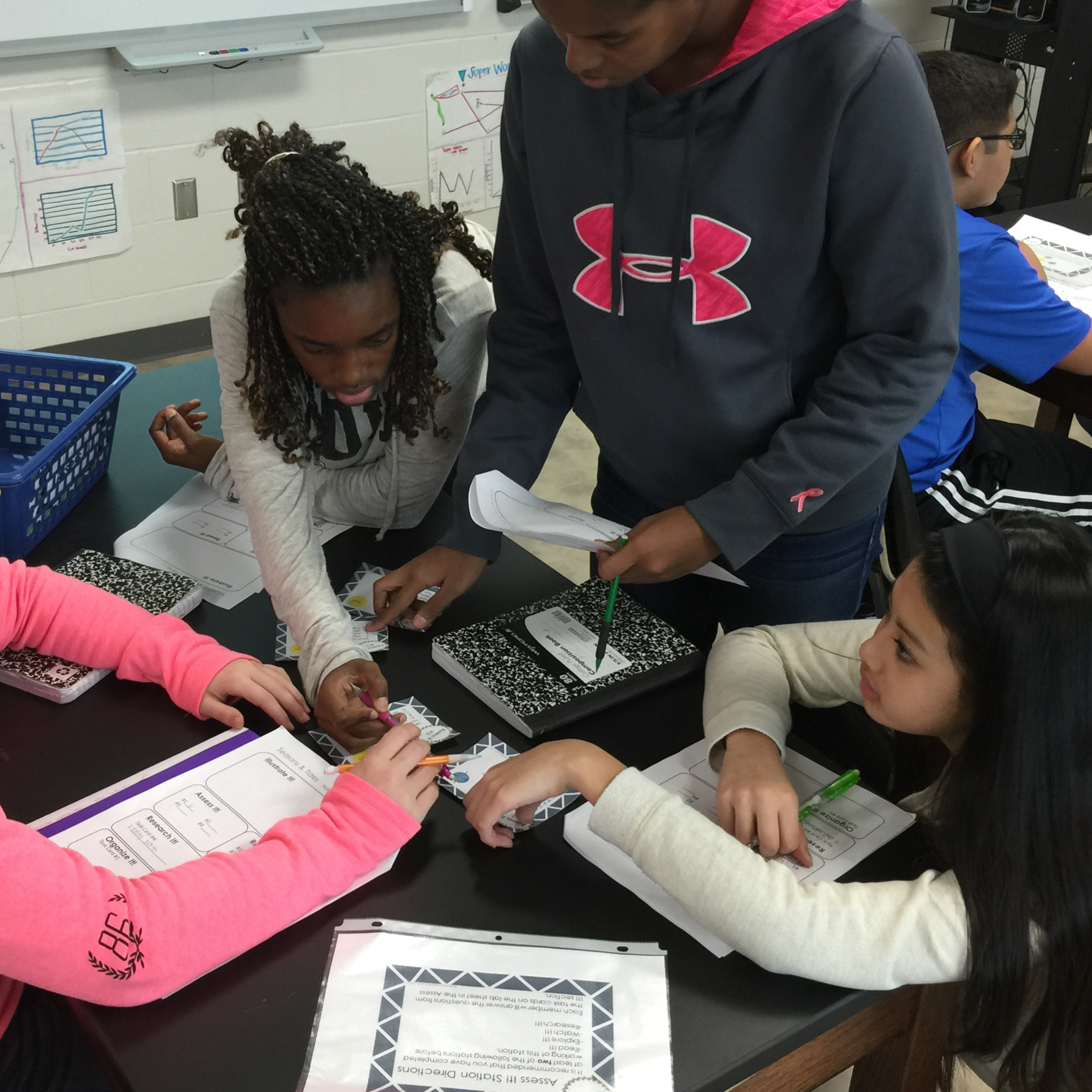
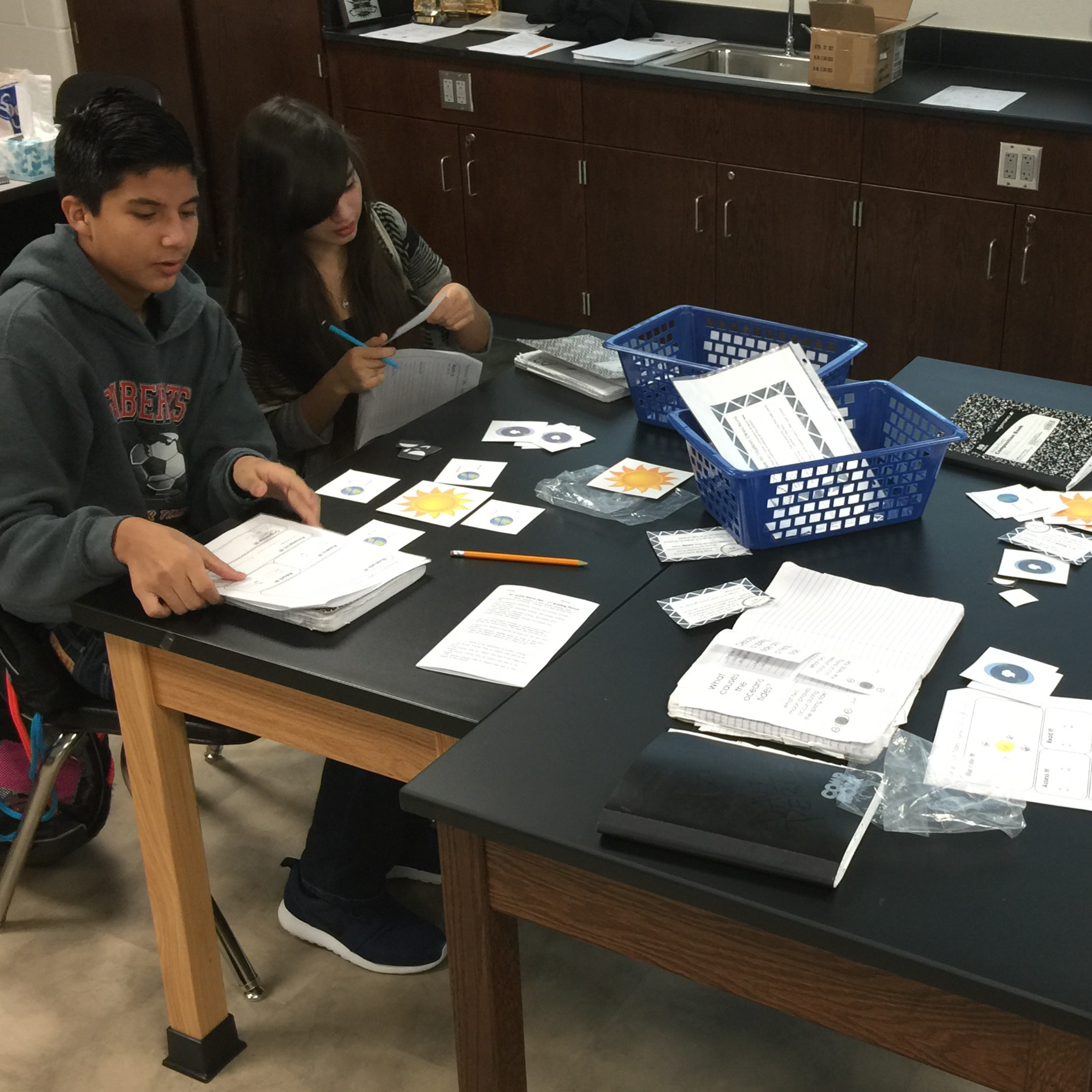
School and district licenses give your teachers access to every resource they need, including station labs, inquiry labs, anchoring phenomena, presentations, escape rooms, and much more. One purchase covers the grade levels you need.
- PO-friendly. We accept purchase orders
- Volume discounts for 11+ teachers
- Complimentary Kesler Science Plus orientation for 4+ teachers
- Three free implementation PD sessions for departments of 11+
- Aligned to the 2024 TEKS standards
See It in Action
Book a walkthrough and we'll show you how Kesler Science fits your campus.
Book Demo CallNo pressure, no hard sell