.png?width=375&height=100&name=WebPage%20logo%20with%20curves%202026%20(8).png)
Model Earth's Tilt & Seasons
"Model and illustrate how the tilted Earth revolves around the Sun, causing changes in seasons."
💡 What This Standard Actually Means
"Model and illustrate". Students are creating models that show the tilted Earth revolving around the Sun and explaining how that revolution causes the seasons. This is a model-making standard, so kids need to physically or visually show what's happening. Earth's axis stays tilted in the same direction in space as it travels around the Sun once a year, and that's what produces summer, fall, winter, and spring. Instruction can take many forms, such as flashlight-and-globe demos, paper-plate orbit models, animated simulations, and seasonal journals tied to the Earth's position.
Earth's axis is tilted about 23.5 degrees compared to the plane of its orbit. That tilt stays pointed in the same direction in space the whole time Earth travels around the Sun. The Earth doesn't wobble back and forth during the year. The tilt is fixed. What changes is which part of Earth is leaning toward the Sun at any given point in the orbit.
When the Northern Hemisphere is tilted toward the Sun, sunlight hits that part of Earth at a more direct angle and the days are longer. More energy per square meter, more hours of light, warmer weather. That's summer in the Northern Hemisphere. At the same time, the Southern Hemisphere is tilted away. Light hits at a shallower angle, the days are shorter, and it's their winter. Six months later, Earth has traveled to the opposite side of the Sun and the situation flips. Now the Southern Hemisphere is leaning toward the Sun (their summer) while the Northern Hemisphere leans away (our winter).
Two big ideas tie it together. The angle of sunlight matters. Direct rays concentrate energy on a smaller area. Shallow rays spread the same energy over a much bigger area, so the ground heats up less. The length of daylight matters. More hours of sunlight means more time to warm up. Both happen at the same time in the hemisphere tilted toward the Sun, and together they create the temperature pattern we feel as the seasons. The whole idea hinges on the tilted Earth revolving around the Sun.
I used to blow right past the tilt part and jump straight to seasons. Big mistake. The first time I slowed down and had kids tilt a globe 23.5 degrees, walk it around a desk lamp "sun" at the center of the room, and keep the axis pointed at the same spot on the wall, something clicked that never clicked from a diagram. They could SEE the Northern Hemisphere lean into the light on one side of the desk and lean away on the other. After that, I started every seasons lesson with the walk. Model first, explanation second. Skip the walk and you're fighting an uphill battle against the distance misconception the whole time.
⚠️ Misconceptions Your Students May Have
These are some of the most common misconceptions. Knowing what to look for can help you get ahead of them.
"It's summer because Earth is closer to the sun"
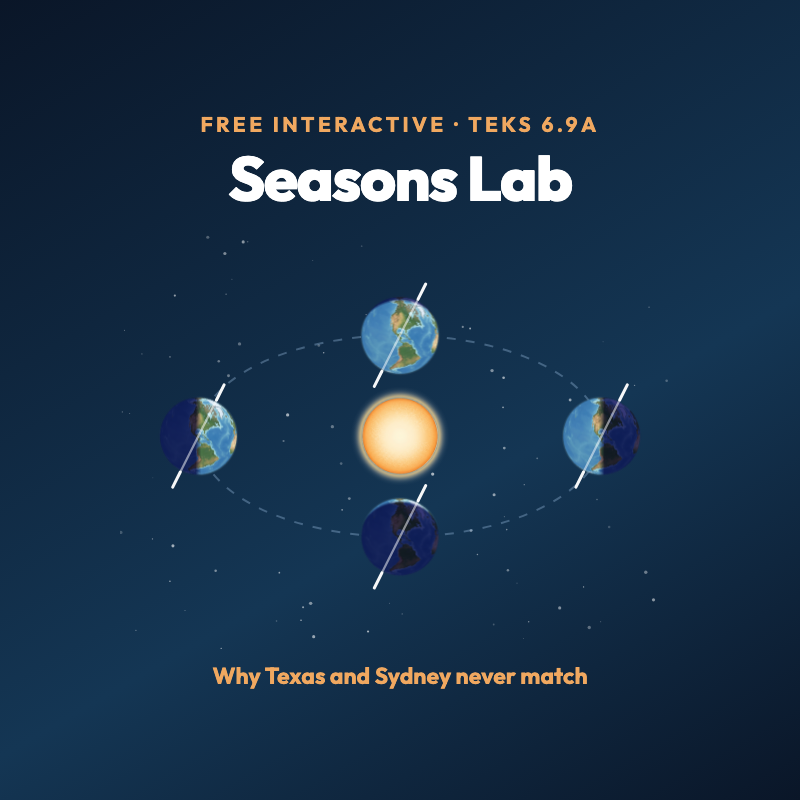
This is the big one, and research shows even some adults hold on to it. Earth's orbit is nearly a circle. The point where Earth is closest to the sun (called perihelion) actually happens in early January, when the Northern Hemisphere is in the middle of winter. Distance is not driving the seasons. The tilt of the axis is. That's why when it's summer in Texas, it's winter in Australia. If distance caused seasons, both hemispheres would have summer at the same time.
"Earth's axis wobbles or changes direction as it goes around the sun"
The axis stays pointed in the same direction in space all year. It doesn't swing toward the sun and then away. What changes is Earth's position in its orbit. As Earth moves to a different spot, the same fixed tilt now leans the Northern Hemisphere toward or away from the sun. This is why the globe walk matters so much. Students see that they never re-aim the axis, they just keep it pointed at one spot on the wall.
"The whole Earth has summer at the same time"
When the Northern Hemisphere has summer, the Southern Hemisphere has winter. Australia, southern Brazil, and South Africa are wearing shorts in December and coats in July. The tilt means the two hemispheres get opposite amounts of direct sunlight at any given time of year. Showing a world weather map from December is a quick way to make this concrete.
"Days and nights are always 12 hours long"
Day length changes throughout the year in most places on Earth because of the tilt. On the summer solstice in the Northern Hemisphere, places like Dallas get about 14 hours of daylight. On the winter solstice, they get closer to 10. The closer you live to the poles, the bigger the swing. Only at the equator does the day stay near 12 hours year-round.
📓 Teaching Resources for 6.9A
These resources are aligned to this standard.


100% Aligned Lessons for Every TEKS You Teach
Kesler Science Plus puts thousands of ready-to-teach lessons and activities in your hands, so you can boost engagement and get your planning time back. Trusted by schools and districts all over the great state of Texas.
🌎 Phenomenon Ideas for 6.9A
Use these real-world phenomena to anchor your lesson. Show students the phenomenon first, let them wonder, then build toward Model Earth's Tilt & Seasons as the explanation.
Christmas on the Beach in Australia
In Sydney, Australia, Christmas Day often lands near 80 degrees Fahrenheit. Families fire up the grill, head to Bondi Beach, and spend the day in the water. At the same moment, families in Minneapolis are shoveling snow and bundling up in coats. Same date. Same planet. Completely opposite weather.
"How can two places on the same planet have opposite seasons on the same day? If Earth were just closer to the sun in December, what would we expect to happen in Sydney?"
Midnight Sun in Alaska
In Barrow, Alaska (now called Utqiagvik), the sun does not set for about 84 days each summer. It just hangs low in the sky and makes a slow loop around the horizon. Then in winter, the sun does not rise for about 65 days. Residents have to adjust their sleep, their schools, and their entire daily routine.
"Why do places near the poles experience days with no sunset, and days with no sunrise? What does this tell us about how Earth's tilt changes the length of daylight in different places?"
A Shadow That Shrinks and Grows Over the Year
Pick a flagpole on a school campus. If students measured the length of its shadow at exactly noon on the first day of each month, they would find the shadow gets shorter through spring, hits its shortest length around the June solstice, then grows longer through fall and reaches its longest length around the December solstice. Same pole. Same time of day. Wildly different shadow.
"Why would a flagpole's noon shadow be short in June and long in December? What is happening to the angle of sunlight hitting the ground at your location across the year?"
💡 Free Engagement Ideas for 6.9A
Ready-to-run activities you can drop straight into a lesson. Where one of these looks like a phenomenon from the section above, that is on purpose: show it first as the hook, then let students run it themselves.
The Globe and Flashlight Walk
Put a desk lamp or bright flashlight in the center of the room. Give a pair of students a small globe tilted to 23.5 degrees. They walk the globe around the "sun" in a circle, keeping the axis pointed at one spot on the wall the whole time. At each quarter of the orbit, stop and ask which hemisphere is tilted toward the light. Kids finally see the tilt stay fixed while the position changes.
Direct vs Indirect Rays With Graph Paper
Tape a square of graph paper flat on a desk. Shine a flashlight straight down and trace the lit area. Now tilt the flashlight to a shallow angle and trace the lit area again. The same beam of light spreads across more squares when it hits at an angle. Students count the squares and see why direct sunlight warms the ground faster than slanted sunlight.
Daylight Hours Around the World
Have students pick three cities at very different latitudes (for example, Quito, Dallas, and Fairbanks) and look up sunrise and sunset times for one date in June and one date in December. They graph the hours of daylight for each city. The pattern makes the "length of daylight" part of the TEKS snap into focus without any math.
Build a Tilt Model With a Pencil and a Ball
Give each student a foam ball or orange and a pencil pushed through the middle. Mark the Northern Hemisphere with a sticker or Sharpie. Pair them up. One student holds a flashlight as the "sun" while the other walks their tilted planet around it, keeping the pencil axis pointed the same way the whole time. Fast, cheap, and every student gets their own hands on it.
🎯 What Approaches, Meets, and Masters Thinking Look Like
Here is what student thinking at each level looks like on this one task, so you know what to look for and how to move a student up.
Draw a model that shows the tilted Earth at two spots in its path around the Sun: one spot where it is summer in Texas, and one spot six months later. Label which way the tilt is pointing in each picture. Then explain why Texas has summer at one spot and winter at the other.
- The Sun drawn in the middle and Earth shown at two spots on a near-circle path around it.
- Earth drawn with a tilted axis (a slanted line through it), not standing straight up.
- The tilt pointing the same direction in space at both spots, not re-aimed toward the Sun each time.
- At the summer spot, the top half of Earth (where Texas is) leaning toward the Sun.
- At the winter spot, that same top half leaning away from the Sun.
- An explanation that connects leaning toward the Sun to warmer weather (more direct sunlight, longer days).
- Seasons explained by the tilt and Earth's position, not by Earth getting closer to or farther from the Sun. That is the easiest place to slip.
It is summer in Texas when Earth is close to the Sun. It is winter when Earth moves far away from the Sun. The closer we are, the hotter it gets.
If Texas were summer because we are closer, why is it winter in Australia at the same time?
Earth is tilted, and the tilt always points the same way. When Texas is tilted toward the Sun, it is summer because the sunlight hits us more directly and the days are longer. Six months later Earth is on the other side of the Sun. The tilt still points the same way, so now Texas leans away from the Sun. The light hits at a slant and the days are shorter, so it is winter.
Seasons are not about how close Earth is to the Sun, because the path is almost a circle and the distance hardly changes. They happen because the tilt stays pointed the same way while Earth travels around the Sun. When Texas leans toward the Sun, the light hits straight-on and is squeezed into a smaller spot, so it is stronger, and the days are longer. That is summer. When Texas leans away, the same light spreads out over a bigger area and is weaker, so it is winter.
That is how I know that when it is summer here, it is winter in Australia. Australia is in the bottom half of Earth. When our half leans toward the Sun, their half leans away at the very same time. The two halves always get opposite seasons because they can never both lean toward the Sun at once.
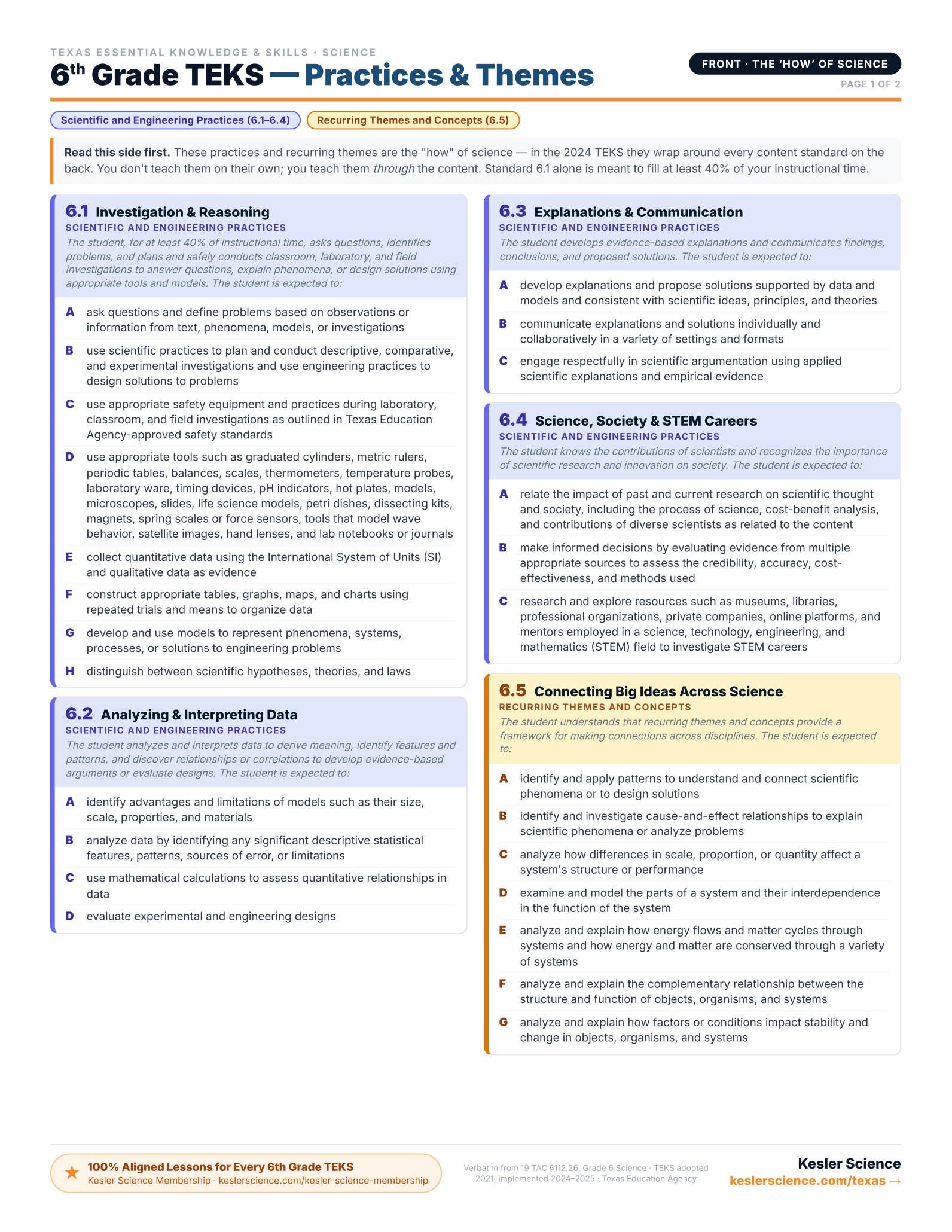
Every 6th-Grade Science TEKS on One Page
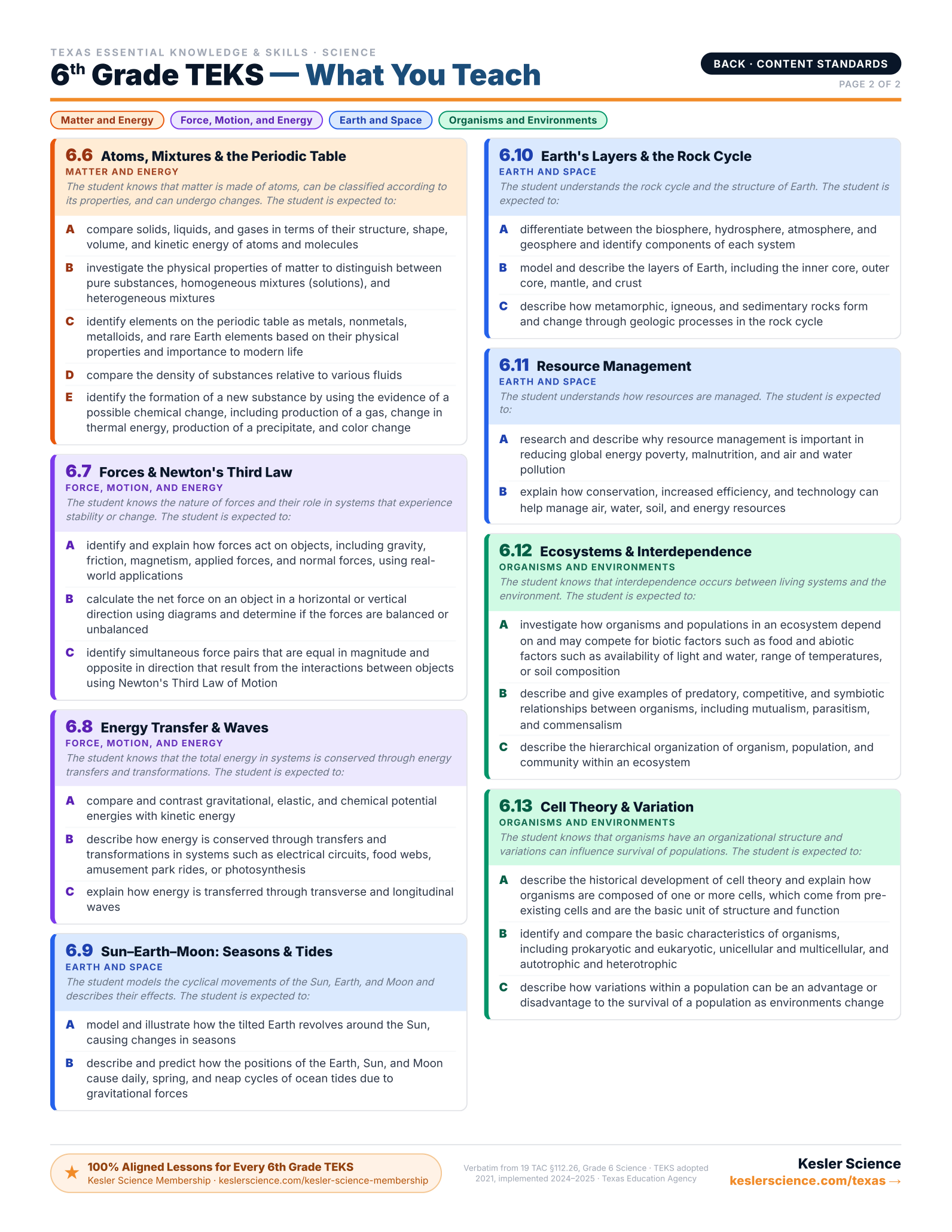
The color-coded, front-and-back cheat sheet I wish I'd had — every standard, organized by reporting category. Print it and reference it all year long. This will be your new favorite document!
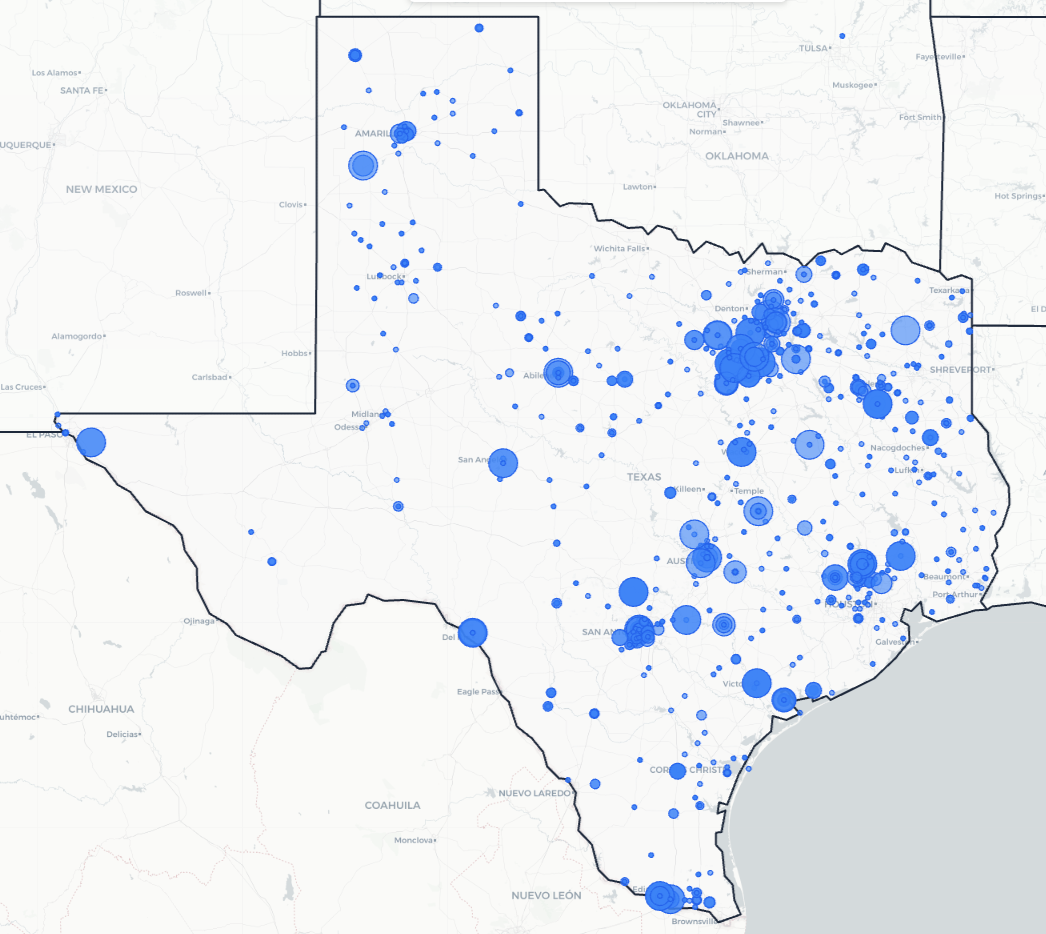
Trusted Across Texas
From the Rio Grande Valley to the Panhandle, Texas science teachers are using Kesler Science to save time and engage students.
Texas Schools and Districts
Love Kesler Science
What Teachers Are Saying
Give Your Science Teachers Everything They Need
School and district licenses give your teachers access to every resource they need, including station labs, inquiry labs, anchoring phenomena, presentations, escape rooms, and much more. One purchase covers the grade levels you need.
- PO-friendly. We accept purchase orders
- Volume discounts for 11+ teachers
- Complimentary Kesler Science Plus orientation for 4+ teachers
- Three free implementation PD sessions for departments of 11+
- Aligned to the 2024 TEKS standards

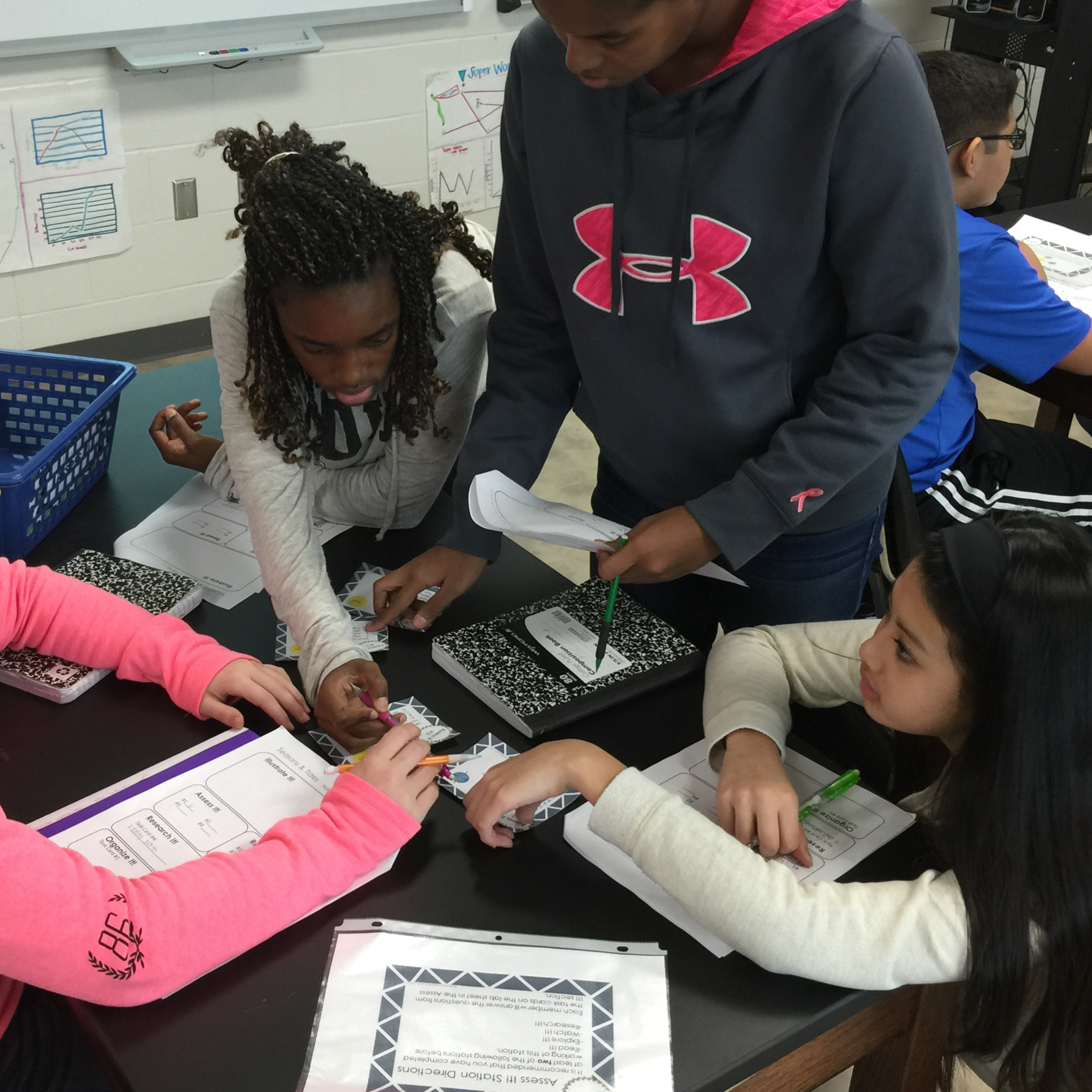
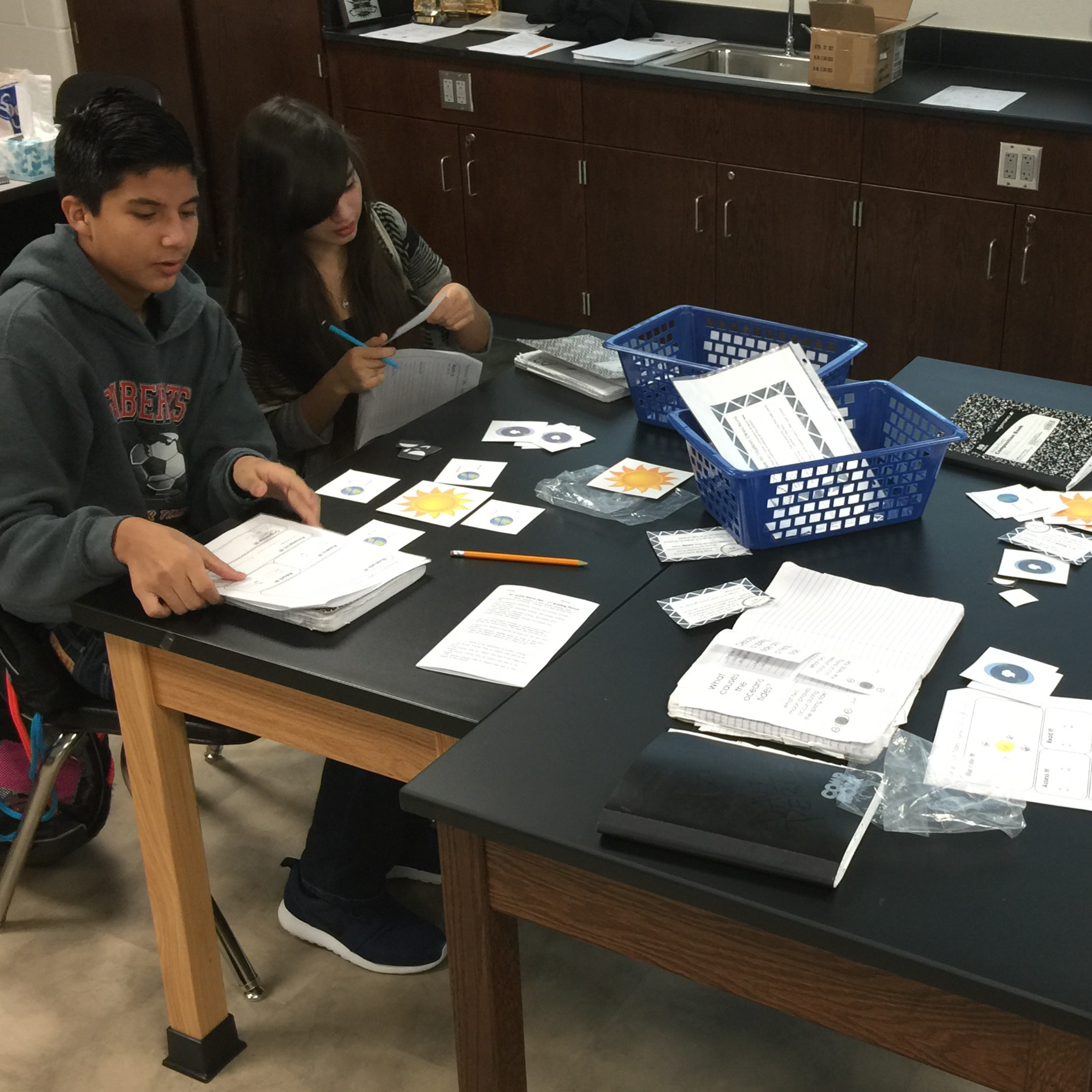
See It in Action
Book a walkthrough and we'll show you how Kesler Science fits your campus.
Book Demo CallNo pressure, no hard sell