.png?width=375&height=100&name=WebPage%20logo%20with%20curves%202026%20(8).png)
Variations & Survival
"Describe how variations within a population can be an advantage or disadvantage to the survival of a population as environments change."
💡 What This Standard Actually Means
"Describe". Students are describing how variations within a population can give organisms an advantage or a disadvantage when the environment changes. The shift in this version is a focus on populations as the unit and on environmental change as the driver. Variation in fur color, beak size, root length, or running speed can be helpful or harmful depending on what's happening around the organism. Instruction can take many forms, such as bird-beak adaptation labs, peppered moth simulations, environmental change scenarios, and population graphing activities.
Every population has variation. Even within a single species, no two members are identical. Some rabbits have darker fur, some lighter. Some finches have thicker beaks, some thinner. Some plants have deeper roots, some shallower. Those variations come from the genes parents pass on to offspring, and they're the raw material that makes evolution and adaptation possible.
The big shift in this standard is the connection to environmental change. A variation isn't automatically good or bad. Whether it helps or hurts depends on what's happening in the environment. A lighter-colored rabbit might be hard to see in a snowy winter, which is an advantage. The same lighter rabbit standing on a dark forest floor in summer stands out to predators, which is a disadvantage. A finch with a thicker beak does well when the available seeds are large and tough but struggles when the only seeds left are small and soft. Same trait, different outcome based on the environment.
One key idea students need to keep straight: populations change over generations, not individuals during their lifetime. A single rabbit doesn't decide to grow lighter fur when winter comes. The lighter rabbits already in the population happen to survive better in the snow, so they reproduce more, and the next generation contains a higher percentage of lighter fur. Over time, the trait spreads through the population. When the environment changes again, a different variation might give the advantage. The core understanding students should walk away with is that variation acts like a built-in insurance policy. The more genetic variety a population has, the better its chances of surviving when environments change.
The activity that sold this concept for me every single year was a paper-dot predator hunt. I'd scatter colored dots (green, brown, yellow, white) all over a patch of the classroom "grass" (a green tablecloth or green construction paper), and give students 15 seconds as "predators" to pick up as many as they could. The white ones vanished first. Green was almost impossible to find. Then we'd talk about which "rabbits" survived to have babies, and what the next generation might look like. Five minutes later, kids understood variation and natural selection better than they would after reading three pages of a textbook. I'd repeat the round to show how the surviving color becomes more common each time.
⚠️ Misconceptions Your Students May Have
These are some of the most common misconceptions. Knowing what to look for can help you get ahead of them.
"An animal adapts by changing itself when it needs to"
This is one of the most common misconceptions in life science. A single individual does not change its traits on purpose during its lifetime to fit the environment. A short giraffe does not "try" to grow a longer neck. Instead, giraffes with longer necks were already in the population and happened to survive and reproduce more often. Over generations, longer necks became more common. The change happens across generations, not inside one animal.
"Survival of the fittest means the strongest animal wins"
"Fittest" in biology means best suited to the environment, not the strongest or fastest. A fish that camouflages well is "fit." A plant that produces more seeds is "fit." A bird whose beak matches the local seeds is "fit." Fitness is about surviving long enough to reproduce in a specific environment, not about winning a fight.
"Traits gained during life can be passed to your children"
If a weightlifter builds strong muscles, their child is not born with bigger muscles. Traits are passed down through genes, not through what happens to a body during life. A dog that loses a tail in an accident still has puppies born with tails. Natural selection works on traits that are coded in the genes and passed from parents to offspring.
"Helpful traits always appear when they're needed"
Variations already exist in a population before the environment changes. A population of bacteria contains a few members with genes that happen to resist a certain antibiotic, even before the antibiotic is ever used. When the antibiotic shows up, those resistant bacteria survive and multiply, and the population shifts. The variation was already there. The environment just determined which ones kept going.
📓 Teaching Resources for 6.13C
These resources are aligned to this standard.


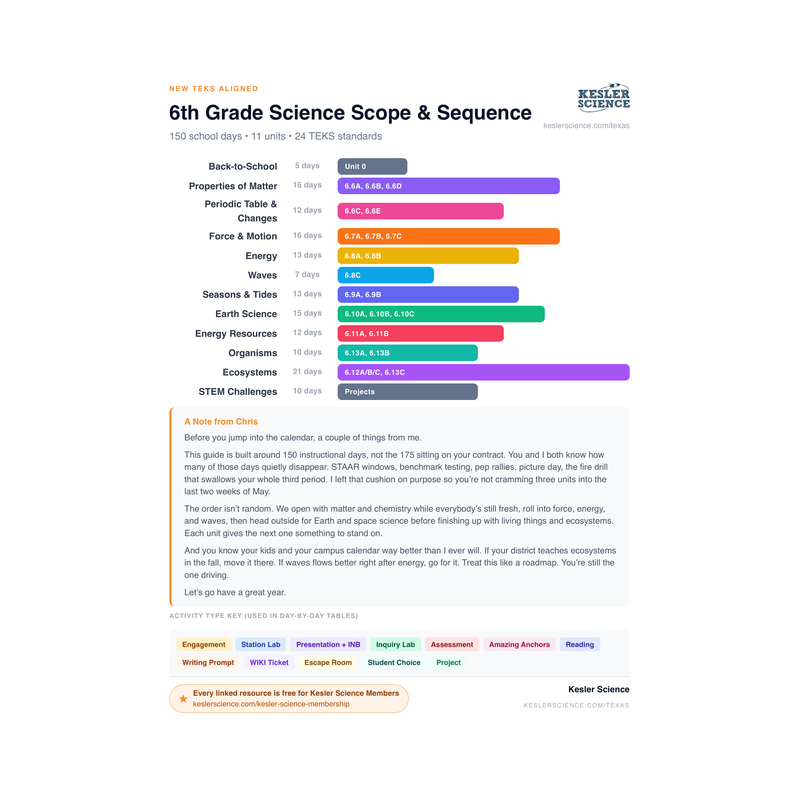
100% Aligned Lessons for Every TEKS You Teach
Kesler Science Plus puts thousands of ready-to-teach lessons and activities in your hands, so you can boost engagement and get your planning time back. Trusted by schools and districts all over the great state of Texas.
🌎 Phenomenon Ideas for 6.13C
Use these real-world phenomena to anchor your lesson. Show students the phenomenon first, let them wonder, then build toward Variations & Survival as the explanation.
Peppered Moths Shift Color in Industrial England
Before the 1800s, most peppered moths in England were light-colored and speckled, blending in with pale tree bark and lichens. During the Industrial Revolution, coal soot darkened the trees in many areas. Within a few decades, the dark-colored form of the moth became much more common in those polluted regions. After the Clean Air Acts of the 20th century, the trees became lighter again, and the light-colored moths rebounded. The moth population shifted color as the environment shifted.
"Both light and dark moths existed the whole time. What would make the dark moths become more common when the trees got darker? Why would the population shift back again once the air cleaned up?"
Finch Beaks Change After a Drought
On a small island in the Galapagos, biologists measured the beaks of finches year after year. After a severe drought in 1977, most of the small, soft seeds were gone. Only large, tough seeds were left. Finches with larger, stronger beaks could crack those seeds. Within one generation, the average beak size in the surviving population was measurably bigger, because the finches with smaller beaks were far less likely to survive and reproduce.
"The finches didn't grow bigger beaks to solve the problem. So how did the average beak size in the whole population get bigger after the drought?"
Rock Pocket Mice on Dark Lava vs. Pale Sand
In the American Southwest, rock pocket mice live in deserts with patches of dark volcanic lava rock and patches of pale sandy ground. On the dark lava, most of the mice are dark-colored. On the pale sand nearby, most of the mice are sandy-colored. Hawks and owls hunt from above. A mouse that stands out against its background is much more likely to be spotted and eaten. The color of the mice in each area matches the color of the ground beneath them.
"If you took a handful of sandy-colored mice and dropped them on dark lava rock, what do you think would happen over many generations? Which variation would become more common, and why?"
💡 Free Engagement Ideas for 6.13C
Ready-to-run activities you can drop straight into a lesson. Where one of these looks like a phenomenon from the section above, that is on purpose: show it first as the hook, then let students run it themselves.
Paper Dot Predator Hunt
Spread colored paper hole-punches (green, brown, yellow, white) across a green tablecloth or sheet of green paper. Give students 15 seconds to pick up as many "prey" as they can. Count what is left. The colors that blend in survive to the next generation. Run it again with the survivors as the starting population and watch the color mix shift.
Bean Beaks Competition
Give each student a "beak" (a spoon, a clothespin, a fork, or tweezers) and a plate of different-sized beans. Students have 30 seconds to pick up as many beans as they can with their beak. Graph the results. Discuss which beak variation would be most successful if small beans disappeared from the environment. Connects directly to finch beak evolution.
Variation Hunt Around the Class
Tell students: today we are going to prove that every species has variation. Pick one observable trait in your class (hand span, thumb length, number of freckles on one arm, can-you-roll-your-tongue). Have everyone record their own data. Chart the results. Point out that no two students are identical. Now picture this same spread in any wild population. Fast way to show that variation is the starting material natural selection works on.
Build-a-Creature Selection Round
Give each student paper, markers, and a made-up environment card (cold, rocky, full of predators / warm, swampy, tons of fruit / dry, open, lots of large prey). They design one creature that would survive. Then swap environment cards and redesign. Students quickly see that "best" depends on the environment, and that traits that help in one place can hurt in another.
🎯 What Approaches, Meets, and Masters Thinking Look Like
Here is what student thinking at each level looks like on this one task, so you know what to look for and how to move a student up.
A population of rabbits lives in a forest. Some rabbits have light brown fur and some have dark brown fur. Each rabbit keeps the same fur color its whole life. For most of the year the forest floor is dark, but each winter it gets covered in snow. Foxes hunt the rabbits by spotting them. Describe how this fur color variation can be an advantage in winter but a disadvantage in summer, and explain what happens to the rabbit population over time as the seasons change.
- Names the variation clearly: some rabbits have light fur and some have dark fur.
- Explains that light fur is an advantage in winter (harder for foxes to see against the snow).
- Explains that the same light fur is a disadvantage in summer (easy to spot against the dark forest floor).
- Connects the trait to survival: rabbits that are harder to see get caught less and live longer.
- Talks about the population over generations, not one rabbit changing its own fur.
- Says the same trait can be helpful or harmful depending on what the environment is doing.
- Avoids saying a rabbit changes its own fur color to match the season. That is the easiest place to slip.
- Teacher note: some of this rabbit's relatives, like the snowshoe hare, really do molt from brown to white for winter, and a student may bring that up. That is a good fact, not a wrong answer. The prompt rules it out on purpose so the task stays on what the standard is after, which is that a population changes across generations while an individual does not. If it comes up, run with it: the molt is a trait the whole hare population carries, and there is still variation inside that population in how early and how completely each hare turns white, which is the same idea one layer up.
Light fur helps the rabbit in the winter because it matches the snow, so the fox can't see it. In the summer the rabbit changes its fur to dark so it can hide on the ground again. The rabbit changes its color when it needs to so it can stay safe all year.
In winter, light fur is an advantage because the snow is white and the light rabbits are hard for the fox to see. So more light rabbits survive and have babies that winter. In summer the forest floor is dark, so now the light fur is a disadvantage because the fox can spot the light rabbits easily, and the dark rabbits hide better.
No single rabbit changes its own color. The population just has more light rabbits after a snowy winter and more dark rabbits after a long summer, because the ones that blend in live longer and have more babies. The same trait can help or hurt depending on the season.
The fur color is an advantage or a disadvantage depending on the environment, not on its own. In winter the snow makes light fur a great way to hide, so more light rabbits survive and pass on light fur. In summer the dark floor flips it, so dark fur is the advantage and the population shifts back. No rabbit changes its own color. The variation was already in the population, and the environment just decides which rabbits live long enough to have babies.
The real reason this matters is that having both colors is like a safety net for the whole population. If every rabbit were the same color, one bad season could wipe most of them out. I think this is also why farmers worry when all their crops are exactly the same. If one new disease shows up and the plants have no variation, the disease could kill the whole field, because there are no different plants that happen to survive it.
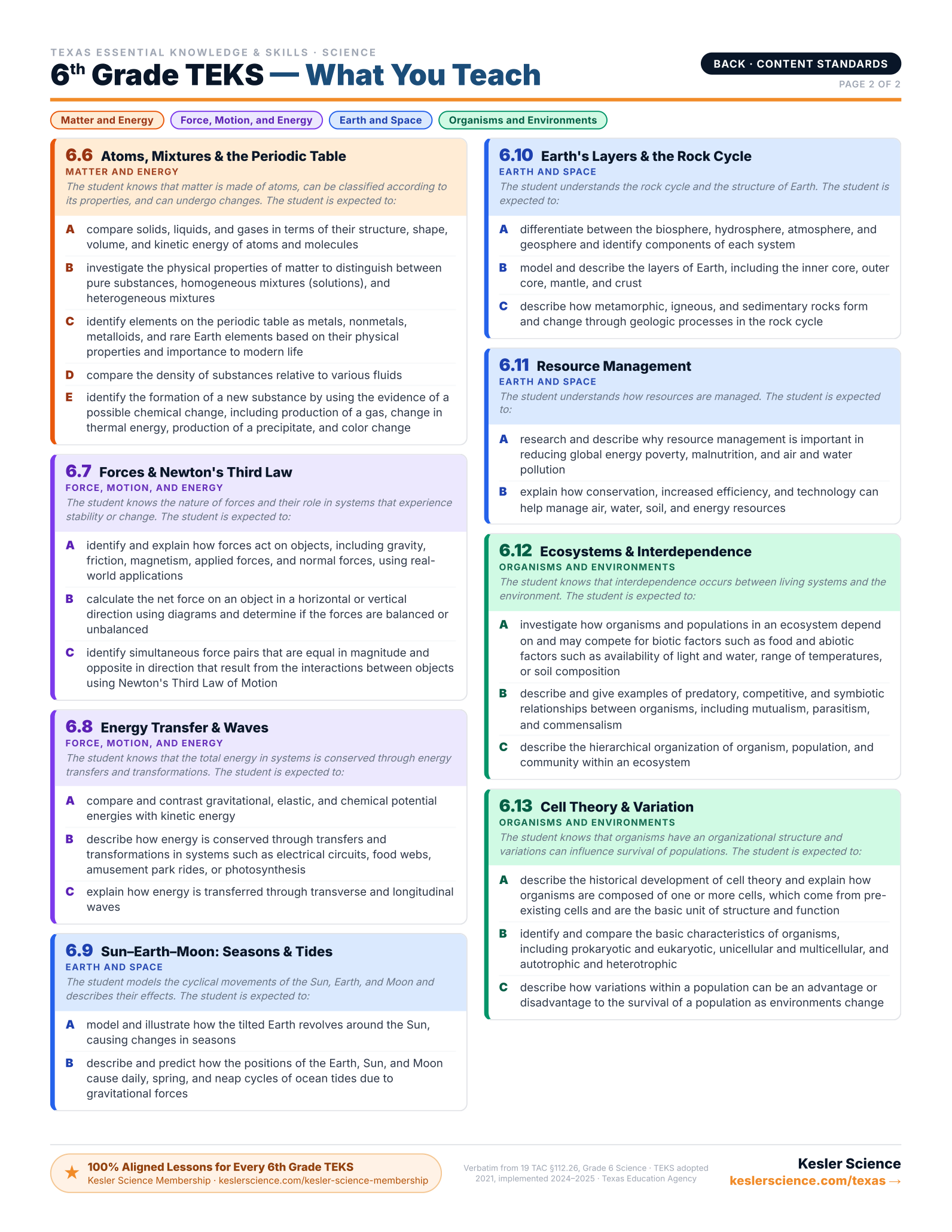
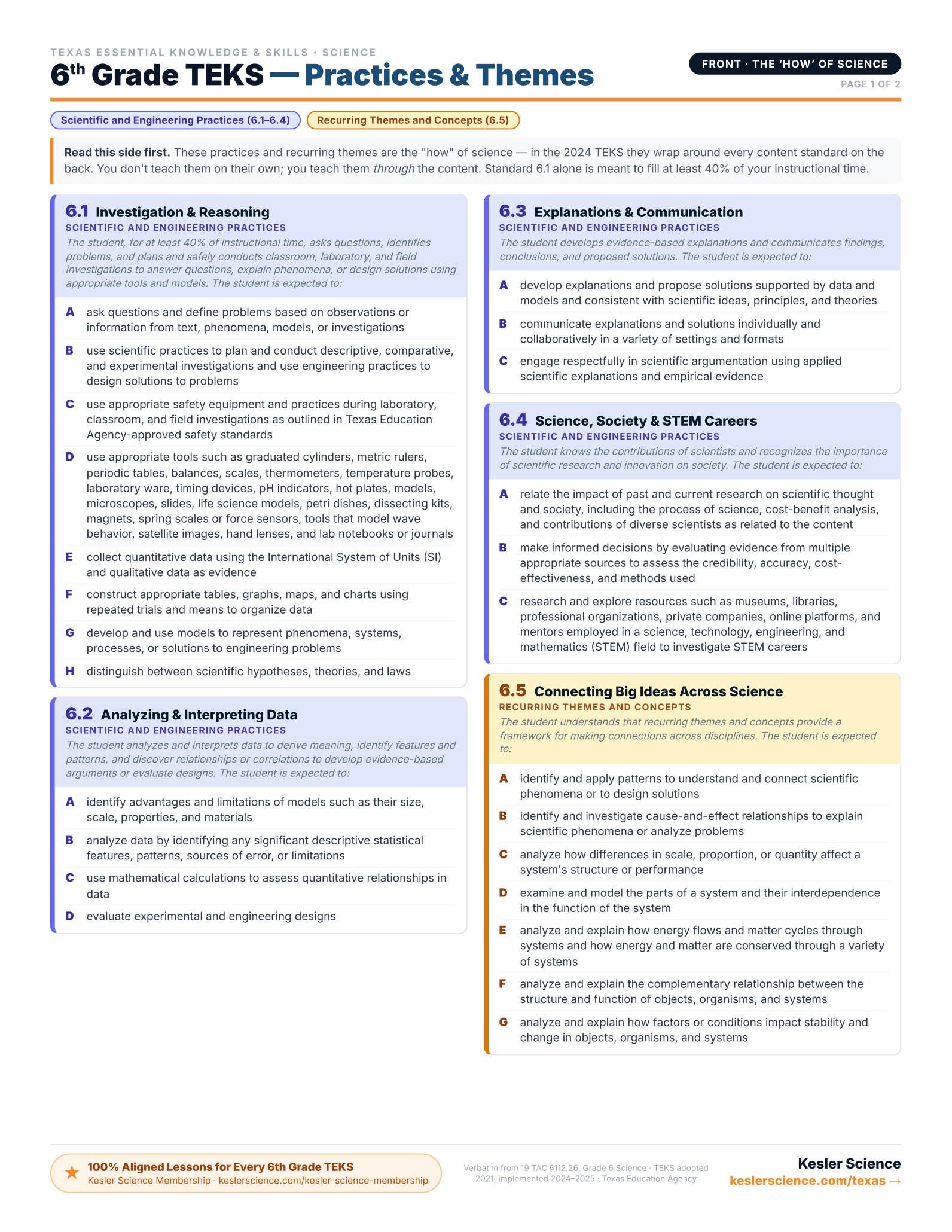
Every 6th-Grade Science TEKS on One Page
The color-coded, front-and-back cheat sheet I wish I'd had — every standard, organized by reporting category. Print it and reference it all year long. This will be your new favorite document!
Trusted Across Texas
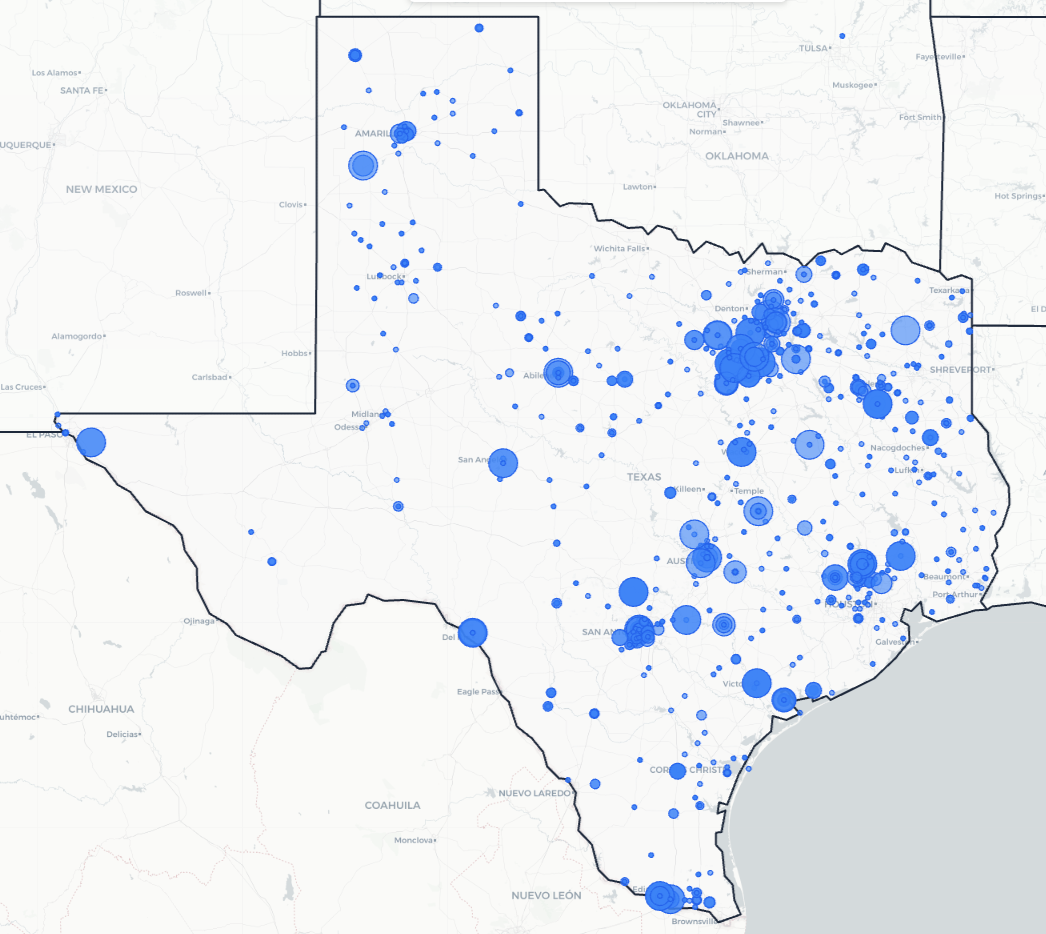
From the Rio Grande Valley to the Panhandle, Texas science teachers are using Kesler Science to save time and engage students.
Texas Schools and Districts
Love Kesler Science
What Teachers Are Saying
Give Your Science Teachers Everything They Need
School and district licenses give your teachers access to every resource they need, including station labs, inquiry labs, anchoring phenomena, presentations, escape rooms, and much more. One purchase covers the grade levels you need.
- PO-friendly. We accept purchase orders
- Volume discounts for 11+ teachers
- Complimentary Kesler Science Plus orientation for 4+ teachers
- Three free implementation PD sessions for departments of 11+
- Aligned to the 2024 TEKS standards
See It in Action
Book a walkthrough and we'll show you how Kesler Science fits your campus.
Book Demo CallNo pressure, no hard sell