.png?width=375&height=100&name=WebPage%20logo%20with%20curves%202026%20(8).png)
Hierarchy of Ecosystems
"Describe the hierarchical organization of organism, population, and community within an ecosystem."
💡 What This Standard Actually Means
"Describe". Students are describing the hierarchical organization of three specific levels within an ecosystem: organism, population, and community. The new wording is a major narrowing. The old standard included six levels (organism, population, community, ecosystem, biome, biosphere). The new TEKS focuses kids on just the first three. Instruction can take many forms, such as labeled-photo nesting activities, schoolyard observation walks, hierarchy ladder drawings, and ecosystem zoom-in/zoom-out animations.
This standard is essentially a zoom-out across three levels of biological organization, all of which sit inside an ecosystem. Each level builds on the one below it.
Start at the smallest. An organism is a single living thing. One white-tailed deer in the Texas Hill Country. One acorn-bearing oak tree. One bee. The organism is the basic individual unit. Step out one level. A population is a group of organisms of the same species living in the same area at the same time. All the white-tailed deer in that part of the Hill Country are one population. All the bees in a particular field are another. Members of a population can interbreed, share resources, and respond to the same local conditions.
Step out one more time. A community is all the different populations of living things that share an area. The Hill Country example would include the deer population, the oak trees, the wildflowers, the coyotes, the butterflies, the soil bacteria, and every other species living in that region. A community is multi-species by definition. The big idea students should walk away with is that the levels nest. One organism is part of a population. Many populations together make up a community. Each level adds more variety than the level before it, and all three sit inside an ecosystem.
I used to walk my kids through six nested containers all the way out to the biosphere, but the new TEKS narrows this standard to three levels, and honestly the nested-container move works even better when you stop sooner. Grab one example and zoom out in three steps. "Here's one prairie dog (organism). Now zoom out, here's the whole prairie dog colony living in this field (population). Zoom out one more step, here are all the species living together in that prairie ecosystem: prairie dogs, hawks, snakes, grasses, beetles (community)." Then have students do the same zoom-out for another organism: a bluebonnet, a roadrunner, a fire ant. The key teaching move is to STOP at community. Don't keep zooming. The TEKS narrowed the scope for a reason, students need depth on the three-level hierarchy before they can handle bigger systems in later grades.
⚠️ Misconceptions Your Students May Have
These are some of the most common misconceptions. Knowing what to look for can help you get ahead of them.
"A population is any group of animals living together"
A population is specifically a group of organisms of the same species in the same area. A group of deer and coyotes together is not a population. That would be two populations (one deer, one coyote) sharing the same area. When you add in the plants and other species too, you have a community.
"A community and an ecosystem are the same thing"
A community is just the living things. An ecosystem is the community PLUS the nonliving factors (sunlight, water, air, soil, temperature). If you only draw the plants and animals, that's a community. Once you add the rocks, the stream, and the sunlight pouring through the trees, you have an ecosystem.
"Everybody in a population gets along, because they're all the same species"
A population is defined by three things, and cooperation is not one of them: same species, same area, same time. In fact, members of the same population are often each other's toughest competitors, because being the same species means needing the exact same food, the same shelter, and the same space. Two squirrels in one yard are one population and direct rivals for the same acorns. Sharing a species label does not mean sharing nicely.
"Each step up the hierarchy means a bigger patch of ground"
Going from organism to population to community is about how many different kinds of living things you are counting, not how much space they cover. A whole community fits under one rotting log: pill bugs, beetles, ants, fungi, and a salamander, all in about a square foot. Meanwhile one deer population can range across miles of Hill Country. Each step up adds more variety, not necessarily more territory.
📓 Teaching Resources for 6.12C
These resources are aligned to this standard.


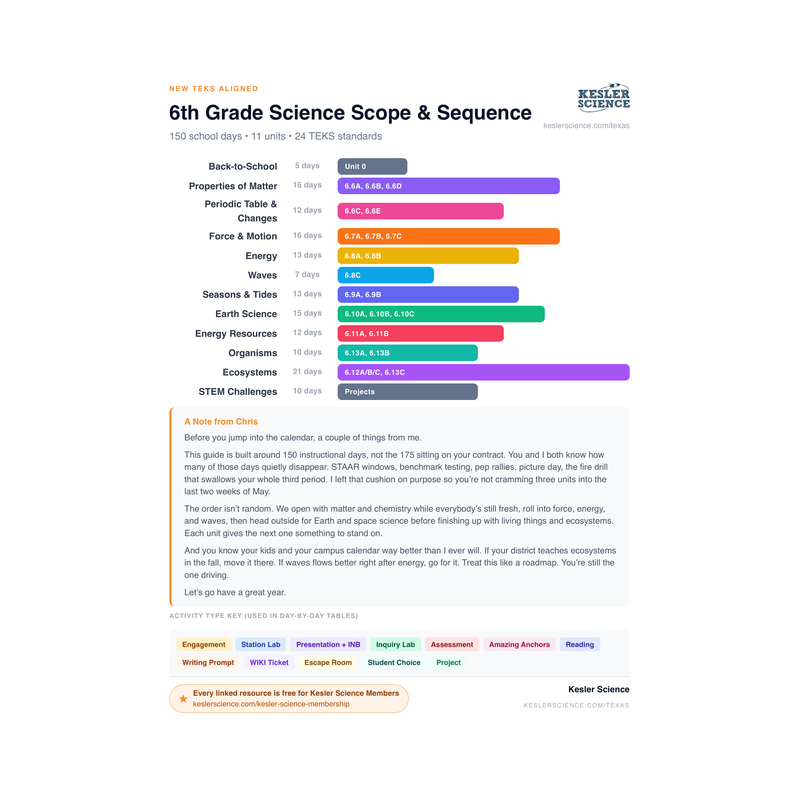
100% Aligned Lessons for Every TEKS You Teach
Kesler Science Plus puts thousands of ready-to-teach lessons and activities in your hands, so you can boost engagement and get your planning time back. Trusted by schools and districts all over the great state of Texas.
🌎 Phenomenon Ideas for 6.12C
Use these real-world phenomena to anchor your lesson. Show students the phenomenon first, let them wonder, then build toward Hierarchy of Ecosystems as the explanation.
The Community Living Under One Log
Flip over a rotting log in a Texas backyard or schoolyard and you suddenly see life everywhere: roly-polies curled up in the damp soil, a few beetles scrambling, ant trails, white threads of fungi, decomposing leaves, and sometimes even a salamander darting away. None of those species is living alone, they're all sharing that one small spot under the log together.
"Describe the hierarchical organization of what you see under that log. Where is the organism level? The population level? The community level? How do all three fit inside one small ecosystem?"
Bison Population Returns to Caprock Canyons
In the Texas Panhandle, a small herd of bison was brought back to Caprock Canyons State Park after the species nearly disappeared from the region. That one population of bison now shares the grassland with prairie dogs, coyotes, hawks, rattlesnakes, mesquite, and native grasses. The bison aren't the whole story, they're one population fitting into a much bigger community of living things.
"Describe the hierarchical organization at Caprock Canyons. What is one organism in this story? What is the population? What other populations are part of that grassland community?"
What's Living in This One Stock Tank?
A stock tank on a Texas ranch is just a small pond dug out for cattle to drink from, but peek in and a whole world is there: red-eared slider turtles, leopard frogs, dragonflies skimming the surface, mosquito fish darting around, algae coating the edges, and water striders dancing on top. All of those different species are sharing the same little pocket of water.
"Describe the hierarchical organization inside this stock tank. Pick one species. What is the organism level for that species? The population level? How do all the populations together form the community in this ecosystem?"
💡 Free Engagement Ideas for 6.12C
Ready-to-run activities you can drop straight into a lesson. Where one of these looks like a phenomenon from the section above, that is on purpose: show it first as the hook, then let students run it themselves.
Three Nested Containers
Bring in three containers of increasing size (a small cup, a medium bowl, and a large tub). Label them organism, population, and community. Students bring up cards with examples and drop them in the correct container. One white-tailed deer figurine goes in the smallest. Add more deer and it moves up to population. Add coyotes, oaks, wildflowers, and beetles and it grows into a community. The whole stack sits inside a labeled tray marked "ecosystem" to show that all three levels live inside an ecosystem.
Three-Panel Zoom-Out Drawing
Give each student a paper folded into three panels. Panel 1: draw one organism (label its species). Panel 2: draw several of the same species in the same area (population). Panel 3: add other species sharing that area (community). Then have students draw a box around all three panels and label it "ecosystem" to show the three levels nest inside one ecosystem. Quick, visual, and a perfect formative assessment.
Ecosystem Scavenger Sort
Give each group 15 to 20 photos or cards showing one organism, several of the same species, and multiple species in one area. Mix Texas examples: one bluebonnet, a field of bluebonnets, a meadow with bluebonnets plus bees plus grasses plus a horned lizard. Groups sort the cards into three piles, organism, population, community, and explain why each card goes where it does.
Schoolyard Field Study
Take students outside to a patch of the schoolyard. In 10 minutes, they find and label one example of each level: one specific organism (a single dandelion, one pillbug), the population of that same species in the area, and the community of all the different species sharing that spot. Back inside, they share their findings and build a class-wide model of the three-level hierarchy inside their schoolyard ecosystem.
🎯 What Approaches, Meets, and Masters Thinking Look Like
Here is what student thinking at each level looks like on this one task, so you know what to look for and how to move a student up.
A photo shows a Texas Hill Country meadow. In it are 12 white-tailed deer, 30 oak trees, a patch of wildflowers, and 2 coyotes. Sort these living things into the right level: organism, population, or community. Then explain in your own words how the three levels fit inside each other.
- A single living thing (like one deer) named as an organism.
- The 12 deer named as a population, because they are all the same species in the same place.
- A reason that ties "population" to same species, not just "a group of animals."
- All the living things together (deer, oaks, wildflowers, coyotes) named as a community, because it is more than one species.
- An explanation that the levels nest: one organism is part of a population, and many populations make a community.
- The deer-plus-coyote question handled correctly: deer and coyotes together are NOT one population. They are two populations sharing the meadow. That is the easiest place to slip.
One deer is an organism. The community is everything living in the meadow, like the deer, the oaks, the flowers, and the coyotes. The 12 deer and the 2 coyotes together are a population because they are a group of animals living in the same place.
One deer by itself is an organism. The 12 deer are a population because they are all the same species in the same area. The coyotes are their own population, and the oak trees are another one. The community is all the populations together: the deer, the oaks, the wildflowers, and the coyotes. The levels fit inside each other. One organism is part of a population, and the populations together make the community.
One deer is an organism, the single living thing. The 12 deer are a population because a population is one species in one area at one time. The coyotes and the oaks are each their own population too. The community is all of those populations together, so it has many species in it. Each level adds more kinds of living things than the one before it. One organism, then same-species groups, then all the groups together.
The real rule is that a population is always one species and a community is always many. That is how I would sort a tide pool I saw at the beach. The crabs of one kind are a population, the snails are a different population, and the seaweed is another. All of those together, every living thing in the tide pool, make up the community. Same three levels, different place.
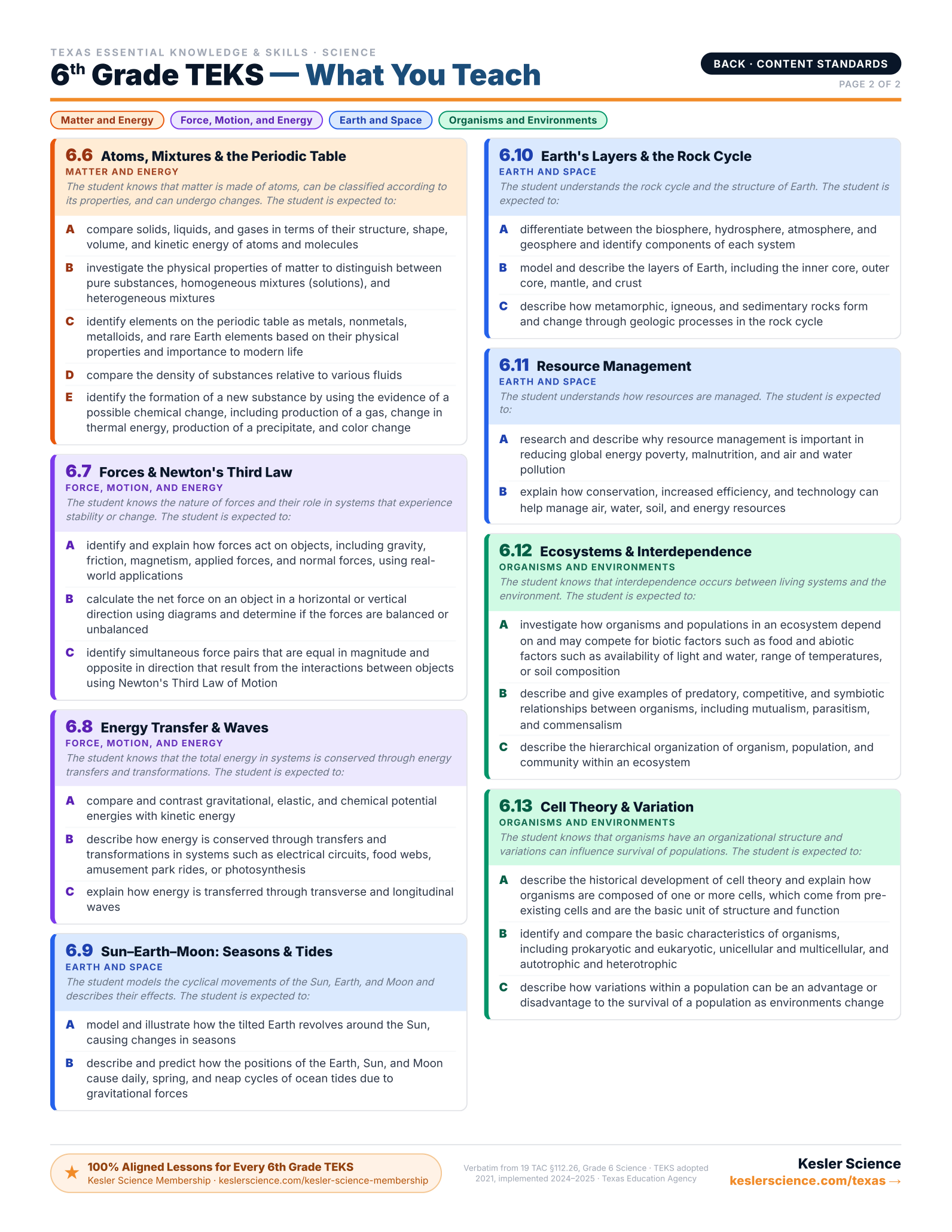
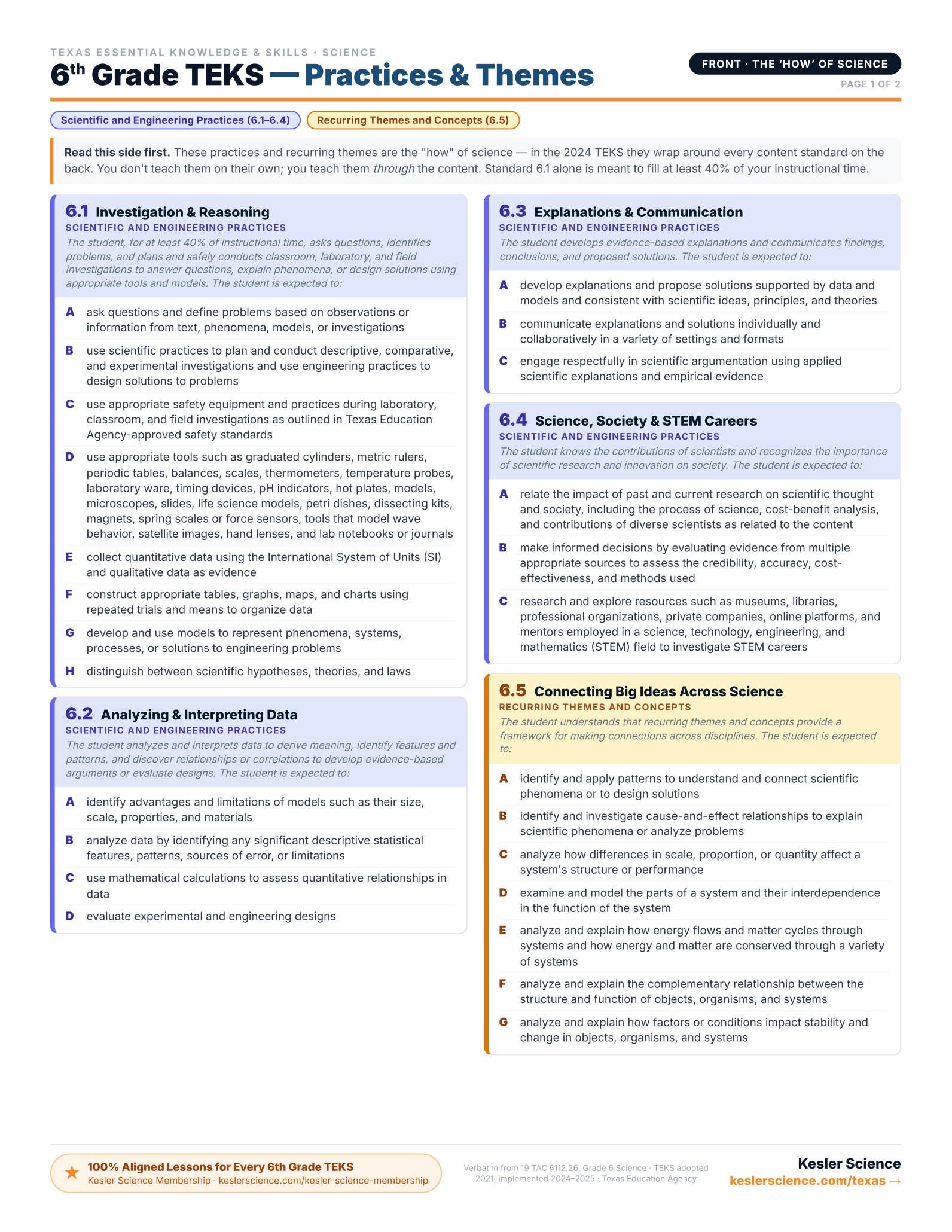
Every 6th-Grade Science TEKS on One Page
The color-coded, front-and-back cheat sheet I wish I'd had — every standard, organized by reporting category. Print it and reference it all year long. This will be your new favorite document!
Trusted Across Texas
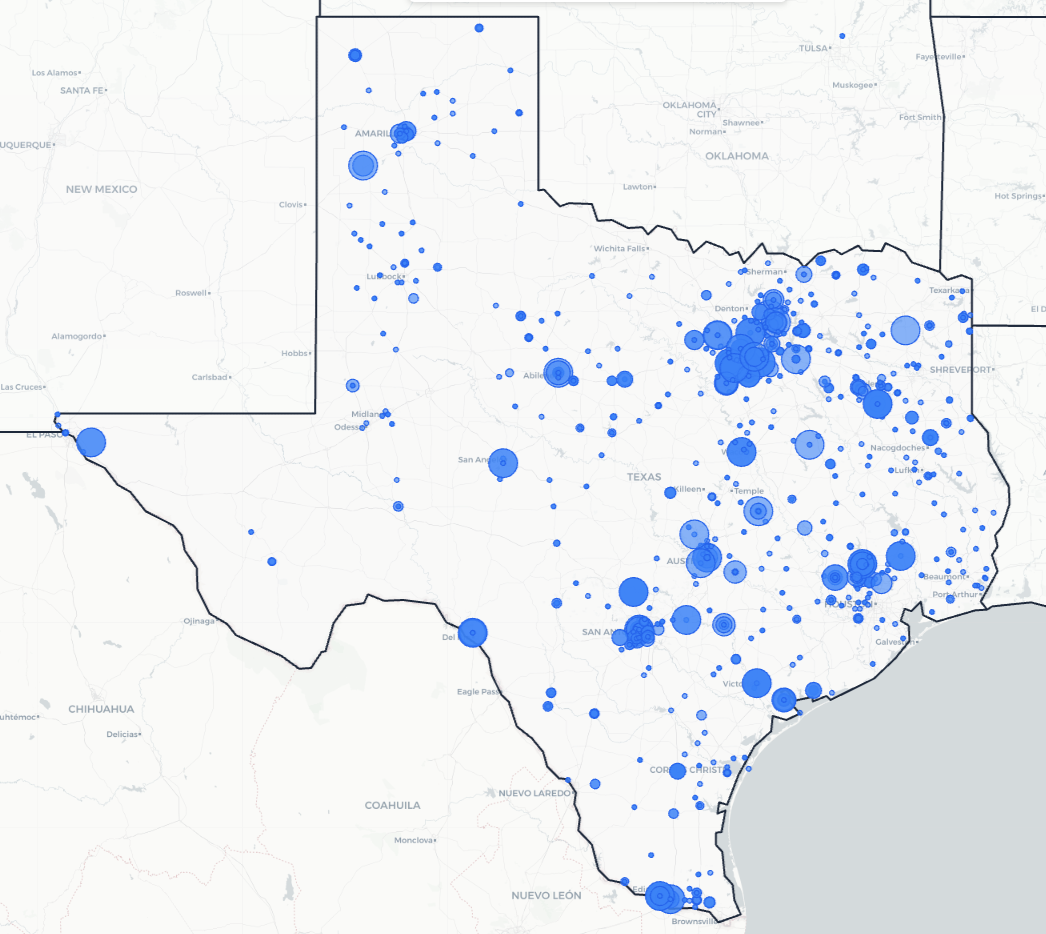
From the Rio Grande Valley to the Panhandle, Texas science teachers are using Kesler Science to save time and engage students.
Texas Schools and Districts
Love Kesler Science
What Teachers Are Saying
Give Your Science Teachers Everything They Need
School and district licenses give your teachers access to every resource they need, including station labs, inquiry labs, anchoring phenomena, presentations, escape rooms, and much more. One purchase covers the grade levels you need.
- PO-friendly. We accept purchase orders
- Volume discounts for 11+ teachers
- Complimentary Kesler Science Plus orientation for 4+ teachers
- Three free implementation PD sessions for departments of 11+
- Aligned to the 2024 TEKS standards
See It in Action
Book a walkthrough and we'll show you how Kesler Science fits your campus.
Book Demo CallNo pressure, no hard sell