.png?width=375&height=100&name=WebPage%20logo%20with%20curves%202026%20(8).png)
Biotic & Abiotic Competition
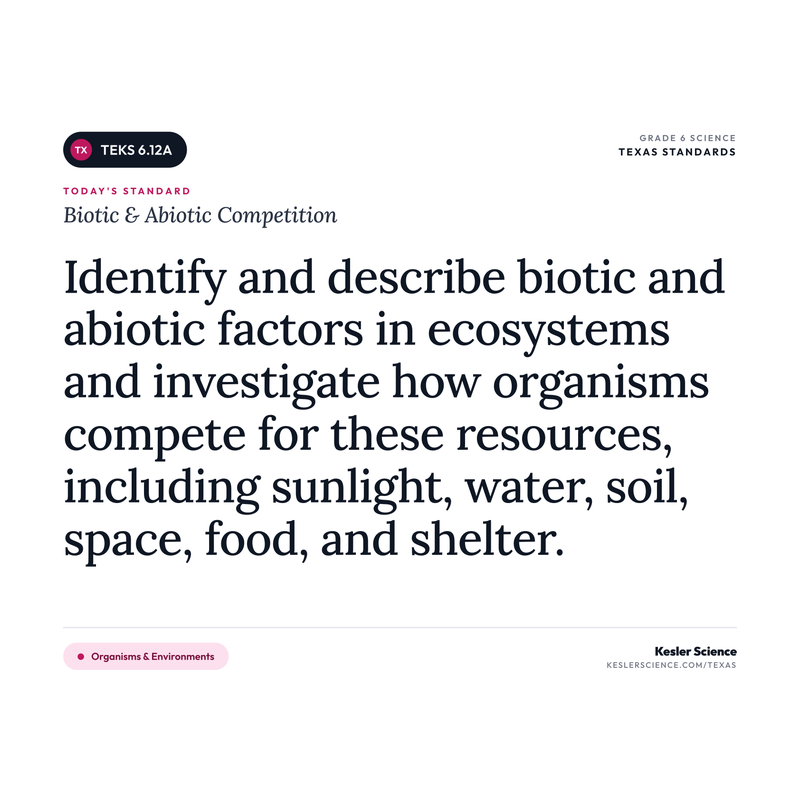
"Investigate how organisms and populations in an ecosystem depend on and may compete for biotic factors such as food and abiotic factors such as availability of light and water, range of temperatures, or soil composition."
💡 What This Standard Actually Means
"Investigate". Students are investigating how organisms and populations in an ecosystem depend on and compete for the resources around them. The standard names specific examples to focus on: biotic factors such as food and abiotic factors such as availability of light and water, range of temperatures, or soil composition. The new wording leans on dependence and competition together (kids need to look at both sides). Instruction can take many forms, such as terrarium observations, ecosystem simulation games, schoolyard biotic-abiotic field studies, and population-versus-resource graphing activities.
Every ecosystem is a mix of living things and nonliving things, and every organism depends on a combination of both to survive. Biotic factors are the living parts, like food sources, plants, animals, fungi, and bacteria. Abiotic factors are the nonliving parts, like sunlight, water, temperature, and soil. The 2024 TEKS calls out specific abiotic examples kids need to know: availability of light, availability of water, range of temperatures, and soil composition.
The first half of the standard is dependence. Organisms need biotic factors (a deer needs grass to eat, a hawk needs smaller animals to hunt). Organisms also need abiotic factors (a plant needs light to make food, a fish needs a certain temperature range to live, an oak tree needs the right soil composition for its roots). Mess with the supply of any of those factors and the organism is in trouble. Populations follow the same rule on a bigger scale. A pond's fish population depends on water, dissolved oxygen, the right temperature, and the small organisms they eat.
The second half is competition. When a resource is limited, organisms have to compete for it. Two oak trees growing close together both reach for the same light. Two squirrels in the same yard search for the same acorns. Wildflowers in a meadow push their roots into the same soil. Animals compete for biotic factors like food and shelter. They also compete for abiotic factors like sunny patches, water sources, and soil with the right nutrients. The core understanding students should walk away with is that organisms in a healthy ecosystem rely on biotic and abiotic factors and often have to compete with each other when those factors are limited.
The trick that worked for me was starting this one outside. Even a patch of grass near the bus lanes has more going on than students realize. I'd give each group a meter stick and a clipboard and say "list every living and nonliving thing you can find in this one-meter square". They'd come back with leaves, ants, dirt, dandelions, a rock, a worm, sunlight, wind, a scrap of plastic (abiotic, since it was never alive). Right there, without me saying the words yet, they've already separated biotic and abiotic. Then we added the next question: "which of these things are other living things competing for?" The sunlight reaching the grass. The water soaking the dirt. Suddenly competition isn't an abstract concept. It's happening in the square foot of ground they just studied.
⚠️ Misconceptions Your Students May Have
These are some of the most common misconceptions. Knowing what to look for can help you get ahead of them.
"Biotic means big animals and abiotic means everything small"
Size has nothing to do with it. Biotic means living or once-living. That includes bacteria, fungi, worms, and insects just as much as lions and trees. Abiotic means nonliving: sunlight, water, air, soil, rocks, temperature. A tiny ant is biotic. A giant boulder is abiotic.
"Competition only happens between predators and prey"
Competition and predation are different. Predation is one organism eating another. Competition is two organisms trying to get the same resource. Two deer eating from the same patch of clover are competing, even though neither is eating the other. Plants compete for sunlight without any eating involved at all.
"Soil is alive because plants grow in it"
Soil itself is a mix of mostly abiotic material: tiny pieces of rock, sand, and minerals, plus water and air in the gaps. It also contains living things, like bacteria, fungi, insects, and worms, which are biotic. So soil is mostly abiotic, but there are biotic components mixed into it. Students often lump all of it under one label.
"If two organisms live in the same place, they must be competing"
Sharing an ecosystem doesn't mean sharing a resource. Two organisms only compete when they need the same limited thing at the same time. A deer and a hawk both live in a Texas forest, but they don't compete because they need very different food and shelter. Competition is specifically about overlap on a resource, not just about living nearby.
📓 Teaching Resources for 6.12A
These resources are aligned to this standard.


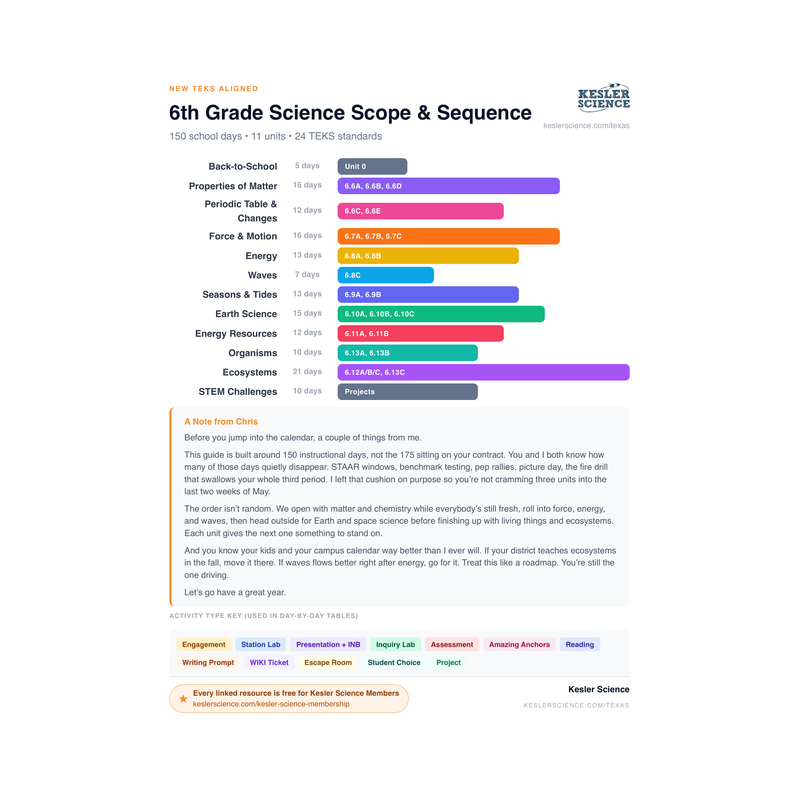
100% Aligned Lessons for Every TEKS You Teach
Kesler Science Plus puts thousands of ready-to-teach lessons and activities in your hands, so you can boost engagement and get your planning time back. Trusted by schools and districts all over the great state of Texas.
🌎 Phenomenon Ideas for 6.12A
Use these real-world phenomena to anchor your lesson. Show students the phenomenon first, let them wonder, then build toward Biotic & Abiotic Competition as the explanation.
Why the Forest Floor Is Mostly Bare
Walk through a dense pine forest in East Texas and notice something: most of the ground is covered in needles and very few small plants. Walk into a nearby open meadow and the ground is bursting with wildflowers, grasses, and shrubs. Both areas get rain. Both have soil. What is different?
"Which resource is abundant in the meadow but limited on the forest floor? How are the tall trees affecting what grows below them?"
Barnacles Stacked on a Tide Pool Rock
At rocky coastlines, barnacles attach to rocks so tightly packed that they touch their neighbors on all sides. There is often a sharp line on the rock where the barnacles stop, because above that line it's too dry and below it there are too many predators or other organisms taking the space. Each barnacle needs a spot to cement itself, and good spots run out fast.
"What resource are these barnacles competing for? What abiotic factors (like water, temperature, or sunlight) are also shaping where they live?"
A Bird Feeder Traffic Jam
Hang a single bird feeder in a backyard and watch what happens. Different species of birds arrive. They push each other off the perches, circle the feeder waiting, and sometimes squabble. Squirrels join in. Eventually the seed runs out. The same backyard, the same birds, the same squirrels, but one small resource is suddenly in high demand.
"Is the competition happening here between members of the same species, between different species, or both? What makes the bird feeder especially likely to cause competition?"
💡 Free Engagement Ideas for 6.12A
Ready-to-run activities you can drop straight into a lesson. Where one of these looks like a phenomenon from the section above, that is on purpose: show it first as the hook, then let students run it themselves.
Meter-Square Ecosystem Survey
Take students outside with meter sticks or string to mark off one-square-meter plots of grass or soil. In 10 minutes, they list every biotic and abiotic thing they can find in their plot. Back inside, they organize their list into two columns. Discuss which items surprised them and why.
Paper Plate Ecosystem Sort
Give each group a pile of index cards with ecosystem components: oak tree, bacteria, sunlight, soil, fox, rock, river, grass, mushroom, temperature, dead log, air. Groups place cards on two paper plates labeled "biotic" and "abiotic". Include a couple of tricky cases (dead log, soil) to spark discussion.
Paperclip Competition Game
Scatter paperclips on a table. Each student is a bird, and the paperclips are "seeds". Round 1 (30 seconds): all students grab seeds one at a time using their fingers. Round 2 (same 30 seconds): half the students have to pick up seeds with a clothespin instead of their fingers. Graph how many each student got. Tie the results to why different species can sometimes share a resource and why same-species competition is often the fiercest.
Two-Seed Sunlight Test
Plant two bean seeds in the same small cup of soil, right next to each other. Plant one bean in its own cup with the same amount of soil. Put them on the same windowsill and water them the same. Observe over a week or two. The single bean usually grows taller and fuller because it isn't competing for the soil nutrients, water, or sunlight. Students draw and label what they see.
🎯 What Approaches, Meets, and Masters Thinking Look Like
Here is what student thinking at each level looks like on this one task, so you know what to look for and how to move a student up.
A small backyard pond has three kinds of animals living in it: a turtle that eats water plants, a frog that eats insects, and a school of small fish that also eats water plants. One summer the pond gets very little rain, so the water plants almost stop growing. Investigate which animals are most likely to compete with each other for food, and explain how you know.
- A clear statement of which two animals compete (the turtle and the fish, because both eat water plants).
- Naming the limited resource at the center of the competition: the water plants, a biotic factor (a living food source).
- A reason the shortage matters, tied to the low rain and the plants barely growing.
- Recognizing that the frog is not competing for the same food, because it eats insects instead of plants.
- Using the word compete to mean two animals needing the same limited thing, not just living in the same pond.
- An explanation that connects the abiotic change (less water) to a biotic shortage (fewer plants) to the competition.
- Not assuming every animal in the pond competes just because they share it. That is the easiest place to slip.
All three animals compete because they all live in the same pond and there is not much food now. The turtle, the frog, and the fish are all stuck in the small pond together, so they all have to fight over what is left.
The turtle and the fish compete because they both eat the water plants. There are not many plants now, so they both want the same food. The frog does not compete with them because it eats insects, not plants. The turtle and the fish need the same thing, but the frog needs something different.
The turtle and the fish compete because they both eat the water plants, and the plants are almost gone. The reason the plants are gone is the low rain. Less water is an abiotic factor, and when there is less water the plants cannot grow, so the food (a biotic factor) runs short. That shortage is what makes the turtle and the fish compete. The frog is fine, because it eats insects, so it never needed the plants.
This is the same way it works on land. Two squirrels in one yard compete for the acorns from a single oak tree, especially in a dry year when the tree drops fewer acorns. A bird that eats worms in that same yard is not competing with the squirrels, because it needs a different food. Competition starts when the same limited resource gets low, no matter what kind of ecosystem it is.
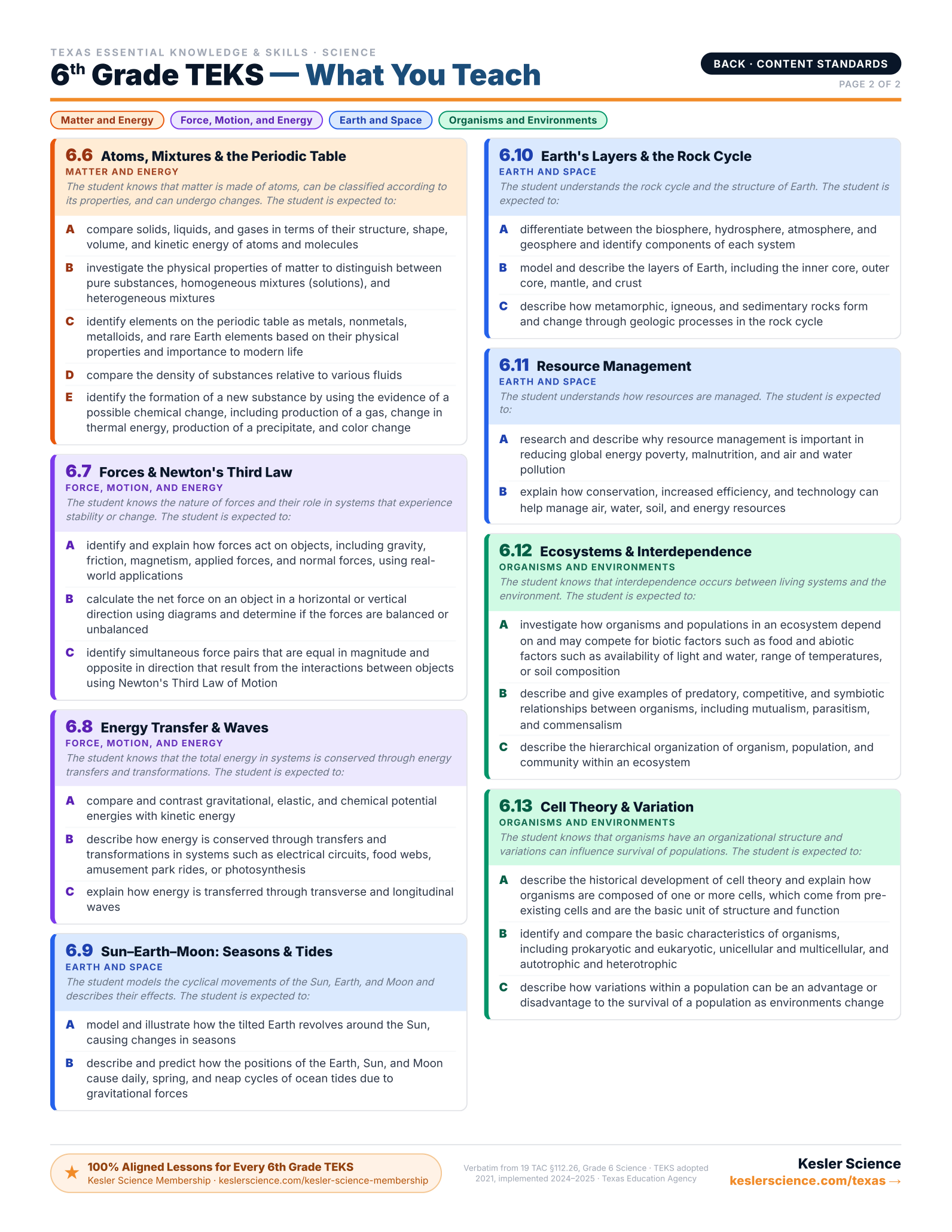
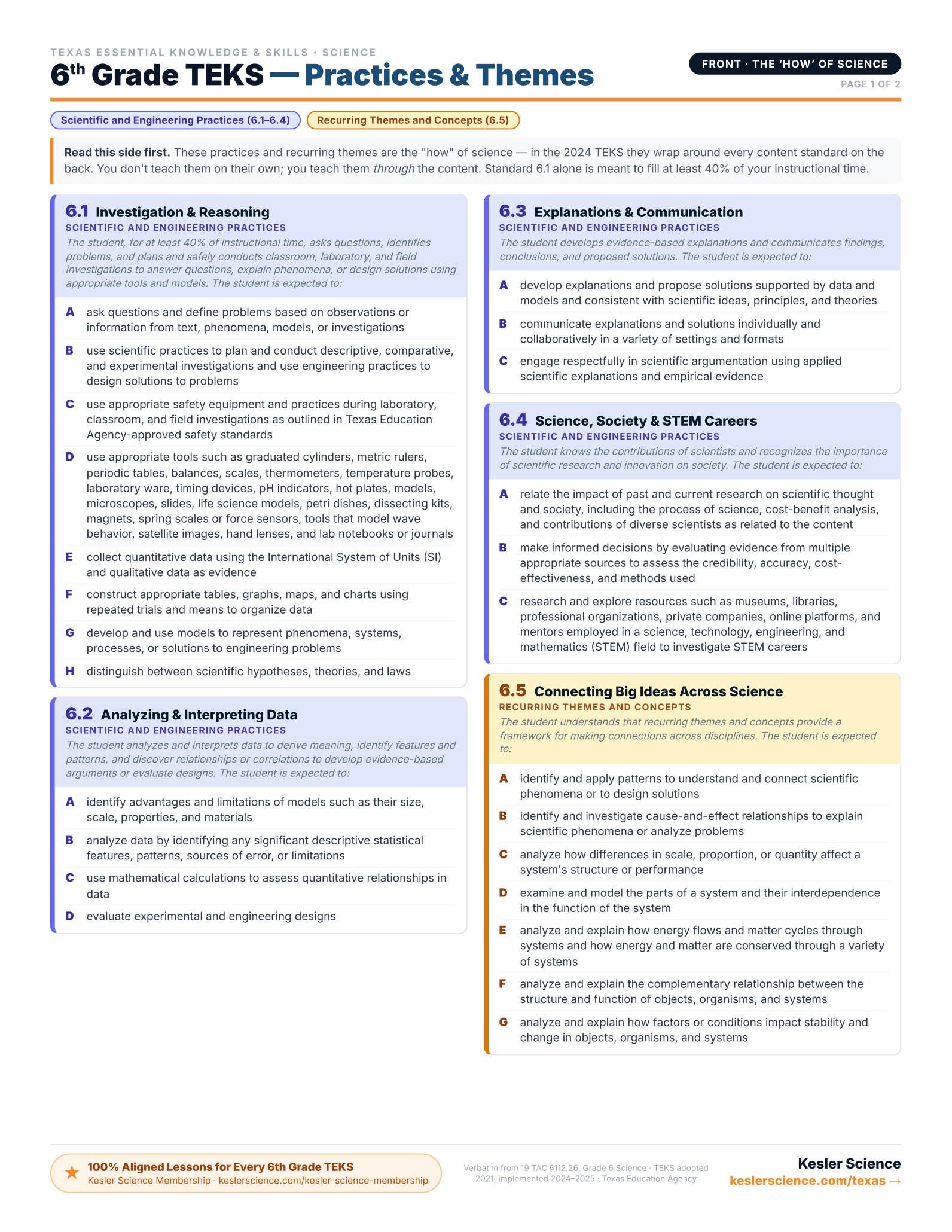
Every 6th-Grade Science TEKS on One Page
The color-coded, front-and-back cheat sheet I wish I'd had — every standard, organized by reporting category. Print it and reference it all year long. This will be your new favorite document!
Trusted Across Texas
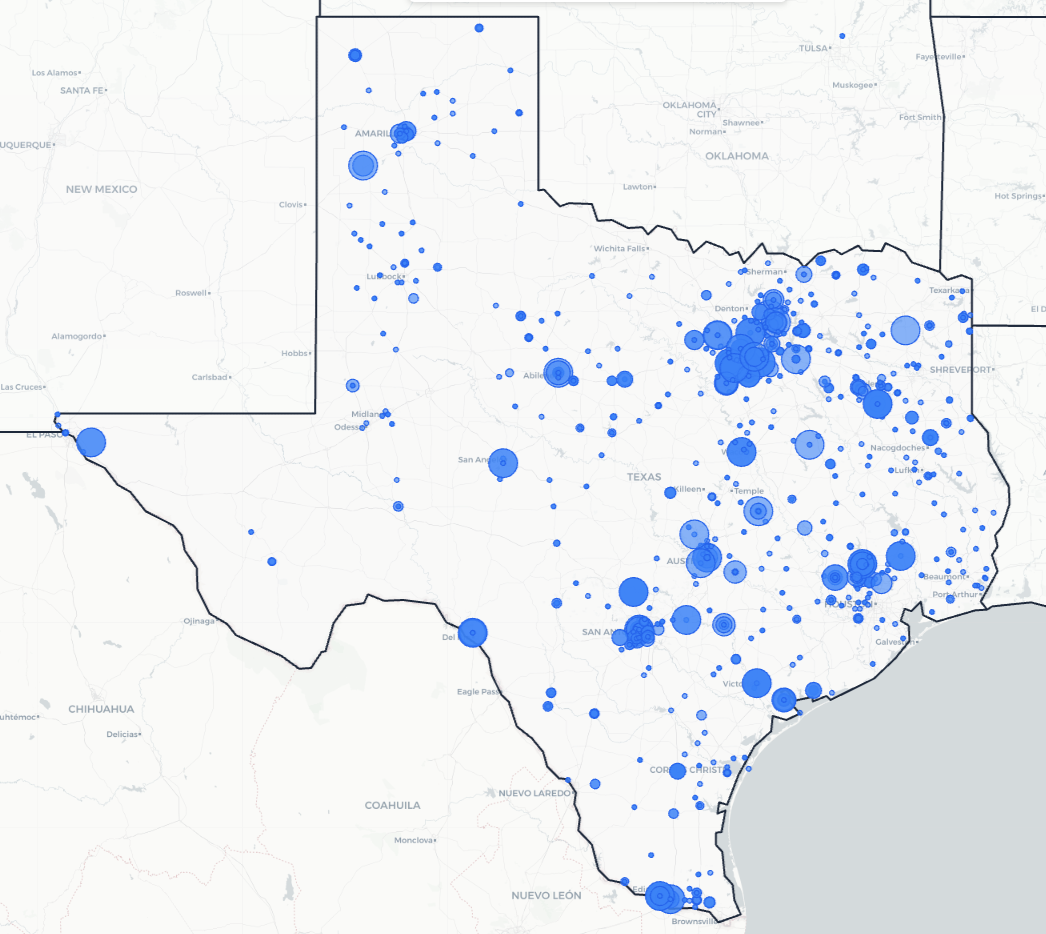
From the Rio Grande Valley to the Panhandle, Texas science teachers are using Kesler Science to save time and engage students.
Texas Schools and Districts
Love Kesler Science
What Teachers Are Saying
Give Your Science Teachers Everything They Need
School and district licenses give your teachers access to every resource they need, including station labs, inquiry labs, anchoring phenomena, presentations, escape rooms, and much more. One purchase covers the grade levels you need.
- PO-friendly. We accept purchase orders
- Volume discounts for 11+ teachers
- Complimentary Kesler Science Plus orientation for 4+ teachers
- Three free implementation PD sessions for departments of 11+
- Aligned to the 2024 TEKS standards
See It in Action
Book a walkthrough and we'll show you how Kesler Science fits your campus.
Book Demo CallNo pressure, no hard sell