.png?width=375&height=100&name=WebPage%20logo%20with%20curves%202026%20(8).png)
Managing Energy Resources
"Explain how conservation, increased efficiency, and technology can help manage air, water, soil, and energy resources."
💡 What This Standard Actually Means
"Explain". Students are explaining how three specific tools, conservation, increased efficiency, and technology, can help manage four kinds of resources: air, water, soil, and energy. This is a major shift from the old standard, which was about comparing the pros and cons of different energy sources. The new focus is on the strategies humans use to make resources last longer. Instruction can take many forms, such as efficiency-rating research, conservation case study analysis, technology spotlight presentations, and home-energy or home-water audit activities.
Earth's resources don't last forever, and how humans use them today shapes what's left for tomorrow. The standard names three big strategies for managing four key resources: conservation, increased efficiency, and technology, applied to air, water, soil, and energy. Each one shows up differently in the real world.
Conservation means using less of a resource on purpose. Turning off lights when leaving a room conserves electricity. Taking shorter showers conserves water. No-till farming conserves soil. Carpooling conserves fuel and reduces air pollution. Conservation doesn't require any new technology. It just requires changing the choices people make. Increased efficiency means doing the same job with less waste. A modern LED bulb uses about 90 percent less electricity than an old incandescent bulb to produce the same light. Drip irrigation delivers water right to a plant's roots, wasting far less than overhead sprinklers. Modern car engines burn fuel more completely than older ones, putting more energy into motion and less into pollution. Same job, less resource used.
Technology is the third tool, and it covers the new tools and systems humans invent to solve resource problems. Solar panels, wind turbines, electric vehicles, water filtration plants, satellite-monitored farming, and recycled-water systems are all technology in action. Together, conservation, efficiency, and technology stretch the resources we already have and reduce the damage we do to air, water, soil, and the energy supply. Students should walk away able to take a real situation (a school cafeteria, a city water system, a farm, a local power plant) and describe a conservation strategy, an efficiency upgrade, and a technology that could help manage resources better.
What changed for me on this standard was realizing the conversation isn't "which energy source wins", it's "how do we make any resource go further." My favorite anchor move now: pick ONE resource (water works great in Texas) and have students build a 3-column chart on butcher paper. Column 1, Conservation moves (shorter showers, fixing leaks, low-flow showerheads). Column 2, Efficiency upgrades (drip irrigation instead of flood irrigation, ENERGY STAR appliances, dual-flush toilets). Column 3, Technology solutions (smart water meters, desalination, greywater systems). Then I'd have groups circle which moves their school or family already does, and star one new one to try. Swap in air (vehicle standards, public transit, EVs) or soil (no-till farming, cover crops, precision-ag sensors) and the same chart still works. The pattern is the lesson.
⚠️ Misconceptions Your Students May Have
These are some of the most common misconceptions. Knowing what to look for can help you get ahead of them.
"Conservation just means using less"
Using less is part of it, but conservation is bigger than that. It includes using less, using more carefully, and protecting what we have so it lasts. Turning off the lights is conservation. So is rotating which fields a farmer plants so the soil doesn't wear out. So is keeping a watershed protected from runoff. The "use less" version is the one kids latch onto, but real conservation also includes how you use the resource and how you keep it healthy.
"Efficiency and conservation are the same thing"
They're related but different. Conservation is using less of a resource. Efficiency is getting more out of the resource you do use. A drip irrigation system is more efficient than spraying a whole field with sprinklers, because more of the water actually reaches the plant roots instead of evaporating. An LED bulb is more efficient than an old incandescent bulb because more of the electricity becomes light instead of heat. Efficiency lets you do the same job with less waste.
"Resource management is only about energy"
The TEKS specifically calls out four resources: air, water, soil, AND energy. Air gets managed through emissions standards and cleaner technologies. Water gets managed through irrigation choices, watershed protection, and treatment plants. Soil gets managed through crop rotation, no-till farming, and erosion control. Energy is just one of the four. Make sure students don't reduce this whole standard to "should we use solar or coal".
"Technology will fix everything, so we don't need to conserve"
Technology is one of the three management strategies, not a replacement for the other two. Better solar panels, more efficient car engines, water-recycling systems, and air-filtering tech all help. But the technology piece works best alongside conservation (using less) and efficiency (using better). Students who think "we'll just invent our way out" miss that the cheapest and fastest way to manage a resource is usually to waste less of it in the first place.
📓 Teaching Resources for 6.11B
These resources are aligned to this standard.


100% Aligned Lessons for Every TEKS You Teach
Kesler Science Plus puts thousands of ready-to-teach lessons and activities in your hands, so you can boost engagement and get your planning time back. Trusted by schools and districts all over the great state of Texas.
🌎 Phenomenon Ideas for 6.11B
Use these real-world phenomena to anchor your lesson. Show students the phenomenon first, let them wonder, then build toward Managing Energy Resources as the explanation.
Drip Lines on a West Texas Cotton Field
A lot of West Texas cotton fields used to be watered by huge sprayers that arced water over the rows. On a hot, windy afternoon, a big chunk of that water evaporated before it ever hit the ground. More and more farmers have switched to drip irrigation, where buried hoses release small amounts of water right at the roots. Same crop, same field, sometimes less than half the water. The cotton still grows. The aquifer underneath stops dropping as fast.
"Drip irrigation is an example of using technology to make a resource more efficient. Which resource is being managed here? How does this connect to the bigger idea of resource management?"
The Same House, Half the Energy Bill
Take a house built in 1970 and one built in 2020 with the same square footage. The newer house probably uses about half the energy to heat and cool. The walls are better insulated. The windows have two or three panes. The AC unit moves more air per watt. The light bulbs are LEDs instead of incandescent. Same shelter, same family, dramatically less energy. No one had to invent a new fuel for that to happen. The savings came from technology and efficiency stacked together.
"How can the same family use half the energy in a newer house without giving anything up? Which management strategies (conservation, efficiency, technology) are at play here?"
The Dust Bowl That Made Farmers Change Their Soil
In the 1930s, after years of plowing the Great Plains the same way every season, the topsoil dried out and started blowing away in storms big enough to darken the sky. We call it the Dust Bowl. After that, farmers across the country started using new soil management practices: cover crops between seasons, contour plowing, no-till methods, and crop rotation. Today the same fields are still farmed, but the soil mostly stays put. A whole region changed how it managed one resource, and the dust storms haven't come back at that scale since.
"What were farmers doing wrong before the Dust Bowl? Which conservation, efficiency, and technology strategies did they adopt to manage soil better?"
💡 Free Engagement Ideas for 6.11B
Ready-to-run activities you can drop straight into a lesson. Where one of these looks like a phenomenon from the section above, that is on purpose: show it first as the hook, then let students run it themselves.
Classroom Resource Audit
Spend one class period observing how the classroom uses air, water, soil (think potted plants or a class garden), and energy. Groups walk around with a clipboard noting things like the AC vents, the sink, the lights, plants, devices left on. Then each group picks one resource and proposes three changes: one conservation move, one efficiency move, and one technology move. Vote on the best ideas, then actually try one for a week. Real changes, real data.
Drip vs. Spray Water Test
Set up two model "fields" using disposable aluminum trays filled with potting soil and bean seedlings. On one tray, use a spray bottle to mimic sprinkler irrigation. On the other, use a poked-hole plastic bag taped just above the soil to drip slowly. Measure how much water you put on each tray, then weigh the trays before and after a few hours in the sun. The drip side will have lost less water to evaporation, and the seedlings will be just as wet at the roots. Tie it to real-world water-management technology.
Energy Efficiency Bulb Showdown
Hook an old incandescent bulb, a CFL, and an LED to a kill-a-watt meter (or use the wattage printed on each bulb). Have students predict which uses the most electricity, then measure. Use a thermometer or infrared thermometer to check how hot each bulb gets. The incandescent bulb wastes most of its electricity as heat instead of light. Connect the data to why swapping bulbs is one of the simplest energy management technology upgrades a household can make.
Manage the Resource Town Council
Your town has four problems on the agenda: dirty air on bad-traffic days, a shrinking water supply, soil eroding off local farms, and rising energy bills. Split the class into four groups, one per problem. Each group has to research and pitch one conservation strategy, one efficiency strategy, and one technology strategy that addresses their problem. Two minutes per pitch. After all four groups present, the class votes on which town problem they'd tackle first, and why.
🎯 What Approaches, Meets, and Masters Thinking Look Like
Here is what student thinking at each level looks like on this one task, so you know what to look for and how to move a student up.
A school uses a lot of water. The cafeteria washes trays, the bathrooms have sinks, and a crew waters the lawn every afternoon. The school wants to manage its water better so it does not run out and the bill goes down. Explain how the school could use each of these three tools to help: conservation (using less on purpose), increased efficiency (doing the same job with less waste), and technology (a new tool or system). Give one real example for each tool.
- One clear example for each of the three tools, not three examples that are all really the same idea.
- A conservation example that means using less on purpose (such as turning off a faucet or watering the lawn less often).
- An efficiency example that does the same job with less waste (such as low-flow faucets that still wash hands but use less water per minute).
- A technology example that names a new tool or system (such as a sensor faucet that shuts off by itself, or a system that reuses rinse water).
- An explanation that says how each example helps manage the water, not just what it is.
- Conservation and efficiency kept separate: using less on purpose is not the same as getting the same job done with less waste. That is the easiest place to slip.
Conservation means the school should use less water. They could turn off the sinks faster and water the grass less. For efficiency they should also use less water, like shorter times at the faucet. For technology they could put up a sign that says save water. All three are about using less water so the school does not run out.
Conservation is using less water on purpose. The school could water the lawn only two days a week instead of every day. Increased efficiency is doing the same job but wasting less. They could put low-flow faucets in the bathrooms, so people still wash their hands but less water comes out each minute. Technology is a new tool. They could install sensor faucets that turn off by themselves when your hands move away, so the water is not left running. Each one helps the school manage its water and lower the bill.
Conservation is using less on purpose, so the school could water the lawn only twice a week. Efficiency is doing the same job with less waste, so low-flow faucets still wash hands but use less water each minute. Technology is a new tool, like sensor faucets that shut off by themselves so water is never left running. These three work best together: even the best technology still wastes water if people leave it on, so you still need conservation and efficiency too.
The same three tools would work for managing energy, not just water. The school could conserve by turning off lights in empty rooms, raise efficiency by switching to LED bulbs that make the same light with less electricity, and use technology like solar panels on the roof. It is the same idea: use less, use better, and invent better tools.
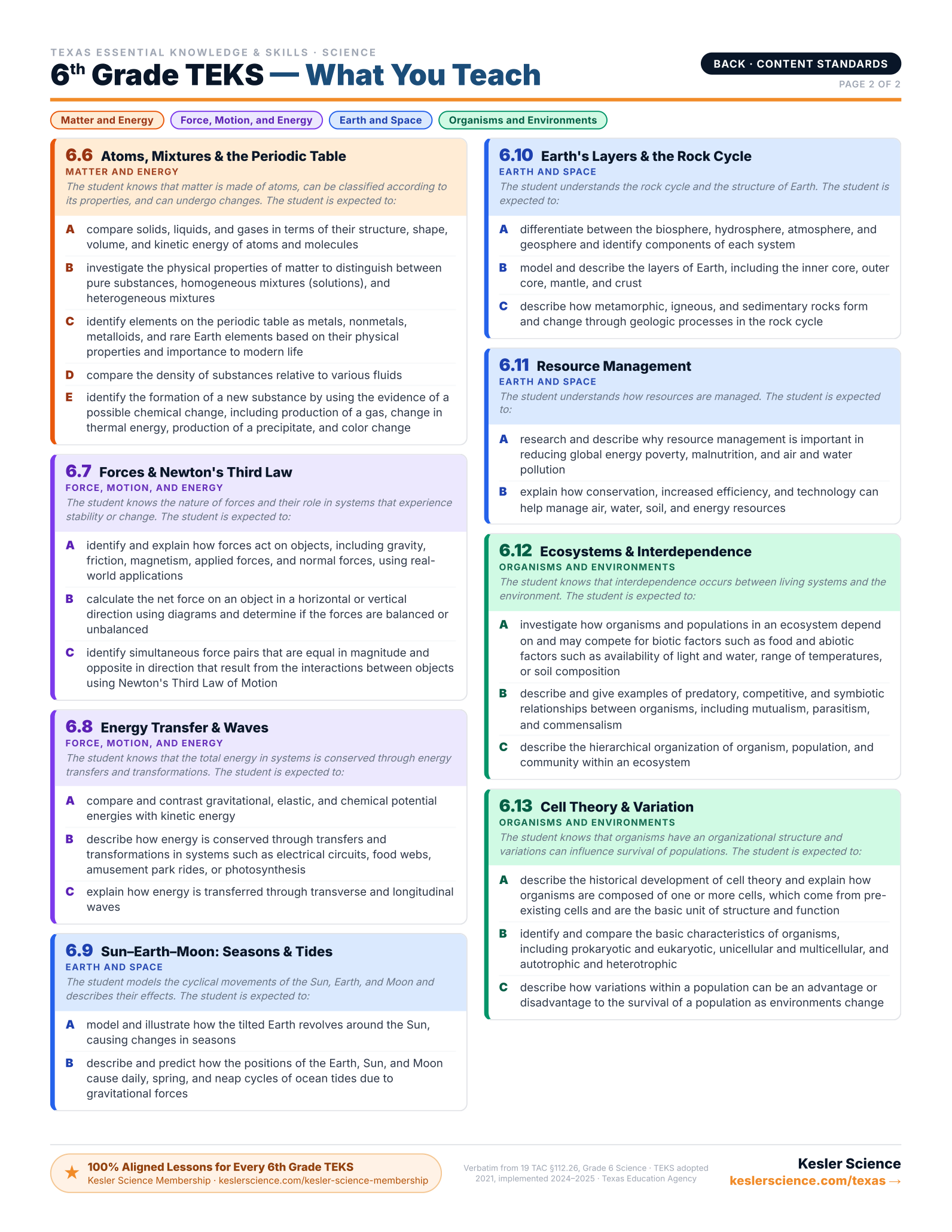
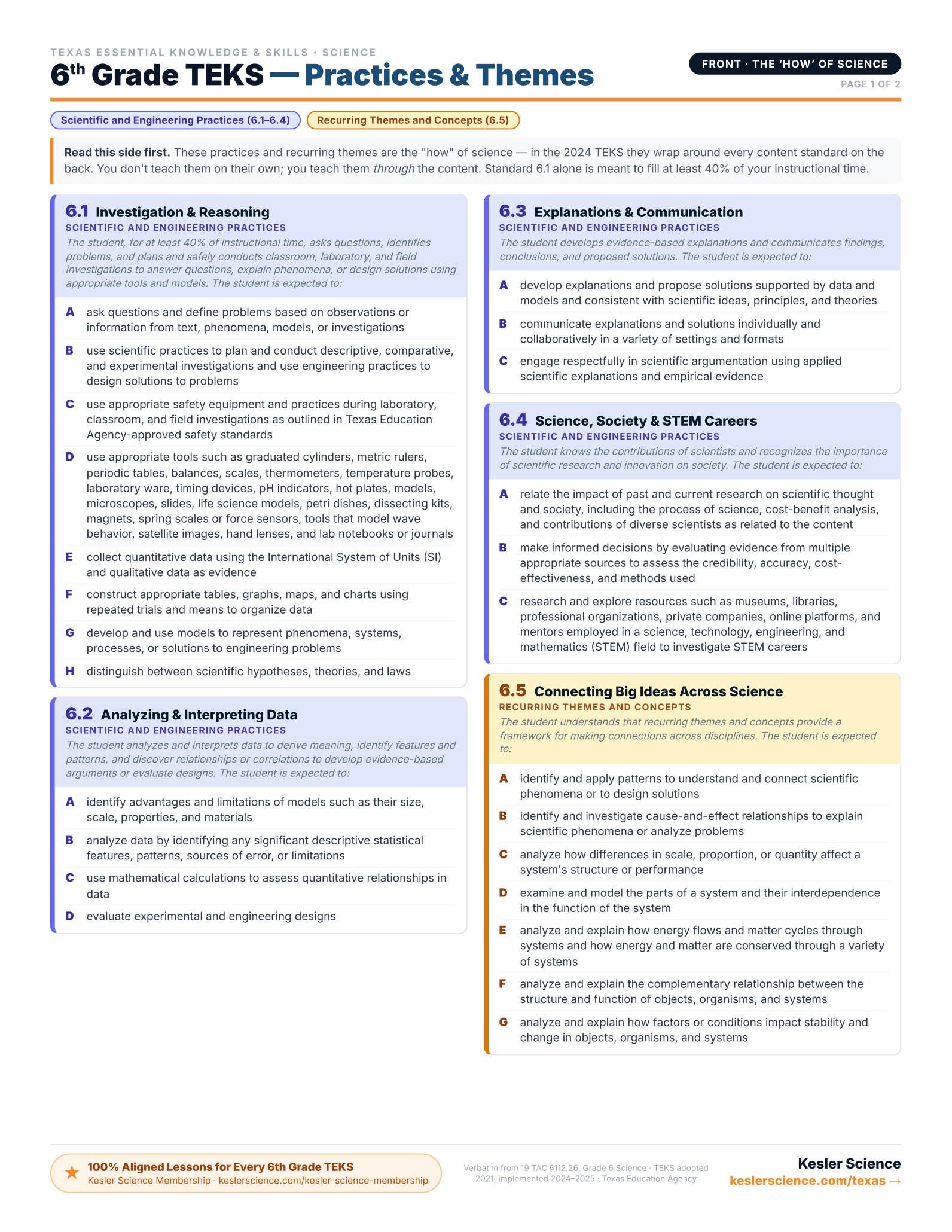
Every 6th-Grade Science TEKS on One Page
The color-coded, front-and-back cheat sheet I wish I'd had — every standard, organized by reporting category. Print it and reference it all year long. This will be your new favorite document!
Trusted Across Texas
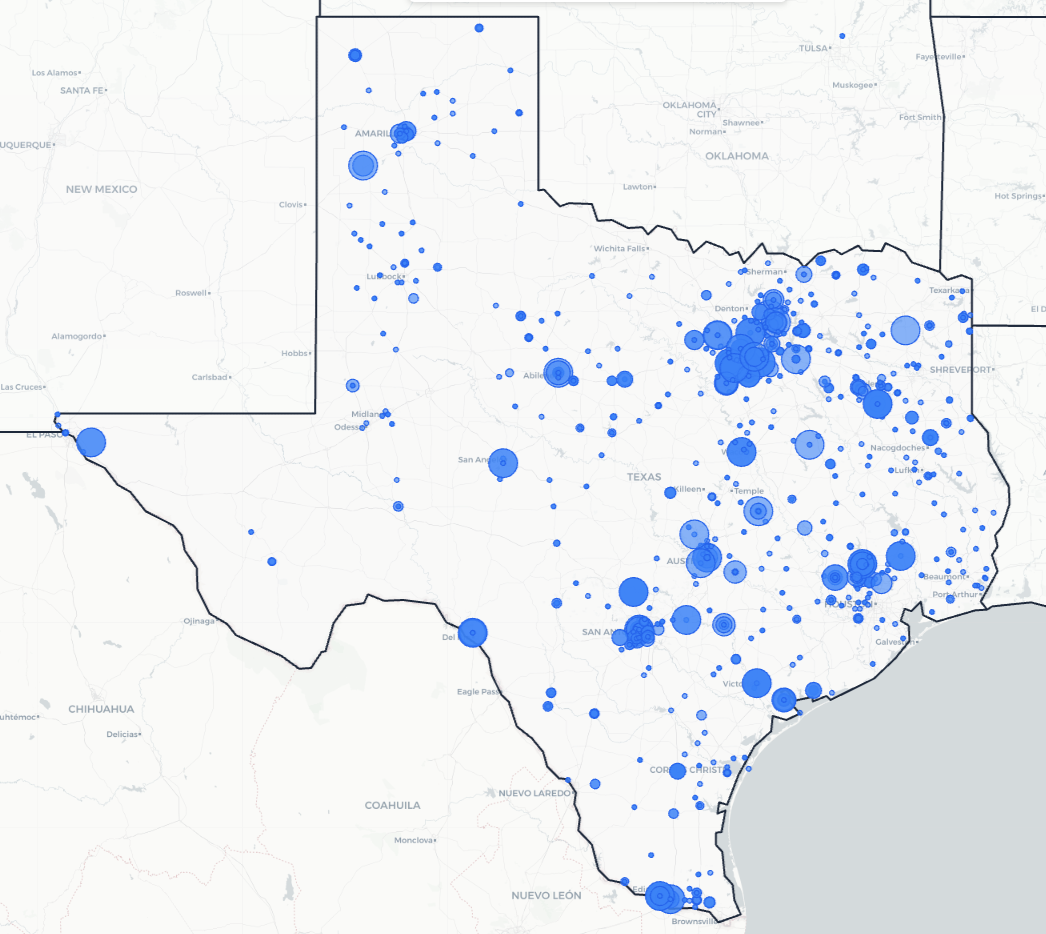
From the Rio Grande Valley to the Panhandle, Texas science teachers are using Kesler Science to save time and engage students.
Texas Schools and Districts
Love Kesler Science
What Teachers Are Saying
Give Your Science Teachers Everything They Need
School and district licenses give your teachers access to every resource they need, including station labs, inquiry labs, anchoring phenomena, presentations, escape rooms, and much more. One purchase covers the grade levels you need.
- PO-friendly. We accept purchase orders
- Volume discounts for 11+ teachers
- Complimentary Kesler Science Plus orientation for 4+ teachers
- Three free implementation PD sessions for departments of 11+
- Aligned to the 2024 TEKS standards
See It in Action
Book a walkthrough and we'll show you how Kesler Science fits your campus.
Book Demo CallNo pressure, no hard sell