.png?width=375&height=100&name=WebPage%20logo%20with%20curves%202026%20(8).png)
Speed & Velocity
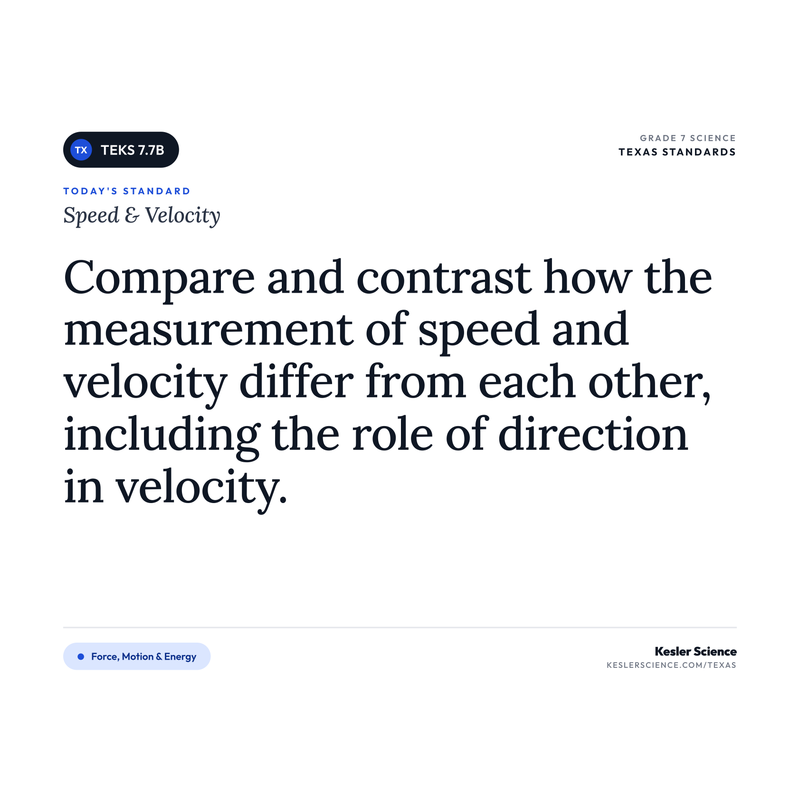
"Distinguish between speed and velocity in linear motion in terms of distance, displacement, and direction."
💡 What This Standard Actually Means
"Distinguish". Students are telling speed and velocity apart in linear motion using three concepts: distance, displacement, and direction. The shift in this standard is the explicit addition of displacement, which wasn't in the old version. Distance and displacement are different things, and that difference is the heart of the speed-vs-velocity comparison now. Instruction can take many forms, such as walk-the-line displacement labs, distance-vs-displacement maze activities, vector arrow drawings, and side-by-side scenario comparisons.
Speed is a measurement of how fast something is moving. It's a single number with a unit, like 30 mph or 5 m/s. Speed uses distance, which is the total amount of ground covered, regardless of direction. If a runner laps the track three times, they've covered 1200 meters of distance, period. Scientists call this kind of measurement a scalar. It has size but no direction.
Velocity is speed with a direction attached. "30 mph north" is a velocity. "5 m/s toward the door" is a velocity. Velocity uses displacement, which is the straight-line change in position from start to finish, plus a direction. If a runner laps a 400-meter track and ends up exactly back where they started, their displacement is zero, even though they ran 1200 meters of distance. Scientists call velocity a vector. It has size and direction.
That distance-vs-displacement difference is the easiest way to tell speed and velocity apart. Speed is built on distance. Velocity is built on displacement. Two cars can be moving at the same speed but have completely different velocities if they're going in different directions. A car going 60 mph north and a car going 60 mph south have the same speed but opposite velocities. The core understanding students should walk away with is that speed answers "how fast?" and velocity answers "how fast and which way?" Direction is what makes velocity different.
What worked for me was a quick trick I called "finish the sentence." I'd put a sentence up on the board like "The jogger was running 6 mph..." and ask students whether that described speed or velocity. They'd say speed. Then I'd add "...to the north." Now it's velocity. Back and forth like that for five minutes, changing the sentences each round, and by the end of it they had the direction-matters idea nailed down. Then I'd bring in the curve example. "If a car is going 60 mph around a roundabout, is its velocity staying the same?" That one gets some great arguments going. Lean into those arguments. They're where the learning happens.
⚠️ Misconceptions Your Students May Have
These are some of the most common misconceptions. Knowing what to look for can help you get ahead of them.
"Speed and velocity are basically the same thing"
Students hear these words used interchangeably in everyday life, especially in sports broadcasts. But in physics they're different. Speed gives you only the magnitude, a single number. Velocity gives you the magnitude AND the direction. Speed tells you how fast. Velocity tells you how fast and which way.
"If the speed is the same, the velocity is the same"
Two cars traveling at 60 mph can have completely different velocities. If one is heading north and the other is heading south, their speeds are identical but their velocities are opposite. Direction is half of velocity, so comparing velocities means comparing both the number and the direction.
"Velocity can't change if the speed doesn't change"
A car going 60 mph around a curve is a classic example. Its speed stays the same the whole way through the curve, but its direction changes every moment. Since velocity includes direction, a change in direction is a change in velocity, even if the speed number stays steady.
"Direction is just something extra you add onto velocity. It's not really part of the measurement"
Direction is not a label tacked on. It's built into the measurement. A velocity without a direction is just a speed. That's why the TEKS specifically names direction as the thing that makes velocity different from speed.
📓 Teaching Resources for 7.7B
These resources are aligned to this standard.


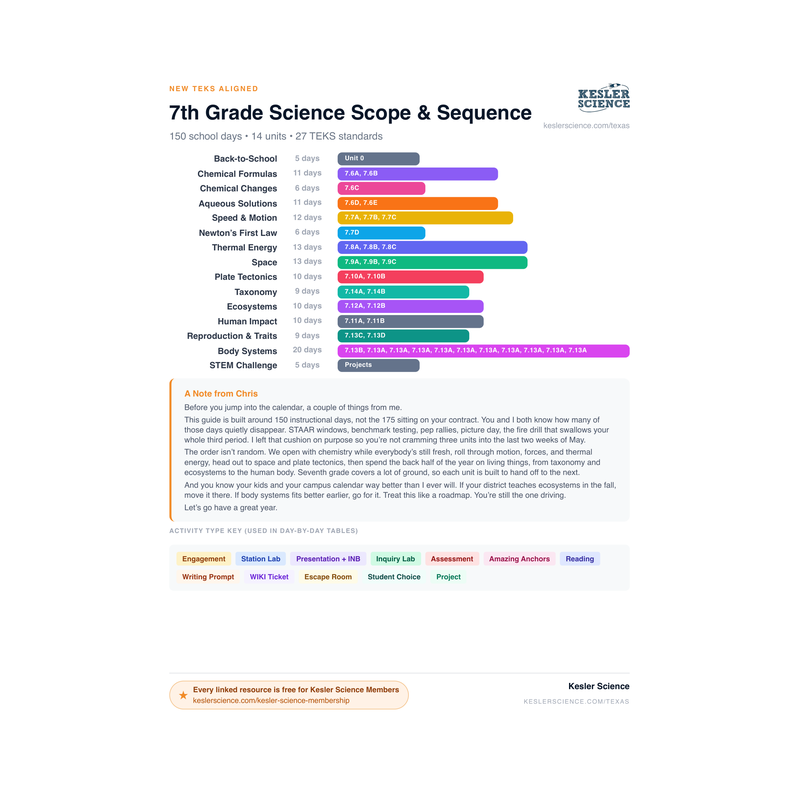
100% Aligned Lessons for Every TEKS You Teach
Kesler Science Plus puts thousands of ready-to-teach lessons and activities in your hands, so you can boost engagement and get your planning time back. Trusted by schools and districts all over the great state of Texas.
🌎 Phenomenon Ideas for 7.7B
Use these real-world phenomena to anchor your lesson. Show students the phenomenon first, let them wonder, then build toward Speed & Velocity as the explanation.
A Merry-Go-Round at the Park
Picture a kid on a playground merry-go-round spinning steadily. Their speed around the platform might stay at a steady walking pace the whole time. But ask them which way they're going and the answer keeps changing. One second they're heading north. A second later they're heading east. A few seconds after that they're heading south. Same speed every single second, but the direction is never the same for long.
"If the kid's speed stays exactly the same the whole ride, why do we say their velocity is constantly changing? What does the merry-go-round tell us about the difference between speed and velocity?"
Two Planes, Same Speed, Different Trips
Two passenger jets take off from the same airport at the same time. Both cruise at about 550 mph. One flies east toward New York. The other flies west toward Los Angeles. After three hours, their locations are hundreds of miles apart. Their speedometers would have read the same number the entire trip, but they ended up nowhere near each other.
"If both planes had the same speed, why did they end up in completely different places? What piece of information does a pilot or air traffic controller need that a simple speed number doesn't give them?"
A Soccer Ball Rolling Toward the Goal
A coach kicks a soccer ball straight toward the goal at 15 m/s. It rolls across the grass, hits a divot, and bounces off at a weird angle. Before the bounce, the ball had a velocity of 15 m/s toward the goal. After the bounce, it's still moving at roughly 15 m/s, but now it's rolling away toward the sideline. The speed is almost the same. The velocity is definitely not.
"Why do we say the velocity of the ball changed after the bounce, even though the ball is moving at a similar speed? What does this tell us about why direction matters when we describe motion?"
💡 Free Engagement Ideas for 7.7B
Ready-to-run activities you can drop straight into a lesson. Where one of these looks like a phenomenon from the section above, that is on purpose: show it first as the hook, then let students run it themselves.
Speed vs. Velocity Sentence Sort
Write 20 short sentences on index cards. Half describe speed only (ex: "The car is going 40 mph"). Half describe velocity (ex: "The car is going 40 mph east"). Students sort them into two piles and have to explain their reasoning. Hand out a blank set of cards at the end and have them write four of their own, two of each kind.
Compass Direction Walking Trials
In the gym or parking lot, have a partner just walk the shape at a steady pace (they are not steering by the compass) while another student uses a phone compass app to record the direction they are facing every 10 seconds. First round: walk in a straight line. Second round: walk a big circle at the same speed. Students record the speed and direction at each interval, then explain which trial had a changing velocity and why.
Marble Maze Direction Changes
Build a quick maze on a tray using straws or pencils and tape. Students roll a marble through the maze and mark every point where the marble changes direction. At each turn, they describe what happened to the speed (was it faster, slower, about the same?) and what happened to the velocity (what changed?). Great reinforcement that direction changes alone are enough to change velocity.
Arrow Diagrams for Velocity
Draw eight simple scenarios on the board (a runner heading north at 6 mph, a bike going east at 10 mph, and so on). Students draw an arrow for each one where the length shows the speed and the direction of the arrow shows the direction of motion. Compare arrows for scenarios with the same speed but different directions. Makes the scalar vs. vector idea visual fast.
🎯 What Approaches, Meets, and Masters Thinking Look Like
Here is what student thinking at each level looks like on this one task, so you know what to look for and how to move a student up.
Two runners start together at the same corner of a square track. Runner A jogs all the way around the track one time and stops back at the starting corner. Runner B leaves the track and jogs in a straight line down a straight path, stopping after covering the same total distance Runner A did. Both runners finish in the same amount of time. Compare the two runners' speed and their velocity. Use the words distance, displacement, and direction in your answer.
- Speed defined as how fast something moves, a single number that uses total distance traveled.
- Velocity defined as how fast and which way, using displacement (the straight-line change from start to finish) plus a direction.
- Both runners covered the same total distance in the same time, so their speed is the same single number.
- Runner A's distance is the full trip around the track, but their displacement is zero because they end where they started.
- Runner B's distance and displacement are the same straight path, with a clear direction named.
- A statement that the two runners have the same speed but different velocity, because direction is part of velocity.
- The explanation ties the difference back to distance vs. displacement, not just to "they went different ways."
- Runner A handled correctly: same speed as Runner B, but Runner A's displacement (and therefore velocity over the whole trip) is zero. That is the easiest place to slip.
Both runners finish in the same time and go the same distance. Runner A goes all the way around and Runner B goes in a straight line. They are going just as fast as each other, so their speed is the same. And if the speed is the same, then the velocity is the same too. So both runners have the same speed and the same velocity.
Speed is how fast you move, and it uses distance, the total ground you cover. Both runners have the same speed because they covered the same distance in the same time. But velocity is how fast and which way, and it uses displacement, the straight line from start to finish, plus a direction.
Runner B went in a straight line and stopped, so Runner B has a displacement and a clear direction. Runner A went all the way around and stopped at the same corner, so Runner A's displacement is zero. That means the two runners have the same speed but different velocity, because their direction and displacement are not the same.
Speed only uses distance, the total ground covered, so it's just one number. Velocity uses displacement, the straight-line change from start to finish, and it also needs a direction. Both runners have the same speed because they covered the same distance in the same time. But Runner B's displacement points in a straight line away from the start, and Runner A's displacement is zero because they ended at the same corner they started at. Same speed, different velocity, because direction and displacement are not the same for the two runners.
The real reason is that velocity always carries direction with it, and speed never does. That is why a car driving at a steady 30 mph around a curve keeps the same speed the whole way but is still changing its velocity, because its direction keeps changing every moment. Speed answers how fast. Velocity answers how fast and which way.
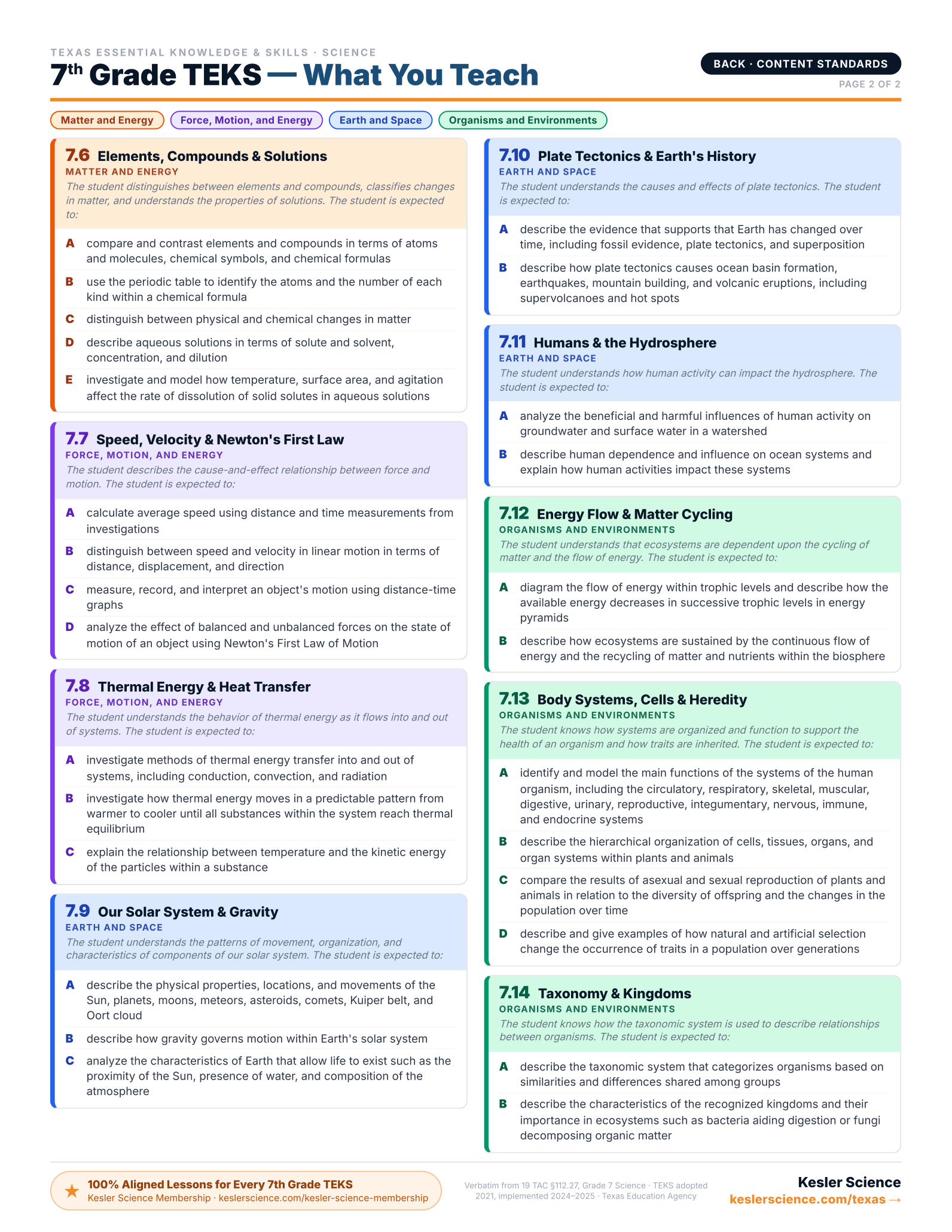
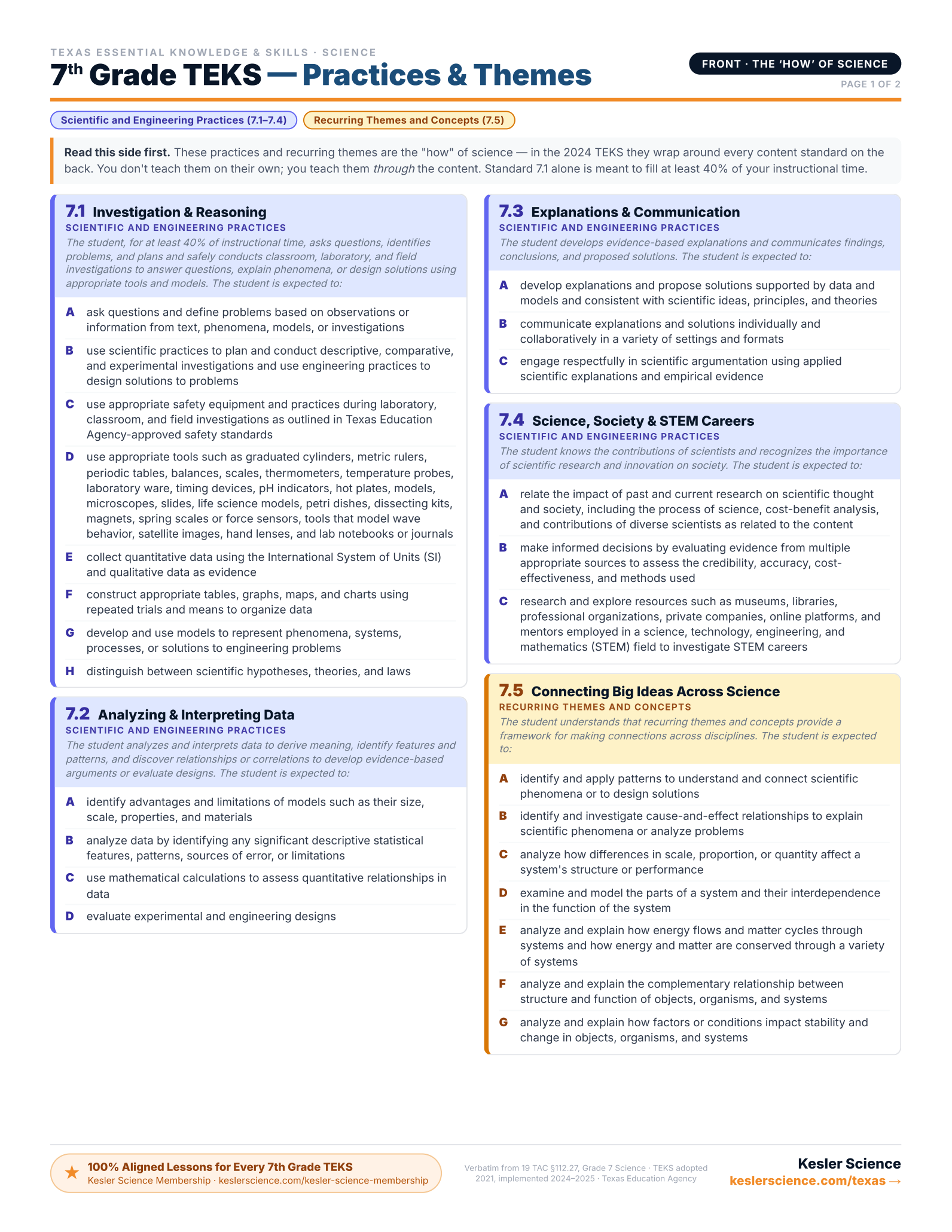
Every 7th-Grade Science TEKS on One Page
The color-coded, front-and-back cheat sheet I wish I'd had — every standard, organized by reporting category. Print it and reference it all year long. This will be your new favorite document!
Trusted Across Texas
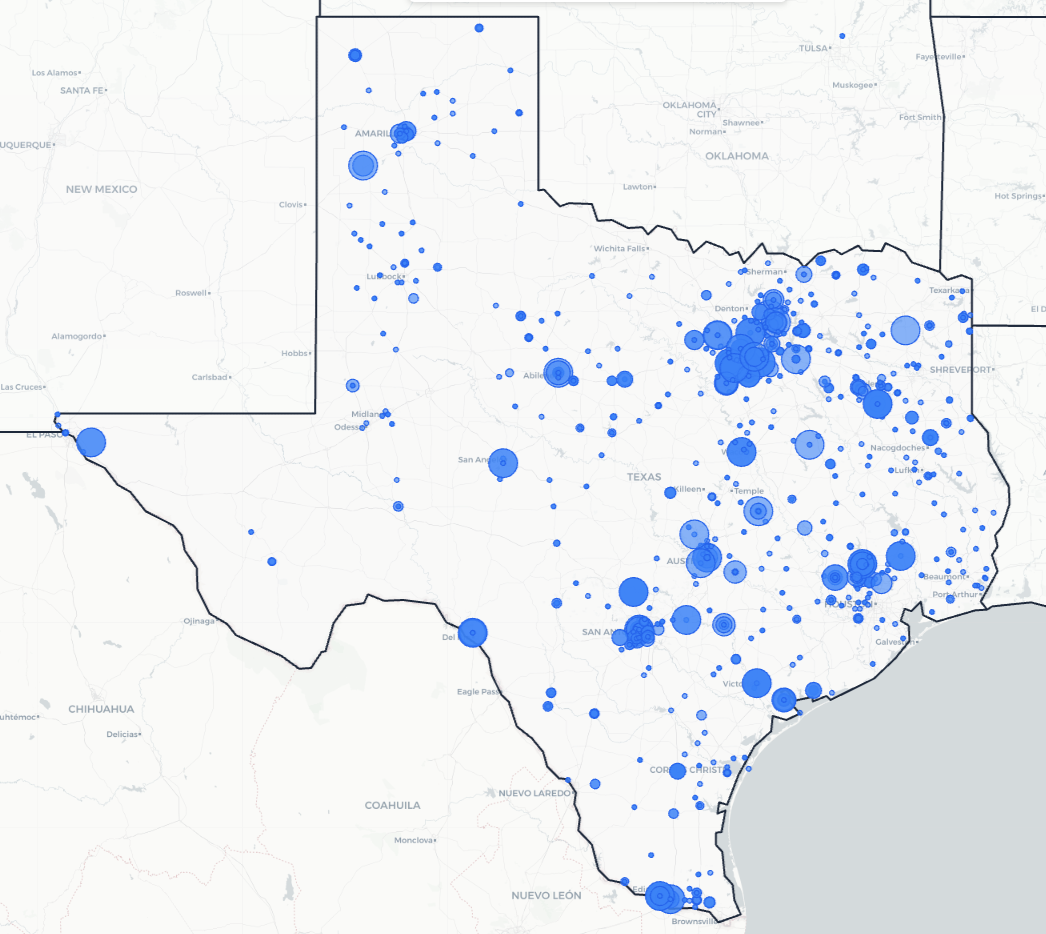
From the Rio Grande Valley to the Panhandle, Texas science teachers are using Kesler Science to save time and engage students.
Texas Schools and Districts
Love Kesler Science
What Teachers Are Saying
Give Your Science Teachers Everything They Need
School and district licenses give your teachers access to every resource they need, including station labs, inquiry labs, anchoring phenomena, presentations, escape rooms, and much more. One purchase covers the grade levels you need.
- PO-friendly. We accept purchase orders
- Volume discounts for 11+ teachers
- Complimentary Kesler Science Plus orientation for 4+ teachers
- Three free implementation PD sessions for departments of 11+
- Aligned to the 2024 TEKS standards
See It in Action
Book a walkthrough and we'll show you how Kesler Science fits your campus.
Book Demo CallNo pressure, no hard sell