.png?width=375&height=100&name=WebPage%20logo%20with%20curves%202026%20(8).png)
Taxonomy
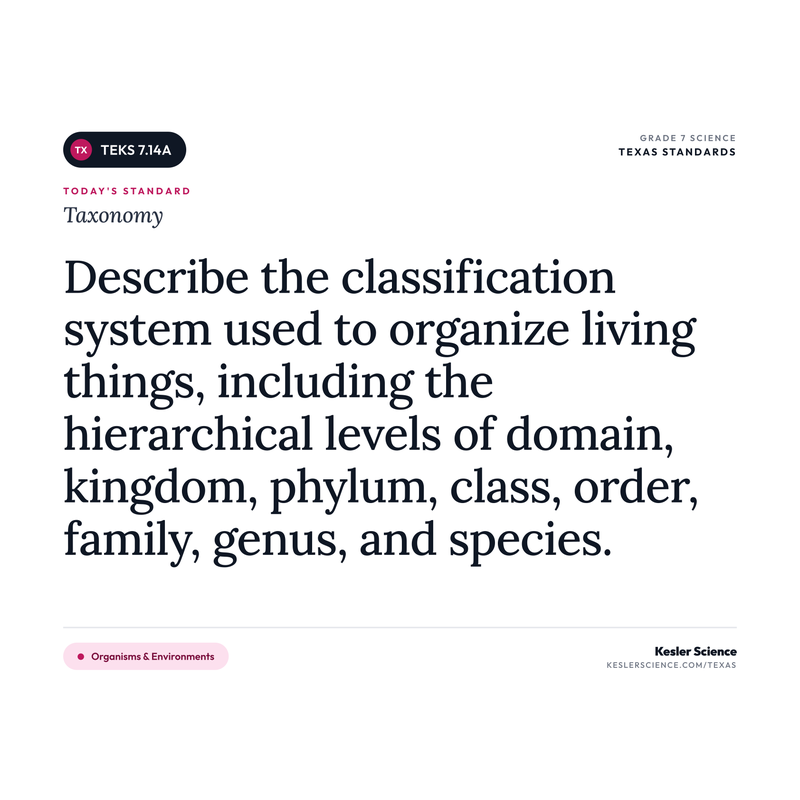
"Describe the taxonomic system that categorizes organisms based on similarities and differences shared among groups."
💡 What This Standard Actually Means
"Describe". Students are describing the taxonomic system that scientists use to categorize organisms based on similarities and differences shared among groups. The shift in this standard is that the eight specific levels (domain, kingdom, phylum, class, order, family, genus, species) aren't called out by name in the wording anymore. The focus is on the system itself and the idea of grouping by shared traits. Most teachers will still teach the levels because they're the easiest way to show how the system works. Instruction can take many forms, such as classification card sorts, mnemonic creation activities, dichotomous key practice, and shared-trait comparison projects.
Taxonomy is the branch of biology that organizes living things into groups based on the characteristics they share. Modern taxonomy started with Carl Linnaeus in the 1700s, and the system he built is still used today, with updates as scientists learn more about how species are related. The big idea students need to walk away with is the system itself: scientists group organisms by similarities, and the more traits two organisms share, the more closely related they are.
The traditional way to teach the system is through eight nested levels, from broadest to most specific: domain, kingdom, phylum, class, order, family, genus, and species. A common mnemonic is "Dear King Philip Came Over For Good Soup." At the top, a domain like Eukarya contains huge groups of life. Each level down narrows the group and adds more specific shared traits. At the bottom, a species is a specific organism (or group of organisms that can interbreed and produce fertile offspring).
Every known species also gets a two-part scientific name called binomial nomenclature. The first word is the genus (capitalized), and the second is the species name (lowercase). Both parts are italicized or underlined. Humans are Homo sapiens. Domestic dogs are Canis familiaris. This naming system gives every species a unique name that scientists worldwide can use, regardless of language or region. Students should walk away able to describe the taxonomic system as a tool for grouping organisms by shared traits, with the broadest groups at the top and the most specific (species) at the bottom.
I used to try teaching the levels in a single day by drilling the mnemonic. Kids could recite it but couldn't use it. What finally stuck was starting with ONE organism and zooming in level by level. I'd put a picture of a dog on the board, then peel it back. Eukarya (has a nucleus), Animalia (animal), Chordata (has a spinal cord), Mammalia (has fur, feeds milk), Carnivora (meat-eater teeth), Canidae (dog family), Canis (wolves and their relatives), familiaris (the domestic one). Each step narrows the group. When students can walk UP and DOWN the ladder with one familiar animal, they own the system. Then you swap in a second organism and they do the whole thing themselves.
⚠️ Misconceptions Your Students May Have
These are some of the most common misconceptions. Knowing what to look for can help you get ahead of them.
"Species is the biggest group and domain is the smallest"
Students often reverse the hierarchy. Domain is the BROADEST category (holds the most organisms) and species is the MOST SPECIFIC (holds the fewest). Reinforce this with visual ladders that get narrower as you move down. Start with the domain at the top and watch the group shrink with each step.
"Common names and scientific names mean the same thing"
Common names vary by region and language. A "mountain lion" in Texas is the same animal as a "puma" in South America and a "cougar" in Canada. The scientific name Puma concolor is used by biologists worldwide. One organism, one scientific name. Show students examples of animals with several common names to make the point stick.
"Organisms that look alike must be in the same group"
Looks can be misleading. Dolphins and fish both live in water and have streamlined bodies, but dolphins are mammals (Class Mammalia) and fish belong to different classes entirely. Bats and birds both fly, but bats are mammals. Taxonomy is based on shared characteristics like skeletal structure, DNA, and reproductive biology, not surface appearance.
"The classification system is fixed and never changes"
Taxonomy gets updated as new evidence (often from DNA analysis) comes in. The older 5- and 6-kingdom systems have been reorganized into 3 domains (Bacteria, Archaea, Eukarya) with kingdoms nested under them. Organisms have been reclassified many times as scientists learn more. It is a living system built on current evidence, not a frozen chart.
📓 Teaching Resources for 7.14A
These resources are aligned to this standard.


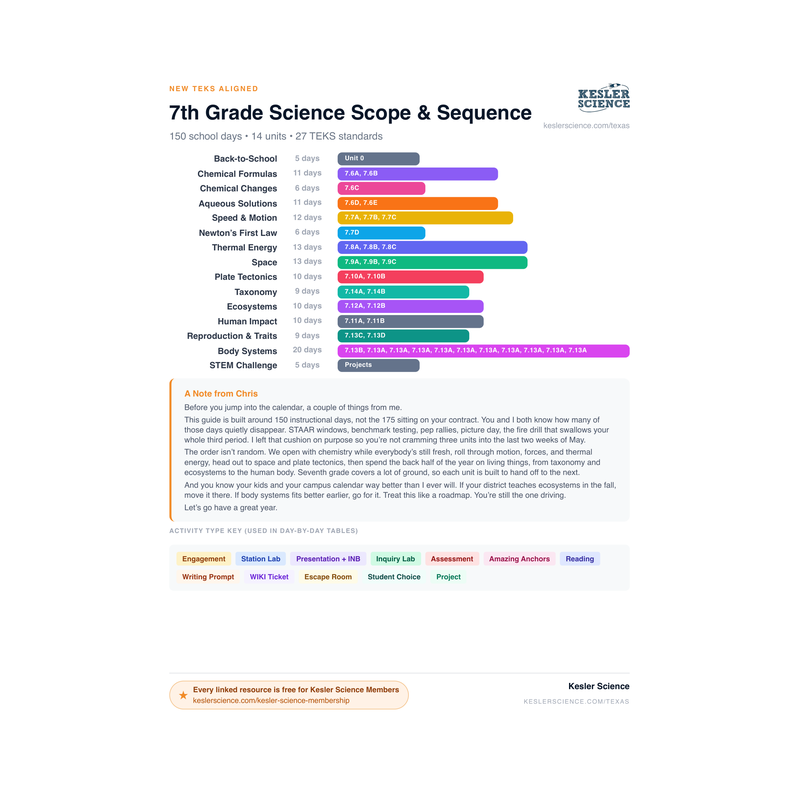
100% Aligned Lessons for Every TEKS You Teach
Kesler Science Plus puts thousands of ready-to-teach lessons and activities in your hands, so you can boost engagement and get your planning time back. Trusted by schools and districts all over the great state of Texas.
🌎 Phenomenon Ideas for 7.14A
Use these real-world phenomena to anchor your lesson. Show students the phenomenon first, let them wonder, then build toward Taxonomy as the explanation.
Dolphins, Sharks, and Tuna All Live in the Ocean and Look Similar
A dolphin, a shark, and a tuna have streamlined bodies, fins, and live in open water. At first glance, a student might assume they all belong to the same group. But dolphins are mammals, sharks are cartilaginous fish, and tuna are bony fish. They sit in very different branches of the classification system despite looking and acting so similar.
"If these three animals look similar and behave similarly, why are they classified so differently? What characteristics would you look at to decide which group an animal belongs to?"
A Mountain Lion Has Many Different Names
The same species of big cat is called "mountain lion" in much of the western United States, "cougar" in Canada, "puma" in South America, "panther" in Florida, and "catamount" in parts of New England. A biologist in Argentina talking to a biologist in Montana would have trouble knowing they were discussing the same animal, until one of them used the scientific name Puma concolor.
"Why would scientists need a naming system that works across every country and every language? What problems could come from using only common names?"
Bats Fly Like Birds but Are Classified as Mammals
Bats flap their wings and fly through the sky, the same way birds do. But bats are mammals. They have fur, give birth to live young, and nurse those young with milk. Taxonomy does not group them with birds, even though they share the ability to fly.
"If flight is such an obvious trait, why doesn't taxonomy group bats and birds together? What shared characteristics do scientists use instead?"
💡 Free Engagement Ideas for 7.14A
Ready-to-run activities you can drop straight into a lesson. Where one of these looks like a phenomenon from the section above, that is on purpose: show it first as the hook, then let students run it themselves.
Button Sort Hierarchy
Give each group a bag of mixed buttons (or beans, pasta shapes, or LEGO pieces). Have them sort from broadest category to most specific, mirroring the taxonomic hierarchy. Round buttons (domain), then 4-hole vs 2-hole (kingdom), then color (phylum), and so on. Students build a physical taxonomy ladder.
Dichotomous Key for Classroom Objects
Have pairs of students build a simple dichotomous key for objects on their desks (pencils, erasers, highlighters, etc.). They write a series of yes/no questions that lead to a single correct identification. Swap keys with another pair and test. Great practice with the kind of questions real biologists ask.
Name That Mystery Organism
Give students a made-up organism with 5 to 6 characteristics. They have to place it in a domain, kingdom, phylum, and class using what they know. Then they create a genus and species name using Latin-sounding roots. A "three-eyed cave-dwelling vegetarian that breathes through gills" becomes Cavernoculus vegetarius.
Taxonomy Ladder Build
Using index cards or sticky notes, have students build the full eight-level taxonomy ladder for one organism (pick something common like a house cat or a sunflower). Each card holds the level and the group for that organism. Students post their ladders around the room and compare. Where do the ladders disagree, and which level gave the class the most trouble?
🎯 What Approaches, Meets, and Masters Thinking Look Like
Here is what student thinking at each level looks like on this one task, so you know what to look for and how to move a student up.
A scientist studies three animals: a dolphin, a shark, and a bat. The dolphin and the shark both live in the ocean and have smooth, streamlined bodies. The bat lives in caves and can fly. Using what you know about the taxonomic system, describe how scientists would group these three animals. Which two are most closely related, and how do you know?
- A clear statement that taxonomy groups organisms by the traits they share, not just where they live or what they look like.
- The idea that the more traits two organisms share, the more closely related they are.
- Some mention of real shared traits scientists use, such as bones, body covering (fur), or how the animal has its young (live birth vs. eggs).
- A correct grouping: the dolphin and the bat are both mammals, so they are more closely related to each other than either is to the shark.
- A reason that goes beyond looks: dolphins and bats both have fur, breathe air with lungs, and feed milk to live-born young.
- The shark placed in a different group (it is a fish) even though it shares the ocean with the dolphin.
- The student does not get tricked by appearance. Living in the same water or having a similar shape does not put two animals in the same group. That is the easiest place to slip.
The dolphin and the shark are most closely related. I know because they both live in the ocean and they both have the same smooth shape for swimming. The bat is the odd one out because it flies and lives in caves instead of the water. Scientists would put the dolphin and the shark in the same group.
The dolphin and the bat are most closely related, even though that seems weird. Scientists do not group animals by where they live. They group them by the traits they share. Dolphins and bats are both mammals. They both have fur, they breathe air with lungs, and they feed milk to their babies that are born live. The shark is a fish, so it goes in a different group. The dolphin only looks like the shark because they both swim, but looks are not what taxonomy uses.
The dolphin and the bat are most closely related because they share the most traits, not because they look alike. Both are mammals: fur, lungs, and live-born babies that drink milk. The shark is a fish, so it shares fewer traits with the dolphin even though they live in the same water. The big rule in taxonomy is that the more traits two organisms share, the more closely related they are, and the system uses real characteristics like skeletons and how animals reproduce, not surface looks.
This same rule explains other tricky cases. A whale looks like a giant fish, but it has lungs, fur, and feeds its young milk, so it is a mammal and belongs near the dolphin. And a penguin has wings and feathers like other birds, so it is grouped as a bird even though it swims and cannot fly. The trait list always beats appearance.
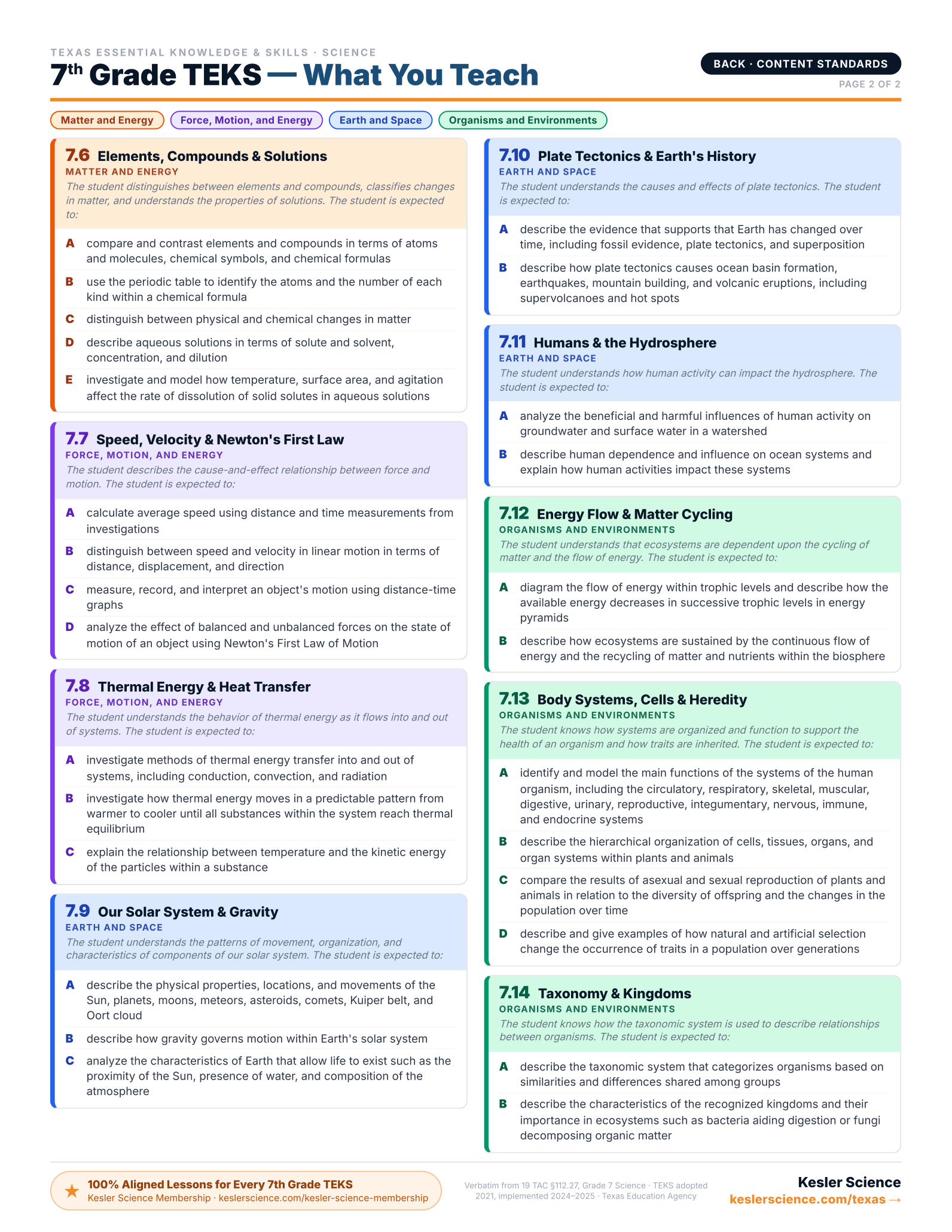
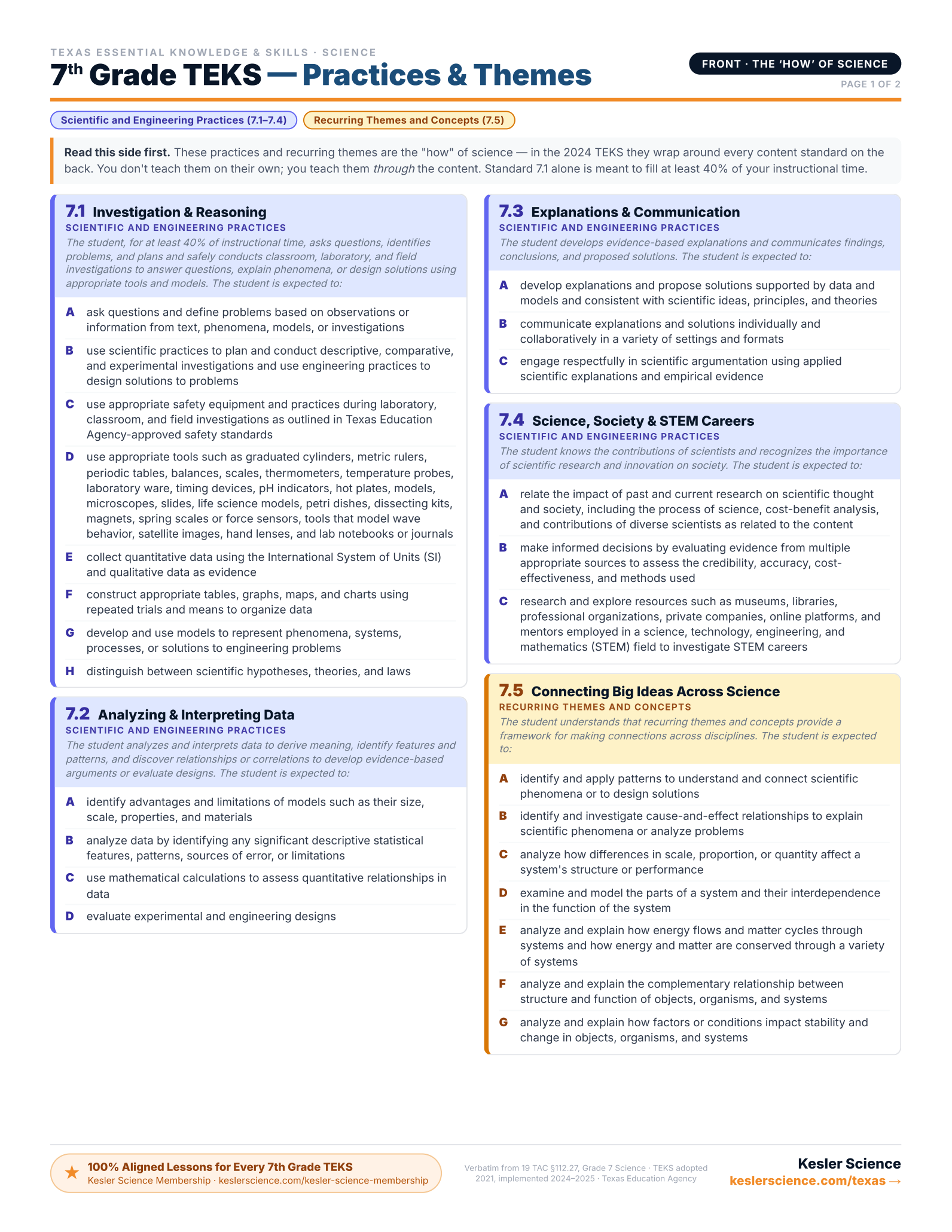
Every 7th-Grade Science TEKS on One Page
The color-coded, front-and-back cheat sheet I wish I'd had — every standard, organized by reporting category. Print it and reference it all year long. This will be your new favorite document!
Trusted Across Texas
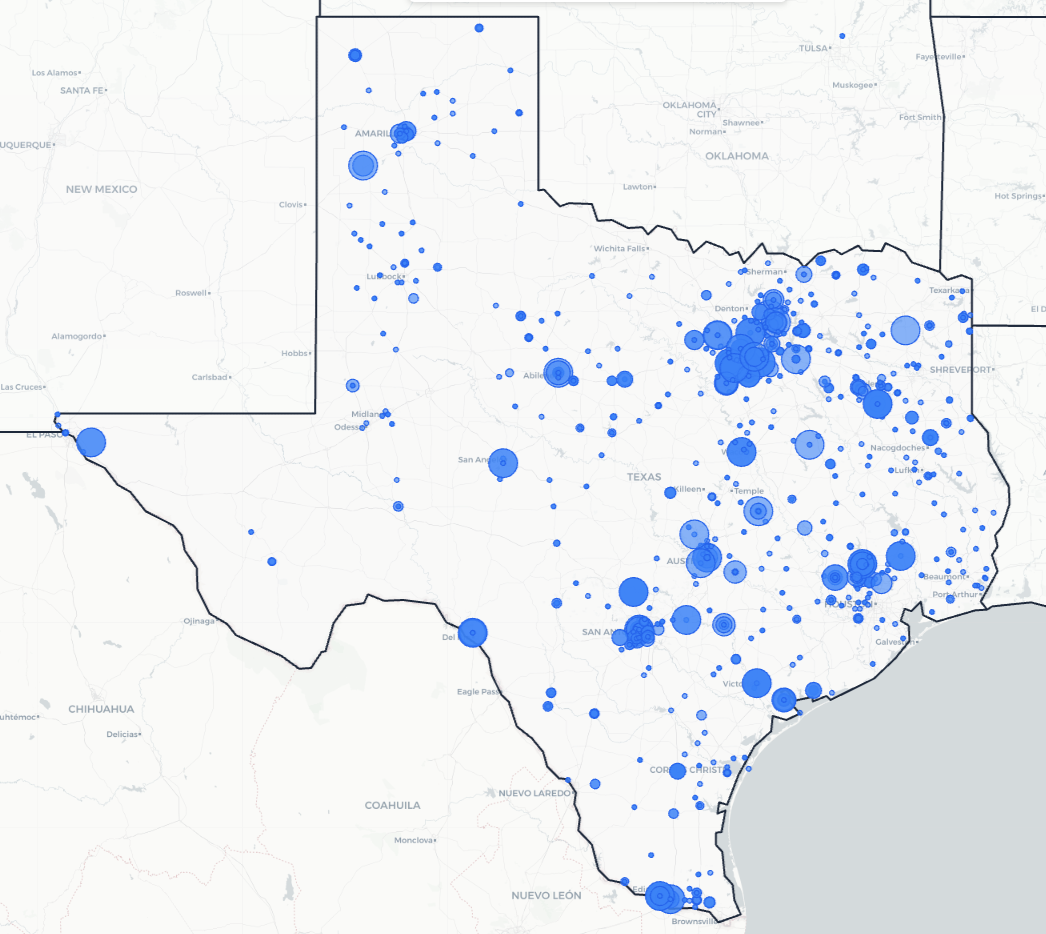
From the Rio Grande Valley to the Panhandle, Texas science teachers are using Kesler Science to save time and engage students.
Texas Schools and Districts
Love Kesler Science
What Teachers Are Saying
Give Your Science Teachers Everything They Need
School and district licenses give your teachers access to every resource they need, including station labs, inquiry labs, anchoring phenomena, presentations, escape rooms, and much more. One purchase covers the grade levels you need.
- PO-friendly. We accept purchase orders
- Volume discounts for 11+ teachers
- Complimentary Kesler Science Plus orientation for 4+ teachers
- Three free implementation PD sessions for departments of 11+
- Aligned to the 2024 TEKS standards
See It in Action
Book a walkthrough and we'll show you how Kesler Science fits your campus.
Book Demo CallNo pressure, no hard sell