.png?width=375&height=100&name=WebPage%20logo%20with%20curves%202026%20(8).png)
NGSS Resource Hub
Three-dimensional breakdowns, phenomena, and classroom-ready activities for every NGSS standard, grades 4-8.

🚀 Jump to Your Discipline
5th Grade NGSS Standards
Pick any standard. Each page is your full lesson-planning workspace for that standard.
Earth's Spheres: How Earth's Four Systems Push and Pull on Each Other
"Develop a model using an example to describe ways the geosphere, biosphere, hydrosphere, and/or atmosphere interact."
NGSS Lead States. (2013). Next Generation Science Standards: For states, by states (5-ESS2-1). The National Academies Press. https://www.nextgenscience.org/dci-arrangement/5-ess2-earths-systems
Students explore how Earth's major systems shape one another, treating the geosphere, hydrosphere, atmosphere, and biosphere as systems. Examples include how the ocean affects ecosystems, landform shape, and climate, how the atmosphere shapes landforms and ecosystems through weather and climate, and how mountain ranges influence winds and clouds.
Summarized in our own words from the 5-ESS2-1 clarification statement (NGSS Lead States, 2013). Not a verbatim quote.
Students only need to consider how two of these systems interact at a time.
Summarized in our own words from the 5-ESS2-1 assessment boundary (NGSS Lead States, 2013). Not a verbatim quote.
The three dimensions packed into this standard
Every standard bundles a DCI (the content), a SEP (the science practice), and a CCC (the crosscutting lens). They run in the same task, not in sequence.
"Earth's major systems are the geosphere (solid and molten rock, soil, and sediments), the hydrosphere (water and ice), the atmosphere (air), and the biosphere (living things, including humans). These systems interact in multiple ways to affect Earth's surface materials and processes. The ocean supports a variety of ecosystems and organisms, shapes landforms, and influences climate. Winds and clouds in the atmosphere interact with the landforms to determine patterns of weather."
National Research Council. (2012). A framework for K-12 science education: Practices, crosscutting concepts, and core ideas. The National Academies Press. https://doi.org/10.17226/13165
Earth has four big systems: the geosphere (rock, soil, land), the hydrosphere (water and ice), the atmosphere (air), and the biosphere (everything alive). None of them works alone. They constantly push and pull on each other. A 5th grader builds a model of ONE real example, like the ocean shaping a beach, and shows two systems touching and changing each other.
"Develop a model using an example to describe a scientific principle."
National Research Council. (2012). A framework for K-12 science education. The National Academies Press.
A 5th grader builds a model showing that Earth's systems interact, instead of just being told. The model can be a labeled diagram, a flowchart with arrows, or a hands-on setup. The point is the model has to do a job: make the interaction between two systems easy to see and explain.
"A system can be described in terms of its components and their interactions."
National Research Council. (2012). A framework for K-12 science education. The National Academies Press.
A system is a set of parts that work together, and you understand it by looking at how the parts affect each other. Earth's four spheres are systems and also parts of one bigger Earth system. The interactions are where the action is.
📍 Where This Standard Fits in the K-12 Progression
Use this to plan the year. Knowing what students should already know and what they're heading toward keeps the lesson focused.
In 4th grade, students made observations and measurements of weathering and erosion, watching water, ice, and wind break down and move rock. They saw the hydrosphere and atmosphere acting on the geosphere up close, but they hadn't yet named Earth's four systems or modeled them interacting as whole spheres.
Earth's Spheres: How Earth's Four Systems Push and Pull on Each Other
In middle school, students develop a model to describe the cycling of Earth's materials and the flow of energy that drives this process, like the rock cycle. They move from "these two systems affect each other" to tracking matter and energy as they cycle through the whole Earth system.
🌎 Phenomena for 5-ESS2-1
Anchor the lesson in one puzzling phenomenon kids keep coming back to. Use the two investigative phenomena to sharpen specific facets.
The Disappearing Beach
Show 5th graders two photos of the same beach, one from years ago and one from today. In the old photo there's a wide sandy beach in front of a house. In the new photo the sand is gone and the waves are reaching the porch. Nobody moved the sand with trucks. The ocean did it, a little at a time, wave after wave. 5th graders will want to know how water could erase a whole beach.
"How can the ocean move a whole beach when no people and no machines were involved?"
- "Is the water carrying the sand away, or is it just covering it up?"
- "Where does all that sand go once the waves take it?"
- "Could the ocean ever bring the sand back, or is it gone for good?"
The Cliff That Crumbles
Pack wet sand or soil into a clear bin to make a small cliff, then pour or splash water against the base over and over. The bottom wears away first, and chunks of the "cliff" slump down. This sharpens the anchor: 5th graders see the hydrosphere (water) directly reshaping the geosphere (land), the same thing happening to the beach, but up close and on purpose.
"Why does the water wear away the bottom of the cliff first instead of the top?"
- "Is the water breaking the cliff, or just moving pieces that were already loose?"
- "Why does the cliff fall in chunks instead of melting away evenly?"
- "If we add more water faster, does the cliff break down quicker?"
Mountains Make Their Own Weather
Show a simple map or cross-section of air blowing toward a mountain range, rising, cooling, and dropping rain on one side, leaving the other side dry. Use a fan and a damp paper "mountain" if you want it hands-on. This sharpens the anchor from the air side: now the geosphere (the mountain) is changing the atmosphere (winds and clouds), proving the push works both directions between systems.
"How can a mountain, which can't move, change where the rain falls?"
- "Why does it rain on one side of the mountain but not the other?"
- "Is the mountain pushing the air up, or is the air going over it on its own?"
- "Does the size of the mountain change how much rain it makes?"
100% Aligned Lessons for Every NGSS Standard You Teach
The membership gives you access to thousands of lessons and activities designed to boost student engagement and reclaim valuable teaching time. Trusted by schools and districts from every NGSS state.
⚠️ Misconceptions Your Students Will Walk In With
These come up almost every year. Knowing them in advance lets you head them off in the first lesson.
"Earth's four systems are separate places that don't touch each other."
The spheres overlap everywhere. A fish (biosphere) swims in the ocean (hydrosphere), breathes oxygen that came from the air (atmosphere), and lives over a sandy bottom (geosphere). At any spot on Earth, you can usually find two, three, or all four systems sharing the same space and changing each other.
"Only living things or machines can change the land."
Water, wind, and ice reshape the land all the time with no help from people. Waves wear away beaches, rivers carve canyons, and wind moves whole sand dunes. In this standard, the hydrosphere and atmosphere are doing the work on the geosphere, slowly but constantly.
"The biosphere is just animals."
The biosphere means every living thing, and that includes plants, trees, bacteria, and humans too. Plant roots holding soil in place is the biosphere acting on the geosphere. Forgetting plants and people leaves out some of the most important interactions a 5th grader can model.
"When two systems interact, only one side changes."
Most interactions go both ways. The ocean wears down the cliff, but the rock also slows the waves and changes the shape of the coastline. The air drops rain on the mountain, but the mountain pushed the air up to make that rain. A good model often needs arrows pointing both directions.
🙋 Common Student Questions and How to Respond
These come up almost every time this standard gets taught. Plan a response and you'll keep the lesson focused.
Push them past the "layers" idea. Ask, "Could you find water, air, rock, and living things all in this one classroom?" The spheres aren't stacked layers. They're systems that mix together everywhere. Help them see all four overlapping in a single tide pool or backyard.
Don't pick a winner. Turn it back on them: "What would happen to the others if one was gone?" Take away the hydrosphere and the biosphere can't live. Take away the geosphere and there's no land. The point of the standard is that they depend on each other, so no sphere stands alone.
Great noticing. Tell them it's both at once, and that's the whole idea. The water is hydrosphere, the fish are biosphere, and they share the exact same space. Use it to show why the spheres are interacting systems, not separate boxes.
Praise the ambition, then steer them to the standard. Ask them to pick just two systems and show that interaction really well. The standard limits each example to two systems at a time. They can always make a second model for a different pair.
📓 Teaching Resources for 5-ESS2-1
These resources are aligned to this standard.
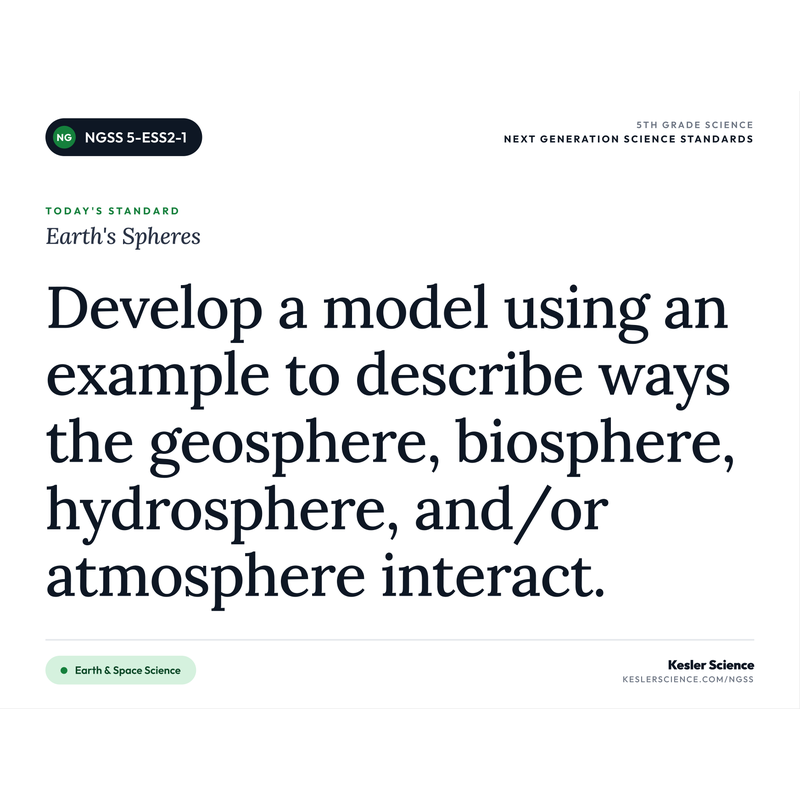
Print-ready classroom poster pack for 5-ESS2-1. Includes the verbatim NGSS performance expectation plus student-language "I Can" statements broken into daily learning goals. Landscape orientation, letter size, ready to print and post on your wall.
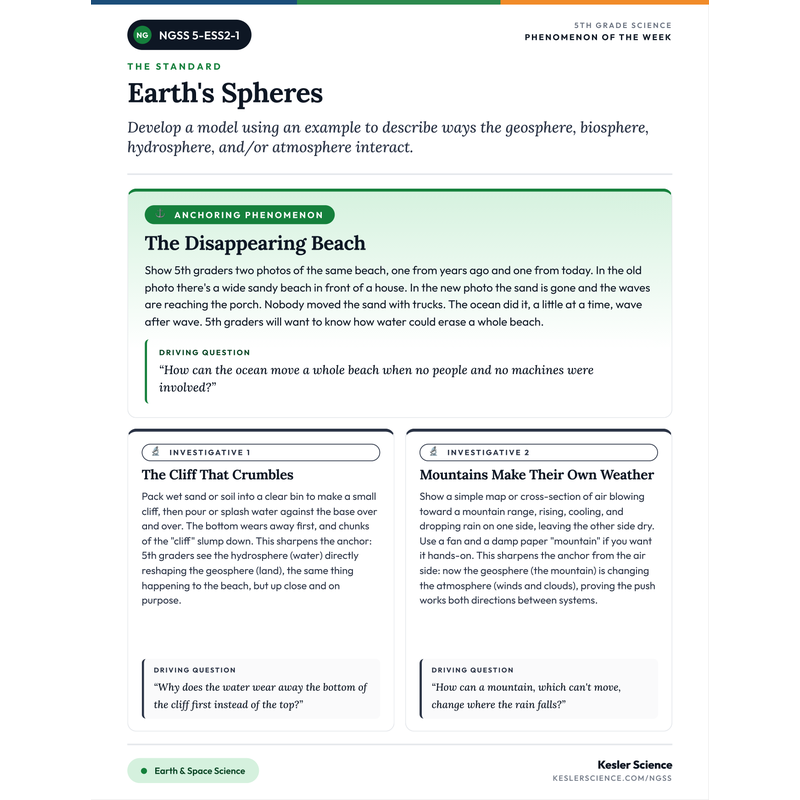
One-page printable with the anchoring phenomenon plus two investigative phenomena for 5-ESS2-1. Each one comes with the driving question students will keep asking. Pin it above your desk for the week — one piece of paper, one week of hooks.
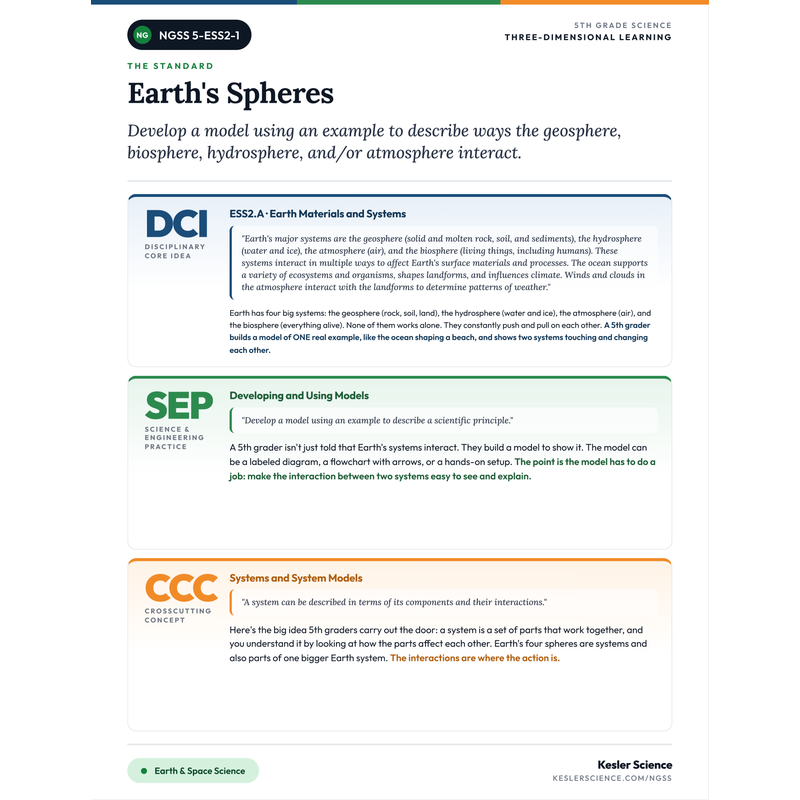
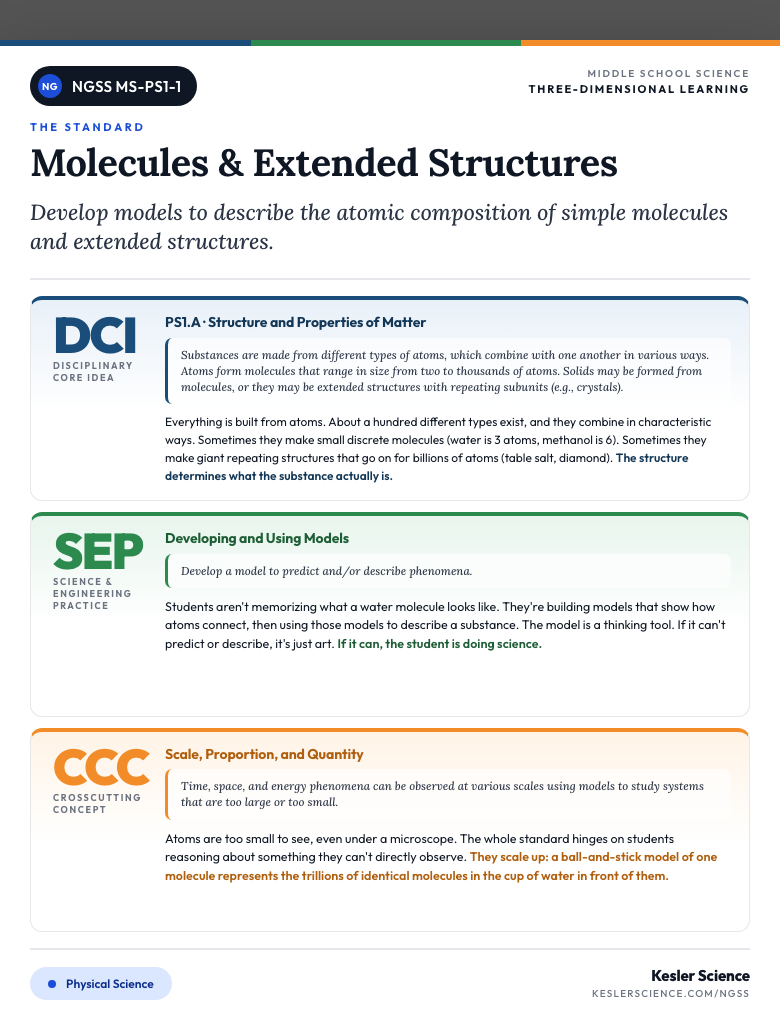
Teacher-facing PDF that breaks down the DCI, SEP, and CCC for 5-ESS2-1 in plain English. Color-coded by dimension so you can read the whole standard at a glance. Perfect for lesson planning or a sub folder.

The full unit for 5-ESS2-1: differentiated station labs, editable presentations, interactive notebooks (English + Spanish), student-choice projects, and assessments. Built on the 5E model.

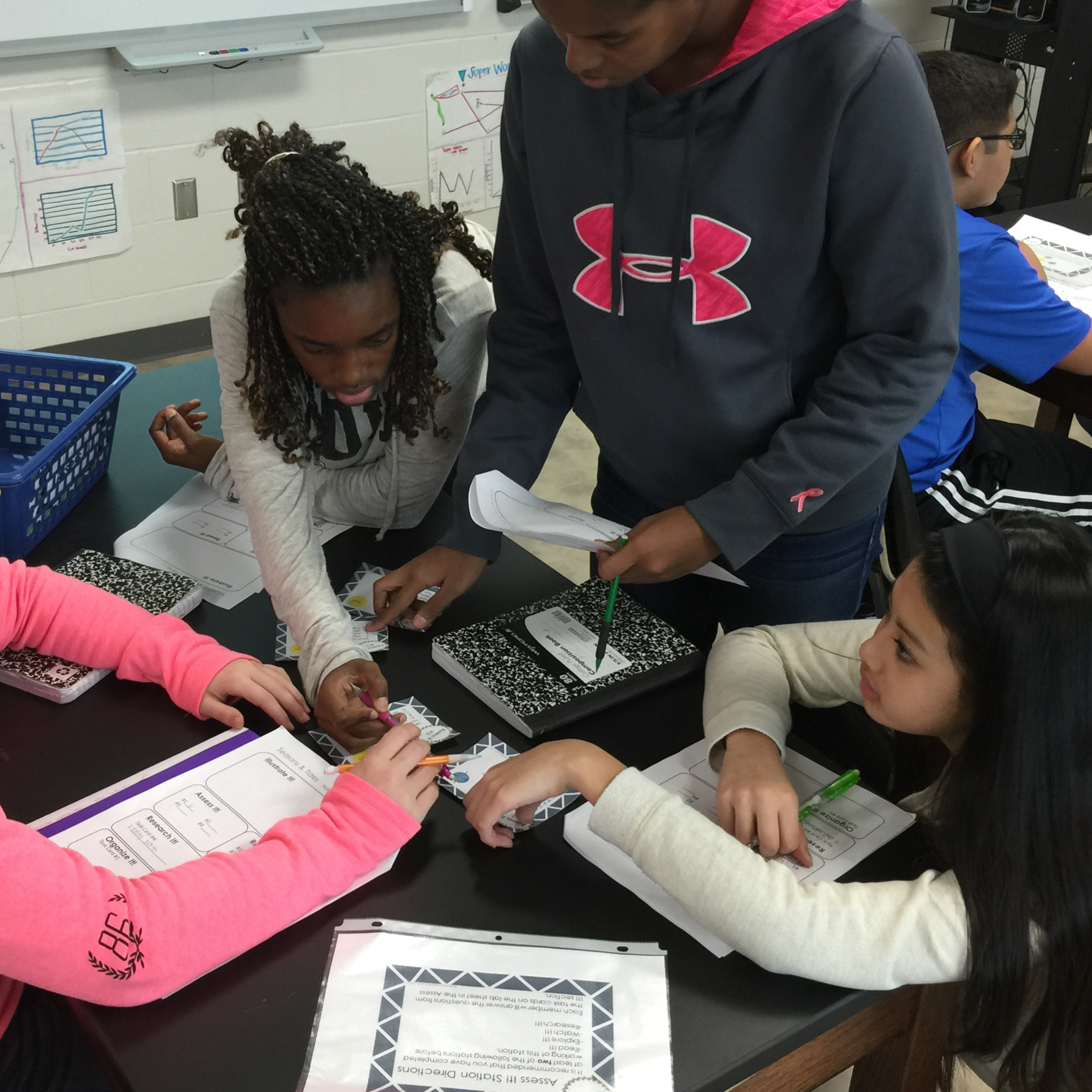
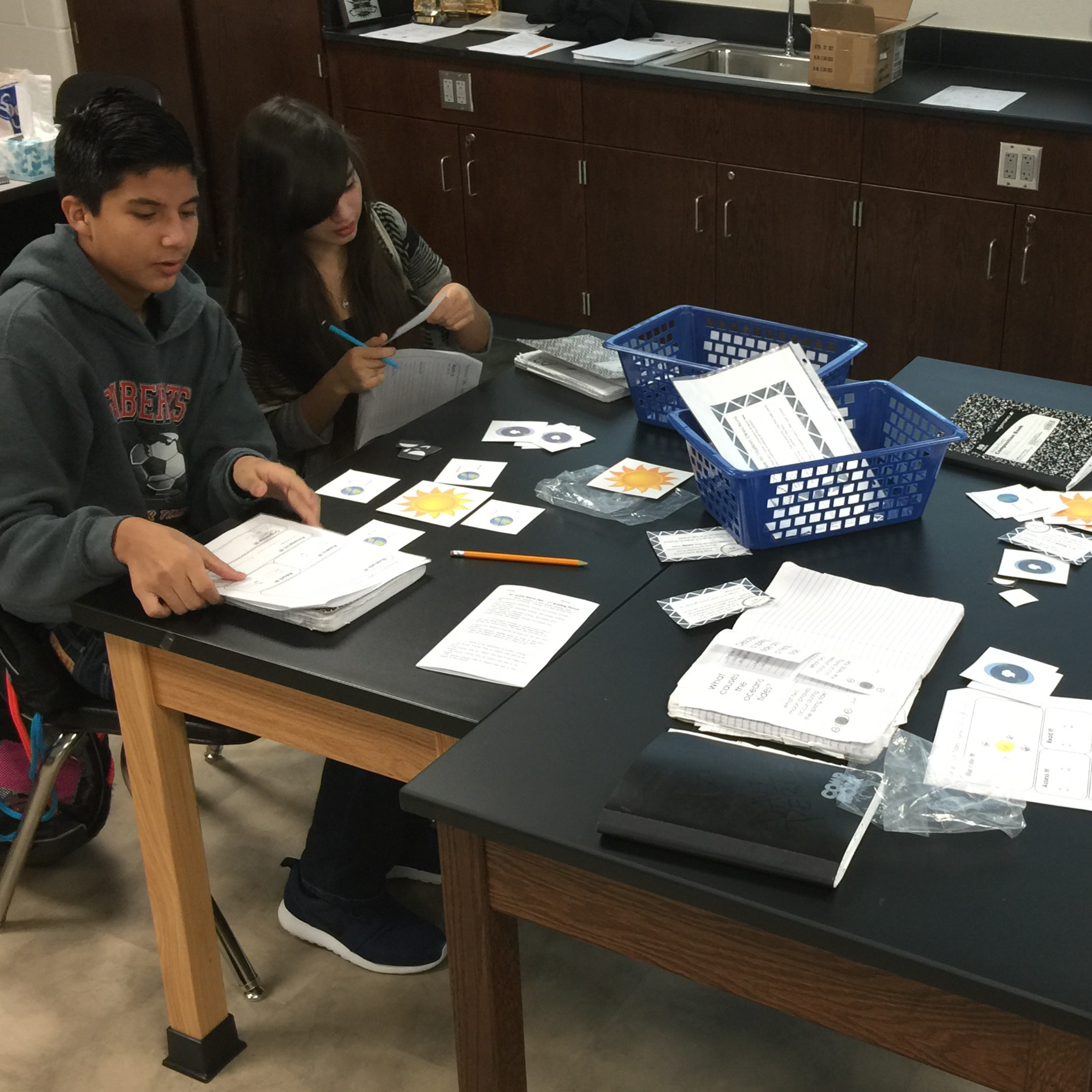
9-station hands-on lab covering how Earth's geosphere, hydrosphere, atmosphere, and biosphere interact, with input stations (Explore It!, Watch It!, Read It!, Research It!) and output stations (Organize It!, Illustrate It!, Write It!, Assess It!). Print and digital. English and Spanish.

A print-and-digital science writing activity where students reason and write about Earth's spheres through an engaging real-world prompt. Includes teacher directions with an answer guide and project ideas. Great for constructed response, bell-ringers, or science journals.
Teaching more than this one standard?
Get every I Can poster, phenomenon hook, and 3-dimension sheet for all 16 5th Grade standards, in one download. The whole year, ready to print.
📚 Vocabulary Students Need for 5-ESS2-1
The terms students need to access this standard. Definitions in plain-English, classroom-ready language.
💡 Free Engagement Ideas for 5-ESS2-1
Build-a-Beach Erosion Tray
Groups make a beach out of damp sand at one end of a tray, then create waves by gently rocking water at the other end. They count waves and mark how far the beach shrinks each time, then label which two systems are interacting. This is the anchor turned into a measurable lab.
Four Spheres Photo Sort
Give pairs a stack of real-world photos (a flood, a forest fire, a glacier carving rock, roots cracking a sidewalk). For each one they name the two systems interacting and draw an arrow showing which changes which. A fast way to practice spotting interactions before building a model.
Mountain Rain-Shadow Model
5th graders draw a labeled cross-section of air blowing up a mountain, where it rises, cools, and the water vapor condenses into rain on the windward side, leaving the far side dry. A fan and spray bottle can stand in for wind hitting the mountain and the wet vs. dry sides, but it is only an analogy, not real rain-making. The diagram explains the real cause.
Interaction Model Poster
Using data from the erosion tray, 5th graders build a labeled model poster of one real example. It must name both systems, use arrows to show the interaction, and include one sentence of evidence from their lab. Turns their hands-on results into the model the standard asks for.
📝 Assessment Ideas for 5-ESS2-1
Three short tasks that hit all three dimensions. Doable in one class period each.
5th graders draw and label a model showing how the ocean (hydrosphere) is changing the beach (geosphere) from the anchor. They must label both systems, add arrows showing the interaction, and write one sentence describing what passes between them. Mirrors the SEP: develop a model using an example.
Show three photos (a glacier carving a valley, a flood drowning a field, wind shaping a dune). For each one, 5th graders name the two systems interacting and tell which one is changing the other. A quick check of whether they can spot interactions in new examples.
Give 5th graders a cross-section of air blowing over a mountain. They write a short explanation of how the geosphere (mountain) and atmosphere (winds and clouds) interact, using their model and the words from the lab. Reasoning from the pattern, no new lab needed.
🎯 What Proficient Student Work Looks Like
Same prompt, three student responses at different proficiency levels. Use as anchor papers when scoring.
"Develop a labeled model of the disappearing beach. Show how two of Earth's systems interact, and use evidence from our erosion tray to describe what is happening."
- A specific claim backed by data or observation
- Use of standard-specific vocabulary in context
- Connection between what students observe and the underlying science idea
- A question they're still wondering about (curiosity stays alive)
"I drew the ocean and the beach. The water hits the sand. The water is the hydrosphere and the sand is the geosphere. The waves are strong."
Names both systems correctly and labels them, which is a real start. But the model just shows the two sitting next to each other. There are no arrows and no description of what changes. It stops at "the water hits the sand" with no evidence from the lab.
"My model shows the ocean (hydrosphere) and the beach (geosphere). I drew an arrow from the waves to the sand because the waves carry the sand away. In our tray, the beach got 4 cm smaller after 20 waves. So the hydrosphere is changing the geosphere by taking sand off the beach."
Labels both systems, uses an arrow to show the interaction, and backs it with a real measurement from the lab. Clearly describes one system changing the other. This is exactly what the standard asks a 5th grader to do.
"My model shows the ocean (hydrosphere) and the beach (geosphere) interacting. One arrow shows the waves carrying sand away, because in our tray the beach shrank 4 cm after 20 waves. But I added a second arrow going back, because the sand and rock slow the waves down and change the shape of the shoreline. So both systems are changing each other, not just one. The ocean is reshaping the land and the land is changing how the water moves."
Backs the claim with a specific measurement AND shows the interaction going both directions with two arrows. Reaches the crosscutting idea that a system is described by how its parts affect each other, without being asked. Strong evidence-based modeling for a 5th grader.
“Next Generation Science Standards” is a registered trademark of WestEd. Neither WestEd nor the lead states and partners that developed the Next Generation Science Standards were involved in the production of, and do not endorse, this product.
NGSS performance expectations © 2013 Achieve, Inc. The Disciplinary Core Idea, Science and Engineering Practice, and Crosscutting Concept descriptions are reproduced from A Framework for K-12 Science Education with permission from the National Academies Press.
Trusted Across NGSS States
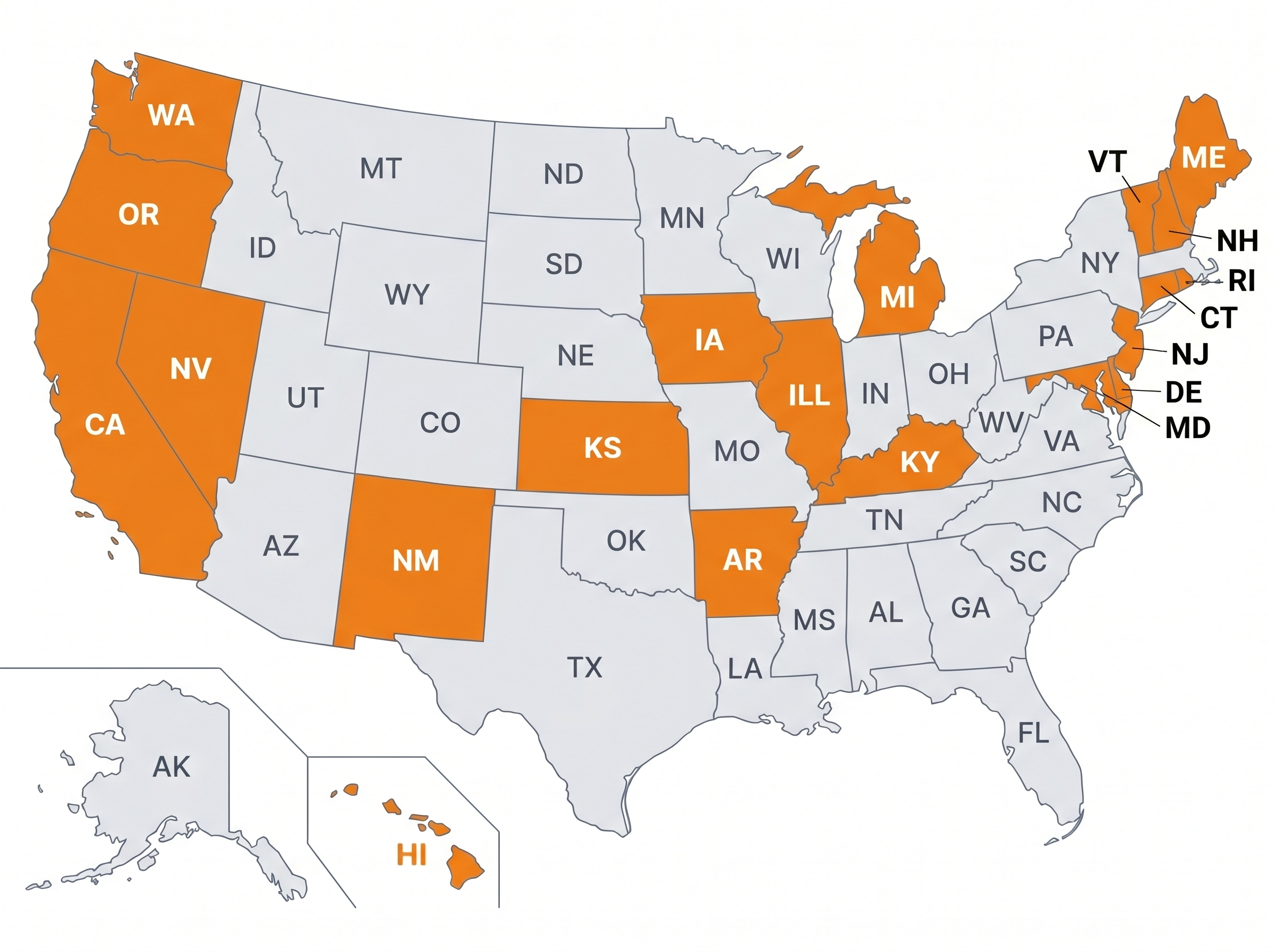
From California to Connecticut, science teachers in the 20 states that adopted NGSS are using Kesler Science to save time and engage students.
Teachers in NGSS States
Love Kesler Science
What Teachers Are Saying
"I'm able to access rigorous NGSS-aligned lessons and labs that are ready to use, so I spend more time helping students directly and less time searching for quality material."
"There's a lesson for each of the NGSS, so I don't have to search for hours to find a good quality lesson. I can spend more time actually teaching."
"The resources help me cover NGSS in a meaningful way, and my students gain a deeper knowledge of the concepts, with learning that's more self-driven."
Give Your Science Teachers Everything They Need
School and district licenses give your teachers access to every resource they need, including station labs, inquiry labs, anchoring phenomena, presentations, escape rooms, and much more. One purchase covers the grade levels you need.
- PO-friendly. We accept purchase orders
- Volume discounts for 11+ teachers
- Complimentary membership orientation for 4+ teachers
- Three free implementation PD sessions for departments of 11+
- Aligned to the NGSS standards
See It in Action
Book a walkthrough and we'll show you how Kesler Science fits your campus.
Book Demo CallNo pressure, no hard sell
"My assistant principal stopped in my room and immediately noticed how the students were engrossed in their centers and how they moved seamlessly from center to center. Also the built-in modifications really impressed!"
"It provides differentiated instruction for all types of learners, allowing them to become more engaged."
"I love it all!! I have become a facilitator in my class and I love the excitement it brings to my class. The kids love all that we do with the Kesler products."