.png?width=375&height=100&name=WebPage%20logo%20with%20curves%202026%20(8).png)
NGSS Resource Hub
Three-dimensional breakdowns, phenomena, and classroom-ready activities for every NGSS standard, grades 4-8.

🚀 Jump to Your Discipline
Elementary NGSS Standards
Pick any standard. Each page is your full lesson-planning workspace for that standard.
Comparing Solutions: Two Good Ideas, One Fair Way to Pick the Winner
"Generate and compare multiple possible solutions to a problem based on how well each is likely to meet the criteria and constraints of the problem."
NGSS Lead States. (2013). Next Generation Science Standards: For states, by states (3-5-ETS1-2). The National Academies Press. https://www.nextgenscience.org/dci-arrangement/3-5-ets1-engineering-design
The three dimensions packed into this standard
Every standard bundles a DCI (the content), a SEP (the science practice), and a CCC (the crosscutting lens). They run in the same task, not in sequence.
"Research on a problem should be carried out before beginning to design a solution. Testing a solution involves investigating how well it performs under a range of likely conditions."
National Research Council. (2012). A framework for K-12 science education: Practices, crosscutting concepts, and core ideas. The National Academies Press. https://doi.org/10.17226/13165
"At whatever stage, communicating with peers about proposed solutions is an important part of the design process, and shared ideas can lead to improved designs."
National Research Council. (2012). A framework for K-12 science education. The National Academies Press.
This standard lives inside one job: a kid has two real designs for the same problem, and they have to pick the better one without just going with their favorite. They name what the design needs to do (the criteria), name what they're stuck with (the constraints), test both, and compare. That single task is the science practice, the core idea, and the crosscutting concept all at once.
"Generate and compare multiple solutions to a problem based on how well they meet the criteria and constraints of the design problem."
National Research Council. (2012). A framework for K-12 science education. The National Academies Press.
Elementary students aren't handed one right answer to build. They generate more than one possible solution, then compare them head to head. The skill is using the same yardstick (the criteria and constraints) on both designs so the comparison is fair instead of a popularity contest.
"Engineers improve existing technologies or develop new ones to increase their benefits, decrease known risks, and meet societal demands."
National Research Council. (2012). A framework for K-12 science education. The National Academies Press.
Here's the idea 3rd to 5th graders carry out the door: engineering exists to solve real problems people actually have. A backpack that won't stay zipped, a boot scraper that's always muddy, a phone that slides off the couch. Comparing solutions is how engineers make the chosen design better for the people who need it.
📍 Where This Standard Fits in the K-12 Progression
Use this to plan the year. Knowing what students should already know and what they're heading toward keeps the lesson focused.
In K-2, students arrive already knowing that designs can be drawn, built, and tested. They've made simple sketches and models to show how a shape or material solves a problem. What they haven't done yet is hold two finished solutions side by side and judge them against the same criteria and constraints.
Comparing Solutions: Two Good Ideas, One Fair Way to Pick the Winner
In middle school, students get systematic about it. They evaluate competing design solutions using a systematic process (for example, a decision matrix or scoring chart), scoring each one against criteria and constraints. The fair comparison they practiced in 3-5 becomes an organized, data-backed method.
🌎 Phenomena for 3-5-ETS1-2
Anchor the lesson in one puzzling phenomenon kids keep coming back to. Use the two investigative phenomena to sharpen specific facets.
Two Bridges, One Backpack to Hold
Two groups each build a paper bridge that has to span a gap and hold a stack of pennies. Both bridges look totally different. One is folded into a deep V, the other is flat with rolled paper columns. They both get pennies stacked on top until one sags. The class wants to know which design is actually better, and that turns out to be a trickier question than it sounds.
"When two designs solve the same problem in different ways, how do we decide in a fair way which one is better?"
- "Better at what, exactly? Holding weight, or fitting the gap, or using less paper?"
- "What if one bridge holds more pennies but uses way more paper, is that still the winner?"
- "Can we test both the same way so it's actually fair?"
Same Rules for Both: The Criteria List
Before testing anything, the class writes down what a good bridge has to do (span the gap, hold pennies, stay under a paper limit). Those are the criteria and constraints. Now both bridges get judged by the exact same list. This sharpens the anchor's big question: a comparison is only fair when both designs face the same rules.
"What rules does every design have to follow so the contest between them is actually fair?"
- "Which things on our list are needs (criteria) and which are limits we're stuck with (constraints)?"
- "If one bridge breaks a rule, does it lose even if it held the most pennies?"
- "Did we test both bridges in the exact same spot the exact same way?"
Borrow the Best Parts
After comparing, groups talk to each other about what worked. The V-fold group sees that columns added height, the column group sees that folding added strength. They each build a second bridge that borrows the other team's best idea. This sharpens the anchor: comparing isn't just to crown a winner, it's to make the next design better.
"After we compare two designs, how do the best parts of each one help us build an even better third design?"
- "Which part of the other team's bridge actually made it stronger?"
- "Can we mix both good ideas into one design without breaking a rule?"
- "Did sharing ideas make both teams' next bridges better than their first?"
100% Aligned Lessons for Every NGSS Standard You Teach
The membership gives you access to thousands of lessons and activities designed to boost student engagement and reclaim valuable teaching time. Trusted by schools and districts from every NGSS state.
⚠️ Misconceptions Your Students Will Walk In With
These come up almost every year. Knowing them in advance lets you head them off in the first lesson.
"There's one correct design and the job is to find it."
Engineering almost never has one right answer. Two very different designs can both solve the same problem well. This standard is about having more than one solution and comparing them fairly, not hunting for the single "correct" one.
"The better design is just the one I like best or built myself."
Liking a design isn't a reason. The fair way is to set criteria and constraints first, then check both designs against that same list. Sometimes the design you didn't build wins, and the evidence shows why.
"The design that holds the most weight is automatically the best."
Not always. A bridge might hold tons of pennies but use way too much paper, or not fit the gap. A solution has to meet ALL the criteria and stay inside the constraints, not just win at one thing.
"Once you pick the winning design, you're finished."
Comparing is often the start, not the end. Talking with other groups about what worked leads to better designs. Engineers improve and re-test, borrowing the best parts of each solution to make the next one even stronger.
🙋 Common Student Questions and How to Respond
These come up almost every time this standard gets taught. Plan a response and you'll keep the lesson focused.
Don't let them stop at one. Ask, "Works compared to what?" A single design has nothing to be measured against. Push them to build or borrow a second solution so they have a real comparison. The whole skill in this standard is choosing between options, and you can't choose with only one.
Send them back to the criteria list before you answer. Ask, "What did we agree a good bridge has to do?" Steer them to check both designs against the same criteria and constraints. The winner is the one that meets the rules best, and they should be able to point to the evidence.
Not at all, and this is worth celebrating. Tell them engineers share ideas on purpose. Ask, "What did the other team figure out that we didn't?" Borrowing the best parts to improve a design is exactly how real engineering works, and the standard calls it part of the process.
Great catch, don't hand them the fix. Ask, "Which rule did each one break, and which break matters more?" Push them to revisit the criteria and constraints and maybe redesign. A design that breaks a constraint usually can't win, even if it's strong in other ways.
📓 Teaching Resources for 3-5-ETS1-2
These resources are aligned to this standard.
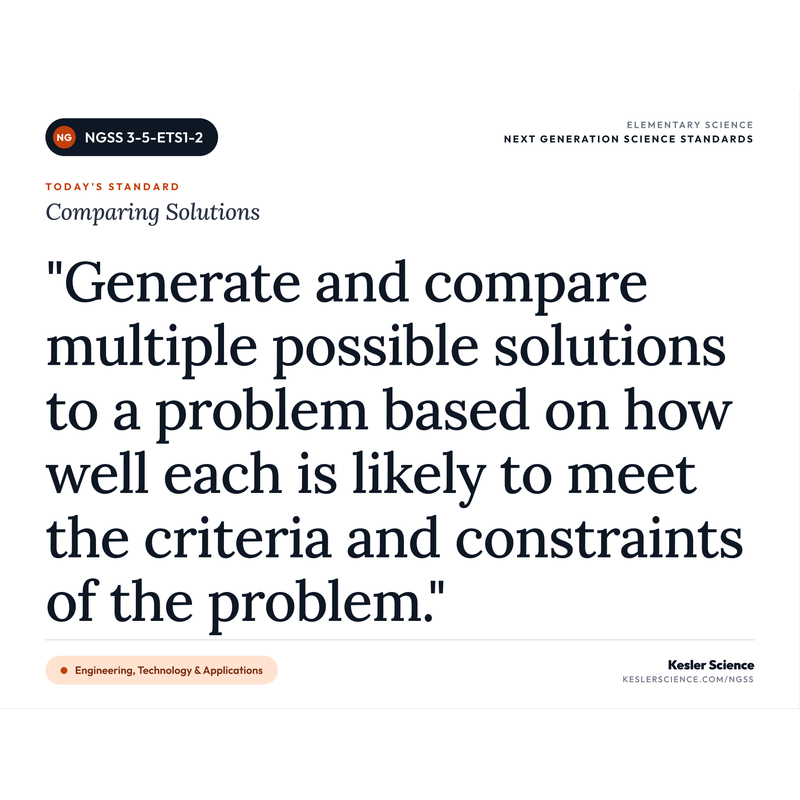
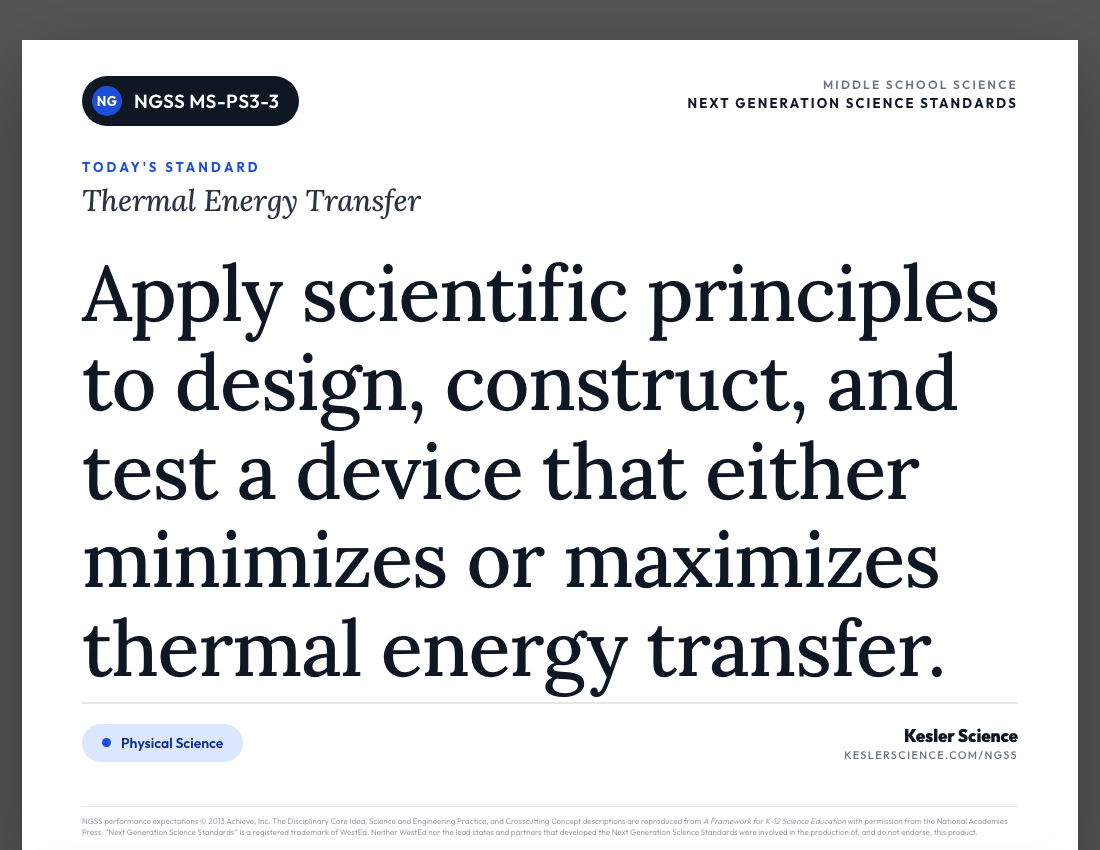
Print-ready classroom poster pack for 3-5-ETS1-2. Includes the verbatim NGSS performance expectation plus student-language "I Can" statements broken into daily learning goals. Landscape orientation, letter size, ready to print and post on your wall.
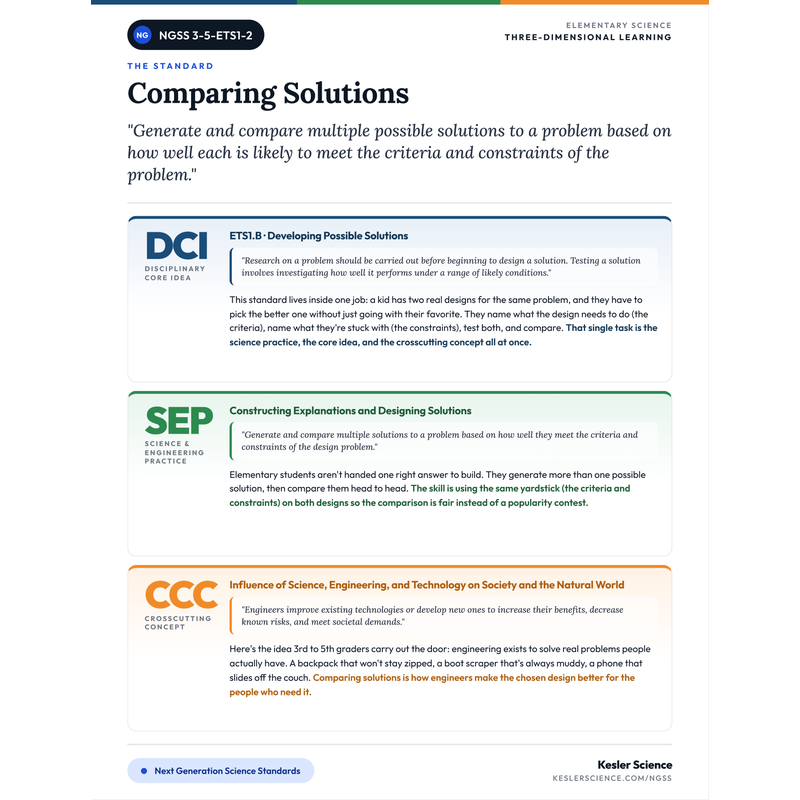
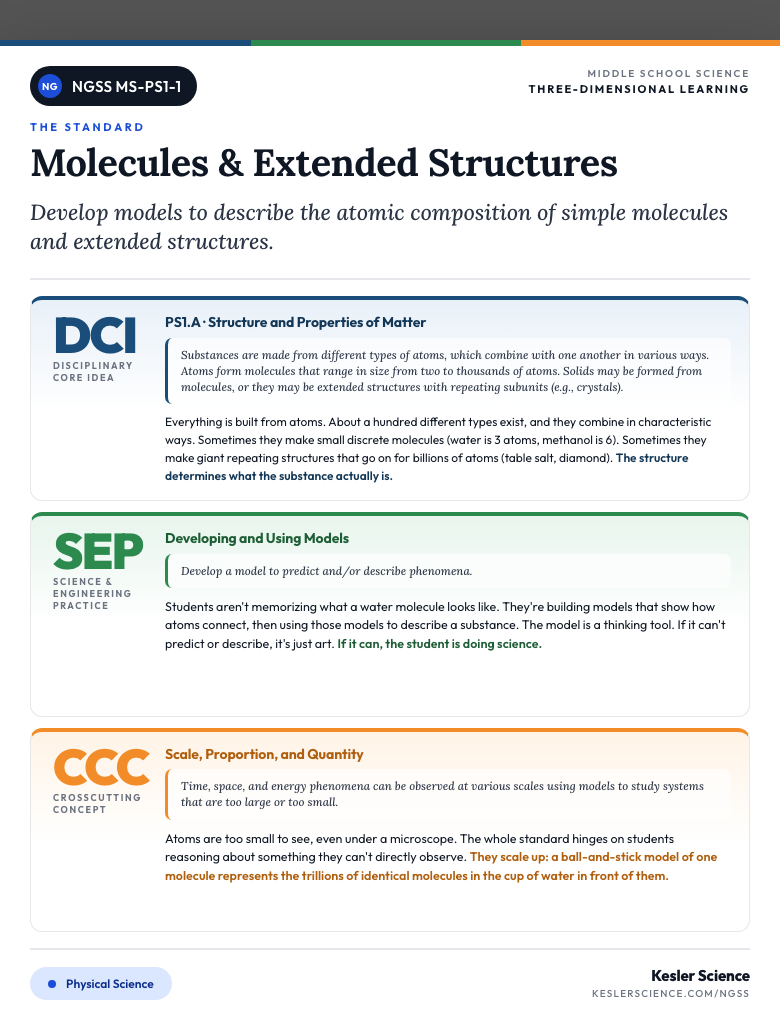
Teacher-facing PDF that breaks down the DCI, SEP, and CCC for 3-5-ETS1-2 in plain English. Color-coded by dimension so you can read the whole standard at a glance. Perfect for lesson planning or a sub folder.
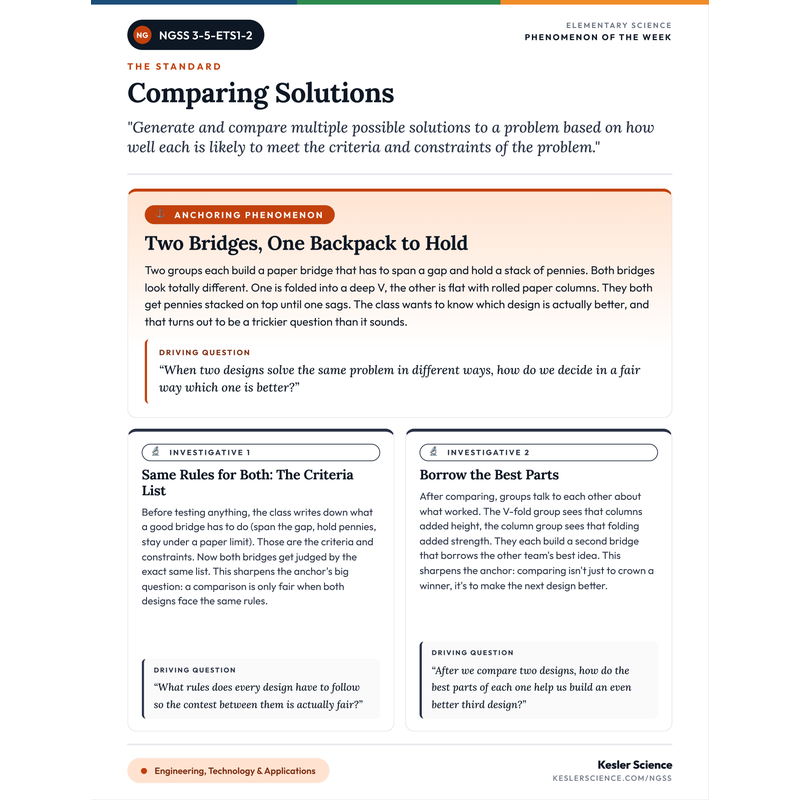
One-page printable with the anchoring phenomenon plus two investigative phenomena for 3-5-ETS1-2. Each one comes with the driving question students will keep asking. Pin it above your desk for the week — one piece of paper, one week of hooks.
Teaching more than this one standard?
Get every I Can poster, phenomenon hook, and 3-dimension sheet for all 17 4th Grade standards, in one download. The whole year, ready to print.
📚 Vocabulary Students Need for 3-5-ETS1-2
The terms students need to access this standard. Definitions in plain-English, classroom-ready language.
💡 Free Engagement Ideas for 3-5-ETS1-2
Penny-Holding Bridge Challenge
Groups design two different paper bridges that must span a fixed gap and hold pennies, using no more than a set number of paper sheets. They stack pennies on each until it sags, record the count, and decide which design wins against the criteria and constraints. This is the anchor turned into a hands-on build.
Tower That Beats the Wind
Students build two index-card towers that must reach a height line and survive a 'wind test' from a hand fan or hair dryer on low. They compare which design stays standing and still meets the height and material limits. Great for seeing that a design has to win on more than one criterion.
Egg-Drop Lander Face-Off
Two groups design different cushions to protect a falling object (a ping-pong ball or plastic egg, not raw) using a limited handful of materials. The teacher drops every lander from one fixed, marked height that is reachable from the floor or a supervised step stool, and students stand clear of the landing zone. They compare which lander protected the object while staying inside the material limit. A favorite for showing fair-test rules.
Borrow-the-Best Redesign
After any of the challenges above, groups trade observations, then build a third design that combines the best part of each first attempt. They re-test and check whether sharing ideas made the new design better. Turns comparing into improving, just like the standard asks.
📝 Assessment Ideas for 3-5-ETS1-2
Three short tasks that hit all three dimensions. Doable in one class period each.
Give students a results sheet for two finished designs (pennies held, paper used, did it fit the gap). They write which design better meets the criteria and constraints and back it up with at least one number or observation from the sheet. Mirrors the SEP: compare solutions against the same criteria and constraints.
Show students a real everyday problem (a dog bowl that tips over). They write a list of criteria (what a good fix must do) and constraints (limits like size or cost) BEFORE any design exists, then explain how that list lets two future designs be compared fairly.
Give students two design sketches with their test results. Students describe the best part of each and draw a third design that combines them, then explain why the new design should beat both. Checks whether they see comparing as a path to improving.
🎯 What Proficient Student Work Looks Like
Same prompt, three student responses at different proficiency levels. Use as anchor papers when scoring.
"Using the test results from both bridges, explain which design better meets our criteria and constraints, and use evidence to back up your choice."
- A specific claim backed by data or observation
- Use of standard-specific vocabulary in context
- Connection between what students observe and the underlying science idea
- A question they're still wondering about (curiosity stays alive)
"My bridge is the best one. It looked really strong and I worked hard on it. The other group's bridge was kind of flat so mine wins."
Picks a winner but judges by effort and looks, not the criteria. No mention of the penny count, the paper limit, or the gap. There's no fair comparison and no evidence from the test.
"The V-fold bridge held 24 pennies and the flat bridge held 16. Both used 2 sheets of paper and both fit across the gap. So the V-fold bridge is better because it met the same rules but held more pennies."
Compares both designs against the same criteria and constraints with real numbers. Names a clear, fair reason for the choice. This is exactly what the standard asks an elementary student to do.
"Both bridges fit the gap and both used 2 sheets of paper, so those rules were tied. The V-fold held 24 pennies and the flat one held 16, so V-fold wins on strength. But the flat bridge's rolled columns gave it a wide base, so for our next try we should fold a V AND add columns to hold even more. That would help a kid carry a heavier backpack across."
Compares on every criterion, separates ties from differences, and uses evidence to pick a winner. Then borrows the best part of the loser to improve the next design, and ties it back to a real need. Reaches the DCI and CCC without being asked.
“Next Generation Science Standards” is a registered trademark of WestEd. Neither WestEd nor the lead states and partners that developed the Next Generation Science Standards were involved in the production of, and do not endorse, this product.
NGSS performance expectations © 2013 Achieve, Inc. The Disciplinary Core Idea, Science and Engineering Practice, and Crosscutting Concept descriptions are reproduced from A Framework for K-12 Science Education with permission from the National Academies Press.
Trusted Across NGSS States
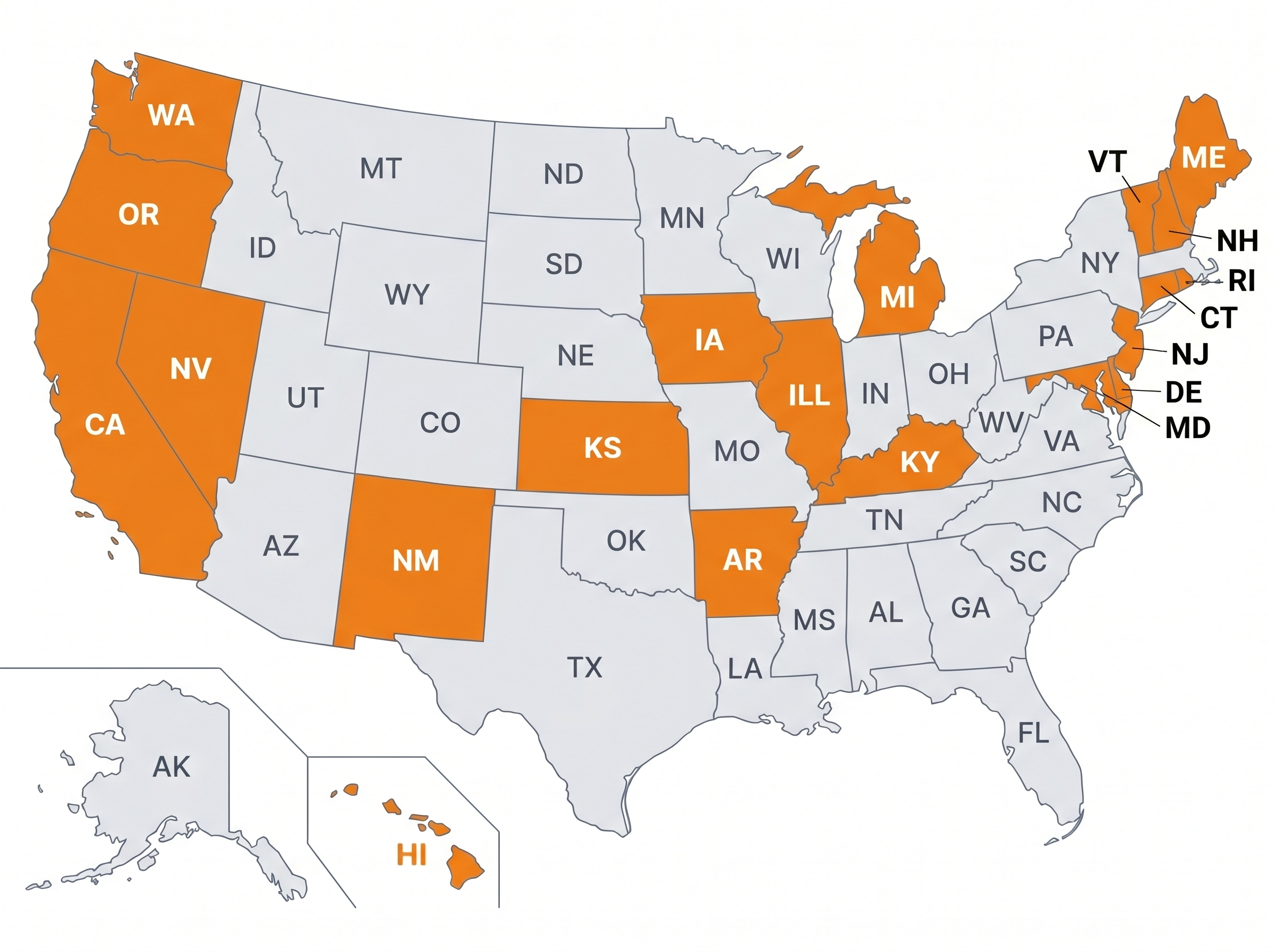
From California to Connecticut, science teachers in the 20 states that adopted NGSS are using Kesler Science to save time and engage students.
Teachers in NGSS States
Love Kesler Science
What Teachers Are Saying
"I'm able to access rigorous NGSS-aligned lessons and labs that are ready to use, so I spend more time helping students directly and less time searching for quality material."
"There's a lesson for each of the NGSS, so I don't have to search for hours to find a good quality lesson. I can spend more time actually teaching."
"The resources help me cover NGSS in a meaningful way, and my students gain a deeper knowledge of the concepts, with learning that's more self-driven."
Give Your Science Teachers Everything They Need
School and district licenses give your teachers access to every resource they need, including station labs, inquiry labs, anchoring phenomena, presentations, escape rooms, and much more. One purchase covers the grade levels you need.
- PO-friendly. We accept purchase orders
- Volume discounts for 11+ teachers
- Complimentary membership orientation for 4+ teachers
- Three free implementation PD sessions for departments of 11+
- Aligned to the NGSS standards
See It in Action
Book a walkthrough and we'll show you how Kesler Science fits your campus.
Book Demo CallNo pressure, no hard sell
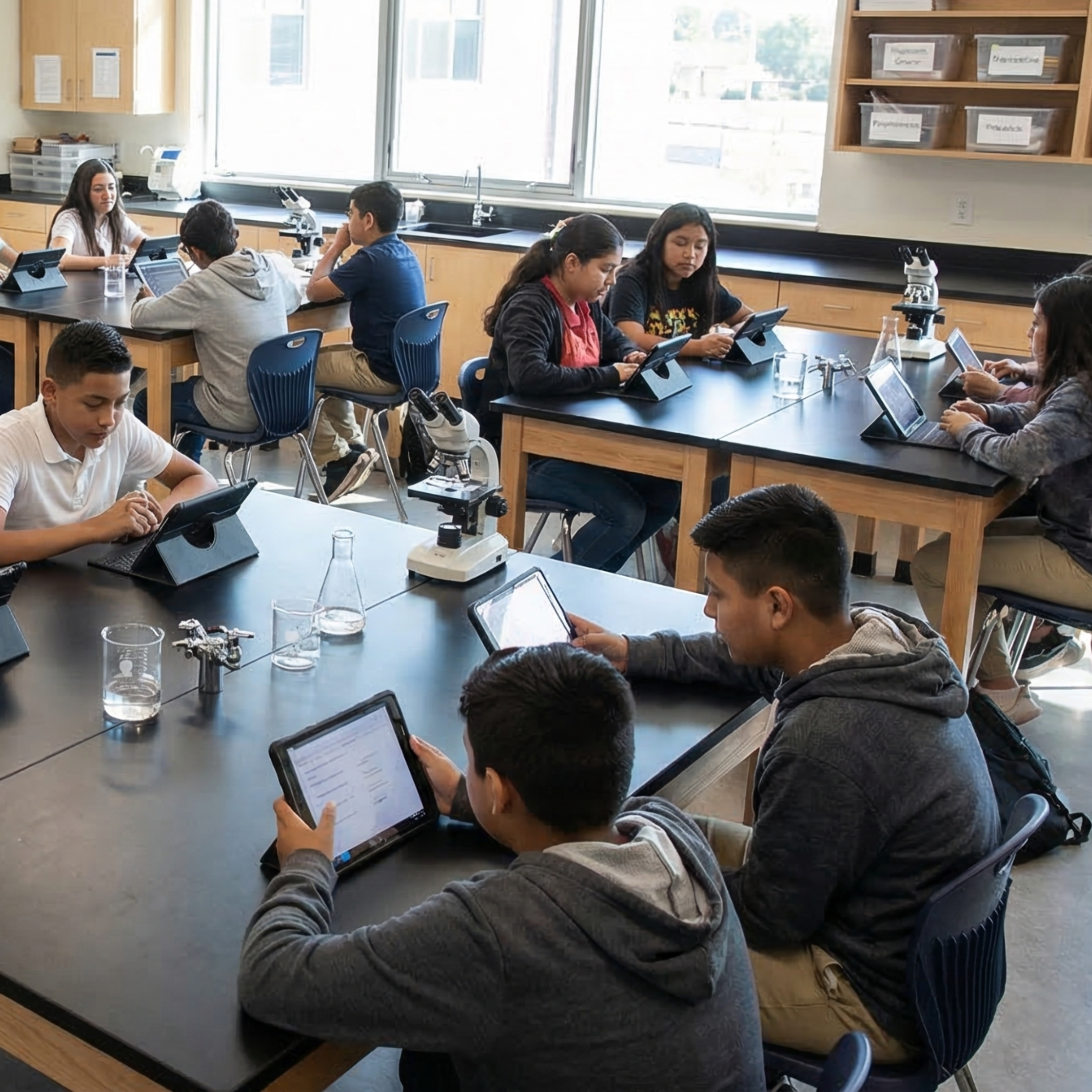
"My assistant principal stopped in my room and immediately noticed how the students were engrossed in their centers and how they moved seamlessly from center to center. Also the built-in modifications really impressed!"
"It provides differentiated instruction for all types of learners, allowing them to become more engaged."
"I love it all!! I have become a facilitator in my class and I love the excitement it brings to my class. The kids love all that we do with the Kesler products."