.png?width=375&height=100&name=WebPage%20logo%20with%20curves%202026%20(8).png)
NGSS Resource Hub
Three-dimensional breakdowns, phenomena, and classroom-ready activities for every NGSS standard, grades 4-8.

🚀 Jump to Your Discipline
4th Grade NGSS Standards
Pick any standard. Each page is your full lesson-planning workspace for that standard.
Solutions to Natural Hazards: We Can't Stop Them, but We Can Be Ready
"Generate and compare multiple solutions to reduce the impacts of natural Earth processes on humans."
NGSS Lead States. (2013). Next Generation Science Standards: For states, by states (4-ESS3-2). The National Academies Press. https://www.nextgenscience.org/dci-arrangement/4-ess3-earth-and-human-activity
Possible solutions students might explore include designing a building that can withstand earthquakes and improving the way volcanic activity is monitored.
Summarized in our own words from the 4-ESS3-2 clarification statement (NGSS Lead States, 2013). Not a verbatim quote.
Students focus only on earthquakes, floods, tsunamis, and volcanic eruptions.
Summarized in our own words from the 4-ESS3-2 assessment boundary (NGSS Lead States, 2013). Not a verbatim quote.
The three dimensions packed into this standard
Every standard bundles a DCI (the content), a SEP (the science practice), and a CCC (the crosscutting lens). They run in the same task, not in sequence.
"A variety of hazards result from natural processes (e.g., earthquakes, tsunamis, volcanic eruptions). Humans cannot eliminate the hazards but can take steps to reduce their impacts."
National Research Council. (2012). A framework for K-12 science education: Practices, crosscutting concepts, and core ideas. The National Academies Press. https://doi.org/10.17226/13165
"Testing a solution involves investigating how well it performs under a range of likely conditions."
National Research Council. (2012). A framework for K-12 science education. The National Academies Press.
4th graders learn one honest truth: nobody can stop an earthquake, a flood, a tsunami, or a volcano. Those are natural Earth processes and they're going to happen. But people are not helpless. We can build smarter, warn earlier, and plan ahead so fewer people get hurt. The job is to shrink the damage the hazard causes.
"Generate and compare multiple solutions to a problem based on how well they meet the criteria and constraints of the design solution."
National Research Council. (2012). A framework for K-12 science education. The National Academies Press.
This standard is engineering, so 4th graders don't just have one idea. They come up with several solutions, then hold them up against each other. Which one protects the most people? Which one fits the rules, like only using the materials we have? Comparing is the real skill. One idea is a guess. Three ideas you can test and rank is engineering.
"Cause and effect relationships are routinely identified, tested, and used to explain change."
National Research Council. (2012). A framework for K-12 science education. The National Academies Press.
Every hazard is a cause that leads to an effect. A flood (cause) washes out a road (effect). 4th graders trace that chain, then design something that breaks it or softens it. A levee blocks the rising water, so the road stays dry. When they test a solution, they're checking whether their fix really changes the effect, not just hoping it does.
📍 Where This Standard Fits in the K-12 Progression
Use this to plan the year. Knowing what students should already know and what they're heading toward keeps the lesson focused.
Engineering shows up early. By the end of 2nd grade, students have asked questions about a problem, sketched out designs, built simple models, and tested them to see how they worked. They arrive in 4th grade knowing a solution is something you build and try, but they have not yet had to compare several solutions or connect them to real Earth hazards.
Solutions to Natural Hazards: We Can't Stop Them, but We Can Be Ready
In middle school, students analyze real data on where and how often natural hazards happen, then use that data to forecast future events and design technologies to reduce their effects. Designing solutions grows into reading patterns in hazard data and predicting where the next one is likely to strike.
🌎 Phenomena for 4-ESS3-2
Anchor the lesson in one puzzling phenomenon kids keep coming back to. Use the two investigative phenomena to sharpen specific facets.
The Two Towns and the Same Earthquake
Two towns sit right next to each other on the same shaky ground. One day an earthquake hits both of them with the exact same force. In one town, buildings crack and fall. In the other town, the buildings shake hard but stay standing. Same earthquake, same ground, but completely different outcomes. 4th graders will want to know what the second town did differently.
"If the earthquake was the same in both towns, why did one town's buildings fall while the other's stayed up?"
- "Could the people in the safe town stop the earthquake from happening?"
- "What did the safe town build that the other town didn't?"
- "Is there more than one way to make a building survive an earthquake?"
Stop the Wave Before It Hits the Houses
Pour a tub of water and tip it to send a tsunami wave rolling toward a row of toy houses. The wave knocks them flat. Now let your 4th graders add a barrier in front, like a wall of clay or a row of blocks. The wave can't be stopped, but the damage can. Test two walls and see which protects more houses.
"We can't stop the wave, so what can we build in front of the houses to keep them dry and standing?"
- "Does a taller wall always work better than a shorter one?"
- "Where is the best place to put the barrier, close to the houses or far away?"
- "Can we test two different walls and see which one protects more houses?"
Two Ways to Survive the Flood
Set toy houses in a low tray and slowly pour in water to flood the town. Then let your 4th graders try two different solutions on different houses: one team raises a house up on stilts (blocks), another team builds a levee wall around theirs. Pour the flood again. Now they have two solutions to compare instead of one, which is exactly what the standard asks for.
"When the flood comes, which house stays drier, the one up on stilts or the one behind the wall?"
- "Did both solutions work, or did only one keep the house dry?"
- "Which one would be easier for real people to build?"
- "Could we use both ideas together on the same house?"
100% Aligned Lessons for Every NGSS Standard You Teach
The membership gives you access to thousands of lessons and activities designed to boost student engagement and reclaim valuable teaching time. Trusted by schools and districts from every NGSS state.
⚠️ Misconceptions Your Students Will Walk In With
These come up almost every year. Knowing them in advance lets you head them off in the first lesson.
"If we build the right thing, we can stop earthquakes and floods from happening."
Nobody can stop a natural hazard. Earthquakes, floods, tsunamis, and volcanoes are natural Earth processes, and they're going to happen no matter what we build. This standard is about reducing the IMPACT, not stopping the hazard. We can't stop the shaking, but we can build a wall that keeps the wave out and a building that doesn't fall down.
"The first good idea you think of is your answer."
This is engineering, so one idea is never enough. 4th graders need to come up with several solutions and compare them. Maybe stilts keep a house dry, but a levee wall does too. The real work is testing both and deciding which one protects people better. Comparing is the whole point.
"Natural disasters only happen far away and never where we live."
Hazards happen all over the world, and many places face one kind or another. Some areas shake from earthquakes, some flood after big storms, some sit near volcanoes or coasts. That's exactly why people design solutions ahead of time, so a town is ready before the hazard ever arrives.
"A solution that looks strong or cool is the best solution."
You can't tell by looking. The only way to know if a solution works is to test it. A wall might look sturdy and still let the wave spill over. In engineering, we judge solutions by how they perform in a test, like whether the house stayed standing, not by how impressive they look.
🙋 Common Student Questions and How to Respond
These come up almost every time this standard gets taught. Plan a response and you'll keep the lesson focused.
Lean into the honest answer. "Earthquakes come from huge forces deep inside the Earth. They're way too big for any machine to stop." Then flip it toward the real job: "So if we can't stop the shaking, what CAN we control?" Steer them to the buildings. We can't change the earthquake, but we can change what we build.
Don't pick for them. Ask, "Best at what? Keeping the house dry, or being easy to build?" Push them to set the rules first, then test both. "Run the flood again and watch. Which house stayed driest?" The comparison is the skill this standard wants, so make them earn the answer with a test.
Great thread to pull. Warning systems ARE a solution, just a different kind. "What if a town got a few minutes of warning? What could people do with it?" Connect it back: monitoring and warning don't stop the wave, but they reduce the impact by giving people time to get to high ground.
Celebrate it. "A test that fails just told you something true." Ask, "What part broke, and how could you change it?" In engineering, a failed test is data. Push them to redesign and try again. The standard rewards comparing and improving solutions, not getting it perfect on the first try.
📓 Teaching Resources for 4-ESS3-2
These resources are aligned to this standard.
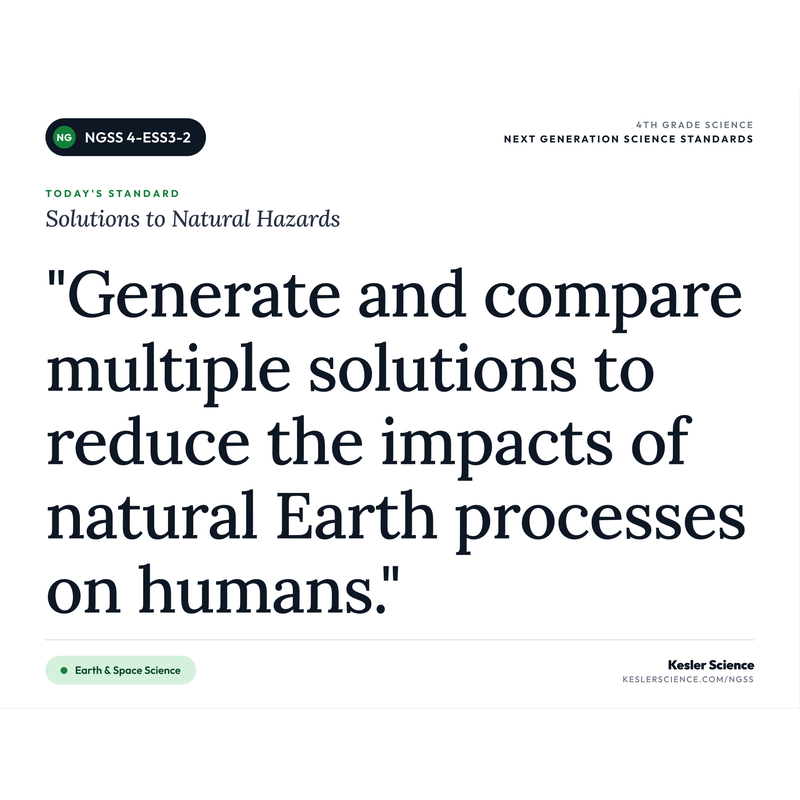
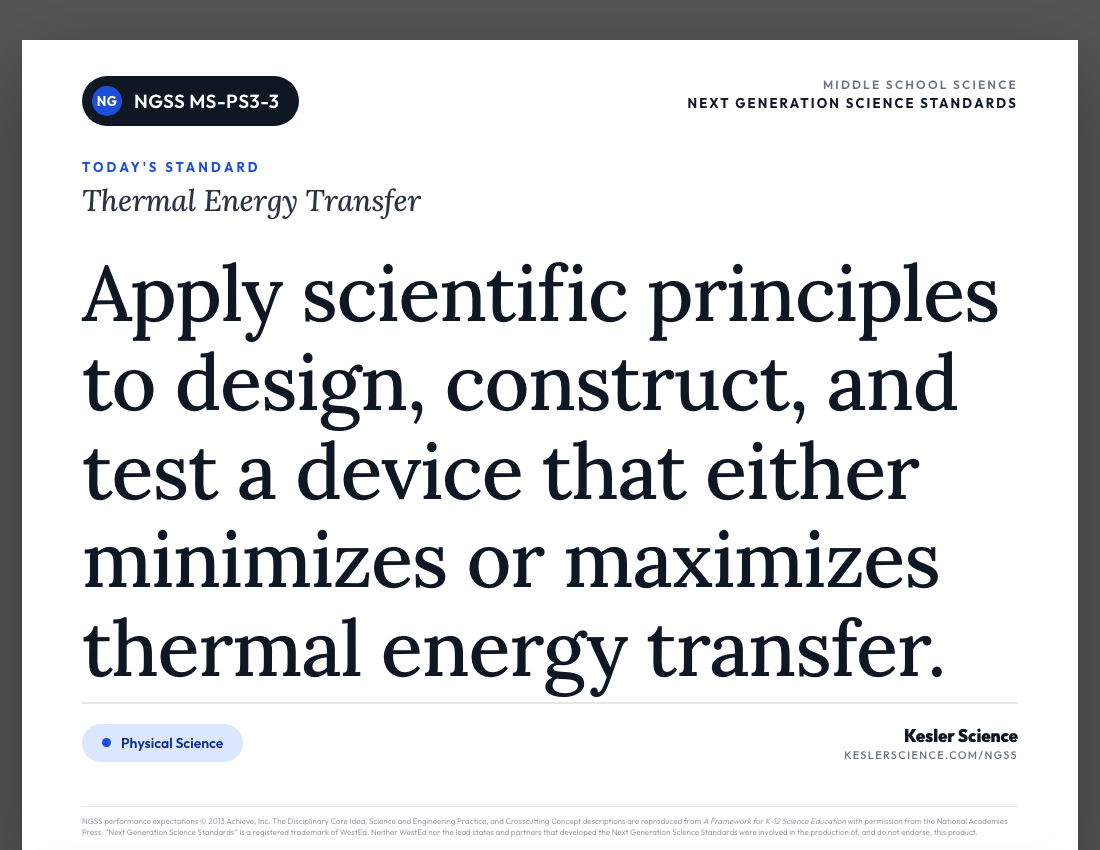
Print-ready classroom poster pack for 4-ESS3-2. Includes the verbatim NGSS performance expectation plus student-language "I Can" statements broken into daily learning goals. Landscape orientation, letter size, ready to print and post on your wall.
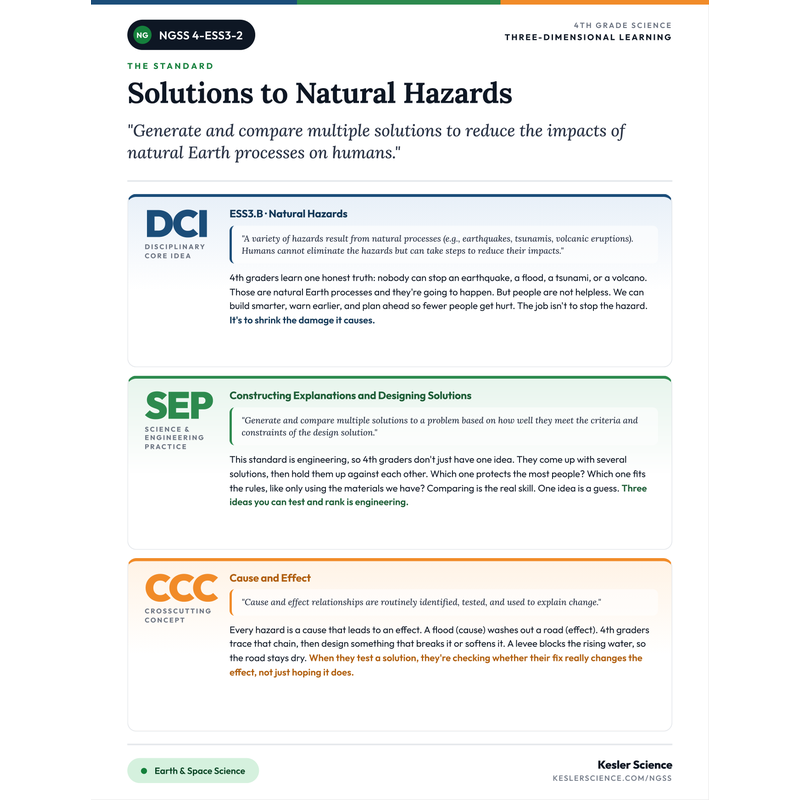
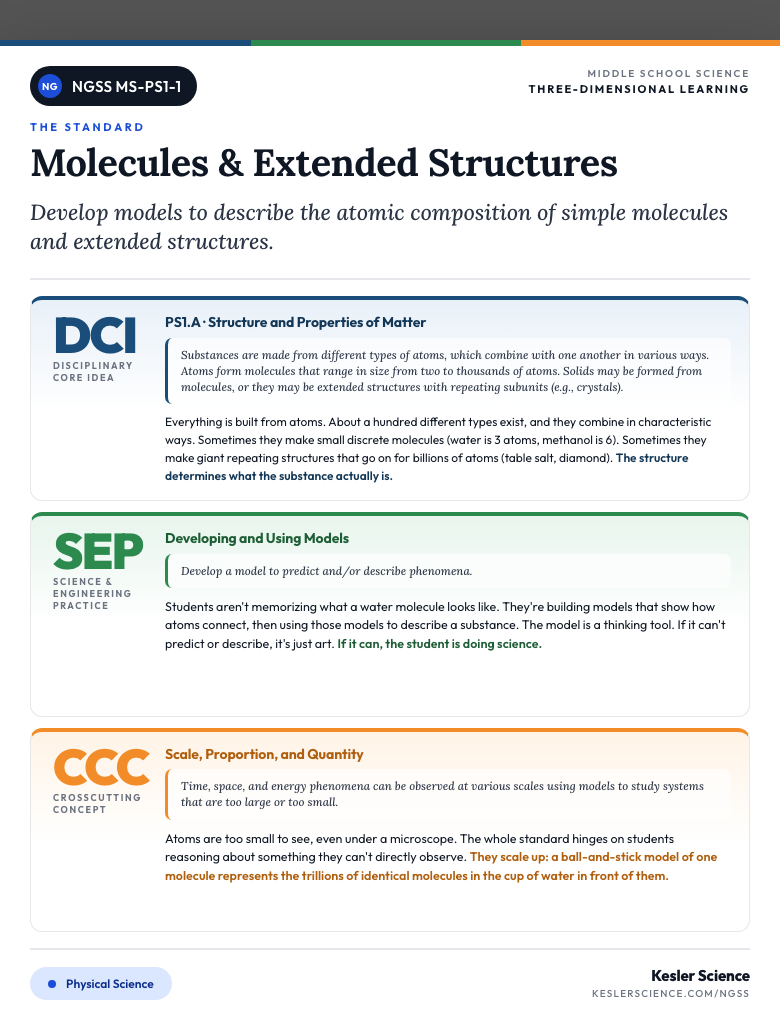
Teacher-facing PDF that breaks down the DCI, SEP, and CCC for 4-ESS3-2 in plain English. Color-coded by dimension so you can read the whole standard at a glance. Perfect for lesson planning or a sub folder.
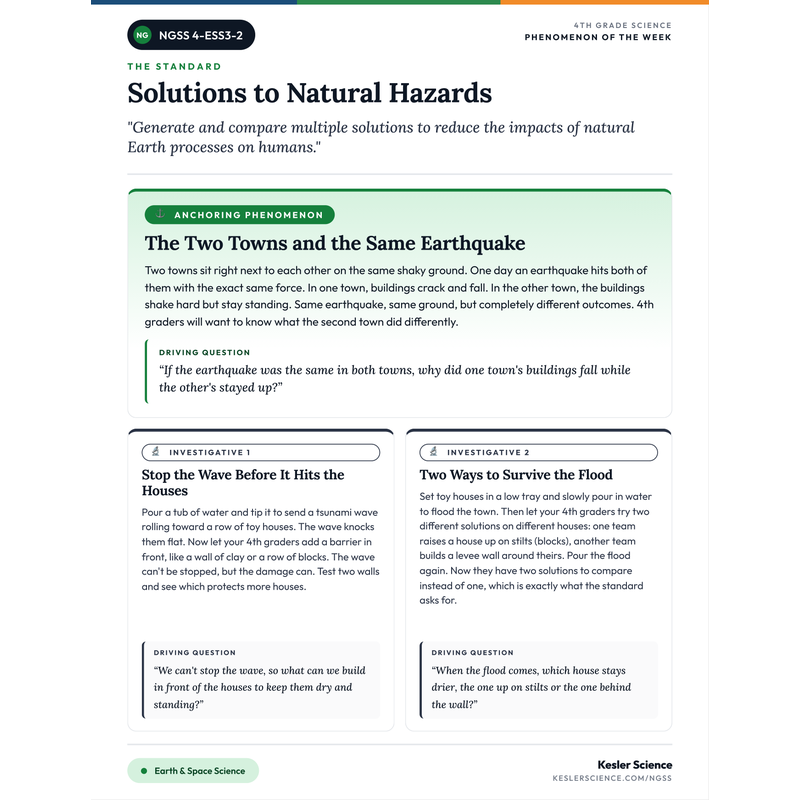
One-page printable with the anchoring phenomenon plus two investigative phenomena for 4-ESS3-2. Each one comes with the driving question students will keep asking. Pin it above your desk for the week — one piece of paper, one week of hooks.

The full unit for 4-ESS3-2: differentiated station labs, editable presentations, interactive notebooks (English + Spanish), student-choice projects, and assessments. Built on the 5E model.

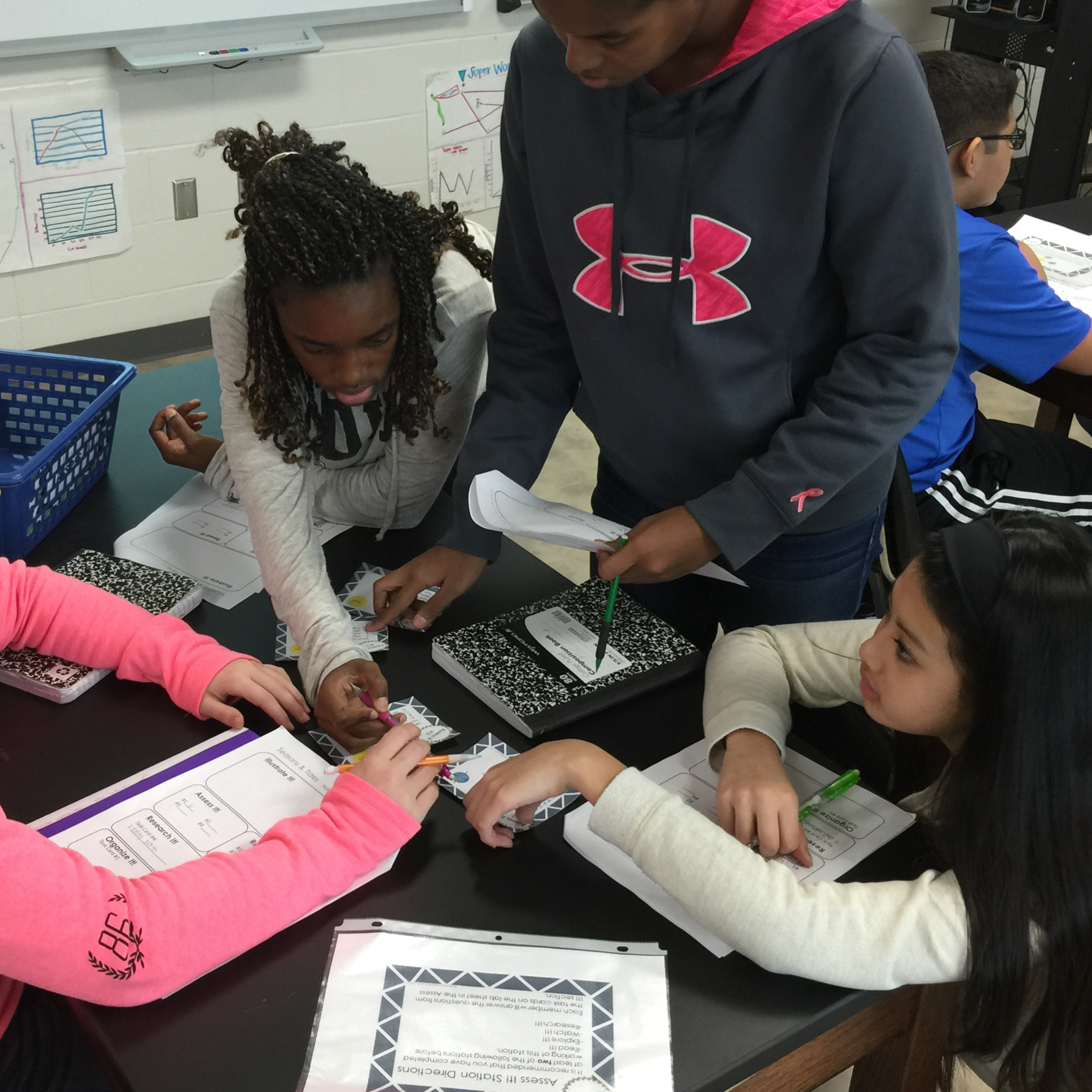
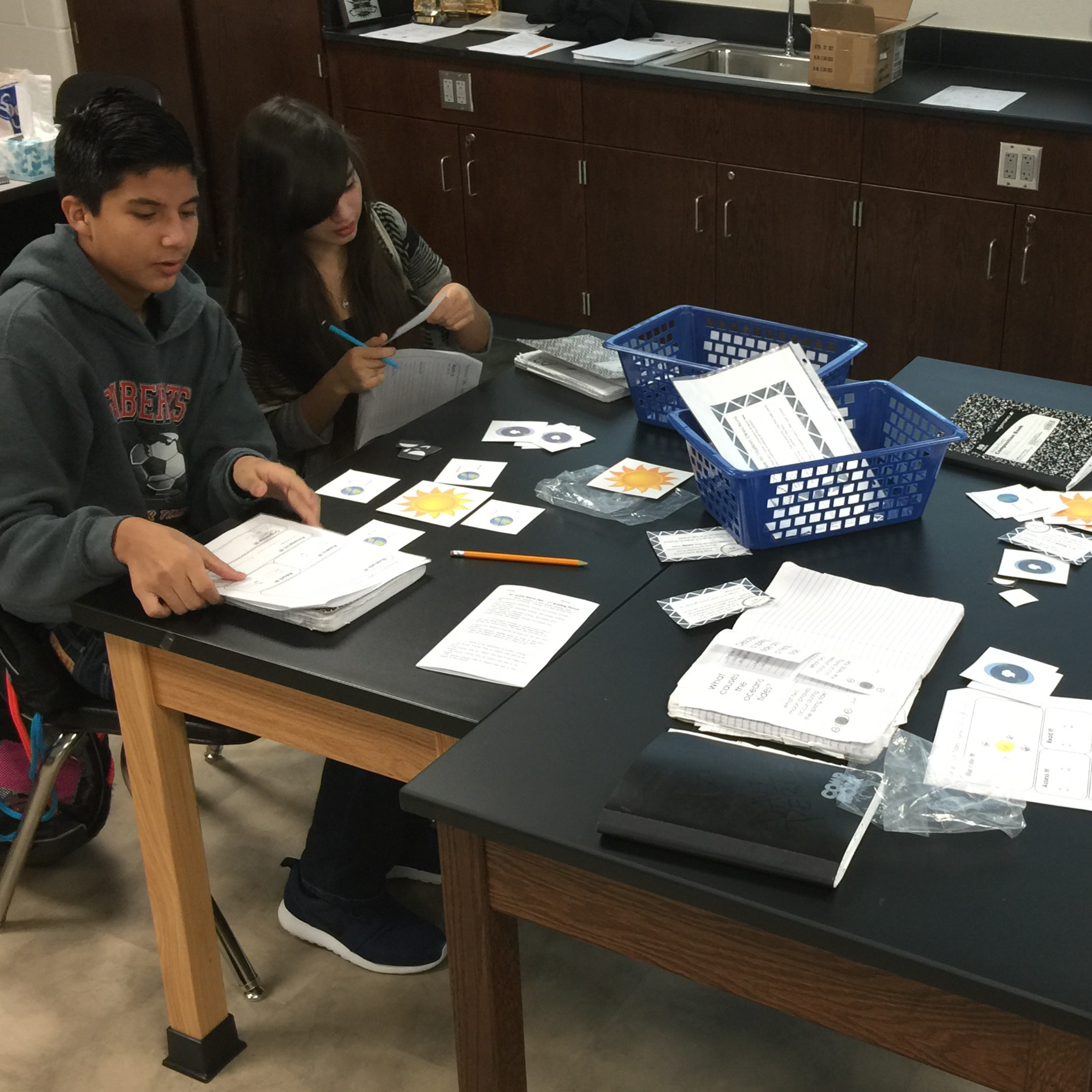
9-station hands-on lab covering how engineers design solutions to reduce the impact of natural hazards, with input stations (Explore It!, Watch It!, Read It!, Research It!) and output stations (Organize It!, Illustrate It!, Write It!, Assess It!). Print and digital. English and Spanish.

A print-and-digital science writing activity where students reason and write about solutions to natural hazards through an engaging real-world prompt. Includes teacher directions with an answer guide and project ideas. Great for constructed response, bell-ringers, or science journals.
Teaching more than this one standard?
Get every I Can poster, phenomenon hook, and 3-dimension sheet for all 17 4th Grade standards, in one download. The whole year, ready to print.
📚 Vocabulary Students Need for 4-ESS3-2
The terms students need to access this standard. Definitions in plain-English, classroom-ready language.
💡 Free Engagement Ideas for 4-ESS3-2
Earthquake-Proof Building Challenge
Groups build a tall tower out of blocks or marshmallows and toothpicks, then set it on a 'shake table' (a tray on top of two tennis balls or a pan of gelatin). They shake it and watch what falls. Then they redesign and build a second, sturdier version and compare which one survives the shaking longer. This is the anchor turned into a build-and-test lab.
Tsunami Wall Test
Your 4th graders line up small toy houses at one end of a water tub and create a wave by tipping the tub. They design two different barriers, maybe a clay wall and a row of blocks, and test which one keeps more houses dry. They compare results and explain which solution reduced the impact more. A clean way to practice comparing multiple solutions.
Flood Defense Showdown
Set toy houses in a low tray. One team raises houses on stilts (blocks), another team builds a levee wall, and a third leaves a house with no protection. Slowly pour in the flood and watch. Your 4th graders rank the solutions from best to worst at keeping houses dry and back up their ranking with what they saw.
Design-a-Warning-System Poster
Not every solution is a wall. Your 4th graders design a warning system for a town near a volcano or coast, deciding what signals would warn people and what people should do when the alarm sounds. They draw and label their plan, then explain how a few minutes of warning reduces the impact even though it can't stop the hazard.
📝 Assessment Ideas for 4-ESS3-2
Three short tasks that hit all three dimensions. Doable in one class period each.
Give your 4th graders two pictures of buildings designed to survive an earthquake, like one with a wide base and one with cross-braces. They compare the two solutions and explain which one they think would protect people better and why, using a clear reason. Mirrors the SEP: generate and compare multiple solutions.
Your 4th graders pick a hazard (flood, tsunami, earthquake, or volcano), draw the cause-and-effect chain (what the hazard does to a town), then sketch one solution that breaks the chain. They label how their solution changes the effect. Connects the cause-and-effect idea straight to designing a solution.
After the tsunami wall or flood lab, your 4th graders write a short explanation of which solution worked best and HOW they know, citing what happened in the test (like how many houses stayed dry). No new activity needed, just reasoning from the data they collected. Shows whether they judge solutions by testing, not by looks.
🎯 What Proficient Student Work Looks Like
Same prompt, three student responses at different proficiency levels. Use as anchor papers when scoring.
"Pick one natural hazard. Design two different solutions that would reduce its impact on people, then explain which solution works better and how you know."
- A specific claim backed by data or observation
- Use of standard-specific vocabulary in context
- Connection between what students observe and the underlying science idea
- A question they're still wondering about (curiosity stays alive)
"My hazard is a flood. I would build a really big wall so the water can't come in. A wall is the best because it is strong and tall."
Names a real hazard and one reasonable solution, but only gives ONE idea instead of two, so there's nothing to compare. The reason ('it is strong and tall') is about how it looks, not a test result. No cause-and-effect chain and no comparison.
"My hazard is a flood. Solution one is a wall around the houses. Solution two is putting the houses up on stilts. We tested both. The wall house stayed dry but the stilt house stayed dry too and was easier to build. I think the stilts are better because the water just went under the house."
Generates TWO solutions and compares them with a real reason from the test. Connects the flood (cause) to staying dry (effect). This is exactly what the standard asks a 4th grader to do: multiple solutions, compared, judged by how they performed.
"My hazard is a tsunami. We can't stop the wave because it's pushed by huge forces in the ocean that are way too big to block. We tested two walls. The clay wall kept 4 houses up. The block wall only kept 2 up. The clay wall worked better because it stopped the water before it reached the houses, so the houses stayed up."
States the honest truth (the wave can't be stopped, only its impact reduced), compares two solutions with real numbers from the test, and explains the cause-and-effect chain of WHY the wall worked. Hits the DCI, SEP, and CCC together in one explanation.
“Next Generation Science Standards” is a registered trademark of WestEd. Neither WestEd nor the lead states and partners that developed the Next Generation Science Standards were involved in the production of, and do not endorse, this product.
NGSS performance expectations © 2013 Achieve, Inc. The Disciplinary Core Idea, Science and Engineering Practice, and Crosscutting Concept descriptions are reproduced from A Framework for K-12 Science Education with permission from the National Academies Press.
Trusted Across NGSS States
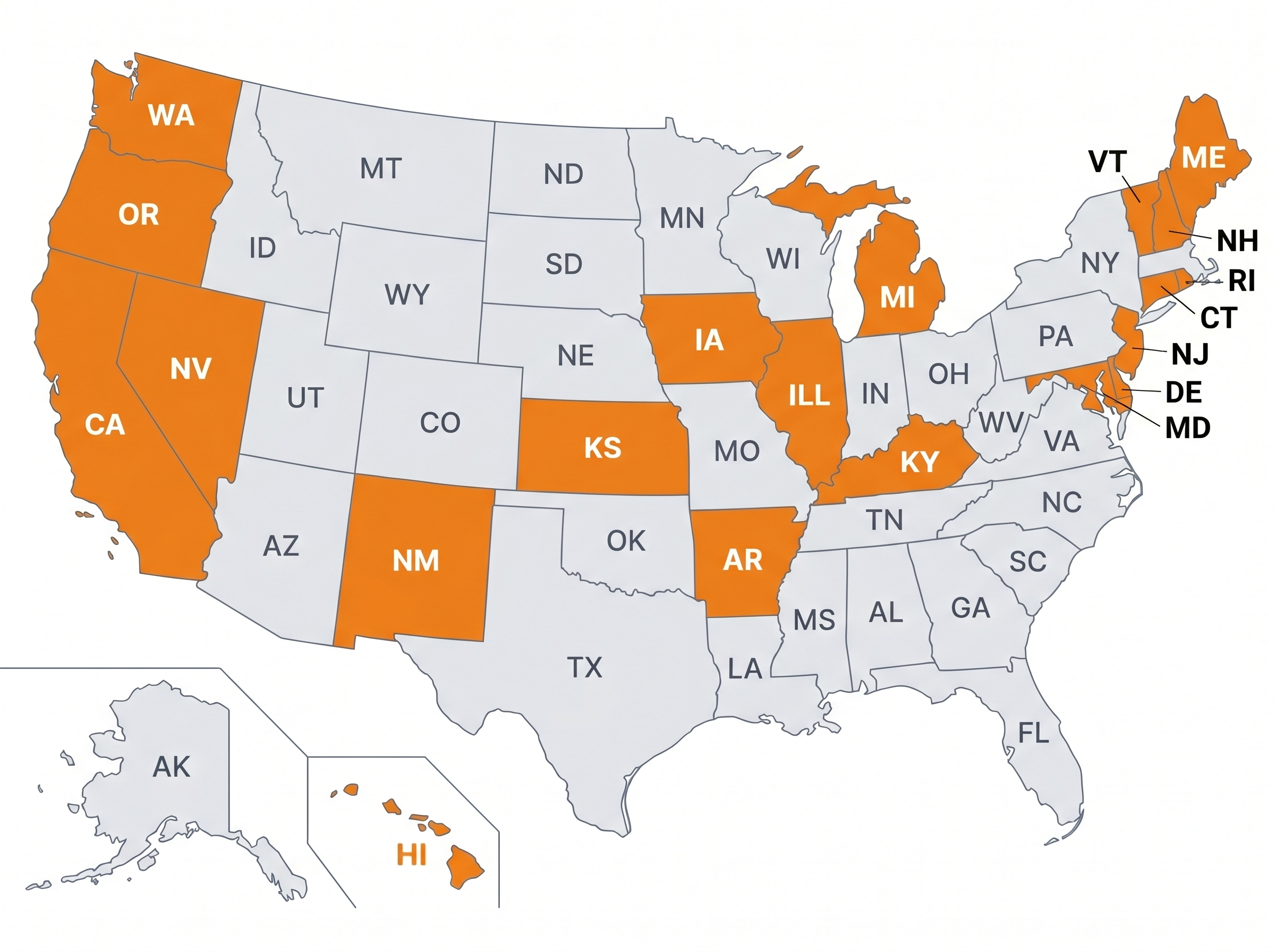
From California to Connecticut, science teachers in the 20 states that adopted NGSS are using Kesler Science to save time and engage students.
Teachers in NGSS States
Love Kesler Science
What Teachers Are Saying
"I'm able to access rigorous NGSS-aligned lessons and labs that are ready to use, so I spend more time helping students directly and less time searching for quality material."
"There's a lesson for each of the NGSS, so I don't have to search for hours to find a good quality lesson. I can spend more time actually teaching."
"The resources help me cover NGSS in a meaningful way, and my students gain a deeper knowledge of the concepts, with learning that's more self-driven."
Give Your Science Teachers Everything They Need
School and district licenses give your teachers access to every resource they need, including station labs, inquiry labs, anchoring phenomena, presentations, escape rooms, and much more. One purchase covers the grade levels you need.
- PO-friendly. We accept purchase orders
- Volume discounts for 11+ teachers
- Complimentary membership orientation for 4+ teachers
- Three free implementation PD sessions for departments of 11+
- Aligned to the NGSS standards
See It in Action
Book a walkthrough and we'll show you how Kesler Science fits your campus.
Book Demo CallNo pressure, no hard sell
"My assistant principal stopped in my room and immediately noticed how the students were engrossed in their centers and how they moved seamlessly from center to center. Also the built-in modifications really impressed!"
"It provides differentiated instruction for all types of learners, allowing them to become more engaged."
"I love it all!! I have become a facilitator in my class and I love the excitement it brings to my class. The kids love all that we do with the Kesler products."