.png?width=375&height=100&name=WebPage%20logo%20with%20curves%202026%20(8).png)
NGSS Resource Hub
Three-dimensional breakdowns, phenomena, and classroom-ready activities for every NGSS standard, grades 4-8.

🚀 Jump to Your Discipline
4th Grade NGSS Standards
Pick any standard. Each page is your full lesson-planning workspace for that standard.
Energy & Fossil Fuels: Where Our Energy Comes From and How It Changes the Earth
"Obtain and combine information to describe that energy and fuels are derived from natural resources and their uses affect the environment."
NGSS Lead States. (2013). Next Generation Science Standards: For states, by states (4-ESS3-1). The National Academies Press. https://www.nextgenscience.org/dci-arrangement/4-ess3-earth-and-human-activity
Renewable energy resources include things like wind, water held behind dams, and sunlight, while non-renewable resources are fossil fuels and fissile materials. Environmental effects students can consider include habitat loss from dams, habitat loss from surface mining, and air pollution from burning fossil fuels.
Summarized in our own words from the 4-ESS3-1 clarification statement (NGSS Lead States, 2013). Not a verbatim quote.
The three dimensions packed into this standard
Every standard bundles a DCI (the content), a SEP (the science practice), and a CCC (the crosscutting lens). They run in the same task, not in sequence.
"Energy and fuels that humans use are derived from natural sources, and their use affects the environment in multiple ways. Some resources are renewable over time, and others are not."
National Research Council. (2012). A framework for K-12 science education: Practices, crosscutting concepts, and core ideas. The National Academies Press. https://doi.org/10.17226/13165
Every bit of energy we use starts somewhere on Earth. The gas in a car comes from oil. The power in an outlet might come from coal, wind, sun, or water behind a dam. Here is what 4th graders connect: getting and using that energy changes the land, air, and animals.
"Obtain and combine information from books and other reliable media to explain phenomena."
National Research Council. (2012). A framework for K-12 science education. The National Academies Press.
4th graders aren't expected to already know this. They go find it. They pull facts from a book, a kid-friendly article, or a short video, then put pieces from different sources together into one clear description. The skill is choosing trustworthy sources and combining what they say, not just copying one page.
"Cause and effect relationships are routinely identified and used to explain change."
National Research Council. (2012). A framework for K-12 science education. The National Academies Press.
This is the thread that holds the whole standard together. Using an energy resource is the cause. A change to the environment is the effect. Burning coal causes dirtier air. Building a dam causes a flooded valley and lost animal homes. 4th graders practice spotting that cause-to-effect link every time.
📍 Where This Standard Fits in the K-12 Progression
Use this to plan the year. Knowing what students should already know and what they're heading toward keeps the lesson focused.
Earth's resources are not brand new in 4th grade. 4th graders arrive knowing that living things, including people, use what the Earth provides for food, water, and shelter. They have not yet connected where our energy and fuels come from, or that using those resources changes the environment.
Energy & Fossil Fuels: Where Our Energy Comes From and How It Changes the Earth
In middle school, students dig into why resources like fossil fuels are spread unevenly around the planet. They learn that today's coal, oil, and minerals formed from past geologic and biological processes over millions of years, which is why some places have them and others don't.
🌎 Phenomena for 4-ESS3-1
Anchor the lesson in one puzzling phenomenon kids keep coming back to. Use the two investigative phenomena to sharpen specific facets.
The Light Switch That Reaches All the Way to a Mountain
Flip a switch and the lights come on. Easy. But trace that energy backward and the trail leaves the building. It might lead to a mountain scraped open for coal, or a valley flooded behind a giant dam. The light is simple. What it took to make it is not.
"Where does the energy for our lights actually come from, and what did it change out in the world to get here?"
- "Does our energy come from one place or lots of different places?"
- "Why would digging up fuel or building a dam change the land or the animals?"
- "Is there a way to make energy that doesn't change the environment as much?"
Wind and Sun That Never Run Out
Set a pinwheel in front of a fan and it spins as long as the air moves. Point a solar yard light at a sunny window and it charges every day. Use this to sharpen the anchor's question: some sources keep refilling. The wind blows again, the sun rises again.
"Why can we use the wind and the sun over and over without ever running out of them?"
- "Will the wind and sun ever get used up like fuel from the ground?"
- "Do wind and sun change the environment as much as digging for coal?"
- "If these never run out, why don't we get all our energy this way?"
The Fuel You Can Only Burn Once
Fill a small jar with sand to stand for fuel pumped from the ground, then scoop some out each "day." The jar empties and never refills on its own. That is the other side: fossil fuels are non-renewable. Once we burn what we dug up, that batch is gone.
"What happens when we keep using up a fuel that doesn't fill back up?"
- "Where did the fuel in the ground come from in the first place?"
- "What changes about the land each time we dig up more of it?"
- "What happens to the air when we burn it?"
100% Aligned Lessons for Every NGSS Standard You Teach
The membership gives you access to thousands of lessons and activities designed to boost student engagement and reclaim valuable teaching time. Trusted by schools and districts from every NGSS state.
⚠️ Misconceptions Your Students Will Walk In With
These come up almost every year. Knowing them in advance lets you head them off in the first lesson.
"Energy and electricity just come from the wall or the power plant. That's where they start."
The plug is the last stop, not the start. The energy in that outlet was made somewhere else, from a natural resource like coal, wind, water, or sunlight. The whole point of this standard is following the energy back to where it really comes from in nature.
"Clean energy like wind, water, and solar has no effect on the environment at all."
Renewable does not mean zero effect. It means the source refills, like the wind blowing again. Renewable sources like wind and solar make power without putting smoke in the air, but they still change the environment in other ways, like a dam flooding a valley or a wind farm taking up land. Teacher heads up: a dam is a renewable energy source AND it changes habitat. That pairing is the point, not that dams are simply good or bad.
"We can't run out of fuels like coal and oil because there's so much in the ground."
Fossil fuels are non-renewable. They took millions of years to form, and we use them way faster than the Earth can ever make more. Every batch we burn is gone for good. That is exactly why they are different from the wind and the sun, which refill on their own.
"Pollution and habitat loss just happen on their own. They aren't connected to how we get our energy."
They are connected, and that connection is the heart of this standard. Using a resource is the cause. The change to the environment is the effect. Burning coal causes dirtier air. Surface mining causes lost habitat. The effect points right back to a choice about energy.
🙋 Common Student Questions and How to Respond
These come up almost every time this standard gets taught. Plan a response and you'll keep the lesson focused.
Celebrate the instinct, then push gently. Ask, "Free once it's set up, but does it take anything to build the panels or find space for them?" Steer them to balance: the sun never runs out and makes no air pollution, but a solar farm still uses land. Cleaner, not perfect.
Don't hand them the full story, it's a middle school job. Keep it simple: it formed from living things buried for a very long time, which is why we can't just make more. What matters here is that it comes from the Earth and we can use it up.
Great real-world thinking. Toss it back: "Does the wind always blow? Does the sun shine at night?" Let them wrestle with it. Then point them to research: have them find one reason people still use fossil fuels and one reason people want more renewables. That IS the standard, combining information from sources.
In 4th grade we don't put a number on it. We use cause and effect instead. The cause is burning the fuel. The effect is dirtier air. Have them describe that link clearly from a reliable source. Save the measuring and the amounts for later grades.
📓 Teaching Resources for 4-ESS3-1
These resources are aligned to this standard.
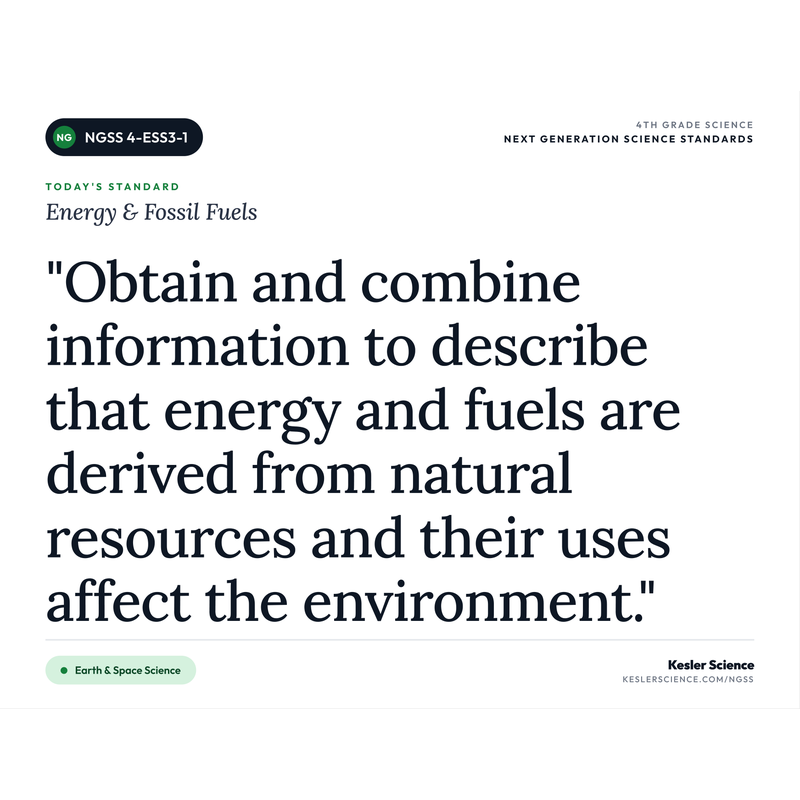
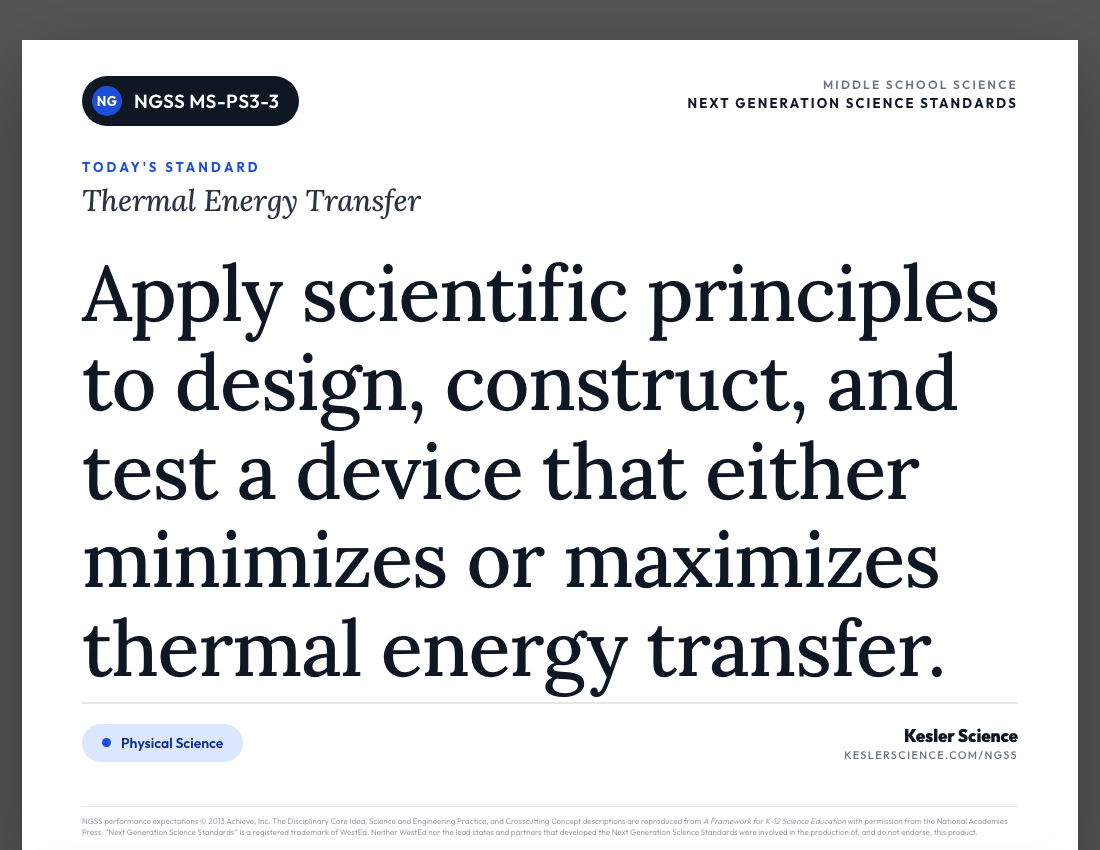
Print-ready classroom poster pack for 4-ESS3-1. Includes the verbatim NGSS performance expectation plus student-language "I Can" statements broken into daily learning goals. Landscape orientation, letter size, ready to print and post on your wall.
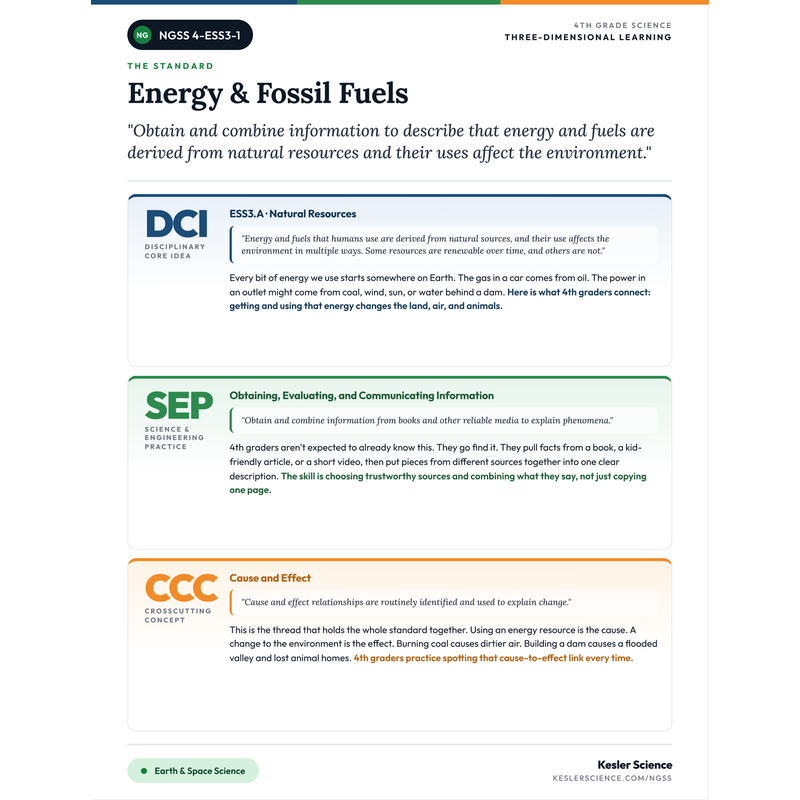
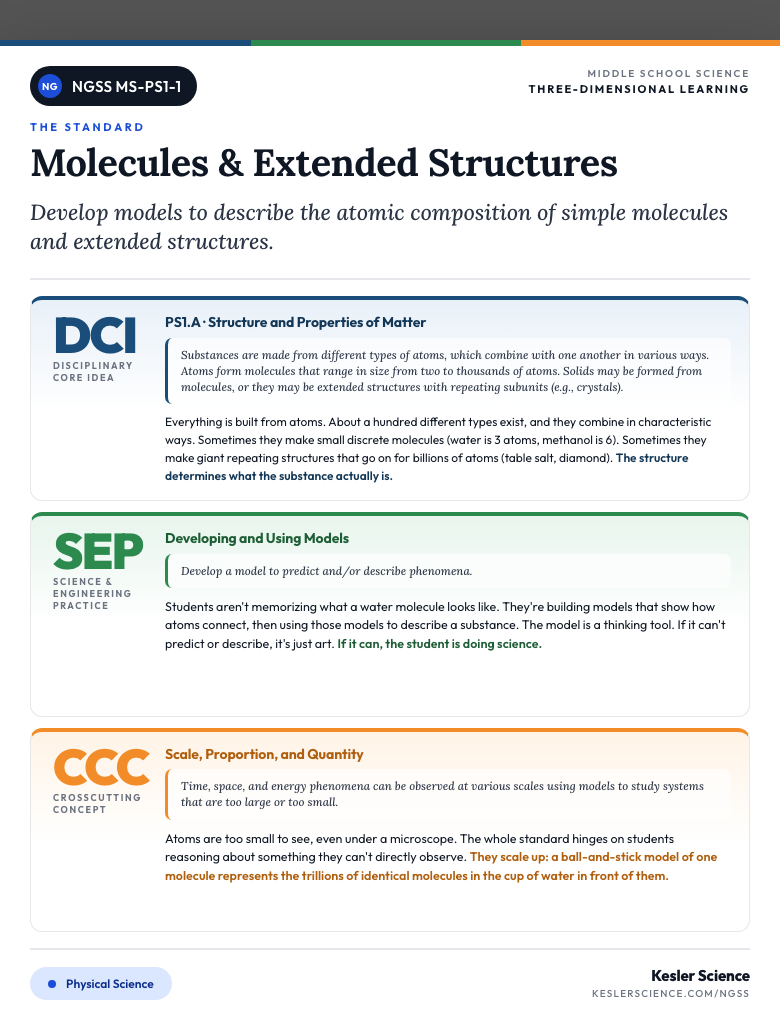
Teacher-facing PDF that breaks down the DCI, SEP, and CCC for 4-ESS3-1 in plain English. Color-coded by dimension so you can read the whole standard at a glance. Perfect for lesson planning or a sub folder.
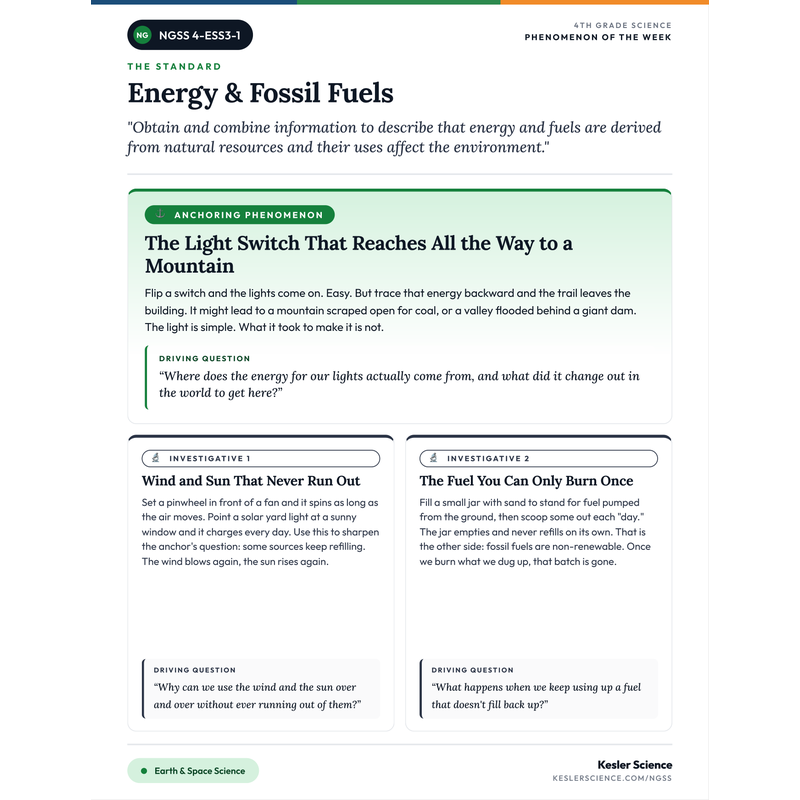
One-page printable with the anchoring phenomenon plus two investigative phenomena for 4-ESS3-1. Each one comes with the driving question students will keep asking. Pin it above your desk for the week — one piece of paper, one week of hooks.

The full unit for 4-ESS3-1: differentiated station labs, editable presentations, interactive notebooks (English + Spanish), student-choice projects, and assessments. Built on the 5E model.

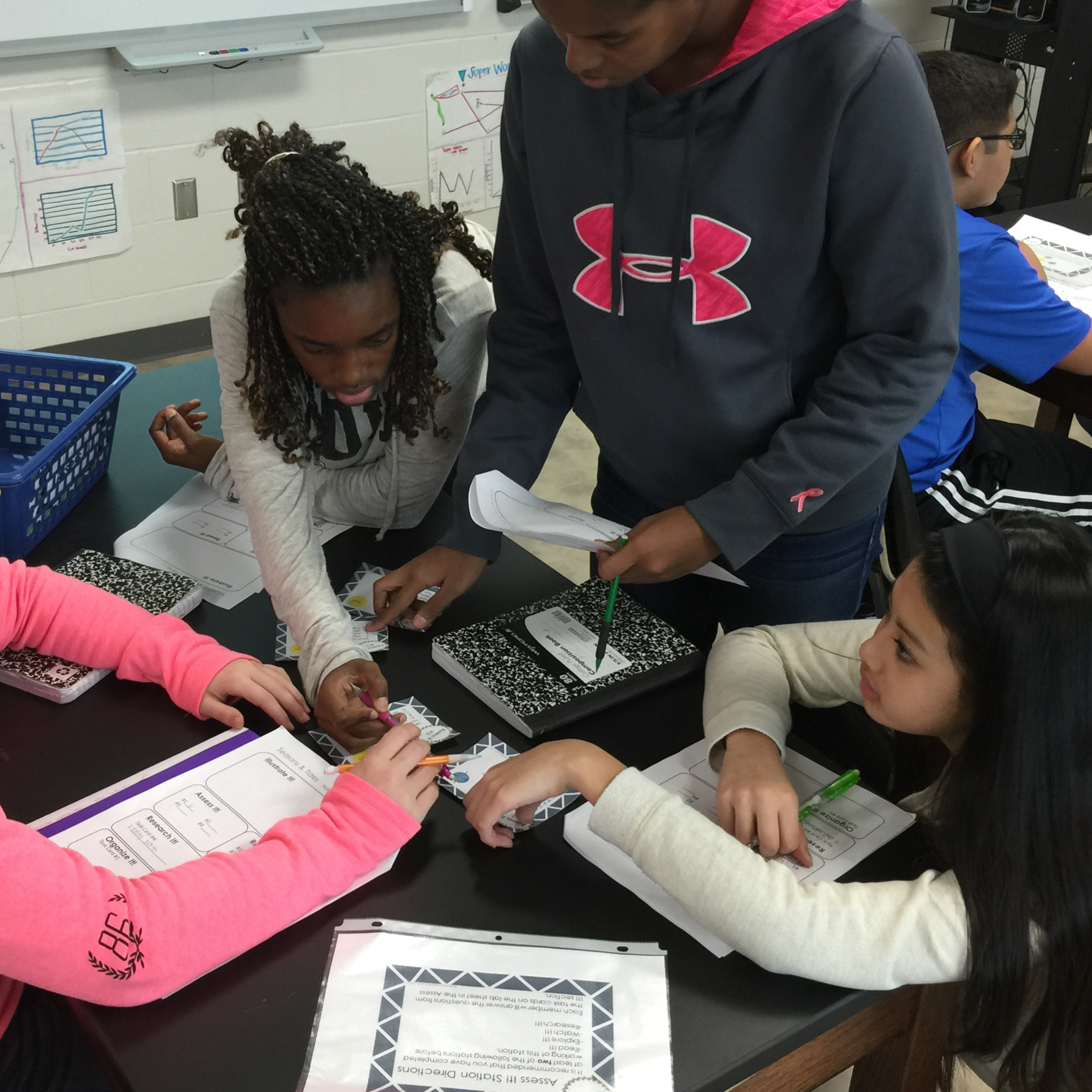
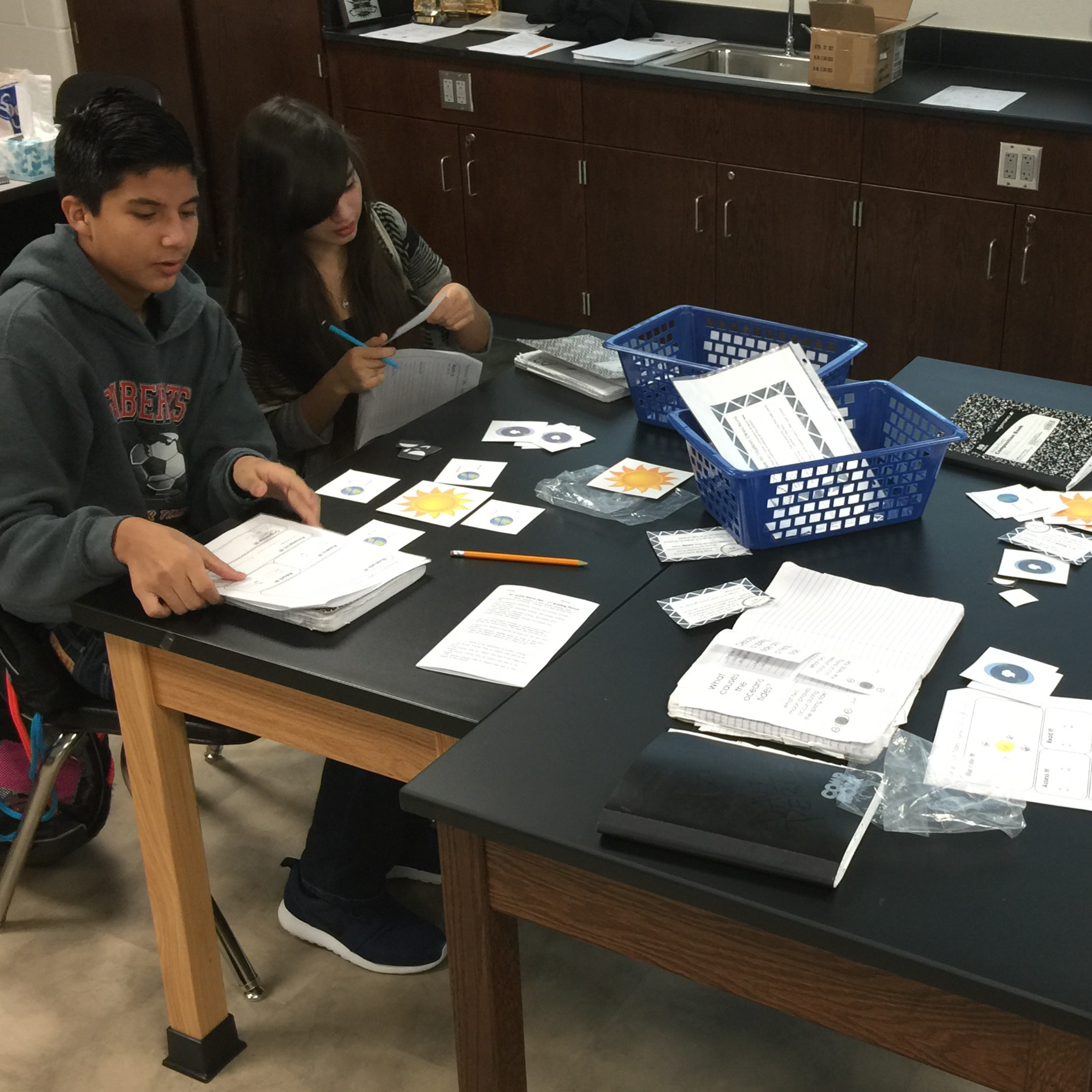
9-station hands-on lab covering where our energy comes from and how fossil fuels form from natural resources, with input stations (Explore It!, Watch It!, Read It!, Research It!) and output stations (Organize It!, Illustrate It!, Write It!, Assess It!). Print and digital. English and Spanish.
Teaching more than this one standard?
Get every I Can poster, phenomenon hook, and 3-dimension sheet for all 17 4th Grade standards, in one download. The whole year, ready to print.
📚 Vocabulary Students Need for 4-ESS3-1
The terms students need to access this standard. Definitions in plain-English, classroom-ready language.
💡 Free Engagement Ideas for 4-ESS3-1
Trace the Energy Back
4th graders start with one everyday thing that uses energy, like a lamp, a car, or a phone charger, and use kid-friendly books and articles to trace it back to its natural resource. They draw the trail as a chain: device, power source, natural resource, and one effect on the environment. This is the anchor turned into research.
Renewable vs. Non-Renewable Sort
Groups get a stack of picture cards (wind, sun, coal, oil, water behind a dam, natural gas) and sort them into renewable and non-renewable piles. Then they add a second sort: which ones make air pollution, and which ones change the land. A fast, hands-on way to lock in the two categories.
Pinwheel and Solar Light Station
4th graders run two stations: a pinwheel in front of a fan and a small solar yard light by a sunny window. They notice the wind and sun keep working without running out, then write one sentence each on why those count as renewable. Connects the abstract word 'renewable' to something they can watch happen.
Build a 'Where It Comes From' Poster
Using facts from at least two sources, 4th graders build a poster on one energy resource: where it comes from, whether it runs out, and one way using it affects the environment, with a labeled drawing of the cause and the effect. Turns their research into a combined explanation.
📝 Assessment Ideas for 4-ESS3-1
Three short tasks that hit all three dimensions. Doable in one class period each.
Give 4th graders two short, reliable sources about the same energy resource (say, a passage and a labeled diagram about coal). They write a description that pulls a fact from EACH source: where the energy comes from and one way using it affects the environment. Mirrors the SEP: obtain and combine information.
4th graders get a set of cause cards (burning coal, building a dam, surface mining for fuel) and effect cards (dirtier air, flooded valley, lost habitat). They match each cause to its effect and write one sentence explaining the link. Teacher note: the dam pair shows it is renewable energy AND it changes habitat, so that pairing is the point.
4th graders sort six energy sources into renewable and non-renewable, then pick one of each and write why, using a fact from a reliable source. A quick check that shows whether they understand which resources run out and which refill, backed by real information.
🎯 What Proficient Student Work Looks Like
Same prompt, three student responses at different proficiency levels. Use as anchor papers when scoring.
"Use information from your two sources to describe where the energy comes from and one way using it affects the environment."
- A specific claim backed by data or observation
- Use of standard-specific vocabulary in context
- Connection between what students observe and the underlying science idea
- A question they're still wondering about (curiosity stays alive)
"Coal makes electricity. We dig it out of the ground. Coal is kind of bad for the Earth."
Names the resource and that it comes from the ground, which is a start. But it only leans on one idea, gives no real environmental effect ("kind of bad" is vague), and doesn't combine two sources. The cause-to-effect link is missing.
"My book said coal is dug out of the ground at mines and burned at a power plant to make electricity. My article said burning coal puts dirty smoke in the air. So the energy comes from coal in the ground, and using it makes the air more polluted."
Pulls a fact from each source and combines them. Names where the energy comes from and one clear effect on the environment. Shows a cause (burning coal) and effect (polluted air). This is exactly what the standard asks a 4th grader to do.
"From my two sources I learned coal comes from the ground and gets burned to make electricity, and that burning it dirties the air. Coal is non-renewable, so once it's gone it's gone. That's different from wind, which keeps blowing, so wind makes power without dirtying the air."
Combines both sources, names where the energy comes from, and gives a clear cause and effect. Goes further by sorting coal as non-renewable and contrasting it with renewable wind, all in plain 4th-grade voice and without being asked.
“Next Generation Science Standards” is a registered trademark of WestEd. Neither WestEd nor the lead states and partners that developed the Next Generation Science Standards were involved in the production of, and do not endorse, this product.
NGSS performance expectations © 2013 Achieve, Inc. The Disciplinary Core Idea, Science and Engineering Practice, and Crosscutting Concept descriptions are reproduced from A Framework for K-12 Science Education with permission from the National Academies Press.
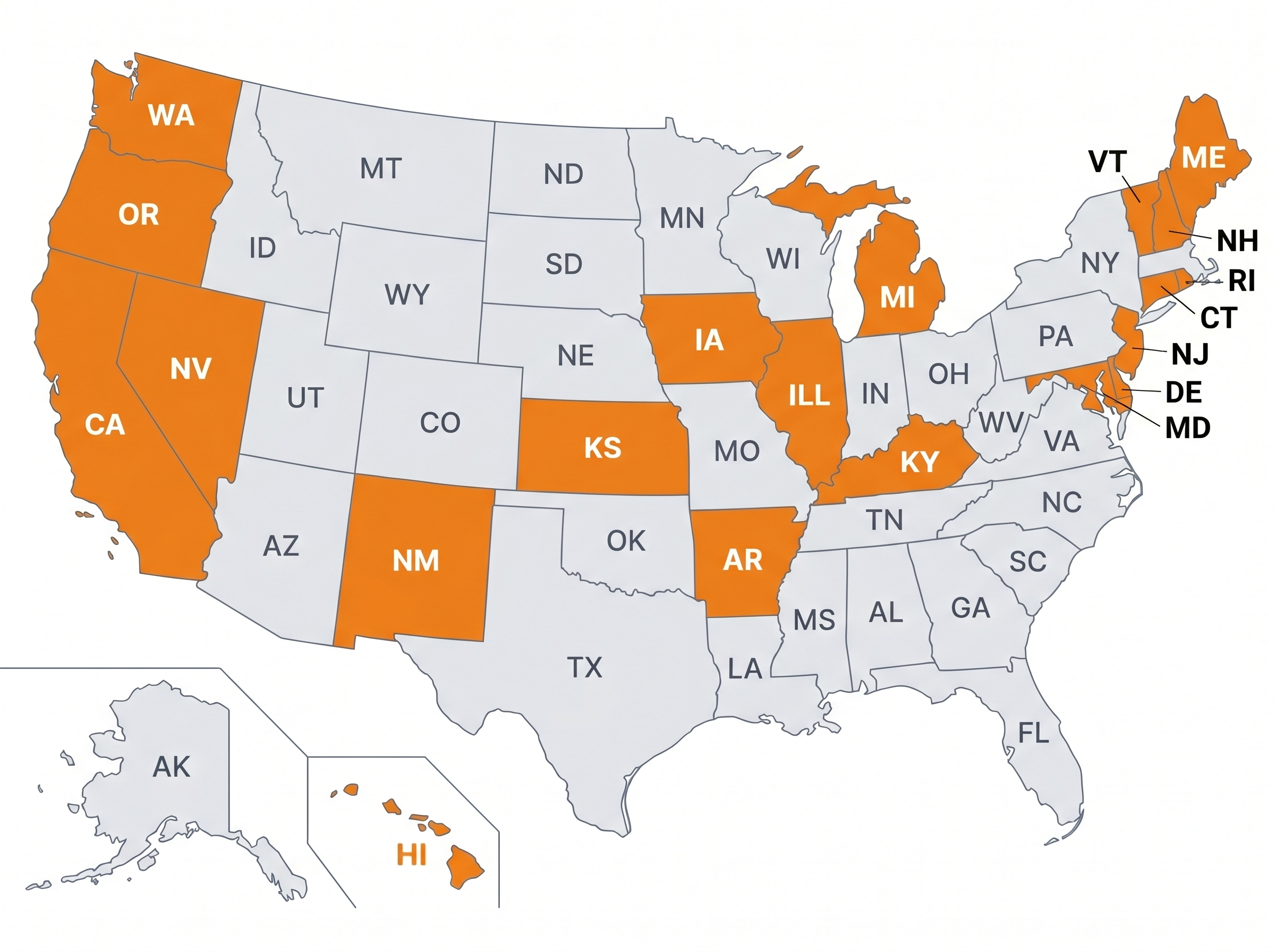
Trusted Across NGSS States
From California to Connecticut, science teachers in the 20 states that adopted NGSS are using Kesler Science to save time and engage students.
Teachers in NGSS States
Love Kesler Science
What Teachers Are Saying
"I'm able to access rigorous NGSS-aligned lessons and labs that are ready to use, so I spend more time helping students directly and less time searching for quality material."
"There's a lesson for each of the NGSS, so I don't have to search for hours to find a good quality lesson. I can spend more time actually teaching."
"The resources help me cover NGSS in a meaningful way, and my students gain a deeper knowledge of the concepts, with learning that's more self-driven."
Give Your Science Teachers Everything They Need
School and district licenses give your teachers access to every resource they need, including station labs, inquiry labs, anchoring phenomena, presentations, escape rooms, and much more. One purchase covers the grade levels you need.
- PO-friendly. We accept purchase orders
- Volume discounts for 11+ teachers
- Complimentary membership orientation for 4+ teachers
- Three free implementation PD sessions for departments of 11+
- Aligned to the NGSS standards
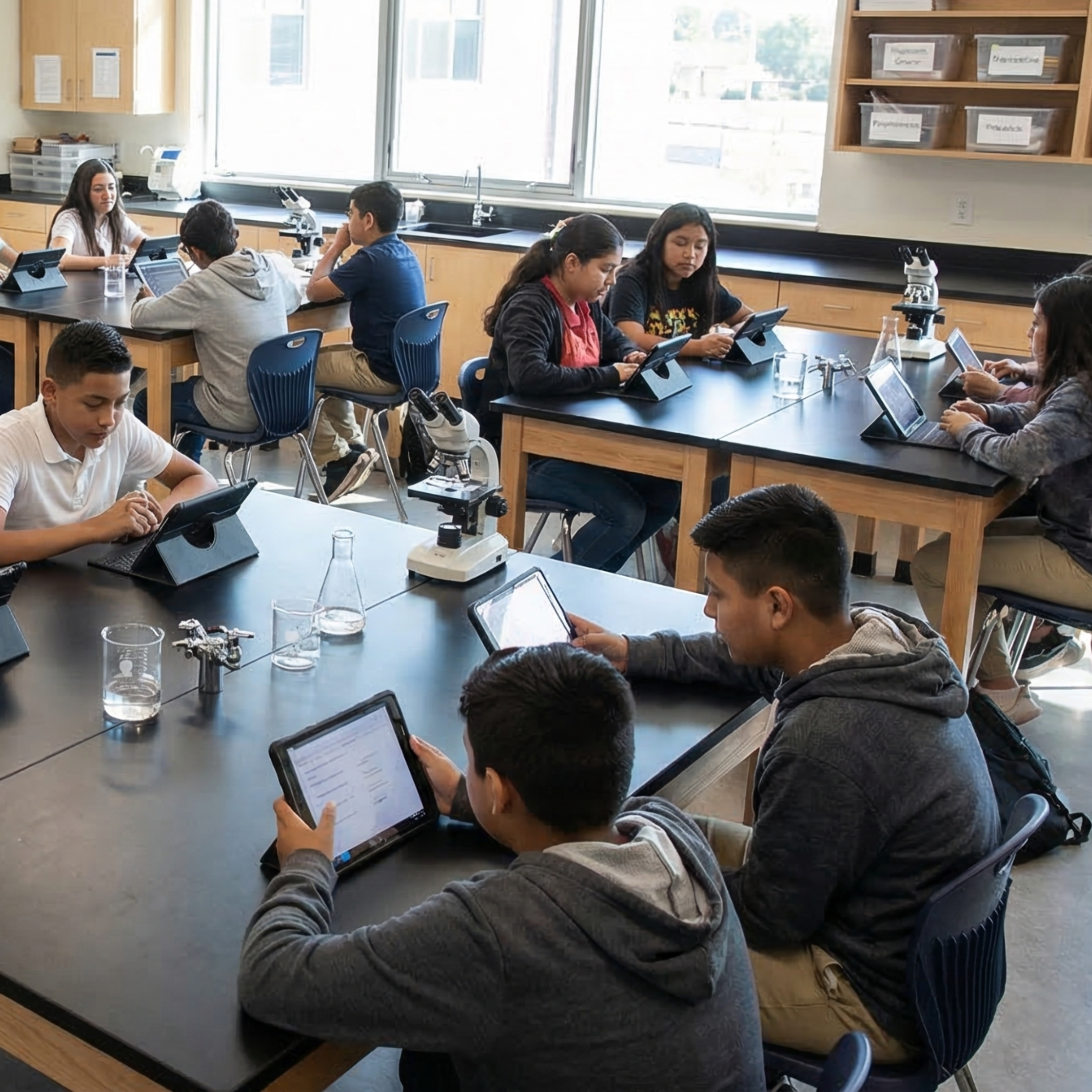
See It in Action
Book a walkthrough and we'll show you how Kesler Science fits your campus.
Book Demo CallNo pressure, no hard sell
"My assistant principal stopped in my room and immediately noticed how the students were engrossed in their centers and how they moved seamlessly from center to center. Also the built-in modifications really impressed!"
"It provides differentiated instruction for all types of learners, allowing them to become more engaged."
"I love it all!! I have become a facilitator in my class and I love the excitement it brings to my class. The kids love all that we do with the Kesler products."