Texas Science Teacher Resource Hub
Free scope and sequences, TEKS breakdowns, phenomenon ideas, and engagement activities for the 2024 Texas science standards.

🚀 Jump to Your Grade
Pick your grade level and go straight to your TEKS standards, aligned resources, and teaching tools.
-
4th
→4th Grade Science14 standards • Earth, Energy, Organisms & more
-
5th
→5th Grade Science16 standards • Matter, Ecosystems, Space & more
-
6th
→6th Grade Science18 standards • Forces, Energy, Matter & more
-
7th
→7th Grade Science17 standards • Cells, Chemistry, Earth & more
-
8th
→8th Grade Science19 standards • Newton's Laws, Space, Genetics & more
6th Grade TEKS Standards
Click any standard to see what it means, how to teach it, where students get stuck, and aligned resources.
Newton's Third Law of Motion
"Identify simultaneous force pairs that are equal in magnitude and opposite in direction that result from the interactions between objects using Newton's Third Law of Motion."
💡 What This Standard Actually Means
"Identify". Students must be able to pick out the force pairs. They're not explaining or calculating. They're identifying. That could show up through diagrams, lists, tables, models, or any other format.
This standard is about Newton's Third Law: forces always come in pairs. When Object A pushes on Object B, Object B pushes back with the same amount of force in the opposite direction, and it happens at the exact same time. That's it.
"Identify" is the verb, and that sets the expectation. However they're asked, students need to be able to recognize the Third Law pairs. The forces act on two different objects, are equal in magnitude, opposite in direction, and simultaneous.
I used to start this lesson by having two students on skateboards push off each other. The lighter student always rolls farther, which immediately sparks the conversation: "Wait, if the forces are equal, why does one person move more?" That's your hook into the difference between Third Law pairs and what happens AFTER the forces act (which is Second Law territory, but your 6th graders don't need to go there yet). Keep it focused: equal forces, opposite directions, two objects, same instant.
⚠️ Misconceptions Your Students May Have
These are some of the most common misconceptions. Knowing what to look for can help you get ahead of them.
"The bigger object pushes harder"
When a truck hits a car, students think the truck exerts more force. The forces are always equal. The car just accelerates more because it has less mass. The truck and car push on each other with identical force.
"The action force causes the reaction force"
There is no "action" that happens first and "reaction" that follows. Both forces appear at the exact same instant. The old phrasing "for every action there is a reaction" is misleading. Avoid it. Use "simultaneous force pairs" instead.
"If forces are equal and opposite, nothing should move"
Third Law force pairs act on two different objects. They don't cancel out because they're not acting on the same thing. Balanced forces (which DO cancel) act on the SAME object. This is a common confusion point.
"Gravity and the floor pushing up are a Third Law pair"
Weight (Earth pulling a book down) and the normal force (table pushing book up) are NOT a Third Law pair because they both act on the same object (the book). The actual Third Law pair for gravity is: Earth pulls book down, and book pulls Earth up.
"Forces are unequal while something is speeding up"
Students think Newton's Third Law is "paused" during acceleration, that one object must push harder to get things moving. The Third Law forces are ALWAYS equal, regardless of whether objects are at rest, moving, or accelerating.
📓 Teaching Resources for 6.7C
These resources are aligned to this standard.
🌎 Phenomenon Ideas for 6.7C
Use these real-world phenomena to anchor your lesson. Show students the phenomenon first, let them wonder, then build toward Newton's Third Law as the explanation.
Jumping Off a Small Boat
When someone jumps from a small boat to a dock, the boat shoots backward in the opposite direction. The harder they jump, the farther the boat moves away. Why does the boat move when nobody pushed it?
"If the person only pushed forward with their legs to jump toward the dock, why did the boat move backward? What was pushing the boat?"
How a Squid Moves Through Water
A squid has no fins, no flippers, and no tail, yet it's one of the fastest animals in the ocean. It moves by sucking water into its body and then squeezing it out in a powerful jet behind it. How does pushing water backward make the squid go forward?
"The squid pushes water in one direction, and it moves the other direction. What other things move this same way? How is a squid similar to a rocket?"
A Firefighter Getting Pushed Back by a Hose
When firefighters open a high-pressure hose, the force is so strong that it can push them backward or even knock them off their feet. The water is shooting forward out of the nozzle, so what's pushing the firefighter backward?
"Why does it take multiple firefighters to hold a single hose? If the water is going forward, what force is acting on the firefighter? Are those two forces equal?"
💡 Free Engagement Ideas for 6.7C
Skateboard Push-Off Demo
Have two students of different sizes stand on skateboards and push off each other. The lighter student rolls farther, opening the conversation about equal forces vs. different accelerations. Instant engagement.
Balloon Rocket Races
String a straw on fishing line across the room, tape a balloon to the straw, release. Air pushes out one way, balloon goes the other. Classic Third Law demo that students can modify and test.
Force Pair Identification Cards
Give students 10 scenarios (bat hitting ball, swimmer pushing pool wall, rocket launching, etc.) and have them identify BOTH forces in the pair. Then sort which ones students get wrong most often and discuss as a class.
"Same Object or Different?" Sorting Activity
Give students force diagrams and have them sort: "Are these two forces acting on the SAME object (balanced/unbalanced) or DIFFERENT objects (Third Law pair)?" This directly addresses a common misconception.
Year-at-a-Glance Pacing Guides
Practical, week-by-week scope and sequences for grades 4-8. These tell you what to teach and when to teach it. Updated for the 2024 TEKS.
🔒 Free download. We just need your email. You'll also get weekly teaching ideas, phenomenon, and resources straight to your inbox.
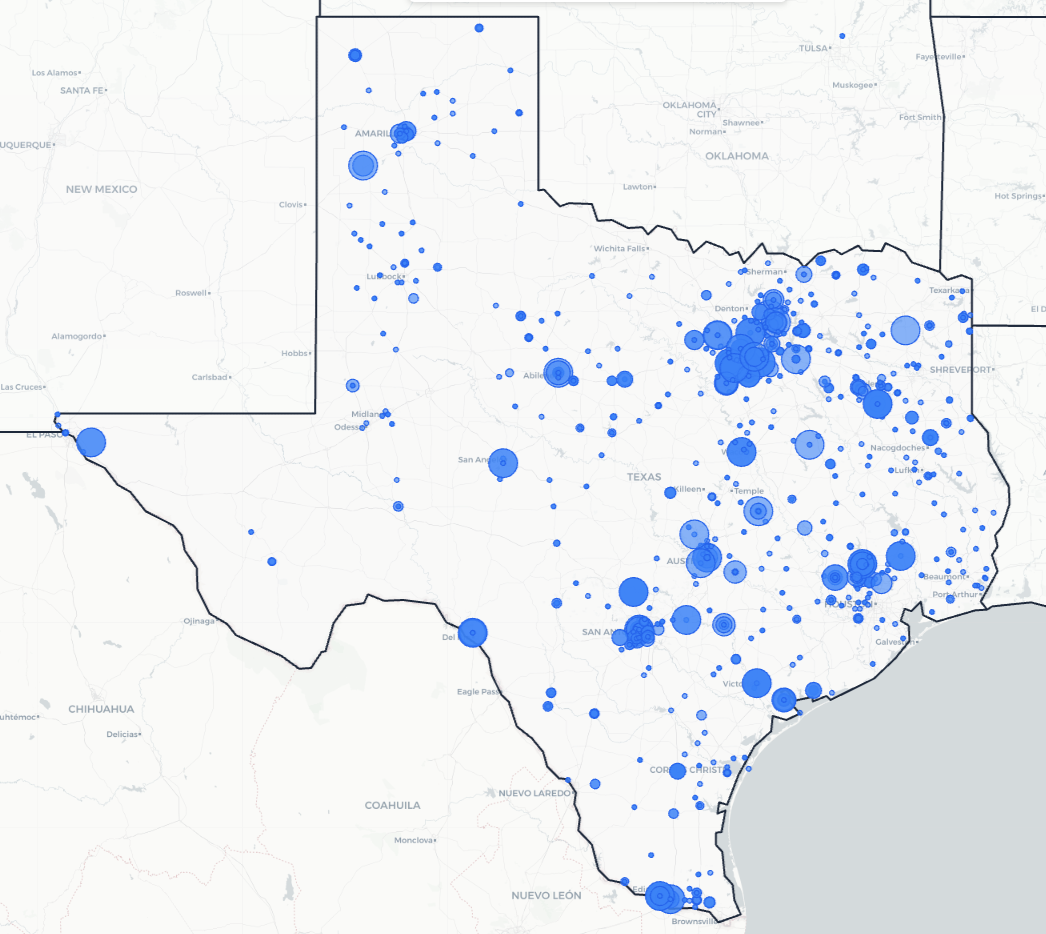
Trusted Across Texas
From the Rio Grande Valley to the Panhandle, Texas science teachers are using Kesler Science to save time and engage students.
Texas Schools and Districts
Love Kesler Science
What Teachers Are Saying
Related Blog Posts
How to Teach Newton's Third Law Without the "Action-Reaction" Trap teks-6.7c
Why the old phrasing causes misconceptions and what to say instead. • 5 min read
5 Misconceptions Students Have About Newton's Third Law teks-6.7c
Common mistakes students make and how to get ahead of them. • 4 min read
3 Real-World Phenomena for Teaching Newton's Third Law teks-6.7c
Phenomenon-based lesson starters for 6.7C. • 4 min read
The 2024 Texas Science TEKS: What Every Middle School Teacher Needs to Know texas-hub-evergreen
A plain-English breakdown of the new standards and the biggest shifts from the previous version. • 8 min read
How a Kesler Science Station Lab Can Change Everything in Your Classroom texas-hub-evergreen
What the 9-station format actually looks like with real kids, and why teachers say it's the first thing that made their classroom work. • 6 min read
Give Your Science Teachers Everything They Need
School and district licenses give your teachers access to every resource they need, including station labs, inquiry labs, anchoring phenomena, presentations, escape rooms, and much more. One purchase covers the grade levels you need.
- ✓ PO-friendly. We accept purchase orders
- ✓ Volume discounts for 10+ teachers
- ✓ Free PD session for departments of 5+
- ✓ Aligned to the 2024 TEKS standards
See It in Action
Book a walkthrough and we'll show you how Kesler Science fits your campus.
Book Demo CallNo pressure, no hard sell